ARTICLE · 1430478
英语(外研版一年级起点)· “十大模块核心词汇句型一本通”——六年级下册期末冲刺
六年级英语下册10个模块,词汇量大、句型丰富、语法进阶。这一份把每个模块的必背词汇、核心句型和语法考点全部拎出来,考前背完就能上考场。
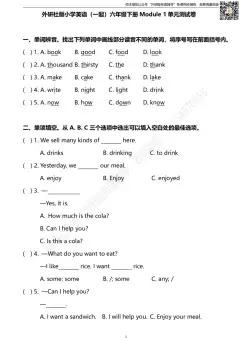
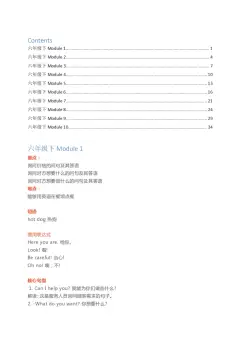
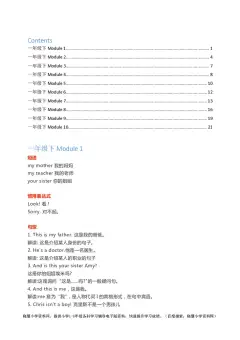
Module 1:Restaurant(餐厅点餐)
核心词汇:
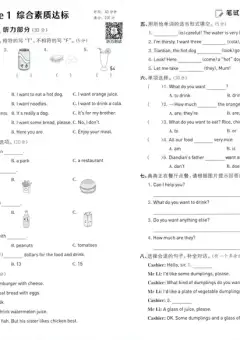
· 食物类:hamburger,pizza,sandwich(复数sandwiches),noodle,fish,chicken,cola,juice,milk,tea,water
· 金额类:dollar(美元),cent(美分),expensive,cheap
· 动词类:enjoy(享受),pay(支付),order(点餐)
量词短语: a hamburger,a bottle of juice,a glass of water,a cup of tea,a bowl of noodles
核心句型:
· 询问价格:How much is it? / How much are they? —It‘s ten dollars and twenty-five cents.
· 点餐:Can I help you? —I want a hamburger and a cola,please.
· 描述食物:It’s a very big sandwich.
语法要点: 可数名词单复数变化(hamburger→hamburgers,sandwich→sandwiches),不可数名词(juice,milk,meat)不能用复数。
易错点: sandwich复数是加es;不可数名词前不能用a/an,可用a bottle/glass/cup of...表示量。
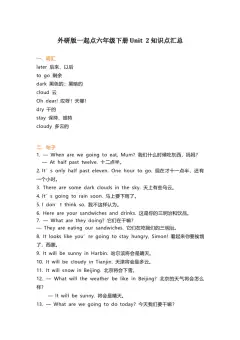
Module 2:Weather & Plans(天气与计划)
核心词汇:
· 天气:sunny,cloudy,rainy,windy,snowy,warm,hot,cool,cold
· 动作类:rain,snow,shine(照耀),plan(计划),stay(停留)
· 时间类:tomorrow,next week,this weekend
核心句型:
· 询问天气:What will the weather be like tomorrow? —It will be sunny.
· 描述天气:It‘s raining now. / It will snow in Beijing.
· 表达计划:We’ll stay in a hotel. / I‘m going to visit my grandpa.
语法要点: 一般将来时两种表达——will + 动词原形(预测天气),be going to + 动词原形(计划安排)。现在进行时描述正在发生的天气。
易错点: 天气提问句型是What will the weather be like? 不是How;rain/snow既可作动词也可作名词。
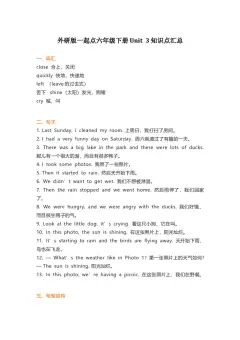
Module 3:Photography(摄影与照片)⚠️ 时态对比高频考点
核心词汇:
· 动作类:take—took(拍摄),eat—ate(吃),buy—bought(买),see—saw(看见),go—went(去),write—wrote(写)
· 名词类:photo(复数photos),camera,picture,postcard
核心句型:
· 过去时描述照片内容:She was at the supermarket. / They were at the zoo.
· 过去动作:She bought some food. / He took photos of his friends.
· 介词短语:in the photo,in the picture,on the left/right
语法要点: be动词过去式(is/am→was,are→were),动词过去式不规则变化。描述照片中的人或物用现在时或过去时均可,取决于照片是“现在看”还是“拍照时”。
易错点: photo复数是直接加s(photos),不是oes;take photos of sb.表示“给某人拍照”。
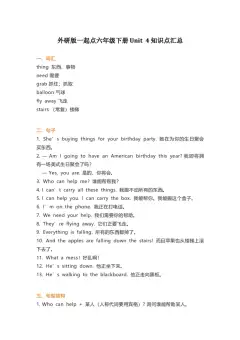
Module 4:Holidays(节日与礼物)⚠️ 中国节日必考
核心词汇:
· 节日类:Spring Festival(春节),Christmas(圣诞节),Thanksgiving(感恩节)
· 礼物类:present,gift,surprise,special
· 动词类:celebrate(庆祝),give—gave(给),receive(收到)
核心句型:
· 询问节日:What do you do at Christmas? —We have a special meal.
· 描述过去:I gave a present to my friend. / She gave me a book.
· 描述计划:I‘m going to give a surprise to my mum.
语法要点: 一般现在时描述节日风俗,一般过去时描述过去节日经历,一般将来时描述即将到来的节日计划。
易错点: give sb. sth. = give sth. to sb.(双宾语结构);节日名称前通常不加冠词。
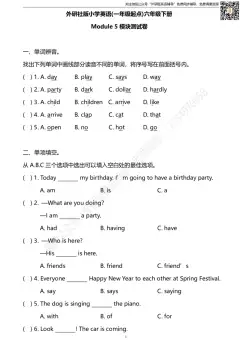
Module 5:Performances(才艺表演)⚠️ 频率副词
核心词汇:
· 乐器类:piano,guitar,flute,drum,erhu(二胡)
· 动词类:play(演奏),dance(跳舞),sing—sang(唱歌),practise(练习)
· 频率副词:often,always,never,sometimes
核心句型:
· 询问乐器:Can you play the piano? —Yes,I can. / No,I can‘t.
· 描述技能:I’m good at playing the guitar.
· 频率描述:I often practise after school. / She never plays the piano.
语法要点: 乐器前加定冠词the(play the piano),球类不加(play football)。频率副词放在实义动词前,be动词后。
易错点: “拉二胡”是play the erhu(同样要加the);be good at + 动名词(playing)。
Module 6:Daily Life(日常生活)⚠️ 一般现在时第三人称单数
核心词汇:
· 日常动作:get up,have breakfast/lunch/dinner,go to school,go home,do homework,watch TV,go to bed
· 职业类:student,teacher,doctor,nurse,policeman,pilot,taxi driver
核心句型:
· 描述日常:I get up at 7 o‘clock every morning.
· 第三人称描述:My father goes to work at 8. He is a doctor.
· 询问职业:What does your mother do? —She’s a nurse.
语法要点: 一般现在时中,主语是第三人称单数(he/she/it/单数名词)时,动词加-s或-es(go→goes,watch→watches,have→has)。频率副词放在动词前。
易错点: 第三单数动词变化规则与名词复数变化规则不同,不可混淆;否定句用doesn‘t + 动词原形。
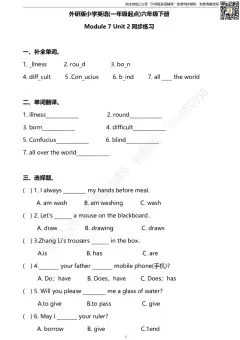
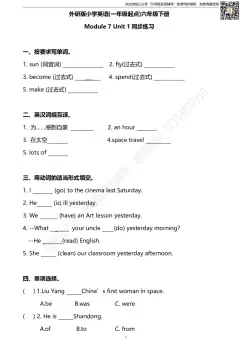
Module 7:Travel(旅行)⚠️ 过去时与将来时综合
核心词汇:
· 交通方式:by plane/bus/train/ship,on foot
· 景点词汇:mountain,river,lake,beach,park,museum,zoo,hotel
· 动词过去式:go—went,see—saw,visit—visited,stay—stayed,take—took(拍照)
核心句型:
· 过去旅行:I went to Beijing last year. I saw the Great Wall.
· 询问交通:How did you get there? —By plane.
· 将来计划:I’m going to visit the museum next week.
语法要点: 一般过去时描述已发生的旅行,一般将来时描述未发生的旅行计划。交通工具前用by(by bus),步行用on foot。
易错点: go to + 地点(go to school / go to Beijing),但go home不加to。
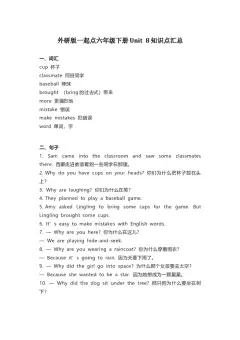
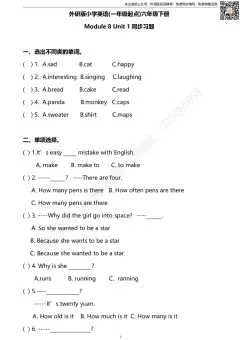
Module 8:School Life(学校生活)
核心词汇:
· 科目类:Chinese,Maths,English,Science,Music,Art,PE
· 学校设施:classroom,library,playground,canteen,computer room
· 动词类:study,learn,ask,answer,finish,start
核心句型:
· 描述课程:We have Maths on Monday morning.
· 学校规则:We can read books in the library. / We can’t run in the classroom.
· 询问时间:When does school start? —It starts at 8 o‘clock.
语法要点: 星期前用on(on Monday),具体时间点用at(at 8 o’clock)。
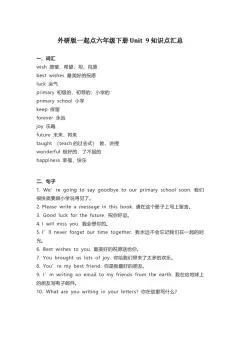
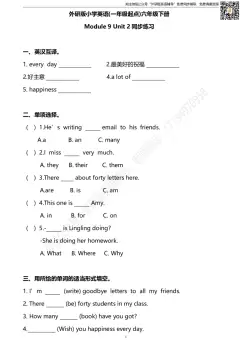
Module 9:Friendship(友谊与回忆)
核心词汇:
· 名词类:friend,memory(复数memories),forever,smile,wish
· 动词类:miss(想念),remember(记住),forget(忘记),share(分享)
· 形容词类:kind,helpful,friendly,wonderful
核心句型:
· 表达情感:I will miss you. / I will remember you forever.
· 描述朋友:She is kind and helpful.
· 表达祝愿:Best wishes to you!/ Good luck!
语法要点: will + 动词原形表示将来;表达祝愿用Best wishes to... / Good luck with...。
Module 10:Middle School(初中新生活)
核心词汇:
· 学校类:middle school,new school,new classmate,new teacher
· 学科类:Physics,Chemistry,History,Geography,Biology
· 动词类:start,begin,learn,study,make(friends)
核心句型:
· 描述新学期:I‘m going to a new middle school.
· 表达期待:I’m excited about middle school.
· 表达决心:I will work hard. / I will make new friends.
语法要点: 用一般将来时表达对初中生活的期待和计划。be excited about + 名词/动名词。
📝 语法速记表
时态 用法 标志词
一般现在时 日常习惯、客观事实 every day,often,usually
现在进行时 此刻正在做 now,look,listen
一般将来时 将来计划、预测 will,be going to