ARTICLE · 959290
片场安静,准备开拍.AI如何重塑中国微短剧”
Quiet on set. How AI transformed China’s microdrama scene
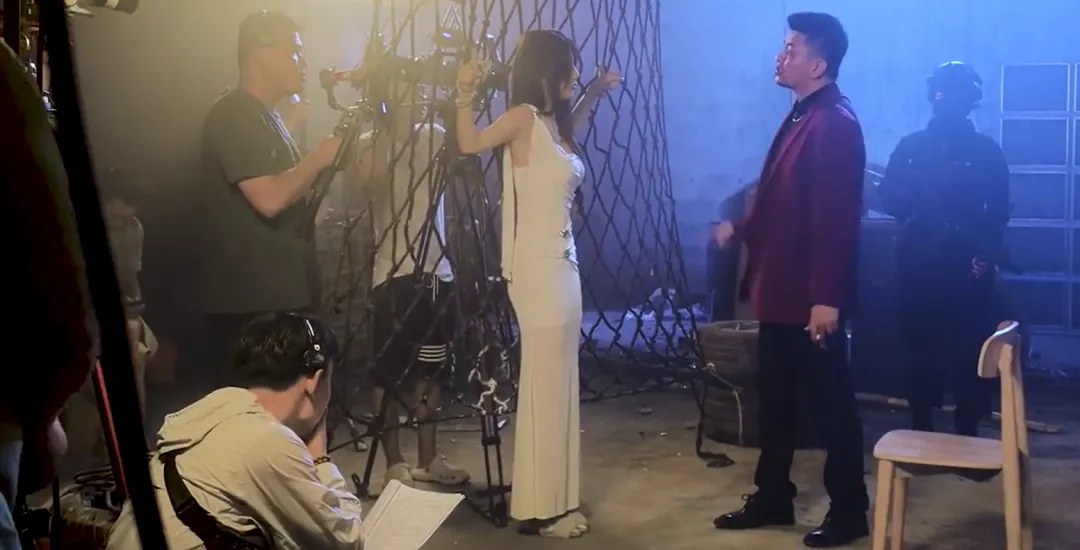
On the set of a microdrama production in the film hub Hengdian in China's Zhejiang province in June. CNN / Joyce Jiang
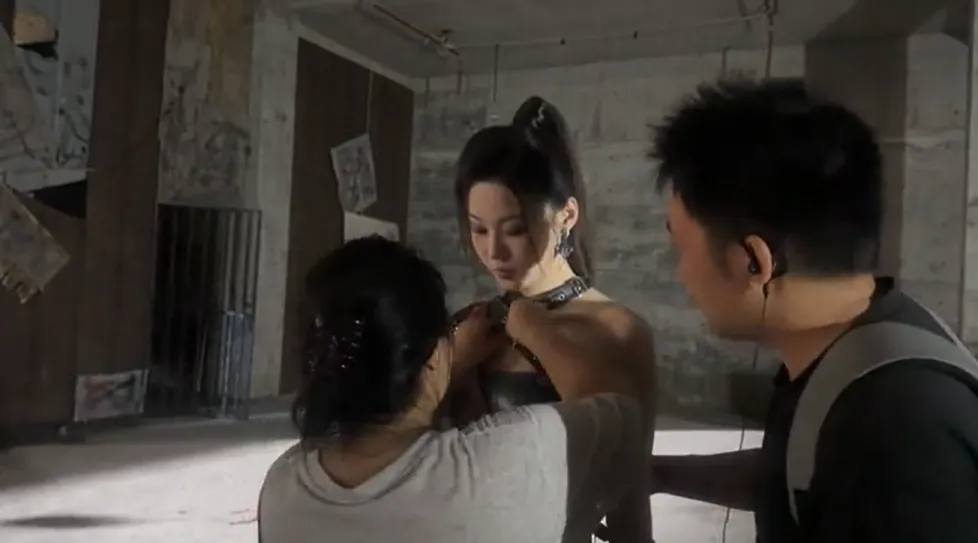
Junlin, who plays an assassin in a forthcoming production, prepares for her next scene on a Hengdian film set. CNN / Joyce Jiang
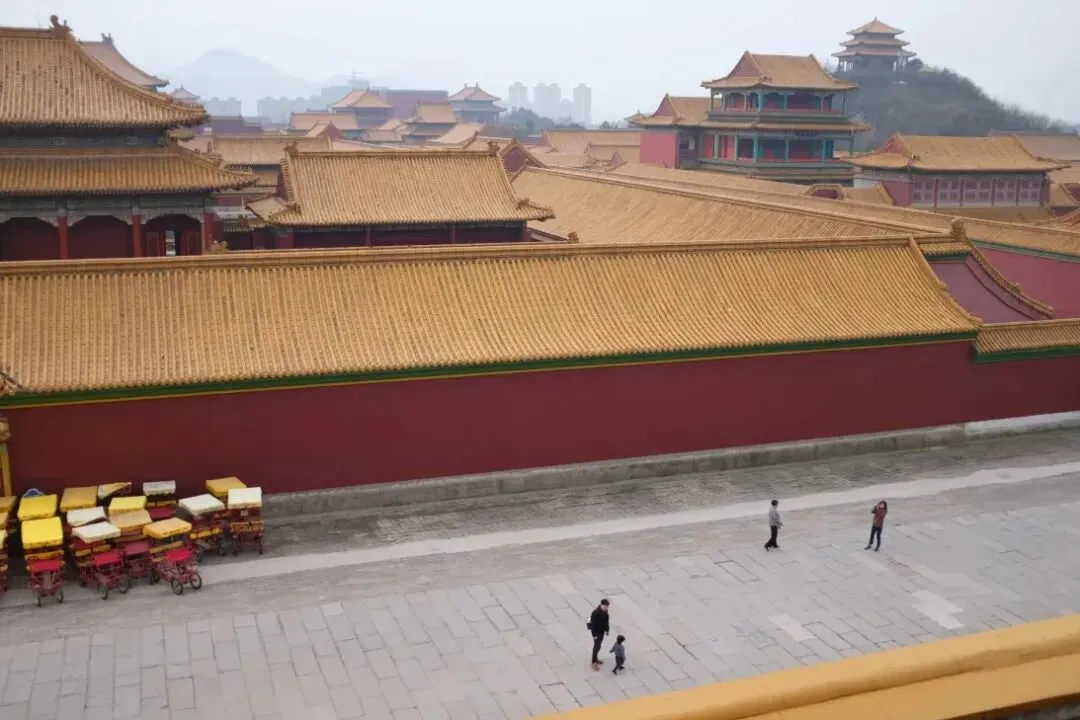
Tourists explore a vast film set replica of Beijing's Forbidden City at Hengdian World Studios. Matthew Knight/AFP/Getty Images
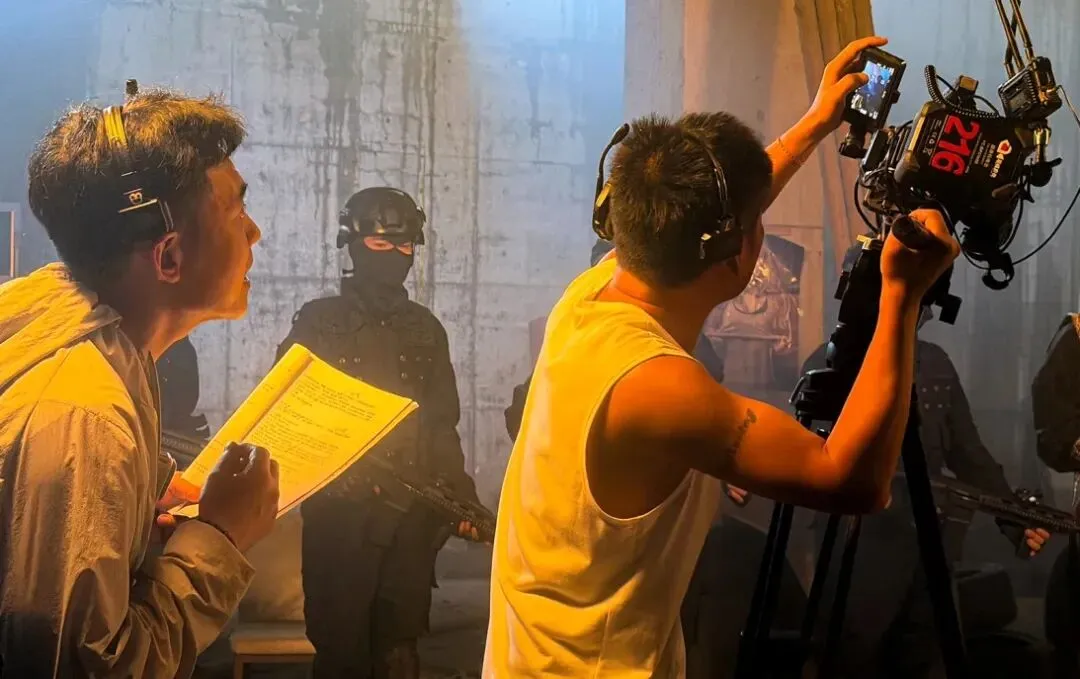
A cameraman optimizes a shot for mobile phone consumption at a Hengdian microdrama film set in June. Joyce Jiang/CNN
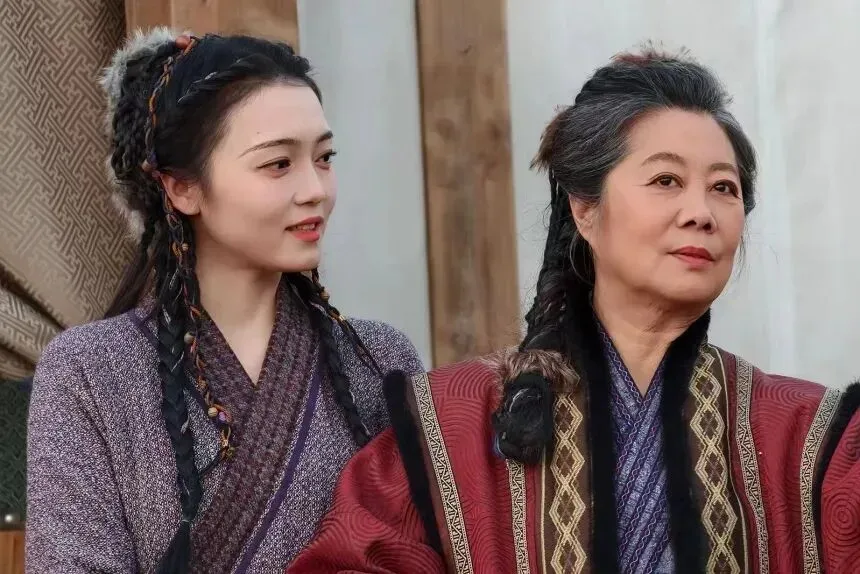
Zhuang Wenjie (left) played the personal maid of a fictional Empress Dowager, played by Zhang Xiaoli (right) on a micro-drama production in January. Zhuang Wenjie
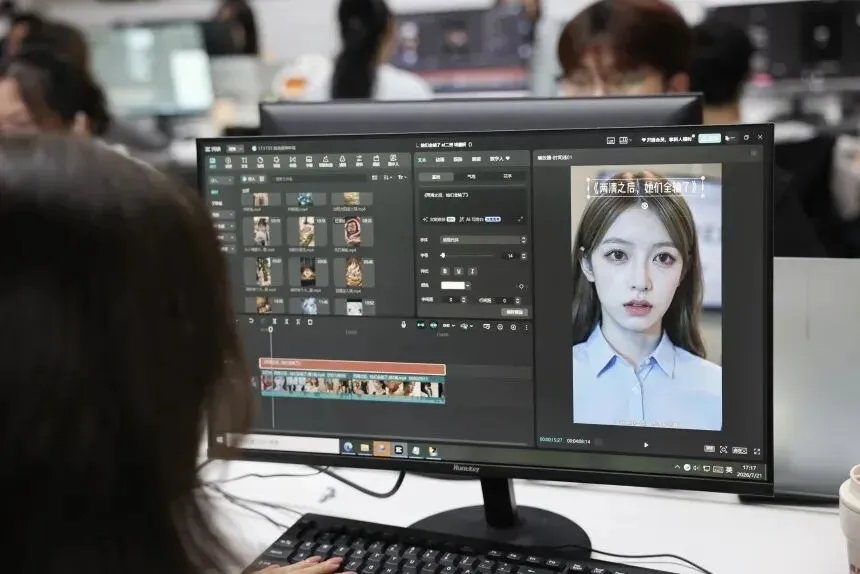
An editor adds titles to a microdrama in Jiaxing, Zhejiang province. VCG/Getty Images
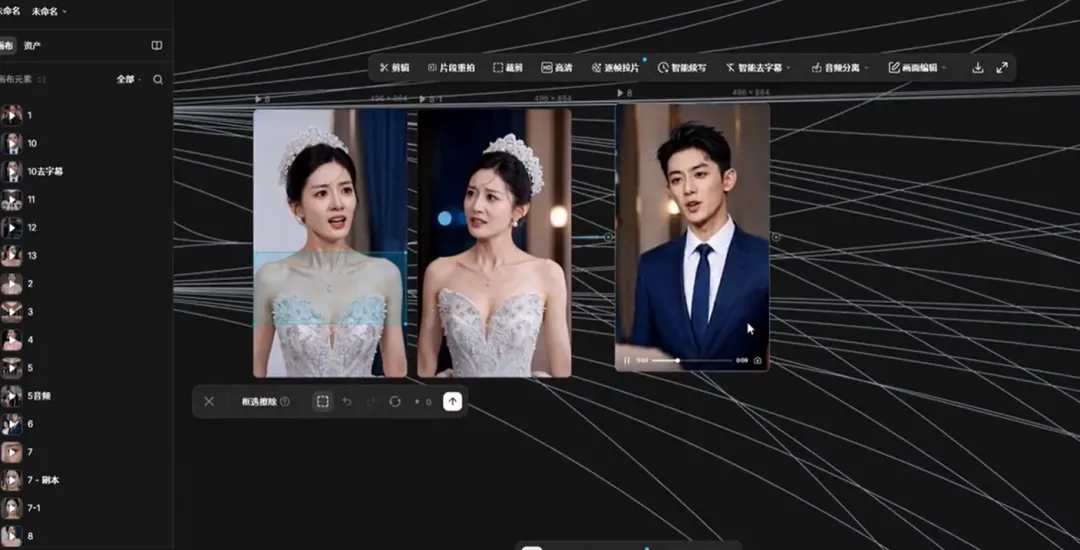
Tan Chen's team uses AI to produce microdramas at a fraction of the cost of a live-action production. Courtesy of Tan Chen
Hengdian, China — Everything seemed to be business as usual as filming got underway (进行中) on a dimly lit set in a basement in Hengdian, a town nicknamed "China's Hollywood" for its sprawling (庞大而延伸的) complex of film studios.
Cameramen raced around hectically (忙碌地;兴奋地) setting up lights and checking shots as choreographers (动作指导;编舞) ran through fight sequences and a prop team worked out how to hoist (吊起;升起) a net that would later restrain a hostage.
Actors, most dressed as assassins (刺客) and hitmen, milled about (闲逛;徘徊) or squatted, smoking cigarettes and getting occasional touch-ups from roving hair stylists and make-up artists as they waited for their scene to start.
But behind the bustle was a new reality: while just a few months ago, production of these so-called "microdramas" was flourishing in Hengdian and other hubs – today, these sets are falling quiet.
Seemingly overnight, new AI-video generation tools have taken over the microdrama industry, able to produce these popular, vertical shows at a fraction of the cost, decimating (大量毁灭;重创) the number of live-action productions across the country and flooding platforms with AI-made content. More than 120,000 microdramas were released in the first three months of this year — with 95% of those generated by AI, according to Chinese state media.
That's made the industry one of the most visible examples of how China's breakneck (极快的;惊险的) AI transformation is impacting people's livelihoods — wiping out jobs and creating new ones, leaving everyone unsure what's next. It's the kind of technological disruption that many creatives fear could upend (颠覆;推翻) movie-making far beyond China.
Between takes actor Junlin, who asked to be identified by her stage name, talks about how she's struggling to stay afloat (维持生计;不负债) as a "bitter winter" has arrived for productions like hers.
"With fewer productions hiring, your space for survival is constantly squeezed," said the 24-year-old, dressed in combat boots and a high ponytail to play a head assassin who storms around with a posse (一队;一群) of hitmen in an upcoming microdrama.
She'd worked only seven days in June, a sharp fall from the spring when she'd been filming 25 out of about 30 days per month in Hengdian and other cities. "I'm someone who gets anxious easily," she said. "If I'm not on set, I would be in a constant state of anxiety."
Boom time
Hengdian, a town of just over 200,000 tucked in a rural part of eastern China's Zhejiang province, had been booming with the rise of the microdrama industry in recent years.
Broken into roughly 90-second episodes, microdramas first emerged during the pandemic, capitalizing on (利用) the popularity of short video apps like Douyin and Kuaishou as cinemas and studios closed.
While each episode is designed to be quick to consume on a mobile phone, together the clips weave together plotlines (故事情节) that can stretch the length of a feature film.
These microdramas — and their often soapy or outlandish (离奇的;古怪的) plots about wicked mother-in-laws, mistaken identities, wartime heroics and wronged lovers — have since proliferated (激增;扩散) in China and spread to audiences overseas, where they've spawned (催生;产生) a fast-growing, multi-billion-dollar industry.
They've also caught the attention of China's censors (审查机构;审查员), who are tightening oversight of microdramas with new rules set to take effect in September. Plotlines, for example, will need to "adhere to correct political direction."
Last year, the domestic microdrama industry was valued at nearly $15 billion, according to market research firm DataEye, almost double the market size for box-office feature films in the country. Its rise ushered in (迎来;开创) a welcome heyday (全盛期) for young creatives at a time of high youth unemployment in China.
"Once microdramas took off, there was a nonstop stream of roles I could take on as long as I wanted to film," said Bi Zhiqiang, 27, another actor living in Hengdian, who quickly built a career after moving there in 2021 as the industry was taking shape.
"Many people who didn't even study acting or film and television joined because there were more and more opportunities."
The lure drew thousands of crews to Hengdian last year to shoot projects in and around the sprawling (庞大的) Hengdian World Studios.
It was a fresh injection of energy for the town and its decades-old eponymous (同名的) studio, known for its large-scale replicas of some of China's iconic imperial architecture, like the Summer Palace and the Forbidden City, and for birthing Chinese blockbusters.
Other hubs — like Qingdao, Xi'an, and Zhengzhou — emerged across the country, too, with microdrama crews shooting in expressly built complexes with fake mansions, boardrooms, and ERs.
But the industry quickly became a pressure cooker for actors and production crews, due to a hyper-competitive model built around cranking out as many microdramas as possible in the hopes that one would go viral.
Actors and crew describe standard 18 to 20-hour working days as productions rushed to stay within budget while shooting what are essentially feature-length movies in the space of roughly a week.
"As long as they keep filming, they can keep releasing. And the logic is — there will always be one that becomes a hit," said Guo Ertai, a director and actor at the National Theater of China in Beijing, who followed audiences and money into the microdrama industry several years ago.
At the bottom of the pecking order (等级秩序) are extras, who might work long shifts for as little as 10 Chinese yuan ($1.50) per hour, a wage one former actor commented wryly (挖苦地;讽刺地) was less than the rental rate for some of the animals used in productions.
Even still, the allure (诱惑;吸引力) of success kept the industry flush with young, ambitious actors, directors and creatives.
Unlike film, which has a high barrier to entry, microdramas "gave an ordinary person an opportunity," said Guo, the director. The thinking is "'I can become rich overnight, I can become a star overnight, I can earn a lot of money overnight with very little outlay (支出;花费),'" he said.
Microdrama actors have become celebrities in their own right with millions of followers on social media platforms. Some television and film stars — including martial arts legend Jet Li — have starred in microdramas. Even those without broad name recognition, who were able to land leading roles in successful dramas, could make multiples of an average monthly urban wage.
But as more money and bigger names entered, competition grew fiercer, pushing a drive to export the dramas overseas for more revenue — and use whatever means available to cut costs.
Enter AI
It took a few weeks for actor Zhuang Wenjie, 28, to realize something was wrong when she returned to Hengdian after celebrating the Chinese New Year holiday in her hometown in February.
She had moved to the area last summer and felt she was just beginning to make a name for herself and could start auditioning (试镜) for higher profile roles.
At first, she didn't quite connect the empty streets around her with the growing number of AI-generated microdramas she saw on her social media feeds.
Soon, though, it became obvious: people weren't returning because jobs had dried up. "Suddenly (there was) a feeling of impending (即将发生的) crisis," Zhuang said.
ByteDance's SeeDance 2.0 had arrived.
Seemingly overnight, Chinese social media was swamped with realistic-looking, AI-generated videos, as users played around with the new, powerful video generation tool.
And when it came to microdramas, SeeDance 2.0 was well positioned. ByteDance owns two of the main platforms in China that host microdramas: Douyin, Tiktok's sister app, and Hongguo. It also has a repository (仓库;资源库) of novels that make up a well of copyrighted material for scripts that collaborating production teams can draw from.
Other tech firms have released rival video-generating technology in recent months, including another short video app owner Kuaishuo, tech giant Alibaba and AI firm MiniMax.
Using next-gen AI video tools, a 120-minute project of ordinary quality can take a five-member team roughly a week to produce and cost some 15,000 yuan, about $2,200, one production firm told CNN — less than a tenth of what's typically cited as the low-end cost of a live production.
In the first half of the year on Douyin alone, 220,000 new AI-generated microdramas racked up a staggering (惊人的;令人震惊的) 500 billion views, according to DataEye, the market research firm. Some were animations, but more than half since March used AI that simulated real people.
Zhuang decided to leave town in April, joining an exodus (大批离开;出走) of actors and crew from the area. "The number of jobs in Hengdian was decreasing day by day, and the pay was also getting lower and lower every day … the hardship really did defeat me," she said.
Actors who did stay on described cratering (暴跌;急剧下降) salaries, such as being offered 300 yuan (about $45) a day to play the kind of leading role that would have previously paid thousands. Some have turned to side jobs to make ends meet.
Liu Yuzhan, 29, says he'd been making steady money booking four new roles a month in the past couple years. Now, Liu says he's picking up extra work as a food delivery driver.
"I have my own mortgage and I'm responsible for my parents' retirement. Given the current market of microdramas… it's simply not enough to cover my daily expenses," he said.
The 'bubble'
As AI tools put microdrama actors out of work, social media chat groups that used to advertise acting opportunities were swamped with a different kind of classified: for AI editors, programmers, designers and screenwriters. And a new crop of companies, editors and entrepreneurs have poured into the space.
Among them is Tan Chen, a 21-year-old college student who founded a startup that began focusing on AI production in April.
His team, which is based in Jinan, a provincial capital in eastern China, takes scripts or novels, and "optimizes" them for microdramas by crunching (压缩;处理) down the narratives and ramping up the excitement and suspense. They decide the look of the characters and the set, a process Tan describes as "similar to casting and location scouting," and then build a storyboard (分镜头剧本).
"We need to transform what we see in words into something that can be expressed visually. That really tests our production staff's directorial thinking and audiovisual language abilities," he said.
How well the AI images come together depends on that language. Employees known as "card-pullers" must use prompts — typically written with the help of AI — to repeatedly generate AI video clips until they get ones that best convey the scene, which are then edited together.
When his team started, Tan said clients would pay them 1,000 yuan, about $150, a minute, typically for a 120-minute project.
But just like actors and live production crews, these creatives are also feeling the squeeze.
A crush of programmers joined the industry and middlemen taking a cut to link creators with clients have multiplied, driving down profits for teams like Tan's. He's now fielding projects for as low as 150 yuan per minute — around $20.
"This rapidly growing market inevitably has a certain degree of bubble," he said.
His company also recently switched to making AI-generated cartoons to avoid inadvertently using AI images that draw from real actor's faces.
'If you can't beat it'
The use of AI characters that resemble real-life actors, without permission, has become a key issue in the industry — with at least one case of a well-known actor receiving court-ordered compensation (赔偿), state media reports.
But other actors, aren't so lucky.
Actor Yu Shutian, 31, recently found what she believes was her own face "blended into AI," after fans alerted her to an AI-generated character that resembled her.
She knew it was nearly impossible to prove the likeness was based on her face, so she never pursued legal action. She also says she realized it was probably the technology, not the creator who was responsible.
"AI is unstoppable. If you can't beat it, join it, so I'd rather find a reasonable way to embrace AI," said Yu, who is starting to use the tech as she's moved some of her focus to directing.
That sentiment illustrates a central tension raised by many of the actors who shared their stories with CNN.
While AI may render the miles of studio space and life-sized sets of places like Hengdian unnecessary, what role humans — including actors — ultimately play in the industry, working alongside AI to create art and entertainment, is far from settled, they say.
Microdrama streaming app Hongguo in recent weeks raised production standards around AI-generated dramas, and ratings in recent weeks suggest there's still viewer appetite (胃口;需求) for "real people dramas," which rank in the platform's top 10 alongside AI productions and cartoons.
"AI is formulaic (公式化的;套路的) — it can't express the full range of human emotions and desires," said Junlin, the actor who is staying put, for now, in Hengdian. "How could it possibly replace humans?"
But when it comes to the transformation underway in her industry, she sees the newer actors like herself, who are still trying to make it, as the most vulnerable (脆弱的;易受伤害的).
"AI absolutely can't replace a real person," she said. "But it might be able to replace me."
全文翻译
中国横店——横店,这个被称作“中国好莱坞”的小镇,地下片场里灯光昏暗,一切看起来照常运转。
摄像师们忙得团团转,架灯、对镜头;动作指导在排打戏;道具组在研究怎么把一张网吊起来——那网待会儿要用来绑人质。演员们大多扮成刺客或杀手,有的晃悠,有的蹲着抽烟,时不时有流动的造型师和化妆师上来补妆,等自己的戏份开拍。
但热闹背后是新的现实:几个月前,这些所谓的“微短剧”还在横店和其他拍摄基地如火如荼——如今,片场正在冷清下来。
几乎一夜之间,AI视频生成工具接管了微短剧行业,能以极低成本产出这些竖屏热剧,全国真人拍摄数量被重创,平台被AI内容淹没。今年前三个月就上线了超12万部微短剧——其中国媒称95%是AI生成的。
这让微短剧行业成了中国狂飙式AI转型冲击民生的最直观样本——工作被干掉,新工作又冒出来,人人都不确定下一步是什么。这种技术颠覆,让全球创意圈都担心电影制作会被彻底翻盘。
片场休息时,演员俊霖(她要求用艺名)聊起自己怎么艰难度日——她们这种戏的“寒冬”来了。
“开拍的戏少了,生存空间一直在被挤压。”24岁的她穿着战靴、扎着高马尾,在一部即将开拍的微短剧里演一个带一群杀手的女刺客头目。
她6月只干了7天活,跟春天时在横店和其他城市每月拍25天相比,断崖式下跌。“我是个容易焦虑的人,”她说,“不在片场的话,我会一直焦虑。”
好时光
横店,这座浙江东部乡村里只有20多万人的小镇,这些年靠微短剧火了起来。
微短剧每集大约90秒,疫情期间影院和片场关闭时借着抖音、快手等短视频App的东风起家。虽然每集在手机上刷起来很快,但所有片段串起来,剧情长度能顶一部长片电影。
这些微短剧——剧情往往狗血或离奇,恶婆婆、错认身份、战时英雄、被冤枉的恋人——在中国井喷后火到了海外,催生了一个几十亿美元的快速成长产业。
它们也引起了中国审查部门的注意,9月将实施新规加强监管。比如剧情需要“坚持正确的政治方向”。
市场研究公司DataEye数据显示,去年国内微短剧产业价值近150亿美元,几乎是院线电影市场规模的两倍。在中国青年失业率高企的背景下,微短剧崛起为年轻创作者迎来了好日子。
“微短剧火了之后,只要我想拍,活儿就没断过。”27岁的毕志强说,他2021年搬到横店,正好赶上行业起步,很快站稳了脚跟。
“很多不是学表演或影视的人也进来了,因为机会越来越多。”
去年,这块磁石吸引了成千上万的剧组涌向横店和横店影视城周边。
这对这个小镇和它同名的老牌影视城来说是一剂强心针——横店影视城以圆明园、故宫等中国标志性皇家建筑的大型复刻品闻名,也出产过不少国产大片。
其他基地——青岛、西安、郑州——也在全国涌现,微短剧剧组在专门建造的片场里拍假豪宅、假会议室、假急诊室。
但这个行业很快成了演员和剧组的“高压锅”——因为模式极度内卷:拼命拍,赌哪部能爆。
演员和剧组说,标准工作日是18到20小时,要在大约一周内拍完一部长片的体量,还得压住预算。
“只要不停拍,就能不停上。逻辑就是——总有一部会中。”中国国家话剧院导演兼演员郭尔泰说。他几年前跟着观众和钱进了微短剧行业。
最底层的是群演,轮班干十多个小时,时薪低至10块钱。有位前演员挖苦说,这还不如剧组租某些动物的费用高。
即便如此,成功的诱惑让这个行业源源不断地吸引着年轻、有野心的演员、导演和创作者。
电影门槛高,微短剧“给了普通人一个机会,”导演郭尔泰说。逻辑就是——“我能一夜暴富,一夜成名,花很少的钱赚大钱。”
微短剧演员本身就红了,在社交平台上有几百万粉丝。一些影视明星——包括功夫巨星李连杰——也演过微短剧。就算没那么大名气,只要能拿到爆款剧的主角,收入也能是城市平均月薪的好几倍。
但随着更多资金和更大的名字涌入,竞争更激烈了——推动业界出海赚更多钱,同时用尽一切手段降本。
AI登场
28岁的演员庄文杰2月回老家过完春节回到横店,过了几周才意识到不对劲。
她去年夏天才搬过来,觉得自己刚站稳脚跟,可以开始试镜更高调的角色了。
一开始,她没把空荡荡的街道跟社交媒体上越来越多的AI微短剧联系起来。但很快就发现端倪:人不回来,是因为没活儿了。“突然有种危机感,”庄说。
字节跳动的即梦(SeeDance)2.0来了。
几乎一夜间,中国社交媒体被逼真的AI生成视频淹没了——用户都在玩这个强大的新视频生成工具。
在微短剧这块,即梦2.0占尽先机。字节跳动旗下有两大微短剧平台——抖音(TikTok姊妹App)和红果。还有一个小说库,给合作剧组提供版权素材改编剧本。
其他科技公司近几个月也发布了竞品视频生成技术——快手、阿里、AI公司MiniMax。
有制作公司告诉CNN,用下一代AI视频工具,一部普通质量的120分钟微短剧,5人团队大约一周就能完成,成本约1.5万元——不到真人实拍成本低端价的十分之一。
DataEye数据显示,仅今年上半年,抖音上新AI微短剧22万部,总播放量高达5000亿次。有些是动画,但3月以来超过一半是用AI模拟真人。
庄4月决定离开横店,加入演员和剧组的大批出走潮。“横店的戏一天比一天少,片酬一天比一天低……真的被现实打败了。”
留下的演员说片酬“雪崩”——以前能拿几千块一天的主角戏,现在只给300块。有人开始干副业糊口。
29岁的刘宇湛说,过去两年他每月能接四部戏,收入稳定。现在他在跑外卖补贴家用。
“我有房贷,还要给父母养老。现在微短剧市场这个样子……连日常开销都撑不住。”他说。
“泡沫”
AI工具把微短剧演员挤出市场后,社交群里以前发招募通告的帖子,全换成了招聘AI剪辑师、程序员、设计师、编剧。新一波公司、剪辑师和创业者涌了进来。
21岁的大学生谭晨就是其中之一。他4月创办了一家专注AI制作的初创公司。
他的团队在山东省会济南,拿到剧本或小说后,通过压缩叙事、拉满爽点和悬念来“优化”成微短剧。他们定角色长相和场景——谭说这“类似选角和堪景”——然后做分镜。
“我们需要把文字转换成可视化的画面。这很考验制作人员的导演思维和视听语言能力。”
AI画面好不好,就看这个语言能力。被称为“拉卡师”的员工要用提示词——通常借助AI来写——反复生成AI视频片段,直到选出最符合场景的,然后剪辑成片。
刚开始时,客户一分钟给1000块,一般做120分钟项目。
但跟演员和实拍团队一样,这群创作者也开始感受到了压力。
大量程序员涌入,中介层层加价,谭的团队利润被压低。他现在接单低至一分钟150块。
“这个快速爆发的市场,多少有些泡沫。”他说。
他的公司最近转向做AI动画,避免无意中用到真人演员面部的AI素材。
“打不过就加入”
未经许可使用跟真人演员相似的AI角色,成了行业里的关键问题——国媒报道至少有一位知名演员获得了法院判赔。
但其他演员没那么幸运。
31岁的演员于舒天最近发现,粉丝告诉她有个AI角色跟她很像——她认为自己的脸“被融进AI了”。
她知道几乎无法证明那个形象是基于她的脸,所以没走法律程序。她也觉得,该归咎的是技术,不是创作者。
“AI势不可挡。打不过就加入吧,我宁愿找个合理的方式拥抱AI。”于说。她已经开始用AI了,因为重心转了一部分到导演工作上。
这种态度,反映了跟CNN分享故事的那些演员们共同面对的焦虑。
他们都说,AI可能让横店这种大片场和实景变得多余,但人类——包括演员——最终在这个行业里跟AI并肩协作扮演什么角色,还远没定论。
微短剧流媒体App红果最近提高了AI剧的制作标准,近几周的榜单显示观众对“真人剧”仍有需求——真人剧跟AI剧和动画一起排在前十。
“AI是套路化的——它表达不了人类全部的情感和欲望,”演员俊霖说,她现在还留在横店。“怎么可能取代人呢?”
但说到自己行业正在经历的大变局,她觉得像她这样还在往上爬的新人演员是最脆弱的。
“AI绝对替代不了真人,”她说。“但或许能替代我。”
---
冷知识讲解
1:95%的微短剧是AI做的,但你看的时候可能完全看不出来
中国官方媒体数据显示,今年前三个月上线的12万部微短剧中,95%是AI生成的。现在的AI视频工具(如即梦2.0)生成的“数字人”已经能做到口型对齐、面部微表情和自然动作——如果不是刻意找破绽,普通观众根本分不清是真人还是AI。这意味着你刷到的大部分“竖屏爽剧”,主演可能压根不存在。
2:微短剧演员的时薪不如剧组租一头骆驼
文章提到一位前演员挖苦说,群演10元/小时的工资,比剧组租某些动物的费用还低。横店剧组确实有租马、骆驼、鹰等动物演员的惯例,日租金从几百到上千不等。一个群演干一整天(18-20小时)也就180-200元,确实不如一头骆驼“出场费”高——这讽刺算得上行业黑色幽默了。
---
重要单词
1. decimating — 大量毁灭;重创 — v. (现在分词)
2. disruption — 颠覆;扰乱 — n.
3. proliferated — 激增;扩散 — v. (过去式)
4. exodus — 大批离开;出走 — n.
5. vulnerable — 脆弱的;易受伤害的 — adj.
---
重要词组
1. milled about — 闲逛;徘徊
2. capitalizing on — 利用
3. ushered in — 迎来;开创
4. pecking order — 等级秩序
5. make ends meet — 收支平衡;勉强度日