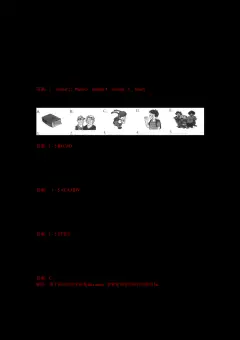
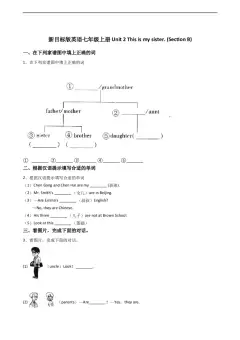
Unit 1 My name’s Gina
一、学习重点
【句型】
What’s your name?你叫什么名字?
1、My name is Gina.我叫吉娜/I’m Gina.
2、Nice to meet you .见到你很高兴。
3、What’s ….number?……号码是多少?
【口语】
(一)常见的问候表达方式有:
1、Hello/Hi
2、Good morning/afternoon/evening/night
3、Nice to meet you/Nice to meet you, too
4、How are you?
5、How do you do?
(二)常见的介绍表达方式有:
1. I’m…/My name’s…/This is…/These are…and….
2. Nice to meet you.
3. What’s your phone number?
4. It’s 2842942.
【语法】
1、be 的一般现在时形式
2、What 引导的特殊疑问句
3、形容词性物主代词:my,your,his,her
二、难点讲评
1.My name’s Jenny.我的名字叫詹尼。
释:两人初次见面时,应首先把自己的姓名介绍给对方,是比较礼貌的。My name’s 是my
name is 的缩写形式,表示“我的名字……”,“My name is + 姓名”是自我介绍的惯用句型。
例如:My name’s Ann.我的名字叫安。
注:对于What’s your name?的回答也常用“My name is…”这个句型。
“I am + 姓名,”表示“我是……”,介绍自己姓名的另一种方式。
例如:I’m Mary.我是玛丽=My name is Mary.
2.Nice to see you.见到你很高兴。
释:这句话是一个省略句,完整的形式为:“It’s nice to meet you.”
双方初次见面经介绍后常说Nice to meet you.这是陌生人初次见面的客套话。这句话也可以
用于双方好久未见,偶然相逢时的场合,表示一种高兴的心情。回答时一般在句末加too。m]
例如:Han Mei: Hello! My name is Han Mei. What's your name?
你好,我的名字叫韩梅,你叫什么名?
Jim: Hello! I'm Jim Green. Nice to meet you.
你好,我叫吉姆格林,见到你很高兴。
Han Mei: Nice to meet you, too. 见到你我也很高兴。
注:这句话的同义句为:“Nice to see you.”或“Glad to see you.”。
3.What’s your name?你叫什么名字?
释:本句是询问对方姓名的特殊问句。其后可加“please”,表示成:What’s your name,
please?=your name ,please?语气更委婉。回答方法如下:
1)My name is +姓名 2)I am +姓名 3)直接用姓名。
例如:——What’s your name ,please?
____My name is Smith=I’m Smith.=Smith.
4. Jim Cmeen 吉姆•格林
释:其中“Jim 吉姆”是“名”,放在前面,称为first name/given name;“Green 格林”是姓,
放在后面,称为last name/family name.
(1)在西方国家对人进行称呼时常在姓前冠以“先生”(Mr.),“小姐”(Miss),“太太”(Mrs)等
称谓。例如:Mr Smith, Miss King, Mrs Green 等。其中Mr.适用于成年男性,Miss 适用于未婚
女性,而Mrs 适用于已婚妇女。对未成年者,人人则直呼其名。
(2)英美人的姓名与中国人的姓名有一个文化上的特点是相同的,即某些字词通常多用作姓
氏,而另一些字词多用作名字。在英美国家,Smith, Vickers, Green 等多用作姓氏,而Many,
Tom, Peter 等多用作名字。
(3)汉语人为Wang Xinyu. Wang 为姓,Xinyu 为名字。中国人的名字译成英语时,可用汉语拼
音表示,单名分开写,双名合起来写。姓与名的第一个字母都要大写,如:Sun Tongtong。
(4)少数中国人的姓是复姓,必须连在一起写,第二个字的首字母不大写。
例如: Shangguan Yun(上官云)。
5. and
释:是连词,用于承上启下,可以理解为“那么,并且”。常用于进一步询问类似相关问题的
情景。
例如:—What’s his name?他叫什么名字?
—His name is Ben.他的名字叫本。
—And what’s her name?她叫什么名字?
—Her name is kay.她的名字叫凯。
6.Her name is Linda.
释:句中her name 表示“她的名字”,your name 意为“你的名字”,his name 表示“他的名
字”,my name 意“我的名字”,其中her, your, my, his 等都是物主代词,用于指代不同的人
称,表示物主关系,常用于名词之前。
7.What’s your phone number?你的电话号码是多少?
What’s…?是口语中常用的一个句型,除了询问别人的姓名之外,还可以询问其他情况。
如:What’s your name?
What’s your mobile phone number?
8.动词be 的用法
1)动词be 与主语的名词或代词在一起,常用“,”来代替is/am/are 的第一个字母,如:I’m=I
am,she is=she’s,you are=you’re.但this is 不能缩写。
2)be 与not 在句中构成否定时,可缩写为isn’t,atrn’t,但在否定定回答时,人称代词一般不能
与be 缩写。
例如:No, we aren’t.不能写成No, we’re not.
3) 动词be 常用作连系动词,用来表示人或事物的性质、状态等,在句中起连接主语和表语的
作用,相当于主语和表语之间的一座桥梁。
4)动词be 的基本意思是“是”,但应注意的是汉语有时不译出“是”,翻译成英语句子时切
不可遗漏“是”(am, is ,are),否则就会出现无“是”生非的现象。
5)主谓一致:主语是第三人称单数,be 用is;主语不是第三人称单数,be 用are;主语是I,be 用
am.
9. 形容词性物主代词
(1)通常用在名词之前,表示“某人的…”,如:my book 我的书,your pen 你的笔,his father 他
的爸爸。
(2)当名词之前有物主代词修饰时,就不能用a, an ,this, that 等。
如:She is my a friend.(€?→She is my friend.(√)
This is my a bike.(€?→This is my bike.(√)
(3)物主代词不能修饰动词。
(4)形容词性物主代词与形容词一样,不能单独使用,必须与名词一起连用,放在被修饰的名
词之前,作定语。学§科§网]
如:my room, your pencils 等。
(5)如果名词前面还有其它词修饰,形容词性物主代词应放在最前面,
例如:My too books 我的两本书,your small bag 你的小书包。
三.典型例解
( )1. —Where ____ they from?
—They’re from China.
A. is
B. am
C. are
分析:C 本题考查am, is, are 与人称代词的搭配, 可由一句口诀“我是am, 你是are, is 跟着他
她它”来记忆,they 是“他们”的意思,是第三人称复数后面接are,故选C。
( )2. —____ your name?
—My name is Kate.
A. What’s
B. What
C. Where
分析:A 由答语My name is Kate.可知是在问名字, 故可排除C, 同时该问句中应该有be 动词,
故选A。
( )3. —Is she Maria?
—No, she ____.
A. is
B. isn’t
C. aren’t
分析:B 本题考查一般疑问句的否定回答, be 动词+主语……?是一般疑问句的句式, 它的回
答要用Yes 后加肯定或No 后加否定。因为有No,先排除A, 由she 可知选B。
( )4. —____, are you Mr. Wang?
—Yes, I am.
A. Fine
B. Please
C. Excuse me
分析:C Fine 表示身体健康的;美好的;天气晴朗以及表示满意等;Please 用于客气的请求或
吩咐以及表示客气的接受和加强陈述的语气等;Excuse me 意为“请问, 打扰了、对不起”等,
常用于引起别人注意、问路、请求让路或打听消息等, 由语境可知选C。
( )5. —Are they from Canada?
—No, they ____.
A. are
B. aren’t
C. isn’t
分析:B 同3 题,本题考查一般疑问句的否定回答,由they 可知选B。学|科|网Z|X|X|K]
( )6. —What’s ____ telephone number?
—It’s 8265-3412.
A. you
B. your
C. my
分析:B you 表示“你,你们”作主语;your 表示“你的/你们的”作形容词性物主代词,此
句是问你的电话号码是多少, 故选B。
( )7. —____ are they?
—They are XiaoLi and Jane.
A. Who
B. What
C. Where
分析:A 本题考查疑问代词的用法。what 表示“什么,怎么样”; where 表示“在哪里,往哪
里”;而who 表示“谁”。由答语他们是Maria 和Jane 可知选A。
( )8. Mary ____ from Cuba.
A. is
B. am
C. are
分析:A 本题考查am, is, are 的用法。Mary 为第三人称单数, 故选A。
( )9. “One one zero” 表示 ____。
A. 火警
B. 匪警
C. 急救中心
分析:B 火警119, 匪警110, 急救中心120。one one zero 翻译成110, 故选B。
( )10. —Is he Li Ping?
—Yes, ____.
A. I’m
B. he’s
C. he is
分析:C 一般疑问句的简单肯定回答中没有缩略式, 故选C。
四.能力培养
Ⅰ.汉译英
1. 姓名__________ 2 .他的钟表___________
3.一件橘色的夹克衫________ 4.你的白色的电话________
5.身份证号码________ 6.我的电话号码________
Ⅱ.根据音标及句意选择正确单词
( )1.My sister is /nain/ years old.
A. night B. nine C. ninth D. ninety
( )2.His /´fæmili/ name is Zhang.
A. family B. irst C. full D. last
( )3.What’s her QQ /´nʌmbə/ ?
A. name B. am C. phone D. number
( )4.Can you /´a:nsə/ this questions?
A. aunt B. card C. number D. answer
( )5.Nice to /mi: t/ you.
A. met B. meat C. meet D. mean
Ⅲ.单选题
( )1. ---_____your name, please? --- _____name is Gina Smith.
A. What, I
B. What’s, Your
C. What’s, My
D. What, My
( )2. Her name is Ann Read. Read is her ____name.
A. first
B. given
C. full
D. family
( )3. My English teacher’s name is Bruce White. So we all call him ________.
A. Miss Bruce
B. Mr. Bruce
C. Mr. White
D. Sir Bruce.
( )4. You want to know Mary’s mobile phone number. You ask her:
A. Is this your mobile phone?
B. This is your mobile phone number.
C. What’s your mobile phone number? D. Your mobile phone number is what
( )5. --- Good morning, Miss Gao. --- _____ Li Ming.
A. Nice to meet you
B. Hello C. Ho w do you do D. Good morning
( )6. ---- What’s this?---- It is ____.
A. an ID card B. a orange
C. ruler
D. an UFO
( )7. That is your red jacket and This is _____ jacket.
A. blue me
B. my blue
C. blue my
D. the my blue
( )8. —What’s the girl’s name? —_______.
A. Kate is B. It Kate C. That is Kate D. Her name is Kate
( )9. Kate Green is a girl. Kate is the _______Green is the ________ .
A. first name, last name B. last name, first name
C. full name, family name D. family name, first name
( )10. --- Sit down, please. --- _______.
A. Thank you
B. Yes, you’re right.
C. OK
D. All right
Ⅳ 完形填空
Today we have ___1__ new students in __2__ school. __3__ are American. Their __4__ are Jane
and Kate. They __5__ twins(双胞胎).They __6__ the same (一样).They are __7__ Class 2, Grade
1.They”re our new __8__. We often __9__ English in class. We often __10__ together(一起)。
( )1. A. three B. one C. two D. fo ur
( )2. A. our B. he C. I D. she Z,X,X,K]
( )3. A They B. She C. He D. We
( )4. A. name B, names C. parents D. brothers
( )5. A. is B. am C. are D. not
( )6. A. see B. have C. watch D. look
( )7. A at B. on C. of D. in
( )8. A. teacher B. classmate C. friends D. teachers
( )9. A say B. speak C. tell D. do
( )10. A. play B. have C. wash D. look
Ⅴ.阅读理解
My name is Tom. I’m nine. This is my mother(母亲). Her name’s Linda Johnson. Her telephone
number is 13052864515. And this is my father( 父亲). His name is Mike Johnson. His phone
number is 13120884699. And this is my sister(姐妹). What’s her name? Her name is Mary. Look!
The boy is my brother(兄弟) Nick. Mary is eight and Nick is six.
( )1. Mother is .
A. Mary Johnson B. Mike Johnson C. Linda Johnson
( )2. Father’s telephone number is .
A. 13120884699 B. 13120884966 C. 13052864515
( )3. Mary is_______.
A. six B. nine C. eight
( )4. My brother is _______.
A. Tom B. Mike C. Nick
( )5. My family name is .
A. Johnson B. Nick C. Mike
Ⅵ 选词填空
A.阅读短文,从方框中选择适当的词填空。
(friends is my years eleven)
Look at the girl . She is eleven 1 old. Her name 2 Wang Lin. I am 3 ,too. 4 name is
Kate. Wang Fang and I are good 5 .
B.阅读对话,从方框中选择适当的词并用其适当形式填空。
help be meet be excuse
A:____1___ me. What’s your name ,please? B: My name is Lei Hao.And what’s your name?
A: Liu Mei. Nice___2___ you,. Lei Hao. B: Nice to meet you ,too.
A: Are you in Class 1,Grade 1? B: Yes, I ___3___.What about you?
A: I'm in Class 1,Grade 1,too. B: Great. We are in the same class.
A: What's your telephone number? B: It __4_____ 8583567.
A: And my telephone number is 8657565.Let's ___5____each other(互相) in the future(将来).
Well, it's time for class. B: Oh. Let's go to class now.
Ⅶ.改写句子
1.My name is Amy.(就划线部分提问) _____ _____ name?
2. Her telephone number is 298-3026. (就划线部分提问)
______ ______ telephone number?
3. He is Bob.(同义句转换) ______ ______ is Bob.
4.This is my school.(改为一般疑问句) ¬¬¬¬¬¬¬¬¬ this school?
5. Gina is in No.5 Middle School.(改为否定句)Gina in No.5 Middle School.
Ⅷ.完成句子
1. 他的电话号码是536-7185。 His________ _______ __________ 536-7185.
2. 她姓什么? What is ______ _____ name?
3. 他叫Mike. _______ ________ Mike.
4. 我是Anna, 很高兴见到你。I ____ Anna. ______ _______ _____ you.
Ⅸ 任务性阅读
看下列图表,然后根据图表中的信息以及相关提示写出句子或回答问题
First name:Tony
Last name:White
Class:3,Grade:7
Tel:287-0837(Home)
398-6160(School)
1. (boy)
2. What’s Tony’s family name?
3. What class(班) is Tony in?
4. Tony is at home(在家). What’s his telephone number?
5. Tony is at school(在学校). What’s his telephone number?
Ⅹ.作文
First name: Mary ; Last name: Hand Age: 14; School: No.5 Middle School;
Telephone number:538-2376 ID card: 390104821023031
假设你是Mary Hand,根据以上表格里的内容,简单介绍你的情况。
参考答案
Ⅰ. 1. full name 2. his clock 3. an orange jacket 4. your white telephone
5. ID card number 6.my telephone number
Ⅱ. 1. B 2. A 3.D 4. D 5. C
Ⅲ . 1. C 2.D 3.C 4.C 5.D 6.A 7.B 8.D 9.A 10.A
Ⅳ. 1.C 2.A 3.A 4.B 5.C 6.D 7.D 8.C 9.B 10.A
Ⅴ. CACCA.Com]
Ⅵ. A. 1. year 2. is 3. eleven 4. My 5. friends
B. 1. Excuse 2. to meet 3. am 4. is 5. help
Ⅶ. 1. What’s your 2. What’s her 3. His name 4. Is your 5. is not
Ⅷ. 1. telephone number is 2. her family 3. His name’s 4. am Nice to meet
Ⅸ 1. male 2. White 3. 3 4. 287-0837 5.398-6160
Ⅹ 略
Unit 2 This is my sister
学生自主学习教材解读与能力培养试题
一、学习重点
【句型】
1、Thanks for…感谢……
2、Is this / that…?这/那是……吗?
3、This / That is….这/那位是……
4、These / Those are….这些/那些是……
【用语】
1、当你向别人介绍某人时,常用的句型归纲如下:
①This is/That is my… 这/那位是我的……
②These/Those are my… 这些/那些是我的……
③He/She is my… 他/她是我的……
④They are my… 他们是我的……
⑤This/That is her/his… 这/那是她的/他的……
⑥These/Those are her/his… 这些/那些是她的/他的……
⑦He/She is his/her… 他/她是他的/她的……
⑧They are her/his… 他们是她的/他的……
2.当你想辨别某人是谁时,常用句型归纳如下:
①Is this/that your…? 这/那位是你的……吗?
②Are these/those your…? 这些/那些是你的……吗?
③Is he/she your…? 他/她是你的……吗?
④Are they your…? 他们是你的……吗?
⑤Is this/that her/his…? 这/那位是她的/他的……吗?
⑥Are these/those her/his…? 这些/那些是她的/他的……吗?
⑦Is he/she his/her…? 他/她是他的/她的……吗?
⑧Are they her/his…? 他们是她的/他的……吗?
【语法】
1、指示代词this ,these; those that 的用法。
2、代词主格I he she they 的用法。
3、名词的复数形式。
二.难点讲评
1.This is my sister.这是我的姐姐。
释:当第三者给双方作介绍时,通常用“This is+姓名”这一句型,在这种场合,不说She
is…“她是……”或He……“他是……”。
例如:This is Wei Hua. 这是魏华。
This is Jim Green. 这是吉姆格林。
Mr Wang, this is my mum. 王老师,这是我的妈妈。
注:This is 不能缩写,因为 this 是以“s”结尾。向别人介绍第三者时,指远处的人时,应用
That’s…句型,意为“那位是……”。
例如:—Who’s that?—It’s my brother.—那位是谁?—是我的哥哥。
2.This is…句型
释:除了加姓名作介绍用语之外,还可以用来加名词表示这是某某物品等。
例如:This is a book. 这是一本书。
This is a pen. 这是一支钢笔。
注:当你向别人介绍两个或两个以上的人时,常说:These are……。
例如:These are my sisters and brothers.这些是我的姐姐和兄弟。
3.Is she your aunt? 她是你的婶婶吗?k.Com]
释:本句是“she is…”的一般问句,它的肯定回答为Yes,she is.否定回答为No,she isn’t.
当aunt 或uncle 后面更姓时,这两个词和姓的首字母都要大写。例如:Aunt Wang Uncle Li
4.add…to…“把……填到……上面”
例如:Please add the apples to the tree.请把这些苹果填到这棵树上。
5.family tree 意为“家谱”.
释:在这个名词短语中,名词family 作定语,修饰后面的复数名词tree。在名词作定语时,须
用单数修饰后面的名词。
如:school bags
书包 English teachers
英语老师 boy students 男生
注:特别提请注意的是woman 和man 作定语时,则须和后面的所修饰的名词在数上保持一
致即复数都得用复数.
如:a woman teacher 一位女教师 two women teachers 二位女教师
a man teacher 一位男教师 three men teachers 三位男教师
6.Draw a picture of Emma’s family.
释:1)这是一个祈使句,短语a picture of 意为“……的一幅照片”,
又如:a picture of Bush 布什么本人的一张照片,
a picture of my family 我的全家幅照片
2)Emma’s 是名词所有格,表示“爱玛的”,名词所有格就是在有生命的名词末尾打“’”,
然后加“s”.
例如:Tom’s 汤姆的,Zhang Fan’s 张帆的,,Wang Xin yu’s 王新宇的等等。
7.名词所有格
是由“名词+'s””或“of+名词”所构成的。用来表示所有关系的名词形式 。
1)有生命的名词所有格形式
(1)表示有生命的东西(特别是人或高级动物)的名词在其词尾上加's 放在另一个名词之前作
定语。
例如:Lei Feng's Diary,雷锋日记 Mr Li's telephone number;李先生电话号码
Tom's friends, 汤姆朋友 my father's room.我父亲的房间
(2)以-s 或-es 结尾的复数名词的所有格只在名词后加“ ' ”。
例如:the twins’ room 双胞胎的房间 Teachers’ Day 教师节
the students' reading-room 学生阅览室 the students' bags 学生们的书包
(3)不规则名词的复数形式在词尾加“’s”。
例如:women’s Day 妇女节 men’s toilet 男厕所 Children's Day 儿童节
(4)如果一样东西为两个或两个以上的人共有拥有某物,则只在后一个名词后面加's;如果不
是共有拥有某物,则两个名词之后都要加's。
例如:Jane and Mary's room 珍妮和玛丽的房间、(共有)
Tom's and John's bike 汤姆的自行车和约翰的自行车(不共有)。
2)有些指时间、距离、重量、价值、国家和城镇、天体等无生命的名词及由人组成的集体名词
也可加“'s”构成所有格。
例如:today's newspaper 今天的报纸,ten minutes' walk 二十分钟的路程,
3)动物和无生命事物的所有格
动物和无生命事物的名词所有格一般不在词尾加“'s”,而用介词“of…”来表示,放在被修饰
名词的后面,表示所有关系。
例如: the window of the room,(房间的窗户) a picture of my family 我家的全家照
a map of China 一幅中国地图 a student of Class One 一班的一个学生
8.Here is…
是一个例装句,意为“这是……”,句子的主语为是单数形式,动词用is。
如:Here is a watch.这儿有一块手表。
9.family
作为一个整体时,意思是“家庭”,后面谓语动词用单数形式,如果把family 看作家庭成员
时,应理解为复数,后面的谓语动词用复数形式。family 的复数形式是families。例如:My
family are very well.我的家人都很健康。
Jim Green has a big family.吉姆格林先生有个大家庭。
10.family; home; house
family 表示“家庭”、“家属”的意思。指组成家庭的成员,即“家里的人”。做主语时,后
面的动词用复数形式。若作为一种社会结构的“家庭”,后面的动词用作单数形式。
例如:It's a picture of my family. 这是我家的照片。
My family is a large one. 我的家是个大家庭。
My family are all watching TV. 我们家的人都在看电视。
home 表示“家”、“家庭”、“住所”的意思。强调某人出生以及抚育长大的环境。
例如:I think she's at home. 我想她在家里。
On her way home she bought a new pen at a shop.
在她回家的路途中她在一家商店买了一支新钢笔。
house 表示“住宅”、“住家”的意思。一般指居住的建筑物本身而言。
例如 :Behind the house there is a tree. 房子后面有一棵树。
She quickly cooked the supper, and cleaned the house.
她很快做好了晚饭和打扫了房子。
11.指示代词
1).this/that 一般指代较近的人或物;that/those 一般指代较远的人或物。
例如:That’s a book.(远处)/These are my books.(近处)
2).this/that 表示单数意义,作主语时,谓语动词要用单数形式;these/those 分别是this/that 的复
数形式,在句中作主语时其谓语动词要用复数形式。
3).在回答主语是this,that,these 或those 的疑问句时,通常要用it 来代替this 或that;用they 来
代替these 或those。
例如:—Is this your pen?这是你的笔吗?
—Yes,it is.是的,它是。
—Are these your parents?—这些是你的父母吗?
—No,they aren’t.—不,他们不是。
4).使用英语打电话时,介绍自己this,询问对方用that。
例如:—This is Tom.—Who’s that?—我是汤姆。—你是哪位?
5).this 和these 常指后面要讲的事物,有启下的作用;而that 常指前面提到过的事物,具有承
上的作用。
例如:This is my sister’s bag.That’s red.这是我姐姐的包。那包是红色的。
12.主格代词
代词he,she,it 都属于第三人称单数,分别代表“她”“他”“它”所表示的人或事物。第
三人称he,she 和it 的复数是they,代表“他们”“她们”“它们”所代表的人或事物。在实
际使用中,以及用来代替前面所提到过的名词,由于和常用来代表人,所以又称之为人称代
词。
1)He 通常代替单数男性。如:a boy, a man, Mr. Smith, Liu Hua,Jim 等。
David is a boy. He is twelve.戴维是个男孩,他12 岁了。(he 代替Daivd)
2)she 通常代替单数 女性。如:a girl, a woman, Mary,Alice,Sue,Miss Gao, Mars Read 等。
例如:“Who’s that woman?”“She’s our English teacher.“那位妇女是谁?她是我们的英语
老师。(she 代替that woman)
3)it 代替单数或不可数事物。
例如:It is a cat. I don’t know its name.
那是一只猫,我不知道它叫什么名字。(it 代替a cat)
注:在实际生活中,有些同人性的动物也可以用或来代替,如由时习惯上可用来代替叫勇敢
或野性的动物;用来代替可爱的小动物;有时也可用来代替一个未知、不确定的人或一个婴
儿。
例如:Your dog is here. He’s my friend.
This is my cat. She’s my friend, too.
“Who’s it?” “ It’s me.”(里边的人问)谁啊?(外边的人回答) 是我。
13.名词
注释: ①.个体名词:都是
可数名词,从
而有单复数形式。
②.集体名词:视集体为整体时,
用于单数形式;指整体各成
员时,用于复数形式。如:
class team police 等。
③.物质名词:大都是不可数名
词,当词义发生变化时,又是
可数名词。如:water→作“水”解,为不可数名词;作“水域”解,是可数名词。复数:waters
④.抽象名词: 大都是不可数名词,当词义发生变化时,又是可数名词。如:experience→作
“经验”解,为不可数名词;作“经历”解,是可数名词。复数:experiences.
⑤.专有名词:通常无复数形式,除非其本身带有复数词缀。如:the United States;或专有名词
普通名词化。如:某姓一家人﹝例the Browns﹞或同姓、同名的若干人﹝例two
Miss Smiths﹞
⑵词型变换
⑴.名词单复数变换
①.一般规则:A.直接加“s”; B.以“s”、“X”、“ch”、“sh”结尾加“es”;
C.以辅音字母加“y”结尾,把“y”变“i”加“es”
roof→roofs
﹙
除外﹚;
D.以“o”结尾,有生命的加“es”,无生命的加“s”
E.以f
e
﹙﹚结尾,把“f
e
”
﹙﹚变为“ves”
②.特殊情况
A.单复数不一致:hild___children man___men woman___women mouse___mice
tooth___teeth foot___feet
B.单复数一致:Chinese___Chinese Japanese___ Japanese deer___ deer sheep__ sheep
fish___fish
C.只有复数形式:people trousers clothes glasses﹙眼镜﹚
⑶名词与句式的联系:做主语、宾语、表语、宾语补足语、定语等。
三.典型例解
( )1. —____ is Mary?
—She is five.
A. Who
B. What
C. How
D. How old
分析:D 本题考查疑问代词,根据答语可知问年龄, 故选D。
( )2. —What are these?
—____ are desks.
A. This
B. Those
C. They
D. It
分析:C 指示代词this/that, these/those 在问句中指代物体时, 其答语分别用it, they 代替, 故选
C。
( )3. —Who’s that, Kangkang?
—____ Mary.
A. That’s
B. It
C. He’s
D. They’re
分析:A this 和that 充当主语用于问句询问是谁, 回答仍用this, that;当知道所问对象的性别
时也可用She/He is ... 回答, 故选A。
( )4. —What class are you in?
—I’m ____.
A. in class 3, grade 7
B. in Class 3, Grade 7
C. class 3, grade 7
D. Class 3, Grade 7[
分析:B class, grade 后接数词作专有名词时, 单词首字母要大写, 同时在某年级某班要用介
词in, 故选B。
( )5. —Are those books?
—Yes, ____.
A. they are
B. they aren’t
C. those are
D. those aren’t
分析:A 本题考查一般疑问句的肯定回答, 同时those 作代词指物时, 回答要用they 代替,故
选A。
( )6. —What’s this ____ English?
—It’s ____ egg.
A. to; a
B. to; an
C. in; an
D. in; a
分析:C in English 是习惯用语, in+语言表示“用某种语言”。egg 是以元音音素开头, 应该
用an, 故选C。
( )7. —Is that an orange?
—____. It’s an apple.
A. Yes
B. No
C. It is
D. It isn’t
分析:B 一般疑问句的答语必须用Yes 或No 先作出判断。根据答语中It’s an apple, 可知此题
应为否定, 故选B。
( )8. —What’s ____ over there(在那边)?
—It’s a bus.
A. these
B. those
C. this
D. that
分析:D this, these 指代近处的人或物,that, those 指代远处的人或物;this, that 是单数,these,
those 是复数, 由问句中over there 和答语, 可知选D。
( )9. —____ do you spell your name?
—T-I-N-A, Tina.
A. What
B. How
C. Who
D. Where
分析:B 本题考查疑问代词, 由答语可知询问“怎样拼写”,故选B。
( )10. My mom is ____ teacher. She’s ____ English teacher.
A. a; an
B. a; a
C. an; a
D. an; an
分析:A 本题考查a, an 的用法。a 用于辅音音素前, an 用于元音音素前。teacher 是以辅音音素
开头, English 是以元音音素开头, 故选A。
四、能力培养
Ⅰ按要求完成下列各题.
1.he’s_________(完全形式)
2.that is _______(缩略形式)
3 daughter_______(对应词)
4.those _______(单数形式)
5.aren’t _________(同音词)
6.four___________(同音词)
7.thanks ______ (单数形式),
8.this _________(复数形式)
9 he __________(物主代词)
10.she__________(形容词性物主代词)
II.写出下面单词的复数形式.
1.this ____________
2.that ____________
3.it ,he ,she _______
4.cousin__________
5.son______________
6.aunt _____________
7.frind ____________
8.grandparent________
9.brother _______
10.game________
11.thank________
12.ruler_________
13.photo________
14.clock________
15pencil________
16.phone________
17.box__________
18.family________
19.backpack_______ 20.pen____________
III.单项选择。
( )1. _______is a picture of my family.
A.These B.This
C.Those D.That’s
( )2.—Is this your _______?
—Yes,it is. Her name is Jenny.
A.brother B.father
C.sister
D.grandpa
( )3.Those_______her friends.
A.are
B.is
C.it’s
D.they
( )4.—Is Bill your brother?
—___________.
A.Yes,she is B.No,she isn’t C.Yes,he isn’t D.No,he isn’t
( )5.Her name is Tina and ______ is my aunt.
A.she
B.her
C.he
D.his
( )6.It’s a photo ________ my family.
A.in
B.of
C.at
D.on
( )7._________ you soon.
A.Meet
B.Look
C.See
D.Look at
( )8.Thanks__________ your letter.
A.at
B.in
C.of
D.for
( )9. _________ is my family photo.
A.She
B.They
C.Her
D.Here
( )10.—these his ___________?
A.Are,watch B.Is,watches C.Are,watches D.Is,watch
IV.句型转换。请根据括号内的要求改写下列句子。
1.This is an eraser.(改为否定句)_______an eraser.
2.This is my friend.(改为复数句子)________my _________ .
3.She is my friend.(变一般疑问句)__________she _______friend?
4.This is my brother.(就画线部分提问)________________?
5.Are these your friends?(作否定回答)_________ ,___________ .
V.将错处的标号填入题前括号内并改正。
( )——1.This is he brother.
A B C D
( )——2.These is my grandparent.
A B C D
( )——3.Tom and I am good friends.
A B C DK]
( )——4.Is Alice your sister?No,he isn’t.
A B C D
( )——5.This is Bob. His mother is my uncle.
A B C D
VI.句子翻译。
1.我非常爱我的父母。_______________ 2.这是我家的一张照片。_____________
3.谢谢你的照片。___________________
4.这是我父母。___________________
5.他是你的朋友吗?_______________
VII.句子翻译。
1.我非常爱我的父母。_______________ 2.这是我家的一张照片。_____________
3.谢谢你的照片。___________________
4.这是我父母。___________________
5.他是你的朋友吗?_______________
VIII.请从方框中选择适当的选项完成对话。
A:Amy,look at the picture.___1___
B:She is my friend.
A:____2___
B:Gina Green.
A.Is he her father?
B.Who’s that girl?
C.Is the boy her brother?
D.What’s its name?
E.What’s her name?
A:Who’s that man?___3____
B:Yes,and the woman is her mother.
A:____4____
B:Yes,he is. And that’s his cat.
A:____5___
B:It’s Mimi.
A:Ah,It’s a nice name.
IX.补全对话。
John:Mum, _____1_____,Alice.
Alice:Nice to meet you.
Mother:_______2______
John:This is my room(房间).
Alice:Look at the photo. ________3________?
John:Yes,it is my family.
Alice: ______4_______?
John:No. He is my uncle.
Alice:____5_____?
John:His name is Ben.Com]
IIX.阅读理解:根据短文内容,判断正(T)误(F)。
Come and look at the picture. It is a picture of an American( family. The man in the hat(戴着帽
子)is Mr. John white. He is a teacher. He teaches(教)English in a middle school in China. You
can see Mrs. White,too. She is Dora white. She’s from Canada(加拿大). She’s a doctor. Mr. and
Mrs. White have two children,Tom and Mary. Tom is ten and Mary is six. They love hem very
much.
( )1.Tom’s father in the picture is in the hat.
( )2.Mary’s father is Canadian and her mother is American.
( )3.Mrs. White is a teacher,too.
( )4.Tom,Mary and their father and mother are in China.
( )5.Tom is eight and Mary is eight,too.
X.写作。
请给你的朋友描述一下你们家的全家福相片。(5—6 句话短文)
____________________________________________________________
___________________________________________________________
参考答案
Ⅰ1.He is 2.That s 3.son 4.that 5.aunt 6.for 7.thank 8.these 9.his 10.her
II.1.these 2.those 3.othey 4.cousins 5.sons 6.aunts 7.friends 8.grandparents 9.brothers 10.games
11.thanks 12.rulers 13.families 19. backpacks 20.pens.
Ⅲ. 1.选A。2.选D。3.选B。4.选D。5.选D。6.选B。7.选C。8.选D。9.选D。10.选C。
IV.
1.This isn’t. 2.These are friends. 3.Is,your. 4.Who is this?5.No,they aren’t.
V.1.(C)be 改为his 2.(A)these 改为This 3.(B)am 改为are 4.he 改为she
5.(D)uncle 改为aunt
VI.
1.I love my parents very much. 2.This is a photo of my family.
3.Thanks for your photo. 4.These are my parents.
5.Is he your friend?
VII. 1——5 BEACD。
VIII.
(1)this is my friend (2)Nice to meet you,too.
(3)Is this(that)your family? (4)Is this/that you father?
(5)What’s his name?
IX. 1.(T)2.(F)3.(F)4.(T)5.(F)
X.This is a photo of my family. There’re three people in it.
This is my mother. He is a worker. This is my mother. She is a teacher. The little boy between
them is me. My name is John Green.
Unit 3 Is this your pencil
学生自主学习教材解读与能力培养试题
一.学习重点
【句型】
1、Is this your pencil? Yes, it is. No, it isn’t.这是你的铅笔吗?是的,不,不是。
2、Is that your backpack? Yes, it is. No, it isn’t.那是你的背包吗?是的,是。不,不是。
3、What’ this/that in English? 这(那)用英语怎么表示?
4、How do you spell…? 你怎样拼……?
【口语】
1、“Is this your/his/her 等物主代词+ 名词?”
2、“Is that/your/his/her 等物主代词 + 名词?”
3、当我们知道某物是谁的东西的时候,常用答语为:
肯定回答:“Yes,it is.”“It’s my/his/her 等物主代词 + 名词。”是的,它是。它是我的/她的/她
的……。
当我们不知道某物是谁的东西的时候,你就可以说:Sorry, I don’t know.
【语法】
1、指示代词:this,that
2、What 引导的特殊疑问句及其简单回答
3、句型:How do you spell pencil?
二.难点讲评
1.Is this/that your pen?这(那)是你的钢笔吗?
释:这是一个一般疑问句,它是在陈述句“This /That is---”的基础上把句中“is”提到句首转
换而来。在英语中be 动词的一般疑问句式为:be + 主语 + 其它?
肯定回答:Yes,it is. 否定回答No,it isn’t.
注:Yes,it is.不能缩写为Yes, it’s.但否定回答可缩写成No,it isn’t.
2.That
意为“那,那个”,“ Is that----?”指问话人问较远的人或事物,“表示那是…吗?”;“ Is
this ----?” 指问话人问较近的人或事物,“表示这是…吗?”,回答时要用it 来代替“that”和
“this”,以避免重复。.Com]
3.no 与not
①这两个词均指“不”,但用法不同。no 常用作一般问句否定回答开头;也可单独使用成为
一句话;此外具有形容词词性,修饰可数名词或不可数名词,相当于not a/an 或not any.
例如:—Is this a book?—No,it isn’t.—这是一本书吗?—不,它不是。
又如:I have no(not an)old pen.我没有旧钢笔。
②not 多用于否定动词,使整个句子或句子的一部分含有否定之意,not 不能单独使用,放在
句子中的动词之后,并与前面的词缩略为n’t。
例如:Sorry,I don’t know.对不起,我不知道。
—Is that your case?—No,it isn’t.—那是你的箱子吗?—不,它不是。
4.Excuse me ; Sorry
Excuse me 和Sorry 都可以表达“对不起”。不过,实际运用时还有一些区别。
Excuse me 意思是“对不起”“劳驾”“请原谅”,常用在你所说的话或要做的事可能引起
对方不愉快时或需要打扰或求助别人时,或要引起别人注意时。
Sorry 是礼节性的道歉用语。意思是“对不起”或“抱歉”,常用在做错了事或不能效劳以
及因某种失误向对方表示歉意时使用。如打扰了别人惹怒了别人等,若用“I’m sorry.”,则表
示说话人更诚恳。还可表示听到对方说出不愉快的消息时,我们也经常回答I’m sorry to hear
that.这时sorry 应理解为“难过”。
例如:—Are you Mr. Green ? 请问你是格林先生吗?
—No, I’m not.不,我不是.
—Sorry.真对不起 。
此外,sorry 常用于做错了事,不能答应别人的要求,以及打扰了别人之后,表示歉意的表达
方式,
例如:I’m sorry I don’t know.对不起,我不知道。
又如:I’m sorry I’m late.对不起,我迟到了。
对于sorry/I’m sorry 的答语为:That’s all right/That’s OK/You’re wel come/Not at all 等表示
“没关系”应答以表示原谅或客气。
5.Thank you
是比较礼貌的致谢用语,意为“谢谢你”。Thank you 中的 thank 是动词,thanks 名词,Thank
you 的语气强于Thanks.
当对方给了我们帮助、关爱或者善待了我们,我们会情不自禁地说声“谢谢你”,英语也是
如此, Thank you 或thanks 以示谢意。
例如:—How are you, Miss Gao?你好,高小姐?
—Fine, thank you.很好,谢谢你。
—Sit down, please.请坐。
—Thank you.谢谢。
当你接受别人帮助, 得到别人赞扬时,你应说Thank you.这时对方会说:That’s all right./Not
at all./You’re welcome./That’s OK.
但是,并非只有在这种场合下人们用Thank you,在英语中,当对方表示称赞、夸奖时,我们也
应用此来回答。
例如:—Hi, Mary! You look very beautiful today.你好马莉!今天你看上去真漂亮。
—Thanks a lot.谢谢。
6.What’s this/that in English?这/那用英语怎么说?
1)这是由“what”引导的特殊疑问句,表示对物进行提问,其句型结构为;What’s + 其它?例
如:What’s your name? 你的名字是什么?
What’s that? 你是什么?
What’s your ID card number?你的身份证号码是多少?
注意在回答这个问句时,不能用Yes 或No,只能用陈述句的肯定句来回答。
2)in English 表示“用英语”,在英语中,凡表示“用某种语言表达……”,都使用“in + 某
种语言”,
例如:in Chimese/Japanese/English/German 用汉语/日语/英语/德语。
7.Spell it ,please.
该句是一个祈使句,表示请求、建议、命令等语气。Please 在句中表示礼貌或客气,可置
于句首或句末。置于句末时,前面加“,”,如在加称呼,可省略“,”。
例如:Sit down,please.=Please sit down.
Sit down please,Jim.
8.please
please 一词可以用在祈使句中也可以用在疑问句中,用在祈使句中,它可以放在句首也可以
放在句末,而用在疑问句中则只能放在句末,前面加逗号,please 在特殊疑问句中的意思相当
于中文的“请问……?”这样显得更有礼貌,更为客气。在一般疑问句中,please 实际上起一
个语气词的作用,表示有礼貌,客气地提出请求或询问。
例如:①What's this, please?请问这是什么?
②Can you spell your name, please? 你能拼写一下你的名字吗?
9.a 与an
a 和an 都是不定冠词,表示一(个,支,本,块……)的意思,但不强调这个数量概念,而是强调
类别,用来限定名词。a 用在辅音音素开头的单数名词前,如:a pencil(一支铅笔),a book(一本
书)an 用于元音音素开头的名词前,如 an eraser(一块橡皮)。如果名词前有修饰语,用a 还是
用an,则以该修饰语的第一音素而决定用a 还是用an。例如:
a clock
一个钟
an old clock
一个旧钟
a book 一本书
an English book 一本英语书
a nice apple 一个可爱的苹果 an apple 一个苹果
10. 寻物启示
当你丢失东西的时候,如何能找到它呢?这时,你需要写“寻物启示”,格式如下:
(1)标题(2)丢失的东西(3)失者姓名(4)联系电话。
Lost:
My + 丢失的东西。
My name + 姓名。
Please call + 电话号码。
例如:假如你叫曲中宇,你不甚丢失了一本数学书,它是新的,你的联系电话是778-2079。请
你写一份寻物启示 。
Lost:
My math book is new.
My name is Qu Zhong yu.
Please call 778-2079.
11.失物招领
如果你拾到别人丢的东西,你该怎样归还给拾主呢?这时,你需要写“失物招领”,格式如
下:
(1)标题(2)拾到的东西(3)询问某物是不是失者的(4)联系人(5)联系电话。
12.Call John at 495-3539.给约翰打电话,号码是,495-3539。
1)call 意为“打电话”,call 为动词。call 还可用作名词,
如:Give Tom a telephone call,please.请给汤姆打个电话。
2)at 是介词,意为“用……号码”,常用于电话号码之前与call 连用.
例如:Call your sister at 7164562.给你姐姐打电话,号码是716-4562。
3)call John 表示“给约翰打电话”,call sb.表示“给某人打电话”。
13.打电话的常用语
1).打电话问某人在不在时。常用Hello! May I / Could I speak to…? (您好!我可以跟某某通
电话吗?)
如果对方要找的人正是你,你应该说:Yes, speaking! 如果对方要找的人不在或一时无法找到
应尽快回话。
例如:Is Bill in, Sam? 萨姆,比尔在家吗?
Sorry, he’s not at home.对不起,他不在家。
2).在西方国家,接电话的人拿起电话后习惯自报电话号码或单位机构名称。
例如:Hello! 3940575.您好,这是3940575。
Hello! (This is ) English Coaching Paper Office.您好(这里是)《英语辅导报》社。
3).询问对方是哪一位时,不说“Who are you?”而用“Who’s that?”或“Is that +姓
名?”;
对方或自我介绍,不用“I am …”,而用“This is +姓名”。打电话时习惯用this 指代自己,用
that 指代对方。
例如:Hi, Sam. This is Mike.您好,萨姆,我是迈克。
4).如果你要找的人不在,代接电话的人往往会主动征询是否愿意留下口信。I'm sorry...is not
in./at home now.对不起,...现在不在。Can I take a message? 我能给你捎口信好吗?打电话结
束时,一般会说声“Thanks for calling. Good-bye.”之类的告别用语。
14.指示代词
指示代词表示"那个"、"这个"、"这些"、"那些"等指示概念的代词。指示代词有this,that,these,
those 等。
指示代词分单数(this / that)和复数(these / those)两种形式,既可作限定词又可做代词。例如:
That is a good idea. 那是个好主意.(作主语)
That is my teacher. 那是我的老师。(that 作主语 )
He is going to marry this girl. 他要和这个姑娘结婚。(this 作限定词)
I bought this. 我买这个。(this 指物,可作宾语)
My idea is this.我的意见是这样的。(表语)
三.典型例解
( )1 More and more people in Shanghai are able to talk and write __ English these days.
A. for B. with
C. in D. to
分析: C 本题考查固定词组中的介词用法。依据题意:越来越多的上海人当今能够用英语交
谈和书写。In English 表示“用英语”。故应选C。
( )2 The cartoon "Mulan" is_____ interesting film and_____ story happened in China.
A. a, the B. an, the C. the, a
D. an, a
分析: B 本题考查冠词的运用。一部有趣的电影,是泛指,首字母读音是元音,排除A、C 两
项;故事是发生在中国,是特指。故选B。
( )3 This is my friend. name is Mike.
A. Her B. His
C. Its
D. My
分析:B 考查形容词性的物主代词的用法。表示“谁的名字”,依据句意:这是我的朋友,他
的名字是迈克。应用his name is…。故选B。
( ) 4. —Welcome to Beijing!
—____
A. Welcome to Beijing, too. B. Thank you.
C. Fine, thank you.
分析:B 对Welcome to...的回答常用Thank...结构。
( )5. Mom, this is my teacher, Miss Lin. Miss Lin, ____
A. thank you.
B. how are you?
C. this is my mom.
分析:C 本题根据上下文语境考查“介绍……”的常用语,一般为This is ...。
( )6. —____
—Fine, thank you.
A. How do you do?
B. How are you?
C. Are you Mr. Wang?网Z§X§X§K]
分析:B How are you? 是英美等西方国家人们见面时的常用问候语, 它只是一句客套话,意为
“你好吗?”, 并非真的要问别人的身体健康如何。常用于熟人之间, 应答语为Fine, thank
you. And you? x*k.Com]
( )7. —____ you Mingming?
—Yes, I ____.
A. Are; are
B. Am; am
C. Are; am
分析:C 本题通过语境考查be 动词的用法。在需要be 动词的情况下, 第一人称单数(I)和第二
人称(you)分别用am, are。
( )8. —Is her name Kate?
—____
A. Yes, she is.
B. No, she isn’t.
C. Yes, it’s.
D. No, it isn’t.
分析:D 本题考查一般疑问句的回答。her name 是名词应该用it 代替, 排除A、B;又因简答
时it is 不能缩写, 故选D。
( )9. I’m in Class 4. Are you in Class 4, ___ _?
A. please
B. too
C. and
D. excuse
分析:B 本题考查词汇。please“请, 使人高兴”等, 用于客气的请求或吩咐;too“也”, 表示与
上句的情况一样, 放在句末, 前用逗号隔开;and“和 , 又”, 用于并列; excuse“原谅,宽恕”。
句意为“你也在四班吗?”,故选B。
( )10. This is my teacher, Miss Chen. ____ i s from Hebei.
A. She
B. He
C. Her
D. His
分析:A 本题考查代词。由上文的Miss 可看出这位老师是女士, 因此排除B、D;因为her 是
作宾语和定语的, 而根据空格位置可知这里是句子主语, 不能用her, 故选A。
四、能力培养
Ⅰ词汇知识
A).重新排列,组成正确拼写的单词。
1.odgl 2.ginr 3.emga 4.dfnuo 5.pocetmur
B).根据句子意思每空填一个英语单词
1.What’s this in E __________? 2.How do you S_______ pen?
3.Is that a pencil c___________? 4.His f________name is John.
5.That is my d________ .
Ⅱ.选择方框内正确的词语填空。
﹝lost and found an no in English call it’s please school ID card isn’t a set of at﹞
1.What’s your name,______ ?
2.What’s this ________ ?
3.Please __________ John. His phone number is 236-0582.
4.Found: keys. Call Mike ______ 582-3678.
5.This is my_________ .
6.Is that your computer game in the _____ case?
7.—What’s this?
—______ a pencil-case.
8.—Is that________ eraser?
— _______ ,it ________ . It’s a sharpener.
Ⅲ.单项选择。
( )1.Please _______ Mary. Her phone number is 7782079.
A .tell B. say C. talk D. call
( )2.—Is this your gold ring?
— _____ .please call John.
A .Yes,it is B. No,it isn’t C. Yes,it isn’t D. No,it is
( )3.Is __________ your bag over there?
A. this B. it C. that D. these
( )4.Your backpack is in the________ case.
A. lost and found B. found and lost C .lose and found D. find and lose
( )5.—Is that your watch?
— ------ . It’s his watch.
A. Yes,it is B. No,it isn’t C. Yes,it isn’t D .No,it is
( )6.Is this your book?_____ .
A. It’s a book. B. No,it is. C. Yes, It is. D. No,it isn’t your book.
( )7.What’s this in English?It is_____ .
A.P-E-N B. her pen C. his pen D. a pen
( )8.Is ________ her pen in the case?
A. that B. his C. what D .it’s
( )9.This is ________ English teacher,Tom.
A. you B. my C. me D .it
( )10.She’s a girl. ______ name is Joy.
A .My B. Her C. She D. His
Ⅳ.句型转换
按要求转换下列各句。
1.Is this your pencil?(作肯定回答)Yes, ___________
2.Is this your ruler?(否定回答) ___________,it ________
3.Is this his dictionary?(改为肯定句)_______________ his dictionary.
4.It is an English book.(改为否定句) _____________ an English book.
5.you,do,book,how,spell?(连词成句) ________________________
Ⅵ.补全对话
A:What’s your 1
?
B:
2
name is Jim.
A:What’s your
3
name?
B:
4
Smith.
A:How do you
5
it?
B:S-M-I-T-H.
A:
6
this your ring?
B:No,it
7
. It’s Ben’s ring. Please
8
him. His 9
10
is 799-8480.
VIII.翻译句子。
1.这是你的电子游戏机。 _____________
2.那是你的身份证吗? _______________
3.请给吉娜打电话。______________
4.你怎样拼写“棒球”这个词?_______________
5.那位是她的老师吗?__________________
IX.阅读理解。
This is a book. It is an English book. It is my English book. That is a dictionary. Is it her
dictionary. No,it isn’t. It’s Tom’s dictionary. My dictionary is in my backpack. Look !What’s
that? It is a pencil sharpener. It’s Mike’s pencil sharpener. Is the pencil Mike’s?Yes,it is. It is
his pencil.
根据短文内容回答问题。
( )1.What is this? It is _____________ .
( )2.What is that? It is_____________ .
( )3.Is it his dictionary? _____ ,it _________ .
( )4.Is it Tom’s pencil sharpener? __________ ,it__________ .
( )5.Whose(谁的)pencil is it? It _______________
参考答案
Ⅰ.A)1.gold 2.ring 3.game 4.found 5.computer
B) 1.English 2.spell 3.case 4.first 5.dictionary
Ⅱ.1.please 2.in English 3.call 4.Aset of,at 5.school ID card 6.lost and found 7.It’s
8.an,No isn’t
Ⅲ.1.选D。2.选B。3.选C。4.选A。5.选B。 6.选B。7.选D。8.选A。9.选B。10.选B
Ⅳ.1.it is 2.No,it isn’t 3.Tis is 4.It isn’t 5.How do you spell book?
Ⅵ.1.name 2.My 3.last 4.It’s 5.spell 6.Is 7.isn’t 8.call 9.phone 10.number
VIII.
1.Is this your computer game? 2.Is that your ID card?
3.Please call Gina. 4.How do you spell“baseball”? 5.Is that her teacher?
IX. 1.an English 2.a dictionary 3.Yes,is 4.No,isn’t 5.is Mike’
Unit 4 Where’s my schoolbag?
学生自主学习教材解读与能力培养试题
一、学习重点
【句型】
1、Where is…?……在哪?
2、It’s under / on / in….它在……
3、Is it under / on / in…?它在……吗?
4、Yes, it is. No, it isn’t.是的。不,不是不在。
5、Are my books on the chair? 我的书在椅子上吗?
【口语】
1、Where’s my backpack? It’s under the bed.我的背包在哪儿?
2、Are my books on the chair?
我的书在椅子上吗?
3、No, they’re not.不,他们不在。
4、I don’t know.我不知道。
【语法】
1、where 引导的特殊疑问句。
2、介词on,in, under 的用法。
二、难点讲评
1.Where’s my schoolbag? 我的双肩挎包在哪?
释:这是由疑问词where 引导的特殊问句,询问某物在何处。英语中通常:特殊问句=特殊疑
问词+一般问句语序。主语是第三人称单数,谓语动词be 用is;主语不是第三人称单数,谓语
动词be 用are。回答形式为It’s….或They’re….
例如:Where’s the backpack? It’s on the sofa.
Where are my books? They’re in my backpac k.
2.It’s under the table.它在桌子下面。
释:1)it 指代上文中的backpack ,it’s 是it is 的缩略形式。
2)under the table 是介词短语,意为“在桌子下面”,这个介词短语是由“介词under(在……
下面)+限定词+名词”构成,表示方位处所。
例如:它在沙发上面。→It’s on the sofa.
3.table 与desk
释:desk 表示“桌子”的意思。指供读书、写字、办公用的桌子,一般带有抽屉。
例如:There are forty desks and chairs in the classroom.
教室里有四十张桌子和椅子。
There are two books on the desk.桌上有两本书。
table 意思是“桌子”。侧重于指供吃饭、喝茶、游戏或其它用途的桌子,通常没有抽屉。
例如:Our football is under the table. 我们的足球在桌子底下。
Where is the table?桌子在哪儿?
4.I don’t know= I’ve no idea..
释:1)可单独成句,表示“我不知道”,也可以在后面跟宾语,说明“我不知道的内容”。
2) don’t 是do not 的缩写形式,know 的意思是“知道”,是实意动词。don’t 是助动词do 的否
定形式,本身无实际意义,用来否定实意动词,还可写成do not。其第三人称单数形式为does
not 或doesn’t。如把do 放在主语之前,便构成了一般疑问句。
例如:I don’t know your name.我不知道你的名字。
They don’t know English.他们不懂英语。
—Do you know his name?你知道他的名字吗?
—Sorry, I don’t know.对不起,我不知道。
5.Are they on the bed?他们在床上吗?
释:(1)是They are on the bed.的一般疑问句。动词be 的复数的一般疑问句的结构为:Are+
主语(复数形式)+其它?
例如:Are the pens in the pencil case?钢笔在文具盒中吗?
(2)对于这个一般疑问句的回答,肯定用:Yes,they are.否定回答为:No,they aren’t.或
No,they’re not.
6.介词短语的用法
释:介词短语=介词+the/物主代词/名词所有格+名词/介词短语=介词+专有名词。
例如:behind the door 在门后(定冠词),in my backpack.在我的背包中(物主代词)on Tom’s
chair 在汤姆的椅子上面(名词所有格);in China 在中国(专有名词)。
(1)在介词短语中,定冠词the 常常不译成中文,但the 不能省略,是表示特指的,如:behind
the desk.在书桌后面。
(2)若介词短语中名词前用了物主代词或名词所有格时,不能再用定冠词the,但在名词所有
格前可以用the,例如:on his desk 在他的书桌上,in the teacher’s room 在老师的房间中。
(3)专有名词之前,不能加定冠词the。
(4)表示方位和地点的介词有on,in,behind,between,under 等。请看它们的具体用法:
①on 表示“在……上面”(紧贴着某物,有接触面)
例如:on his desk“在他的书桌上”,on the floor“在地板上”,on the bed“在床上”。
②in 表示“在……里面”
例如:in Class 3“在三班”,in the classroom“在教室”,in the school“在这个学校”。
③behind 表示“在……后面”
例如:behind the choor“在门后边”,behind us“在我们后面”。
④between 介于两者之间,常和and 连用
例如:between you and me“在你和我之间”,between the chair and the desk“桌椅之间”。
⑤under 表示“在……下面”
例如:under my chair“在我的椅子下面”,under the desk“在书桌下面”。
7.Please take these things to your brother.请把这些东西带给你哥哥。
释:动词词组take---to----表示把-----带给----。
例如:Please take the CDs to the boy.请把这些光盘带给那个男孩。
8.Can you bring some things to school?你能带些东西到校吗?
释:1)这句话是由情态动词can 引导的一般疑问句。表示说话人请求对方的许可,询问是可以
做某事,通常指朋友、熟人之间请求对方帮忙做某事的场合。
例如:Can you take the video cassette to Mr Green?
你能把这个录像带带给格林先生吗?
Can I look at the picture? 我可以看看这幅画吗?
2)some things 译成“一些东西”,some 意为“一些”,常用于肯定句及肯定回答中,但在表
示委婉的请求、要求或建议的句型中也常用some 代替any;any 也表示“一些”,常用否定句
及否定回答之中。
例如:Can you bring some milk to me? 你能带些牛奶给我吗?
3)Can 是情态动词,意思是“能够、可以”等。情态动词虽有一定的意义,但不能独立作谓语,
必须在后面加动词原形,一起构成谓语。不论主语为第几人称,是单数还是复数,都是用于下
面句型结构:
肯定式:主语+can+动词原形+其他。 疑问式:Can+主语+动词原形+其他?
答语:Yes, 主语+can. No, 主语+can’t. 否定式:主语+can’t +动词原形+其他。
例如 :I can find my pen.我能找到我的钢笔。
I can ’t find my pen.我找不到我的钢笔。
---Can you find your pen? 你能找到你的钢笔吗?
---Yes, I can./ No, I can’t.是的,我能。/ 不,我不能。
Can I come in? 我能进来吗?
9.take 与bring
释:这两个词都有“拿”、“取”、“带”之意,带用法有别:
bring 是表示“拿来;带来”,是指从别处往说话者所在或将要在的地方“拿”或“带”,即:
“往外拿;带”。在方向上正好与take 所表示的方向相反。take 意为“拿走、带走”,强调把
人(物)从说话者身边带走。方向恰好与bring 相反。
例如:Please take the math book to your sister.请把这本教学书带给你姐姐。
Please bring your dictionany to school.请把你的字典带到学校来。
三.典型例解
( )1. —____ is he?
—He is my friend.
A. What
B. Where
C. Who
D. How
分析:C 本题考查疑问词。what 表示什么; where 表示在哪里; who 表示谁; how 表示怎样;
由答语He is my friend, 可知问“他是谁?”,故选C。
( )2. Mary and Joy are ____ Class One.
They are ____ the U.S.A.
A. from; in
B. in; from
C. to; from
D. in; to
分析:B 本题考查介词的用法。in 指在……里(内,上), 用……; from 指来自; to 指到,对,向。
由此题中的Class One 和the U.S.A. 可知选B。
( )3. —____
—Yes, I’m Mike.
A. What’s your name?
B. What are you?
C. How are you?
D. Are you Mike?
分析:D A、B、C 都为特殊疑问句, D 为一般疑问句。由答语Yes 可知问句为一般疑问句, 故
选D。
( )4. —Is this ____ car?
—Yes, it’s ____ English car.
A. a; an
B. a; a
C. an; an
D. an; a
分析:A 本题考查a, an 的用法。a 用于以辅音音素开头的单词前;an 用于以元音音素开头的
单词前。car 是以辅音音素开头, 其前用a, English 是以元音音素开头, 其前用an, 故选A。
( )5. —What are those?
—____ are cakes.
A. That
B. These
C. It
D. They
分析:D these, those 在问句中指代物体时, 答语中用they 代替, 而对this, that 回答则用it 代
替, 故选D。
( )6. —What’s that ____ English?
—It’s a desk.
A. from
B. to
C. in
D. /
分析:C 本题考查介词搭配。因what 提问是什么, 句末有单词English,其与in 组成固定搭配
in English 表示“用英语表达”,此句句意为“那个用英语怎么说?,故选C。
( )7. —____ is she?
—She’s ten.
A. How old
B. How
C. Where
D. What
分析:A 本题考查特殊疑问词。how old“多少岁”; how“怎样”; where“在哪里”; what“什
么”, 由答语可知问句是“她多少岁了?”, 故选A。
( )8. —Is her name Kate?
—____
A. Yes, she is.
B. No, she isn’t.
C. Yes, it’s.
D. No, it isn’t.
分析:D 本题考查一般疑问句的回答。her name 是名词应该用it 代替, 排除A、B;又因简答
时it is 不能缩写, 故选D。
( )9. I’m in Class 4. Are you in Class 4, ____?
A. please
B. too
C. and
D. excuse
分析:B 本题考查词汇。please“请, 使人高兴”等, 用于客气的请求或吩咐;too“也”, 表示与
上句的情况一样, 放在句末, 前用逗号隔开;and“和 , 又”, 用于并列; excuse“原谅,宽恕”。
句意为“你也在四班吗?”,故选B。
( )10. This is my teacher, Miss Chen. ____ is from Hebei.
A. She
B. He
C. Her
D. His
分析:A 本题考查代词由上文的Miss 可看出这位老师是女士, 因此排除B、D;因为her 是作
宾语和定语的, 而根据空格位置可知这里是句子主语, 不能用her, 因此选A。
四.能力培养
Ⅰ.根据句意,写出划线词的对应词或反义词
1.His first name is John,and his ________ name is Brown.
2.________ your pictures here. Take the books there.
3.Linda is my ________, and Clark is my uncle.
4.Ask and ________ these questions.
5.The parents have a son and a ________.
Ⅱ.将下列词组译成英语
6.在课桌下面 __________________
7.在沙发上面 ________________
8.在背包里 ____________________
9.在抽屉里 __________________
10.在椅子背后 _________________
11.在电话旁边 _______________ ZXXK]
12.在图片里 ___________________
13.在墙面上 _________________
14.在梳妆台和床之间 ___________ 15.在地上 ___________________
Ⅲ.单项选择
( )16.Is your photo in the drawer? ________.
A.Yes, I am B.No,it is C.Yes,it is D.No,I’m not
( )17.________ my baseball? It’s under the chair.
A.Where B.Where’s C.Where’re D.Where are
( )18.________ under the tree? No,they aren’t.
A.Where are B.What is C.Are they D.Is it
( )19.Where are your brothers? ________.
A.He is at home B.He is in his roomC. Yes,they are D.I don’t know[m]
( )20.There ________ a computer on the desk.
A.are B.have C.has D.is
( )21.________ there water in the cup?
A.Is B.Are C.Has D.Have
( )22.What’s under the desk? ________.
A.It’s a football B.I can see a set of keys
C.They are red box D.There’s a cat
( )23.He ________ a small room. ________ a nice desk in it.
A.is, There is B.has, Has C.have, There is D.has, There is
( )24.Lucy and Lily ________ a new bike.
A.have B.has C.there is D.there are
( )25.There ________ an orange and two apples on the table.
A.are B.has C.is D.have
Ⅳ.句型转换
26.We are in Beijing. (就划线部分提问)
________ ________ we?
27.Can you bring the ruler to me? (作出否定回答)
No, ________ ________.
28.I draw pictures on the wall. (变为否定句)
I ________ ________ pictures on the wall.
29.We have two new students in our class. (变为同义句)
________ ________ two new students in our class.
30.There’s an English book in the desk. (变为复数句)
________ ________ English ________ in the desks.
Ⅴ.选择句子补全对话
A: Hey, Susan!
B: 41 .
A: Is my computer game on the table?
B: No, it isn’t. It’s on the bookcase.
A: Oh, OK. 42 . Are they on the bookcase, too?
B: 43 . They’re on the chair.
A: Oh. So, where is my pencil case?
A.Yes!
B.The keys? They’re on the table.
C.No, they aren’t.
D.How about my books?
E.It’s under the sofa.
B: 44 .
A: And where’s my backpack?
B: It’s under the table. And your baseball is under the chair.
A: Oh, OK. And where are Mom’s keys?
B: 45 .
Ⅵ.完形填空
A
This is a 46 of my bedroom. It’s a nice 47 . The door is 48 . And a ball is
49 it. 50 desk is near the window. You can see a 51 behind the desk. You
52 books and flowers 53 it. I 54 my’ English books in my schoolbag. The bag is now
behind 55 chair.
( )46.A.picture B.book C.map D.family
( )47.A.classroom B.room C.toilet D.home
( )48.A.there over B.here C.this D.that
( )49.A.in B.on C.under D.behind
( )50.A.Me B.I C.My D.Mine
( )51.A.window B.door C.clock D.chair
( )52.A.see B.can see C.must see D.look at
( )53.A.from B.on C.at D.of
( )54.A.put B.colour C.find D.put on
( )55.A.a B.the C.an D.of
B
Look at the p 56 . It’s a picture o 57 a classroom. W 58 can you see i 59
the classroom? I can see a b 60 desk in the front of the classroom. Some books are o 61
the desk. What other things can you see on the teacher’s desk? I can see two white b 62 . There
is some chalk i 63 them. Where a 64 the brooms? They are b 65 the door.
Ⅶ.阅读理解,根据短文内容选择正确答案
A
This is a room in Kate’s house. There is a big bed, a table, a computer and some chairs in it.
There’s a glass and some books on the table. There is a picture on the wall. Kate is in the room.
She is looking at the picture. Her father and mother are in the school. They work hard.
( )66.Is there only one room in Kate’s house?
A.Yes, there is. B.There is a bed.
C.There is a computer. D.I don’t know.
( )67.What’s in the room?
A.Only a bed. B.Only a table.
C.Only some chairs. D.A bed, a table, a computer and some chairs.
( )68.Is there anything on the table?
A.Yes, there is. B.No, there isn’t.
C.Some books. D.A glass.
( )69.Who is at home?
A.Kate’s father. B.Kate’s mother.
C.Kate s brother. D.Kate.
( )70.Kate’s father and mother are ________.
A.teachers B.students C.friends D.at home
B.科.网Z.X.X.K]
Mrs King: Oh, Bill, where are my gloves(手套)? They aren’t here.
Mr King: Maybe they’re in the dining-room.
Mrs King: No, they aren’t in our dining-room. Are they there?
Mr King: No, they aren’t here.
Mrs King: Are they on the table?
Mr King: No. Oh, here’s a glove under the chair. It’s black.
Mrs King: No, that isn’t my g love. My gloves are white. Oh, Bill, are they here, in the car?
Are they on you seat? Or under your seat?
Mr King: No, they aren’t there. But are they in your bag?
Mrs King: No, they aren’t§X§X§K]
Mr King: Are you sure?
Mrs King: Yes... oh, Bill, they are here. Yes, these are my gloves. They are in my bag. Bill,
I’m very sorry.
( )71.Mrs King is looking for her ________.
A.dining-room B.car C.gloves D.seat
( )72.The glove under the chair is ________.
A.white B.black C.Mrs King’s D.Bill’s
( )73.________ first name is Bill.
A.Mr King B.Mr King’s C.Her D.Mrs King’s
( )74.Mrs King’s gloves are in her ________.
A.bag B.car C.house D.dining-room
Ⅷ.看图并联想
75.观察A、B、C 三幅图,用英语表达出Mimi 的位置。
76.根据前三幅图联想,画出第四幅图中Mimi 的位置,并用英语表达。
Where is Mimi?
In Pictuer A: _____________________________________________________________
In Picture B: _____________________________________________________________
In Picture C: _____________________________________________________________
In Picture D: _____________________________________________________________
参考答案
Ⅰ.1.last 2.Bring 3.aunt 4.answer 5.daughter
Ⅱ.6.under the desk 7.on the sofa 8.in the backpack
9.in the drawer 10.behind the chair 11.next to the telephone
12.in the picture 13.on the wall 14.between the dresser and the bed
15.on the floor
Ⅲ.16—20.CBCDD 21__25.ADDAC(
Ⅳ.26.Where, are 27.I, can’t 28.don’t, draw 29.There, are 30.There, are, books
Ⅴ.41.A 42.D 43.C 44.E 45.B
Ⅵ.46__50.ABBDC 51__55.DBBAB
56.Picture 57.of 58.What 59.in 60.black 61.on
62.boxes 63.in 64.are 65.behind
Ⅶ 66__70.DDADA 71___74.CBBA
Ⅷ.In Picture A: Mimi is in the tub.
In Picture B: Mimi is on the tub
In Picture C: Mimi is under the tub.
In Picture D: Maybe(或许)Mimi is behind the tub.
Unit 5 Do you have a soccer ball
学生自主学习教材解读与能力培养试题
一.学习重点
【句型】
1.Let’s play baseball
2.There is a book on the desk.
3.Do you have a watch?
4.I don’t have a ping-pong ball.
【用语】
1. Do you have a TV?
Yes, I do. /No, I don’t.
2. Do they have computer?
Yes, they do. / No, they don’t
科网]
3. Does he /she have a soccer ball?
Yes, he/she does. No, he/she doesn’t.
4. Does Chi young have a baseball?
Yes, he does. / No, he doesn’t.
5. Let’s play soccer.
6. I don’t have a soccer ball.
7. Well, Let’s play volleyball.
8. That sounds good.
【语法】
一般现在时中的 do
1. 构成否定句网]
当一个句子由"主语+行为动词+(宾语)"结构组成时,要想把这个句子变成否定句,常常在行
为动词的前面加上don't 或doesn't。主语是第一人称、第二人称或复数时,用don't,主语是第
三人称单数时,用doesn't。
例如:Xiao Wang doesn't clean the window. 小王没有清洗窗户。
We don't study French. 我们不学法语。
2. 构成疑问句
如果一个英语句子的结构是"主语+实义动词+宾语",要把这样的句子变为疑问句,我们常在
主语的前面加上do 或does,句子的谓语用动词原形,并把句子的句号改为问号。主语是第一
人称、第二人称或复数时,用do 提问;主语是第三人称单数时,用does 提问。
例如:He leaves home at seven every morning. 他每天早上七点钟离家。
Does he leave home at seven every morning? 他每天早上七点钟离家吗?
They work on the farm. 他们在农场工作。(对划线部分提问)
Where do they work? 他们哪里工作?
3. 用来构成附加问句
附加问句放在陈述句之后,提出疑问,希望对方来证实。附加问句的主语
是代词。如果前面是肯定句,附加问句就用否定形式;如果前面是否定句,附加问句就用肯定
形式。主语是第一或第二人称和复数时,用do;主语是第三人称时,用does。
例如:She doesn't work here, does she? 她不在这里工作,是吗?
You live in London, don't you? 你住在伦敦,是吗?
二.难点讲评
1.Do you have a ping-pong ball?
释:这是一个现在时行为动词(do) 的一般疑问句,其中have 是实义动词, 表示 "某人
有"。句中do 为助动词,没有实际意义。只是帮助构成句式。
例如:Do you have a watch? 你有手表吗?
谓语have 是英语中很有用的动词,基本含义是“有”。如I have a soccer ball. have 在he, she,
it 后面要变成has,即:一般现在时态第三人称单数形式。如: He has a basketball.
注:Have 当动词“有”的意思时,句式是:
1)陈述句:I have a nice bag.
2)疑问句:Do you have a nice bag? Yes, I do./ No, I don’t.
Yes, I do. 这是个肯定的简略回答形式.其中do 为动词, 用来避免动词的重复。No. I don’t. 这
是个否定的简略回答形式,其中don’t 是do 和not 的缩写形式。
3)否定句:I don’t have a nice bag.
2.have 词组
have classes(上课)
have breakfast (吃早饭) have a good time (玩得高兴)
have sports (进行体育活动)
have a day off (休假)
3. have 与there be 句型的区别
释:There be 是表示“在某处存在某物”,而have 则是表示所属的意思,即“拥有”,通常是
人。例如:There is a book on the desk. 书桌上有一本书。
I have many books. 我有很多本书。
4. soccer 与ball
释:soccer ball 是指英式足球,常用于口语,即通常所指的football.
American football 美式足球,橄榄球。
5. watch TV 看电视 释:television 常缩写成TV
6. Let’s play baseball.
释:句中的let's 表示“让我们”,这个句型表示说话人的建议,建议说话人和听话人一起
去干某事情,它是let us 的缩写形式,但用let us 表示的是说话人建议听话人让说话人干某事。
例如:Let’s go to school.让我们到学校去。
Let's play basketball.让我们打篮球去。
Mr. Wang, let us read the book now. 王老师,让我们读课文吧。
7. I don’t have a ping-pong ball.
释:这是一个行为动词(do)的否定句,其句式为:主语(第1.2人称及复数)+don’t+动词
原形+其它。
例如I don’t play soccer.我不踢足球。
8. let’s play tennis.
释:在球类运动的名称前,不用冠词。
例如play volleyball 打排球 play basketball 打篮球
9. Well, Let’s play volleyball.
释:Well 为语气词,表示说话人的语气,翻译为 "恩"
10. That sounds good.
释:句中的sound 为系动词,其后接形容词good 作表语。
当主语是第三人称单数时, 在一般现在时的肯定句中,动词后要加s, 构成动词的第三人称单
数形式。如:He often plays soccer.他经常踢足球。
11. We have many sports clubs.
释:Many 用来修饰可数名词的复数形式,意思是"许多"。
例如:many boys 许多男孩。many girls 许多女孩。:Zxxk.Com]
12. Ed Smith has a great sports collection.
释:当主语为第三人称单数时,动词have 要变成第三人称has。
例如: He has two sisters. 他有两个妹妹。
Mary has a computer game.马丽有一个游戏机。
13. He has 8 tennis rackets, 9 basketballs, and 7 baseballs.
释:当表示两个或者两个以上的物品时,名词要用复数形式。
例如:One tennis racket , eight tennis racket.
One basketball , nine basketballs.
One baseball, seven baseballs.
14. But he doesn’t play sports.
释:主语为第三人称单数的一般现在时的否定句式为:主语+doesn’t+动词原形+其它。
例如.My mother doesn’t like dogs. 我妈妈不喜欢狗。
She doesn’t have a book.她没有书。
15. He only watches them on TV!
释:them 为代词they 的宾格形式,在句中做宾语。
例如.I like them. 我喜欢他们。
Do you know them? 你认识他们吗?
16.watch TV 和watch …on TV 的区别
释:watch TV 为固定搭配,意思为"看电视"。
watch …on TV 是"在电视上看......"介词必须用on。
三.典型例解
( )1. —____ is your teacher?
—It’s Miss Gao.
A. What
B. Who
C. Where
D. How
分析:B 本题考查疑问代词。what“什么”; who“谁”; where“在哪里”; how“怎样”。根据
答语“高老师”可知问句是“谁是你的老师”, 故选B。
( )2. Tony and I are good friends, but we are in different ____.
A. classes
B. school
C. grade
D. age
分析:A different 后接名词复数形式, 故选A。
( )3. Her hair ____ black and long.
A. has
B. am
C. is
D. are
分析:C 本题考查名词。hair 是不可数名词, 作主语时, 谓语动词用单数, 故选C。
( )4. —____ Wang Fang have two small eyes?
—No, she has two big eyes.
A. Does
B. Do
C. Is
D. Are
分析:A 行为动词have, has 的疑问句分别由do, does 引导。have 由do 引导;has 由does 引导,
且has 变为原形have, 故选A。
( )5. Mr. Lee is English. He comes from ____.
A. Canada
B. England
C. Japan
D. China
分析:B 由上句“Mr. Lee 是英国人”可知“他来自英国”, A、D、C 不合题意, 故选B。
( )6. —Look, the girl has long legs.
—____
A. That’s right.
B. Yes, she is.
C. Thanks.
D. Good.
分析:A 句意是 “看, 这个女孩有一双长腿”,根据题意, B、C、D 选项不合题意。That’s
right.是同意对方的观点或看法时的常用语, 译为“对, 正确”,故选A。
( )7. —Does Li Ying have a small mouth?
—No, she has a wide ____.
A. it
B. them
C. one
D. ones
分析:C 本题考查代词。人称代词代替“同一个人或物”, one 代替“前面提到的人或物”。
they, them 是it 的复数;ones 是one 的复数, 据题意应选C。
( )8. I ____ a big nose, but he ____ a small nose.
A. have; have
B. have; has
C. has; has
D. has; have
分析:B 本题考查have 用法。主语是第三人称单数时have 变has, 第三人称复数和其他人称
单、复数作主语时用have。题干中I 是第一人称单数, he 是第三人称单数, 故选B。
( )9. They are in ____ but in ____.
A. same grade; different classes
B. the same grade; different classes
C. same grades; different class
D. the same grades; different class
分析:B 本题考查same 和different 的用法。same 后接名词单数且与the 连用, different 后接名
词复数,故选B。
( )10. —Do the two boys have big noses?
—____
A. Yes, they are.
B. No, they aren’t.
C. No, they have big ones.
D. Yes, they do.
分析:D 以do 或does 引导的一般疑问句, 其答语仍用do, does 作答, 否定用don’t, doesn’t, 故
选D。
四.能力培养
Ⅰ、单项选择
1.Lily and Liz ___________ a cat.They like it very much.
A.have B.has C.there is D.there are
2.—Do you have any empty bags?
—___________,I___________.
A.Yes;don' t B.No;don' t have anyC.Yes,have any D.No;have
3.—How many pens ___________ Jim ___________?
—Three.
A.does;have B.do;haveC.does;has D.do;has
4.I don't ___________ a dictionary.She ___________ one.
A.has;have B.have;haveC.have;has D.have;has a
5.They don't have ___________ colour pencils,but I have ___________§K]
A.some;some B.any;someC.some;any D.no;some
6.—Is this your bike?
—No,it is___________.___________is red.
A.her;His B.his;HerC.mine;Her D.hers;Mine
7.Every day ___________ has a good rest and does his homework after school.
A.Tom B.KateC.Tom and Kate D.Tom's sister
8.___________ that old woman ___________ a house near the river?
A.Do;has B.Does;haveC.Does;has D.Do;have
9.—___________,what's the time?
—___________,I don't know.I don't have a watch.
A.Excuse me;Sorry B.Sorry;Excuse meC.Sorry;Sorry D.Excuse me;Excuse me
10.—Who ___________ 20 yuan now?
—I do.
A.have B.hasC.do have D.is have
11.—___________you___________any apples?
—Yes,I___________.
A.Do;have;do B.Are;have;doC.Are;having;am D.Do;have;am
12.—Li Wei,do you have any pencils?
—___________! I don't have any.
A.Excuse me B.CertainlyC.OK D.Sorry
13.___________,do you have a pencil?
A.Hello B.SorryC.Thank you D.Excuse me
14.Kate gives___________ some books,but I must give___________ back soon.
A.I;it B.me;themC.my;they D.me;they
15.—Do your friends have any story books?
—No,they___________.
A.aren't B.not haveC.don't D.can't
Ⅱ、句子转换
1.I have some baseball bats?(改为一般疑问句,并作肯定回答)
________________________________________________
2.We have a big TV in our house? (改为否定句)
________________________________________________
3.She has many things to do today.(改为一般疑问句,并作否定回答)
________________________________________________
4.Kate has some money in her pocket.(改为否定句)
________________________________________________
5.My parents have five good friends.(就划线部分提问)
________________________________________________
Ⅲ、用have 或has 填空
1.A:Do you ___________ a soccer ball?
B:No,I don't.
A:What about Billy?
B:I think he ___________ one.
2.There are some children in the room.They all ___________ new books.But they don't
___________ any colour pencils.Lei Hao ___________ a big pencil-box.Ren Lijuan ___________
a small one.What about Bai jie? Oh,she ___________ two!
Ⅳ.情景交际
从方框中选择适当的句子补全对话,有两项多余。
A: Hi, Han Mei. 1
B: I’m in Class Three, Grade Seven.
A: Oh, I have a good friend in your class.
B: 2
A: Yes, she is. She has a round face.
A. Who is she?
B. What class are you in?
C. Where is she from?
D. No, she doesn’t]
E. Is your friend a girl?
F. Where is he from?
G. Yes, she does.
B: Does she have long black hair?
A: 3 She has short black hair.
B: Does she have big eyes?
A: 4
B: 5
A: She comes from Shanghai.
B: Is she Zhang Hong?
A: Yes, you are right.
Ⅴ.完形填空
Hi, I have two friends. They are twelve 1 old. They 2 from England. Look at the 3 . His
name is Jim. He 4 a round face, a big nose, a small mouth 5 small eyes. This girl is his 6 ,
Jane. She and Jim are from 7 same family(家庭). But they look 8 . She has a long face, a small
9 , a small mouth and big 10 . They are my good friends.
( )1. A. years
B. year
C. ages
D. age
( )2. A. welcome
B. comes
C. come
D. is
( )3. A. girl
B. boy
C. mom
D. sister
( )4. A. is
B. are
C. have
D. has
( )5. A. and
B. but
C. and a
D. but a
( )6. A. sister
B. teacher
C. friend
D. student
( )7. A. a
B. an
C. the
D. /
( )8. A. same
B. different
C. the same
D. the different
( )9 A. face
B. mouth
C. eyes
D. nose
( )10 A. arm
B. hair
C. eyes
D. neck
参考答案
Ⅰ、1~5 ABACB 6~10 DABAB11~15 ADDBC
Ⅱ、1.Do you have any baseball bats? Yes, I do.
2.We don’t have a/any big TV in our house.
3.Does she have many things to do today?No, she doesn't.
4.Kate doesn't have any money in her pocket.
5.How many good friends do your parents have?
Ⅲ、1.A:have B:has 2.have, have, has, has, has
Ⅳ1——5B E D G C
Ⅴ1——5ACBDA 6——10ACBDC
Unit 6 Do you like bananas
学生自主学习教材解读与能力培养试题
一.学习重点
【句型】
1、Do you like…?
Yes, I do. No, I don’t.
你喜欢……?是的,我喜欢。不,我不喜欢。
2、Do they like…?
Yes, they do. No, they don’t.
他们喜欢…?是的,他们喜欢.
不,他们不喜欢。
3.Does he / she like…?
Yes, he / she does. No, he / she doesn’t. 他/她喜欢…?是的,他/她喜欢。
不,他/她不喜欢。网Z_X_X_K]
【口语】
1、Do you like hamburgers?你喜欢汉堡包吗?
Yes, I do. No, I don’t.是的,我喜欢。/ 不,我不喜欢。
2、I like French fries.我喜欢在薯条。
3、I don’t like tomatoes.我不喜欢西红柿。
【语法】
可数名词与不可数名词
二.难点讲评
1.Do you like bananas?你喜欢香蕉吗?
释:这是关于行为动词like 一般现在时的一般问句及其回答。在改为疑问句和否定句时,主
语是第三人称单数,要借助于助动词does;主语不是第三人称单数,要借助于助动词do。
例如:I don’t like English very much. Do you like English?
She doesn’t like English very much. Does she like English?
2.like
1)行为动词,意为“喜欢”,其反义词是dislike.
2)介词,意为“象……一样”,其反义词是Unlike.
例如:He looks like his father.他与他父亲长得一样。
3.—Yes,I do.是的,我喜欢。
d o 有两种词性:
1)行为动词,意为“做”,如:Let’s do our homework.咱们做作业吧。
2)助动词,常用于一般现在时,无词义,用于否定句和疑问句中。
例如:—Do you like bananas?你喜欢吃香蕉吗?
—Yes,I do.—是的,我喜欢。
4.Let’s have ice cream.咱们吃冰淇淋吧。
释:句中的have 具有多种含义。本句中的have 意为“吃”,而不表示“有”。
如:We have apples eveny day. 我们天天吃苹果。
We have three meals every day.我们每天吃三顿饭。
5.Running star Sandra Clark eats lots of healthy food.
跑步明星Sandra Clark 吃许多健康食品。
释:(1)lots of=a lot of,表示“许多,很多,大量”,这个短语可修饰可数名词或不可数名词,通
常用于肯定句中,修饰可数名词复数时,相当于many,修饰不可数名词时,相当于much,例
如:We have lots of apples.我们有许多苹果。
They have lots of milk.他们有许多牛奶。
(2)healthy food“健康食品”,healthy 是形容词,它的名词是health.意为健康。
6.eat 与 have
释:这两个词均跟“吃”有关,但用法不同。
eat 指把固体食物放在嘴里吃。have 意为“吃、喝”,常用在三餐名词之前,或meal 之前,也
可作“抽”、“吸”讲。
如: We eat these things.我们吃这些东西。
We have three eggs for breakfast.早餐我们吃了三个鸡蛋。
7.For breakfast,Tom likes eggs,oranges,and bananas.早餐时,汤姆喜欢吃鸡蛋、桔子和香蕉。
释:for breakfast 表示“就早餐而言”,for 在此处介词,表示“对于,就……而言”,后面常跟
名词或代词。
如 :For dinner,my mother likes salad and bread.餐,我妈妈喜欢吃沙拉和面包。
英语中,表示一日三餐的词有:
breakfast(早餐),lunch(午餐),dinner(正餐,晚餐),supper(晚餐)
8.have breakfast/lunch/dinner/supper 表示“吃早/午/晚餐”。
释:1)表示“吃三餐中任何一餐”时,都不能加冠词(a,an,the)。
2)at breakfast/lunch/supper/dinner 吃早饭/午饭/晚饭时,
before breakfast/lunch/supper/dinner 在早/午/晚饭之前,
after breakfast/lunch/supper/dinner 在早/午/晚饭之后,
in the middle of breakfast/lunch/supper/dinner 在早/午/晚饭中 。
3)“have+食品+for+三餐(breakfast/lunch/supper/dinner)”表示“三餐吃……”,for 表示
“对……而言(来说)”。
如:She often has eggs,bananas and apples for breakfast.她早餐经常鸡蛋、香蕉和苹果
9.You are going on a picnic with a group.of friends.你准备与一群朋友进行野餐。
释:1)be going 结构是现在进行时态,含义上表示要发生的动作,类似这种用法的动词还有
come,go,leave 等。
如:I am coming.我就来。
2)go on a picnic“举行野餐”,go on 常与旅游,这是野餐,航海等一类名词连用,表示“去”
之意。
例如:They often go on a picnic.他们经常去野餐。
3)动词go 常与动词的ing 形式连用,表示“去……,”
如:go swimming 去游泳,go dancing 去跳舞,go fishing 去钓鱼,go shopping 去购物等。
4)a group of 表示“一群”,“一组”,其后常跟复数名词。
如:a group of boys,一群男孩,a group of chickens 一群小鸡。
10.Make a list of food to buy.制定一个购物单。
释:句中make a list 意为“制定一个清单”,food to buy 表示“要买的食物”,其中动词不定
式to buy 作定语,修饰前面的名词food。
三.典型例解
( )1.There are three _______ in my family.
A. people
B. person
C. peoples
D. child
分析:A 本题考查名词单复数形式的运用。people 的单复数同形;person 的复数形式应是
persons;child 的复数形式为children。故答案为:A。
( )2.There are few _____ in the fridge. Let's go and buy some potatoes, carrots and peppers.
A. eggs B. meat C. vegetables D. fruit
分析:C。本题考查名词单复数形式的运用。由题干few 提示,后接可数名词,故排除B、D 项。
根据下文,去买一些洋芋、红萝卜和辣椒。可知冰箱里没有蔬菜了。故选C。
( )3.My grandfather often reads newspapers _________ breakfast.
A. on B. in
C. at
D. of
分析:C。本题考查三餐前介词的用法。依据题意:爷爷经常在早餐时看报纸。表示每天进餐
的时间。 其表示法为:at breakfast/lunch/supper/dinner 等。故选C。
( )4. —Does Lucy look like Lily?
—Yes, she ____. They ____ the same.
A. does; looks
B. does; look
C. do; looks
D. do; look
分析:B 回答部分用she 作主语, 是第三人称单数用does 回答;they 作主语时谓语动词用原
形,故选B。
( )5. —What does Yang Ping look like?
—____
A. He is a student. B. He is in China.
C. He is twelve.
D. He has a big head.
分析:D 本题考查固定句型的回答。题意为“他长得什么样?”故选D。
( )6. —Do you know Alice?
—____, I don’t know her.
A. Sorry
B. Yes
C. OK
D. Thanks
分析:A 本题考查如何进行道歉。根据回答语中I don’t know her“我不认识她”知应先表达
歉意。故选A。
( )7. —What color ____ her shoes?
—Black.
A. am
B. is
C. are
D. be
分析:C 本题考查be 动词。shoes 是由两只组成一双, 常以复数形式出现, 所以be 动词用复
数, 故选C。
( )8. —Excuse me, is Michael in black pants now?
—No. He’s in ____ coat and ____ pants now.
A. black; a white
B. a black; white
C. black; white
D. a black; a white
分析:B coat 是可数名词的单数形式, 其前要用a; pants 是复数, 其前不用a, 故选B。
( )9. —Lucy, do you ____ your sister, Lily?
—No, we have different looks.
A. look
B. look at
C. look the same
D. look like
分析:D 根据答语“我们长得不像”可知是问Lucy 和Lily 是否长相相似或相像。 A looks
like B 意为“A 看上去像B”, look the same 单独使用表示长得一样,因此应选D。
( )10. —That’s my bag. Please ____.
—OK.
A. give it to me
B. give me to it
C. give it me
D. give me it
分析: A 本题考查固定短语。表示“把某物给某人”可用give sb. sth.也可用give sth. to sb.,
但如果某物是代词时, 只能用give it/ them to sb.,故选A。
四.能力培养
Ⅰ、单项选择
( )1. ________ you like ice cream?
A. Are B. Am C. Does D. Do
( )2. ________ play table tennis.
A. Let B. Lets C. Let’s D. It’s
( )3. ________ does your father have ______ lunch? Chicken and tomatoes.
A. What; for B. What; / C. How; for D. How; /
( )4. Oranges are a kind of ________.
A. vegetables B. vegetable C. fruits D. fruit
( )5. What ______ Tom like _______ for breakfast?
A. does; eat B. is; eat C. does; to eat D. is; to eat
( )6. –Do you like ice cream for ______ dessert?
A. a B. the C. / D. an
( )7. –Does your friend like salad?
-- _________.
A. Yes, she like. B. No, she does. C. Yes, she doesn’t D. No, she doesn’t.
( )8. I have a cat. It likes fish. It eats _______ every day.
A. a lot B. many C. Lots of D. much
( )9. –Does your English teacher sing very _____ ?
--Yes, She does.
A. good B. nice C. great D. well
( )10. –Let’s _______ baseball.
--OK. Let’s _______.
A. play; go B. plays; go C. play; to go D. play; goes
Ⅱ、英汉互译
1.吃晚饭 _______________ 2、每天 _________________
3、a list of food ___________ 4、a running star ___________
5.
healthy food __________
Ⅲ、根据句意和首字母完成单词
1.I have hamburgers for b___________.
2. Here are some tomatoes. Do you like t _________?
3. I like French f _________.
4. I have an ice c_________.
5. Children should (应当) eat lots of v___________.
6. What do you have for d__________?
7. Zhou Jielun is a singing s________.
8. She eats h________ food every day.
9. How m________ apples do you have?
10. I’m going on a picnic with a group of f_________.
Ⅳ、完形填空
Mrs Jones: Which meal do we need most, breakfast, lunch or __1____?
Tony: Dinner.
Mrs Jones: Dinner is the big meal of the day. But I don’t ___2___ we need it most.
Tony: Is lunch the meal we want most?
Mrs Jones: No, ____3___ is the meal we need most. But why?
Kate: It is a long time from night to morning. We have no ____4___.
Mrs Jones: Right! If we don’t have breakfast, we don’t feel ____5____. But what makes a good
breakfast?
James: I think we can ____6____ milk, bread, noodles or porridge. ___7____ are good for
breakfast.
Mrs Jones: That’s right. We can eat some vegetables and fruits ___8____ the morning, too. They
make us healthy.
David: I ____9___ coca cola a lot. Can I have that in the morning?
Mrs Jones: You’d better not. Water is good for you.
Danny: Mum says we can not eat too much things after ____10____.
Mrs Jones: Great, Danny. It may make you sick. After sports you need water and a rest first, not
lots of foodk.Com]
( ) 1. A. fruits B. food C. dinner
( ) 2. A. like B. know C. think
( ) 3. A. breakfast B. lunch C. dinner
( ) 4. A. water B. food C. vegetables
( ) 5. A. good B. great C. well
( ) 6. A. take B. make C. have
( ) 7. A. You B. They C. We
( ) 8. A. for B. in C. on
( ) 9. A. eat B. bring C. like
( ) 10. A. school B. lunch C. sports
Ⅴ、用所给词的正确形式填空
1.
–Do you like bananas?
--No, I don’t like __________ (it) at all.
2.
Peter likes ________ (play) basketball.
3.
His mother ________ (not) like French fries.
4.
I like strawberry ice cream, but I don’t like ________. (strawberry)
5.
They like _________ (eat) hamburgers and carrots for lunch.
Ⅵ、按要求改写句子
1.
Linda and Tom like French fries. (改成否定句)
They _____ ______ French fries.
2.
Does Tom like eggs for breakfast? (否定回答)
______, ______ _______.
3.
She doesn’t have lunch. (变肯定句)
She _______ lunch.
4.
My teacher plays basketball. (改一般疑问句)
______ your teacher ________ basketball?
5.
We play volleyball. (变成由Let 开头的祈使句)
______ _______ volleyball.
Ⅶ、阅读理解
Tom: Good evening, Mum.
Mum: Good evening, Tom.
Tom: Do we eat chicken for dinner, Mum?
Mum: No, we eat fish and carrots, dear.
Tom: Mum, I don’t like carrots. I like chicken.
Mum: But we need more vegetables, not only meat. It’s not healthy to eat chicken every day.
Tom: OK. But dad likes chicken, too.
Mum: Well, let’s eat chicken and broccoli tomorrow. (明天)
Tom: That sounds great!
( ) 1. What do they eat for dinner?
A. chicken B. Carrots C. Carrots and fish
( ) 2. what does Tom want to eat for dinner?
A. fish B. chicken C. broccoli
( ) 3. What do they need to eat more?
A. chicken B. meat C. vegetables
( ) 4. Does Tom’s father like chicken?
A. No, he doesn’t B. Yes, he does. C. We don’t know.
( ) 5. what will they eat tomorrow?
A. fish and carrots B. chicken and fish C. broccoli and chickenm]
Ⅷ、任务型阅读
根据材料,请找出Jim Green 为家人准备的晚餐,并填写表格。
Today is my birthday. I want to thank my family for their love. So I cook the dinner for
them. I know my mother likes hamburgers and broccoli. But my father likes chicken and tomato
soup. I have a brother. He likes hamburgers, too. But he doesn’t like broccoli. He likes carrots. I
have a sister, too. She likes fish and French fries. I like chicken and strawberries. I will buy these
things for the birthday party.
Mrs Green
Mr Greenbrother
sister
Jim
Hamburger and(1)________ (2)_________
_________
(3)_________
_________
(4)_________
_________
(5)_________
_________
Mrs Green
Mr Green
brother
sister
Jim
Hamburger
and(1)________
(2)_________
_________
(3)_________
_________
(4)_________
_________
(5)_________
_________
Ⅸ、书面表达
写一篇5-8句的短文,介绍你的家人以及他们的饮食习惯(包括他们喜欢或不喜欢食
物、饮料、水果等)。
______________________________________________________________________________
______________________________________________________________________________
______________________________________________________________________________
参考答案:
Ⅰ、1—5 DCACC 6—10 CDCDA
Ⅱ、1.have/eat dinner 2. every day 3. 食品单 4. 跑步明星 5. 健康食品
Ⅲ、 1—5 breakfast, tomatoes, fries, cream, vegetables
6—10 dinner, star, healthy, many, friends
Ⅳ、 them, to play, doesn’t, strawberries, to eat
Ⅴ、 don’t like No, he doesn’t strawberries has Does, play Let’s play
Ⅵ、CCABCCBBCC
Ⅶ、 CBCBC
Ⅷ、broccoli chicken, potato soup hamburgers, carrots fish, French fries
chicken, strawberries
Ⅸ、(略)
Unit 7 How much are these socks
学生自主学习教材解读与能力培养试题
一.学习重点
【短语】
how much 多少;come down to 到达,从一处来到另一处;have a look at 看一看
【句型】
1.How much is / are…?……多少钱?
2.It is…. They are….它/他们是…
3.Can I help you? 你要买什么?
4.Let’s play …让我们玩…吧。
5.Come to …Cool’s Clothing Sale.
来看…服装大甩卖。
6.I want to buy..我想买……
7.What colour is /are …?
……是什么颜色的?
【口语】
1、—How much is the bag?
—这个包多少钱?
—It’s ten yuan.—10元。
2、—How much are the bags?
—这些包多少钱?
—They’re 100 yuan.—他们100元。
3、OK.I’ll take it.
行,我将买下它。
4、Thank you.谢谢!
5、You’re welcome.不用谢。
6、I’m sorry.对不起。
7、Here you are.给你。
[来源:学科网]
【语法】
基数词规律总结
1.1—20 逐个记忆,21—99 先说整十加上连字符“—”,再说个位数。
例如:21 twenty_one 56 fifty_six
2.若是几百几十,百后跟and,再加上一位(两位)数。
例如:528 five hundred and twenty_eight, 101 one hundred and one
3.若是四位或四位以上的数从后向前数,每三位用逗号分开,第一个逗号前是“千”
(thousand),第二个逗号前是“百万”(million),第三个逗号前是“十亿”(billion).
例如:39,218 thirty_nine thousand,two hundred and eight
注意:
1)ten hundred thousand million billion 表示具体数目时不用复数形式。但与“of”连用表示
数十、数百、数千、数百万、数十亿时,用复数形式。
例如:tens of students 数十名学生
2)表示“某人几十岁”时,用“in + one’s + 十位数的复数形式”
例如:in my twenties 在我二十几岁的时候
3)表示在“几十年代”时,用“in + the + 逢十的数的复数形式”
例如:in the 1980s 二十世纪八十年代
4)由基数词和名词通过连字符构成词组作定语时,名词用单数形式。
例如:a ten_year_old boy 一个十岁的男孩
二.难点讲评
1.—How much is this T-shirt?这件T恤衫多少钱?
—It’s seven dollars 七美元。
释:How much意为“多少”,通常是就“钱”多少进行提问的。如果询问某个物品的价格,
常用表达方式为:“How much is…?”, 它也可以说:What's the price of…?
在回答这个句子时,常用“It’s/ They are +价格”这个句型。
例如:—How much is your sweater?—你的毛衣多少钱?—It’s 50 dollars.—它是50美元。
—How much is the coat? = What's the price of the coat?这件外套多少钱?
—It's fifty yuan. 50元。
2. a pair of shoes
释:名词socks(袜子),shoes(鞋子),pants(裤子),shorts(短裤),trousers(裤子),glasses(眼镜)
等都是一个物品是由不可分隔的两部分组成的,他们是成双成对的物品,通常以复数形式
出现,因此词尾都加“s”,当他们作主语时,谓语动词要用are,而不能使用is。如果表示一双
或两双鞋子,袜子,裤子等则用a pair of shoes/sooks/trousers,two pairs of
shoes/socks/trousers。
3.how much/how many
释:这两个短语都译为“多少”,但用法不同。
how many修饰可数名词的复数形式,how much修饰不可数名词。
例如:How many books do you have? 你有多少本书?
How many boys are there in your class? 在你班有多少个学生?
How much(money)is the watch?这块手表多少钱?
How much cola do you have? 你有多少可乐?
注:①在询问某物多少钱时,how much money中的money通常省略。
②汉语中的“钱”是用汉语拼音表示的,即yuan(元),jiao(角),fen(分),只有单数形式,
不能加“s”,
例如:10元9角8分写作ten yuan,nine jiao,eight fen. 但是美元等外币,习惯有单复数之分。
4.Can I help you?请问,你要点什么?
释:这句话有两种含义:一是服务人员或营业员主动询问顾客需要的常用语。可译为:“请问,
您需要要点什么?”;二是某人主动询问对方是否需要帮助的用语,此时意为:“您需
要帮忙吗?”本句是商店售货员招呼顾客时的常用语。在说英语的国家,商店中的售货
员通常问顾客Can I help you?或May I help you?或What can I do for you?以表示客气和礼
貌,而不能说:What do you want? 否则会显得很没有礼貌,顾客如需购物,则说:
Yes,please.然后说出自己所需要的商品。如果仅想逛商店,则可回答:No, thanks.
I’m just looking around.或Just have a look.
例如:—Can I help you,Sir?请问,您需要点什么,先生?[来源:学科网]
—Yes,please.I’d like some oranges.我想买点桔子。
—Can I help you?—你需要帮忙吗?
—Thank you veny much.—Could you help me take the books to the classroon?
—非常感谢。请您帮我把这些书带到教室好吗?
注:Can I help you? 这句话在不同的场合,其含义及用法也是不同的。
如果在饭店,服务员对你说这句话,则表示“您想吃点什么?”
如果在大街小巷出现困难时,警察出现在你面前并说这句话,则表示“需要帮忙吗?”
5.Here you are.给你(这正是你所需要的东西).
释:这是把某物递给对方时常说的一句话,表示“这就是你所需要的东西。”
6.Here you are./Here it is./Here they are./Here we are.
释:(1)当你购物时或向别人借东西时,对方常说:Here you are.表示“给你”。
(2)寻找东西,若是自己发现的,常说:“Here it is.或Here they are.表示终于找到了”。
(3)当你乘事到沾时,司机或售票员会说:“Here you are.”表示“你到站了。”
(4)几个人乘车到站时,自己常说:“Here we are.”我们到了。
7.OK.I’ll take it.我就买这件。
释:当选定商品,决定购买时,常说这句话。
(1)句中I’ll是I will的缩写形式,will是一般将来时的助动词,“will+动词原形”表示
“将要”,“准备”,“打算”,常常表示将来发生的动作。
例如:I’ll play football.我准备踢足球。
(2)句中take意为“拿走”,“取走”,“买”,相当于buy,但一般不说:I’ll buy it。而说I’ll
take/have it.表示“我就买这个”。
(3)句中it是代词,代替上文要买的那个东西,为避免重复,所以用it来代替。
8. it的用法
释:it是代词,主格和宾格形式同形。其用法分类如下:
(1)代替上文出现的this或that。
例如:What's this? 这是什么?It's a bike. 这是一辆自行车。
(2)指前面所提到的事情。
Your teacher asked you to read this lesson. You must do it.[来源:学科网]
你的老师要求你读这课,你一定得读。
(3)指心目中或上下文中的人或物。
Do yon know it? 你知道那件事吧。Yes, I do. 是的,我知道。
(4)起指示代词的作用,代替不明确的或不知姓名的人。
Who is it behind the tree? 谁在树后呢?It's Kate. 是凯特。
(5)指正在做某种动作的人。
Who is sing? 谁在唱歌?It's Lily. 是莉莉。
(6)表示时间、天气、距离、季节、环境等自然现象。
What time is it? 几点了?It's seven o'clock. 七点了。
It's fine today. 今天天气真好。
It's two miles from my home to the school.从我家到学校有两英里的路。
9.You’re welcome.不用谢。
释:该句是对Thank you的答语,当别人对你表示感谢后,你应该说You are welcome.以示礼貌,
你还可以说That's all right. That's OK. Not at all, It's my pleasure,或No worries(澳大利亚人
常用)意思都是不客气,不用谢”。
例如:①Thank you.谢谢你
You are welcome./That's all right.不客气
Thanks.
②
谢谢.
You are welcome/That's OK.不用谢.
Thank you very much.
③
非常感谢.
Not at all./No worries.别客气。
注:1)very much意为“非常”,表示感谢的程度,
2)You are welcome!不能简略为welcome!,因为“welcome一词单独使用时意为“欢迎”。
10.Come and buy your clothes at our great sale!来买你的衣服,华兴大甩卖!
释:1)这是个祈使句,表示请求、命令、建议的句子称为祈使句。
祈使句的主语经常是第二人称you,一般省略。肯定式以动词原形开头,否定形式通常是
“Don't+动词原形”。
例如:Please sit down. 请坐下。
Don’t open your books, please. 请别打开书。
Don’t be late.不要迟到。
祈使句,无主语,原形动词作谓语。客气加上please。
2)come and buy 意思是“来买”,and是连词,用来连接两个动词的。英语中一句子如果出
现两个动词,动词之间须用and连接,或者用or不定式和从句等形式,不能两个动词连在一起
用如:come buy。
例如:Come and look at this picture.来看看这幅画。
Go and listen to the tape.去听听录音吧。
Go to see your parents.去看看你的父母吧。
注:and与go、come、run等连用表示目的,没有具体意义。
例如:Go and ask the boy=go to ask the boy.
11.clothes、clothing、dress
释:clothes统指身上的各种服装,包括上衣、裤子、内衣等,是复数名词,不能与数词直接连
用。
例如:She often wears beautiful clothes.
Clothing是物质名词,是服装的总称,除包括上衣、裤子、内衣等,还包括帽子、鞋袜等,没
有复数形式,但“一件衣服”则表示为“an article clothing”。
又如:The shop sells women’s clothing.此家商店出售女子服装。
Dress作可数名词时指连衣裙;作不可数名词时,指某种特殊服装,尤指在社交场合的衣
服。
例如:My sister is wearing a red dress.我妹妹穿一件红连衣裙。
12.We have sweaters at very good price.only¥25!
释:at表示“以…的价格”的意思。
例如:I sold my car at a high price.我以高价出售了我的汽车。
13.Do you need bags for sports?你需要运动书包吗?
释:1)句中need是行为动词,意为“需要”,此句是一般现在时的一般问句。
例如: We need many books.我们需要许多书。
2) 表示“需要,必须”,主要用于否定句和疑问句中。
例如:Need I call him for you? 需要我给你叫他吗?
3)need引导的疑问句,肯定回答时多用must,否定回答时用needn’t。
例如:Need he come? 他必须来吗?
Yes, he must.是的,必须来。/ No, he needn’t.不,他不必来。
Need you go yet? 你要走了吗?
Yes, I must. / No, I needn't.是的,我要走了/不,不急着走。
4)句中for意为“适合于……”,“为……准备的”,for sports or school是介词短语,修
饰前面的bags,作后置定语,bags for sports or school表示“运动包或书包”。
14.Come and see for yourself at Huaxing Clothes Store!到华兴来自己亲眼瞧一瞧吧!
释:句中for yourself表示“亲自”,see for yourself意为“亲眼瞧瞧”。
15.have a look/see/look/watch
释:(1)look“看”(回想看而投注目标,不管结果如何)
如:I look but can’t see it.我看了,可是看不清楚。
(2)watch“看,观看”;“特别留意,感兴趣地看运动着的东西”如:Watch TV!
(3)see看到,看见;强调看的结果,有意或无意地看到,无进行时:
We can see you.我们能看到你们。
(4)have a look表示“看”,句中look是名词,这个短语相当于look,当它后接名词时,要加
介词at.
例如:Let’s look at your watch.咱们看看你的手表。
16.also; too
释:also用于肯定句中,通常位于be动词,助动词与行为动词之间。
例如:I also like English veny much.我也非常喜欢英语。
She is also a student.她也是一名学生。
too也用于肯定句,比also更通俗,可与also互换,一般置于句末或作插入语置于句中。
例如:She is,too,a teacher.或She is teacher,too.她也是一位教师。
17.for sale; on sale;
释:for sale表示“供售卖”的意思。
例如:House for sale.(This house is for sale)此房出售。
Are these things for sale? 这些东西是卖的吗?
on sale表示“在出售、大减价”的意思。
例如:There are some nice apples on sale in that shop.那个商店有些优质苹果在出售。
These clothes are on sale.这些衣服减价出售。
三.典型例解
( )1.Where ________ your new pants? ________ on the bed.
A.is, It’s B.are, They are C.is, They’re D.are, It’s
分析:B(pants 作主语, 谓语中be 用are)。
( )2.What color ________ the socks?
A.can B.do C.are D.is
分析:C(主语socks 是复数)。
( )3.The girl ________ a colorful pencil.
A.there is B.there are C.have D.has
分析:D(主语the girl 是单数)。
( )4.It’s that time ________ year again.
A.for B.of C.for a D.of a
分析:B(that time of year 一年中的那个时节)。
( )5.You want it, we have it, ________ a very good price.
A.for B.at C.of D.in[来源:Z,xx,k.Com]
分析:B(“以……价格销售”用介词at)
( )6.We have sweaters ________ all colors ________ ¥50 each.
A.in, at B.at, in C.in, in D.at, at
分析:A(in all colors 各种颜色的, at ¥50 each 以每件50 美元的价格)。
( )7.Come down ________ Huaxing and see ________ yourself.
A.to, to B.for, for C.to, for D.for, to
分析:C(come down to 来到某处for yourself 你亲自)。
( )8.We can ________ books ________ the bookstore (书店).
A.sell, to B.buy, from C.sell, from D.buy, to
分析:B(buy…from…从……购买……)。
( )9.The store ________ school things ________ the students.
A.sell, to B.buy, from C.sells, to D.buys, from
分析:C(sell…to…把……出售给……)。
( )10.There ________ many shorts ________ sale in the store.
A.are, on B.are, for C.is, on D.is, for
分析:A(on sale 出售)。
( )11.________ the pants? They’re 15 yuan.
A.How many is B.How many are
C.How much is D.How much are
分析:D(how much 可以表示询问价格)。
( )12.We read $ 10as ________.
A.ten dollar B.ten dollars C.dollar ten D.dollars ten
分析:B($10 读作ten dollars)。
( )13.This shirt is very cheap. I’ll ________ it.
A.bring B.take C.want D.believe
分析:B(take 此处表示“买下”)。
( )14.________ a clerk work in a store?
A.Is B.Are C.Does D.Do
分析:C(主语为a clerk, 谓语是行为动词work, 因此疑问句助动词为does)。
( )15.We have T-shirts ________ green for only $ 8.
A.at B.in C.on D.with
分析:B(in green 绿色的)。
四.能力培养
Ⅰ、图词配对,写出下列单词
A
B
C
D
E
F
G
1. ______
2. ________
3. ______
4. ______
5. ________
6. _______
7. ______
Ⅱ、根据汉语注释及首字母写出空缺处各单词的正确形式
8. The bags on _____(销售)are fifteen yuan each.
9. My sister likes to go to that _______(服装)store to buy clothes.
10. The boy in _______(白色的), not the one in black, is his cousin.
11. You can buy the shirt for eight ______ (美元) or twenty RMB yuan.
12. They ______ (卖) the soccer balls for only ¥40.
13. Green, yellow, black and red are all c______.
14. A_____ the boys like sports.
15. Come and see for y_______ at Xingfu Clothes Store.
16. –What’s the p_________ of this bird? –It’s 100 yuan.
17. The white pants are too s _______ for Jim, but the black pants are too long for him.
Ⅲ、单项选择
18. – ________ it the TV? –It’s 2000 yuan.
A. How many B. How much C. How about D. How big
19. I want to buy a shirt _______ my father. A. to B. on
C. for D. in
20. –Can I help you? –_________.
A. Thank you
B. Yes, please, I want a pen. C. You’re welcome.
D.I’m sorry.
21. Let’s go and have _______ his new CD.
A. look at
B. a look at
C. a look
D. the look at
22. Jim’s _______ is red. A. shoes B. bag
C. socks D. pants.
23. –How much are the pants? –________ twenty dollars.
A. It has
B. It is
C. They have
D. They are
24. –Are these your shoes? –Yes, ___________.
A. they’re
B. they are
C. these are
D. there’re
25. –The T-shirt is only ten dollars. ----–I’ll ______it.A. buy B. take C. sale
D. sell
26. I like red but my brother ____________.
A. likes red, too
B. doesn’t
C. does
D. doesn’t like
27. I like sports. My friend Allan ______likes sports.A. too B. but C. and D. also
28. –What color is it? –____________
A. It’s a green car
B. It’s a green
C. It’s green
D. It’s green car
29. We have ________ students.
A. fourty –four
B. four – fourty
C. forty – four
D. four –forty
30. How much _________ do you want?
A. tomatoes
B. bananas
C. hamburgers
D. chicken
31. The car is too ____, I can’t buy it.A. cheap B. dear
C. nice D. good
32. They have T-shirts _________ green and black for only $13_______ the shop.
A. at; at
B. in; in
C. with; with
D. at; in[来源:学.科.网Z.X.X.K]
Ⅳ、用适当的句子补全对话。
A: Good morning!
B: Good morning! ________________?
A: Yes, please. . __________________.
B: Come this way. Here are the sweaters. .
A: This white one is nice.______________________?
B: 49 dollars.
A: OK. _________________.Here is the money. B: Thank you . A: __________________.
Ⅴ、从B 栏中找出与A 栏相对应的答语,并将答案写在下面相应的横线上。
A
B
43. How much are the tomatoes?
A. It’s $17
44. What is five and eight?
B. Yes, please.
45. How much is the bag?
C. They are only 2 dollars.
46. Do you want seven or seventeen pencils?
D. Seventeen.
47. Can I help you?
E. Thirteen.
43. _________ 44. ________ 45. _________ 46. __________ 47. ___________
Ⅵ、完形填空。
I work in a small shop. It’s near an English 48 . Every day students come to 49 things.
In the 50 . I get up (起床) at six. And then I have breakfast.
I get go (到达) the 51 at about six fifty. The shop opens at seven. We sell things 52 food
and drink. We have school things. 53 , so there 54 often many people in our shop 55 morning
to evening.
I have 56 in the shop. At seven in the evening the shop is closed. We go home 57 supper.
( )48. A. farm
B. factory
C. school
D. river
( )49. A. buy
B. sell
C. take
D. want
( )50. A. evening B. afternoon
C. noon
D. morning
( )51. A. classroom.
B. school
C. shop
D. club
( )52. A. with
B. like
C. for
D. about
( )53. A. too
B. also
C. and
D. but
( )54. A. are
B. have
C. see
D. come
( )55. A. in
B. on
C. at
D. from
( )56. A. supper
B. breakfast
C. tea
D. lunch
( )57. A. to
B. at
C. with
D. for
Ⅶ、阅读理解 A
It is Sunday afternoon. Mary goes to do the shopping with her mother. Her mother wants to
buy some food for supper. Mary wants to buy a new skirt and some school things. They come to a
shop.
“What does your shop sell?” Mary asks, “A lot of things.” The girl in the shop says. “You can
buy food, drinks, chothes in our shop and school things, too.”
Mary and her mother go in. there are many people in the shop. Mary finds a nice white skirt.
“How much is the skirt?” Mary asks the girl in the shop.
“It’s eighty yuan.” “That’s too dear. Can I find a cheap one?”
“What about the green one? It looks nice. And it’s only thirty yuan.”
“Ok, thanks a lot.” “You are welcome.”
After that, Mary buys some school things, too. Here mother buys a lot of food, like bread,
cakes, meat and fish. They get home very late.
( ) 58. Mary goes to do the shopping with her mother on ________.
A. Saturday afternoon B. Saturday morning C. Sunday morning
D.Sunday afternoon
( )59. Mary wants to buy a new skirt and _________.
A. some food
B. some drinks
C. come clothes
D. some school things
( ) 60. The white skirt is _____.A. ¥30
B. ¥110 C. ¥80
D. ¥100
( ) 61. Mary buys a _________ skirt. A. white B. green C. red
D. dear
( ) 62. The green skirt is ___________.
A. nice but dear
B. nice and cheap
C. not nice but cheap
D. not nice or cheap
B
Mr. King goes to a dinner party. He is wearing old clothes. He comes into the room. But
people in the room don’t look at him. They don’t ask him to sit at the table.
Mr. King goes home and puts on his good clothes. He goes back to the party. Everyone in the
room stands up and smiles at him. They give him very good food to eat.
Mr. King takes off his clothes, and puts them in the food and says, “Eat, clothes!”
The other people ask, “What are you doing?”
He answers, “I’m asking my coat to eat food. I am wearing my old clothes. You don’t look at
me. You don’t ask me to sit down. Now I’m in these clothes. And you give me very good food.
Now I see, you give the food to my clothes, not to me!”
( )63. Mr. King goes to the dinner party, but people in the room don’t look at him. Because __.
A. he doesn’t come by car
B. he is young C. he is wearing his old clothes
D. he is old
( )64. Mr. King goes home to _______ his ________ clothes.
A. put on; good
B. puts on; fine
C. take off; good
D. wear; good
( )65. Mr. King goes back to the party. People in the room stand up and smile at him
because_____ .A. he is wearing his old clothes
B. he comes by a very good car
C. he is wearing his good clothes
D. he is putting on his good clothes
( )66. Mr. King takes off his good clothes, and ________ them _________ the good food.
A. ask; to eat
B. asks; to eat
C. lets; to eat
D. ask; eat
( )67. Mr. King says the good food is _______.
A. for he
B. for his good clothes
C. for me
D. for him
Ⅷ、句型转换
1.These tomatoes are nine dollars.(划线提问)________ _______ ________these tomatoes?
2.The girl is my sister.She is in red.(合并一句) The girl ______ ________ is my sister.
3.They have a new bike each.( 同义句 ) ______ of them ______ a new bike.
4.Can I help you? ( 同义句 ) _______ can I _______ _____ you?
5These pants are short. ( 同义句 ) These are _______ ________ .
6. How much is the pencil ? ( 同义句 ) ________ the ________ of the pencil?
Ⅸ、翻译句子
1. The blue sweater is ______ _______.(11元)
2. We have socks _______ a ______ _______ ________ .(合理的价格的)
3. They have ______ _______ ______ .(红色的T 恤衫)
4. Anybody can _______ our _______ . (支付我们的价格)
5. You can buy bags ______ _______ ________ .(价格12美元)
6. The yellow skirt is ________ ________ for 25 pounds . (出售)
7.Come and ______ ______ _______ .(亲自看看)
8How much are _______ ______ ______ ?(那些白色的鞋子)
Ⅹ.书面表达
假如你的服装店出售很多的衣、帽、鞋、袜等,请写一则销售广告。(开头已给)
Welcome to Fenghua Clothing Sale. These T-shirts are just $ 5 each ...
_______________________________________________________________________________
______________________________________________________________________________
_
_______________________________________________________________________________
_______________________________________________________________________________
参 考 答 案
Ⅰ、图词配对
1-7、D C E B F G A
Ⅱ、单词拼写
8-12、sale clothes white dollars sell
13-17、colors All yourself price short
Ⅲ、单项选择
18-22、D C B B B
23-27、D B B B D
28-32、C C D B B
Ⅳ、补全对话
33-37、help please want sweaters much
38-42、Chinese too much how/what take
Ⅴ、找亲戚
43-47、C E A B D
Ⅵ、完形填空
48-52、C A D C B
53-57、A A D D D
Ⅶ、阅读理解
58-62、D D C B B
63-67、C A C B B
Ⅷ、任务型阅读
68-71、red black blue white
Ⅹ.书面表达
Welcome to Fenghua Clothing Sale. These T-shirts are just$5 each. Do you like any
sweaters? We have sweaters in all colors at$15 each. Do you need bags for sports or school? We
have great bags for just $4. And hats in all colors for just$2 each. We have socks for$6. And that’s
not all. Please come to Fenghua and see for yourself!
Unit 8 When is your birthday
学生自主学习教材解读与能力培养试题
一.学习重点
【短语】
how old 多大
school trip 郊游
basketball game 篮球赛
English speech contest 英语演讲比赛
volleyball game 排球赛
school day 学校上课日
【句型】
When is your / his / her birthday? It’s…
【口语】
When is your birthday?
My birthday is November 11.
When is Sarab’s birthday?
Sarab’s birthday is January 21.
How old are you? I’m 14.
【语法】
1.when 引导的特殊疑问句 2.序数词
二.难点讲评
1.___When is your birthday,Linda?___Linda,你什么时候出生的?
___My bithday is May 2nd..我的生日是5 月2 日。
释:1)此句中when 是疑问副词,意为“什么时候”,构成特殊疑问句。疑问代词有:who、
what、whose、which 等。疑问副词有:when、where、how、why 等。
2)___My bithday is May 2nd.= ___My bithday is on May 2nd.
2.when 与what time
释:when 可以对“年、月、日及时刻”提问。回答常用in、on、at 构成的介词短语。具体
日期前用on;年、月前用in;在时刻前用at。
例如:When do you go to school?你什么时候上学?
I go to school at seven.我七点上学。
When were you born?你什么时候出生?
I was born on April 2,1966.我出生于1966 年4 月2 日。
What time 常用来询问“钟点”而不询问“年、月、日”。
例如:What time does he usually get up? 他通常几点起床?
He usually gets up at 6:00. 他通常6 点起床
3.How old are you ?你多大了?
释:1)此句是就年龄进行提问的特殊疑问句,其句型结构为:How old+be+主语?表示“……
几岁/多大了”,句中how old 意为“多大年龄/几岁”,在回答这个句型时,常用“主语
+be+数词+years/months old”来表示,也可以直接说出年龄。
例如:—How old is your father? —你爸爸多大了?
—He is sixty. —他六十岁了。
2)How old are you? 的同义句有:What’s your age? / May I know your age?
3)At the age of 是用来表示年龄一种说法。What age are you? 你几岁 ? ( 你多大年龄 ? )
在英语中表达年龄时常说:She‘s eight. 也可以说:She is eight years of age . 还可以说:She is
eight years old. 但不可说:She is eight age.
4)“年龄”表示法还有:
(1)“at the age of + 基数词”或“at +基数词”。基数词后不再加 years old , 此短语常作状
语。如: At the age of eight ,he went to an island with his parents .
(2)“of + 基数词”。此结构常作后置定语,数词后不能接 years old。
如:At that time , he was just a boy , of sixteen . 当时,他只是一个十六岁的男孩。
(3)“基数词-year-old”。此结构常用前置定语。
如:When he was an eight-year-old boy , he began to make a living .
当他是一个八岁的男孩时,就开始谋生了。
(4)“be in one’s + teens / twenties / thirties……nineties”
表示“在某人十几岁/二十几岁/三十几岁……九十几岁时”。如: He was in is fifties .
(5) “aged + 基数词”。此结构常用后置定语。
如:Mr Smith , a foreigner aged 30 , works in north China.
史密斯先生是一位30 多岁的工程师,在华北工作。
4.
contest 与game
释:contest 作为名词,意为“比赛、竞争”,常见的搭配有:enter a contest 参加比
赛,hold a contest 举行比赛。
game 作为名词,意为“游戏、娱乐、玩耍、比赛、竞争”等。
例如:favorite game 最喜欢的游戏;football ga me 足球比赛。
5.Are you having a fun birthday?你在过一个有趣的生日吗?
释:1)这是现在进行时的一般问句,其句式结构为“助动词be(is、am、are)+主语+现在分
词…”
例如:Are they watching TV?他们在看电视吗?
2)句式拓展
(1)肯定句:主语+be+V-ing+其它。例如:She’s cleaning the desk.
(2)一般问句:助动词be(is、am、are)+主语+现在分词…?
肯定回答:Yes,主语+be.
否定回答:No,主语+be+not.
例如:Is he watching TV? Yes,he is./No,he isn’t.
(3)特殊问句:特殊疑问词+一般问句语序?
例如:What are you doing? 你在做什么?
6. 基数词变序数词的规律:
英语中,用来表示事物的数目的词是基数词,用来表示事物顺序的词是序数词。那么基数词
变序数的口诀是什么呢?
记住:“基变序有规律,结尾字母是th”,“一、二、三特殊记,结尾字母t,d,d”,“八去t,九去e,f
要把ve 替”,“ty 将y 变成i,th 前面有个e”,“几十几,也好记,只变个位就可以”。
注意:在基数词改为序数词时,多数都在基数词尾加th,但one,too,three 所对应的序数词依次
为first,second 和third (即“ 结尾字母t,d,d” )。eight 在加th 时要去掉末尾字母
t(eight→eighth,即“八去t”);nine 在加th 时要去掉字母e(nine→ninth,即“九去e”);以ve
结尾在加th 时,应先把ve 用f 换掉,然后再加th。(如:five→fifth,twelve→twelfth,即f 要把ve
替);以ty 结尾的基数词在变成序数词,应先将y 变i,th 前面还要加上字母e(如:
twenty→twentieth,thirty→thirtieth,……ninety→ninetieth 等,即ty 把y 变成i,th 前面还有一个
e);类似twenty-four,twenty-six 这样“几十几”的基数词在改为序数词时,只需变个位就可
以了。如:twenty-four→twenty-fourth,twenty-six→twenty-sixth 等。
三.典型例解
( )1.Tom and Ann stood in front of the mirror and looked at ________.
A. her
B. him
C. them
D. themselves
分析:D 本题考查反身代词的运用。依据题意:汤姆和安站在镜子前,看着他们自己。需要用
反身代词,故用D。
( )2.September 10th is ___________.
A. Women's Day
B. Children's Day C. Mid-autumn Day
D. Teachers' Day
分析:D。本题考查节日名称。 本题属于社会常识。
( )3.Have you learned ____ lesson?
A. twelve
B. twelveth
C. the twelfth D. the twelve
分析:C。本题考查序数词的用法。题意为:你们学第十二课了吗?以ve 结尾在加th 时,应先
把ve 用f 换掉,然后再加th。
( )4.—Who’s the girl in red?
—Sorry, I don’t know ____.
—____ is a new student.
A. she; She
B. her; She
C. her; Her
D. she; Her
分析:B 前者在动词后面做宾语应用宾格her, 后者在句子中做主语应用主格she。
( )5.—Where does he live?
—He ____ in Shanghai.
A. lives
B. live
C. is live
D. to live
分析:A 从第一句可以判定下句用一般现在时, 答句主语为第三人称单数, 故选A。
( )6.Li Lei often ____ Lin Tao ____ his English.
A. help; to
B. helps; with
C. helps; to
D. help; with
分析:B help sb. with sth. 意为“帮助某人做某事”, 与help sb. (to) do sth. 同义。题干中
often 暗示用一般现在时, 主语为第三人称单数, 故选B。
( )7.He doesn’t like apples ____.
A. very
B. much
C. at all
D. little
分析:C not ... at all 表示“一点也不”,故选C。
( )8.I like the little cat a lot but she likes it ____.
A. a lot
B. a little
C. lot
D. muchX_X_K]
分析:B like ... a lot 表示“很喜欢…”, 后面的but 有转折的意思,a little 意为“一点点(表
示程度)”。句意为“我很喜欢那只小猫,但她只是有点(喜欢它)”,故选B。
( )9.Sally often helps me study English. And I help her study Chinese. We help _____.
A. each other B. others
C. the other
D. other
分析:A 根据句意“Sally 帮我学英语,我帮她学汉语”可知我们互相帮助。each other 意为
“互相”,因此选A。
( )10.He ____ to visit China.
A. want
B. to want
C. don’t want
D. wants
分析:D 主语he 是第三人称单数, 其否定形式为doesn’t want,故选wants。
四.能力培养
Ⅰ、图词配对,下面每幅图片代表一个月,请把它们分辨出来。
[来源:学科网]
A
B
C
D
E
F
G
H
I
J
1. February ____ 2. March ____ 3. April 4. May 5. June
6. July ________
7. August____ 8. September ____ 9. October _____ 10. December ___
Ⅱ、单词拼写。根据所给汉语注释及文首字母,写出空缺处各单词的正确形式,每空一词。
11. David is thirteen _________(年) old.
12. Today is her _________(八) birthday.
13. This is my _________(外祖母) bag.
14. Let’s _________(看) the volleyball game on TV.
15. We have an Art __________(节日) every year.
16. –When is your b__________?
–It’s May 26th
17. There are 12 m __________in a year.
18. We have an English s_________ contest on Saturday.
19. The first month of the year is J__________.
20. Can you come to my birthday P________?
Ⅲ、单项选择。
21. –_________ is he?
–He’s fourteen.
A. How big
B. How old
C. How many
D. How much
22. We have an English concert _____ July 5th each year.
A. in
B. at
C. on
D. of
23. _______ is your Art Festival?
A. What
B. When
C. Which
D. Who
24. The boy is only ______. Today is his _________ birthday.
A. five; five
B. fifth; five
C. fifth; fifth
D. five; fifth
25. Sunday is the _______ day of a week.
A. third
B. second
C. first
D. last
26. Students don’t go to school ________ Sundays.
A. in
B. at
C. on
D. to
27. –What’s the date today?
– It’s _________.
A. Tuesday
B. July 7th
C. the second day of the week
D. June
28. Vera ________ know when Jeff’s birthday is.
A. not
B. isn’t
C. don’t
D. doesn’t
29. Look at the girl over there. _____ is my good friend and ______ birthday is September 11th..
A. He; his
B. He; he’s
C. She; her
D. She; she’s
30. Our school will have a speech ________ next month.
A. game
B. trip
C. contest
D. concert
31. –Do you have a school trip?
– ___________
A. Yes, you do.
B. No, I do.
C. Yes, there is.
D. Sorry, I don’t know.
32. When is ________ birthday party?
A. David
B. David’s
C. you
.D. him
33. I ________ a birthday party every year.
A. have
B. get
C. bring
D. take
34. –_______ is this pencil case?
–It’s five yuan.
A. How many
B. How much
C. How old
D. How
35. _____ today? It’s Monday.
A. What day is
B. What’s the date C. When is
D. How is
Ⅳ、从B 栏中找出与A 栏相对应的答语
A
B
36. Do you like your school day?
A. It’s in July.
37. When is the pop concert?
B. It’s August fifteenth.
38. Do you have a Music Festival?
C. sorry, I don’t know.
39. When is your brother’s birthday?
D. Yes, I do.
40. How old is he?
E. He is fourteen years old.
36._________ 37.__________ 38.__________ 39.___________ 40.__________
Ⅴ、完形填空。
Today is June 4th it’s 41 fine day. It is Betty’s birthday. She comes 42 and sees a new red box
on her bed. She opens 43 . There is nothing but a piece of paper 44 it! Betty takes it out and
45 : “Dear Betty. I’m your present(礼物). Come and 46 me in the front room.” Betty runs 47
front room. She finds her parents there. They look at her happily. She looks round and sees her
present –a nice 48 bike. “Happy birthday. Betty.” Her parents both 49 . Betty is very happy and
says: “ 50 very much.”
( ) 41. A. /
B. the
C. a
D. an
( ) 42. A. to home
B. home
C. the home
D. at home
( ) 43. A. box
B. them
C. its
D. it
( ) 44. A. under
B. behind
C. on
D. in
( ) 45. A. reading
B. read
C. reads
D. to read
( ) 46. A. look for
B. look after
C. look like
D. lookXXK]
( ) 47. A. in the
B. for the
C. to the
D. out the
( ) 48. A. newer
B. newest
C. new
D. old
( ) 49. A. speak
B. say
C. talk
D. ask
( ) 50. A. Thanks you
B. Thanks a lot
C. Thank
D. Thank you
Ⅵ、阅读理解
(A)
I’m Ann. I’m English. I’m twelve. I was born on May 17th , 1991. I learn Chinese at Beijing No.3
Middle School. I have a good friend. Her name is Lucy. She is twelve, too. We are in the same
grade. But we are not in the same(同样的) class. I’m in Class Two, and she is in Class Three. We
have the same Chinese teacher. Her name is Zhang Ying. We all like her. Lucy’s parents are
English teachers in China. She has a sister. Her name is Lily. She is only five years old.
( )51. Ann and Lucy are _________.
A. classmates
B. sisters
C. brothers
D. friends
( ) 52. Ann was born _____________.
A. on May 17th , 1990
B. on May 17th 1991
C. in May 17th, 1991
D. in May 17th, 1990
( ) 53. Zhang Ying is Luly’s __________ teacher.
A. English
B. Chinese
C. math
D. music
( ) 54. Lily’s parents are in _________. They teach English.
A. England
B. China
C. America
D. Japan
( ) 55. Lucy and ______ are in the same grade.
A. Ann
B. Lily
C. Zhang Ying
D. her sister
(B)K]
Mr. Wu. Good morning, Bruce. Sit down, please. May I ask you some questions?
Bruce: Certainly. What do you want to know?
Mr. Wu: First, when were you born, Bruce?
Bruce: On June 22, 1980.
Mr. Wu. Secondly, where were you born?
Bruce: In Sydney, Australia.
Mr. Wu: Where was your father born?
Bruce: He was born in Sydney, too.
Mr. Wu. When was he born?
Bruce: Sorry, I don't know. But I know he's about forty years old.
Mr. Wu: I see. What does your father do?
Bruce: He's a doctor. He works in a hospital here.
Mr. Wu: Is your mother working in China, too?
Bruce: No, she works in Sydney. She's coming to China soon.
Mr. Wu: Oh, that's very good. I have no more questions. Thank you, Bruce.
Bruce: You're welcome, Mr. Wu. Good-bye.
Mr. Wu: Good-bye.
( )56. When was Bruce born? _________
A. On July 22.
B. In 1980.
C. In July.
D. On June 23.
( ) 57. Where was Bruce born? __________
A. In China.
B. In Australia.
C. In America.
D. In England.
( ) 58. When was Bruce's father born? __________
A. In 1964.
B. In 1952.
C. In 1965.
D. In 1955.
( ) 59. What does his father do? _________
A. He's a worker.
B. He's a teacher.
C. He's a doctor.
D. It doesn't tell us.
( )60. Where is Bruce's mother working now? ___________
A. In China.
B. In Australia.
C. In America.
D. In England
科网ZXXK]
Ⅶ、作文
根据以下情况填空表格,然后写一篇短文介绍你的这位笔友。
李华,英文名叫Tony,是第一中学一年级二班的学生。他出生于1989 年8 月20 日。他的出生
地在广东深圳。他今年16 岁,爱好音乐和篮球。他最喜欢英语和爱玩电脑游戏。他经常放学
后与同学打篮球。
(A)根据内容填写。(共10 分,每空1 分)
Chinese Name: 61
English Name: 62 Age: 63
School: 64 Class: 65 Grade: 66
Birthday: 67
Birthplace(出生地): 68
Likes: 69 Favourite things: 70
(B)写短文介绍,开头已给出。(共10 分)
I have a good penfriend. Let me tell you something about him.
______________________________________________________________________________
______________________________________________________________________________
______________________________________________________________________________
参 考 答 案
Ⅰ、图词配对
1-5、C B E H A
6-10、J I D F G
Ⅱ、单词拼写
11-15、years eighth grandmother’s/ grandma’s watch Festival
16-20、birthday months speech January party
Ⅲ、单项选择
21-25、B C B D C
26-30、C B D C C
31-35、D B A B A
Ⅳ、找亲戚
36-40、D A C B E
Ⅴ、完形填空
41-45、C B D D C
46-50、A C C B D
Ⅵ、阅读理解
51-55、D B B B A
56-60、B B C C B
Ⅶ、作文
(A)61-65、Li Hua; Tony Li; 16/Sixteen; No.1 Middle School; Two
66-70、One, August 20, 1989; Shenzhen, Guangdong;
basketball, music; English, computer games
(B)I have a good penfriend. Let me tell you something about him. His name is Li Hua. He has an
English name. It is Tony. He is a middle school student in Class Two, Grade One of No.1 Middle
School. He is 13 years old now. He was born in Shenzhen, Guangdong. His birthday is August the
twentieth. He likes playing basketball and listening to music. He often plays basketball with his
classmates after school. His favourite subject is English and he likes playing computer games best.
I like to write to him. He is my good friend.
Unit 9 My favorite subject is science
学生自主学习教材解读与能力培养试题
一.学习重点
【短语】
physical education 体育
want to do sth.想做某事
do some shopping 购物
year(s) old……岁(年龄)
【句型】
1.What’s your favorite subject?
你最喜欢的学科是什么?
2.My favorite subject is history.
我最喜欢的学科是历史。
3.Why do you like…? 你为什么喜欢…?
4.Why does he / she like…?
他/她为什么喜欢……?
5.Who is your …teacher?
谁是你们的……老师?
【口语】
1.Why do you like history?
Because it’s interesting.
你为什么喜欢历史?因为它很有趣。
2.What’s his favorite subject?
His favorite subject is art.
他最喜欢的学科是什么?是美术。
3.Why does he like art?
Because it’s fun.
他为什么喜欢美术?因为它有趣。
4.Who’s your math teacher?
Mrs. O’Sullivan.
您的数学老师是谁?是夫人。
【语法】
特殊疑问句
1.基本规律
一般问句语序﹙疑问词﹙组﹚不作主语﹚
一般问句语序﹙疑问词﹙组﹚不作主语﹚
特殊问句=疑问词﹙组﹚﹢
谓语……﹙疑问词﹙组﹚作主语﹚
2.常用句型
1)询问职业、身份
What is your father? He is a doctor.
2)询问姓名、关系
Who is that boy? He is my brother
3)询问相貌特征 4)询问目的
What is she like?=What does she look like? What did they come here for?
She is beautiful. To attend a meeting.
5)询问原因 6)询问天气
Why did they come here? How is the weather today?
Because they have a meeting to attend. = What is the weather like today?
7)询问颜色 8)询问尺寸
What dolor is her skirt? What size does he wear?
It’s red. He wars 40.
9)询问钟点 10)询问星期
What time is it? What day is it today?
It’s 7:30. It’s Tuesday.
11)询问几号 12)询问年龄
What is the date today? How old is he?
It’s May 2. He is 38.
13)询问多久 14)询问长度
How long have you been here? How long is the bridge?
For five months. It’s 500 metres.
15)询问距离 16)询问频度
How far is it from here to the zoo? How often do you come back?xk.Com]
It’s 6 kilometres. Once a week.
17)询问多快 18)询问数量
How soon will she arrive? How many jackets do you have?
In an week. How much coffee do you want?
19)询问价格 20)询问高度
How much is it? How tall is she?
How much does it cost? How high is the tower?
二.难点讲评
1.What’s your favorite subject?你最喜欢的学科是什么?
释:1)favorite 是形容词“最喜欢的”,作定语或表语。Z+X+X+K]
例如:My favorite subject is English.(定语)我最喜欢的学科是英语。
The book is my favorite(表语)。这本书是我最喜欢的。
2)favorite 作名词,意为“好意、欢心、宠爱”。
例如:The girl is a favorite.此女孩是受人欢迎得人。
2.Then make your own conversation.然后自编一组对话。
释:make 是使役动词,其意义及用法介绍如下:
1)make sb. do sth.让某人做某事。如:He makes me work all day.他让我整天工作。
2)make sb. /sth+形容词。如:Let’s make our class clean.咱们把教室打扫干净吧!
3)Make after sb 追求某人
make friends 交朋友
make tea/coffee 沏茶/泡咖啡,
make a coat 做衣服
make the bed 铺床
make meal/breakfast/supper/lunch/dinner 做饭/早餐/晚饭/午饭/正餐 。
3.Why do you like math? 你为什么喜欢数学?
释:这是以why 引导的特殊疑问句,why 引导的特殊疑问句是就原因进行提问的,因此
用because……来回答。
例如:-Why do you like P.E? 你为什么喜欢体育?
-Because it’s fun. 因为它有趣。
4.Who is your science teacher?你的自然老师是谁?
释:这是以who 引导的特殊疑问句, 如果疑问代词是问句的主语或以“疑问形容词+名词”
为问句的主语,这个问句就用正常的陈述句语序。
例如:Who is your teacher? 谁是你的老师?
5.My science teacher is Mr Wang.我的自然老师是王先生。
释:在句中Mr. Wang 为称呼语,称呼语要放在问候语之后,前面要加逗号。Mr.意为“先生”,
是Mister 的缩写形式,第一个字母须大写,不能单独使用,必须和姓连用,放在姓前面,这一
点与汉语不同。
注:Mr.先生、Miss 小姐(未婚女子)、Ms 女士(已婚或婚否不明)三者都习惯于人的姓之前称
呼。如:Mr. Wang 王先生, Miss Green 格林小姐, Ms Mary 玛莉女士。这种表达形式与汉语
语序不同,绝不能把“王先生”说成Wang Mr.,“格林小姐”说成Green Miss,“玛莉女
士”Mary Ms。使用Mr.、Miss 和 Ms 三词时第一个字母要大写。当称呼某某老师时,常用这
三个词。如:“高老师”要说Mr.(Miss,Ms) Gao ,而不能说Teacher Gao 和Gao Teacher。
6 What’s your mother’s favourite color?你妈妈最喜欢的颜色是什么?
释:句中的mother’s 是名词所有格,意为 “母亲的” ,名词所有格是在表示有生命的名
词末尾加“s”,表示“……的”,其变化规则如下:
(1)单数名词和不以“s”结尾的人名后,加“s”,如:the girl’s name 女孩的名字。
(2)在以“-s”结尾的单数名词后加“’”,如:marks’ desk 麦克斯的书桌。
(3)在规则的复数名词的“-s”后面加所有格符号“’”。如:Students’ books 学生的书。
(4)在没有“-s”结尾的复数名词后用所有格用“’s”的形式。如:Children’s Day 儿童节。
(5)两人共同拥有的人或物,如:Lucy and lily’s mother 露西和莉的妈妈。
不是两人共同拥有的人或物,如:Lucy’s and WeiHua’s mothers 露西和伟华的妈妈们.
7. It’s Tuesday, November11.今天是11 月11 日,星期四。
释:在英语中,如果同时出现的日期和星期,一般先说星期,后说日期。
例如:It’s Monday,October ist today.
Today is monday,October 1st.今天是十月一日,星期一。
在疑问句及否定句中,通常用it 作语,而不用today 作主语。例如:一般不能说:Is today
Tuesday? 或Today isn’t Tuesday.
表示星期、月份的名词都是专有名词,单词的第一个字母必须大写。而且前面不加任何冠词。
如:Friday,Saturday,Sunday,April,October,December 等。
注:如要询问星期几,一般用What day…? 来提问。
例如:What day is it today? 今天星期几?It's Saturday today. 今天是星期日。
如要询问日期,则有What date…?提问。
例如:What date is it today? 今天几号?It's September 10th.今天是九月十日。
8. I’m really busy today! 我今天真的很忙。
释:1)句中really 是形容词real 的副词,意为“真实地、真正地”,在句中常常常可以修
饰形容词,副词或动词,它通常位于动词be 之后,行为动词之前。
例如:I really love you very much 我真地非常爱你。
2) be busy 表示“很忙”。
例如:My mother is busy today. 我妈妈今天很忙。
注:关于busy 的常见句式还有:
be busy with sth 忙于……be busy doing sth. 忙着做……
例如:He is busy with his homework .=He is busy doing his homework.
他正忙着做家庭作业。
9. Our teacher is very stict and makes me very tined.我们的老师非常严格,他使我很疲倦。
释:1)句中的strict mother 一位严厉的母亲,a strict teacher 一位严格的老师。
2)句中草药make 意为“使…成…(的状况)”,常用make+名词/代词+形容词结构.
例如:This makes me very happy. 这使我们非常高兴。
注:①be strict with sb. 表示“对某人要求严格”的意思。
例如:My parents are strict with me. 我父母对我要求非常严格。
②be strict in sth. 表示“对某事要求严格”的意思。
例如:Our teacher is strict in everything.
我们老师在每一件事上对我们都非常严格要求。
③be strict with sb. in sth 则表示 对某人在每件事上都要求严格。
例如:My parents are strict with me in everything. 我父母在每件事上对我要求严格。
三.典型例解
( )1. It’s very kind ____ you ____ help me.
A. of; for
B. to; do
C. of; to
D. for; for
分析:C 本题考查常用句型It’s (very) kind/nice of sb. to do sth. 选C。
( )2. —Could you ask her ____ me back, please? I have something to tell her.
—OK.
A. call
B. to call
C. calling
D. call to
分析:B 本题通过上下文语境考查固定词组ask sb. to do sth.“请求某人做某事”的用法,选B。
( )3. —I don’t like the green coat.
—____ the red one?
A. What’s
B. Where’s
C. What about
D. How
分析:C 本题通过语境考查征询别人意见或建议的句子, “……怎么样?”用What/How
about ... ? 因此选C。
( )4. I like these shoes. Can I ____?
A. try it on
B. try them on
C. try on it
D. try on them
分析:B shoes 是复数, 其代词宾格应为them, try on 跟代词时, 代词应放在try 和on 中间, 故
选B。
( )5. —Would you like to go out for a picnic tomorrow?
—Yes, I’d love to.
—Don’t forget ____ some drinks.
A. bringing
B. to bring
C. taking
D. to take
分析:B 本题通过语境考查forget 的用法以及bring 与take 的区别。forget to do sth. 忘记做某
事(未做);forget doing sth.“忘记做过某事(已做) ”。bring 为“取来, 拿来”之意。take 为“拿
走”之意。根据语境:“记得带些饮料去野餐”, 因此选B。
( )6. That coat is nice and I’ll ____ it.
A. try
B. take
C. want
D. put
分析:B 根据语境, 此题指购物时买下某物的说法。在购物时, 要买下某物时常说
I’ll/We’ll take ... 因此选B。
( )7. —What time is it?
—It’s ____.
A. four four-five
B. a quarter to five
C. three quarters past four
D. forty-five four
分析:B 根据时间表达法, B 应是正确答案。另一种表达为four forty-five。
( )8. —Could you help me, please?,网]
—Sure. What would you like me ____?
A. do
B. to do
C. doing
D. does
分析:B 本题考查would like sb. to do sth. 的用法, 它的意思是“想让某人做某事”, 因此选
B。
( )9. —Do you want ____ with me?
—Yes, I do.
A. to do any shopping
B. do any shopping
C. to do some shopping
D. do some shopping
分析:本题考查want to do sth. 和do some shopping 的用法, 在疑问句和否定句中some 不需
变成any。
( )10. I don’t have ____ apple juice, but I have ____ orange juice.
A. any; some
B. some; some
C. any; any
D. some; any
分析:A 本题考查some 与any 的基本用法。some 与any 都作“一些”讲的时候, some 一般
用于肯定句;any 一般用于否定句、条件句、疑问句中。但在表示征询意见或建议的疑问句中
常用some 而不用any。
四.能力培养
Ⅰ、词汇。
A)根据句意及首字母提示,补全单词,使句子完整、正确。
1. —How many students are there in your class?
—F . Thirty boys and twenty girls.
2. —What color is your new bike?
—O .
3. My best friend was born in 1994, so he is thirteen y old now.
4. Simon’s parents are very b and don’t have much time to talk with him.
5. My father b two books from the library twice a month.
B)根据句意及汉语提示,拼写单词,使句子完整、正确。(共5 分)
6. —It’s very hot in (夏天) in Dongtai.
—That’s right.
7. I usually spend twenty minutes (读) English every day.
8. As we all know Yao Ming is a famous basketball (运动员) in the world.
9. My toy is a white one. So the black one isn’t (我的).
10. —Can you see many tall trees (在……之间) the hills?
—Yes, I can.
Ⅱ.单项选择。
( )1.—______ does he like science? —Because it’s interesting.
A. What B. Why C. When D. Where
( )2.—What’s Tom’s favorite city?
—______ favorite city is New York.
A. Its B. It’s C. His D. He
( )3.—____ does your music teacher come? —At nine o’clock.
A. When B. What C. Who D. Why
( )4.I like math _______it’s difficult for me.
A. but B. and C. or D. Because
( )5.—___ does he have P.E ? —He has P.E. at 3:00 in the afternoon .
A. When. B. What C. Where D. Why
( )6.We have politics ______ Tuesday.
A. on B. in C. at D. /
( )7.—Where does he live? —He _________in Beijing.
A. lives B. live C. is living D. to live
( )8.—Do you like music? —________
A. Yes, it does. B. No, it isn’t.
C. Yes, because it’s relaxing. D. No, I do.
( )9.Let me ___ the new student to the classroom.
A. take B. takes C. to take D. taking
( )10. Can you play ?
A. the basketball B. the football C. piano D. the piano
( )11. Music very relaxing.
A. sound B. sounds C. look D. looks
( )12.—What do you eat for breakfast ? —__________.
A. At 6:30 B. Usually C. Bread and eggs D. At home
( )13.—What’s your favorite color ? —My favorite color is ______.
A. baseball B. science C. hamburger D. white
( )14.After class, I have gymnastics .
A. At two hours B. for two hours C. for a hour D. at an hour
( )15.—Is Steve’s favorite day Friday? — .
A. No, it is B. Yes, he is C. Yes, it is D. No, he isn’t
Ⅲ.请根据括号内的要求改写下列句子,每空一词
1.My favorite subject is science.(就划线部分提问)
_____ ______your favorite subject?
2.He is really busy today.(改为一般疑问句)
____ _____ really busy today?
3.I like P.E. best.(改写同义句)
______ ______ subject is P.E.
4.He likes art because it’s fun. (就划线部分提问)
_____ does he ____ art?
5.My science teacher is Mr Green.
_____ ______ your science teacher? (就划线部分提问)
Ⅳ.情景交际 从II 栏中找出与I 栏相对应的答语。
I II
( )1.Is Saturday the sixth day of the week?
( )2.Why does Jim like biology?
( )3.Who is your Chinese teacher?
( )4.What is his favorite subject?
( )5.Does Amy like math best?
( )6.What’s your favorite color?
( )7.What time do you get up?
( )8.What day is it today? ( )9.Can you speak Japanese? ( )10.Where is the guitar?
Ⅴ.完形填空
My dear friends, let me tell you something about my daily timetable(时间表). I ___ (1) at 7:00
and I go to ____ (2) at 8:00.I have science at ____ (3) and then I have math at 10:00. ____ (4)
is my favorite subject. I like math because it’s ___ (5). Mr. Dai is our math _____ (6). I like him
very much. I eat _____ (7) at 12:00 and then I have music at 1:00.I have history at 2:00.I _____
(8) like history because it is boring. But I __ (9) like art and I want to be an ___ (10). I have art
on Wednesday at 2:00.
( )1.A.work B. get up C. study D. go to bed
( )2.A.home B. movie C. school D. work
( )3.A.six B. nine C. eleven D. twelve
( )4.A.Music B. Math C. English D. Chinese
( )5.A.boring B. difficult C. interesting D. relaxing
( )6.A.teacher B. partner C. classmate D. parent
( )7.A.breakfast B. dinner C. lunch D. /
( )8.A.not B. doesn’t C. don’t D. can’t
( )9.A.kindly B. really C. surely D. well
( )10.A.artist B. actor C. teacher D. president
Ⅵ.阅读理解
(A)
Mr. Grey is a teacher of English. He is not a very young man, but he is not old, either. He knows
three or four languages and reads and speaks and writes them well. He reads many books and
writes some.
His desk is in the middle of the room. Pens, pencils and ink(墨水) bottle are on the desk. There is
some paper, too. The telephone is on the left. There is a reading-lamp behind the telephone. It is
almost eleven o’clock at night now. But Mr. Grey is still working. He works very late. Sometimes
he works till two or three o’clock in the morning. But usually he goes to bed at about twelve or
one o’clock.
He teaches his students very well. All of them like him. He is not only(不仅) their teacher but
also(而且) their friend.
( )1.Mr. Grey is an _____ teacher.
A. old B. geography C. English D. math
( )2.From the passage we know Mr. Grey’s languages are very _____.
A. good B. fast C. well D. slow
( )3.In the second paragraph(第二段), we know Mr. Gray works ______.
A. late at night B. at noon
C. early in the morning D. for long time in the morning
( )4.Mr. Grey’s ____ is wonderful.
A. cooking B. music C. fishing D. teaching
( )5.The passage is mainly about ______.
A. Mr. Grey’s languages B. the friendly teacher
C. Mr. Grey’s family D. a good teacher
(B)
One day an old woman wants to see her son in Paris. When she goes to the small station ,she
forgets the time the train is coming and leaving. She looks around and she sees a boy playing with
a toy pistol(手枪) nearby. She comes up to him and asks for help. The boy doesn’t say a word. He
only points to her with his pistol, says “/ tu: tu: tu: tu: tu: tu: /”, then he runs away quickly. The old
woman is very angry. She doesn’t know why the boy plays such a joke with(同某人开玩笑) her.
The train comes. She gets on the train. When the train starts, she suddenly smiles: How clever the
boy is! He tells her the time in that way!
( )1.The old woman goes to the small station___.
A. to play B. to see her son in Paris
C. to take a train to Paris D. to see her daughter in Paris
( )2.--What is the boy doing? – He ____
A. plays with a pistol. B. playing with a toy.
C. is watching a train nearby D. is playing with a toy pistol.
( )3.Does the boy answer the woman’s question?
A. No, she isn’t. B. Yes, he does. C. No, he doesn’t. D. Yes, he don’t.
( )4.The boy is a ___boy.
A. clever B. foolish C. sad D. happy
( )5.When does the train stay at the station?
1: 40—2:20 a.m. B. 1:58—2:02 p.m. C. 2:02—1:58 p.m. D. 20:02—21:08
Ⅶ、书面表达。
假如你叫Daniel,你的网友Amy 想知道你的日常生活,现在请你根据以下提示,给你的网友
发个邮件,告诉她你的情况。
1.在北京阳光中学上学。
2.6:30 起床7:30 上学。
3.8:30~11:30 上课。
4.下午4:30 后与同学打篮球,然后回家。
5.每晚花一个小时做作业。作业太多,很讨厌。
6.9:30 左右睡觉。
注意:信的开头和结尾已经帮你写好,你只需要接着写。字数60 左右。
Dear e-friend
Thank you for writing to me. I want to tell you something about my life.
_______________________________________________________________________________
_______________________________________________________________________________
_______________________________________________________________________________
____________________________________
Yours,
Daniel
参考答案
Ⅰ、A) 1. Fifty 2. Orange 3. years 4. busy 5. borrows
B) 6. summer 7. reading 8. player 9. mine 10. between
II. 1~5 BCAAA 6~10 AACAD 11~15 BCDBC
III. 1.What, is 2.Is ,he 3. My, favorite 4.Why, like 5. Who ,is
V.1~5 DEFGH 6~10 BICJA VI.1~5 BCBBC 6~10 ACCBA
Ⅵ.1~5 CAADD 6~10 CDBAB
VIII. One possible version
Dear e-friend。k.Com]
Thank you for writing to me. I want to tell you something about my life.
I study in Beijing Sunshine Middle School. I usually get up at 6:30 in the morning. I go to school
at 7:30. We have classes from 8:30 to 11:30. I play basketball with my classmates after 4:30 in the
afternoon, then I go home. I spend an hour on homework every night. There is too much
homework for us. We all dislike it. I go to bed at about 9:30.
Yours,
Daniel