五年级下册英语开学必背知识考点梳理
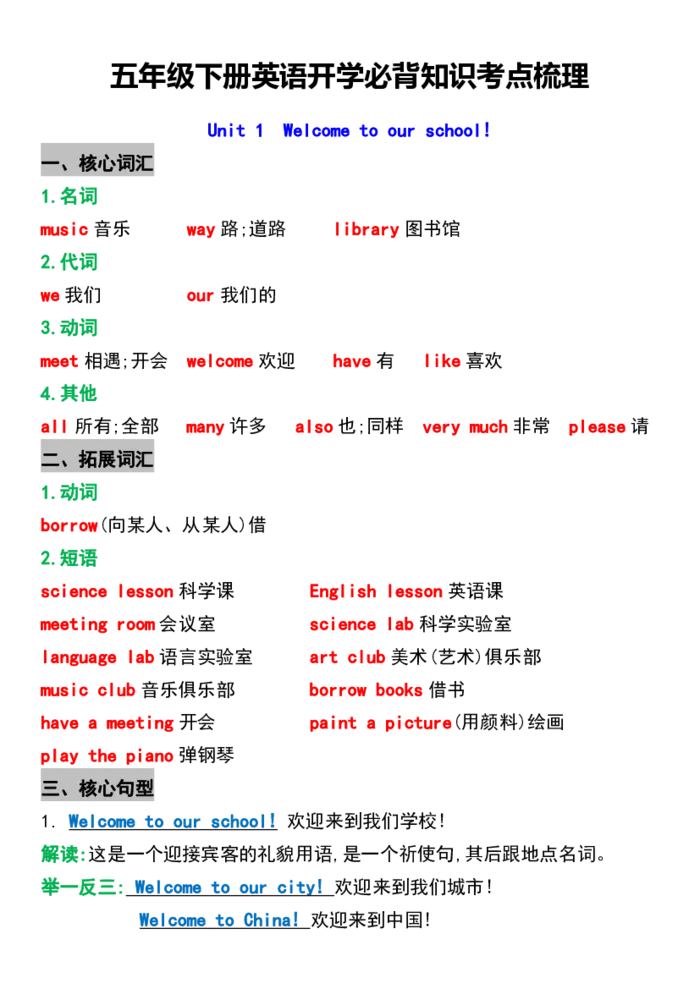
Unit 1
Welcome to our school!
一、核心词汇
1.名词
music 音乐
way 路;道路
library 图书馆
2.代词
we 我们
our 我们的
3.动词
meet 相遇;开会
welcome 欢迎
have 有
like 喜欢
4.其他
all 所有;全部
many 许多
also 也;同样
very much 非常
please 请
二、拓展词汇
1.动词
borrow(向某人、从某人)借
2.短语
science lesson 科学课
English lesson 英语课
meeting room 会议室
science lab 科学实验室
language lab 语言实验室
art club 美术(艺术)俱乐部
music club 音乐俱乐部
borrow books 借书
have a meeting 开会
paint a picture(用颜料)绘画
play the piano 弹钢琴
三、核心句型
1. Welcome to our school! 欢迎来到我们学校!
解读:这是一个迎接宾客的礼貌用语,是一个祈使句,其后跟地点名词。
举一反三: Welcome to our city! 欢迎来到我们城市!
Welcome to China! 欢迎来到中国!
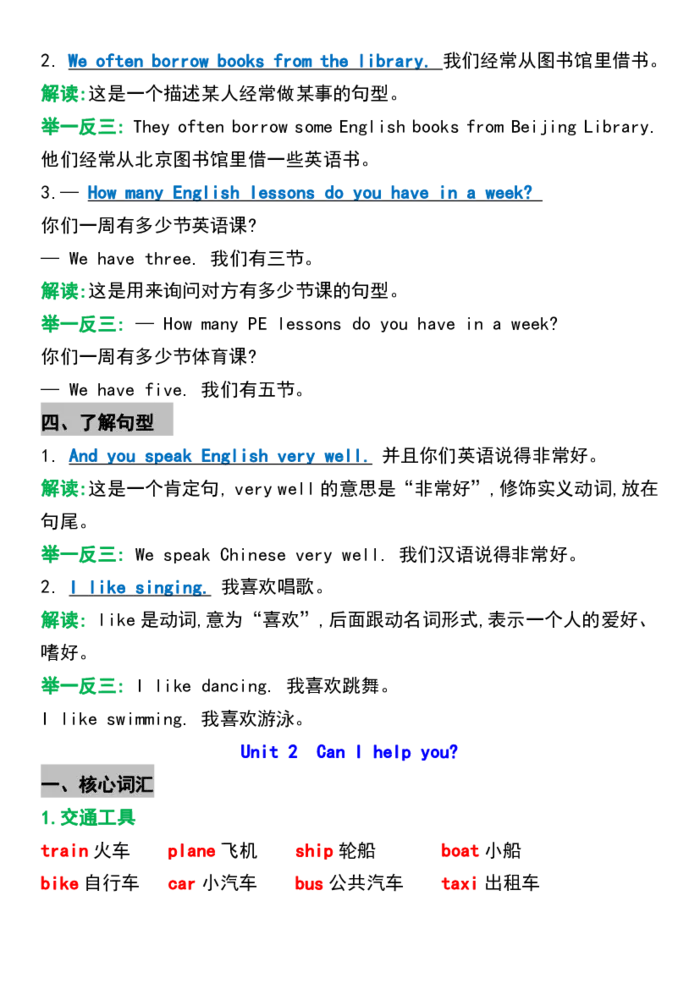
2. We often borrow books from the library. 我们经常从图书馆里借书。
解读:这是一个描述某人经常做某事的句型。
举一反三: They often borrow some English books from Beijing Library.
他们经常从北京图书馆里借一些英语书。
3.— How many English lessons do you have in a week?
你们一周有多少节英语课?
— We have three. 我们有三节。
解读:这是用来询问对方有多少节课的句型。
举一反三: — How many PE lessons do you have in a week?
你们一周有多少节体育课?
— We have five. 我们有五节。
四、了解句型
1. And you speak English very well. 并且你们英语说得非常好。
解读:这是一个肯定句, very well 的意思是“非常好”,修饰实义动词,放在
句尾。
举一反三: We speak Chinese very well. 我们汉语说得非常好。
2. I like singing. 我喜欢唱歌。
解读: like 是动词,意为“喜欢”,后面跟动名词形式,表示一个人的爱好、
嗜好。
举一反三: I like dancing. 我喜欢跳舞。
I like swimming. 我喜欢游泳。
Unit 2
Can I help you?
一、核心词汇
1.交通工具
train 火车
plane 飞机
ship 轮船
boat 小船
bike 自行车
car 小汽车
bus 公共汽车
taxi 出租车
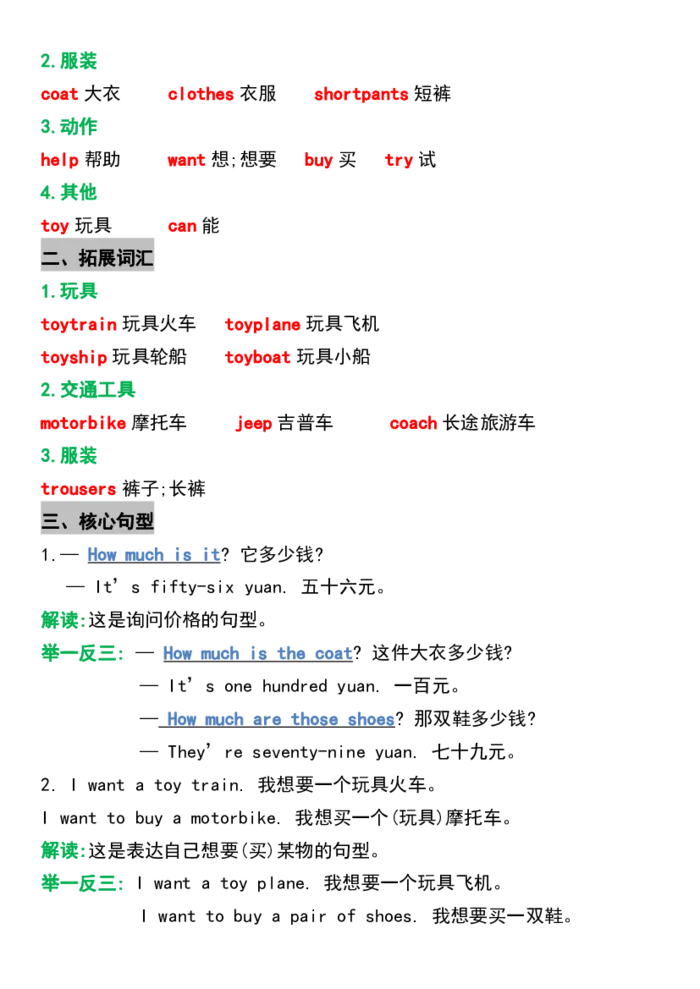
2.服装
coat 大衣
clothes 衣服
shortpants 短裤
3.动作
help 帮助
want 想;想要
buy 买
try 试
4.其他
toy 玩具
can 能
二、拓展词汇
1.玩具
toytrain 玩具火车
toyplane 玩具飞机
toyship 玩具轮船
toyboat 玩具小船
2.交通工具
motorbike 摩托车
jeep 吉普车
coach 长途旅游车
3.服装
trousers 裤子;长裤
三、核心句型
1.— How much is it? 它多少钱?
— It’s fifty-six yuan. 五十六元。
解读:这是询问价格的句型。
举一反三: — How much is the coat? 这件大衣多少钱?
— It’s one hundred yuan. 一百元。
— How much are those shoes? 那双鞋多少钱?
— They’re seventy-nine yuan. 七十九元。
2. I want a toy train. 我想要一个玩具火车。
I want to buy a motorbike. 我想买一个(玩具)摩托车。
解读:这是表达自己想要(买)某物的句型。
举一反三: I want a toy plane. 我想要一个玩具飞机。
I want to buy a pair of shoes. 我想要买一双鞋。
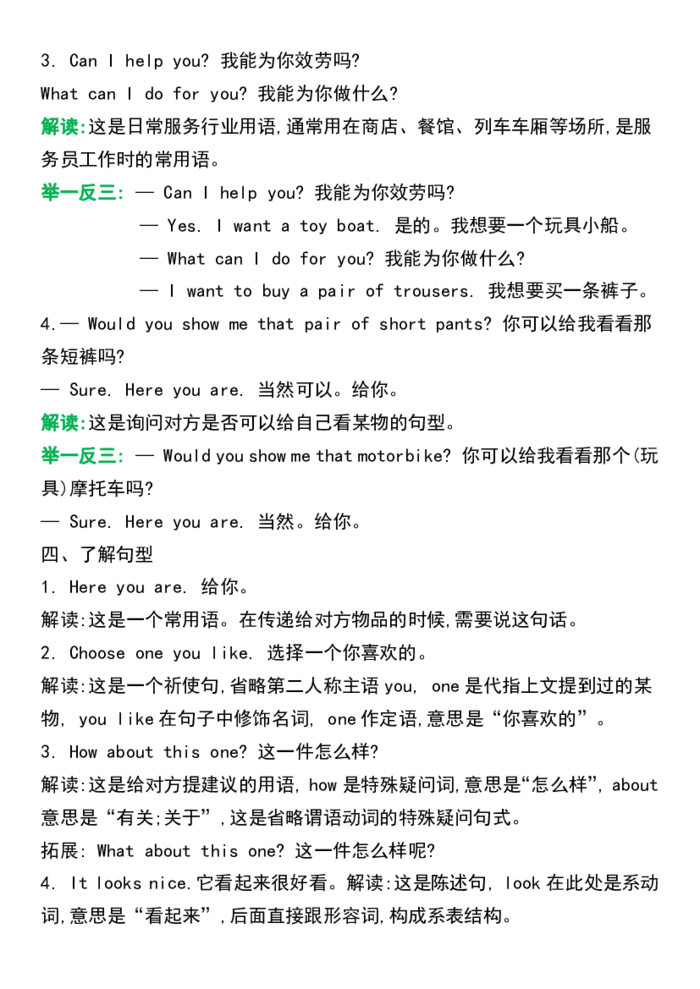
3. Can I help you? 我能为你效劳吗?
What can I do for you? 我能为你做什么?
解读:这是日常服务行业用语,通常用在商店、餐馆、列车车厢等场所,是服
务员工作时的常用语。
举一反三: — Can I help you? 我能为你效劳吗?
— Yes. I want a toy boat. 是的。我想要一个玩具小船。
— What can I do for you? 我能为你做什么?
— I want to buy a pair of trousers. 我想要买一条裤子。
4.— Would you show me that pair of short pants? 你可以给我看看那
条短裤吗?
— Sure. Here you are. 当然可以。给你。
解读:这是询问对方是否可以给自己看某物的句型。
举一反三: — Would you show me that motorbike? 你可以给我看看那个(玩
具)摩托车吗?
— Sure. Here you are. 当然。给你。
四、了解句型
1. Here you are. 给你。
解读:这是一个常用语。在传递给对方物品的时候,需要说这句话。
2. Choose one you like. 选择一个你喜欢的。
解读:这是一个祈使句,省略第二人称主语you, one 是代指上文提到过的某
物, you like 在句子中修饰名词, one 作定语,意思是“你喜欢的”。
3. How about this one? 这一件怎么样?
解读:这是给对方提建议的用语, how 是特殊疑问词,意思是“怎么样”, about
意思是“有关;关于”,这是省略谓语动词的特殊疑问句式。
拓展: What about this one? 这一件怎么样呢?
4. It looks nice.它看起来很好看。解读:这是陈述句, look 在此处是系动
词,意思是“看起来”,后面直接跟形容词,构成系表结构。
Unit 3
We should obey the rules.
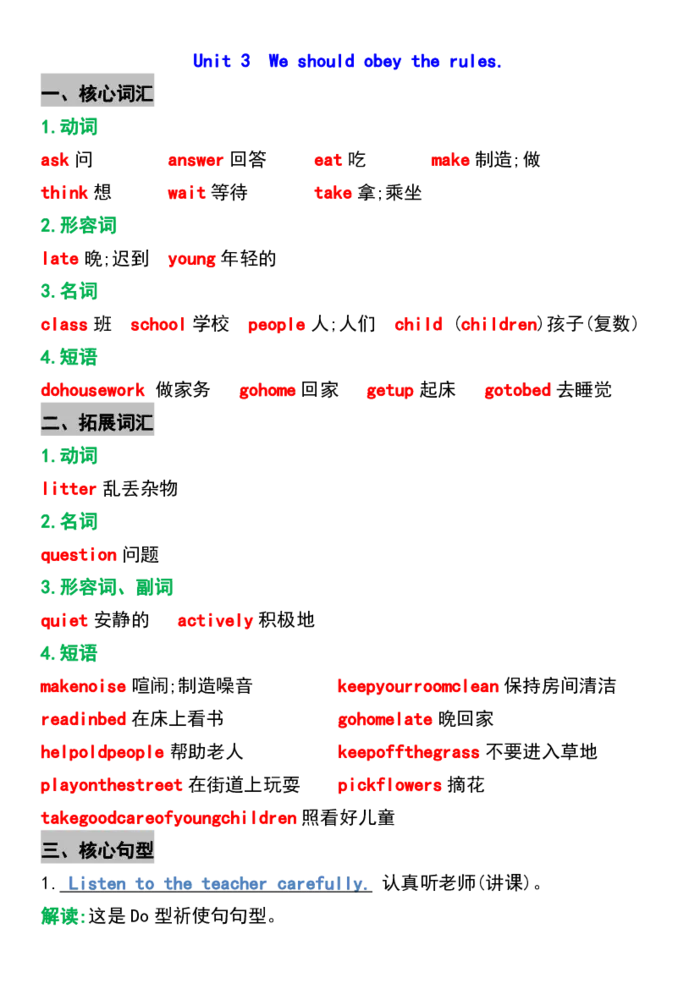
一、核心词汇
1.动词
ask 问
answer 回答
eat 吃
make 制造;做
think 想
wait 等待
take 拿;乘坐
2.形容词
late 晚;迟到
young 年轻的
3.名词
class 班
school 学校
people 人;人们
child (children)孩子(复数)
4.短语
dohousework 做家务
gohome 回家
getup 起床
gotobed 去睡觉
二、拓展词汇
1.动词
litter 乱丢杂物
2.名词
question 问题
3.形容词、副词
quiet 安静的
actively 积极地
4.短语
makenoise 喧闹;制造噪音
keepyourroomclean 保持房间清洁
readinbed 在床上看书
gohomelate 晚回家
helpoldpeople 帮助老人
keepoffthegrass 不要进入草地
playonthestreet 在街道上玩耍
pickflowers 摘花
takegoodcareofyoungchildren 照看好儿童
三、核心句型
1. Listen to the teacher carefully. 认真听老师(讲课)。
解读:这是Do 型祈使句句型。
举一反三: Put your English book on the desk. 把你的英语书放在课桌
的上面。
2. Don’t be late for class/school. 上课/上学不要迟到。
解读:这是否定祈使句句型。
举一反三: Don’t be late for our party. 我们的聚会你不要迟到。
3.You should go to bed early. 你应该早点儿去睡觉。
解读:这是表达某人应该做某事的句型。
举一反三: We should obey the school rules. 我们应该遵守学校规则。
4. You shouldn’t read in bed. 你不应该在床上看书。
解读:这是表达某人不应该做某事的句型。
举一反三: We shouldn’t go out to play now.我们现在不应该出去玩。
5. You must wait for the green light. 你应该等待绿灯。
解读:这是表达某人必须做某事的句型。
举一反三: We must hand in our homework on time. 我们必须按时交作业。
6. You mustn’t cross the street when the light is red. 红灯时,你
不能过马路。
解读:这是表达某人不允许做某事的句型。
举一反三: You mustn’t make noise in class. 在课堂上你不能喧闹。
四、了解句型
1. Hand in your homework on time. 准时交作业。
解读:这是一个Do 型祈使句。hand in 的意思是“上交”, on time 的意思
是“准时”。
2. Ask and answer questions actively. 积极提问和回答问题。
解读:这是一个Do 型祈使句。ask 和answer 是并列动作,故用and 连接。
3. He doesn’t like to do housework. 他不喜欢做家务。
解读:这是表达某人不喜欢做某事的句型。doesn’t 是does not 的缩略
形式,to do housework 是动词不定式短语,作目的状语。
4. He watches TV too often. 他看电视太频繁。
解读:这是一个陈述句。watches 是watch 的第三人称单数形式, too often
的意思是“太频繁”,副词too 修饰频度副词often。
Unit 5
I’m cleaning my room.
一、核心词汇
1.单词
stand 站立
sit 坐;坐下
cousin 表(堂)兄弟;表(堂)姐妹
2.动词短语
makeacall 打电话
writeanemail 写电子邮件
washtheclothes 洗衣服
cleantheroom 打扫房间
tellastory 讲故事
singasong 唱歌
lookatthepicture 看图片
talkabout 谈论……
二、拓展词汇
短语
playtheguitar 弹吉他
playtheviolin 拉小提琴
三、核心句型
1.I’m cleaning the room. 我正在打扫房间。
解读:这是表达自己正在做某事的句型。
举一反三: I’m playing the violin. 我正在拉小提琴。
I’m watching TV. 我正在看电视。
2.Dad is writing an email. 爸爸正在写电子邮件。
Mum is washing the clothes. 妈妈正在洗衣服。
解读:此句是表达某人正在做某事的句型。
举一反三: Kate is telling a story. 凯特正在讲故事。
Alice is playing games on the computer. 艾丽斯正在电脑上玩儿游戏。
3.— What are you doing, Peter? 你正在做什么,彼得?
— I’m telling a story. 我正在讲故事。
— What’s Li Yan doing? 李艳正在做什么?
— She’s singing a song. 她正在唱歌。
解读:这是询问对方或某个人正在做什么的句型。
举一反三: — What are you doing, Tim? 你正在做什么,蒂姆?
— I’m writing an email.我正在写电子邮件。
4.— Are you looking at this picture? 你正在看图片吗?
— Yes, I am. 是的,我正在看。
— No, I’m not. 不,我没在看。
解读: 这是询问对方是否正在做某事的句型。
举一反三: — Are you cleaning the room? 你正在打扫房间吗?
— Yes, I am./No, I’m not. 是的,我正在打扫。/不,我没在打扫。
5.— Is he looking at the moon? 他正在看月亮吗?
— No, he isn’t. He’s looking at the sun.不,他没在看。他正在看太
阳。
解读:这是询问他人是否正在做某事的句型。
举一反三:— Is Tom playing the guitar? 汤姆正在弹吉他吗?
— No, he isn’t. He is playing the violin. 不,他没在弹。他正在拉
小提琴。
四、了解句型
1. — Can I speak to Grandpa? 我可以和爷爷讲话吗?
— Yes. Hold on, please. 好的。请稍等。
解读:这是打电话用语。如果要找的人不在身边时,接电话的人可以说,“Hold
on, please.”
2. Are you coming here with your parents this morning? 今天上午你
和你的父母一起来这里吗?
解读: come 的意思是“来”,是短暂性动词。be coming 表示“将要来”但
还没有来的意思。this 后面跟时间名词,如: this afternoon 今天下午, this
evening 今天晚上, this week 这一周, this month 这个月, this year 这
一年。
Unit 6
We’re watching the games.
一、核心词汇
1.简称
Miss 小姐
Ms 女士
Mr 先生
Mrs 太太
2.球类
football 足球
basketball 篮球
3.其他
watch 观看
foot(feet)脚(复数)
playground 操场
favourite 最喜欢的
sport 运动
run 跑;跑步
game 比赛;游戏
4.动词短语
highjump 跳高
longjump 跳远
二、拓展词汇
动词短语
playfootball 踢足球
playvolleyball 打排球
playbasketball 打篮球
watchthegames 观看比赛
playbadminton 打羽毛球
playtennis 打网球
playping-pong 打乒乓球
playbaseball 打棒球
dothehighjump 跳高
dothelongjump 跳远
runfast 跑得快
三、核心句型
1. We’re watching the games. 我们正在观看比赛。
解读:这是一个主语是复数的现在进行时态的句型。
举一反三: We are playing the violin. 我们正在拉小提琴。
2.— What are you doing? 你们正在做什么?
— We’re playing ping-pong. 我们正在打乒乓球。
解读:这是一个现在进行时态的特殊疑问句型。
举一反三: — What are they doing? 他们正在做什么?
— They are playing football. 他们正在踢足球。
3.— Are you watching the high jump? 你们正在观看跳高吗?
— Yes, we are. 是的,我们正在看跳高。
解读:这是现在进行时态的一般疑问句型。
举一反三: — Are you running? 你正在跑吗?
— No, I am not. 不,我没在跑。
4.— Are they doing the high jump, too? 他们也正在跳高吗?
— No, they aren’t. 不,他们没在跳高。
解读:这是一个主语是复数的一般疑问句型。
举一反三: — Are they playing chess? 他们正在下棋吗?
— No, they aren’t. They are playing badminton. 不,他们没在下棋。
他们正在打羽毛球。
四、了解句型
1. Let’s go and watch the games on the playground. 我们去操场观看
比赛吧。
解读:这是省略第二人称的祈使句。let’s 是let us 的缩略式,意思是“让
我们”。
2. How about those boys? 那些男孩们怎么样?
解读:这是一个省略谓语动词的句型。how 是特殊疑问词,意思是“怎么样”,
how about 后面跟名词短语,意思是某人有关上文提到的事情怎么样。