文档文本内容
第五周星期二
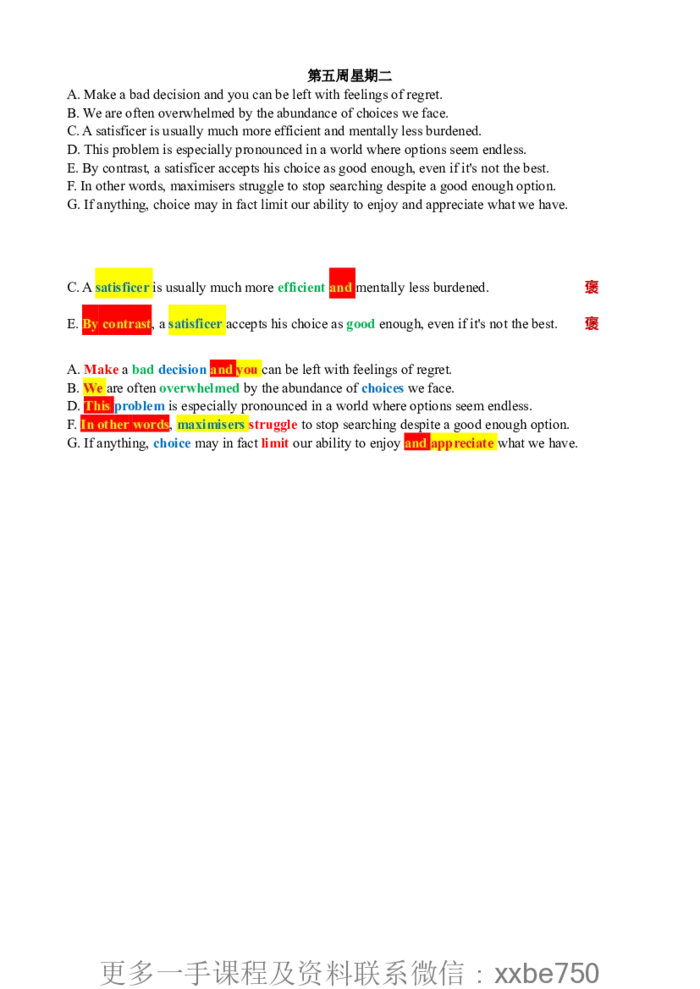
A. Make a bad decision and you can be left with feelings of regret.
B. We are often overwhelmed by the abundance of choices we face.
C. A satisficer is usually much more efficient and mentally less burdened.
D. This problem is especially pronounced in a world where options seem endless.
E. By contrast, a satisficer accepts his choice as good enough, even if it's not the best.
F. In other words, maximisers struggle to stop searching despite a good enough option.
G. If anything, choice may in fact limit our ability to enjoy and appreciate what we have.
C. A satisficer is usually much more efficient and mentally less burdened.
褒
E. By contrast, a satisficer accepts his choice as good enough, even if it's not the best.
褒
A. Make a bad decision and you can be left with feelings of regret.
B. We are often overwhelmed by the abundance of choices we face.
D. This problem is especially pronounced in a world where options seem endless.
F. In other words, maximisers struggle to stop searching despite a good enough option.
G. If anything, choice may in fact limit our ability to enjoy and appreciate what we have.
更多一手课程及资料联系微信:xxbe750
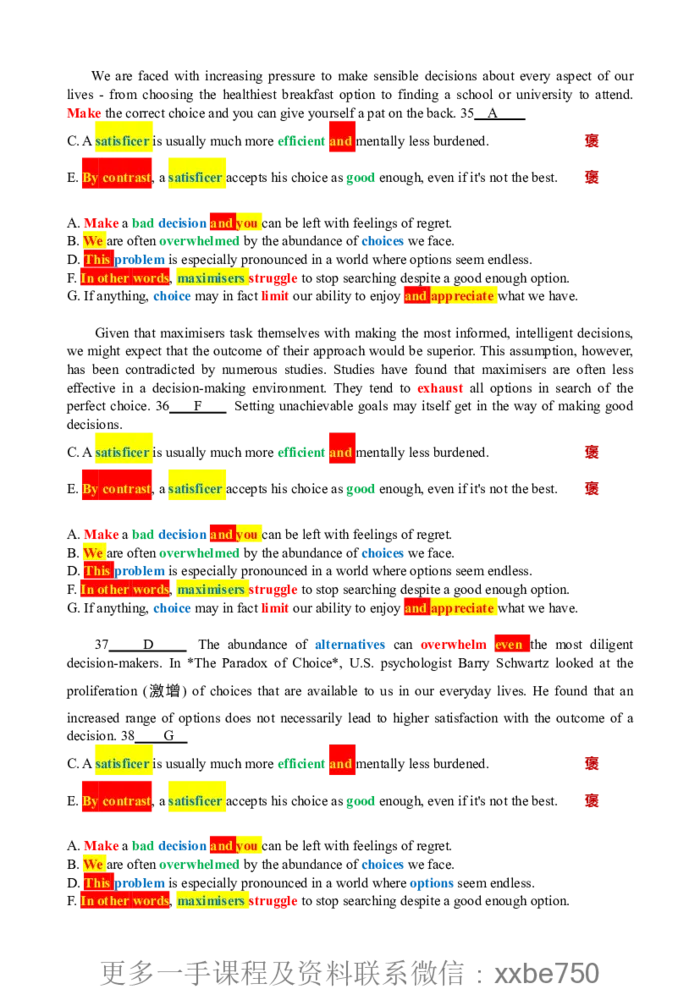
We are faced with increasing pressure to make sensible decisions about every aspect of our
lives - from choosing the healthiest breakfast option to finding a school or university to attend.
Make the correct choice and you can give yourself a pat on the back. 35
A
C. A satisficer is usually much more efficient and mentally less burdened.
褒
E. By contrast, a satisficer accepts his choice as good enough, even if it's not the best.
褒
A. Make a bad decision and you can be left with feelings of regret.
B. We are often overwhelmed by the abundance of choices we face.
D. This problem is especially pronounced in a world where options seem endless.
F. In other words, maximisers struggle to stop searching despite a good enough option.
G. If anything, choice may in fact limit our ability to enjoy and appreciate what we have.
Given that maximisers task themselves with making the most informed, intelligent decisions,
we might expect that the outcome of their approach would be superior. This assumption, however,
has been contradicted by numerous studies. Studies have found that maximisers are often less
effective in a decision-making environment. They tend to exhaust all options in search of the
perfect choice. 36
F
Setting unachievable goals may itself get in the way of making good
decisions.
C. A satisficer is usually much more efficient and mentally less burdened.
褒
E. By contrast, a satisficer accepts his choice as good enough, even if it's not the best.
褒
A. Make a bad decision and you can be left with feelings of regret.
B. We are often overwhelmed by the abundance of choices we face.
D. This problem is especially pronounced in a world where options seem endless.
F. In other words, maximisers struggle to stop searching despite a good enough option.
G. If anything, choice may in fact limit our ability to enjoy and appreciate what we have.
37
D
The abundance of alternatives can overwhelm even the most diligent
decision-makers. In *The Paradox of Choice*, U.S. psychologist Barry Schwartz looked at the
proliferation (激增) of choices that are available to us in our everyday lives. He found that an
increased range of options does not necessarily lead to higher satisfaction with the outcome of a
decision. 38
G
C. A satisficer is usually much more efficient and mentally less burdened.
褒
E. By contrast, a satisficer accepts his choice as good enough, even if it's not the best.
褒
A. Make a bad decision and you can be left with feelings of regret.
B. We are often overwhelmed by the abundance of choices we face.
D. This problem is especially pronounced in a world where options seem endless.
F. In other words, maximisers struggle to stop searching despite a good enough option.
更多一手课程及资料联系微信:xxbe750
G. If anything, choice may in fact limit our ability to enjoy and appreciate what we have.
事实
上
Maximisers tend to experience a sense of "buyer's regret" following a decision, doubting
whether it was correct, and imagining how life would have been had they chosen a different path.
39
E
While a maximising approach might seem an optimal approach to decision-making,
our energy may be better spent satisficing and appreciating what we have, rather than what we
might have had.
C. A satisficer is usually much more efficient and mentally less burdened.
褒
E. By contrast, a satisficer accepts his choice as good enough, even if it's not the best.
褒
A. Make a bad decision and you can be left with feelings of regret.
B. We are often overwhelmed by the abundance of choices we face.
D. This problem is especially pronounced in a world where options seem endless.
F. In other words, maximisers struggle to stop searching despite a good enough option.
G. If anything, choice may in fact limit our ability to enjoy and appreciate what we have.
更多一手课程及资料联系微信:xxbe750