文档文本内容
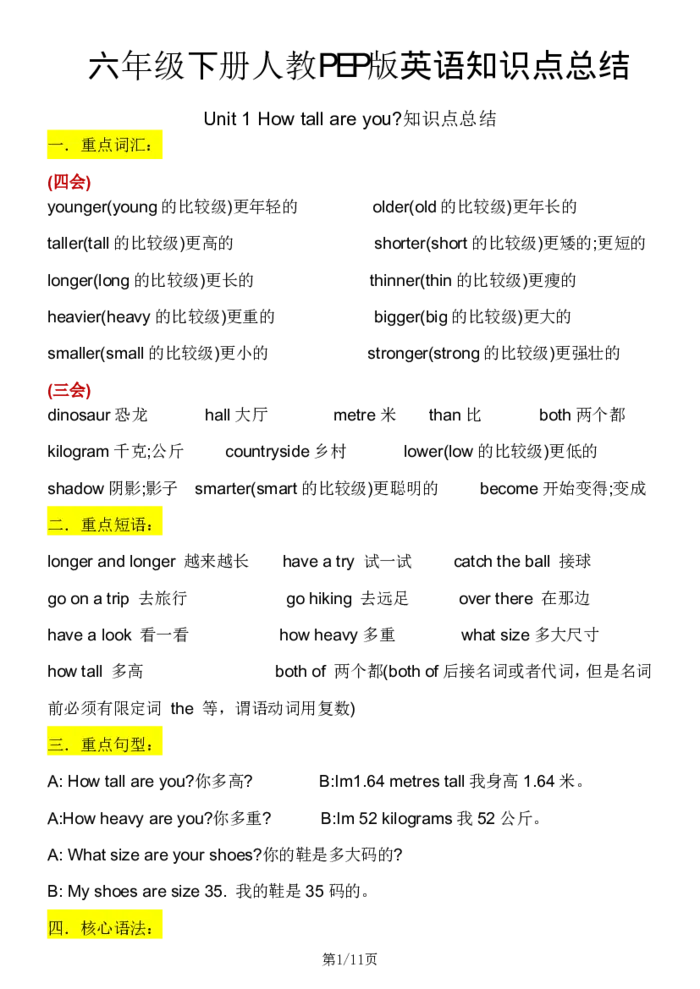
Unit 1 How tall are you?知识点总结
dinosaur 恐龙
hall 大
older(old 的比较级)更年长的
shorter(short 的比较级)更矮的;更短的
thinner(thin 的比较级)更瘦的
bigger(big 的比较级)更大的
stronger(strong 的比较级)更强壮的
厅
metre 米
than 比
both 两个都
kilogram 千克;公斤
countryside 乡村
lower(low 的比较级)更低的
shadow 阴影;影子
smarter(smart 的比较级)更聪明的
become 开始变得;变成
二.重点短语:
longer and longer 越来越长
have a try 试一试
catch the ball 接球
go on a trip 去旅行
go hiking 去远足
over there 在那边
have a look 看一看
how heavy 多重
what size 多大尺寸
how tall 多高
both of 两个都(both of 后接名词或者代词,但是名词
前必须有限定词the 等,谓语动词用复数)
三.重点句型:
A: How tall are you?你多高?
B:Im1.64 metres tall 我身高1.64 米。
A:How heavy are you?你多重?
B:Im 52 kilograms 我52 公斤。
A: What size are your shoes?你的鞋是多大码的?
B: My shoes are size 35. 我的鞋是35 码的。
四.核心语法:
younger(young 的比较级)更年轻的
taller(tall 的比较级)
一.重点词汇:
(四会)
更高的
longer(long 的比较级)更长的
heavier(heavy 的比较级)更重的
smaller(small 的比较级)更小的
(三会
六年级下册人教PEP版英语知识点总结
)
第1/11页
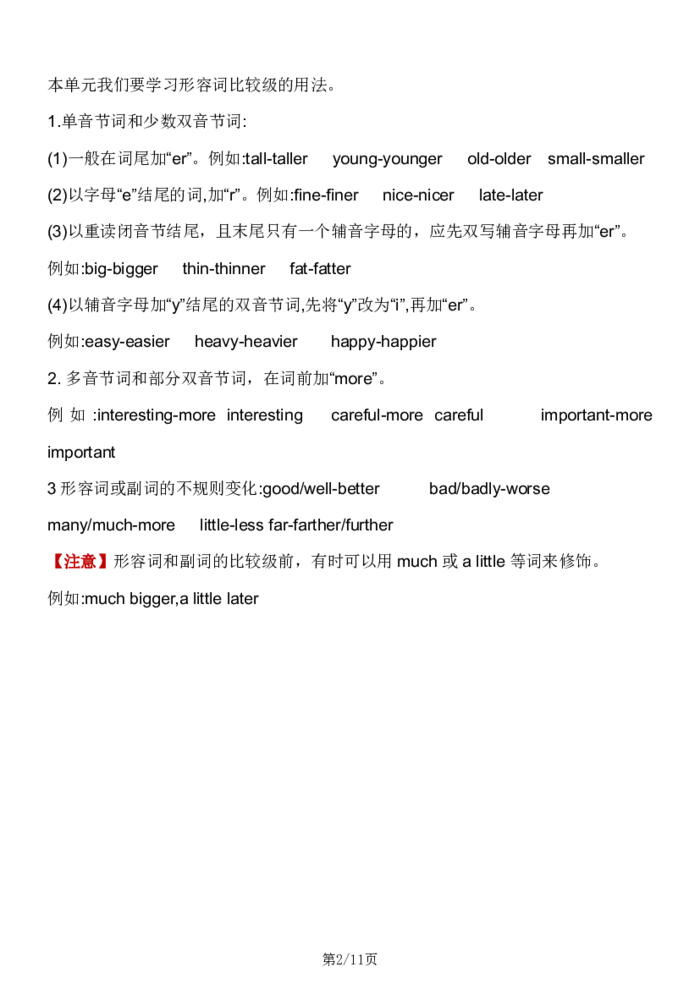
本单元我们要学习形容词比较级的用法。
1.单音节词和少数双音节词:
(1)一般在词尾加“er”。例如:tall-taller
young-younger
old-older
small-smaller
(2)以字母“e”结尾的词,加“r”。例如:fine-finer
nice-nicer
late-later
(3)以重读闭音节结尾,且末尾只有一个辅音字母的,应先双写辅音字母再加“er”。
例如:big-bigger
thin-thinner
fat-fatter
(4)以辅音字母加“y”结尾的双音节词,先将“y”改为“i”,再加“er”。
例如:easy-easier
heavy-heavier
happy-happier
2. 多音节词和部分双音节词,在词前加“more”。
例如:interesting-more interesting
careful-more careful
important-more
important
3 形容词或副词的不规则变化:good/well-better
bad/badly-worse
many/much-more
little-less far-farther/further
【注意】形容词和副词的比较级前,有时可以用much 或a little 等词来修饰。
例如:much bigger,a little later
第2/11页
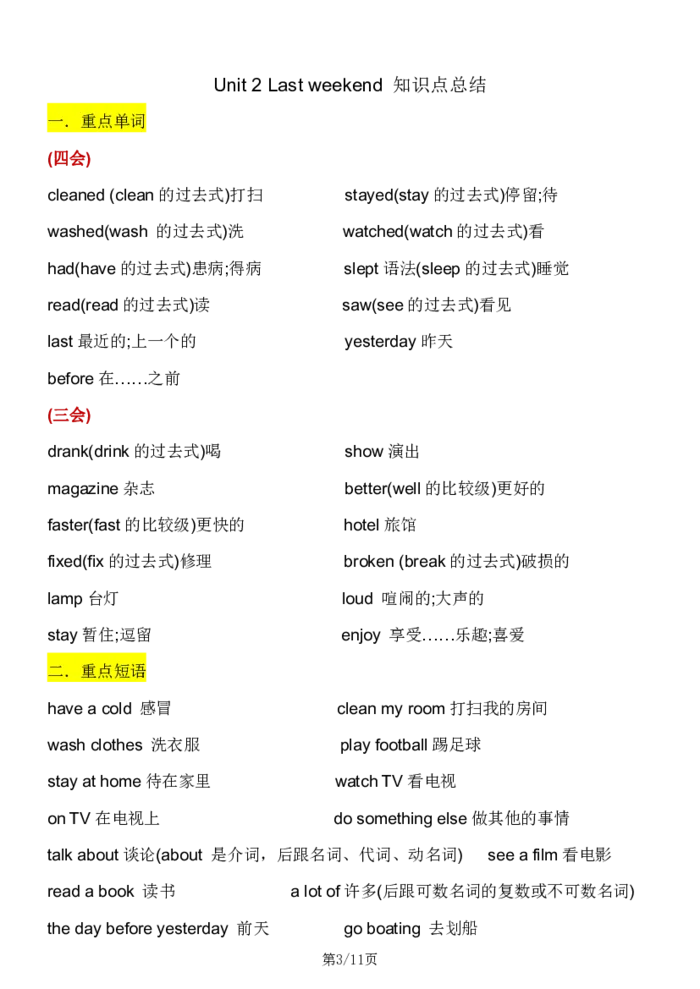
Unit 2 Last weekend 知识点总结
一.重点单词
(四会)
cleaned (clean 的过去式)打扫
stayed(stay 的过去式)停留;待
washed(wash 的过去式)洗
watched(watch 的过去式)看
had(have 的过去式)患病;得病
slept 语法(sleep 的过去式)睡觉
read(read 的过去式)读
saw(see 的过去式)看见
last 最近的;上一个的
yesterday 昨天
before 在……之前
(三会)
drank(drink 的过去式)喝
show 演出
magazine 杂志
better(well 的比较级)更好的
faster(fast 的比较级)更快的
hotel 旅馆
fixed(fix 的过去式)修理
broken (break 的过去式)破损的
lamp 台灯
loud 喧闹的;大声的
stay 暂住;逗留
enjoy 享受……乐趣;喜爱
二.重点短语
have a cold 感冒
clean my room 打扫我的房间
wash clothes 洗衣服
play football 踢足球
stay at home 待在家里
watch TV 看电视
on TV 在电视上
do something else 做其他的事情
talk about 谈论(about 是介词,后跟名词、代词、动名词)
see a film 看电影
read a book 读书
a lot of 许多(后跟可数名词的复数或不可数名词)
the day before yesterday 前天
go boating 去划船
第3/11页
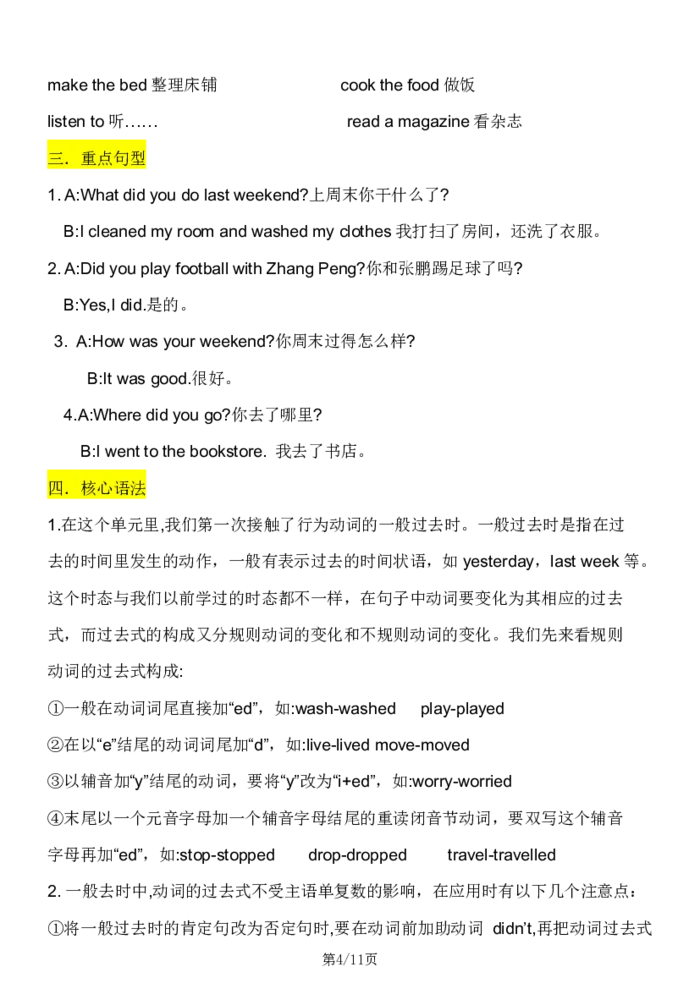
make the bed 整理床铺
cook the food 做饭
listen to 听……
read a magazine 看杂志
三.重点句型
1. A:What did you do last weekend?上周末你干什么了?
B:I cleaned my room and washed my clothes 我打扫了房间,还洗了衣服。
2. A:Did you play football with Zhang Peng?你和张鹏踢足球了吗?
B:Yes,I did.是的。
3. A:How was your weekend?你周末过得怎么样?
B:It was good.很好。
4.A:Where did you go?你去了哪里?
B:I went to the bookstore. 我去了书店。
四.核心语法
1.在这个单元里,我们第一次接触了行为动词的一般过去时。一般过去时是指在过
去的时间里发生的动作,一般有表示过去的时间状语,如yesterday,last week 等。
这个时态与我们以前学过的时态都不一样,在句子中动词要变化为其相应的过去
式,而过去式的构成又分规则动词的变化和不规则动词的变化。我们先来看规则
动词的过去式构成:
①一般在动词词尾直接加“ed”,如:wash-washed
play-played
②在以“e”结尾的动词词尾加“d”,如:live-lived move-moved
③以辅音加“y”结尾的动词,要将“y”改为“i+ed”,如:worry-worried
④末尾以一个元音字母加一个辅音字母结尾的重读闭音节动词,要双写这个辅音
字母再加“ed”,如:stop-stopped
drop-dropped
travel-travelled
2. 一般去时中,动词的过去式不受主语单复数的影响,在应用时有以下几个注意点:
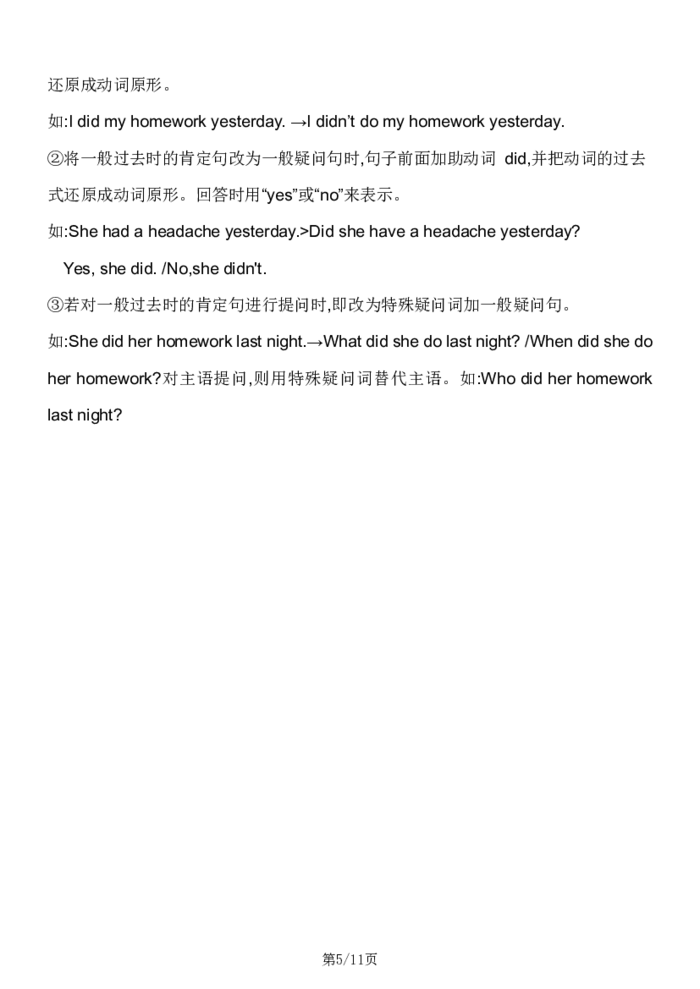
①将一般过去时的肯定句改为否定句时,要在动词前加助动词didn’t,再把动词过去式
第4/11页
还原成动词原形。
如:I did my homework yesterday. →I didn’t do my homework yesterday.
②将一般过去时的肯定句改为一般疑问句时,句子前面加助动词did,并把动词的过去
式还原成动词原形。回答时用“yes”或“no”来表示。
如:She had a headache yesterday.>Did she have a headache yesterday?
Yes, she did. /No,she didn't.
③若对一般过去时的肯定句进行提问时,即改为特殊疑问词加一般疑问句。
如:She did her homework last night.→What did she do last night? /When did she do
her homework?对主语提问,则用特殊疑问词替代主语。如:Who did her homework
last night?
第5/11页
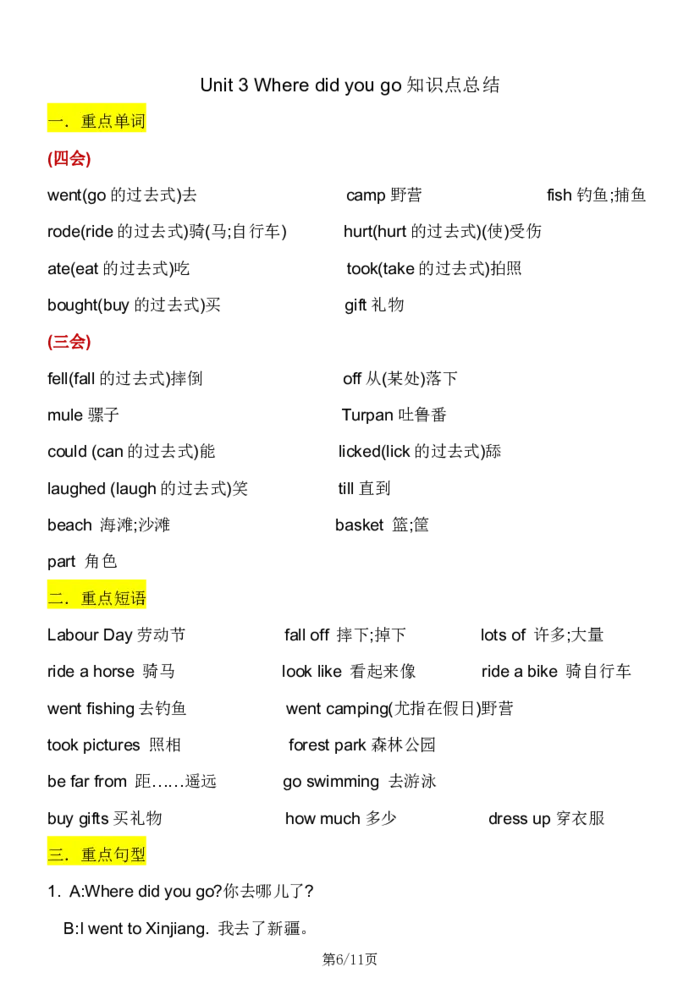
Unit 3 Where did you go 知识点总结
一.重点单词
(四会)
went(go 的过去式)去
camp 野营
fish 钓鱼;捕鱼
rode(ride 的过去式)骑(马;自行车)
hurt(hurt 的过去式)(使)受伤
ate(eat 的过去式)吃
took(take 的过去式)拍照
bought(buy 的过去式)买
gift 礼物
(三会)
fell(fall 的过去式)摔倒
off 从(某处)落下
mule 骡子
Turpan 吐鲁番
could (can 的过去式)能
licked(lick 的过去式)舔
laughed (laugh 的过去式)笑
till 直到
beach 海滩;沙滩
basket 篮;筐
part 角色
二.重点短语
Labour Day 劳动节
fall off 摔下;掉下
lots of 许多;大量
ride a horse 骑马
look like 看起来像
ride a bike 骑自行车
went fishing 去钓鱼
went camping(尤指在假日)野营
took pictures 照相
forest park 森林公园
be far from 距……遥远
go swimming 去游泳
buy gifts 买礼物
how much 多少
dress up 穿衣服
三.重点句型
1. A:Where did you go?你去哪儿了?
B:I went to Xinjiang. 我去了新疆。
第6/11页
2. A:How did you go there?你怎么去那儿的?
B:I went by train.我乘火车去的。
3. A:Who did you go with?你和谁去的?
B: My parents and my uncle. 我的父母和叔叔。
4. A:What did you do there?你在那里干了什么?
B:I rode a bike. 我骑了自行车。
5. A:What happened?发生了什么?
B:I fell off my bike. 我从自行车上掉下来了。
四.核心语法
1.在第二单元里我们已学了规则动词的过去式的变化,还学了一般过去时句型的构成
现在我们还要学一学不规则动词的过去式,从中可以找到一些记忆的规律:
come-came
sleep-slept
get-got
run-ran
sweep-swept
ride-rode
sit-sat
take-took
write-wrote sing-sang
stand-stood
go-went
ring-rang
understand-understood
do-did
swim-swam
throw-threw
还有的动词过去式与它的原形一模一样,但读音可能会有变化。
如:hurt-hurt
cut-cut
read-read[red]
hit-hit
put-put
2. 有一些特定的时间状语表示过去的时间,可用于一般过去时态中。
如:last night 昨天晚上in2004 在2004 年ten days ago 十天前
this morning 今天早上(相对说话人所处的时间而言)
第7/11页
Unit 4 Then and now 知识点总结
一.重点单词
(四会)
grass 草坪
gym 体育馆
ago 以前
cycling 骑自行车运动(或活动)
ice-skate 滑冰
badminton 羽毛球运动
(三会)
star 星
easy 容易的
Internet 互联网
different 不同的
active 积极的;活跃的
race 赛跑
nothing 没有什么
thought(think 的过去式)想
felt(feel 的过去式)感觉
cheetah 猎豹
trip 绊倒
woke(wake 的过去式)醒
dream 梦
二.重点短语
dining hall 饭厅
not... at all 一点也不;根本不
a little 有一点
get there 到达那里
go cycling 去骑自行车
look up 查阅
Play badminton 打羽毛球
have a race 举行比赛
Dream about 梦到……
wake up 醒来
wash the dishes 洗碗碟
三.重点句型
1. There was no library in my old school.我以前的学校里没有图书馆。
2. Tell us about your school,please 请给我们讲讲您的学校吧。
3. How do you know that?你是怎么知道的?
4. There were no computers or Internet in my time 我那时没有电脑也没有网络。
5. Before,I was quiet. Now,I'm very active in class.
以前,我很安静。现在,我在课堂上很活跃。
第8/11页
6. I was short,so I couldn’t ride my bike well. Now I go cycling every day
我以前个子小,骑自行车骑得不好。现在我天天骑车。
四.核心语法
there be 句型
there be 句型表示的是“某处有(存在)某人或某物”,其结构为“There be(is,are,was
were)+名词+地点状语”。
例如:There are fifty-two students in our class. 我们班有52 个学生。
There is a pencil in my pencil case. 我的铅笔盒里有一支铅笔。
There was an old house by the river five years ago.五年前河边有一间旧房子。
否定句:there be 句型否定句式的构成和含有be 动词的其他句型一样,在be 动词后
加
上“not”;也可用“no”来表示,即no+n=not a/an/any+n.
注意:no+可数名词单数=not a/an+可数名词单数;
no+可数名词复数=not any+可数名词复数;
no+不可数名词=not any+不可数名词。
例如:There is an orange in her bag.她的包里有一个橙子。
There isn't an orange in her bag.她的包里没有橙子。
There are some oranges in her bag.她的包里有一些橙子。
There aren't any oranges in her bag.她的包里没有橙子。
第9/11页
Recycle Mike’s happy days 知识点总结
一.重点单词
pear 梨
jacket 夹克衫
egg 鸡蛋
orange 橙子
umbrella 雨伞
horse 马
tomato 西红柿
market 超市
shopping 购物
music 音乐
busy 忙碌的
finally 最后
another 另一个
favourite 最喜欢的
best 最好的
difficult 困难的
candy 糖果
basketball 篮球
swim 游泳
cheese 奶酪
storybook 故事书
farewell 告别
fresh 新鲜的
plate 盘子
dance 跳舞
knife 小刀
bread 面包
fork 叉子
prize 奖品
paint 画画
balloon 气球
二.重点短语
skip rope 跳绳
shopping list 购物单
how much 多少
go fishing 去钓鱼
do the cleaning 打扫卫生
have fun 玩得高兴
get up 起床
turn... over 反过来
speak English 说英语
play the piano 弹钢琴
music class 音乐课
be good at 擅长
middle school 中学
draw pictures 画画
good luck 好运
keep in touch 保持联系
take care 当心;小心
write soon 尽快写信
have a good trip 旅途快乐
三.重点句型
1. Bill is playing ping-pong.比尔正在打乒乓球。
2. In the morning,I got up early 早晨我起得很早。
3. I go to school from Monday to Friday.周一到周五我去上学。
4. His favourite class is English. 他最喜欢的课是英语课。
5.It's time to leave our school.到了我们离开学校的时间了。
第10/11页
6. We will say goodbye to each other.我们将互相告别。
7. Thank you for your invitation.谢谢你的邀请。
四.核心语法
在这个单元中,我们将复习三年级至六年级中所学过的语法,如一般现在时、
be going to、现在进行时,will 引导的一般将来时等。
如:We are going to have a farewell party.我们将要举行一个告别会。
We will draw pictures and sing songs. 我们将要画画、唱歌。
He goes fishing. 他去钓鱼。
Bill is playing ping-pong. 比尔正在打乒乓球。
第11/11页