 夜雨聆风
夜雨聆风


源码走读:Dubbo如何进行服务启动预热?
在分布式架构中,当下游服务端刚启动时,可能并不能承载上游瞬间大流量过来。通过warmup的机制,客户端可以根据下游服务端启动时间进行缓慢预热配比放量。而dubbo就通过注册启动时间戳的方式告知调用方自己的启动时间,客户端则据此进行预热配比放量,避免对服务端造成重启!
这篇文章承接上一篇Dubbo如何实现基于http的jsonrpc调用展开。上篇中介绍了关于Dubbo中如何对jsonrpc进行http调用,最后我们提到了Dubbo默认的集群容错模式是failover。看下边这个图中即将执行的方法:
org.apache.dubbo.rpc.cluster.support.FailoverClusterInvoker#doInvoke
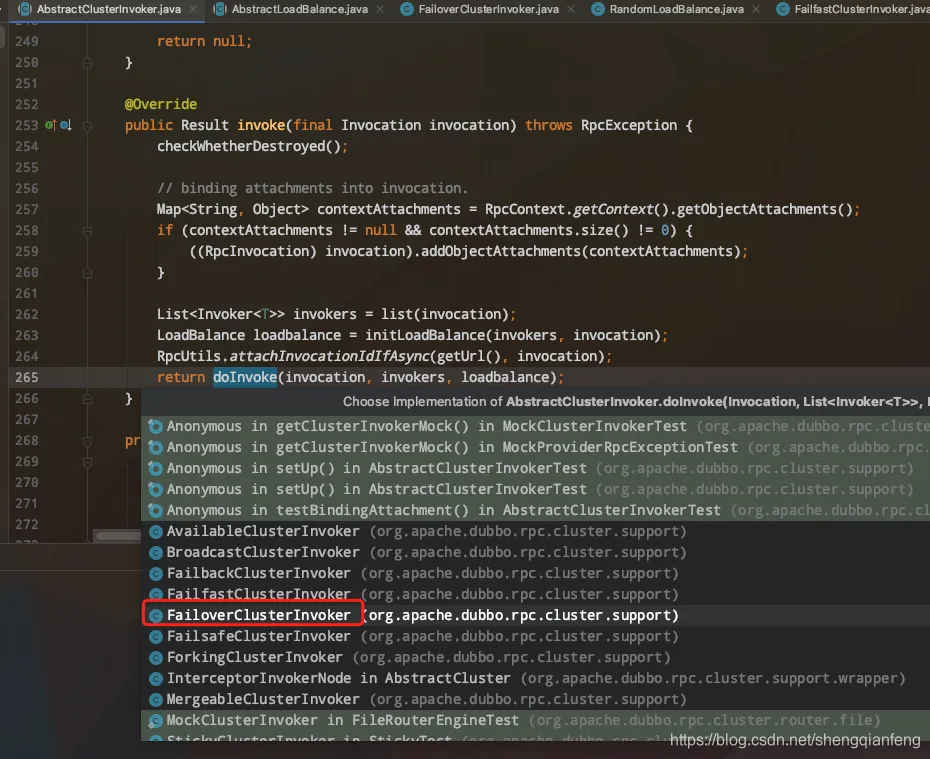
当进入 FailoverClusterInvoker#doInvoke方法中会执行到下边这行,它用于选择目标节点的invoker对象。我们就重点分析下这个invoker是怎么来的?
//FailoverClusterInvoker.java Invoker<T> invoker = select(loadbalance, invocation, copyInvokers, invoked);我们只选取关键代码:
//FailoverClusterInvoker.javaprotected Invoker<T> select(LoadBalance loadbalance, Invocation invocation, List<Invoker<T>> invokers, List<Invoker<T>> selected) throws RpcException { ..... Invoker<T> invoker = doSelect(loadbalance, invocation, invokers, selected); ... return invoker;}而这里的doSlelect方法中又紧接着调用了loadbalance#select方法:
//AbstractClusterInvoker#doSelectprivate Invoker<T> doSelect(LoadBalance loadbalance, Invocation invocation, List<Invoker<T>> invokers, List<Invoker<T>> selected) throws RpcException { ...... Invoker<T> invoker = loadbalance.select(invokers, getUrl(), invocation); .... return invoker;}这里的select方法就是由它的抽象类AbstractLoadBalance.java类提供:
//AbstractLoadBalance#select @Override public <T> Invoker<T> select(List<Invoker<T>> invokers, URL url, Invocation invocation) { if (CollectionUtils.isEmpty(invokers)) { return null; } if (invokers.size() == 1) { return invokers.get(0); } return doSelect(invokers, url, invocation); } protected abstract <T> Invoker<T> doSelect(List<Invoker<T>> invokers, URL url, Invocation invocation);可以看到里边有一个模板方法doSelect(这里使用了模板模式)。具体实现由子类提供,那么AbstractLoadBalance的子类有哪些呢?
在dubbo cluster模块的org.apache.dubbo.rpc.cluster.loadbalance包下有如下5种:
①ConsistentHashLoadBalance②LeastActiveLoadBalance③RandomLoadBalance④RoundRobinLoadBalance⑤ShortestResponseLoadBalance
这里我们找一个最简单的看一下,比如这里的随机负载均衡算法RandomLoadBalance:
/** * Select one invoker between a list using a random criteria * @param invokers List of possible invokers * @param url URL * @param invocation Invocation * @param <T> * @return The selected invoker */ @Override protected <T> Invoker<T> doSelect(List<Invoker<T>> invokers, URL url, Invocation invocation) { // Number of invokers int length = invokers.size(); // Every invoker has the same weight? boolean sameWeight = true; // the maxWeight of every invokers, the minWeight = 0 or the maxWeight of the last invoker int[] weights = new int[length]; // The sum of weights int totalWeight = 0; for (int i = 0; i < length; i++) { //获取下游服务权重 int weight = getWeight(invokers.get(i), invocation); // Sum totalWeight += weight; // save for later use weights[i] = totalWeight; if (sameWeight && totalWeight != weight * (i + 1)) { sameWeight = false; } } if (totalWeight > 0 && !sameWeight) { // If (not every invoker has the same weight & at least one invoker's weight>0), select randomly based on totalWeight. int offset = ThreadLocalRandom.current().nextInt(totalWeight); // Return a invoker based on the random value. for (int i = 0; i < length; i++) { if (offset < weights[i]) { return invokers.get(i); } } } // If all invokers have the same weight value or totalWeight=0, return evenly. return invokers.get(ThreadLocalRandom.current().nextInt(length)); }这是带权重的随机算法,使用int数组weights来存储不同下游节点的权重值,长度自然就是下游节点的个数。最后在从invokers列表选择invoker的时候,通过计算总权重的随机offset位移值来获取invoker。
int offset = ThreadLocalRandom.current().nextInt(totalWeight);看注释可以知道,这是为了防止invokers列表中所有invoker的权重weight值之和小于等于0的情况,这种情况下没必要进行权重随机了,直接根据invokers列表长度随机就行了。
// If all invokers have the same weight value or totalWeight=0, return evenly. return invokers.get(ThreadLocalRandom.current().nextInt(length));总体上这个RandomLoadBalance#doSelect方法逻辑很容易理解。但其中的循环获取每个invoker的权重这个方法需要引起重视。因为这个方法在下游节点配置了启动时间戳TIMESTAMP_KEY的情况下,会进行warmup配比放量。也就是说,当下游服务端刚启动时可能并不能承载上游瞬间大流量过来,通过warmup的机制,客户端可以根据下游服务端启动时间进行缓慢预热配比放量。
//AbstractLoadBalance.java提供 int weight = getWeight(invokers.get(i), invocation); String TIMESTAMP_KEY = "timestamp"; //AbstractLoadBalance.java提供 /** * 获取考虑预热时间的情况下的调用权重值,如果下游服务的uptime启动时间在warmup预热时间内,那么下游服务的权重将会被减少! * * @param invoker the invoker * @param invocation the invocation of this invoker * @return weight */ int getWeight(Invoker<?> invoker, Invocation invocation) { int weight; URL url = invoker.getUrl(); // Multiple registry scenario, load balance among multiple registries. if (REGISTRY_SERVICE_REFERENCE_PATH.equals(url.getServiceInterface())) { weight = url.getParameter(REGISTRY_KEY + "." + WEIGHT_KEY, DEFAULT_WEIGHT); } else { weight = url.getMethodParameter(invocation.getMethodName(), WEIGHT_KEY, DEFAULT_WEIGHT); if (weight > 0) { long timestamp = invoker.getUrl().getParameter(TIMESTAMP_KEY, 0L); if (timestamp > 0L) { long uptime = System.currentTimeMillis() - timestamp; if (uptime < 0) { return 1; } //下游服务默认权重值100 int warmup = invoker.getUrl().getParameter(WARMUP_KEY, DEFAULT_WARMUP); //下游启动时间大于0且小于预热时间阈值则减少下游服务权重 if (uptime > 0 && uptime < warmup) { weight = calculateWarmupWeight((int)uptime, warmup, weight); } } } } return Math.max(weight, 0); } /** * Calculate the weight according to the uptime proportion of warmup time * the new weight will be within 1(inclusive) to weight(inclusive) * * @param uptime the uptime in milliseconds * @param warmup the warmup time in milliseconds * @param weight the weight of an invoker * @return weight which takes warmup into account */ static int calculateWarmupWeight(int uptime, int warmup, int weight) { int ww = (int) ( uptime / ((float) warmup / weight)); return ww < 1 ? 1 : (Math.min(ww, weight)); }到这里,我们还算比较详细地一起深入分析了Dubbo的cluster模块如何从FailoverClusterInvoker#doInvoke调用RandomLoadBalance#doSelect方法的脉络,其中的代码逻辑总体是比较清晰的,如果这里大家还有疑问,欢迎留言一起交流!

