 夜雨聆风
夜雨聆风


新SAT阅读必读的50篇美国核心建国文档和历史文献
新SAT阅读的“建国文档和历史研究”推荐核心文章选读(连载1)
新SAT阅读要求学生在65分钟内完成6篇文章共52道题。这6篇文章主要分为这三大类:“文学”、“历史与社会研究”和“自然科学”,每文篇幅500-700字不等。其中,文学类题材占1篇,10-11道题;历史与社会研究占2-3篇,共21题;自然科学类占2-3篇,共21道题。而“历史与社会研究”这一主题又主要包含两类话题:“建国文档和全球性对话”、“社会科学”。总6篇文章中,其中有4篇是单篇长文,有两篇是长对比。
关于其中的重要组成:建国文档与全球性对话
这对于新SAT阅读来说是一个全新的主题。每套题中必有一篇,文章篇幅500-700字,可能是单篇阅读也可能是双长篇。大概占到20%的题目。
SAT似乎在刻意回避过去的“无背景阅读”原则。例如,如果不知道美国国会的构成和职能,不知道“TheFederal Convention”是怎么回事,没学过美国宪法,没读过“TheFederalist Papers”,不知道Hamilton和WoodrowWilson是谁,他们各自在美国历史上有什么重要地位等等,要读懂例文“BarbaraJordan Speech”是很难的。而这些知识,与美国高中的常规学习密切相关。在一般的美国高中,《美国历史》是必修,《美国政府》也是必修。在这些课程中,美国学生了解美国作为一个国家的形成过程、讨论不同的事件发生的起因、不同人物和政策的是非对错,慢慢形成自己的世界观价值观。
需要背景知识才能读懂原文。与以往脱离日常课程教学的形象不同,CollegeBoard(即美国大学理事会)努力地把SAT与学校常规学习关联起来,鼓励学生通过长期的课程学习为SAT做准备。与“建国文档与全球性对话”这个主题相关的课程至少应该包括:《美国历史》、《美国政府》、《世界历史》等。
对于大部分中国学生来说,新增加的这个20%并不是一个好消息。首先,大部分中国学生的美国史知识都比较薄弱,即使选修过,通常也只是些浅尝则止的信息获取,很少会涉及到诸如“TheFederalist Papers”的细节知识,更别说讨论了。不经学习和讨论,要有深刻认识是很难的。其次,即使学生愿意学,一时间也很难找到这么多对美国和世界历史了若指掌的老师。所以,这一类文章很可能会成为未来中国学生学习SAT的一大障碍。
以下是为大家推荐的一本可以做为备考进行精读的一本书,书里面推荐了50篇重要核心文章。
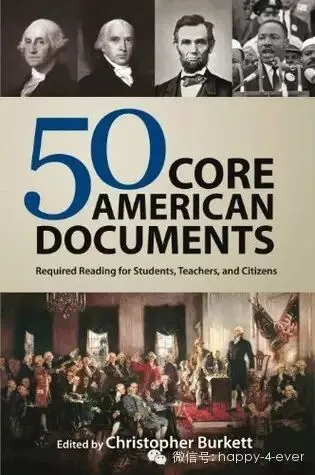
以下是这本书里包含的50个文章,及相关介绍。
1. Declaration of Independence 独立宣言
July 4, 1776
2.Memorial and RemonstranceAgainst Religious Assessments
by James Madison | June 20, 1785
3.Virginia Statute for ReligiousFreedom
by Thomas Jefferson | January 16,1786
4.Notes of Debates in the FederalConvention of 1787
by James Madison | 1787
5.Constitution of the UnitedStates
September 17, 1787
6.Brutus I
by Brutus | October 18, 1787
7.The Federalist No. 1
by Publius (Alexander Hamilton) |October 27, 1787
8.Brutus II
by Brutus | November 1, 1787
9.The Federalist No. 10
by Publius (James Madison) |November 22, 1787
10.The Federalist No. 51
by Publius (James Madison) |February 6, 1788
11.Speech on Amendments to theConstitution
by James Madison | June 8, 1789
12.Letter to the HebrewCongregation at Newport
by George Washington | August 18,1790
13.Bill of Rights
December 15, 1791
14.”Property”
by James Madison | March 29, 1792
15.Farewell Address
by George Washington | September19, 1796
16.First Inaugural Address
by Thomas Jefferson | March 4,1801
17.Marbury v. Madison
by Supreme Court of the UnitedStates (5 U.S. 137) | February 24, 1803
18.Letter to John Holmes
by Thomas Jefferson | April 22,1820
19.Monroe Doctrine
by James Monroe | December 2,1823
20.Letter to Henry Lee
by Thomas Jefferson | May 8, 1825
21.Letter to Roger C. Weightman
by Thomas Jefferson | June 24,1826
22.The Webster-Hayne Debates
by Daniel Webster and Robert Y.Hayne | January 1830
23.Fort Hill Address
by John C. Calhoun | July 26, 1831
24.Veto Message of the Bill onthe Bank of the United States
by Andrew Jackson | July 10, 1832
25.Proclamation RegardingNullification
by Andrew Jackson | December 10,1832
26.Speech on the Oregon Bill
by John C. Calhoun | June 27,1848
27.”What to the Slave Is theFourth of July?”
by Frederick Douglass | July 5,1852
28.Speech on the Repeal of theMissouri Compromise
by Abraham Lincoln | October 16,1854
29.Dred Scott v. Sandford
by Supreme Court of the UnitedStates (60 U.S. 393) | March 6, 1857
30.Fragment on the Constitutionand Union
by Abraham Lincoln | January 1861
31.”Corner Stone”Speech
by Alexander H. Stephens | March21, 1861
32.Final EmancipationProclamation
by Abraham Lincoln | January 1,1863
33.Gettysburg Address
by Abraham Lincoln | November 19,1863
34.Resolution Submitting theThirteenth Amendment to the States
by Abraham Lincoln | February 1,1865
35.Second Inaugural Address
by Abraham Lincoln | March 4,1865
36.Oration in Memory of AbrahamLincoln
by Frederick Douglass | April 14,1876
37.Plessy v. Ferguson
by Supreme Court of the UnitedStates (163 U.S. 537) | May 18, 1896
38.Roosevelt Corollary to MonroeDoctrine
by Theodore Roosevelt | December06, 1904
39.New Nationalism Speech
by Theodore Roosevelt | August31, 1910
40.Progressive Party Platform of1912
August 7, 1912
41.”Fourteen Points”Message
by Woodrow Wilson | January 8,1918
42.Speech on the 150thAnniversary of the Declaration of Independence
by Calvin Coolidge | July 5, 1926
43.Commonwealth Club Address
by Franklin D. Roosevelt |September 23, 1932
44.Speech on the Consequences ofthe Proposed New Deal
by Herbert Hoover | October 31,1932
45.1944 State of the UnionAddress
by Franklin D. Roosevelt |January 11, 1944
46.The Long Telegram
by George Kennan | February 22,1946
47.Brown v. Board of Education of Topeka I and II
by Supreme Court of the UnitedStates (347 U.S. 483) | May 17, 1954
48.”I Have a Dream”Speech
by Martin Luther King, Jr. |August 28, 1963
49.”Great Society”Speech
by Lyndon B. Johnson | May 22,1964
50.”A Time for Choosing”
by Ronald Reagan | October 27,1964
需要该书电子文档的考新SAT学员可以加吕永华老师的微信 bjxdflyh

