 夜雨聆风
夜雨聆风

过年的时候,你领到各大APP发的红包了么 | 经济学人
01 文章选材
March 14TH-20TH |Business

【Para. 1】中国AI企业发放节日福利吸引用户
【Para. 2】国内AI行业补贴大战竞争白热化
【Para. 3】中国互联网现状,头部企业领跑
【Para. 4】中小AI公司面临淘汰
【Para. 5】AI补贴大战的结果:消费者受益,企业压力加剧
【Para. 6】监管部门不支持行业补贴战
03 原文音频

 569 words ★★★☆☆(难度评级)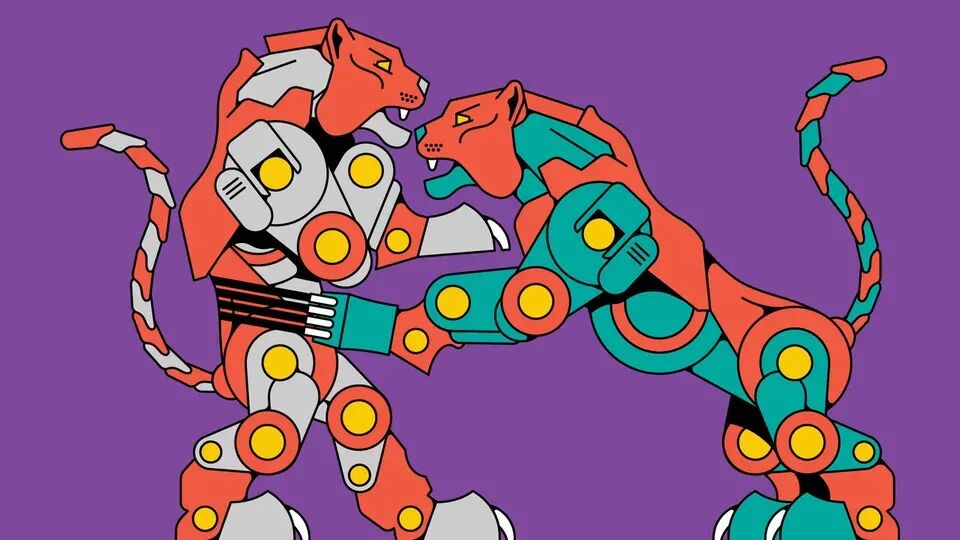
China’s AI giants are handing out cash to lure in users
【Para.1】It is customary in China to give gifts during the Lunar New Year. Throughout the most recent festivities, which ended on March 3rd, the country’s artificial-intelligence industry enthusiastically embraced the tradition. Over the preceding month companies handed out coupons worth a generous 8bn yuan ($1.2bn) to anyone willing to download and use their applications, the latest versions of which boast “agentic” capabilities that allow bots to perform tasks such as ordering a meal with just a few spoken instructions.
【Para.2】Locally this subsidy spectacle has been dubbed the “hongbao wars”, in reference to the red envelopes of cash typically handed out over the new year. Already most Chinese AI companies were making their models available at no charge. Now they are paying consumers to use their services. How long can the industry’s ferocious rivalry last?
【Para.3】Chinese AI firms have been investing heavily to develop and promote their agentic services. In mid-February, ahead of the celebrations, Alibaba, an e-commerce giant, and ByteDance, which controls TikTok and its local sister-app, Douyin, both launched upgrades to their chatbots that allow them to perform various tasks on behalf of users. More than 100m drinks were sold via Qwen, Alibaba’s chatbot, during the Lunar New Year period. Doubao, ByteDance’s chatbot, fielded almost 2bn queries over a few hours on February 16th during a televised gala that was sponsored by the company.
【Para.4】For China’s internet giants, agentic chatbots provide a way to direct users to other services from which they make money, such as e-commerce. Some dream of creating an AI-powered “super app” that can facilitate nearly all of a user’s digital transactions. Alibaba, ByteDance and Tencent, another Chinese internet superstar which offers the Yuanbao chatbot, seem best positioned; Baidu, China’s equivalent to Google and creator of the Ernie chatbot, is falling behind. Industry insiders reckon that smaller AI companies without vast consumer-internet businesses will probably not survive. Even DeepSeek, an AI lab that shocked the world early last year with a model that could compete with the best foreign ones, has seen its share of users decline (though it helps to power Yuanbao and could regain momentum with a powerful new model that is expected to be unveiled soon).
【Para.5】Consumers have undoubtedly benefited from China’s furious AI rivalry. But not everybody is happy. Shareholders in China’s internet giants are still waiting for evidence that the investment binge will yield a return. Since the start of the hongbao wars the share price of Alibaba, which probably offered the most lavish subsidies, has fallen by roughly 30%. At the same time, there are signs that efforts to better monetise the technology are causing grumbling among China’s top AI brains. On March 4th Lin Junyang, the chief engineer behind Qwen, unexpectedly quit Alibaba. Some in the industry speculate that increased commercial pressure may have frustrated him.
【Para.6】Then there are China’s regulators. They have recently expressed displeasure with the subsidy war currently raging in the food-delivery business, and are probably just as unexcited about the battle for users in the AI industry. Chinese officials tend to look askance at consumer-internet services, and would much rather companies invest in supporting national efforts in areas such as chipmaking. Next Lunar New Year Chinese consumers should not count on more digital red envelopes.
05 
Read the following text carefully and answer the questions below by choosing A, B, C or D.
21. According to Paragraph 1, Chinese AI companies offered coupons worth 8bn yuan to
[A] celebrate the Lunar New Year tradition.[B] promote their new agentic capabilities.[C] attract users to download their applications.[D] compete with foreign AI companies.
22. The author mentions Alibaba and ByteDance in Paragraph 3 to show that
[A] Chinese tech giants are leading AI innovation.[B] agentic services require massive investment.[C] chatbots can generate significant commercial value.[D] competition is driving rapid AI development.
23. What can be inferred about Baidu from Paragraph 4?
[A] It has failed to develop competitive AI models.[B] It lacks the ecosystem to support AI services.[C] Its chatbot Ernie has lost market share.[D] It is struggling to monetize AI technology.
24. The word “askance” in Paragraph 6 is closest in meaning to
[A] approval.[B] disapproval.[C] indifference.[D] curiosity.
25. Which of the following would be the most appropriate title for the text?
[A] The Hongbao Wars: China’s AI Industry Subsidy Battle[B] Chinese AI Giants vs. Foreign Competitors[C] The Future of Agentic AI in China[D] Consumers Benefit from AI Price War
看更多单词注释,全文翻译,长难句解析,写作积累以及答疑服务;
扫码下方报名训练营获取👇👇👇



注:在线课程报名之后不接受退款,报名之前有疑问请先加助教微信(ttzhujiao888)查看例文免费试学和训练营介绍,考虑清楚再报名