ARTICLE · 1007278
外研版高中英语选择性必修二 Unit 1 教材解析+说课稿Unit 1 Growing upUnderstanding ideasThe Age of Majority

外研版高中英语选择性必修二 Unit 1 教材解析+说课稿
Unit 1 Growing up
Understanding ideas
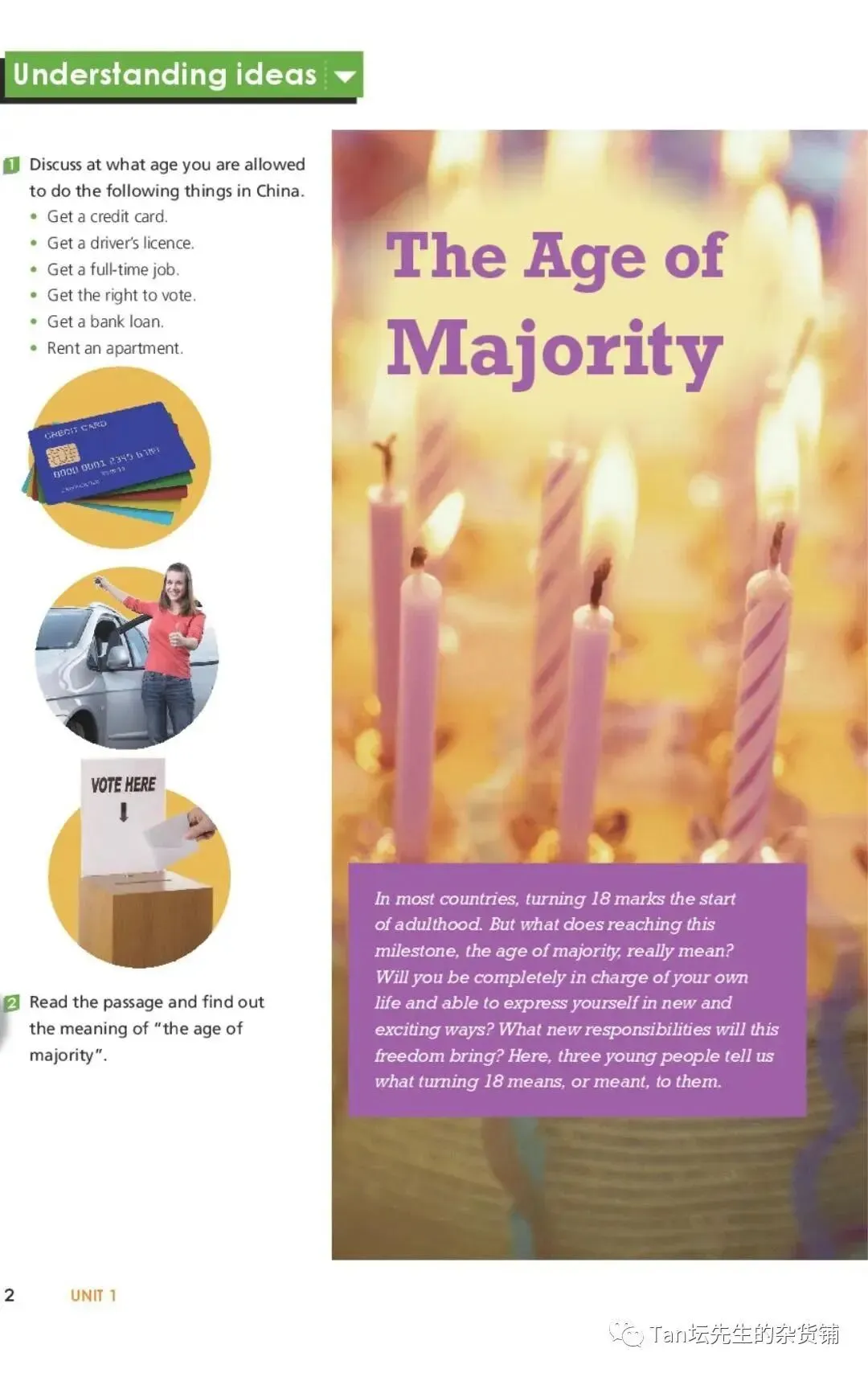
The Age of Majority
——18岁真的会让一个人在一夜之间“变成大人”吗?
一、单元定位:Growing up讨论的不是“长大了真好”
选择性必修二第一单元的标题非常简单:
Growing up
但“成长”恰恰是一个很难简单定义的概念。
年龄增加是不是成长?
获得更多自由是不是成长?
离开父母是不是成长?
能够赚钱是不是成长?
还是说:
真正的成长体现在一个人开始理解责任、别人和自己的选择?
Starting out已经通过coming-of-age ceremonies和Rudyard Kipling的If把学生带入这个问题:
What qualities make a mature person?
到了Understanding ideas,教材进一步把抽象的“成长”放进一个非常具体的节点:
turning 18。
也就是:
the age of majority。
教材对这个概念的基本界定是:
法律承认一个人从未成年人进入成年人的年龄节点。
但全文真正关心的并不是:
What happens legally at 18?
而是:
What does becoming an adult actually mean?
教材开篇连续提出:
Will you be completely in charge of your own life?
What new responsibilities will this freedom bring?
实际上已经把全文最重要的一组关系摆出来:
FREEDOM
和
RESPONSIBILITY。
所以这一课如果最后只剩下:
18岁可以投票、考驾照、办信用卡……
那其实没有进入教材真正的主题。
二、The Age of Majority:标题里的“age”其实有两层含义
第一层是:
legal age。
也就是法律意义上的成年年龄。
但文章读到最后会发现:
age并不能完全定义:
maturity。
Morgan最后甚至直接得出一个非常重要的认识:
some responsibilities are more about attitude than age.
所以文章实际上在制造一种张力:
LEGAL ADULTHOOD
≠
COMPLETE MATURITY。
18岁可以明确划出:
legal boundary。
但是:
independence
responsibility
self-control
social awareness
这些能力并不会在生日当天零点突然自动出现。
因此“The Age of Majority”这个标题表面在讨论:
年龄。
实际最后却把学生引向:
What makes a person mature beyond age?
三、全文最漂亮的设计,其实是三个人的年龄顺序
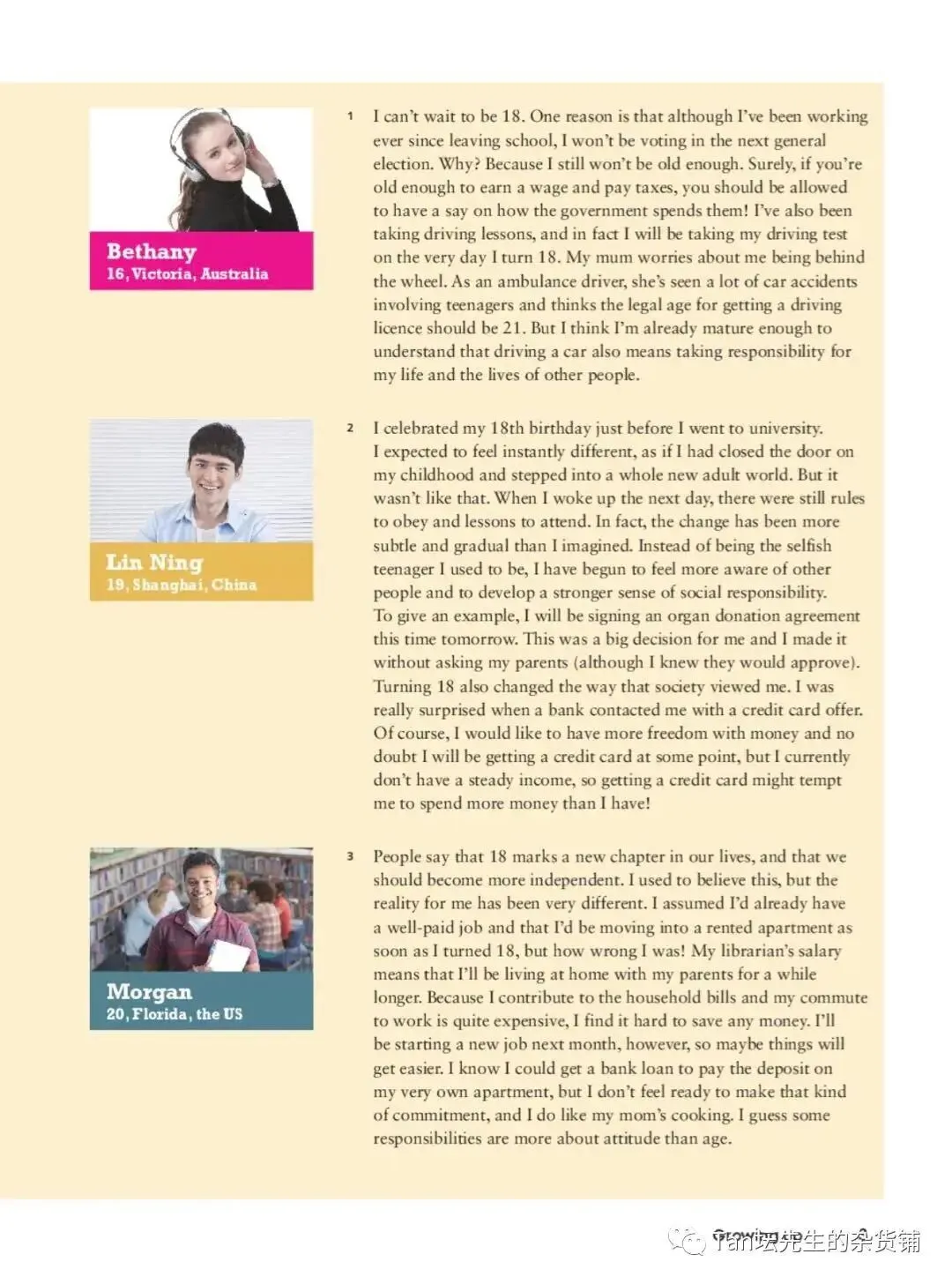
文章选择:
Bethany,16岁,澳大利亚;
Lin Ning,19岁,中国上海;
Morgan,20岁,美国佛罗里达。
为什么不是三个18岁的人?
这是教材分析中特别值得抓住的一点。
因为三个人恰好形成:
BEFORE 18
↓
JUST AFTER 18
↓
FURTHER INTO ADULTHOOD。
Bethany还没有成年。
她看到的是:
期待。
Lin Ning刚刚成年。
他看到的是:
变化没有想象中那么突然。
Morgan已经20岁。
他看到的是:
现实中的独立远比想象复杂。
所以三个小节其实不是并列的三个“采访”。
而是一条认知时间线:
EXPECTATION
↓
EXPERIENCE
↓
REFLECTION。
这就是全文最深层的结构。
四、Bethany:成年首先意味着“我终于可以拥有更多权利”
Bethany开头直接说:
I can’t wait to be 18.
为什么如此期待?
她已经工作,
能够:
earn a wage
pay taxes,
但却觉得自己在下一次大选中没有投票权很不公平。
她的逻辑是:
如果一个人已经在承担税收义务,
为什么不能对政府如何使用这些税收:
have a say?
这里最值得分析的是:
她对成年的第一理解来自:
rights。
vote
drive
make decisions。
这非常符合一个尚未成年的年轻人的视角:
成年意味着:
more freedom
more control
more choices。
但是作者马上让:
responsibility
进入她的故事。
五、开车这个例子为什么比“考驾照”本身重要?
Bethany正在学开车。
她计划18岁生日当天参加驾驶考试。
母亲却非常担心。
因为母亲是一名ambulance driver,
见过很多涉及青少年的交通事故,
因此认为取得驾照的法定年龄应该提高。
Bethany不同意。
但她并没有简单说:
It is my right.
她说自己已经足够成熟,能够理解:
driving a car also means taking responsibility for my life and the lives of other people.
这里出现全文第一处非常重要的概念升级:
RIGHT
↓
RESPONSIBILITY。
驾照不是:
permission to enjoy freedom。
它同时意味着:
your actions can affect other people。
所以真正成熟的理解应该是:
A right gives you freedom to act.
Responsibility requires you to think about the consequences of that action.
这已经远远超出:
“18岁可以开车”
这个表层知识。
六、Bethany与母亲谁对?教材故意没有告诉你
这一部分特别适合做critical thinking。
母亲认为:
21岁更安全。
Bethany认为:
自己已经足够成熟。
谁对?
教材没有裁判。
这很重要。
因为文章不是:
adult says something → teenager learns the correct answer。
而是让学生看到:
同一个年龄限制背后,
存在不同:
perspectives。
母亲依据:
professional experience and safety concern。
Bethany依据:
fairness and personal maturity。
所以课堂可以问:
Should legal rights depend mainly on age or individual maturity?
马上就会出现一个现实困难:
如果不用年龄作为统一标准,
社会怎样客观判断每个人是否成熟?
这就开始进入真正的社会规则思考。
七、Lin Ning:成年真的会在生日第二天“感觉完全不同”吗?
Lin Ning的开头和Bethany形成非常有意思的对照。
Bethany:
I can’t wait to be 18.
Lin Ning:
I expected to feel instantly different.
他以为18岁生日意味着:
closed the door on childhood
and
stepped into a whole new adult world。
这是非常形象的:
metaphor。
childhood
↓
door
↓
adult world。
好像人生存在一条清晰的界线。
只要走过去,
一个人的身份就完全改变。
但紧接着:
But it wasn’t like that.
生日第二天:
rules仍然存在。
lessons仍然要上。
于是:
idealised adulthood
与:
actual adulthood
发生冲突。
八、全文一个非常重要的词:gradual
Lin Ning最后发现:
the change has been more subtle and gradual than I imagined.
subtle:
不是那么明显。
gradual:
逐渐发生。
这两个词实际上直接推翻了:
18 = instant transformation。
法律身份可以:
change overnight。
心理成长却往往:
develop over time。
所以文章开始出现一个更成熟的成长观:
Growing up is not an event.
It is a process.
这句话非常适合作为本课的主题主线。
九、Lin Ning真正的变化不是“没人管我了”,而是开始看到别人
文章接下来写:
Instead of being the selfish teenager I used to be,
I have begun to feel more aware of other people
and to develop a stronger sense of social responsibility.
这里的成长特别值得讲。
他没有说:
I can do whatever I want now.
而是:
more aware of other people。
也就是说:
成长的方向不是:
more self-centred freedom。
反而是:
less self-centred thinking。
儿童和青少年很自然地从:
What do I want?
出发。
成熟则越来越需要加入:
How will my decision affect others?
What responsibility do I have towards other people and society?
于是:
adulthood
不再意味着:
I matter more。
而是某种意义上的:
I realise other people matter too.
十、器官捐献这个细节为什么被作者选进来?
Lin Ning决定签署:
an organ donation agreement。
这一决定很重要,
因为它把抽象的:
social responsibility
变成了:
action。
如果作者只写:
Lin Ning became more socially responsible.
这只是一个:
claim。
而:
organ donation agreement
提供:
evidence。
所以这一小节其实有一个非常好的写作结构:
CHANGE IN THINKING
↓
SPECIFIC ACTION
↓
EVIDENCE OF MATURITY。
这也非常适合高考人物品质题。
人物品质不是靠作者直接贴标签。
而应该从:
choices and actions
进行推断。
十一、信用卡:成年自由为什么同时可能制造新的风险?
Lin Ning成年以后,
银行主动提供:
credit card。
这明显代表:
society now views him differently。
法律身份变化之后,
一些新的:
doors
打开了。
但他的反应非常值得分析。
他当然想:
more freedom with money。
可是由于目前没有:
steady income,
他担心信用卡会:
tempt me to spend more money than I have.
这又形成:
FREEDOM
↓
TEMPTATION
↓
SELF-CONTROL。
一个法律允许你做的事情,
并不意味着:
you should immediately do it。
这就是另一层成熟:
Maturity includes knowing that:
“Can I?”
和:
“Should I?”
不是同一个问题。
十二、这一处其实特别适合中国高中生
18岁之后,
学生会逐渐接触:
bank accounts
credit
online shopping
loans
contracts
financial decisions。
真正的成年教育不应该只是:
你以后自由了。
而还应该包括:
financial literacy。
例如:
收入是多少?
支出是多少?
债务意味着什么?
信用消费的成本是什么?
我有没有能力承担长期承诺?
所以这一篇看似只是英语课,
其实已经触碰:
financial responsibility。
这也是选择性必修教材比低年级教材更接近真实成人世界的地方。
十三、Morgan:第三个人为什么已经20岁?
如果第三个人仍然18岁,
全文其实不会这么有力量。
Morgan已经20岁,
还有:
a full-time job。
按照很多青少年对于成年生活的想象,
他似乎应该:
financially independent
rent his own apartment
live away from parents。
他自己原来也是这样认为的。
但现实是:
his salary is not high enough。
还需要:
contribute to household bills
支付:
high commuting costs。
于是他发现:
很难存钱,
仍然需要住在父母家。
这就是第三次:
EXPECTATION
vs
REALITY。
十四、Morgan这一段真正拆掉的是“18岁=完全独立”的神话
社会常常把:
independence
当作成熟标志。
但现实经济条件会影响:
when independence becomes possible。
一个20岁的年轻人可能:
emotionally responsible
work full-time
contribute to family expenses
manage money carefully,
但仍然:
live with parents。
这是否意味着他:
not mature?
显然不能这样简单判断。
所以文章开始迫使学生区分:
independence
和:
maturity。
它们有关,
但并不是同一个概念。
十五、银行贷款:能借钱买房,为什么Morgan还是不借?
Morgan知道:
he could get a bank loan
to pay the deposit
on his own apartment。
法律和金融系统已经允许他:
take on debt。
但他说:
I don’t feel ready to make that kind of commitment.
commitment是这一段特别重要的词。
它不只是:
commitment to a person。
还可以指:
a serious long-term responsibility。
成年人真正困难的地方之一就在于:
选择变多了,
但每一个重大选择可能都带来:
long-term consequences。
所以成熟不是:
I can make my own decision.
而是:
I understand what my decision may require from me afterwards.
十六、全文最值得作为主题句的一句话
Morgan最后说:
some responsibilities are more about attitude than age.
这几乎可以看作整篇文章最后真正推导出来的结论。
文章开头问:
What does reaching the age of majority really mean?
读到最后,
答案已经不再只是:
turning 18。
它逐渐成为:
rights
choices
consequences
responsibility
attitude。
所以最成熟的主题理解可以写成:
Legal adulthood begins at a certain age.
Maturity develops through the way we think, choose and take responsibility.
十七、三个人实际上分别讨论三种责任
如果继续深挖,
会发现三个案例并不是随机。
Bethany:
responsibility for safety and other people's lives。
Lin Ning:
social responsibility + financial self-control。
Morgan:
financial responsibility + long-term commitment。
也就是说:
RESPONSIBILITY
本身也在升级。
Personal responsibility
↓
Social responsibility
↓
Independent adult responsibility。
所以全文既存在年龄递进,
也存在责任递进。
十八、三个人还形成“自由观”的变化
Bethany眼中的自由:
I want the right to...
Lin Ning眼中的自由:
I now can..., but should I?
Morgan眼中的自由:
I can legally..., but can I actually afford and handle it?
可以概括成:
FREEDOM AS PERMISSION
↓
FREEDOM AS CHOICE
↓
FREEDOM AS RESPONSIBLE DECISION-MAKING。
这才是全文非常漂亮的思想结构。
十九、为什么文章使用三个第一人称,而不是由作者总结?
如果作者直接写:
Young people often expect more freedom when they turn 18, but adulthood also brings responsibilities.
一句话已经可以讲清楚。
为什么还需要三个人?
因为:
first-person accounts
让学生进入不同个体的:
expectations
emotions
conflicts。
Bethany说:
I can’t wait...
Lin Ning说:
I expected...
Morgan说:
I used to believe...
这三句话都是非常明显的:
subjective voice。
读者不是得到一个抽象结论,
而是看到:
young people thinking through adulthood themselves。
这也让文章特别适合:
fact vs opinion
训练。
二十、Fact和Opinion为什么是教材专门安排的重点?
教材课后明确让学生判断:
facts
和:
opinions。
例如:
“I will be taking my driving test on the very day I turn 18.”
属于:
fact。
而:
“Surely...you should be allowed to have a say...”
明显属于:
opinion。
Morgan的:
some responsibilities are more about attitude than age
同样属于:
viewpoint。
为什么这一课特别需要教这个?
因为文章就是由:
personal voices
构成。
学生必须认识:
A statement in a text is not automatically a fact simply because it is printed in a textbook.
这是非常重要的阅读素养。
二十一、高考里Fact—Opinion到底有什么用?
高考阅读中大量题目实际上都在考:
作者陈述了什么事实?
人物表达了什么观点?
作者本人认同什么?
哪一句只是受访者个人判断?
例如:
Bethany thinks the voting arrangement is unfair.
这是:
fact about Bethany's opinion。
但是:
The arrangement is unfair.
这就变成:
the reader/writer accepting the opinion as fact。
两者完全不同。
这种区别对于:
新闻
访谈
议论文
网络信息
都特别重要。
二十二、三个人来自三个国家,但不要把个体差异简单变成“国家文化性格”
Bethany来自:
Australia。
Lin Ning来自:
China。
Morgan来自:
the US。
这当然提供了:
cross-cultural perspectives。
但是教师要注意:
不要直接总结:
Australians value freedom.
Chinese people value responsibility.
Americans value independence.
文章只有:
three individuals。
一个人的故事不能自动代表:
an entire culture。
更合理的教学方式是:
Compare their experiences,
not stereotype their countries.
可以问:
Which differences seem related to laws?
Which seem related to personal situations?
Which may be related to social expectations?
这就是真正的:
cross-cultural thinking。
二十三、文章结构:不是“三个人各说一段”这么简单
全文可以理解成:
Introduction
提出:
What does turning 18 really mean?
Voice 1:Bethany
Before adulthood
↓
Expectation of rights
↓
Awareness of responsibility。
Voice 2:Lin Ning
Just after adulthood
↓
Expected instant change
↓
Experienced gradual change
↓
Social responsibility。
Voice 3:Morgan
Further into adulthood
↓
Expected independence
↓
Economic reality
↓
Responsibility as attitude。
所以深层结构是:
QUESTION
↓
EXPECTATION
↓
COMPLICATION
↓
REFLECTION。
而三个人不断重复这个过程。
这就是一种:
parallel structure with progression。
二十四、全文最重要的共同写法:Expectation vs Reality
Bethany:
I expect more legal rights.
↓
But rights bring responsibility.
Lin Ning:
I expected to feel instantly different.
↓
But change was gradual.
Morgan:
I assumed I would have a good job and rented apartment.
↓
But economic reality was different。
所以整篇文章可以用一个公式概括:
EXPECTATION
↓
REALITY
↓
RETHINKING ADULTHOOD。
这可能是本课最适合作为公开课板书的结构。
二十五、这篇和高考阅读的连接非常强:主旨题
如果问:
What is the passage mainly about?
不能只选:
legal rights at the age of 18。
因为Morgan大量内容已经不是法律权利。
也不能只选:
differences among three countries。
真正更准确的是:
Three young people's different experiences and reflections on what turning 18 and becoming an adult really mean.
教材本身给出的更合适替代标题也是:
Turning Eighteen – What Does It Mean?
这说明:
meaning of adulthood
才是中心。
二十六、高考标题题:为什么The Age of Majority既准确又不完整?
它准确,
因为全文确实从:
legal adulthood
展开。
但如果学生重新命题:
Turning Eighteen – What Does It Mean?
其实更能体现:
questioning。
教材正是通过“选择另一个合适标题”的活动,让学生意识到:
一个好标题不仅要:
mention the topic,
还应该:
capture the central concern。
这正是高考最佳标题题的底层逻辑。
二十七、高考推理题:谁最接近“真正理解成年”?
这种题不一定直接出现,
但很适合课堂。
Bethany:
已经意识到安全责任。
Lin Ning:
意识到社会责任和自我控制。
Morgan:
认识到责任是一种态度而不是年龄。
如果必须比较,
Morgan的反思似乎更加成熟。
为什么?
不是因为他:
20岁。
而是因为他已经经历:
expectation → reality → reflection。
这恰好进一步证明:
maturity comes partly from experience。
二十八、高考人物态度题:不要只看positive / negative
三个年轻人对于成年并不是简单:
happy
unhappy。
Bethany:
eager + confident。
Lin Ning:
initially excited → reflective and cautious。
Morgan:
realistic, slightly disappointed, but hopeful。
这种态度变化比:
positive
negative
更值得训练。
高考人物态度题经常需要:
context-sensitive vocabulary。
比如:
expectant
cautious
realistic
responsible
hopeful
rather than simply:
good/bad。
二十九、未来进行时为什么特别适合这一篇?
Using language紧接着学习:
future continuous。
其实主阅读已经自然铺垫:
I will be taking my driving test...
I will be signing an organ donation agreement...
I will be getting a credit card...
I’ll be living at home...
I’ll be starting a new job...
为什么全文这么多:
will be doing?
因为整个主题就在:
looking forward into adulthood。
人物站在:
now,
想象:
what life will be like at a future moment。
所以future continuous并不是脱离语篇的语法点。
它与整个单元:
Growing up
天然匹配。
语法在表达:
future life in progress。
三十、高考语法真正应该教的是:形式为什么服务意义
例如:
I will sign an organ donation agreement tomorrow.
和:
I will be signing an organ donation agreement this time tomorrow.
第二句让读者感觉:
在未来某个具体时刻,
这个动作正在成为生活的一部分。
所以future continuous特别适合:
imagining oneself in a future situation。
这也是为什么教材后面的活动继续让学生:
talk about future plans。
教师如果只讲:
will be + doing
表示将来某一时刻正在发生,
就只完成了半个教学任务。
还应该让学生理解:
Why is this tense meaningful in a unit about becoming an adult?
三十一、这篇对高考写作的第一个价值:学会写“观点+依据”
Bethany不是只说:
I think it’s unfair。
她给理由:
earn a wage
pay taxes
therefore should have a say。
可以抽象成:
OPINION
↓
EVIDENCE / REASONING。
Lin Ning:
I am becoming socially responsible.
↓
organ donation decision。
Morgan:
I am not ready for complete financial independence.
↓
salary + household bills + commuting costs + loan commitment。
所以这篇特别适合训练学生:
Don't give an opinion without support.
高考观点类写作真正拉开差距的,
不是:
I strongly believe that...
而是:
Why should the reader believe you?
三十二、第二个写作价值:成长类文章不要只写“我长大了”
学生写:
An Experience That Made Me Grow
常见结尾:
From then on, I became more mature.
问题是:
How?
The Age of Majority给出更好的表现方式。
不要直接写:
I became responsible.
而写:
I began to think about how my decision affected other people.
不要写:
I became independent.
而写:
I started managing my own budget and realised that every choice involved giving something else up.
真正的成长应该通过:
changed thinking
和:
changed behaviour
体现。
三十三、与读后续写的连接:人物成长必须出现“认知差”
成长型叙事最基本的结构就是:
WHAT I USED TO BELIEVE
↓
WHAT ACTUALLY HAPPENED
↓
WHAT I NOW UNDERSTAND。
这篇三个人全部如此。
所以学生写续写时,
如果人物最后要:
grow,
前面最好先建立:
misunderstanding / expectation。
否则最后的:
lesson learnt
就会凭空出现。
真正自然的人物弧光是:
belief
↓
experience
↓
revision of belief。
三十四、公开课建议:不要从“18岁可以做什么”讲20分钟
教材Pre-reading当然涉及:
credit card
driver’s licence
full-time job
vote
bank loan
rent apartment。
这些适合:
activate knowledge。
但课堂如果陷入各国法定年龄讨论,
非常容易偏成:
legal trivia lesson。
真正的核心问题建议只设一个:
Does turning 18 make you an adult?
课前学生可能说:
Yes, legally.
读完以后答案应该变成:
Legally, yes.
But becoming mature is much more gradual and complex.
这就形成:
conceptual development。
三十五、公开课问题链可以这样推进
第一层:
What changes when people turn 18?
学生寻找:
rights
social status
choices。
第二层:
Does everything change?
Lin Ning:
No.
第三层:
Does more freedom make life easier?
Morgan:
Not necessarily.
第四层:
What comes with freedom?
Responsibility.
第五层:
So what makes a mature adult?
这时候学生自己归纳:
responsibility
self-control
awareness of others
financial judgement
independence
ability to accept consequences。
最后:
Age marks adulthood.
Attitude and action reveal maturity.
这就完成主题建构。
三十六、一个非常好的课堂活动:Design your own definition of adulthood
读完以后不要直接给:
Adulthood = rights + responsibilities。
可以给学生几个词:
AGE
FREEDOM
INDEPENDENCE
MONEY
RESPONSIBILITY
SELF-CONTROL
CARE FOR OTHERS
EXPERIENCE。
要求:
Choose the three most important elements of adulthood.
Rank them.
Explain why.
然后必须引用:
Bethany / Lin Ning / Morgan
作为证据。
这样就把:
textual evidence
和:
personal judgement
结合起来。
这是非常典型的新高考高阶能力。
三十七、批判性思维:一个人18岁以前就可能很成熟吗?
当然。
那么反过来:
一个30岁的人一定成熟吗?
也未必。
这正是全文最后:
attitude rather than age
可以继续发展的地方。
于是:
legal adulthood
和:
psychological/social maturity
被明确区分。
法律为什么仍然需要年龄?
因为社会规则需要:
clear and administrable boundaries。
而成熟为什么不能完全靠年龄判断?
因为人的发展存在:
individual differences。
这两个判断可以同时成立。
这就是成熟的思维:
不是非黑即白。
三十八、另一个批判性问题:独立一定意味着离开父母吗?
Morgan的故事特别适合讨论。
如果一个年轻人住在父母家,
但:
works
contributes to bills
manages responsibilities
plans financially,
他是否“不独立”?
这取决于:
how we define independence。
physical independence
financial independence
emotional independence
decision-making independence
并不完全是一回事。
这能帮助学生避免:
把一个复杂概念缩成一个生活标签。
三十九、英文说课核心逐字稿
Good morning, judges.
Today I am going to present Understanding Ideas from Unit 1, Growing up, in Selective Compulsory Book 2.
The passage is entitled “The Age of Majority”.
It is a magazine-style column presenting the first-person accounts of three young people: Bethany from Australia, Lin Ning from China and Morgan from the United States.
At the surface level, the passage explores what changes when young people reach the legal age of adulthood.
However, the deeper theme of the text is the relationship among age, freedom, independence and responsibility.
One particularly meaningful feature of the passage is the choice of the three speakers.
Bethany is sixteen and still looking forward to adulthood.
Lin Ning is nineteen and has recently experienced the transition.
Morgan is twenty and has already discovered some of the practical realities of adult life.
Therefore, the three voices form a progression from expectation, to experience, and finally to reflection.
Bethany initially focuses on rights such as voting and driving, but she also recognises that driving involves responsibility for both her own life and the lives of others.
Lin Ning expected adulthood to feel like an immediate transformation, but gradually realised that maturity develops over time and includes greater awareness of other people and social responsibility.
Morgan's experience further challenges the assumption that turning eighteen automatically brings independence. Although he has a full-time job, financial pressures mean that he continues to live with his parents. His conclusion that some responsibilities are more about attitude than age provides an important insight into the passage as a whole.
Therefore, the central question of my lesson will be:
“Does turning eighteen really make a person an adult?”
In terms of discourse, the passage uses three parallel first-person accounts, but these accounts are not simply placed side by side. Together, they create a deeper progression:
expectation, reality and reflection.
Another important reading skill is distinguishing facts from opinions. Since the passage contains several personal viewpoints about fairness, responsibility and adulthood, students need to understand that a statement appearing in a text is not necessarily an objective fact.
Through the lesson, students will move from identifying legal rights and practical changes, to comparing different experiences, and finally to constructing their own evidence-based definition of maturity.
In this way, the lesson will develop language ability, discourse awareness, intercultural awareness, critical thinking and a stronger sense of personal and social responsibility.
四十、教学目标建议
By the end of the lesson, students will be able to:
explain the meaning of “the age of majority” in the context of the passage;
summarise Bethany's, Lin Ning's and Morgan's different expectations and experiences of adulthood;
identify the progression from expectation to experience and reflection across the three accounts;
distinguish facts from personal opinions and support their judgments with textual evidence;
explain the relationship among freedom, rights, independence and responsibility;
analyse how first-person narration makes the passage authentic and engaging;
evaluate whether age alone is an adequate measure of maturity;
construct and justify their own definition of a responsible adult.
四十一、教学重点与难点
Teaching focus:
不是只整理:
Who can vote?
Who can drive?
Who can get a credit card?
而要建立:
EXPECTATION
↓
REALITY
↓
REFLECTION。
进一步理解:
FREEDOM
必须和:
RESPONSIBILITY
一起讨论。
Teaching difficulty:
第一,
区分:
legal adulthood
和:
personal maturity。
第二,
区分:
fact
和:
opinion。
第三,
避免把三个个体经历简单概括为三个国家的固定文化特征。
四十二、新课标+高考:这一篇最终训练什么?
语言能力:
围绕成长、权利、责任和独立理解并使用:
age of majority
milestone
in charge of
responsibility
have a say
mature
instantly
gradual
social responsibility
credit card
steady income
commitment
independent
等表达。
语篇能力:
识别:
introduction + three parallel first-person accounts
的结构。
进一步发现:
before adulthood
↓
recent adulthood
↓
adult reality
的隐含递进。
识别:
expectation–reality contrast
如何推动每一个人物的小叙事。
思维品质:
思考:
Does age equal maturity?
Does freedom equal independence?
Does legal permission mean a decision is wise?
Can different people become mature at different rates?
文化意识:
了解不同社会环境中的成年法律身份、权利与责任存在差异,
同时避免以少数个人经验替代整个文化。
学习能力:
从人物陈述中提取:
claim
evidence
reasoning。
能够使用文本证据支持自己的观点。
高考能力:
主旨大意
最佳标题
人物观点
人物态度
事实与观点
推理判断
跨段信息整合
对比结构
第一人称作用
复杂概念辨析
观点类写作
成长型读后续写。
四十三、最后的主题升华:18岁是一条法律的线,却不是成长的终点线
生日很奇怪。
前一天:
17。
第二天:
18。
时钟走过午夜,
法律身份可能真的发生变化。
但一个人的:
judgement
self-control
empathy
financial sense
social responsibility
不会跟着蜡烛一起突然出现。
所以社会需要:
the age of majority。
因为法律需要一条:
clear line。
但是人生中的成长,
很少有这样清楚的线。
成长更像Lin Ning说的:
subtle and gradual。
有时候,
成长是第一次意识到:
我有权做一件事,
却仍然决定不做。
有时候,
成长是发现:
自由并不是没有规则,
而是自己开始承担规则过去替你承担的后果。
有时候,
成长甚至不是:
I no longer need my parents。
而是:
即使仍然与父母生活在一起,
我开始承担自己的部分,
管理自己的选择,
并知道哪些承诺现在还不适合我。
所以:
turning eighteen
也许告诉社会:
You are legally an adult.
而真正的成长,
需要一个人不断用自己的选择回答另一个问题:
What kind of adult am I becoming?
这才是Growing up比“年龄增加”更重要的地方。
【课堂最后可留三个思考题】
Why does society need a fixed legal age for adulthood if people mature at different speeds?
Which is a stronger sign of maturity: having more freedom or knowing when not to use that freedom?
If you had to replace age with three criteria for judging whether someone is mature, what would they be, and why?
【教材与资料依据】
本文依据外研版普通高中英语选择性必修第二册 Unit 1 Growing up,Understanding ideas板块The Age of Majority进行教材解析。目前可检索到的2025—2026学年外研版教学资源仍将该篇作为Unit 1 Understanding ideas的核心阅读,文本由Bethany、Lin Ning和Morgan三位年轻人的第一人称经历组成,围绕成年后的权利、自由、独立和责任展开。
教材课后活动并没有停留在具体成年权利的信息提取,而是进一步要求学生选择更合适的标题、整理三人的观点,并明确区分facts与opinions;Think & Share还继续提出“What do you think it means to be a responsible adult?”等问题。因此,本课教学核心应从“18岁能做什么”推进到“什么真正构成成熟与责任”。
教材前言同时明确指出,选择性必修课程在必修课程基础上进一步提升语篇意识和高阶思维要求,强调学生在获取、处理、重构信息过程中发展逻辑思维、多元思维和批判性思维。本课中的多人物视角、fact/opinion辨析和成年概念讨论正适合落实这一要求。
免费分享,整理不易,感谢点赞和小心心!
祝大家生活愉快,工作顺利!