 夜雨聆风
夜雨聆风检查项目:全身骨显像 + 局部SPECT/CT断层融合(如需)
临床适应证:恶性肿瘤(如乳腺癌、前列腺癌、肺癌等)治疗后,骨转移筛查
显像剂:99mTc-亚甲基二膦酸盐(99mTc-MDP)
剂量:___ mCi (___ MBq)
注射-显像间隔:___ 小时
检查技术:
全身前位+后位平面显像
局部SPECT/CT:(部位),(层厚)
既往对比:【与____年__月__日检查对比】
影像所见:
全身骨骼显像剂分布对称,双侧肾盂及膀胱呈生理性排泄。
第X胸椎及左侧第6侧肋可见局灶性显像剂摄取增高(focal increased radiotracer uptake),边界清晰,放射性浓聚程度显著高于对侧及邻近正常骨骼。
SPECT/CT断层融合显像示:上述摄取增高区与CT所示___(骨硬化/骨小梁增粗/骨质破坏)相对应,未见明确软组织肿块。
其余骨骼未见明确局灶性摄取增高或减低区。
诊断意见:
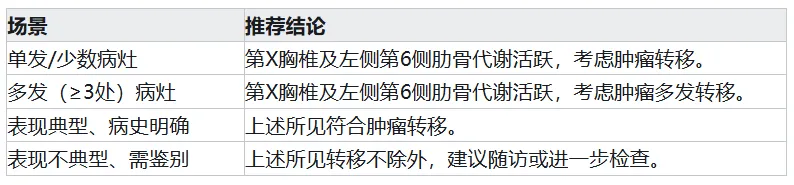
单发/少数病灶,第X胸椎及左侧第6侧肋骨代谢活跃,考虑肿瘤转移。
多发(≥3处)病灶,第X胸椎及左侧第6侧肋骨代谢活跃,考虑肿瘤多发转移。
表现典型、病史明确,上述所见符合肿瘤转移。
表现不典型、需鉴别,上述所见转移不除外,建议随访或进一步检查。
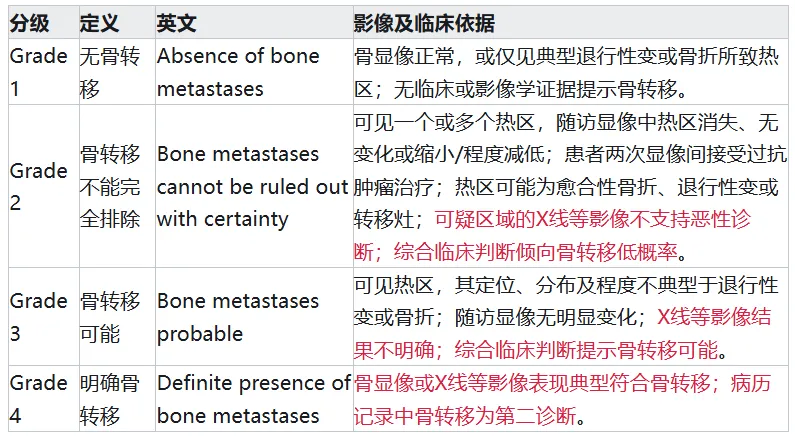
Grade 1: absence of bone metastases (The scintigraphic pattern is normal or shows hot spots typical of degenerative changes or fractures; there are no clinical or radiographic data indicating bone metastases.) 可排除骨转移,无需进一步影像随访(常规复查除外)
Grade 2: bone metastases cannot be ruled out with certainty (There are one or more visible hot spots that have disappeared, remained unchanged, or decreased in size and intensity on the follow-up scan. The patients in this group all received cancer therapy between the first and the follow-up scans, and hot spots could be healed fractures or degenerative changes or could be metastases. Radiographic modalities, when available, in the suspected regions did not favor a diagnosis of malignancy, and the gathered clinical judgment leaned toward a low probability of bone metastases.) 建议临床随访或3~6个月后复查骨显像,结合其他影像学检查(CT/MRI)
Grade 3: bone metastases probable (Visible hot spots with localization, distribution, and intensity not typical of degenerative changes or fractures are demonstrated. Scintigraphic follow-up shows no substantial changes. Radiographic findings are equivocal, but the overall clinical judgment indicates probable bone metastases.) 建议进一步影像学检查(SPECT/CT、PET/CT、MRI)或活检
Grade 4: definite presence of bone metastases (Scintigraphic or radiographic patterns are typical of bone metastases; the medical record states bone metastases as a secondary diagnosis.) 可确诊骨转移,按转移性骨病进行临床管理
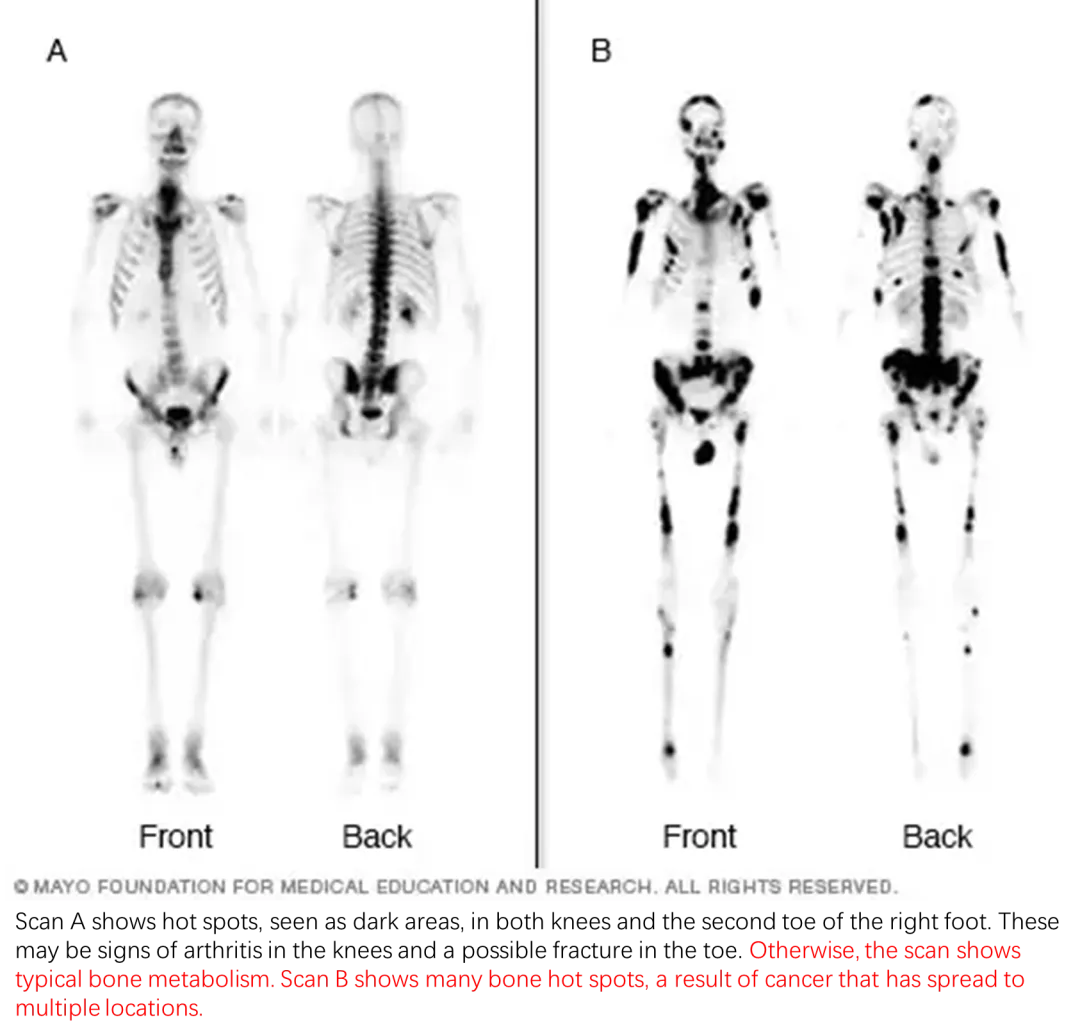
A bone scan might help determine the cause of bone pain that can't be explained. The test is sensitive to differences in bone metabolism, which the radioactive tracer highlights in the body. Scanning the whole skeleton helps in diagnosing a wide range of bone conditions, including:
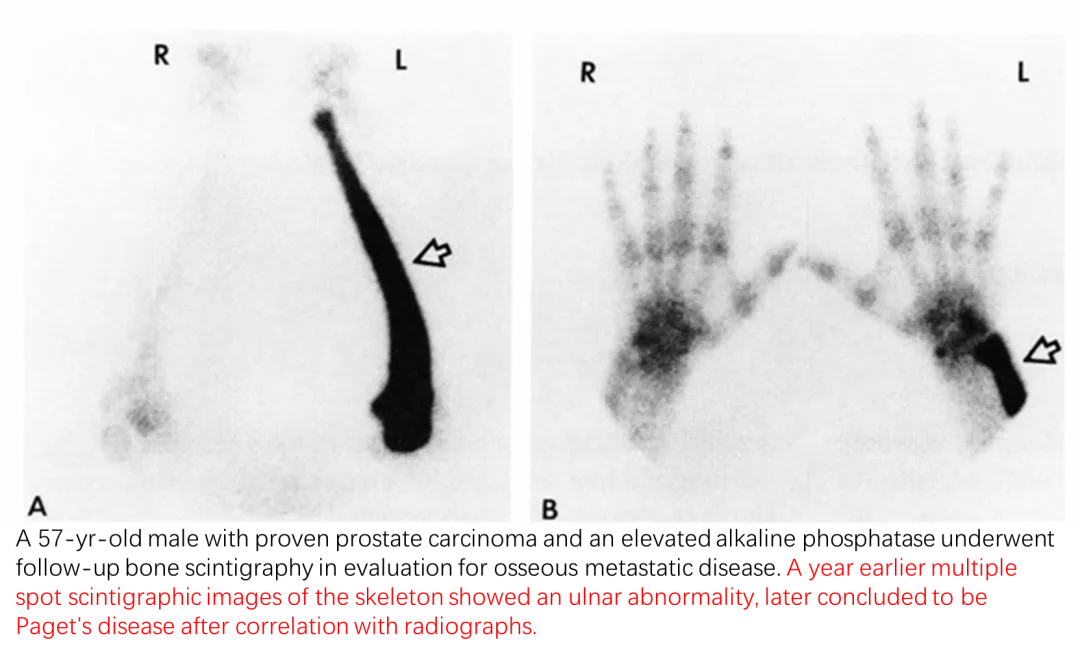
Fractures. Arthritis. Paget's disease of bone. Cancer that begins in the bone. Cancer that has spread to bone from a different site. Infection of the joints, joint replacements or bones.
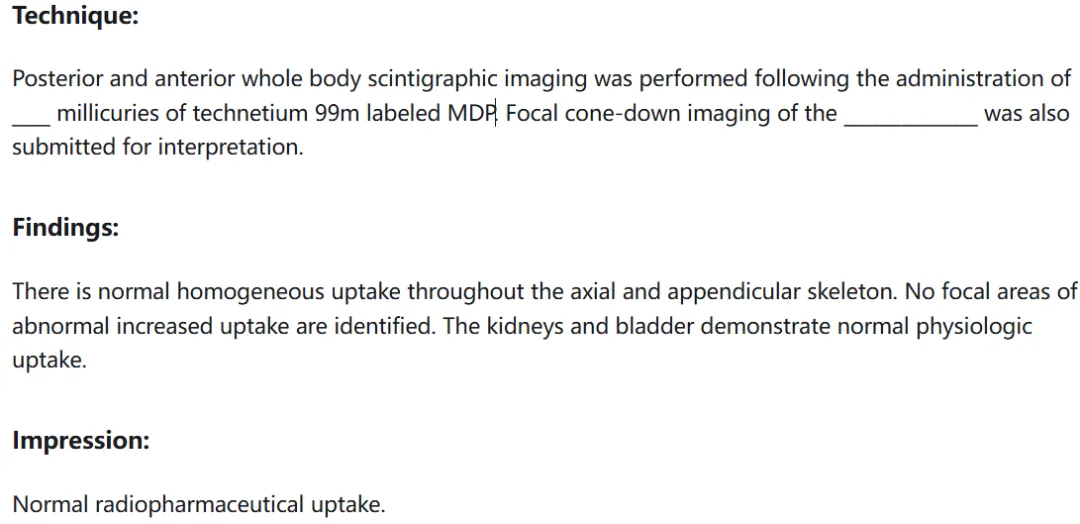
诊断意见(阴性结果):
标准阴性,骨显像未见明确异常。
直接回答临床问题,未见明确骨转移征象。
结合两者,骨显像未见明确异常,目前未见明确骨转移征象。
https://pmc.ncbi.nlm.nih.gov/articles/PMC11475626/
https://radiopaedia.org/articles/bone-scintigraphy-1?lang=us
https://tech.snmjournals.org/content/46/4/398
https://tech.snmjournals.org/content/16/1/15
https://jnm.snmjournals.org/content/49/12/1958.full
http://xradiologist.com/sample%20dictation%20Bone%20scan/index.html
https://www.mayoclinic.org/tests-procedures/bone-scan/about/pac-20393136
https://www.researchgate.net/figure/Case-report-of-one-patient-showing-bone-pseudoprogression-in-a-bone-scans-and-b_fig3_352407267