 夜雨聆风
夜雨聆风· · ·
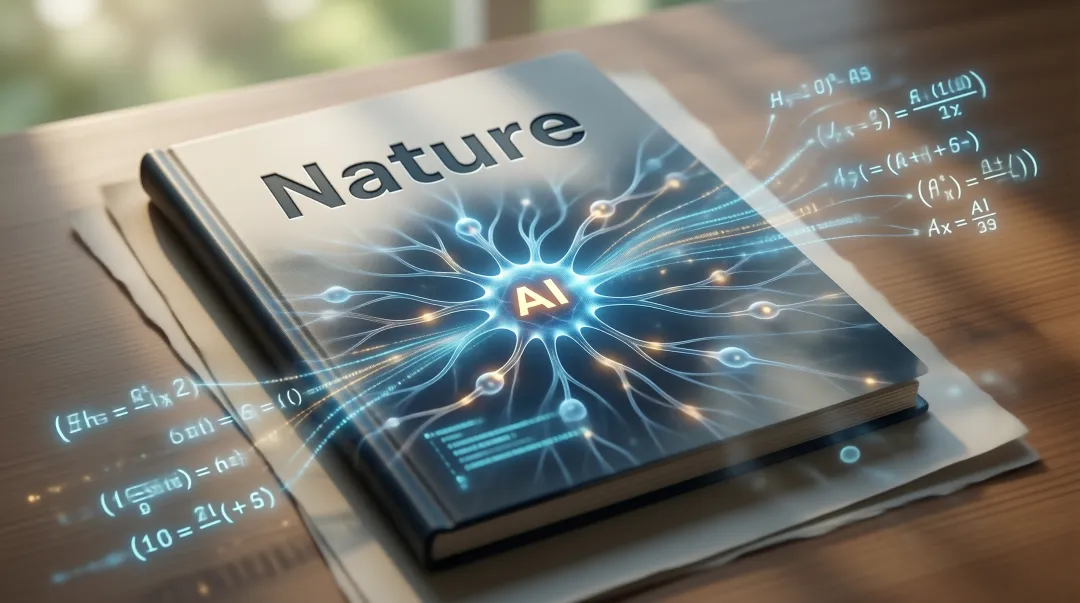
📊 In March 2026, a Nature paper shook the entire academic world. The title was explosive: "Towards end-to-end automation of AI research." For the first time, humanity saw that AI can not only run experiments and write papers, but also review its own work.
📊 2026年3月,一篇 Nature 论文震动了整个学术界。标题炸裂:「Towards end-to-end automation of AI research」,人类第一次看见:AI不仅能做实验、写论文,还能给自己审稿。
🟡 A system called The AI Scientist has achieved full end-to-end automation of the scientific process for the first time. From generating ideas, searching literature, writing code and running experiments, to writing papers and automatic peer review — no human intervention needed at any stage.
🟡 一个叫 The AI Scientist 的系统,首次实现了科学研究的全流程自动化。从产生想法、搜索文献、写代码做实验,到写论文、自动审稿,全程不需要人插手。
🟡 This isn't science fiction. The paper is already out, published in Nature.
What Can It Do?
它能做什么?
The AI Scientist's workflow consists of four phases: (1) automated idea generation from existing literature, (2) experiment design and execution using tree search to write code, tune hyperparameters, and run experiments, (3) paper writing that compiles results into complete academic papers, and (4) automated peer review where another AI model scores the paper with accuracy rivaling human reviewers.
The AI Scientist 的工作流程分为四个阶段:1️⃣ 自动产生研究想法 — 让 LLM 基于现有文献提出新假设。2️⃣ 实验设计与执行 — 用树状搜索自动写代码、调超参、跑实验。3️⃣ 论文撰写 — 把实验结果整理成完整的学术论文。4️⃣ 自动审稿 — 另一个 AI 模型对论文打分,准确率与人类审稿人相当。
🟢 The most explosive data point: the automated reviewer predicts conference acceptance decisions with accuracy matching human reviewers.
🟢 最炸裂的数据:自动审稿系统预测会议录用结果的准确率,与人持平。
🔵 This means the most central环节 of academic publishing — peer review — has been breached by machines for the first time.
🔵 这意味着学术出版最中心的环节,同行评审,第一次被机器突破了。
💡 If academic research is a gold mine, humans used to do both the prospecting and the mining. Now AI can at least contract the mining work.
Is the Quality Good Enough?
质量够硬吗?
🔴 You might ask: can AI-written papers actually be read? The Nature data provides the answer:
🔴 你可能会问:AI写的论文能看吗?Nature 上的数据给出了答案:
| 指标 | The AI Scientist | 人类研究人员 |
|---|---|---|
| 论文产出速度 | 每几小时一篇 | 数周至数月 |
| 审稿匹配度 | 与人类持平 | 基准水平 |
| 随模型升级 | 质量持续提升 | 受限于个人能力 |
| 覆盖环节 | 全流程 | 需团队分工 |
🔵 A critical finding in the paper: as the underlying models improve (from GPT-3 to GPT-5.3), the quality of generated papers significantly increases. The newer the version, the better it writes, and this trend is accelerating.
🔵 更关键的是论文中的一个发现:随着底层模型持续升级(从 GPT-3 到 GPT-5.3),生成论文的质量也在显著提升。版本越新,它写得越好,这种趋势还在加速。
🔴 Counterpoint: scholars like Dean Ball point out that The AI Scientist is currently used for grunt work like algorithm efficiency optimization, far from replacing top scientists' original thinking. "Next year it won't be doing genius work — it'll be doing laborer work."
🔴 反方观点:Dean Ball 等学者指出,AI Scientist 目前主要用于算法效率优化这类"苦活",还远远谈不上取代顶级科学家的原创性思维。"明年它在做的不是天才的工作,是苦力的工作。"
🔵 本节语法:① "consists of" — 表示组成部分 ② "has been breached" — 现在完成时被动语态,表示已经发生且结果持续 ③ "the newer... the better" — 比较级平行结构表示相关性
More Than Just Writing Papers
不只是写论文
🎯 This race has far more players than just The AI Scientist. Google's AlphaEvolve uses LLMs to guide algorithmic evolution, discovering optimization approaches humans never thought of in chip design and data center scheduling.
🎯 这条赛道的玩家远不止 The AI Scientist 一个。Google 的 AlphaEvolve 用 LLM 引导算法进化,已经在芯片设计、数据中心调度等领域发现了人类未曾想到的优化方案。
🟡 Google DeepMind researcher Matej Balog says: "Often you look at what the system discovers, and you actually learn from that discovery."
🟡 Google DeepMind 的研究员 Matej Balog 表示:「经常你看着 AI 发现的东西,反而从中学到了新知识。」
Meanwhile, startup Ricursive Intelligence is trying to shrink chip design cycles from one to two years down to days. Their roadmap has three phases: helping human designers → full automation → AI designing chips to train better AI.
另一边,Ricursive Intelligence 正试图把芯片设计周期从一到两年缩短到几天。路线图有三阶段:帮人类设计 → 完全自动化 → AI 设计芯片来训练更好的 AI。
🟢 This is no longer just tool evolution — it's a paradigm shift in scientific discovery. Humans used to propose hypotheses, and machines verified them. Now machines are starting to compete with humans in hypothesis generation.
🟢 本节语法:① "has far more... than just" — 表示远不止 ② "shrinking from... down to" — 表示大幅缩减 ③ "used to" — 表示过去的惯常行为(现在已改变)
Where Is the Ceiling?
天花板在哪?
⚠️ There are also sobering voices. Nathan Lambert at the Allen AI Institute proposed the concept of lossy self-improvement (LSI): friction increases during self-improvement cycles, making progress harder as systems grow more complex.
⚠️ 也有不少冷静的声音。Allen AI 研究所的 Nathan Lambert 提出了 **lossy self-improvement(有损自我改进)**的概念:自我改进过程中摩擦不断增大,系统越复杂,改进越难。
Furthermore, today's AI Scientist has a fatal shortcoming: it can only do compute-based science — machine learning experiments. Real-world science — chemical synthesis, biological experiments, physical measurements — still requires physical robots.
此外,今天的 AI 科学家有一个致命短板:它只能做纯计算的科学(机器学习实验)。真实世界的科学,化学合成、生物实验、物理测量,还需要实体机器人。
🟣 But from another perspective: if AI can already handle compute-based science, that alone is a massive playing field. The global volume of ML papers is growing exponentially, and The AI Scientist can at least handle the "paper mill" level of repetitive work for humanity.
🟣 但换个角度看:如果今天 AI 能做的事情是纯计算科学,那这条赛道本身就足够大了。全球机器学习论文的数量正在指数级增长,AI 科学家至少可以帮人类处理掉"论文工厂"级别的重复劳动。
🔴 本节语法:① "friction increases as systems grow more complex" — 时间伴随关系 ② "has a fatal shortcoming" — 表示致命缺陷 ③ "can at least handle" — 情态动词表示最低能力
🟣 What you're seeing isn't AI replacing scientists. It's the beginning of a division of labor. The ability to ask good questions is transforming from a uniquely human skill into a playing field where humans and AI compete together.
🟣 你看到的不是 AI 取代科学家,而是一个分工变迁的起点。提出好问题的能力,正在从人类独有的技能,变成人类和 AI 共同竞争的赛场。
🟣 本节语法:① "isn't... it's" — 否定对比强调 ② "is transforming from... into" — 表示正在发生的根本转变