 夜雨聆风
夜雨聆风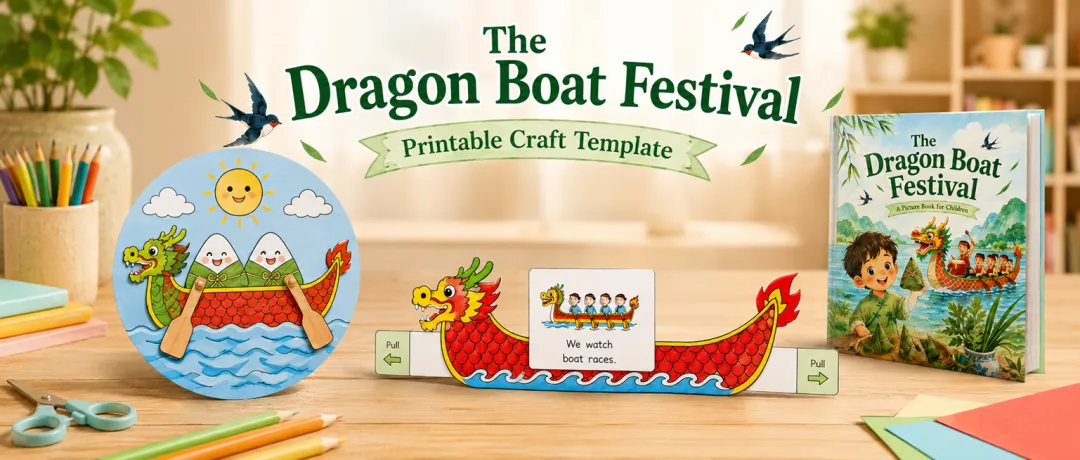
端午节快到了,这次配套绘本 The Dragon Boat Festival,我们做了一套适合 6–9 岁孩子使用的英文拓展资源。
这套资源不是简单涂色,也不是单纯做手工,而是围绕一个目标来设计:
读懂端午节,用英文简单介绍端午节。
孩子会在绘本里读到 Qu Yuan、dragon boat race、rice dumpling、sachet、mugwort、calamus、five-color threads 等内容。资源包就围绕这些核心词和句子展开,让孩子边读、边做、边说。
Today is a special day.
It is the Dragon Boat Festival.
In Chinese, we call it Duanwu Jie.
今天是一个特别的日子。今天是端午节。
在中文里,我们叫它“端午节”。
The Dragon Boat Festival is a traditional Chinese festival.
It comes on the fifth day of the fifth lunar month.
Families get together.
Children learn old stories.
People enjoy food, games, and fun races.
端午节是中国的传统节日。它在农历五月初五。
家人们聚在一起。孩子们听古老的故事。
人们享受美食、游戏和有趣的比赛。
Long ago, there was a great poet.
His name was Qu Yuan.
He loved his country very much.
He cared about the people.
He wrote beautiful poems.
很久以前,有一位伟大的诗人。
他的名字叫屈原。他非常热爱自己的国家。
他关心百姓。他写了许多美丽的诗篇。
One day, Qu Yuan felt very sad
because his country was in trouble.
Later, he went into the river.
People missed him very much.
有一天,屈原非常难过,因为他的国家遇到了困难。
后来,他投身江中。人们非常想念他。
The people rowed boats
to look for Qu Yuan.
They beat drums loudly.
“Boom! Boom! Boom!”
This is one reason
we have dragon boat races today.
人们划着船,去寻找屈原。他们大声敲鼓。
“咚!咚!咚!”这就是今天我们有赛龙舟习俗的原因之一。
People also threw rice into the river.
They hoped the fish would eat the rice
and not hurt Qu Yuan.
Today, we remember him
by eating zongzi.
人们还把米撒进江里。他们希望鱼儿吃米,不要伤害屈原。
今天,我们通过吃粽子来纪念他。
Zongzi are sticky rice dumplings.
They are wrapped in leaves.
Some are sweet.
Some are salty.
They smell good.
They taste yummy!
粽子是糯米做的食物。它们被叶子包起来。
有些是甜的。有些是咸的。它们闻起来很香。
吃起来真美味!
Dragon boat races are exciting.
The boats are long
and look like dragons.
Many people row together.
A drummer helps them keep the beat.
“Go! Go! Go!”
赛龙舟非常激动人心。龙舟很长,看起来像龙。
许多人一起划船。鼓手帮助大家保持节奏。“加油!加油!加油!”
At the Dragon Boat Festival,
some families hang mugwort and calamus by the door.
They are special plants.
People believe they can bring health
and keep bad things away.
在端午节,
有些家庭会在门边挂艾草和菖蒲。它们是特别的植物。
人们相信它们可以带来健康,也可以驱赶不好的东西。
Children may wear colorful sachets.
A sachet is a small bag.
It smells nice.
Some children also wear
five-color threads for good luck.
孩子们可能会佩戴彩色香囊。
香囊是一个小袋子。它闻起来香香的。
有些孩子还会戴五彩绳,寓意好运。
Now we celebrate the Dragon Boat Festival
with family and friends.
We eat zongzi.
We watch dragon boat races.
We hang mugwort and calamus.
We wear sachets and five-color threads.
We remember Qu Yuan, too.
现在,我们和家人朋友一起庆祝端午节。
我们吃粽子。我们看赛龙舟。我们挂艾草和菖蒲。
我们戴香囊和五彩绳。我们也纪念屈原。
Now I can introduce the Dragon Boat Festival:
现在,我可以介绍端午节了:
The Dragon Boat Festival is a traditional Chinese festival.
It is on the fifth day of the fifth lunar month.
We eat zongzi and watch dragon boat races.
Some families hang mugwort and calamus.
Children may wear sachets and five-color threads.
We remember Qu Yuan.
Happy Dragon Boat Festival!
端午节是中国的传统节日。它在农历五月初五。
我们吃粽子,也看赛龙舟。有些家庭会挂艾草和菖蒲。
孩子们可能会戴香囊和五彩绳。我们纪念屈原。端午节快乐!

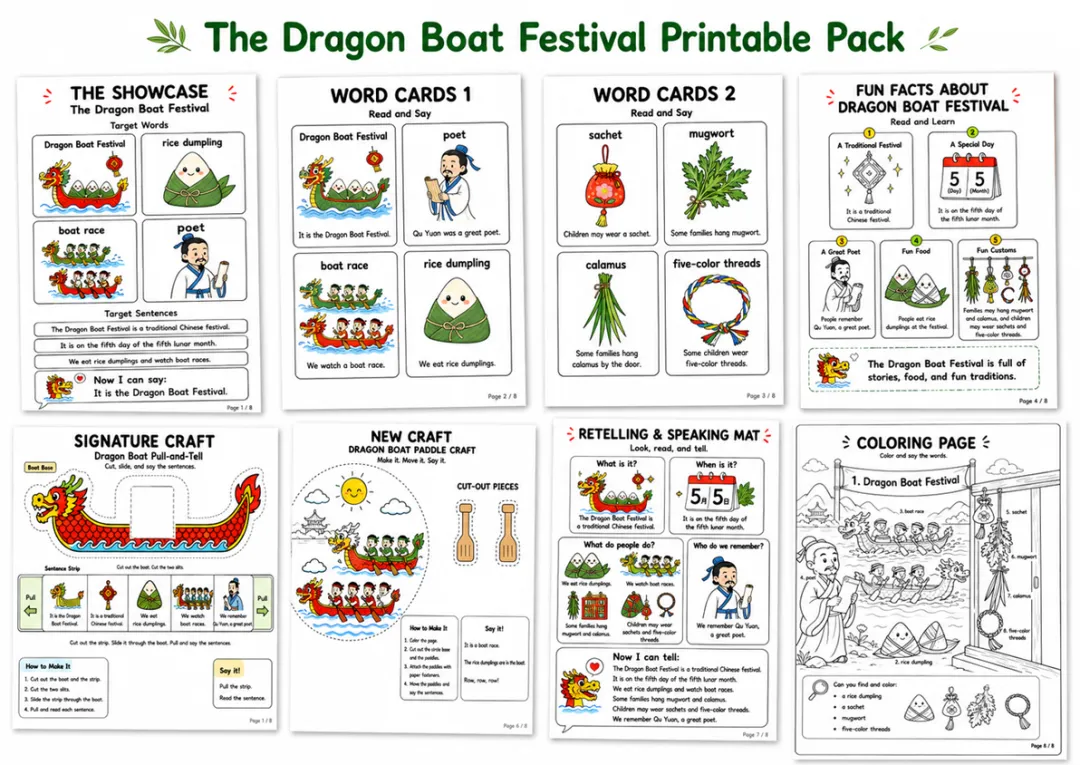
1、先认识:The Showcase
第一页是整套资源的学习总览。
孩子先通过图片认识端午节的几个核心元素:
Dragon Boat Festivalrice dumplingboat racepoet
下面配有目标句:
The Dragon Boat Festival is a traditional Chinese festival.It is on the fifth day of the fifth lunar month.We eat rice dumplings and watch boat races.
这一页适合放在最前面热身。家长可以先带孩子看图说词,再读句子。读完后,孩子对“端午节是什么、会做什么”就有了基本印象。
2、词卡:Word Cards 1 & 2
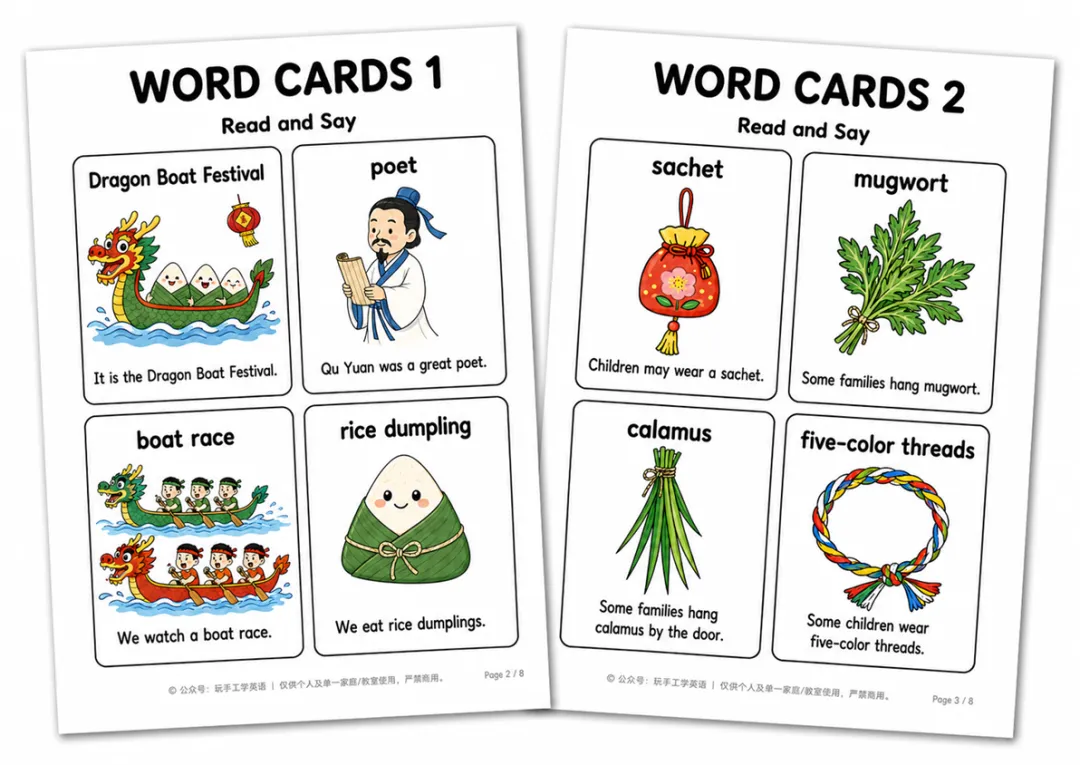
第一组偏故事主线;第二组偏节日习俗。
每张词卡都有图片和例句,孩子不是孤立背单词,而是在句子里理解词义。
比如:
Children may wear a sachet.Some families hang mugwort.Some children wear five-color threads.
这些词平时不常见,但放在端午节场景里,孩子很容易通过图片建立理解。
使用时可以这样做:
先读单词,再读例句,最后盖住单词看图回忆。熟悉后,也可以让孩子用词卡做简单介绍:
We eat rice dumplings.We watch boat races.We remember Qu Yuan, a great poet.
3、读文化:Fun Facts Poster
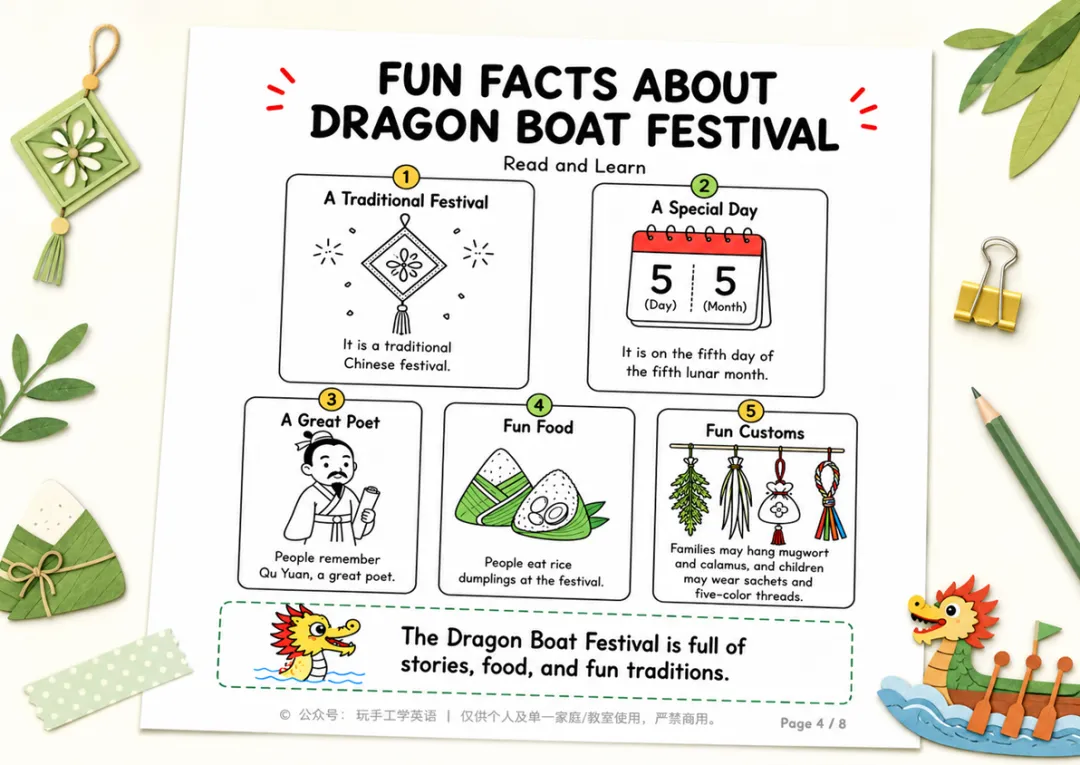
第四页是端午节趣味知识海报。这页把绘本里的重点信息整理成几块:
端午节是传统中国节日。它在农历五月初五。人们纪念 Qu Yuan。大家吃 rice dumplings。有些家庭会挂 mugwort 和 calamus,孩子会戴 sachets 和 five-color threads。
这页适合在读完绘本后使用,帮助孩子把故事和文化习俗连起来。
它不是练习题,更像一张“节日信息图”。家长可以带孩子指图问答:
What do people eat?What do people watch?Who do we remember?
孩子能回答出短句就很好。
4、输出:Retelling & Speaking Mat
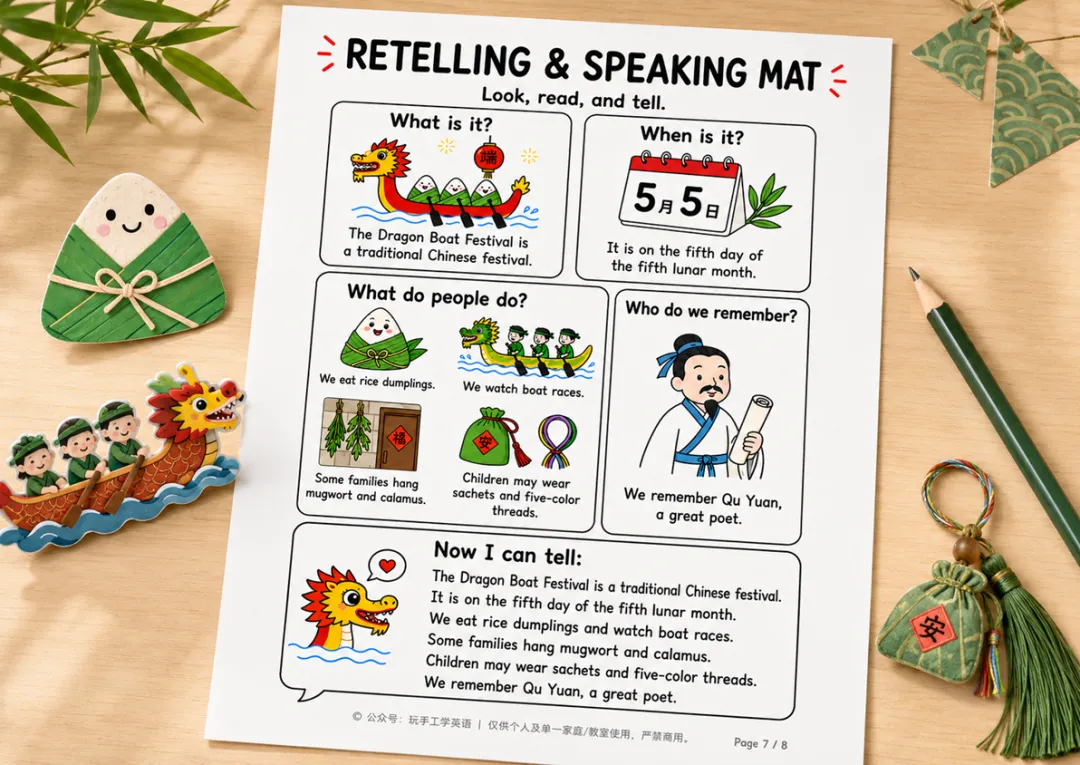
第七页是口语复述页。
前面孩子已经读过词、看过海报、做过手工,这一页就是把内容串起来。
页面按几个问题来组织:
What is it?When is it?What do people do?Who do we remember?
孩子可以借助图片和句子,完整说出:
The Dragon Boat Festival is a traditional Chinese festival.It is on the fifth day of the fifth lunar month.We eat rice dumplings and watch boat races.Some families hang mugwort and calamus.Children may wear sachets and five-color threads.We remember Qu Yuan, a great poet.
这就是这套资源最后想达到的效果:孩子不是只知道“端午节”三个字,而是能用英文把它介绍出来。
5、轻松收尾:Coloring Page
最后一页是端午节主题涂色页。
孩子涂色时,可以顺便找一找、读一读这些端午节主题词汇。
这页适合放在最后,作为复习和放松。也可以用来做课堂展示,孩子涂完后指着图说:
I see a boat race.I see rice dumplings.I see a sachet.

卡纸 打印模板(文末有下载方法) 彩笔或蜡笔 剪刀 胶棒 两脚钉
手工一:Dragon Boat Pull-and-Tell
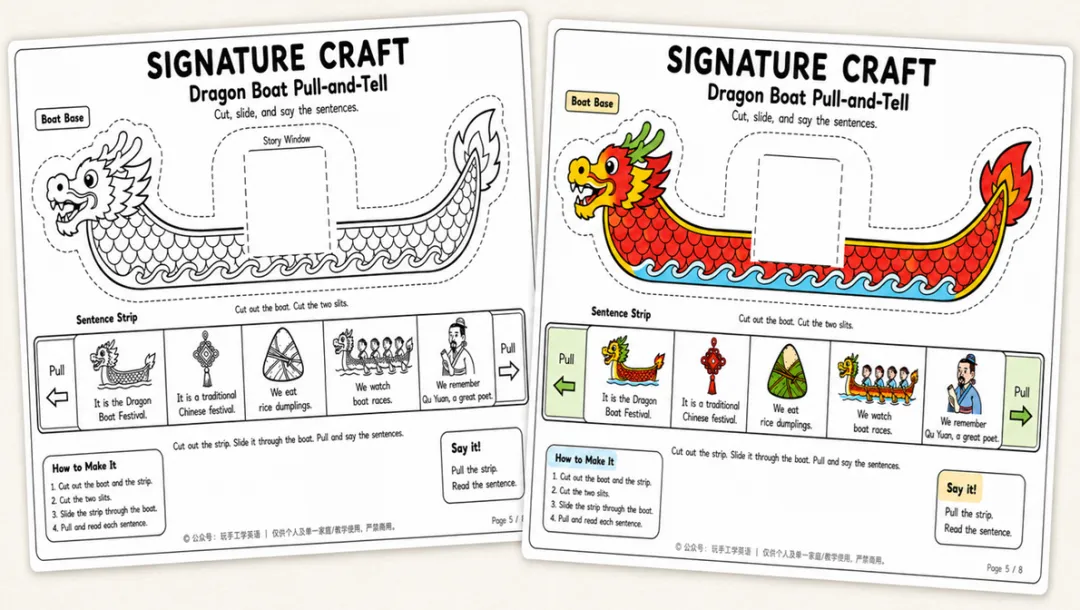
第五页是第一个核心手工:龙舟拉条。
孩子剪下龙舟和拉条,把拉条从龙舟中间穿过去。拉动时,窗口里会出现不同画面和句子。
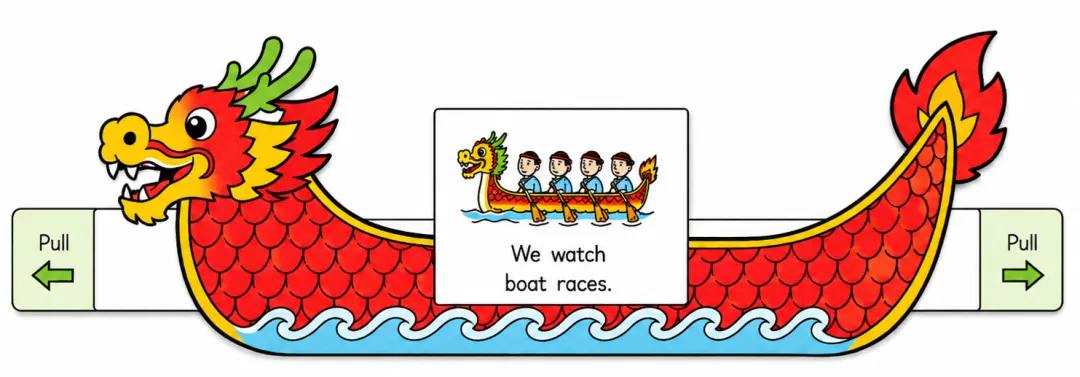
比如:
It is the Dragon Boat Festival.We eat rice dumplings.We watch boat races.We remember Qu Yuan, a great poet.
这个手工的重点不是“做完好看”,而是让孩子一边拉、一边读、一边复述。
每拉出一格,就说一句。几个句子连起来,就是一段简单的端午节介绍。
这比单纯让孩子背诵自然很多,也更有参与感。
手工二:Dragon Boat Paddle Craft
第六页是第二个手工:圆形龙舟划桨手工。
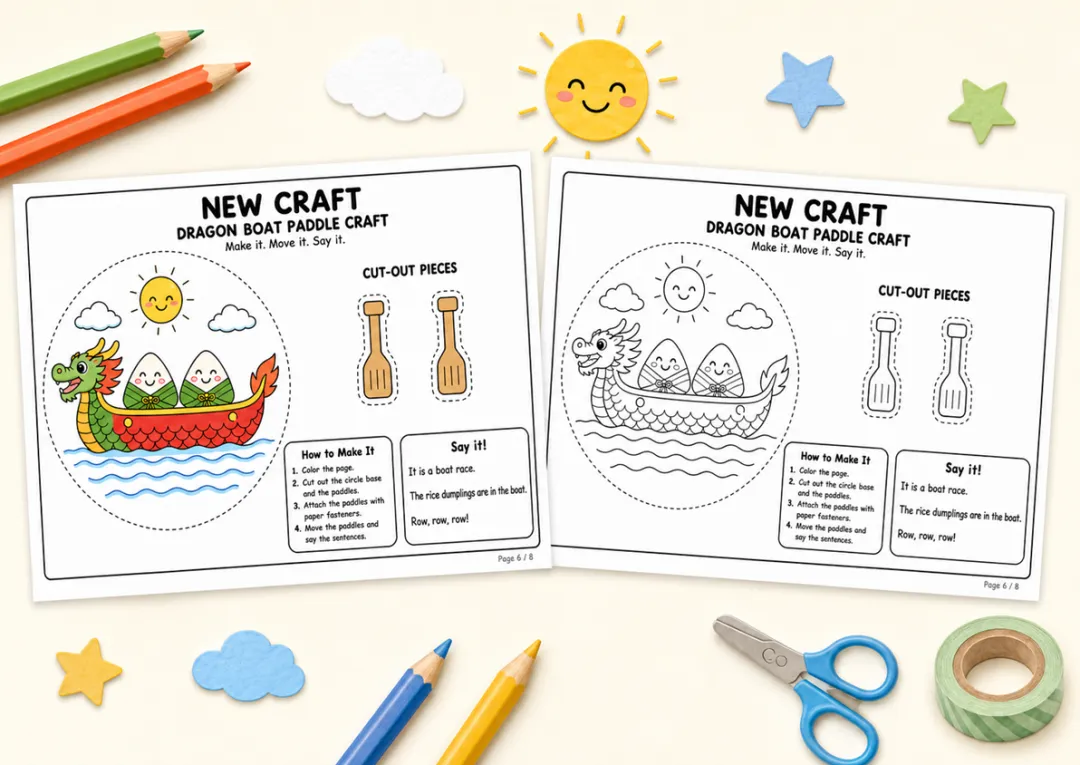
孩子先剪下圆形底板和两支船桨,再用两脚钉把船桨固定在龙舟上。完成后,船桨可以上下摆动。
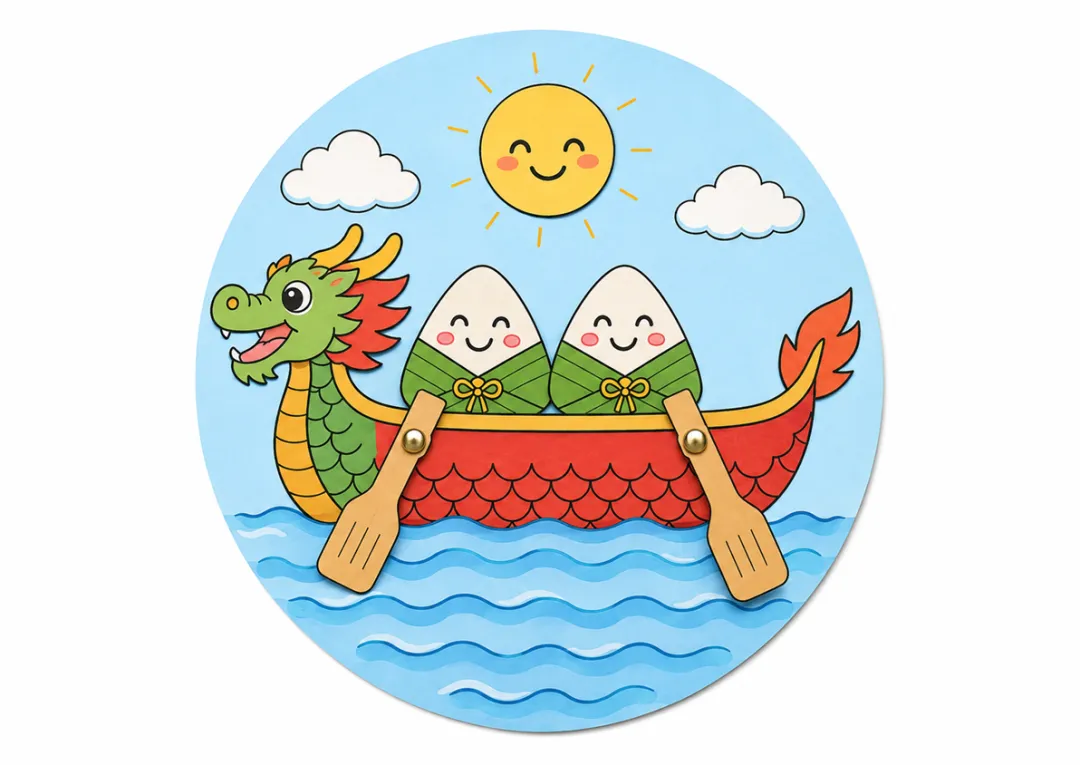
这页更偏趣味互动,适合低门槛收尾,也很适合课堂展示。
孩子可以一边摆动船桨,一边说:
It is a boat race.The rice dumplings are in the boat.Row, row, row!
这类动作句非常适合孩子开口。尤其是 “Row, row, row!” 简单、有节奏,孩子很容易跟着说。
推荐阅读:
端午节:Dragon Boat Festival Wishes(含资源)
电子资源清单:
音、视频及绘本电子版
文中提到的所有素材