夜雨聆风
夜雨聆风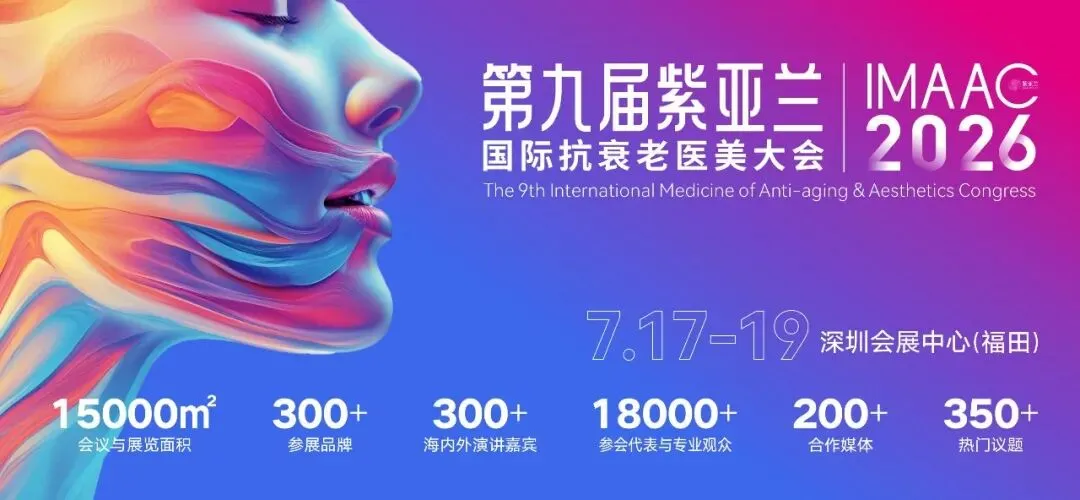
数智化浪潮下,AI已成为医美产业升级的核心引擎。过去依托传统运营、经验诊疗、粗放获客的发展模式,已无法适配当下精细化、精准化、高效化的市场需求。在全球医美技术融合创新、国内医美消费升级的双重趋势下,如何借力AI打通获客、咨询、诊疗、留存全链路,如何接轨国际前沿智能医美技术,如何实现降本增效、构筑品牌差异化壁垒,成为所有医美机构的核心命题。
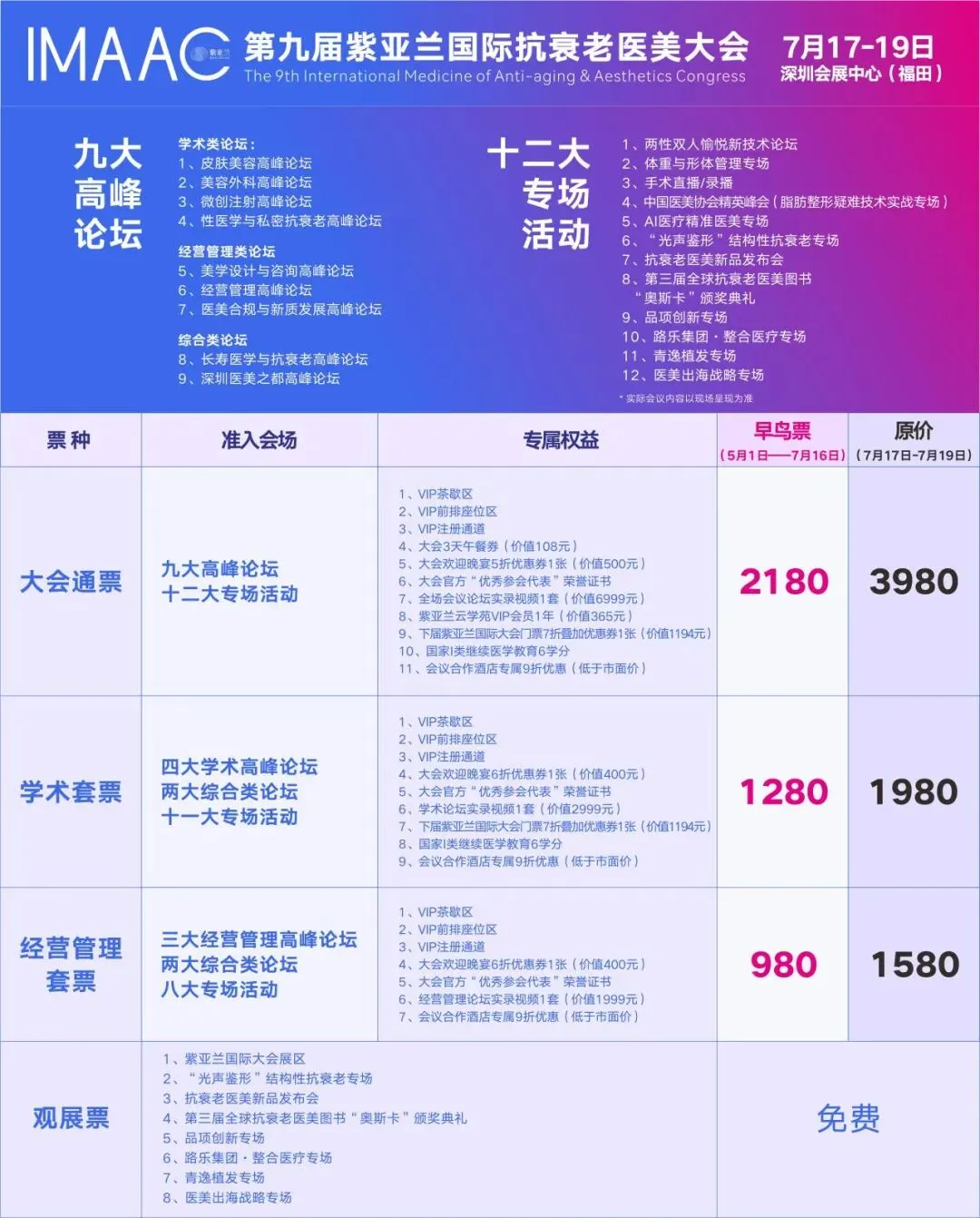
7月17-19日,第九届紫亚兰国际抗衰老医美大会即将重磅启幕!大会特别打造「AI医疗精准医美专场」,以实战干货+国际视野双重加持,为您全景式拆解医美数智化转型的增长新路径。打通获客→咨询→诊疗→留存全链路,接轨国际智能技术,实现降本增效,构筑差异化竞争壁垒。
部分精彩课题抢先看:
(按演讲时间排序)
【重磅首发】
一线专家与创新课题抢先曝光
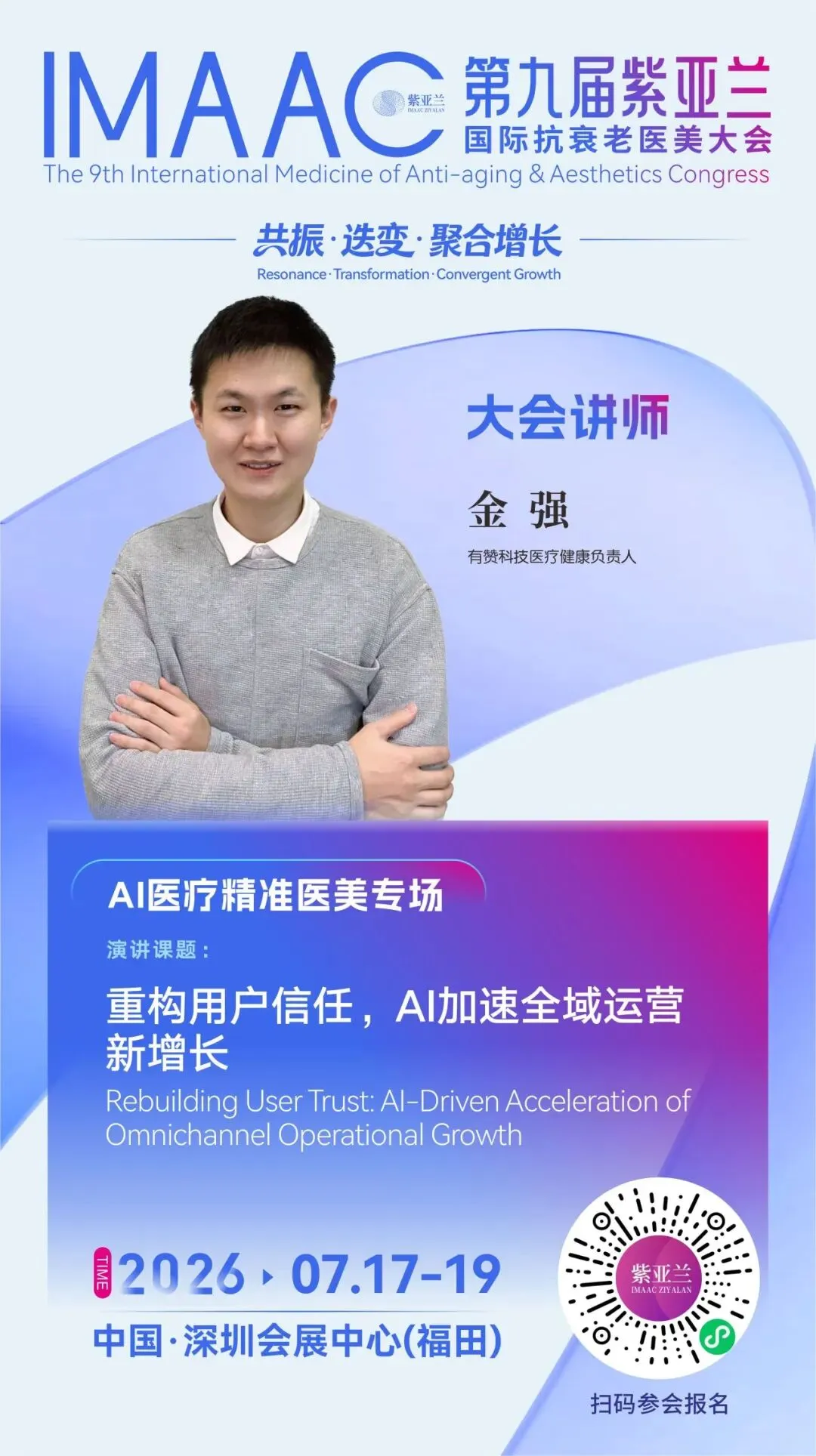
金 强《重构用户信任,AI加速全域运营新增长》
2025-2026,医疗健康行业在发生着巨大的变革。尤其是抗衰类健康产品和医美机构,在有赞增长迅速,有赞将呈现,对行业的进一步观察和机会点洞察。我们同样发现,行业内获客路径在改变,客户的信任链路在不断拉长,客户的需求在发生着巧妙的转变,如何通过有效的运营手段和AI做全新的增长,也是本次分享的重点命题。
AI提升获客:2026年,国内各大模型月活纷纷破亿,其中问答占据着主要场景,而客户在医疗健康知识的获取,成为机构和品牌的必争之地。
AI提升转化:消费者选择抗衰和医美产品,第一要素永远是信任而不是价格,如何通过锋利的AI能力,提升医疗健康级别服务客户的质量和转化,是接下来锁定企业和品牌胜局的关键。
AI组织管理:当下,仍有很多的企业和老板,仍停留在AI焦虑,到底组织应该怎么建设,哪些管理需要被工具替代,哪些应该交给人,从标杆企业给到现场企业进一步思考。
AI的核心场景应用,重构用户全生命周期信任链路,实现业务全域新增长。
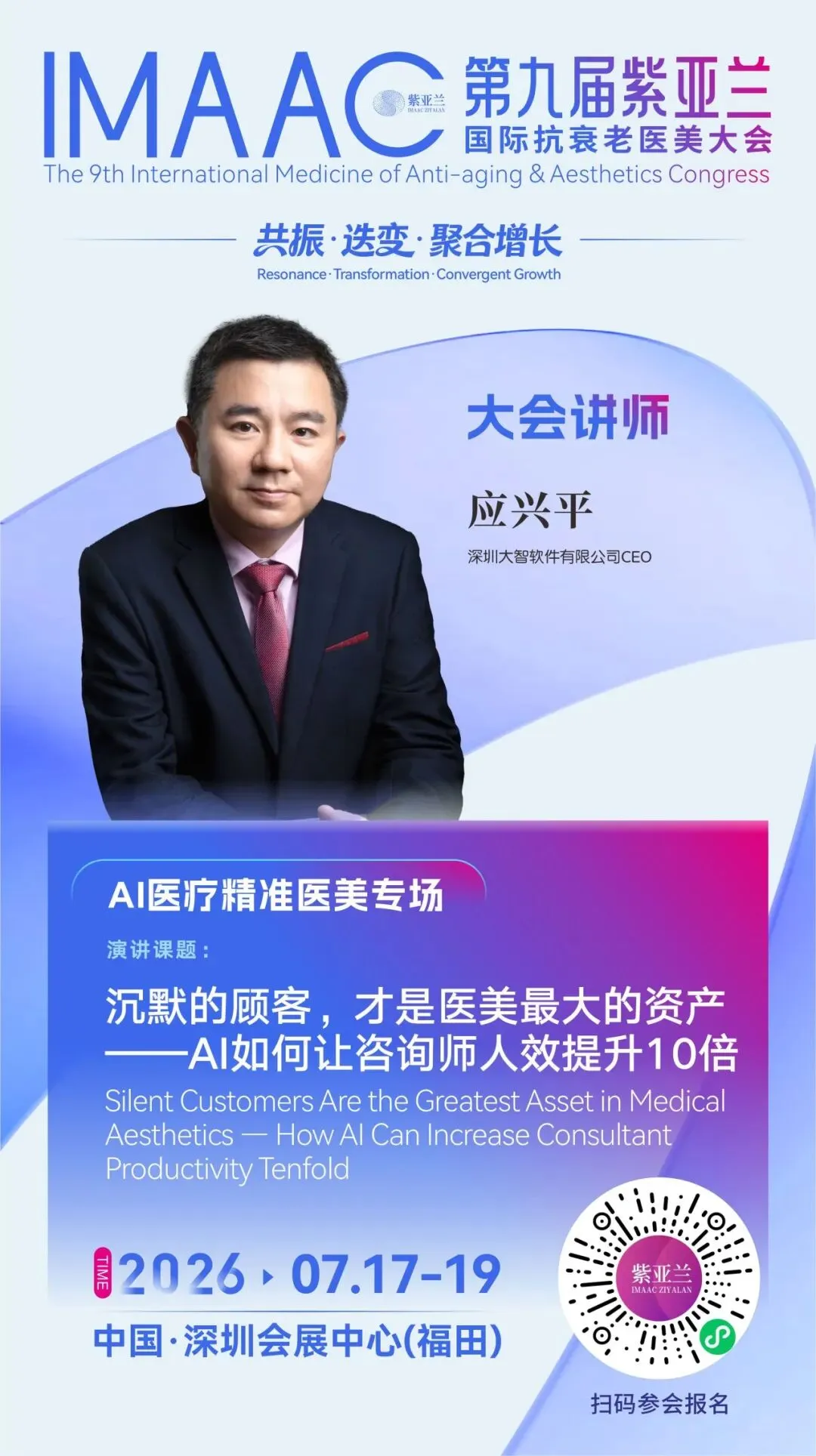
应兴平《沉默的顾客,才是医美最大的资产——AI如何让咨询师人效提升10倍》
医美行业普遍存在大量沉默存量客群,其激活成本远低于新客开发,是机构极易被忽视的核心资产。传统咨询模式依赖人工经验,客户分层粗放、跟进低效,大量存量资源闲置浪费。本次演讲立足医美实战场景,聚焦存量客户价值挖掘,拆解AI技术在客户标签分层、需求精准研判、智能跟进触达、标准化咨询赋能等核心环节的落地应用,解锁咨询师降本增效新路径,助力机构摆脱低效获客困境,实现咨询人效十倍提升、存量业绩长效增长。
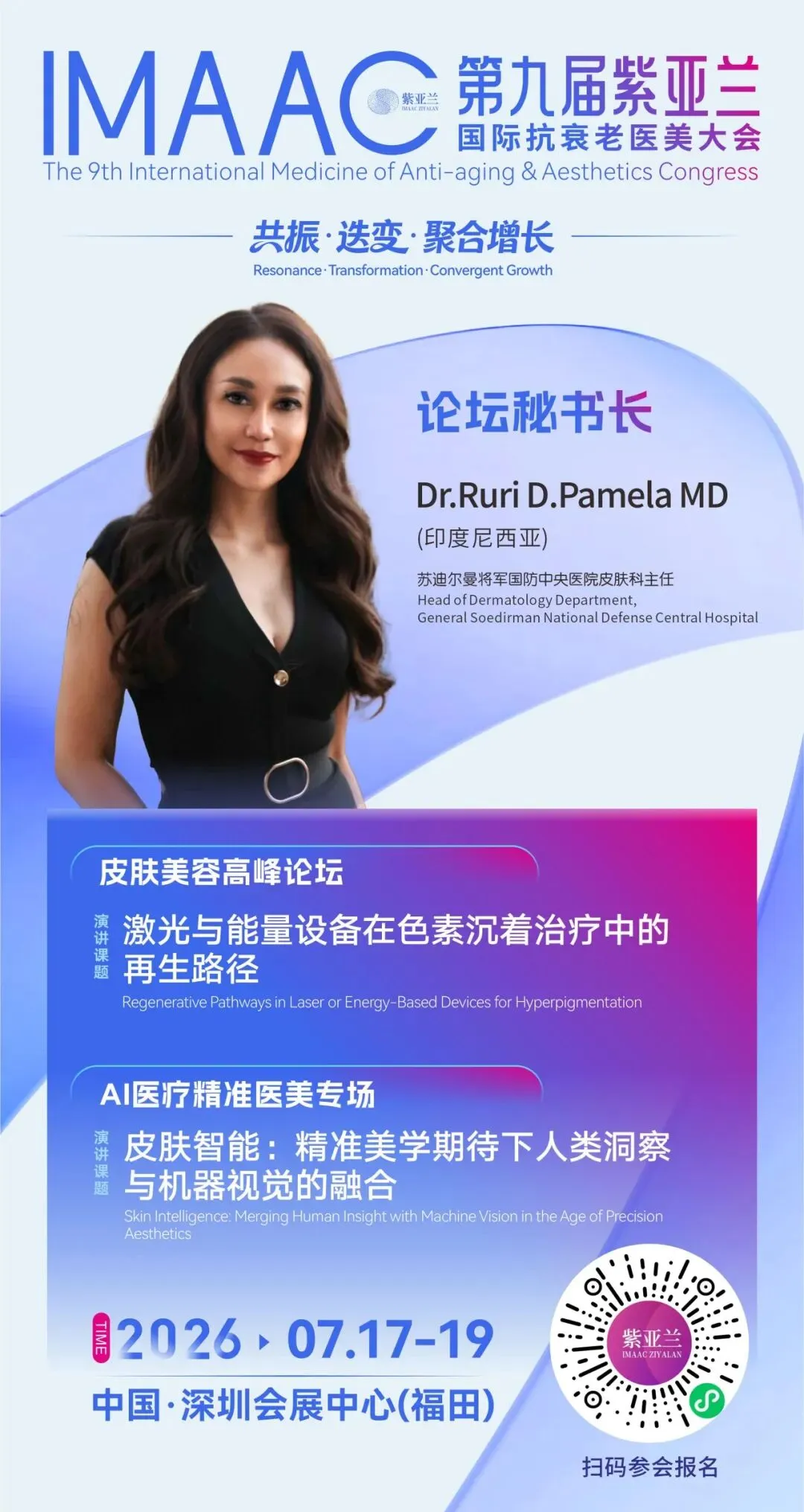
Dr. Ruri D. Pamela MD《皮肤智能:精准美学期待下人类洞察与机器视觉的融合》
人工智能正将皮肤科从依赖视觉经验的学科,转变为数据驱动的精准医学。随着机器学习发展为多模态诊断系统,“皮肤智能”成为人类临床判断与机器视觉融合的新范式。
AI在皮肤疾病识别方面已达到皮肤科医生水平,并结合影像分析、暴露组学数据及生物物理指标,实现对皮肤健康的多维度理解与个性化评估。在医美领域,AI可用于虚拟评估、疗效模拟及长期随访,提高诊疗一致性。
该系统并非替代医生,而是增强临床决策能力,同时强调透明性、公平性与可解释性等伦理原则。最终,皮肤智能推动皮肤科从被动诊断走向预测性与个性化治疗,使技术成为精准美学的延伸工具。
Skin Intelligence: Merging Human Insight with Machine Vision in Precision Aesthetics
Artificial intelligence is transforming dermatology from visual intuition to data-driven precision. As machine learning evolves into multimodal diagnostic systems, it enhances how clinicians interpret and treat skin through what we define as Skin Intelligence—the integration of human reasoning and machine vision.
AI systems now achieve dermatologist-level accuracy in detecting skin diseases and, when combined with imaging, exposome data, and biophysical metrics, enable a more holistic and personalized understanding of skin health. In aesthetics, AI supports virtual assessment, outcome simulation, and longitudinal monitoring, improving consistency in care across diverse populations.
Rather than replacing clinicians, Skin Intelligence amplifies decision-making while maintaining human oversight. Ethical considerations such as transparency, inclusivity, and interpretability remain essential.
Ultimately, this paradigm shifts dermatology from reactive diagnosis to predictive, personalized care, where technology extends the clinician’s ability to deliver precision aesthetics.
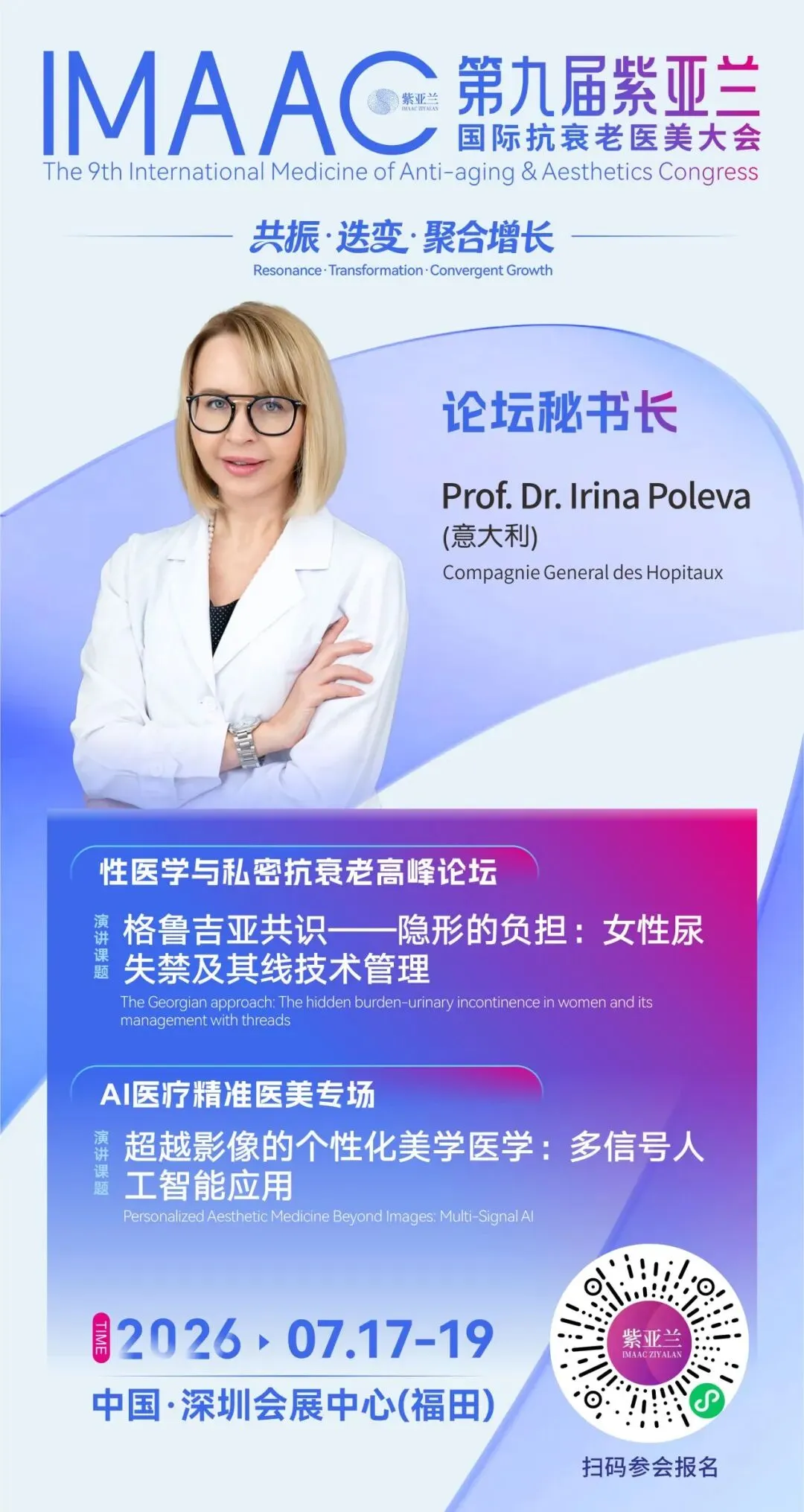
Prof. Dr. Irina Poleva《超越影像的个性化美学医学:多信号人工智能应用》
人工智能在医美领域已被广泛应用,主要体现在基于图像的皮肤与面部分析系统中。尽管这些工具在标准化与数据记录方面具有显著优势,但其临床价值仍然有限,因为衰老是一个动态且多因素驱动的过程,无法仅通过静态图像全面反映。到2026年,医美领域人工智能的核心挑战不再是图像识别的精确度,而是如何整合异质数据并转化为具有临床意义的预测能力。本次演讲聚焦于从单一图像人工智能向多信号与多组学系统的转变,以实现个体化衰老轨迹的建模。多信号人工智能整合皮肤影像、患者报告结局、生活方式与暴露组数据、治疗史以及特定生物标志物。多组学数据则以务实方式应用,包括靶向基因组检测、表观遗传衰老标志物、重点蛋白组与代谢组分析、微生物组评估以及常规实验室指标,而全面探索性组学目前仍主要局限于科研领域。本次演讲进一步阐明这些数据的现实来源:学术机构提供高质量组学数据与生物学参考模型,专业实验室为私立医疗机构提供可规模化的生物标志物检测服务,私立医美机构则贡献纵向表型数据、治疗方案、随访结果及患者主观感受。通过整合多方数据来源,人工智能可由分类工具升级为预测工具,从而支持反应人群识别、治疗方案个体化以及长期疗效优化。同时,医生的角色也逐步转向对人工智能系统的解读、监管以及维护患者信任。
Artificial intelligence is widely used in aesthetic medicine, mainly through image-based systems for skin and facial analysis. While these tools improve standardization and documentation, their clinical impact is limited because aging is a dynamic, multifactorial process that cannot be captured by static images alone. In 2026, the key challenge for AI in aesthetics is not image accuracy, but the ability to integrate heterogeneous data into clinically useful predictions.This presentation focuses on the transition from image-only AI to multi-signal and multi-omic systems capable of modeling individual aging trajectories. Multi-signal AI integrates skin imaging, patient-reported outcomes, lifestyle and exposome data, treatment history, and selected biological markers. Multi-omic data are used pragmatically, relying on targeted genomic panels, epigenetic aging markers, focused proteomic and metabolomic profiles, microbiome assessments, and conventional laboratory parameters, while full discovery omics remain largely confined to research settings.The talk clarifies where these data realistically originate. Academic institutions provide high-quality omic datasets and biological reference models. Specialized laboratories enable scalable biomarker testing for private clinics. Private aesthetic practices contribute longitudinal phenotype data, treatment protocols, follow-up outcomes, and patient perception. Integrating these sources allows AI to move from classification to prediction, supporting responder identification, protocol personalization, and improved long-term outcomes. The physician’s role evolves toward interpretation, supervision of AI systems, and preservation of patient trust.
更多重磅嘉宾及议程即将公布,敬请期待
↓↓↓
Day1
7月17日(周五)
时间 | AI医疗精准医美专场 |
10:00-10:30 | 重构用户信任,AI加速全域运营新增长 金 强 有赞科技医疗健康负责人 |
10:30-11:00 | 沉默的顾客,才是医美最大的资产——AI如何让咨询师人效提升10倍 应兴平 深圳大智软件有限公司CEO |
11:00-11:30 | 皮肤智能:精准美学期待下人类洞察与机器视觉的融合 Skin Intelligence: Merging Human Insight with Machine Vision in the Age of Precision Aesthetics Dr. Ruri D. Pamela MD 苏迪尔曼将军国防中央医院皮肤科主任Head of Dermatology Department , General Soedirman National Defense Central Hospital |
11:30-12:00 | 超越影像的个性化美学医学:多信号人工智能应用 Personalized Aesthetic Medicine Beyond Images: Multi-Signal AI Prof. Dr. Irina Poleva Compagnie General des Hopitaux |
用实战干货打破认知壁垒
以国际视野重构增长逻辑
7月17-19日,深圳会展中心(福田)
第九届紫亚兰国际抗衰老医美大会
AI医疗精准医美专场
解锁医美数智化长效增长新路径
IMAAC
参会购票咨询
扫码领取福利