文档文本内容
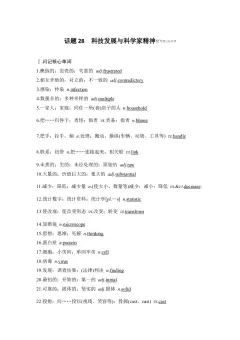
话题 26 科学家精神
Ⅰ.闪记核心单词
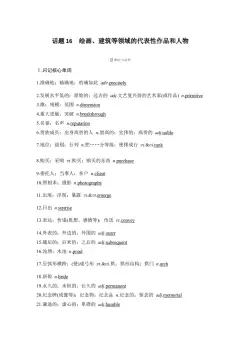
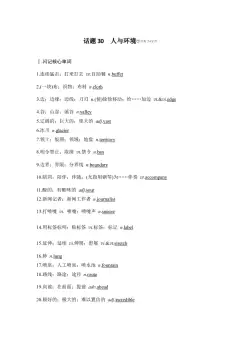
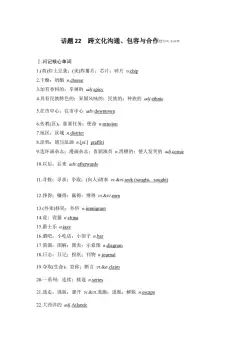
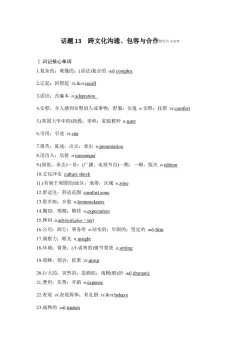
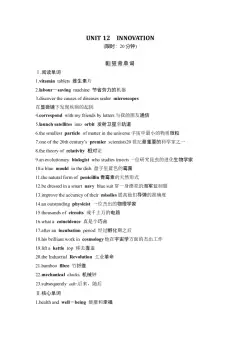
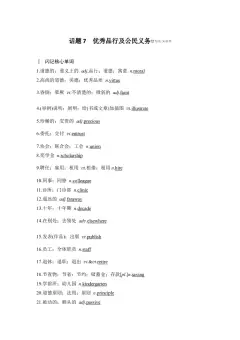
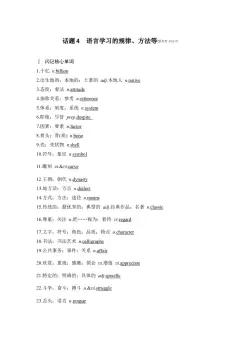
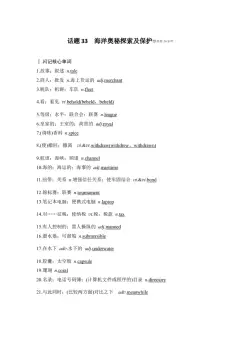
1.生理学;生理机能 n.physiology
2.至关重要的;关键性的 adj.crucial
3.必不可少的;极其重要的;充满生机的 adj.vital
4.目标;目的 n.客观的 adj.objective
5.性质;特征;财产 n.property
6.提取物;摘录 n.提取;提炼;摘录;(用力)拔出 vt.extract
7.(使)沸腾;煮开;烧开 vt.&vi.沸腾;沸点 n.boil
8.液体 n.液体的;液态的 adj.liquid
9.(尤指经努力)获得;赢得 vt.(规章、习俗等)存在;流行 vi.obtain
10.承认(属实、权威等);(公开)感谢 vt.acknowledge
11.失败;挫败 n.击败;战胜 vt.defeat
12.显而易见;看来;显然 adv.apparently
13.物质;物品;事实根据 n.substance
14.科学(上)的;关于科学的 adj.scientific
15.主要地;一般地 adv.mostly
16.结论;推论 n.conclusion
17.迅速离开;逃跑 vi.&vt. flee(fled , fled)
18.条件;环境;状况(usually pl.) n.circumstance
19.小说家 n.novelist
20.(长篇)小说 n.novel21.推断;推定 vt.infer
22.从政者;政治家;政客 n.politician
23.众多的;许多的 adj.numerous
24.相对论;相对性 n.relativity
25.天才;天资;天赋 n.genius(pl.geniuses)
26.专利;专利证书;获得专利 n.有专利的;受专利保护的 adj.patent
27.酷爱;激情 n.passion
28.不一般的;非凡的;意想不到的 adj.extraordinary
29.逐渐地;逐步地 adv.gradually
30.偶然碰到;遇到 vt.邂逅;遭遇n.encounter
31.教授 n.professor
32.哀悼;忧伤 vt.&vi.mourn
33.非凡的;显著的 adj.remarkable
34.方法;技巧;装置;仪器 n.device
35.草稿;草案 n.起草;草拟 vt.draft
36.承诺;保证 vt.忠于;全心全意投入(工作、活动等) vi.commit→尽心尽力的;
坚定的;坚信的 adj.committed→投入;奉献;承诺 n.commitment
37.(艺术、文学、科学等的)研究院;学会;专科院校 n.academy→学业的;学
术的 adj.academic
38.植物学的 adj.botanical→植物学 n.botany
39.评价;评估 vt.evaluate→评价;评估 n.evaluation
40.清晰的;清楚的;有区别的 adj.distinct→区别;差别 n.distinction
41.分析 vt.analyse(NAmE-ze)→分析 n.analysis (pl.analyses)
42.创建;建立;把……建立在 vt.found→创建;基金会 n.foundation→创建者;创始人 n.founder
43.温柔的;文静的 adj.gentle→温柔地;温和地 adv.gently
44.结果;后果 n.consequence→随之发生的;作为结果的 adj.consequent→结果;
所以 adv.consequently
45.教授 n.professor→职业,行业 n.profession→职业的 adj.专业人士
n.professional
Ⅱ.速记重点短语
1.授予某人某物 award sb with sth/award sth to sb
2.有着……的目的 with the objective of
3.区分/明辨…… make a distinction between...
4.有希望,有指望,有前途 show promise
5.承认/认为……是…… acknowledge...as...
6.承诺做了某事 acknowledge doing sth/having done sth
7.……是大家认可的 it is acknowledged that...
8.意外地 by chance/accident
9.坚决要求做某事 insist on doing sth
10.经受得住 stand up to...
11.(正常使用造成的)磨损 wear and tear
12.专心致志于做某事 be committed to doing sth
13.承诺;保证(做某事、遵守协议或安排等) commit oneself to (sth/doing sth/do
sth)
14.得出结论 draw/come to a conclusion
15.某人突然想起 it strikes/hits/occurs to sb that...
16.辍学 quit school
17.流程图 flow chart
18.出于对知识的酷爱 out of one’s passion for knowledge
19.(开始)掌权;上台 come to power
20.执政,当权 in power21.因此,结果 as a consequence/in consequence
22.由于,因为……的结果 as a consequence of/in consequence of
23.担任;任职 take up a position
24.直立着 stand on end
25.总言之 to sum up
26.特别是 in particular
Ⅲ.快记经典句式
1.Artemisinin has become a vital part of the treatment for malaria, and is thought to
save 100 , 000 lives a year in Africa alone. (be thought to do sth)
青蒿素已成为治疗疟疾至关重要的成分,被认为仅在非洲每年就能拯救 10万人
的生命。
2.In the beginning, Tu Youyou went to Hainan, where malaria was more common,
to study malaria patients.(where引导非限制性定语从句)
起初,屠呦呦前往海南研究疟疾病人,在那儿疟疾更常见。
3.Using a lower temperature to draw out the extract, she found a substance that
worked.(现在分词短语作状语)
通过使用较低的温度萃取提取物后,她发现了一种有效的物质。
4.Later, the medicine was tested on malaria patients, most of whom recovered.(“代
词+介词+关系代词”引导非限制性定语从句)
后来,这种药在疟疾患者身上进行了试用,其中大多数患者都康复了。
5.Upon hearing that she had been awarded the Nobel Prize,she said,“...It is
indeed an honour for China’s scientific research and Chinese medicine to be spread
around the world.” (upon doing sth)
当听到自己被授予诺贝尔奖时,她说:“……中国的科学研究和中医药能够在
全世界传播确实是一种荣誉。”
6.He made numerous contributions to the world, the most well - known being thegeneral theory of relativity... (独立主格结构)
他为世界做出了许多贡献,最为知名的是广义相对论……
7.Einstein, who was Jewish,found the doors of academic institutions closed to him.
(形容词短语作宾语补足语)
身为一个犹太人,爱因斯坦发现学术机构的大门对他关闭了。
8.He had a thick moustache and long white hair, which sometimes stood on end as
though he had just received an electric shock.(as though/if 引导方式状语从句)
他胡须浓密,头发又长又白,有时会像刚遭了电击似的竖起来。
9.Under no circumstances should we do terrible things to other people. (under no
circumstances位于句首的倒装)
我们决不能做对他人造成伤害的事。
Ⅳ.话题语篇填空
In 2015,Tu Youyou was awarded the Nobel prize for Physiology or Medicine for her
research, which led to the 1.discovery (discover) of artemisinin, 2.a crucial new
treatment for malaria. Artemisinin 3.has saved (save) large numbers of people and has
led to improved health for millions of people.
4.Graduating (graduate) from Peking University Medical School in 1955, Tu Youyou
worked at the China Academy of Traditional Chinese Medicine in Beijing. In 1967, a
team of scientists was formed to discover a new treatment for malaria, Tu Youyou was
among the first researchers 5.chosen (choose). She went to Hainan, 6.where malaria
was more common, to study malaria patients. In 1969, she decided to review ancients
Chinese medical texts to find traditional botanical treatments for the disease.One
medical text from the fourth century suggested 7.using (use) the extract from sweet
wormwood to treat a fever. Tu’s team tested a collection of dried wormwood leaves
but found no effect. Tu Youyou committed herself 8.to the research and analysed the
medical texts again, and by chance she found one sentence suggesting a different wayto treat the wormwood. She found a substance that 9.worked (work) by boiling the
sweet wormwood at a lower temperature. After failing over 190 times, their work
finally 10.paid(pay) off in 1971.