新六年级上册外研版知识点+默写
Unit 1 What do you do with money?
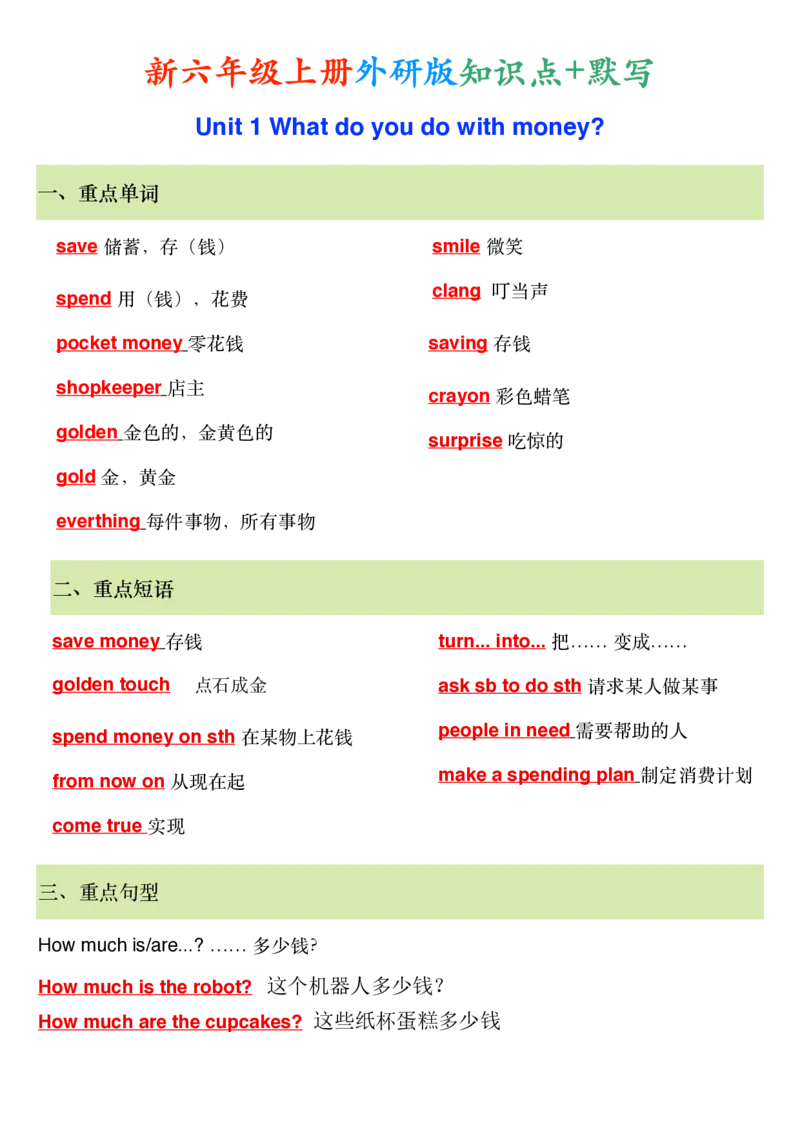
⼀、重点单词
save 储蓄,存(钱) smile 微笑
clang 叮当声
spend ⽤(钱),花费
pocket money 零花钱 saving 存钱
shopkeeper 店主
crayon 彩⾊蜡笔
golden ⾦⾊的,⾦黄⾊的
surprise 吃惊的
gold ⾦,黄⾦
everthing 每件事物,所有事物
⼆、重点短语
save money 存钱 turn... into... 把…… 变成……
golden touch 点⽯成⾦ ask sb to do sth 请求某⼈做某事
people in need 需要帮助的⼈
spend money on sth 在某物上花钱
make a spending plan 制定消费计划
from now on 从现在起
come true 实现
三、重点句型
How much is/are...? …… 多少钱?
How much is the robot? 这个机器人多少钱?
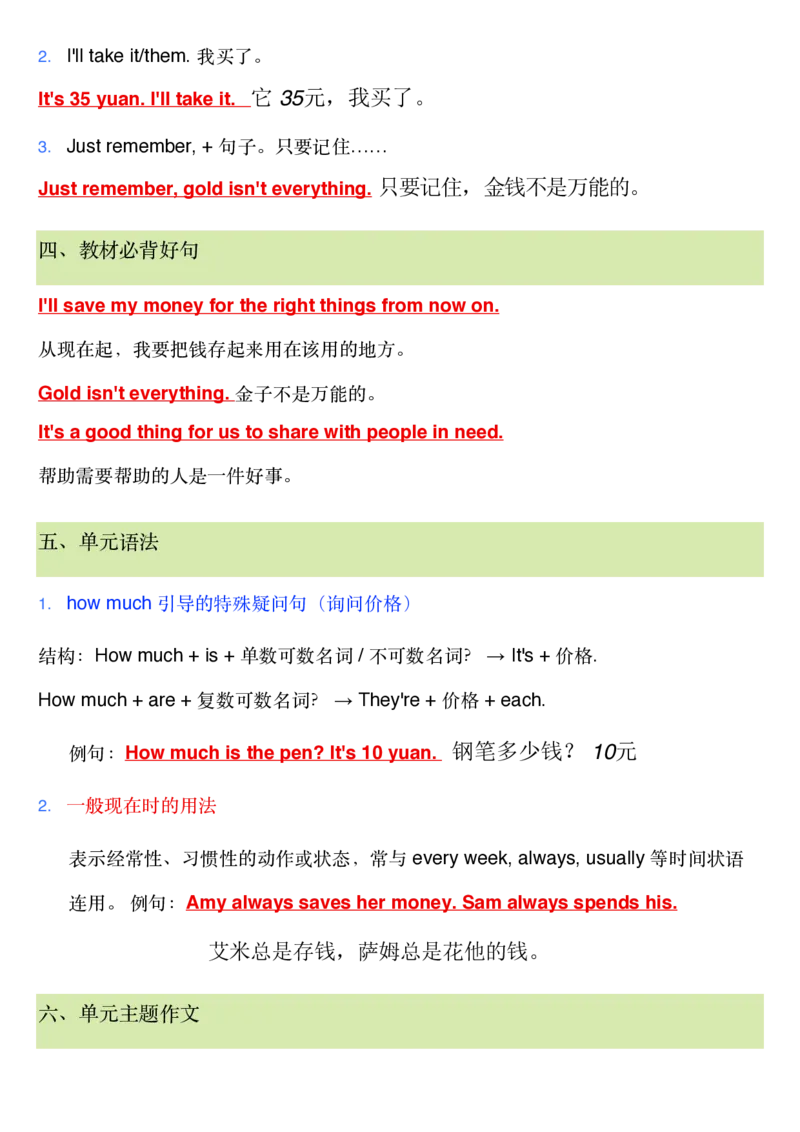
How much are the cupcakes? 这些纸杯蛋糕多少钱2. I'll take it/them. 我买了。
It's 35 yuan. I'll take it.
它 35元,我买了。
3. Just remember, + 句⼦。只要记住……
Just remember, gold isn't everything.
只要记住,金钱不是万能的。
四、教材必背好句
I'll save my money for the right things from now on.
从现在起,我要把钱存起来⽤在该⽤的地⽅。
Gold isn't everything. ⾦⼦不是万能的。
It's a good thing for us to share with people in need.
帮助需要帮助的⼈是⼀件好事。
五、单元语法
1. how much 引导的特殊疑问句(询问价格)
结构:How much + is + 单数可数名词 / 不可数名词? → It's + 价格.
How much + are + 复数可数名词? → They're + 价格 + each.
例句:How much is the pen? It's 10 yuan.
钢笔多少钱? 10元
2. ⼀般现在时的⽤法
表⽰经常性、习惯性的动作或状态,常与 every week, always, usually 等时间状语
连⽤。 例句:Amy always saves her money. Sam always spends his.
艾米总是存钱,萨姆总是花他的钱。
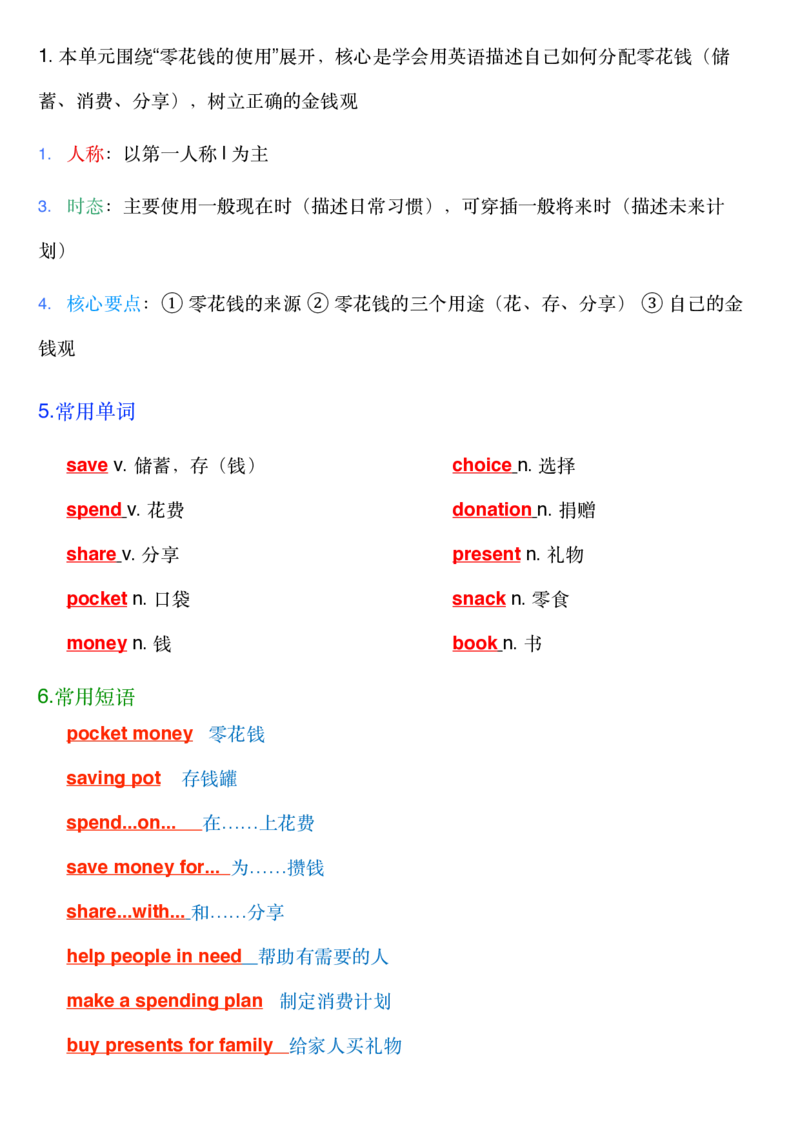
六、单元主题作⽂1. 本单元围绕“零花钱的使⽤”展开,核⼼是学会⽤英语描述⾃⼰如何分配零花钱(储
蓄、消费、分享),树⽴正确的⾦钱观
1. ⼈称:以第⼀⼈称 I 为主
3. 时态:主要使⽤⼀般现在时(描述⽇常习惯),可穿插⼀般将来时(描述未来计
划)
4. 核⼼要点:① 零花钱的来源 ② 零花钱的三个⽤途(花、存、分享) ③ ⾃⼰的⾦
钱观
5.常⽤单词
save v. 储蓄,存(钱) choice n. 选择
spend v. 花费 donation n. 捐赠
share v. 分享 present n. 礼物
pocket n. ⼜袋 snack n. 零⾷
money n. 钱 book n. 书
6 . !"#$
pocket money 零花钱
saving pot 存钱罐
spend...on... 在……上花费
save money for... 为……攒钱
share...with... 和……分享
help people in need 帮助有需要的⼈
make a spending plan 制定消费计划
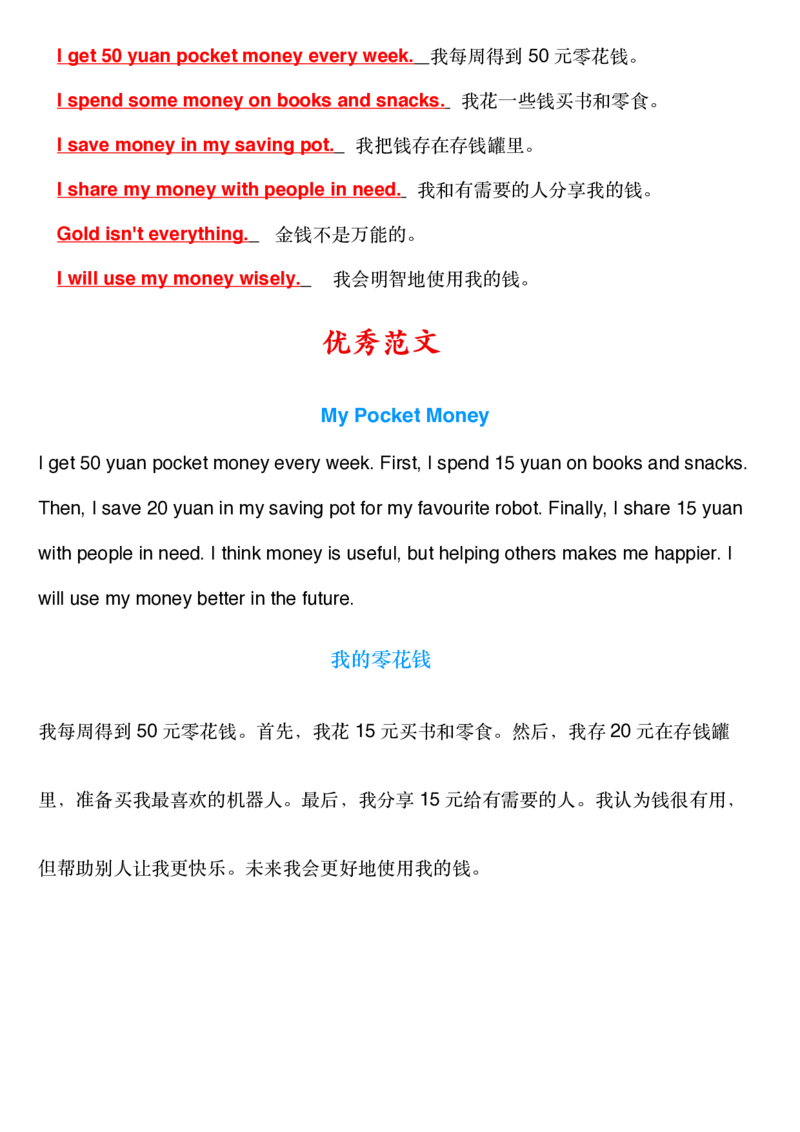
buy presents for family 给家⼈买礼物I get 50 yuan pocket money every week. 我每周得到 50 元零花钱。
I spend some money on books and snacks. 我花⼀些钱买书和零⾷。
I save money in my saving pot. 我把钱存在存钱罐⾥。
I share my money with people in need. 我和有需要的⼈分享我的钱。
Gold isn't everything. ⾦钱不是万能的。
I will use my money wisely. 我会明智地使⽤我的钱。
优秀范⽂
My Pocket Money
I get 50 yuan pocket money every week. First, I spend 15 yuan on books and snacks.
Then, I save 20 yuan in my saving pot for my favourite robot. Finally, I share 15 yuan
with people in need. I think money is useful, but helping others makes me happier. I
will use my money better in the future.
我的零花钱
我每周得到 50 元零花钱。⾸先,我花 15 元买书和零⾷。然后,我存 20 元在存钱罐
⾥,准备买我最喜欢的机器⼈。最后,我分享 15 元给有需要的⼈。我认为钱很有⽤,
但帮助别⼈让我更快乐。未来我会更好地使⽤我的钱。新六年级上册外研版知识点+默写
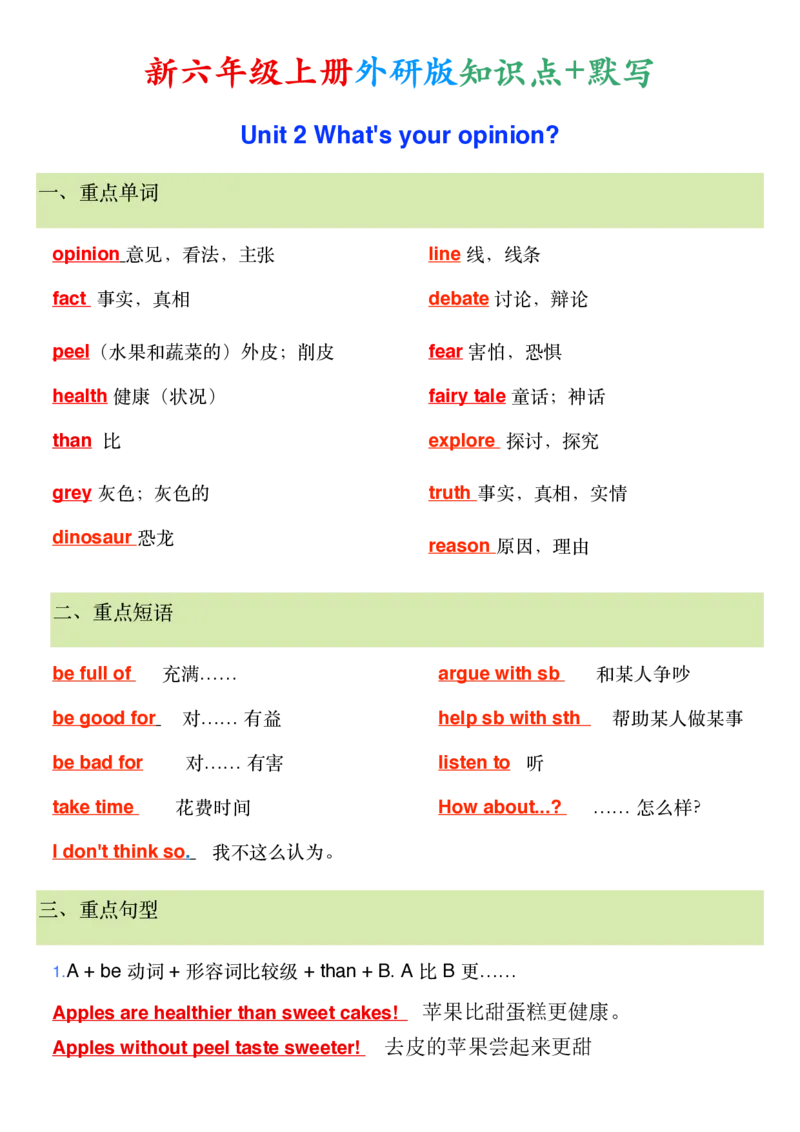
U in t 2 W h a t ’ s y uo r po i n i no ?
⼀、重点单词
opinion 意见,看法,主张 line 线,线条
fact 事实,真相 debate 讨论,辩论
peel(⽔果和蔬菜的)外⽪;削⽪ fear 害怕,恐惧
health 健康(状况) fairy tale 童话;神话
than ⽐ explore 探讨,探究
grey 灰⾊;灰⾊的 truth 事实,真相,实情
dinosaur 恐龙
reason 原因,理由
⼆、重点短语
be full of 充满…… argue with sb 和某⼈争吵
be good for 对…… 有益 help sb with sth 帮助某⼈做某事
be bad for 对…… 有害 listen to 听
take time 花费时间 How about...? …… 怎么样?
I don't think so. 我不这么认为。
三、重点句型
1. A + be 动词 + 形容词⽐较级 + than + B. A ⽐ B 更……
Apples are healthier than sweet cakes! 苹果比甜蛋糕更健康。
Apples without peel taste sweeter! 去皮的苹果尝起来更甜2. In my opinion, + 句⼦。在我看来,……
In my opinion, this book is very interesting. 在我看来,这本书很有趣。
3. Why not + 动词原形?为什么不…… 呢?
Why not just eat it? 为什么不直接吃它呢?
四、教材必背好句
An apple a day keeps the doctor away. ⼀天⼀苹果,医⽣远离我。
To find out the truth, read, learn and explore.
要发现真相,就要阅读、学习和探索。
Drop all your fears and trust your heart. 放下所有恐惧,相信⾃⼰的内⼼。
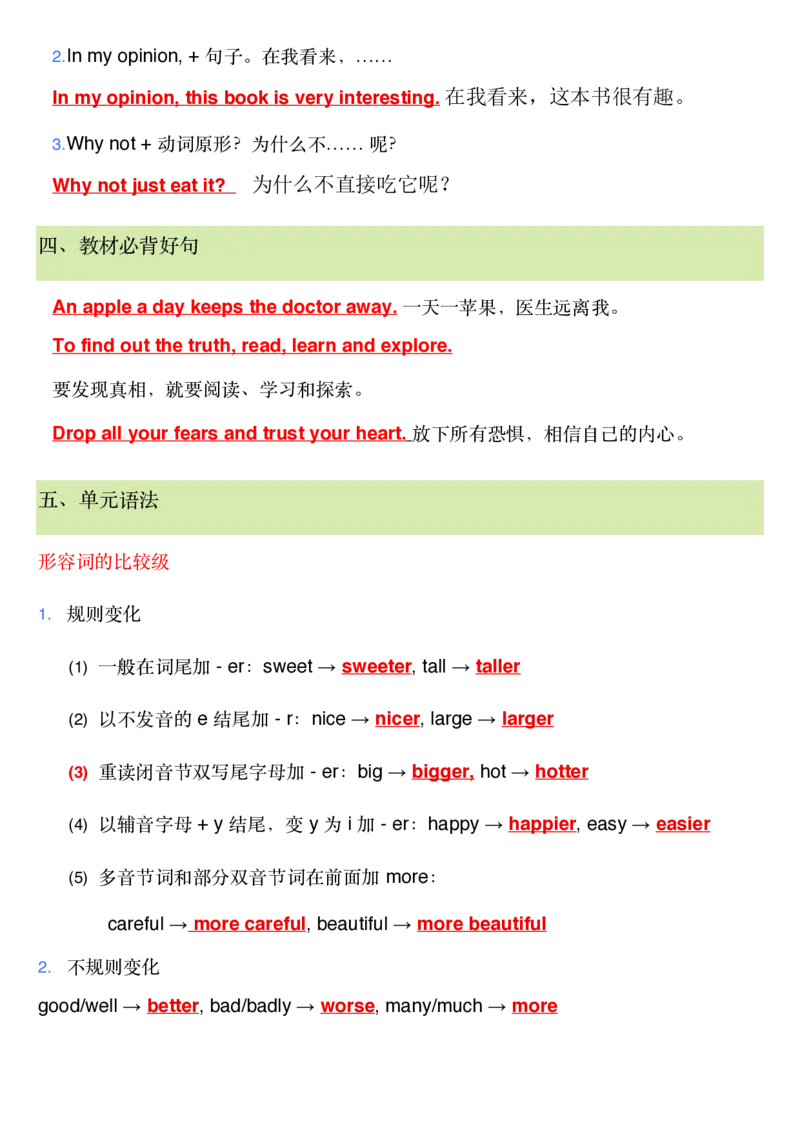
五、单元语法
形容词的⽐较级
1. 规则变化
(1) ⼀般在词尾加 - er:sweet → sweeter, tall → taller
(2) 以不发⾳的 e 结尾加 - r:nice → nicer, large → larger
(3) 重读闭⾳节双写尾字母加 - er:big → bigger, hot → hotter
(4) 以辅⾳字母 + y 结尾,变 y 为 i 加 - er:happy → happier, easy → easier
(5) 多⾳节词和部分双⾳节词在前⾯加 more:
careful → more careful, beautiful → more beautiful
2. 不规则变化
good/well → better, bad/badly → worse, many/much → more3. ⽤法
⽤于两者之间的⽐较,标志词是 than。
例句:This ruler is longer than that one. 这个尺子比那个更长。
六、单元主题作⽂
1. 本单元核⼼是“表达观点”,要求学⽣能区分事实和观点,并⽤英语清晰表达⾃⼰对某
件事的看法,同时给出理由。常⻅作⽂主题包括:纸质书 vs 电⼦书、科技的利弊、⽣⽇
是否该送礼物、是否该使⽤塑料袋等
2. ⼈称:以第⼀⼈称 I 为主
3. 时态:主要使⽤⼀般现在时
4. 核⼼要点:① 明确表达⾃⼰的观点 ② 给出 2-3 个⽀持理由 ③ 简单总结
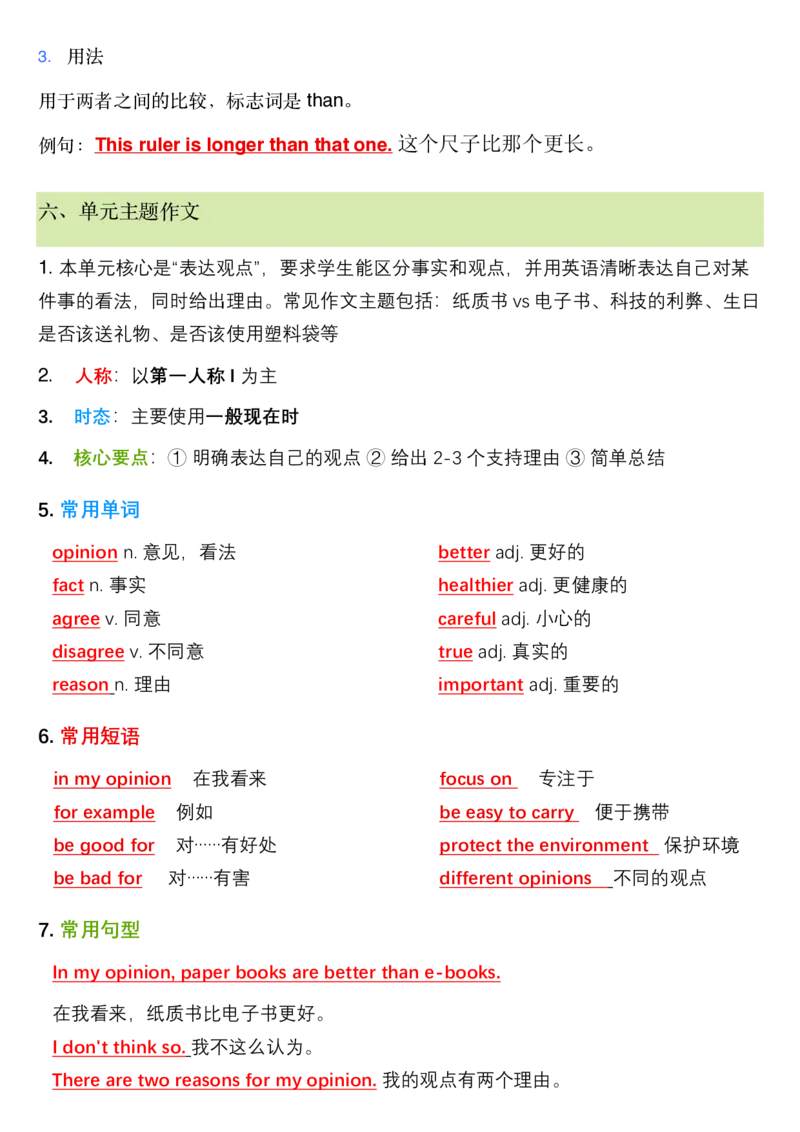
5. 常⽤单词
opinion n. 意⻅,看法 better adj. 更好的
fact n. 事实 healthier adj. 更健康的
agree v. 同意 careful adj. ⼩⼼的
disagree v. 不同意 true adj. 真实的
reason n. 理由 important adj. 重要的
6. 常⽤短语
in my opinion 在我看来 focus on 专注于
for example 例如 be easy to carry 便于携带
be good for 对……有好处 protect the environment 保护环境
be bad for 对……有害 different opinions 不同的观点
7. 常⽤句型
In my opinion, paper books are better than e-books.
在我看来,纸质书⽐电⼦书更好。
I don't think so. 我不这么认为。
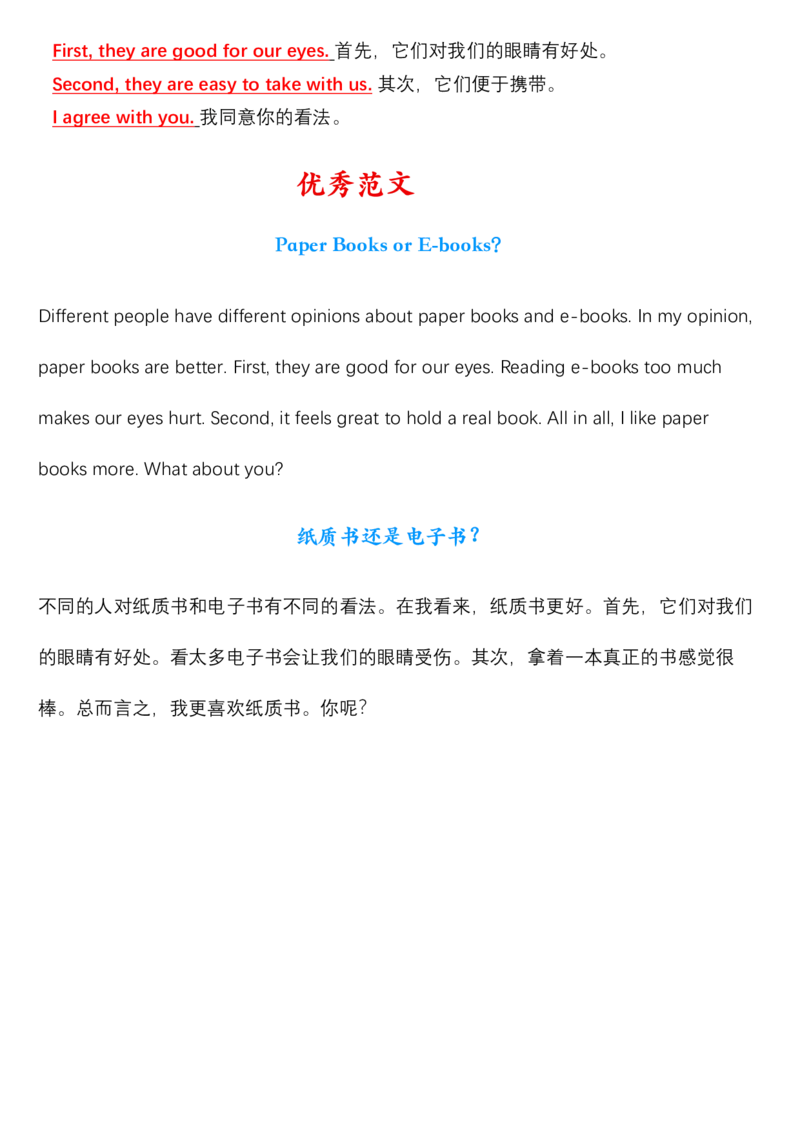
There are two reasons for my opinion. 我的观点有两个理由。First, they are good for our eyes. ⾸先,它们对我们的眼睛有好处。
Second, they are easy to take with us. 其次,它们便于携带。
I agree with you. 我同意你的看法。
优秀范⽂
?
Paper Books or E-books
Different people have different opinions about paper books and e-books. In my opinion,
paper books are better. First, they are good for our eyes. Reading e-books too much
makes our eyes hurt. Second, it feels great to hold a real book. All in all, I like paper
books more. What about you?
?
纸质书还是电⼦书
不同的⼈对纸质书和电⼦书有不同的看法。在我看来,纸质书更好。⾸先,它们对我们
的眼睛有好处。看太多电⼦书会让我们的眼睛受伤。其次,拿着⼀本真正的书感觉很
棒。总⽽⾔之,我更喜欢纸质书。你呢?新六年级上册外研版知识点+默写
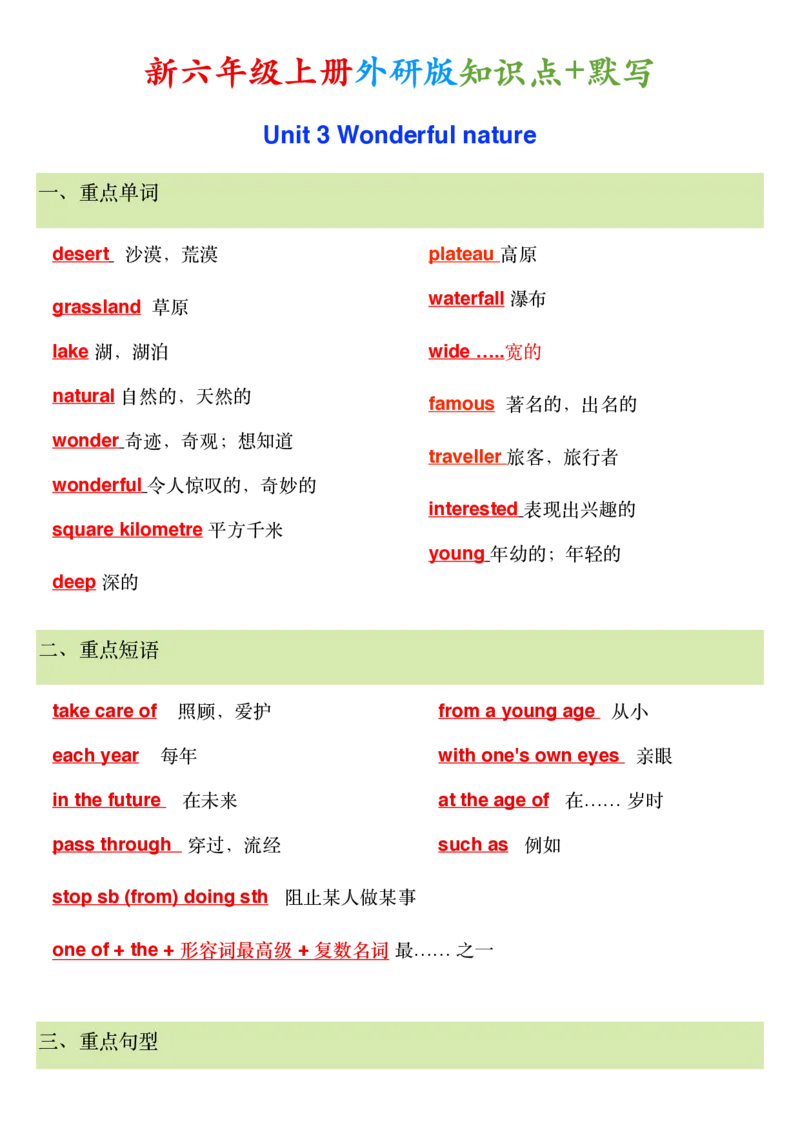
U in t 3 ondW e r f u l n a t u r e
⼀、重点单词
desert 沙漠,荒漠 plateau ⾼原
waterfall 瀑布
grassland 草原
lake 湖,湖泊 wide …..宽的
natural ⾃然的,天然的
famous 著名的,出名的
wonder 奇迹,奇观;想知道
traveller 旅客,旅⾏者
wonderful 令⼈惊叹的,奇妙的
interested 表现出兴趣的
square kilometre 平⽅千⽶
young 年幼的;年轻的
deep 深的
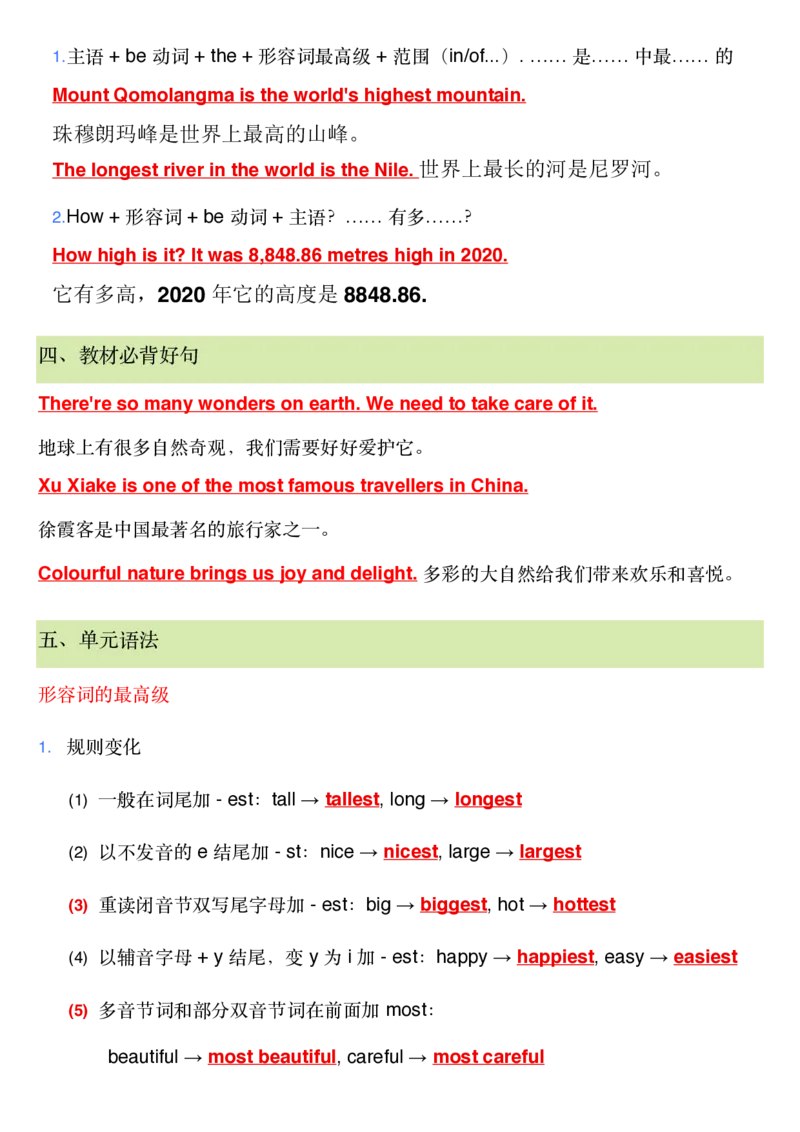
⼆、重点短语
take care of 照顾,爱护 from a young age 从⼩
each year 每年 with one's own eyes 亲眼
in the future 在未来 at the age of 在…… 岁时
pass through 穿过,流经 such as 例如
stop sb (from) doing sth 阻⽌某⼈做某事
one of + the + 形容词最⾼级 + 复数名词 最…… 之⼀
三、重点句型1. 主语 + be 动词 + the + 形容词最⾼级 + 范围(in/of...). …… 是…… 中最…… 的
Mount Qomolangma is the world's highest mountain.
珠穆朗玛峰是世界上最高的山峰。
The longest river in the world is the Nile. 世界上最长的河是尼罗河。
2. How + 形容词 + be 动词 + 主语?…… 有多……?
How high is it? It was 8,848.86 metres high in 2020.
它有多高,2020 年它的高度是 8848.86.
四、教材必背好句
There're so many wonders on earth. We need to take care of it.
地球上有很多⾃然奇观,我们需要好好爱护它。
Xu Xiake is one of the most famous travellers in China.
徐霞客是中国最著名的旅⾏家之⼀。
Colourful nature brings us joy and delight. 多彩的⼤⾃然给我们带来欢乐和喜悦。
五、单元语法
形容词的最⾼级
1. 规则变化
(1) ⼀般在词尾加 - est:tall → tallest, long → longest
(2) 以不发⾳的 e 结尾加 - st:nice → nicest, large → largest
(3) 重读闭⾳节双写尾字母加 - est:big → biggest, hot → hottest
(4) 以辅⾳字母 + y 结尾,变 y 为 i 加 - est:happy → happiest, easy → easiest
(5) 多⾳节词和部分双⾳节词在前⾯加 most:
beautiful → most beautiful, careful → most careful2. 不规则变化
good/well → best, bad/badly → worst, many/much → most
3. ⽤法
⽤于三者或三者以上的⽐较,前⾯必须加定冠词 the,后⾯常接 in/of 短语表⽰范围。
例句:Tom is the tallest boy in our class. 汤姆是我们班最高的男生
六、单元主题作⽂
1.本单元围绕“奇妙的⼤⾃然”展开,要求学⽣能介绍世界著名的⾃然奇观、中国的⾃然景
点或国家公园,描述其特点和⼈们可以进⾏的活动。作⽂通常要求突出⾃然景观的壮
美,传递保护⾃然的意识
2. ⼈称:以第三⼈称 it/they 为主,可穿插第⼀⼈称 I
3. 时态:主要使⽤⼀般现在时(描述客观事实)
4. 核⼼要点:① 景点的名称和位置 ② 景点的特点(⽤最⾼级) ③ ⼈们可以在那⾥做什
么
5. 常⽤单词
mountain n. ⼭ forest n. 森林
river n. 河 waterfall n. 瀑布
desert n. 沙漠 highest adj. 最⾼的
lake n. 湖 longest adj. 最⻓的
deepest adj. 最深的
6. 常⽤短语
natural wonder ⾃然奇观 national park 国家公园
Mount Qomolangma 珠穆朗玛峰 take photos 拍照
the Nile 尼罗河 go hiking 去远⾜
the Yangtze River ⻓江 protect nature 保护⾃然
Tianchi Lake 天池
7. 常⽤句型Mount Qomolangma is the highest mountain in the world.
珠穆朗玛峰是世界上最⾼的⼭。
The Yangtze River is the longest river in Asia. ⻓江是亚洲最⻓的河。
It is about 6,300 kilometres long. 它⼤约 6300 千⽶⻓。
You can go hiking and take photos there. 你可以在那⾥远⾜和拍照。
It is one of the most beautiful places in China. 它是中国最美的地⽅之⼀。
We should protect these natural wonders. 我们应该保护这些⾃然奇观。
优秀范⽂
! " # $ % & ’ # $ ( ) " $ * # + $
Huangshan Mountain is a famous natural wonder in Anhui Province. It is famous for its
strange rocks and beautiful clouds. The highest peak is 1,864 metres high. You can
climb the mountains, watch the sunrise and take photos there. It is one of the most
beautiful places in China. I hope I can visit it soon.
黄⼭
⻩⼭是安徽省著名的⾃然奇观。它以其奇松怪⽯和美丽的云海⽽闻名。最⾼峰 1864 ⽶
⾼。你可以在那⾥爬⼭、看⽇出和拍照。它是中国最美的地⽅之⼀。我希望我能很快去
参观它。新六年级上册外研版知识点+默写
U in t 4 W e c a n d o i t !
⼀、重点单词
invention 发明(物) feeder 饲料容器
inventor 发明家
cloth 布料
phone 电话
string 线,细绳
tooth ⽛齿
glue 黏合,粘贴;胶⽔
teeth ⽛齿(复数) fold 折叠
fan 扇⼦
easily 容易地,轻易地
instrument 乐器
middle 中间;中间的
material 材料
bottom 底部,基部
fine 健康的;好的 drum ⿎
window 窗户
⼆、重点短语
go on holiday 去度假 keep off 挡住,避开
come back 回来 take... with... 随⾝携带……
make a hole 钻⼀个洞 right away ⽴刻,马上
cut off 剪掉,切掉 thanks to 多亏,由于
put... in... 把…… 放进…… ⾥ turn... into... 把…… 变成……
on the way home 在回家的路上 make a bird feeder 制作喂鸟器三、重点句型
1. First... Next... Then... Finally... ⾸先…… 然后…… 接着…… 最后……
First, make a small hole in the middle of the bottle top. Next, cut off the bottom.
Then, put water in the bottle. Finally, put it in the pot.
首先,在瓶盖中间钻一个小孔。然后,切掉瓶子的底部。接着,往瓶子里装
水。最后,把它放进花盆里。
2. What are you doing? 你正在做什么?
I'm making a watering bottle for the plants. 我正在给植物做⼀个浇⽔壶。
四、教材必背好句
Use our minds and our hands to make trash into treasure.
⽤我们的头脑和双⼿变废为宝。
Lu Ban had bright ideas and clever hands. 鲁班有聪明的头脑和灵巧的双⼿。
You can do anything if you try your best. 只要尽⼒,你就能做成任何事。
五、单元语法
1. 现在进⾏时
结构:主语 + am/is/are + 动词 - ing 形式
⽤法:表⽰此时此刻正在进⾏的动作。
例句:What are you doing? I'm reading a book. 你在⼲什么?我在读书。
2. 描述步骤的连接词
first(⾸先)、next(然后)、then(接着)、finally(最后)⽤于清晰地说明做某事的
先后顺序,是本单元的核⼼语法点。例句:First, wash the apples. Next, cut them into pieces. Then, put them in the
blender. Finally, turn on the blender.
首先,把苹果洗干净。然后,把它们切成小块。接着,把它们放进搅拌机
里。 最后,打开搅拌机。
六、单元主题作⽂
1. 本单元主题是“⼩发明与制作”,要求学⽣能⽤英语描述⼀个⼩发明的制作过程、功能
和⽤途,培养动⼿能⼒和创新思维。作⽂通常要求按顺序描述制作步骤,使⽤ first, next,
then, finally 等顺序副词。
2. ⼈称:以第⼀⼈称 I/we 为主
3. 时态:主要使⽤⼀般现在时(描述制作步骤)
4. 核⼼要点:① 发明的名称和⽤途 ② 制作所需材料 ③ 制作步骤(⽤顺序副词) ④ 发
明的优点
5. 常⽤单词
invention n. 发明 then adv. 然后
make v. 制作 finally adv. 最后
use v. 使⽤ bottle n. 瓶⼦
first adv. ⾸先 carton n. 纸盒
next adv. 接下来 string n. 绳⼦
6. 常⽤短语
watering bottle 浇⽔瓶 turn...into... 把……变成……
bird feeder 喂⻦器 make a hole 钻⼀个洞
paper plane 纸⻜机 cut off 剪下
recycled materials 回收材料 put...in... 把……放进……
7. 常⽤句型
I want to make a watering bottle for my plants. 我想给我的植物做⼀个浇⽔瓶。
We need a milk carton and a string. 我们需要⼀个⽜奶盒和⼀根绳⼦。First, clean the milk carton. ⾸先,把⽜奶盒洗⼲净。
Next, cut a small window on the side. 接下来,在侧⾯剪⼀个⼩窗户。
Then, put a string through the hole. 然后,把绳⼦穿过洞。
Finally, hang it in the tree. 最后,把它挂在树上。
优秀范⽂
How to Make a Bird Feeder
Do you want to make a bird feeder? It's easy. You need a milk carton, a string and a pair
of scissors. First, clean the carton and dry it. Next, cut a small window on one side. Then,
make two holes at the top and put the string through. Finally, put some bird food in it.
Hang it in the tree and birds will come!
如何制作喂鸟器
你想做⼀个喂⻦器吗?很简单。你需要⼀个⽜奶盒、⼀根绳⼦和⼀把剪⼑。⾸先,把⽜
奶盒洗⼲净并晾⼲。接下来,在⼀侧剪⼀个⼩窗户。然后,在顶部钻两个洞,把绳⼦穿
过去。最后,放⼀些⻦⻝进去。把它挂在树上,⻦⼉就会来了!新六年级上册外研版知识点+默写
U in t 5 Hea l t h m a tt e r s
⼀、重点单词
matter 事情,问题 flu 流⾏性感冒,流感
fever 发烧,发热 virus 病毒
runny 流⿐涕的
blackboard ⿊板
sore 疼痛的;酸痛的
dark 昏暗的;⿊暗的
throat 喉咙,咽喉
gladly ⾼兴地
headache 头痛
toothache ⽛痛
⼆、重点短语
have a fever 发烧 get lots of sleep 多睡觉
have a headache 头痛 do sports 做运动
have a sore throat 喉咙痛 take care of 照顾,爱护
have a runny nose 流⿐涕 do eye exercises 做眼保健操
have a cough 咳嗽 look far away 看远处
have a toothache ⽛痛
spend time in nature 花时间在⾃然中
stay away from 远离
三、重点句型
1. What's the matter (with sb)? (某⼈)怎么了?
What's the matter? I have a fever and a bad headache.怎么了?我发烧了,还头疼得厉害。
2. You should + 动词原形。你应该……
You should take this medicine and get lots of sleep.
你应该吃这个药,多睡觉。
You should not read in the dark. 你不应该在黑暗中看书。
四、教材必背好句
Eat healthy food and do sports, then you'll be healthy and strong.
吃健康的⾷物,多运动,这样你就会健康强壮。
Just put a smile on your face and gladly face your day.
⾯带微笑,开⼼地⾯对每⼀天。
Be kind to others, and it will bring you happiness. 善待他⼈,这会给你带来快乐。
五、单元语法
1. have 表⽰ “患病” 的⽤法
结构:have a + 疾病名称
常见搭配:have a cold(感冒)、have a fever(发烧)、have a headache(头
痛)
例句:I have a bad cold today. 我今天感冒了。
2. 情态动词 should 的⽤法
表⽰ “应该”,⽤于提出建议或劝告,后⾯接动词原形。
否定形式:should not(缩写为 shouldn't),表⽰ “不应该”。
You should drink more water when you have a cold. You shouldn't eat too
much junk food.当你感冒的时候,你应该多喝水。你不应该吃太多垃圾食品。
六、单元主题作⽂
1.本单元围绕“健康”展开,要求学⽣能描述常⻅的疾病症状、给出健康建议,或制定⾃⼰
的健康计划。
2. ⼈称:以第⼀⼈称 I 为主,可使⽤第⼆⼈称 you 给出建议
3. 时态:主要使⽤⼀般现在时
4. 核⼼要点:① 健康的重要性 ② 保持健康的⽅法(饮⻝、运动、睡眠等) ③ ⾃⼰的健
康计划
5. 常⽤单词
health n. 健康 exercise n. 锻炼
healthy adj. 健康的 sleep n. 睡觉
fever n. 发烧 vegetable n. 蔬菜
headache n. 头痛 fruit n. ⽔果
toothache n. ⽛痛 junk food n. 垃圾⻝品
6. 常⽤短语
have a cold 感冒 eat healthy food 吃健康的⻝物
have a fever 发烧 get enough sleep 得到⾜够的睡眠
do eye exercises 做眼保健操 stay away from flu 远离流感
7. 常⽤句型
Health is very important for us. 健康对我们来说⾮常重要。
You should eat more vegetables and fruits. 你应该多吃蔬菜和⽔果。
You shouldn't eat too much junk food. 你不应该吃太多垃圾⻝品。
Do exercise every day to keep healthy. 每天做运动保持健康。
Go to bed early and get up early. 早睡早起。
If you have a fever, you should see a doctor. 如果你发烧了,你应该去看医⽣。优秀范⽂
My Health Plan
Health is very important for me. So I make a health plan. First, I will eat more vegetables
and fruits. I won't eat too much junk food. Second, I will do exercise for 30 minutes every
day. I like playing basketball. Third, I will go to bed before 9 o'clock. I hope I can be
stronger and healthier.
我的健康计划
健康对我来说⾮常重要。所以我制定了⼀个健康计划。⾸先,我会多吃蔬菜和⽔果。我
不会吃太多垃圾⻝品。其次,我会每天锻炼 30 分钟。我喜欢打篮球。第三,我会在 9
点前睡觉。我希望我能变得更强壮、更健康。新六年级上册外研版知识点+默写
U in t 6 S e e t h e w o r l d
⼀、重点单词
view 视野,视线 speak 会说,会讲
bridge 桥,桥梁 April 四⽉
neck 脖⼦ splash 溅湿 ,往…..泼
luck 好运 pretty 漂亮的,好看的
lucky 幸运的 cultural ⽂化的;⽂化上的
⼆、重点短语
travel around 环游 get together 聚在⼀起
with one's own eyes 亲眼 bring good luck to sb 给⼈带来好运
good luck to sb 祝某⼈好运 call a taxi 叫出租车
by the road 在路边 learn about 了解
to one's surprise 令某⼈惊讶的是 deal with 处理
ask sb to do sth 邀请某⼈做某事 cultural differences ⽂化差异
When in Rome, do as the Romans do. ⼊乡随俗。
三、重点句型
1. What + (a/an) + 形容词 + 可数名词单数 (+ 主语 + 谓语)!
What a cute panda! 多么可爱的⼀只熊猫啊!
What a beautiful place! 多么美丽的⼀个地⽅啊!2. How + 形容词 / 副词 (+ 主语 + 谓语)!
How delicious the ice cream is! 这个冰淇淋多美味啊!
How lucky I am! 我多幸运啊
四、教材必背好句
China is a beautiful and interesting place. 中国是⼀个美丽又有趣的地⽅。
Differences make travelling interesting. 差异让旅⾏变得有趣。
When in Rome, do as the Romans do. ⼊乡随俗。
Welcome to my home town. It has many wonderful places to visit.
欢迎来到我的家乡,这⾥有很多值得参观的好地⽅。
五、单元语法
感叹句
1. what 引导的感叹句
结构 1:What + a/an + 形容词 + 可数名词单数 + 主语 + 谓语!
例句:What an interesting book it is! 多么有趣的书啊!
结构 2:What + 形容词 + 可数名词复数 / 不可数名词 + 主语 + 谓语!
例句:What beautiful flowers they are! 多漂亮的花啊!
2. how 引导的感叹句
结构:How + 形容词 / 副词 + 主语 + 谓语!
例句:How fast he runs! 他跑得真快啊!3. ⽤法区别
what 修饰名词,how 修饰形容词或副词。判断⽤ what 还是 how,看形容词后是否紧跟
名词:紧跟名词⽤ what,否则⽤ how。
六、单元主题作⽂
1.本单元主题是“看世界”,要求学⽣能描述⾃⼰的旅⾏经历或介绍⾃⼰的家乡,包括旅⾏
的时间、地点、活动和感受,或家乡的景点、美⻝和⽂化。
2. ⼈称:以第⼀⼈称 I 为主
3. 时态:描述旅⾏经历⽤⼀般过去时,介绍家乡⽤⼀般现在时
4. 核⼼要点:① 旅⾏的时间和地点/家乡的位置 ② 做的事情/家乡的特⾊ ③ ⾃⼰的感
受
5. 常⽤单词
travel v. 旅⾏ delicious adj. 美味的
visit v. 参观 beautiful adj. 美丽的
go v. 去 exciting adj. 令⼈兴奋的
see v. 看⻅ happy adj. 开⼼的
eat v. 吃 home town n. 家乡
6. 常⽤短语
go on a trip 去旅⾏ Water-splashing Festival 泼⽔节
take photos 拍照 by plane 乘⻜机
try local food 品尝当地美⻝ by train 乘⽕⻋
visit places of interest 参观名胜古迹 have a good time 玩得开⼼
7. 常⽤句型
Last summer, I went to Yunnan with my parents. 去年夏天,我和⽗⺟去了云南。
We went there by plane. 我们乘⻜机去的那⾥。
We visited the Old Town of Lijiang. 我们参观了丽江古城。The food there was very delicious. 那⾥的⻝物⾮常美味。
What a beautiful place! 多么美丽的地⽅啊!
I had a wonderful time there. 我在那⾥玩得很开⼼。
#"! $
My Trip to Yunnan
Last spring, I went to Yunnan with my parents. We went there by train. We visited Dali
and Lijiang. We rode bikes around Erhai Lake. The lake was very beautiful. We also tried
the local food. It was delicious. What a wonderful trip! I hope I can go to Yunnan again
one day.
我的云南之旅
去年春天,我和⽗⺟去了云南。我们乘⽕⻋去的那⾥。我们参观了⼤理和丽江。我们绕
着洱海骑⾃⾏⻋。洱海⾮常美丽。我们还品尝了当地的美⻝,⾮常美味。多么棒的⼀次
旅⾏啊!我希望有⼀天我能再去云南。