考研英语核心语法
--有“法”可依
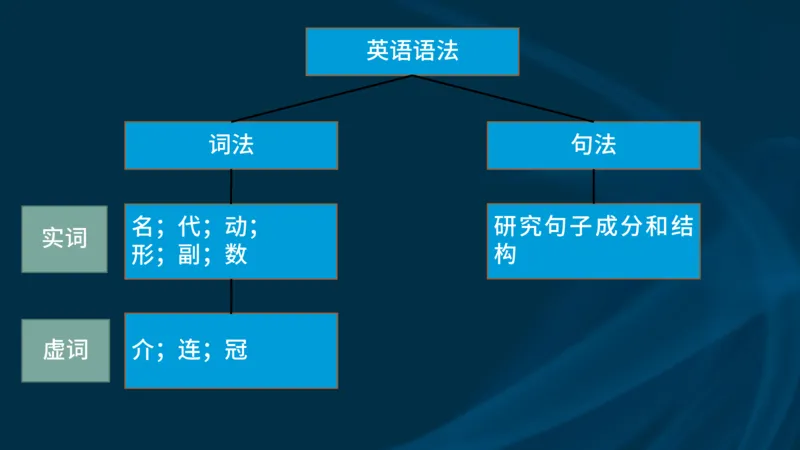
主讲人:薛冰老师(Snow Ice)核心语法综述英语语法
词法 句法
名;代;动; 研究句子成分和结
实词
形;副;数 构
虚词 介;连;冠句子成分与句型结构英语句子成分
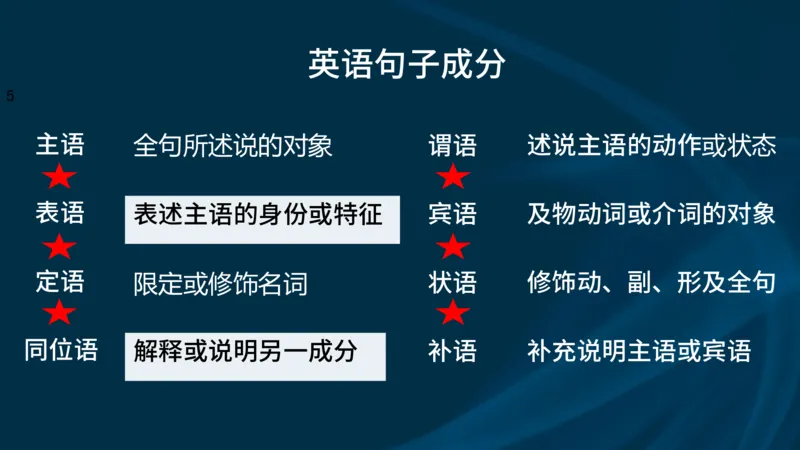
5
全句所述说的对象 或状态
主语 谓语 述说主语的动作
表语 表述主语的身份或特征 宾语 及物动词或介词的对象
限定或修饰名词
定语 状语 修饰动、副、形及全句
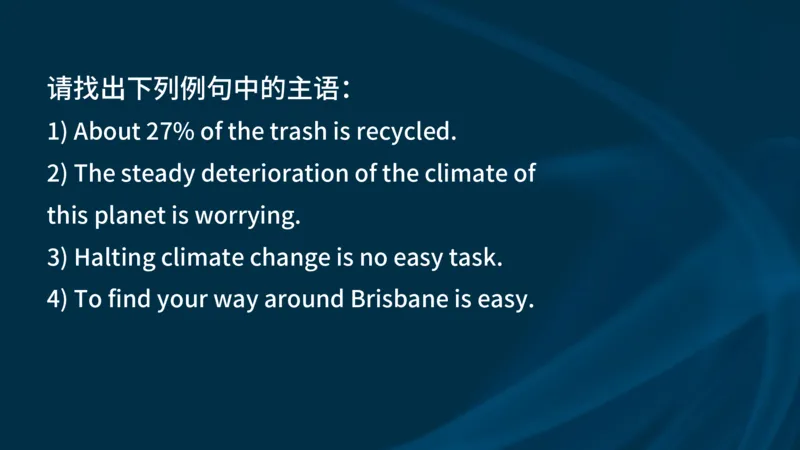
同位语 解释或说明另一成分 补语 补充说明主语或宾语请找出下列例句中的主语:
1) About 27% of the trash is recycled.
2) The steady deterioration of the climate of
this planet is worrying.
3) Halting climate change is no easy task.
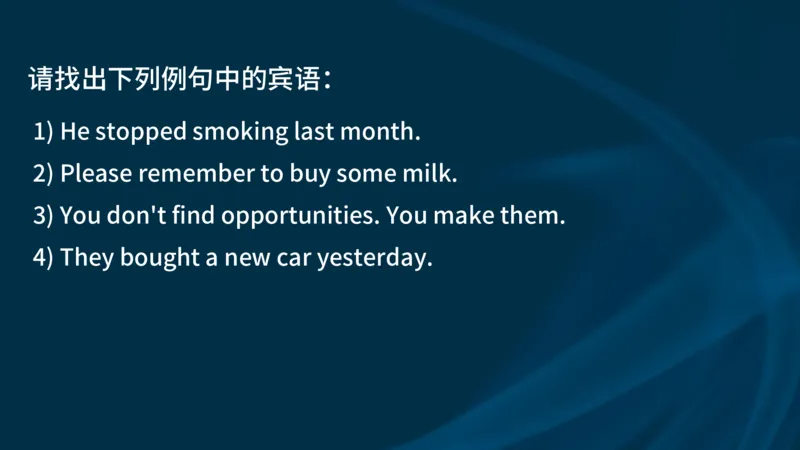
4) To find your way around Brisbane is easy.请找出下列例句中的宾语:
1) He stopped smoking last month.
2) Please remember to buy some milk.
3) You don't find opportunities. You make them.
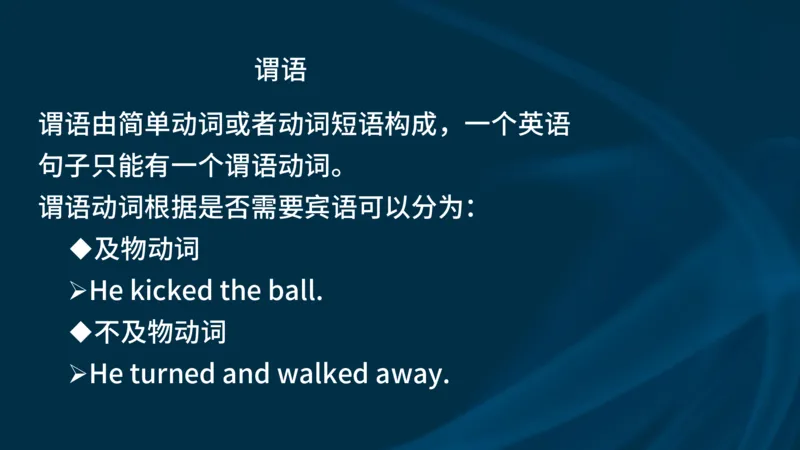
4) They bought a new car yesterday.谓语
谓语由简单动词或者动词短语构成,一个英语
句子只能有一个谓语动词。
谓语动词根据是否需要宾语可以分为:
u
及物动词
Ø
He kicked the ball.
u
不及物动词
Ø
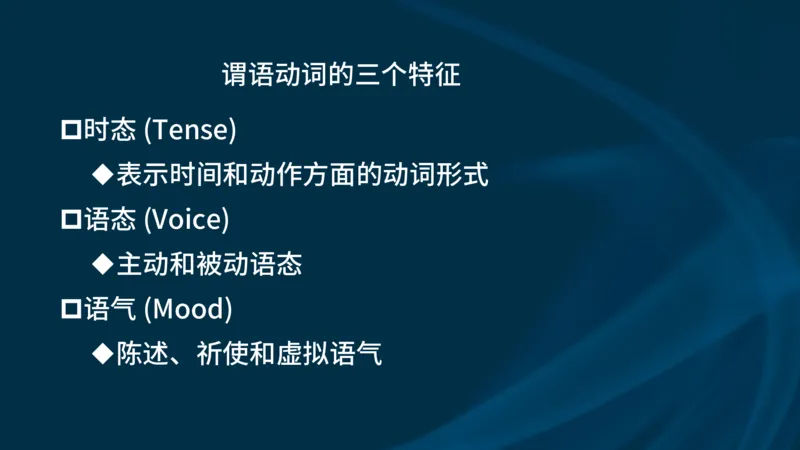
He turned and walked away.谓语动词的三个特征
p
时态 (Tense)
u
表示时间和动作方面的动词形式
p
语态 (Voice)
u
主动和被动语态
p
语气 (Mood)
u
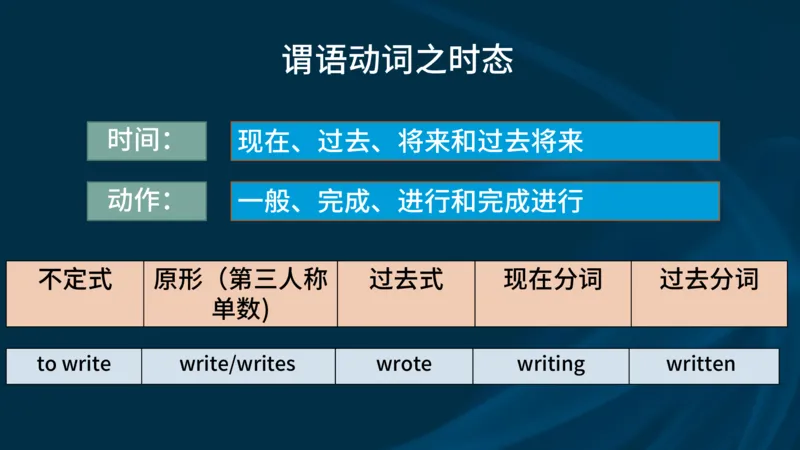
陈述、祈使和虚拟语气谓语动词之时态
时间: 现在、过去、将来和过去将来
动作: 一般、完成、进行和完成进行
不定式 原形(第三人称 过去式 现在分词 过去分词
单数)
to write write/writes wrote writing written时间 现 在 过 去 将 来 过去将来
动作
一般 一般现在 一般过去 一般将来时 过去将来时
时 时
进行 现在进行 过去进行 将来进行时 过去将来进行
时 时 时
完成 现在完成 过去完成 将来完成时 过去将来完成
时 时 时
完成进行时 现在完成 过去完成 将来完成进行 过去将来完成
进行时 进行时 时 进行时NOW
BEFORE NOW AFTER NOW
(future)
(past)
•
I often write letters.
•
I wrote a letter yesterday.
•
I will write a letter tomorrow.
•
Jim said that he would write me a letter.NOW
BEFORE NOW AFTER NOW
(past) (future)
S
•
I am writing a letter.
•
I was writing a letter, when you called.
•
I have written three letters.
•
I had written three letters before you called.
•
I have been writing letters for a few hours.表语(与系动词)
• 虽然系动词本身有词义,但它不能单独用作谓
语,后边必须跟表语,构成系表结构说明主语
的状况、性质、特征等情况。
• 例句:
u
常见He的 b系ec动a词me有 a professor.
be, feel, smell, sound, taste,
u
。
appear, become, remain, seem, turn, etc
She looked angry.
u
The flower smells very sweet.定语
• 位置:
u
中文:(定语)名词
u
英文:(定语)名词(定语)
Ø
the little boy
Ø
an interesting story
Ø
10 people定语
1) The book on the desk is very interesting.
2) We are looking for someone reliable and hardworking.
3) The last one to leave the office must lock the door.
4) The man standing by the door is our manager.
5) I received a letter written by Jane.状语
• 可以表示时间、地点、原因、目的、结果、程度、
条件、让步、方式和比较。
• 1) These days I probably take my health
much more seriously.
• 2) Economically, the current government
has been a success.同位语
• 跟在某名词后面,用来解释或说明该名词。或者句子
后有逗号/冒号/破折号,且这些符号后是名词/动名词,
则这些名词/动名词作同位语。
• 1) Lee, the accountant, works at a big company.
• 2) She has two kids, a boy and a girl.
• 3) He, the head of the company, had to explain
what had happened.英语句子简单句、并列句、复合句(主句+从句)。
简单句5种:1. 主+谓。
2. 主+系+表。
3. 主+谓+宾。
4. 主+谓+双宾。
5. 主+谓+宾+宾补。
双宾和宾补的判断方法:
I gave her a Teddy Bear.
We elected John monitor.英语从句种类
相当于名词
• 名词性从句
u
主语、宾语、表语和同位语从句
相当于形容词
• 形容词性从句
u
定语从句
相当于副词
• 副词性从句
u
状语从句名词性从句之主语从句
• 1) Two kids survived the plane crash and
this is a miracle.
That
• 2) _____ two kids survived the plane
crash is a miracle.
It
• 3)_____ is a miracle that two kids survived
the plane crash.名词性从句之主语从句
p
由wh-类词引导:
u
Whether he agrees to the proposal or not
does not matter.
u
What he said really shocked me.
u
How he escaped is a mystery.名词性从句之宾语从句
• 由that引导:
u
I am afraid (that) the customer
may have misunderstood me.
p
由wh-类词引导:
u
He didn't say when we shall meet again.
u
We don't know which area he is from.
u
I was surprised at what you said.名词性从句之表语从句
• 由that引导:
u
The truth is that we are short of money.
• 由wh-类词引导:
u
The question is what the company
will do to handle the strike.名词性从句之同位语从句
由that引导:
u
它 一 般 放 在
f a c t , n e w s , i d e a , t r u t h , h o p e , p r o b l e m ,
The news that we won the match is true.
等抽象
information, belief, thought, doubt, promise, question
• 由wh-类词引导:
名词的后面,对前面的名词作进一步的解释, 说明前面名词的具
u
体含义I 。have no idea how I can finish the project on time.定语从句:与同位语从句的区别
区别 例句
that在定语从句中必须充 The news that you told me
当成分 yesterday is not true.
that在同位语从句中不充 The news that the leader will
当成分 visit us is not true.定语从句引导词:
that, who/whom, which, whose, when, where,
why.
如果先行词被形容词最高级或first, last, only, few,
much, very 等词修饰,thing, something,
anything, nothing等后必用that.介词+关系代词引导的定语从句:
定语从句之前加介词,一般出于以下两种情况:
1. 依照先行词的要求。例:
The age at which young people are
allowed to drive any vehicle should be
raised to at least 21.
2. 由于从句中某个词的要求,通常是动词和形
容词。
It is a theory to which many economists
subscribe.状语从句类型时间 After the fruit is harvested, it is sold at the market.
Wherever there are computers, there is Microsoft software.
地点
I didn't call her because I'm shy.
原因
She took a computer course in order that she could
目的
get a better job.
条件
If you save your money, you will be able to go to college.
让步
Although Jim has a Master's degree, he works as a store clerk.
He looks as if he were frightened.
方式
比较
This book is more interesting than that one.
结果 I was so weak that I could not speak.
She worked as hard as she could.
程度1. 时状特殊引导词:
the moment, the minute, the instant, directly,
immediately, instantly.
hardly/scarcely…when…;
no sooner…than… ;(若描述过去状况,前半部
分多用过去完成时,后半部分一般过去时)
例:Hardly had he assumed the leadership role
when he began to put on airs.2. 条件状特殊引导词:
provided/providing;
suppose/supposing;
as (so) long as.
3. 目的状引导词:
so that, in order that, so as to, in order to,
in the hope that…, on purpose that…,
for the purpose that…4. 方式状引导词:
as;as though/as if;(in) the way.
5. 结果状特殊引导词:
so that, to the degree/extent that;
to such a degree/extent that.6. 原因状引导词:
because, as, since, for 后接句子;
in that, now that, given (that) 后接句子;
owing to, due to, thanks to 后接名词/动名词。7. 让步状特殊引导词:
although; while; even though/even if;
-ever结尾的词: whatever; whenever; wherever;
=no matter what/when/where.让步状特殊引导词:
adj/adv/V-ed/n (不加冠词)+as+主+谓;
V+as+主+助动词(do, may, might, can, could,
will…)
例:Poor as he is, he is very generous.
Much as I respect him, I cannot agree with
him.
Praised as he was, he was modest.
Child as he is, he knows common sense.
Try as you will, you won’t manage it.状语从句的省略:
如果状语从句和主句的主语相同,且状语
从句中有be动词,则状语从句的主语和be
动词可一同省略。这种省略多见于时间状语
从句、条件状语从句、让步状语从句、方式
状语从句等。1. 时间状语从句:
Be sure not to lose confidence when confronted
with difficulties.
2. 条件状语从句:
Most animals we commonly observe do in fact age
as we do, if given the chance to live long enough.
3. 让步状语从句:
Judges, however wise or eminent, are human and
can make mistakes.
4. 方式状语从句:
The old man opened his mouth slowly as if murmuring
some words.非谓语
功能 作名词 作形容词 (定 作副词 (状语)
(主语、宾 语、表语、补
分类
语) 语)
to do √ √ √
doing √ √ √
done à å To be or not to be --that is the question.
不定式(主语)
• Seeing is believing.
动名词(主语 表语)
+
• He came running into the room.
现在分词(状语)
• The prisoner came in, followed by a guard.
过去分词(状语)I have something to do.
不定式(定语)
I find my roommate watching a soccer
现在分词(补语)
game.后接sb(sth) do/adj/v-ing/v-ed的动词:
1. 感官动词:see, hear, watch, notice, find等。
2. 使役动词:let, make, have等。
注意:若以上结构转为被动语态,则必须加to。
Her innocence made me feel guilty.
变为:I was made ________guilty by her
innocence.虚拟语气:
虚拟语气主要用来表示假设、而非客观存在的事实,
所陈述的是一个条件,不一定是事实,甚至完全与
事实相反。虚拟语气通过谓语动词的特殊形式来表
示。英语中的语气分为陈述语气、祈使语气、虚拟
语气、疑问语气和感叹语气五类。虚拟语气表示说
话者做出的假设而非事实,或难以实现的情况,甚
至表达彻底相反的概念。此外如需表达主观愿望或
某种强烈的感情时,也可用虚拟语气。倒装:
由于语法结构的要求,或是由于修辞的需要,往往要
改变句子的自然语序,把一些本应置于主语之后的句
子成分提到主语之前。我们称这种语序的变化为“倒
装语序”这样的倒装语序可能使句子的内在含义产生
细微的、甚至明显的改变。只有注意观察引起倒装的
原因,才能更准确地理解句子的含义。• 主语和谓语是句子的核心,它们之间有两种
语序:
• 一是主语在谓语之前称为自然语序(Natural
Order);
• 二是主语在谓语之后则称为倒装语序
(Inverted Order)。
• 而倒装语序中又有完全倒装(Full Inversion)
和部分倒装(Partial Inversion)独立主格(Absolute Structure) :
1. 名词+现分/过分/形/副/介短/不定式。
2. with+名词+现分/过分/形/副/介短/不定式。
1). Weather permitting, we are going to visit you.
2). The Shenzhou-XI Spaceship launched successfully,
the whole country was in tremendous excitement.名词单复数:
1. 物质名词属于不可数名词,没有复数形式。
bread, chalk, coal, water, ice, milk, sand,
cheese, tea, sugar….
可用a+量词+of+物质名词表示一定的数量:
a piece of bread
a glass of water
a grain of sand2. 许多抽象名词属于不可数名词
information, advice, luck, laughter, anger…
可用a+量词+of+抽象名词表示一定的数量:
a piece of information
a fit of anger主谓一致:
谓语就近原则:
Not only A but also B….
Not only A but B….
Not only A but B…..as well.
Either A or B….
Neither A nor B…
谓语就远原则:
A as well as B…
A along with B…
A together with B…
A coupled with B…
A including B…
A in addition to B…你就是下一个成功者!
祝大家金榜题名!