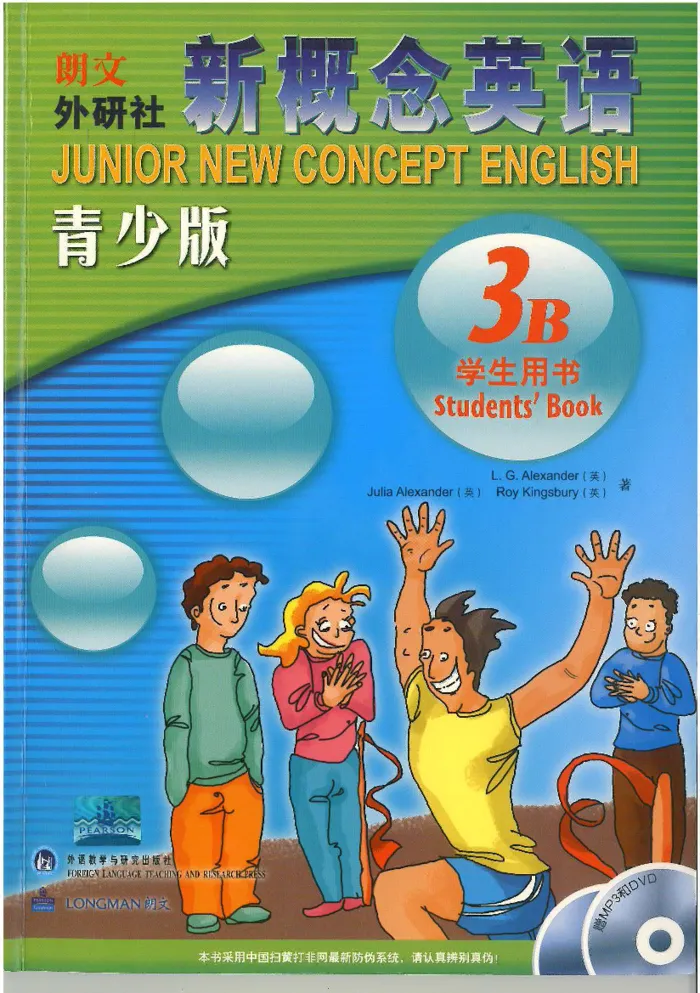
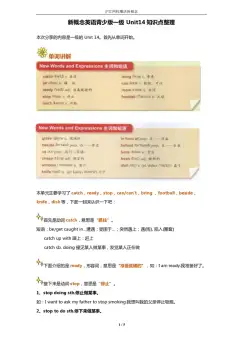
跟
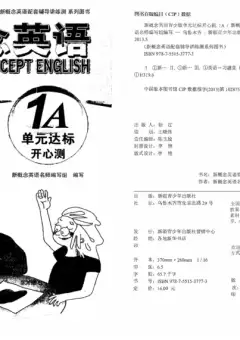
外研社
学生
Students' Book
L. G. Alexander (英)
Julia Alexander ( 英)
Roy Kingsbury ( 英)咀
战
a民
争,
4俨
朗卖
外研社
4 .
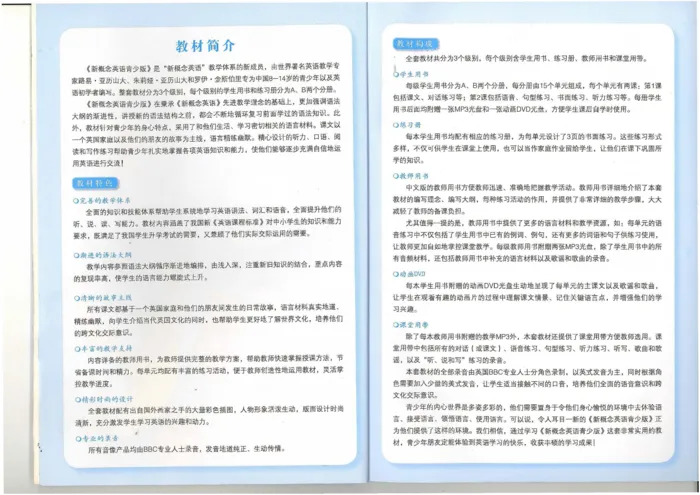
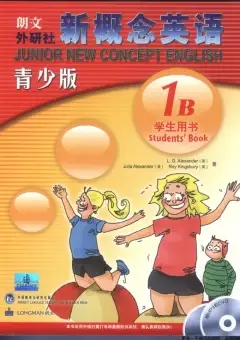
教材简介
《新概念英语青少版》是"新概念英语"教学体系的新成员,由世界著名英语教学专
家路易·亚历山大、朱莉娅·亚历山大和罗伊·金斯伯里专为中国8一14岁的青少年以及英
语初学者编写。整套教材分为3个级别,每个级别的学生用书和练习册分为A 、
B两个分册。
《新概念英语青少版》在秉承《新概念英语》先进教学理念的基础上,更加强调语法
大纲的渐进性,讲授新的语法结构之前,都会不断地循环复习前面学过的语法知识。此
外,教材针对青少年的身心特点,采用了和他们生活、学习密切相关的语言材料。课文以
一个英国家庭以及他们的朋友的故事为主线,语言精练幽默。精心设计的昕力、口语、阅
读和写作练习帮助青少年扎实地掌握各项英语知识和能力,使他们能够逐步充满自信地运
用英语进行交流1
。完善的教学休系
全面的知识和技能体系帮助学生系统地学习英语语法、词汇和语音,全面提升他们的
听、说、读、写能力。教材内容涵盖了我国新《英语课程标准》对中小学生的知识和能力
要求,既满足了我国学生升学考试的需要,又兼顾了他们实际交际运用的需要。
。渐进的语法大纲
教学内容参照语法大纲循序渐进地编排,由浅入深,注重新旧知识的结合,重点内容
的复现率高,使学生的语言能力螺旋式上升。
。清晰的故事主线
所有课文都基于一个英国家庭和他们的朋友间发生的曰常故事,语言材料真实地道、
精练幽默,向学生介绍当代英国文化的同时,也帮助学生更好地了解世界文化,培养他们
的跨文化交际意识。
。丰宫的教学支持
内容详备的教师用书,为教师提供完整的教学方案,帮助教师快速掌握授课方法,节
省备课时间和精力。每单元均自己有丰富的练习活动,便于教师创造性地运用教材,灵活掌
控教学进度。
。精彩时尚的设计
全套教材配有出自国外画家之手的大量彩色插图,人物形象活j发生动,版面设计时尚
清新,充分激发学生学习英语的兴趣和动力。
,
。专业的录音
所有音像产品均由BBC专业人士录音,发音地道纯正、生动传情。
全套教材共分为3个级别,每个级别含学生用书、练习册、教师用书和课堂用带o
Q 学生用书
每级学生用书分为A 、
B两个分册,每分册由1 5个单元组成,每个单元有两课.第1 课
包括课文、对话练习等;第2课包括语音、句型练习、书面练习、昕力练习等。每册学生
用书后面均附赠一张MP3光盘和
张动画DVD光盘,方便学生课后自学时使用。
。练习册
每本学生用书均配有相应的练习册,为每单元设计了3页的书面练习。这些练习形式
多样,不仅可供学生在课堂上使用,也可以当作家庭作业留给学生,让他们在课下巩固所
学的知识。
。教师用书
中文版的教师用书方便教师迅速、准确地把握教学活动。教师用书详细地介绍了本套
教材的编写理念、编写大纲,每种练习活动的作用,并提供了非常详细的教学步骤,大大
减轻了教师的备课负担。
尤其值得一提的是,教师用书中提供了更多的语言材料和教学资源,如:每单元的语
音练习中不仅包括了学生用书中已有的例词、例句,还有更多的词语和句子供练习使用,
让教师更加自如地掌控课堂教学。每级教师用书附赠两张MP3光盘,除了学生用书中的所
有音频材料,还包括教师用书中补充的语言材料以及歌谣和歌曲的录音。
。动画DVD
每本学生用书附赠的动画DVD光盘生动地呈现了每单元的主课文以及歌谣和歌曲,
让学生在观看有趣的动画片的过程中理解课文情景、记住关键语言点,并增强他们的学
习兴趣。
。课堂用带
除了每本教师用书附赠的教学MP3外,本套教材还提供了课堂用带方便教师选用。课
堂用带中包括所有的对话
( 或课文) 、语音练习、句型练习、昕力练习、听写、歌曲和歌
谣,以及"昕、说和写"练习的录音。
本套教材的全部录音由英国BBC专业人士分角色录制,以英式发音为主,同时根据角
色需要加入少量的美式发音,让学生适当接触不同的口音,培养他们全面的语音意识和跨
文化交际意识。
青少年的内心世界是多姿多彩的,他们需要置身于令他们身心愉悦的环境中去体验语
言、接受语言、领悟语言、使用语言。可以说,令人耳目一新的《新概念英语青少版》正
为他们提供了这样的环境。我们相信,通过学习《新概念英语青少版》这套非常实用的教
材,青少年朋友定能体验到英语学习的快乐,收获丰硕的学习成果!
自
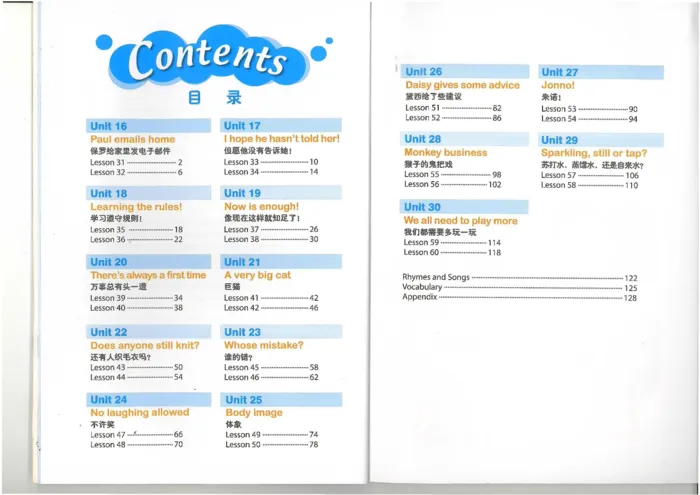
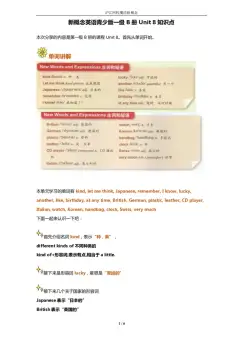
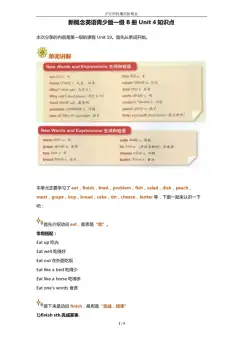
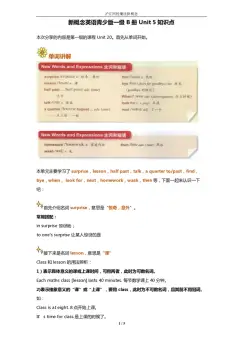
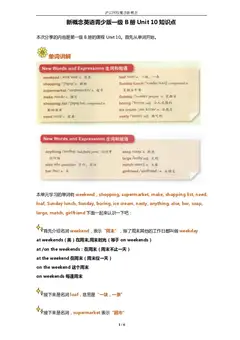
Unit 16
Paul emails home
保罗给家里发电子邮件
Lesson 31 …………"……川"… 2
Lesson 32 …....................… 6
Unit 18
learning the rules!
学习遵守规则!
Lesson 35
川…………川..… .. 18
Lesson 36 .;..............……….22
Unit 20
There's always a first time
万事总有头-道
Lesson 39 ….........…………..34
Lesson 40 ........….,.....……..38
Unit 22
Does anyone still knit?
还有人织毛衣吗?
Lesson 43 ……"………"…….50
Lesson 44 ………"……"….54
M
们
札
γ
d
Unit 24
No laughing allowed
不许笑
Lesson 47 ...L..……....…….66
Lesson 48 .......….......…"….70
录
p咽
Unit 17
馆
I hope he hasn't told her!
但愿他没有告诉她1
Lesson 33 …………"……… 10
Lesson 34 …·………………"… 14
Unit 19
Now is enough!
像现在这样就知足了!
Lesson 37 ……....……........… 26
Lesson 38 ..........……"…......30
Unit 21
A very big cat
巨猫
Lesson 41 ..........……...........42
Lesson 42 ………….......…….. 46
Unit 23
Whose mistake?
谁的错?
Lesson 45 ………………"…….58
Lesson 46 ……………..…… 62
Unit 25
Body image
体象
Lesson 49 …..…"………"….. 74
Lesson 50 …….................... 78
Unit 26
Daisy gives some advice
黛西给了些建议
Lesson 51
… ... ...... ..…·川…… .82
Lesson 52 ..................……… 86
Unit 28
Monkey business
猴子的鬼把戏
Lesson 55 …...............………. 98
Lesson 56 …...….........…….. 102
Unit 30
We all need to play more
我们都需要多玩一玩
Lesson 59..………·…"……… 114
Lesson 60 ….........……........118
Unit 27
Jonno!
朱诺!
Lesson 53..…………..........….90
Lesson 54........…………........ 94
Unit 29
Sparkling, still or tap?
苏打水,蒸馆水,还是自来水?
Lesson 57..……..........……..1 06
Lesson 58 ………........…"….11 0
Rhymes and Songs ……"…·……………............…...…...…...…...…·……"….1 22
Vocabulary …·…........………………….............…...........………..........……..……… 125
Appendix …...…...............……………...….............…........…........……"…….......... 128
二♀主
卢~马
每2在勾匈每磊!l.
一
华车"豆2主
D巳ar Mum and Dad,
Paul emails home
保罗给家里发电子邮件
I'm 巳mai1ing you through the Redston巳Ranch websit巳. You can 巳mailme
back on Dau1.bruce@redstoneranch.cOI!l. 1'11 ca11 you n巳xtw巳饨,when 1 can
use a Broadband phone.
⑩
LESSON
My assessment at Redstone was a bit strange. They asked m巳to do a 10t of
tick-box tests. Then we did some outdoor activiti巳s. They to1d me to 1ead
someon巳up an easy climb. Then th巳yask巳d me to 1ead a sma11 group , in
kayaks, on whit巳water.
5
也
飞
守
J
S
V
M
N
1
抖
Listen to the recording, and then answer this question: 明Ihen will Paul be able to phone
his parents? 听录音,然后回答问题:保罗什么时候能给父母打电话?
After that , the main qu巳stlOn was ,‘ Wh巳re did you 1earn a11 these "back-
country skills". 1 said,‘1 grew up in "back country". In Scotland, 1
sometimes skied to school.' They lik巳d that. A1so , my tim巳in th巳London
Marathon was big news. Thr巳巳hours or 1ess is magic!
10
。
没
寄
电遵
守自
司
d
、
司
需V
1 met the top guy, Ed, and he ask巳d me to st盯tn巳xt week. Of course 1 said
yes. 1 won't be ab1e to trave1 much in the US this time, but it's great to hav巳
this chanc巳. 1'11live fre巳,too! Redstone will pay all my expenses.
J
Ta1k to you next week!
Lov巳,
Pau1
15
叫
3
4
飞
飞
高
',~飞、"J."
"r';'" 叮
怡、、。心
",.想
可甲"""可思可F
事
心、"'V
W夺
飞,"~"恕町、……
」二
毛二严。
正三22;
三
,
3
2
'
‘.J
‘
: I MßiJl',' li'l时12EJit!J阳[41'.1[.i n$1生词和短语】
号右后Z京去~高石=司司石
斗~.. ,-""",物V啪
"啪"阶功训
Broadband phone /'br:l:dbænd ,f~un/
compound n
充频电话
assessment /~'sesm~nt/ n. 评估
tick-box test /'tlk bnks ,test/ compound n
在框中肯l 勾的测讯
outdoor activity /,aut'd:l: æk'tlv~til
compound n. 尸外活动
lead /li:d/ v
带领
climb /klaJm/ n. 攀登,攀爬
kayak /'kalækl n
小皮艇,轻型独木舟
white water /, waIt 'W:l:tg/ n 端流
m
back country /'bæk ,k^ntril n 偏远山区
skill /sk!l/ n. ~主多7
grow up in v. + αdν parficle + prep
(i l7 fransitiνe) 成长于…
ski /ski:/ν. 滑雪
less /Ies/ quant泸er (comparative) 较少
magic /'mæd3Ik/ n
奇迹
unimportant /,^nJm'p:l:t:mt/ adj
不重妥的
cheaply /'tfi:pli/ adv. 便宜地
score /sb:/ 几分数
"-,,<γ刊时…
(
l~m(4....jl'I .t:aml击111注释l-
叫
1 Dear Mum and Dad,
这是标准的书信和电子邮件称呼语,结构为
Dear + 收件
人+逗号。
2
emai1 一作动词时用怯与glve 相似,后面可以接直接宾活和间接宾语,
如l'm
emailing you 出1 S 。
3 They askea me 10 do a 10t of tick -box tests 一- askltell somebody (not) to do something
表示"(不)让某人做某事" 。
4
live free -
free 在这里作副词,表示"免费地",1ive fr臼可以理解为"免费吃住"。
注意区分free 作副词时与freely 的区别
freely 表示"无限制地,自由地"如:
speak freely (自由地发表言论) 。
参考译文
亲爱的爸爸和妈妈
,
我正通过雷德斯通牧场的网站给你们发邮件。你们可以往皿凶主旦旦豆豆
redston巳ranch.corn 给我回邮件。我下周就能给你们打宽频电话了。
在雷德斯通他们对我的测评方式有些独特。他们让我做了很多在框中划勾的
测试。然后我们进行了一些室外活动。他们先让我带着一个人做了简单的登山活动,
然后让我带若一小组人在滞流中划了小皮艇。
之后,
主要的问题是"你是在哪里学会这些野外技能的中"我说"我就是在
偏远山区长大的。在苏格兰,
我有时滑雪去学校。"他们听了很商兴o
我在伦敦马
拉松比赛上的成绩也很捧。
3 小时以内已经是个奇迹了!
我见了负责人埃德。他让我下星期开始实习。我当然答应了。这回我在美国
没什么时间旅游了,但得到这个机会很不错,我还可以免费吃住!
雷德斯通会支
付我的所有费用。
下星期再和你们聊
l
爱你们的?
保罗
{ lCIIfG 1m III…一同时
ψ
~:~…叫…叫川
,
不呼叫百司中5'
10 Answ叫uestions ab川he text 根据课文回答问题。
a) Example: Is Paul emailing his parents through the Redstoue Ranch website?
Yes, he is.
才
He' lI call them next week, won'! he?
5 Was his time in !he London Marathon
2
Did they ask Paul !o do a lot of !ick-
big news?
box tes!s?
6
Did Ed ask him to start nex! week?
3
Then !hey told him to lead someone
7
Of course, Paul said yes, didn't he?
up an easy climb, didn'! !hey?
8
Will he be able !o travel much in !he
4
In Scotla 门d ,he sometimes skied to
US !his !ime?
school, didn'! he?
9
And he'll live free, won'! he?
b) Example: Is Paul emailing his sister? No, he isn't. He's emailing his parents.
才
Will he call !hem next month?
5 Was his time in the London Marathon
2 Was his assessment ordinary?
unimportant?
3
Did !hey ask him !o do composition
6
Did Ed ask him to start nex! month?
tes!s?
7 Will he live quite cheaplý?
4
Did they ask him !o lead a large group
8 Will a 什iend pay all his expenses?
on whi!e water?
c) Example: How is Paul emailing his pareuts?
(He's emailing them) through the Redstone Ranch website.
1 How can !hey email him back?
6
How many people did they tell him to
2
When will Paul call !hem?
lead up an easy climb?
3 What was his assessment like?
7 Where did Paul grow up?
4
Wha! did !hey ask him to do?
8 Who did Paul meet?
5 What kind of ac!ivities did !hey do?
9 Why won'! Paul be able 10 !ravel much
in Ihe US Ihis time?
8 Ask questions about the text.根据课文提问。
Imagine you are talking to Paul about Redstone Ranch and his assessment. What
questionscan you ask him? 假设你在与保罗谈论雷德斯通牧场和那里对他的评价。
你会问他些什么问题?
Examples: How long did the tick-box tests take? And what were they like?
Did you get good scores iu the outdoor activities?
e Ask each other these questions. 互相提问。
才
Do you email friends.relalives or colleagues? How often? Whal abou!?
2
Has anyone asked you !o do anything loday? Who, and whal? Has anyone told you
10 do anything !oday? Who, and wha!?
3 What kinds of !hings do you ask o!her people 10 do for yo川Why?
5
一
LESSON
I'd like you to !eave it ODeQ, p. l~.Ç!;"ì~. .
I'd asked her not t豆豆豆tJ:1ê.t.
NewWords and 阳-叫词和短语I
close Ikl;mzl v
关闭
still Ist lν 叫j 静止的
ìndoor actìvìty l'md:J: æk't;:lv;:ltil COI1ψoundn
室内活动
J
learner l' 13:n;:l1 n
学员
I
m 吨
'","m
←"^'''''啊啊俨''f''"''
,.,..阳唰机懈可呻ψ 惊艳飞4挪胳膊皇岛潮伊
Ask and answer questions. 问答练习。
A: May 1 close the door?
5
A: He's closing the door.
B:
No, I'd like you to leave it ope门',pleas巳
B:
But 1 asked him not to close the door!
Please tell him to leave it open.
2
A:
He's closing the door.
B:
Is he? Ask him to leave itopen.
6
A:
He's going to close the door.
B: 1 told him not to close the door!
3 A: Can he close the door?
Please ask him to leave it open.
B:
N口" please tell him to leave it open.
4
A:
He's closing the door.
B:
He isn't, is he?
1 asked him not to close the door!
,
6
16 (sixteen)
17 (seventeen)
ι
飞、
18 (eighteen)
19 (nineteen)
not 1 close the door
leave it open
notl move
keep still
not 1 talk in her巳
ke巳pqm巳t
not 1 throw away thos巳notes
keep them
60 (sixty)
not 1 watch TV
turn it off
70 (seventy)
80 (eighty)
90 (ninety)
not 1 get a taxi
catch a bus
not 1 stand outside
com巳m
not 1 spend all that money
save Jt
7
一
s 飞且半明咀u)
t ook at the pict町'es,listenωthere四,rding,and act the scene. 看图片,听录音,然后表演。
[I:m巾~…s 改写句子]
[l'i'n阳~叫马s 书面练习E
o Patterns 句型
Refer to the Pattern Practice on page 6, and write out in full numbers 1 and 6. 参照
第6 页的句型练习,用图片中的信息套用句型1 和6 写出完整的对话。
飞8 Sentence Structure 句子结构
Complete these sentences, using the not四in brackets. Then refer ωthe text in Lesson 31.
用括号中的信息完成句子。然后查看第31 课的课文。
1'11 ca11 ... (next we巳k / use / Broadband phone) (lines 3-4)
They asked ... (do / lot / tick -box tests) (lines 5-6)
Th巳n they asked ... (lead / sma11 group / kayaks / white water) (lines 7-8)
1 met ... (top guy / asked / start / n巳xt week) (lin巳13)
-
A
q
岳
。
3
A
『
\
Rewrite the sentences below, Iike the examples. 仿照例句,
改写下列句子。
Example:
‘自it down,' the teacher said to us.
You write: The te口clìer told us to sit down
ø Guided Summary 总结
Write complete answers to these questions about the text in Lesson 31, to make one
paragraph. 完整回答以下关于第31 课课文的问题,并将答案连成一段话。
Example: ‘Cau you pleas而turn 0咀the radio?' he asked her.
You write: He ask:ed lìer to turn on tlìe r口dio
‘Can you pick me up at 8?' she asked m巳.
William said to Lucy,‘Wait outside the school.'
‘Email me some time next week,' 1 asked her
She asked them,‘Please turn the music down.'
‘Please be r巳ady at 6.30,' h巳told us.
‘Don't turn off the TV,' h巳asked them.
'
i
句
4
1
v
4
·
《
J
/
。
引币1at did h巳te11 them about his
time in Scotland? What did they
think of his time in the London
Marathon? (Begin with
A卢er that, ... and use ..., and)
Who did he meet? When did he ask
Paul to start? (U se ...,αnd)
Did Paul say y巳s ,orno?
Will he live free, or not? What wi11
Redstone pay? (Use ..., because)
4
5
6
7
Who is Paul emailing? What will
he do next week when he can use a
Broadband、phone ? (Us巳.. .,but)
ln his assessment at Redstone, what
t巳sts did they ask him to do?
Did they do some outdoor or indoor
activities? (Begin with
Then ...)
1
飞
2
3
\
f
Choose the correct answer ωfill the blank - a, b, c or d. Then look at the text in Lesson 31.
从a 、b 、c 和d 中选择正确的答案填空,然后查看第31 课的课文。
止.川臼选择眩目
\ o Guided Composition: Paul's Interview 作文:保罗的面试
Imagine you were at Paul's interview. We heard part of it in Unit 12. Write some of
the rest of it. Use these prompts to write Ed's questions, and then write Paul's answers
after each. 假设你参加了保罗的面试,我们在第12 单元中已听到了面试的部分情况。
写出面试的剩余部分的情况。用以下提示写出埃德的问题,然后写出保罗的回答。
一一_ you next week, when 1 can use a Broadband phon巳. (lines 3-4)
a) 1 call
b) l' m ca11ing
c) l' 11 ca11
d) 1 ca11ed
Theyasked 一一_ a lot of tick-box tests. (lines 5-6)
的1 do
b) I'm doing
c) me do
I 一一
m
‘ back country' . (line 10)
a) born
b) had
I 一一
th巳top guy, Ed ... (lin巳13)
a) meet
b) meeting
c) met
. and he asked
next w巳ek. (line 13)
a) 1 start
b) 1'11 start
c) me to start
d) me to do
d) grew up
c) did
l
2
3
4
where he 1earn巳d all his ‘back
country skills' .
when he ran th巳London Marathon,
and what his time was.
if he can start n巳xt week.
4
5
Ed asks Paul ..
1 if he can do some tick-box t巳sts for
th巳m.
if he can lead a learner up an easy
c1imb
if he can lead a sma11 group, in
kayaks, on white water.
2
d) have met
d) me starting
5
6
h喃喃………………,,,,,,,-,,,..,,,,…吼叫
• 3
.
·re
9
8
一
7
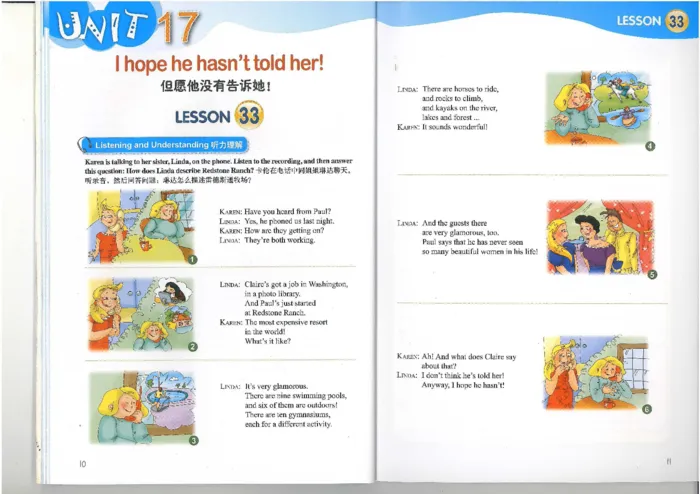
I hope he hasn't told her!
但愿他没有告诉她!
盼。N ⑩
Karen is taIking to her sister, Linda, on the phone. Listen to the recording, and then answer
this question: How do四Lindadωcribe Redstone Ranch? 卡伦在电话中同姐姐琳达Jf9p天。
听录音,然后回答问题:琳达怎么描述雷德斯通牧场?
@
4
10
KAREN: Have you heard 企om Paul?
LINDA: y,邸,he phoned us last night.
KAREN: How are they getting on?
LINDA: Th巳y're both working.
LINDA: Claire's got ajob in Washington,
in a photo library.
And Paul 's just started
at Redstone Ranch.
KAREN: The most expensive resort
in the world!
What's it like?
LINDA: It's very glamorous.
There are nine swimming pools,
and six of them are outdoors!
Th巳re are ten gymnasmms,
each for a different activity.
LINDA: Th巳re are horses to ride,
and rocks to climb,
and kayaks on the river,
lakes and forest ...
KAREN: It sounds wonder臼l!
LINDA: And th巳guests there
are very glamorous, too.
Paul says that he has never seen
so many beautiful women in his life!
KAREN: Ah! And what do巳s Claire say
about that?
LINDA: 1 don't think he's told her!
Anyway, 1 hope he hasn't!
。
。
11
Ei早早垣军Rlil2孟回国事事蹦蹦IJ
phone 厅
If;Jonl v 打电话
gymn阳asi汕u川
r町m l闯d句3引m町
n
get on I'get ' 口nl v. + αdν.pa阳le
rock Ir口kl n. 岩石
在
(intransiti阳)进展
forest I'for;:>stl n. 森林
j
reso时In' z;,:tI n. 度假地
guest Igestl n
客人,宾客
户
swimming pool /'sWlmll) ,PU:1I n
游泳池
j
唰咿咐咐饷啊何时仰川吻柳州时内的叫叫阳时时W附加明叫时哺时仲可即仰伊哈哈军立了时宵节t贸出三<TH_W.哆胶东导蒜诩
'
LE2:2二.laT:m课文注释卤
<v',w_,叫'/",.仙
事
'#....-.唱伽
1 Have you heard from Paul?
本句用了现在完成时,用于询问从过去到现在的状况。
12
hearfrom 意为"(通过信件等)得到某人的消息"。
2
Howare 出ey getting on? ←一本句用了现在进行时,用于询问目前的状况。
3 Paul says that he has never seen so many beautiful women in his life! 一本句使用了
间接引语。
says 为引述动词,间接引语为that 引导的宾语从句。放在say 后面时
,
that 通常可以省赂。副词so 表示程度,
so many (much) 意为"这么多,如此多"
many 与可数名词复数连用,
much 与不可数名词连用。
4
1 don't think 1毡's told her! -
think 后面接that 引导的宾语从句时,
that 可以省赂。
5 1 hope qe h创的
hope 后面接that 引导的宾语从句时,
that 可以省赂。
参考译文
卡伦
你有保罗的消息、吗?
琳达
有
,他昨天晚上给我们打电话了。
卡伦
他们怎么样?
琳达
他们两人都在工作。
琳达
克莱尔在华盛顿的一个图片库找
到了工作。
保罗也开始了在雷德斯通牧场的
工作。
卡伦
世界上最奢华的度假地
|
那里什么样中
琳达
非常迷人。
那里有9 个游泳池,其牛有6 个
在室外
l
有10 个体育馆
1
每个用于不同
的活动。
琳达
那里可以骑马、攀岩、在河上划
独木舟1
还有湖泊和森林
....
卡伦
听起来真棒
l
琳达
那里的客人也很有魅力。
保罗说他从未见过这么多漂亮的
女人
l
卡伦
'f'f I
那克莱尔对此有什么看法?
琳达
我想他没有告诉她这些
1
反正我希望他没有
l
噩噩国
妇一聘用明明明隅'
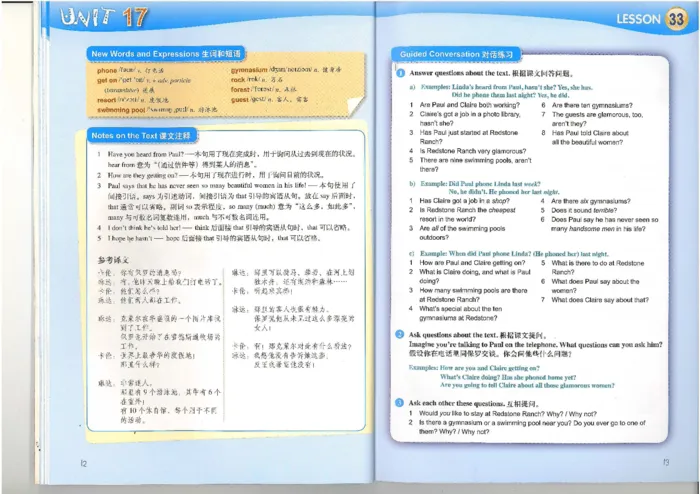
|@ Answe叫uestions about the text. 根据课文回答问题。
a) Examples: Linda's h咽rd 仕om Paul, hasn't she? Yes, she has.
D也d he phone them last night? Yes, he did.
1 Are Paul and Claire both working?
6
Are there ten gymnasiums?
2
Claire's got a job in a photo library,
7
The guests are glamorous, too,
hasn't she?
aren't they?
3
Has Paul just started at Redstone
8
Has Paul told Claire about
Ranch?
4
Is Redstone Ranch very glamorous?
5
There are nine swimming pools, aren't
there?
b) Example: Did Paul phone Linda last week?
all the beautiful women?
No, he didn't. He phoned her last night.
1
Has Claire got a job in a shop?
4
Are there six gymnasiums?
2
Is Redstone Ranch the cheapest
resort in the world?
3
Are all of the swimming pools
outdoors?
5
Ooes it sound terrible?
6
Ooes Paul say he has never seen so
many handsome men in his life?
c) Example: When did Paul phone Linda? (He phoned her) last night.
1 How are Paul and Claire getting on?
5
What is there to do at Redstone
2
What is Claire doing, and what is Paul
Ranch?
doing?
6
What does Paul say about the
3
How many swimming pools are there
at Redstone Ranch?
4
What's special about the ten
gymnasiums at Redstone?
women?
7
What does Claire say about that?
e Ask questions about the text. 根据课文提问。
Imagine you're talking to Paul on the telephone. What questions can you ask him?
假设你在电话里同保罗交谈。你会问他些什么问题?
Examples: How are you and Claire getting on?
明That's Claire doing? Has she phoned home yet?
Are you going to tell Claire about all those glamorous women?
O
A缸sk 侃ho仙
tl仙h陀阳町
e臼rt由
:h阳
e阳
sequ阳
E
1 Would y'归
ouli川ik
阳〈但e to s创ta町ya挝t Redstone Ranch? Why? 1 Why not?
2
Is there a gymnasium or a swimming pool near you? 00 you ever go to one of
them? Why? 1 Why not?
13
LESSON
:no
She 呈主X豆that she's lost her purse.
She 呈型.Q that, but I don't 血坦!s she has.
F
、E
A l ~t4,*,j!.j.]i.~+j ," I ÆJ.)i4}i[']'t*DE i!tûQIj
蹦蹦蹦,
一一一
purse /p3:S/ n. (女用) 钱包,
手袋
W四/ta l -;'/ n. (BrE. > AmE. tire) 轮胎
Ask and answer questions. 问答练习o
(Patterns 1 司nd 5 with pictures 15,50, 16,60,
17 and 70 only)
1 A: What's wrong with Karen?
B: She says (thatJ she甘lost her purs巳
2
A:
What主the matter with Karen?
B:
She thinks (thaο she主lost her purs巳
3
A
How do you know (that) Karen's lost her
purse?
B:
Because she says she's lost it.
4
A: I hope (thatJ Karen has门't lost her purse.
B:
I hope so to口',but she says 5he has.
5
A: Has Karen really lost her purse?
B:
Well, she says she's lost it, but I don't
think she has.
,
|叫
调at /flæt/αdj. 瘪的
puton 幌ight fixed phrase 体重增加
(Patterns 6 and 7 with pictures 18,80, 19 and
900nly)
6
A:
Is that tyre f1at?
7
B:
Yes, 1 think so. / Yes, 1 think it i5.
A:
B:
or No, 1 don't think so. / No, 1 don't think
It 15.
That tyre isn't f1at, is it?
1 hope it isn't. / 1 hope not.
15 (自fteen)
Karen
16 (sixteen)
Nina
Sh巳's lost her purse
She's putting on weight
17 (seventeen)
Jack
H巳's missed the plane
18 (eighteen)
80 (eighty)
50 (自fty)
Robert
60 (sixty)
WiIliam
70 (seventy)
Polly
He's failed th巳exam
He's going to lose his job.
She '11 fail the test
19 (nineteen)
90 (ninety)
That tyre's fiat.
Thos巳eggs are bad.
Your watch is slow. That clock's fast.
15
GJ;用理哩ji
I Listen and write notes for Daisy about th啤messages 仕om her friends. Then use the
notesωreport each message ωDaisy. 听黛西的朋友给她的留言并做记录。然后根据记
录把每个留言转述给黛西。
[ l'ml阳
I 4:(ij am叫面练习』
-
ζ王雪运
……一…………阳明吧兽11)
Match the questions on the left with the answers on the right, and write them down.
将左栏的问题与右栏的回答搭配起来,并把它们写下来。
F
、
A Match the Questions and Answers fã) lHãìli~
飞8 Sentence Structure 句子结构
Complete these sentences, using the notes in brackets. Then refer ωthe text in Lesson 33.
用括号中的信息完成句子。然后查看第33 课的课文。
1 Claire ... (job / Washington / photo library) (pic. 2)
2 There ... (nine swimrning pools / six / outdoors)! (pic. 3)
3 There ... (ten gymnasiums /巳ach / different activity) (pic. 3)
4
Paul says ... (never / see / so many / women / life)! (pic. 5)
., Join the Sentences 连接句子
Join the pairs ofideas below, like the example. 仿照例子,连接以下句子。
飞
htL
'nuc
su
OO
J
口
QOEMU
M
乱
犯
b
α
的
时
IE
'EA
ot
舍
L
孔
u
u
i-
n
ο
IE
m
v
础
。
3
·
唱
A
B
Mhu
}t
dsJH
P
3
,
叶
U
户
、
2·H·d
p
巾
-
71
,
heo
IHN
new.
No, 1 haven飞but 1 hope you have.
1 hope not!
1 think I've f:创led my Maths exam
~t
o Patterns 句型
Refer to the Pattern Practice on page 14, and write out in full numbers 5 and 6 . 参照
第14 页的句型练习,用图片中的信息套用句型5 和6 写出完整的对话。
Answers
1
1
令
马
句
3
A
叶
,
、
u
d
u
A Questions
Hav巳you heard from Nina this week?
Are thos巳eggs fresh?
What's the matter with you?
That car isn't very old, is it?
10 o'clock? It isn't that late, is it?
What's wrong with Tom?
-A
7-1MAUTF3
rAU
Is he going to be ill? 1 hope h巳isn't.
(1 hope ...)
Has she spent a11 her money? 1
think sh巳has. (1 think ...)
Example: Is your watch fast? 1 h晴pe it is. (1 h晴pe ...)
You write: 1 noÞe (t卡口已your watcn is fast
Hash巳missed the train? 1 think h巳
has. (1 thìnk ...)
Sh巳isn't ti巳巳ling we11. Sh币says sh巳
isn't. (She says ...)
Have they fai!ed their 巳xams?We
hop巳they haven 't. (We hop巳...)
4
5
1
2
3
…何时叫-…………磨
Choose the correct answer to fill the blank - a, b, c or d. Then look at the text in Lesson 到.
从a 、b 、c 和d 中选择正确的答案填空,然后查看第33 课的课文。
How are they 一一_? - They're both working. (pic. 1)
a) getting
b) getting up
c) gettingω
And Paul' s 一一_ at Redstone Ranch. (pic. 2)
a) already start
b) just started
c) starting yet
There are horses 一-一,and rocks ωclimb ... (pic. 4)
a) ride
b) riding
c)ωrid巳
d) rode
Paul says that h巳has never seen 一一_ beautiful women in his life! (pic. 5)
a) as much
b) too many
c) too much
d) so many
一一_ he's told her! (pic. 6)
a) Do 1 出ink
b) 1 think not
国~
。
Guided Summary 总结
Write complete answers to these questions about the text in Lesson 33, to make one
paragraph. 完整回答以下关于第33 课课文的问题,并将答案连成一段话。
d) getting on
d) started for
1
2
Who are very glamorous too? What
do巳s Paul say about the beautiful
women? (Use ..., and)
Does Linda think Paul has told
Claire about the women? Does she
hope he has, or does she hop巳h巳
hasn't? (Use ..., and)
4
5
MUe
争
E
L
尸
l
】
r
k
闹
。
α
:
a
m
N
阳
M
U
旧
S
IHGmum
n
川
"
阳
,
山
·
旧
d
人
g
阳
阴
阳
4
.
叫
d
M
队
y
p
咀
M
U
叮
咚
咀
。
(
V
-
u
o
)
σ
b
n
r
·
-
n
E
ε
J
i
s
-
2
也
.
U
7
m
u
v
d
阳
mwAP
…
YEna
m
A
他
b
m
m
m
叫
"
m
m
d
y
w
记
恤
川
剧
M
U
m
L
凹
U
]
』
5
7
I
E
(
E
缸
,
吐
内
d
n
7
·
7
到
P
D
创
v
-
e
e
e
M
川
、
,
、
M
V
V
V
V
且
伊
且
吁
凶
I
1
O
E
C
W
M
K
M
U
H
白
白
l
2
3
c) I'm not thinking d) 1 don't think
3
4
5
,
17
16
一
8
Learning the rules!
学习遵守规则!
LESSON
Listen to the recording, and then answer this question: Does Karen's answer surprise
WiIliam? Why? / Why not? 听录音,然后回答问题:卡伦的回答令威廉吃惊吗?为什
么令他吃惊? /为什么不令他吃惊?
18
ROBERT: Dad!
Have you asked Mum yet?
WILLlAM: What about?
ROBERT: Have you ask巳dMum
if 1 can start karate lessons?
WILLIAM: No, 1 haven't. 1'11 ...
Shh! She's coming!
KAREN:
What ar巳you two
whispering about?
ROBERT:
Oh ,巳r ,nothing!
I'mjust going upstairs.
See you later, Dad!
WILLlAM: Yes, of cours巳.
KA阻N:
What's the mystery?
Is Robert all right?
WILLlAM: H巳's fine
H巳just wants me
to ask you something.
KAREN:
Why doesn't he ask me
himself?
WILLlAM: He's afraid 出at you'l1 say no.
KAREN: Oh, dear! What is it, William?
WILLlAM: Rob巳rt wants to learn karat巳.
H巳doesn't know
whe仕1巳r you'111et him.
KAREN:
Oh, is that all!
You worried me!
WILLlAM: Do you mean
that you don't mind?
KAREN:
Of course 1 don't mind!
Why would 1 mind?
Karat巳's a sp。此,isn't it?
WILLlAM: It's a martial art!
It's about fighting!
KAREN:
All competitions are
a kind of fighting.
The martia1 arts are also
about rules!
立7。
19
20
回跑原理费哥哥白费理事
whisper /'WISPQ/ v 低语,耳语
upstairs /,Ap'ste;Jz/ adv. (place) 在
(往)楼上
afraid /;1 'fre l d/αdj
担心的
whether !,w巳凸;1/αdv. (condition) 是否
fight /fa It/ν
打斗
寄予咖附嘟聊聊,精
伸向'咛仔"俨T:;g'々?明啤炉子"P;寸寸响彻明响叫~m叩. .".,....,,:<<,.""<"~ ~,.~咽~~向伊W啊"""""首何?可::;Z'::士羽;;'''::: 气叫'":l:-'':-;士
11侃5 on the Text ìJ:且d
………………J
1 Have you asked Murn if 1 can start karate le ssons ? 一if 引导的宾语从句作谓语动词
ask 的直接宾语。
ask 与gJVe 和tell 类似,后面可以接直接宾语和间接宾语。
2 He's afraid that you'll say no -
be afraid that .. . 在这里表示咀心发生某种事情"
that 引导的从句通常用将来时。
3 Oh, is that all! -
all 在这里作代词,表示
"全部事情"
谓语动词要用单数形式。
4
All cornpetitions are a kind of fighting -
all 在这里作形容词,表示"所有的,一
切的"修饰可数名词复数,谓语动词要用复数形式。表示同样的意思也可以用
巳very ,
结构为
every+ 可数名词单数+谓语动词单数形式。
参苦译文
罗伯特
爸爸,你问妈妈了吗?
威廉
'
问什么?
罗伯特
你问妈妈我能不能学空手道
了吗?
威廉
还没有。我要...嘘
l
她来了
1
卡伦
I
你们两个在嘀咕什么呢?
罗伯特
嗅,呢,
什么也没有
|
我正要上楼。
再见,爸爸
l
威廉
对,什么也没说。
卡伦
有什么秘密吗?
罗伯特没事吧。
威廉
他很好。
他只是想让我问你住事。
卡伦
他自己为什么不问?
威廉
他怕你不答应。
,
卡伦
噢,这样啊!威廉?
是什么事。
威廉罗伯特想学空手道。
他不知道你会不会同意。
卡伦噢?就是这事呀
i
你倒让我着急了一场
l
威廉你是说你不反对?
卡伦
当然不反对了!
我为什么要反对?
空手道是一项运动,不是吗?
威廉是一种武术
l
与打斗有关
l
卡伦
所有竞技项目都是一种打斗。
武术也是有规则要遵守的
l
11mr;r:ti IW."Lf24ì圳叫话练习
l"
| @ Answerquestionsaboutthetext- 根据课文回答问题。
a) Example: Has William asked Karen yet if Robert can start karate lessons?
No, he hasn't.
1 Robert and William are whispering,
aren't they?
2
Is Robert going upstairs?
3
Robert wants his dad to ask his mum
something, doesn't he?
4
Is Robert afraid his mum will say no
to karate lessons?
5
Karen does 门't mind if Robert has
karate lessons, does she?
6
She says that all competitions are a
kind of fighting , does 门't she?
7 Are the martial arts also about rules?
b) Example: Does Robert want his dad to ask his mum if he can start German lessons?
No, he doesn't. He wants his dad to ask her if he can start karate lessons.
1 Are Robert and William shouting?
4
Does William want to learn karate?
2
Does Robert want his dad to tell his
5
Does Karen say,‘Mosf competitions
mum something?
are a kind of fighting'?
3
Does Robert fhink that his mum will
say no?
。
Example: Why are Robert and William whispering?
Because they don't want Karen to hear them.
1 Why is Robert going upstairs?
2 What does Robert want his father to ask his mother?
3 Why doesn't Robert ask his mother himself?
4
Why doesn't Karen mind if Robert has karate lessons?
e Ask questions about the text. 根据课文提|词。
Imagine you are talking to Robert and his parents about his karate lessons. What
questions can you ask them? 假设你在同罗伯特和他的父母谈论学习空手道的问
题。你会问他们些什么问题?
Examples: (to Robert)
Why do you re喝Ily want to learn karate?
(to William) Do you think karate is dangerous?
(to Karen)
Would you like to learn karate?
Ð Ask each other these questions. 互相提问。
1 Would you like to learn karate? Why? / Why not?
2 What new sport or activity would you like to learn? Why?
3
Do you think martial arts are a good thing for young people? Why? / Why not?
4
Karen says,‘AII competitions are a kind of fighting. The martial arts are also
about rules.' What do you think?
21
22
LESSON
Please 豆豆ιM且皿pause if I can sta且karate J~~~.9.rJ.$..
1'11 fi且巫♀监pause whether she m i.lJ.g主
担架引导男男静悄舅舅螃明;
wonder j'wAnd;}j v.
想、扣道
Ask and answer qnestions. 问答练习。
A:
B:
2
A:
B:
3
A:
B:
4
A:
B:
Has"CIaire found a job?
1'11 ask her if she's found 口ne
I hope Claire's found a job.
1'11 币nd out if she's found one.
I wonder if Claire's found a job.
I don't know. 1'11 ask her if she has
I want to know if Claire's found a job
Then why don't you ask her
if she's found one?
,
5
A:
B
6
A:
B:
平莎。
/
I must know whether Claire's found 口
job ornot.
Leave itt口me.lcan 币nd out whether
she's found one
Can you tell me if Claire's found a job or
not?
I'm 门口t sure whether she has or not, but
Ican 币ndout 币。ryou .
100
Claire
110
Jack
Has she found a job?
Has he read today's paper?
120
130
The boys
William
140
Jack
Can they Sp巳ak French?
Is he going to work?
150
Nina
WiII he be in th巳US next week?
Is sh巳enjoying her job?
160
170
Polly and Annie
Paul and Claire
Do they lik巳shopping?
Did they go to th巳th巳atre last week?
23
圃圄
一
习
一
一
同
一
拍
…
-
eu
…
-e
-s
i
-
C
E''
-e
-
x
n
一
-E
-nu
-
-au
-
-
A
V
‘
一
-
4
冒
‘
-
i
EVE
-
-
w
一
导u如ess ωusual 照常营业
Listen to the recording, and answer the questions
about the text . 听录音,回答问题。
Whodo巳s the ca11er ask to speak to first?
Where is she?
Is she coming back to the office today?
Who does the ca11er ask to speak to next?
Where is he?
Who 巳lse is at the office?
Who is the ca11er?
1
晶
句
,
&
句
3
A
且
寸
气
J
f
O
句
/
、o
Patterns 句型
Refer to the Pattern Practice on page 22, and write out in fuIl numbers 1 and 4. 参照
第22 页的句型练习,用图片中的信息套用句型1 和4 写出完整的对话。
e Senteuce Structure 句子结构
Complete these sentences, using the notes in brackets. Then refer to the text in Lesson 35.
用括号中的信息完成句子。然后查看第35 课的课文。
飞
飞
E
[
in the
ente…二一连接句子面
Join the pairs of ideas below, Iike the example. 仿照例句,连接下列句子。
Example: Has Linda heard from Paul yet? 1'1\ ask her. (1'1\ ask Linda ...)
You write: 1'11 clsK Lind口
if 5卡e has heard from Paul vet
Is she enjoying her new job? 1 want ωknow . (1 want ...)
Will they both stay in the US? 1 wonder. (1 wonder ...)
Can Claire speak Italian? Can you find out? (Can you …)
Did th巳y go to the cinema 1ast weekend? Can you ask them? (Can you ...)
Is Tom putting on weight? Do you know? (Do you know . ..)
Has she passed the English exam? Why don't you ask her? (Why don't you ...)
Can we park here? Will you find out? (Will you ...)
Would he like to study Medicine? 1 wonder. (1 wonder ...)
[
! 1'lmlllj1叫ìE [ít~ 选择填空】
12345678
Have you ... (ask / Mum / 1 / start / karate lessons)? (pic. 1)
What ... (you two / whisper / about)? (pic. 2)
He's fine. He just ... (want me / ask / something) (pic. 3)
He's afraid ... (you / say no) (pic. 3)
He doesn't know ... (you / let him) (pic. 4)
Do you mean ... (you / not / mind)? (pic. 5)
All comp巳titions ... (kind / fighting) (pic. 6)
The martia1 arts ... (a1so / rules)! (pic. 6)
飞
t
i
q
L
句
3
A
吨
气
d
f
O
呵
/
0
0
、飞
、
Choose the correct answer to filI the blank - a, b, c or d. Then look at the text in Lesson 35.
从a 、
b 、
c 和d 中选择正确的答案填空,然后查看第35 课的课文。
Have you ask巳d Mum 一一
1 can start karat巳l巳ssons? (pic. 1)
a) if
b) so
c) as
d) or not
H巳ju st wants 一一一you something. (pic. 3)
a) 1 ask
b) me ask
c) 1'11 ask
He's afraid 一_ you'll say no. (pic. 3)
a) that
b) as
c) wheth巳r
He doesn 't know 一一_ you'lllet him. (pic. 4)
a)that
b)so
c)wheth巳r
Oh, is that all! You 一一_ me! (pic. 5)
a) asked
b) wondered
c) to1d
What does Robert want to 1eam?
What doesn't he know? What is
Robert afraid she will say?
(Use ..., but and ..., and)
Does Karen mind or not? Does
she think that karate is a sport, or
something e1se? (Use ..., because)
What does she think about a11
competitions? And what about the
martia1 arts? (Us巳.,and that)
飞g Guided Summary 总结
Write complete answers to these questions about the text in Lesson 35, to make one
paragraph. 完整回答以下关于第35 课课文的问题,并将答案连成一段话。
Who wants to know if his dad has
asked his mum if he can start karate
1essons? Has h巳asked her yet or
not? (U se ..., but)
Then where does Robert go?
What do巳s Karen ask William
about Robert? What does William
te11 her? (Use ..., and)
4
5
1
2
3
飞
6
d) me to ask
d) because
d) worried
d) if
2
4
3
5
,
25
2叫
26
Now is enough!
像现在这样就知足了!
LESSON ⑩
Jed and Paul are in kayaks on the lake at Redstone Ranch. Jed is explaining to Paul how
he feels. Listen to the recording, and then answer this question: Why is this vacation
different for Jed? 在雷德斯通牧场,杰德和保罗正乘坐皮艇在湖中游玩。杰德在向保罗
可苗述他的感受。听录音,然后回答问题:对杰德来说,为什么这次度假与众不同?
@
\ v " -_...
@
。@
JED: It was my wife's id巳a
to come here.
She said,‘You need a vacation.
Leave it to m巳J
So 1 did.
She made all the res巳rvations.
It was a big surpris巳!
岛10st people think
that a vacation is about r巳stmg.
You feel tired, so you s1eep,
you eat, you Slt.
You rest.
1 used to think that, too.
1 used to sit by the pool al1 day,
and eat too much dinn巳E
every night.
The funny thing is,
on a vacation like that,
1 didn't g巳t 1巳s s tired.
At home, 1 sit at a desk al1 day
At night, 1 sit in front of the TY.
Maybe 1 巳at too much dinner
So what's the differ巳nce?
The only di旺巳rl巳nc巳is the plac巳
This vacation is different.
Ev巳ry day is different,
and every day is active.
When 1 was a kid,
1 us巳d to go out to play.
1 didn't think about tim巳.
It's lik巳that now
Now is enough!
。
@
27
I
(:l4i&'clti a. b. ... Jíí!j叩ssions ~.ì6J~~ìß J
E :rn Eill商哼
←一…一
leave something to somebody
ν
(transitiνe) + prep. + 0句iect 留下
reservation /, rez;:,' VelJ
.;m/ ι 预订
…时
use to /'jU:S tU/ aux. v
习惯做
pool /pU:l/ n. 游泳池
active /'æktlV/ adj
活跃的,积极的
一一~
i ,'" .'~/P" •• ,叫一
(lffilt4....]I.~;t?l -t?S:i!课文注释】
28
I
皿kayaks 00 the lake at Redstooe Raoch 一这三个地点状语的排列顺序是从小的地点
到大的地点。
2 Most people 也ink-most 表示"大多数的"修饰可数名词复数和不可数名词。
people 属于集合名词,表示复数意义,作主i吾时谓语动词用复数。
3 1 used to thiok that -
used to do somethiog 表示"过去常常做某事"。疑问句形
式为
Did ... use to ...?否定句形式为.. . dido 't use to ...
参考译文
杰德
来这儿是我妻子的主意。
她说
"你该休假了,
我来安排。"
我同意了。
她做了所有预订工作。
其是一个大大的惊喜
1
大多数人认为度假就是要休息。
你感到疲惫了,所以你睡觉、
吃
东西、
坐着。
你休息。
我过去也这样认为。
我过去常常整日坐在游泳池边,
每顿晚饭都吃得太多。
有趣的是,
这样休假并没有减轻
我的劳累感。
,
在家里,我整日坐在书桌旁。
晚上,
我坐在电视机前。
也许我会吃太多晚饭。
所以有什么区别?
唯一的区别就是地方不同。
而这次度假则不同。
每天都不一样,
每天都充满了
活力。
我小的时候经常出去玩。
我从不考虑时间。
现在就是这样。
像现在这样就知足了
|
t
Guided Conversatlon 对话练习E
b Answerquestionsabout川xt 根据课文回答问题。
a) Example: It was Jed's wife's idea to go to Redstone Ranch, wasn't it? Yes, it was.
Did she make all the reseNations?
7
At home, he sits at a desk all day,
2
Was it a big surprise for Jed?
doesn't he?
3
Most people think that a vacation is
8
Does he sit in front of the TV at night?
about resting, don't they?
9
This vacation is di忏erent ,isn't it?
4
Did Jed use to think the same?
10 When he was a kid, Jed used to go
5
Did he use to sit by the pool all day?
out to play, didn't he?
6
And he used to eat too much dinner
11
Did he think about time?
every night, didn't he?
12
It's like that now for him, isn't it?
b) Example: Was it]ed's idea to go to Redstone Ranch?
No, it wasn't.1t was his wife's idea.
1 Did she say, ‘You need a new job'?
5
Did he use to sit by the pool all nighf?
2
Did he make all the reseNations?
6
Did he use to eat too much break角sf?
3
Do all people think that a vacation is
7
Does he sit at a desk all night?
about resting?
8
Is this vacation the same?
4
Did Jed's wife use to think that?
c) Example: Whose idea was it to have a vacation at Redstone Ranch?
(It was) Jed's wife's (idea).
1
Who made all the reseNations?
5
What's the only difference between
2
What do most people think a vacation
home and a vacation?
is?
6
Why is this vacation different?
3
What did Jed use to do on vacation?
7
When did he use to go out to play?
4
What does Jed do at home?
And what didn't he think about?
e Ask questions about the text. 根据课文提问。
Imagine you are talking to Jed at Redstone Ranch. What questions can you ask
him ? 假设你在雷德斯通牧场与杰德谈话。你会问他些什么问题?
Examples: Whose idea was it to go to Redstooe Ranch?
What other places have you been to on vacation?
e Ask each other these que蜘ns. 互相提问。
1 Where did you go for your last vacation? When was that?
2
Did you use to sleep a lot when you were a baby? What else did you use to do?
3 What games did you use to play when you were young? And where did you play?
29
LESSON
:. i'e] 1IIIlfíil F.iffi
his~shoes
this~chance it was~Jake
he 's~tfte
thi s~的Ing
F一………冈山-生词和短语~
pop music / 'p口p ,mju:zlk/ n . 流行音乐
be keen on !bi 'ki:n on/βxed phrase
(+ gerund)
热衣于
Ask and answer questions. 问答练习。
(Patternsl-5 with pictures180- 210 only)
1 -A: Ooes he pJay football?
2
3
4
B:
N口" he doesn't, but he used to pJay
football when he was younger.
A:
Hedoes门't pJay football, does he?
B: No, not now, but he used to when he
was younger.
A: Oid he use to pJay football?
B:
Y它5,he did when he was younger.
A: Ooes he pJay football?
B: WeJJ, he used to, but he does'n't any
more
5
A: 00 you pJay football?
8: Well, J never used to, but J do now.
,
30
be fond of /bi ' fond 口V/ fixed phrase
(+ something / gerund) 喜欢
spider /'spald:l/ n . 蜘蛛
(Patterns 6 and 7 with pictures 220-250 only)
6
A: Are you goqd at Maths?
B: Well, J used to be good at it,
but J'm not any more.
7
A: Are you good at Maths?
B: J never used to be, but J am now.
180
190
play football
ride a bike
- - --- -…---------翩翩- ---阴阳---------------睛- - ----------
----------- 嗣----------
200
210
明
listen to pop music
read a lot
---四--国----------町"……------_.…------
220
。雪
be good at Maths
be keen on riding
E 四--------罔……---阳- -------------
240
250
⑥
"
be fond of swimming
be afraid of spiders
31
[μ
问问
W
帕恻r叫i阳E阳00j肌叫
e恍m削附
i丽阳
s臼e叫里2量
圈
飞o
Patterns 句型
Refer to the Pattern Practice on page 30, and write out in full numbers 1 and 6 . 参照
第30 页的句型练习,用图片中的信息套用句型1 和6 写出完整的对话。
飞e Guided Summary 总结
Write complete answers to these questions about the text in Lesson 37, to make one
paragraph . 完整回答以下关于第37 课课文的问题,并将答案连成一段话。
飞
1 Whose id巳a was it to go to
5
What's funny? Did he get mor巳or
Redstone Ranch?
less tired? (Begin with The户nny
2
Did Jed leave it to h巳r ,or not? Who
thing ...)
made a11 the reservations?
6
What does he do at home a11 day?
吨\
(Use ...,αnd)
What does he do at night?
3
What do most peop1e think a
(Use ..., and)
vacation is about? Did Jed use to
7
引1hy is this vacation different?
飞
think that too? (Use ..., and)
What is 巳very day like?
4
What did he use to do a11 day? How
(Us巳
. ..,because)
muchdidhe 巳at ev巳ry night?
8
Whatdidh巳us巳todowh巳nh巳was a
飞
(Use .~ . ,αnd)
kid? What didn't h巳出inkabout?
(Use ..., and)
9 Is this vacation lik,巳that ,or not?
飞Ð Guided Composition: L抽in China 100 Years Ago 作文
100 年前中国人的
生活状况
Imagine you lived in China 100 years ago. Write down for us now what life was like
飞
then . Begin 'Life was veη diJferent in China a hundred years ago.' - and then answer
some or all of these questions with one sentence each. 假设你生活在100年前的中国。
写写那时的生活状况。以"Life was very different in China a hundred years ago." 开头,
飞
了后回答以下部分或全部问题
每个问题用一句话回答
How did you get to plac巳s? (By
bicycle? By boat? Or did you
wa1k?)
What did you eat and drink every
day? How did your family'cook
meals? Who did th巳cooking?
3 What clothes did you wear?
4 Where did you work?
5
Whatw巳r巳the str巳巳ts and houses
lik,巳7
6
What kinds of shops did you hav巳7
7
Did you have much mon巳y?
8 Did you go to school? If so, where?
飞
2
,
一一一一一一一
32
Fompu阳don't know anything! 电脑什么都不懂!
Listen to the recording, and answer the questions about
the text. 听录音,回答问题。
1 What was R巳dburn like until recently?
2 Can trucks go tl丑'ough Redburn? Why? / Why not?
3
What happ巳ned when a Polish driver tried to
drive his truck through th巳village?
4 Why did he turn off the main road?
、
:c… ……曹雪.
This Crossword Puzzle is complete. Write simple clues for it. Below are two examples.
这个填词游戏已经完成。为它写出简单的提示。以下是两个例子。
1 S
P
D 2E R
3 S
L
A
4S
I
E
5 A T
6p
U
T
E
7M
s
E
8 p
L A
Y
9C
A
N' lOT
Y
llL
K
I
12C A B
130 F
R
A
E
A
E
R
14A
F R
A
I
D
。
δ
ob
巳
l
φ
ι
-H
σ
。
-e
Lu
t
--
W
ρ
L
W
rA
U
t
到
U
OLV
俨
且
ρ
i
w
ρ
u
v
l
k
υ
-I
rA
VA
0
8
·h
m
A
C
A
I
Down
1 1 usua11y 一一一一_ eight hours a night.
."且国画画m'ij9睡霸费;
Choose the correct answer to fill the blank - a, b, c or d. Then look at the text in Lesson 37.
从a 、
b 、
c 和d 中选择正确的答案填空,然后查看第37 课的课文。
1 She said ,‘ You 一一
a vacation. Leav巳it to m巳.' (pic. 1)
a) want
b) have
c) ne巳d
d) think
2
一_ people think that a vacation is about resting. (pic. 2)
a) Most
b) The most
c) Most of
d) Most of that
3
You feel tired ,一→_ you sleep, you eat, you sit. (pic. 2)
a) so
b) as
c) for
d) since
4
1一_ by the pool a11 day, and eat too much dinner 巳very night. (pic. 3)
a) sat
b) sitting
c) was sitting
d) us巳d to sit
5
When 1 was a kid, 1 一一_ out to play. (pic. 5)
a) go
b) going
c) used to go
d) am going
33
也
专
There's always a first time
万事总有头-遭
脱。N ⑩
or :lI! ... 'tf; U 1 •
eζ τ
Alan is chatting to Nina in a coffee shop. Listen to the recording, and then answer this
question: What is Alan going to do for his cousin? 艾伦在咖啡馆里与尼娜聊天。听录
音,然后回答问题:艾伦将为他的表姐做什么?
a旷v
革
ALAN: 1 had just got hom巳th巳other
night, when my cousin, Alice,
rang the doorbell
‘Oh, no!' 1 thought.
‘引That does she want?'
吃
喝
口
队
kbm
巾
E
M
en-p
叫
u
m
a
3tE
归
m
m
w
H
S
日
'
。
削
m
m
r
m
川
s
a
o
v
v
'
虽
t
s
a
卫
巳
的
d
M
叫
m
w
a
m
J
山
l
SIt
-,
]t
引
-
H
W
J
制
CJUBi
-
-
1
1
c
i
ρ
L
V
M
L
N
A
血
For a moment, 1 didn't answer
the door.
But 1 had just parked the car
outside
Perhaps she had seen m巳
@
3叫
So 1 invit巳d her in
and mad巳som巳tea.
Tm getting married in April,'
sh巳said.
‘Congratulations!' 1 r巳plied.
And 1 waited.
w巳had alr巳ady had two cups of tea,
wh巳n sh巳said ,
哇'd like to have a film of my
w巳dding
Alan, have you ever mad巳
ahomemovi巳?'
‘ NO ,Ihav巳n飞'1 said.
‘And 1 don't want to!'
‘Ah, well,' she said.
‘ Ther,巳's always a first time!
I'm sure you'll do it very well.'
The sad thing is,
I'm afraid 1 will!
返
。
35
明明拥用再用事跚跚蹦蹦事!
doorbell /'d:J:be\f n 门铃
answer l'a:ns:J1 v
回答
invite in Im'valt 'ml v. + αdν . particle
(trans山时)邀请进屋
(
1 ~ r.lt4.-i.J.'hI:W r
w …周勇司.
36
平
"~'9'~
1 1 had just gat hame the ather night, when my cousin, Alice, rang the doorbell 一本句用
了过去完成时,表示在过去某一时间或动作之前发生的动作。
the other night (day,
mOfllU毡,afternoon) 表示"不久前的一个晚上(一天,一个早晨,一个下午) 。
2
1'm getting married 一本句用了现在进行时,表示已经安排好的将要做的事情。
3 l' d like to have a 凸1m of my wedding 一- would like to do something 表示
"希望做
某事" 0 would like something 表示
"想要某物"
如
would like a cup of tea (想
喝杯茶) 。
参考译文
艾伦
几天前的一个晚上,
我刚到家我
的表姐艾丽斯就来按门铃了。
"嗅,不"我心想。
"她想要干什么?"
艾丽斯总是想要我帮她做一些事,
而且总是一些大事
l
几个月前,她曾让我去搬过钢琴。
我没有立刻去开门。
但是我刚把车停在外面。
她也许看见我了。
所以我邀请她进屋,还湖了茶。
自我4 月要结婚了o "她说。
"恭喜你"我答道。
我等着她的下文。
,
我们喝了两杯茶以后
,
她说
" 我想把我的婚礼拍成一部影片。
艾伦,你拍过家庭电影吗? "
"没有,我没拍过。"
我说。
也而
且我也不想拍"
"啊,那么
" 她说
" 万事总有头
一道嘛
|
我相信你会做得很好。
'
不幸的是,
恐怕我的确会做得
很好
l
[ @I 'PÆ''1,J''+'9ft't'''j'õifríÞtD面
明静明!
|@ Answerquestionsaboutthetext- 根据课文回答问题。
@
a) Examples: When Alice rang the doorbell, had Alan just got home? Yes, he had.
Alice always wants something, doesn't she? Yes, she does.
1
Ooes she always wanl somelhing big?
2 She asked Alan 10 move a piano a few
monlhs ago, didn'l she?
3
He didn'l answer the door for a
moment, did he?
4
Had he jusl parked the car oulside?
5
Oid he invite his cousin in?
6
She's getting married in April, isn't she?
7 Would she like 10 have a film of her
wedding?
8
She wanls Alan to make a home
movie of Ihe wedding, doesn't she?
b) Example: Is Alice Alan's sister? No, she isn't. She's his cousin.
1 Ooes Alice always wanl something
smal/?
2
Oid she ask Alan to move a computer?
3
Had Alan parked his bike outside?
4
Is Alice getting married in Jul川
5 Would she like to have a film of her
part俨
6
Ooes Alan Ihink he will do il very bad.忻
c) Example: Who rang the doorbell when Alan had just got home?
His cousin, Alice.
1 Whal does she always want?
2 When did she ask Alan to move a
piano?
3 Where had he parked the car?
4
Had Alice seen him?
5 Whal did Alan say, when Alice said,
'I'm getting married'?
6 When she said she'd like to have a
film of her wedding , whal had they
already had?
7 Whal doesn't Alan want 10 do?
8
How well does Alice Ihink Alan will do
il?
9 What aboul Alan? How well does he
Ihink he'll do il?
Ask questions about the text. 根据课文提问。
Imagine you're talking to Alan and Alice. What qu创tions can you ask them?
假设你在同立伦和艾丽斯谈话。你会问他们些什么问题?
Examples: (归Alan) Why don't you want to film Alice's wedding?
(恤
t阳
'oAl,阮
'ice
ω) Why do you wan旧
E此tAl,归
αntωo make a movie of you町rwedding?
o As徨keωach
】ho创th町
e町rt伽h阳
e酣
s优eq阴u配
1忧e创耐
st叫
tiωion皿互相提1问同。
1 00 you do things for relatives? Whal kinds of things do you do for Ihem?
And when?
2
How often do you do Ihings for friends? What kinds of Ihings?
3
Have you ever made a home movie? If nol, would you like lo?
4
00 you take many pholos? What do you like 10 pholograph?
37
01…
.IU4t:l lle
盼。N ⑩
AliceaIwavs wantâ something.
We had 到旦旦兰坦d two cups of tea
明些哩哇院院附静静事事蹦睛j
fall asleep /f::l:1 ;,' sli:p/βxedphrase 睡着
在飞
Ask and ànswer questions . 问答练习。
1 A:
Paul phoned a 什iend.
B:
、
What did he do then?
A: He cooked a meal.
4
A:
Did Paul cook a meal?
B:
Yes, but he'd al陀ady phoned a friend
be而ore that
2
A:
Did p,口ul cook a meal?
B:
Yes, he did, but he pho门ed a friend 币rs t.
5
A:
Did you cook a meal?
B:
Yes, 1 did, but only after /'d phoned a
什iend.
3
A:
What did Paul do after he had phoned
。什iend?
B:
He cooked a meal.
Study this:
Iufinitive
Past Simp\e
Past Perfect
fall
fell
had fallen
finish
且nished
had 白nished
go
went
had gone
p缸k
parked
had parked
phone
phoned
had phoned
1飞~ad /ri:d/
read /redJ
had read /red/
sell
so\d
had sold
,
watch
watched
had watched
飞、
一
38
300
Pau\
400
Daisy
phon巳d a friend
watch巳d the news on TV
cooked a meal
fell asleep
500
Gary
600
Kareu
read 仕le book
且nish巳d the housework
saw the 自1m
w巳nt to town
V
W
P
··
U
L
AU
n
a
t
r
OL
O
巾
劝
阻
剧
自nish巳d their homework
sold his old car
went to the cin巳ma
bought a new one
900
1,000
Jack
Nina
parked his car
went indoors
read a magazine
wrote some emails
39
,
[a
帕附阳
r忖毗
i忱t阳l;IT:l阳Cr:HÕ3叫r.m叫面练习E
o Patterns 句型
\
Refer to the Pattern Practice on page 38, and write out in full numbers 3 and 4. 参照
第38 页的句型,用图片中的信息套用句型3 和4 写出完整的对话。
飞8 Guided Summary 总结
Write complete answers to these questions about the text in Lesson 39 ,ωmakeone
paragraph. 完整回答以下关于第39 课课文的问题,并将答案连成一段话。
均气
1 When had A1an just got home? 吼叫10
rang the doorbell? (Use when)
2 What does Alice a1ways want? Is it
a1ways som巳thing big or som巳由mg
sma11? (Use ..., and)
3 What did she ask Alan to do a
few months ago? (Begin with
For example, ...)
5
What did she say? What did Alan
say? Did he wait or not? (B巳gm
with When ... and use . .., and)
6
How many cups of t巳ahad th巳y
had? What did she say and what
did she ask? (Use when
and ..., and)
\
4 Did he answer the door straight
7
Has Alan ever made a home
movie? Does he want to? Will he
probably film the wedding or not?
(Use .. ., and and ..., but)
飞
叫O
@
away or not? Did he invite h巳r in?
WhatÚid he make? (Use ..., but
then and ..., and)
Guided Composition: What Happened ω MyCar? 作文:我的车怎么了?
This is a page ofyour diary. You wrote it late on Sunday night. Write out the story in fuJl.
(Today is Thursday, 5th March.) Begin like this and use the diary notes to continue it. 这
一页是你星期日夜里写的日记。写出完整的事情经过。(今天是3 月5 日,星期四。)
用以下方式开头,借助提示接着写。
I • Jd just got home Iqst Sundqy 口fter 口dqy out, when
Sunda弘
1st March
Just got home after day out 一阶one rang. Rçm into house- answered the þhone-no one
there. Went outside agqin. Had þarked the car in the road- not there1 Went into hou纪
。ga in. Had someone taken it? Rang the þolice Waited. Watched a þrogramme on N - 30
minutes1 ìhen read 口m口9日zine. Fell asleeþ. Finally the þolice arrived-an hour later. News1
Found my car in the city centre Young man-'borrowed' it - drive home1
,
iron stomach 钢筋铁胃
Listen to the recording, and answer the questions about
the text. 听录音,回答问题。
1 Who phoned 出e boy's mother at work? Why?
2 What did the nurses tell h巳r when she arrived
at th巳hospital?
3 What had the scan shown?
4 What did the doctor show her?
5 Had th巳child ever been difficult about food?
6 What didn ' t 出巳boy 's parents know?
[ I M:.t6fiilE i I t.. :1 搭配A 、B 栏
]
Match A's statements and questions on the left with B's responses on the right, and
write them down . 将A 栏的陈述和问题与B 栏的回答搭配,并把它们写下来。
A
B
1 Did you catch the train all right?
1 Yes , but only after 1 had phoned a
2 1 had already seen th巳自1m before 1
friend for some help.
read the book.
2 Yes, 1 never used to b巳,but 1 am now.
3 Did you finish your homework?
3 1 hope so, too.
4 Are you really afraid of spiders?
4 But tb巳book was better, wasn't it?
5 1 hope he hasn't failed his exam
5 No, it had left before 1 got to th巳
stat1On.
[ M叫
Choose the correct answer to fiJl the blank - a, b, c or d. Then look at the text in Lesson 39.
从a 、
b 、
c 和d 中选择正确的答案填空,然后查看第39 课的课文。
I 一一
hom巳the other night when my cousin, Alic巳,rang the doorbell. (pic. 1)
a) just get
b) have just got
c) had just got
d) just getting
2 A few months ago, she asked 一一_ a piano. (pic. 2)
a) 1 move
b) me move
c) will you move
d) me to mov巳
3 For a moment, 1 didn't answer the door. But 1 一一_ the car outside. (pic. 3)
a) just parked
b) had just parked
c) just parking
d) have just parked
4
‘I'm g巳tting married in April ,' she said
‘一一一! ' 1 replied. (pic. 4)
a) Good luck
b) Happy birthday
c) Well done
d) Congratulations
叫|
t
A very big cat
LESSON ⑩
庐山
Listen ωthe recording, and then answer this question: One person believed the writer. 明1ho
wasthat? 听录音,然后回答问题:有一个人相信作者说的话。这个人是谁?
问2
击三三ε二
Our friends , Judy and Mark, have a country house outsid巳Bodrnin in south w巳st
Eng1and. Th巳y 10v巳th巳wild open country around 此,and th巳y go th巳re a 10t.
LJ
About ay巳盯ago ,Judy to1d m巳sh巳
had se巳n a puma in the garden. A
5
puma, in Eng1and! I1ist巳ned to her
polite1y, but 1 r巳ally beli巳ved that she
had se巳nav巳1γbig cat.
4三三
Last w巳ek巳nd ,they had invit巳d us to
go with them to Bodmin. It was a six-
hour journey, and wh巳nw巳arnv巳d ,I
want巳d to s仕etch my 1egs. 1 went out
into the quiet gard巳n. Then 1 saw it,
straight in front of me. It star巳datme
for amom巳时,with big yellow eyω.
15
Then it turn巳d ,jumped onto the wall,
and disappeared.
1 went into the house and said to the others, Tve just se巳n a puma in the gard巳n.'
My wife replied, 'There ar巳som巳very big cats around th巳se days.'
Judy smiled. ‘There are indeed!' she said.
叫3
EW!Il制(til].(!24tJJ: ii [1] ,1 对话练习矗
…一一…-"""" '-"吁……一…J
[ 阳w。附and Expressions 生也盟1
What did the writer want to do
when they arrived?
Oid he go out into the field?
When he saw the animal , where was
it?
How long did it stare at the writer?
What were its eyes Iike?
Then what did it do?
Oid the writer run after the animal?
Where did he go?
Oid he say he had just seen a cow
in the garden?
What did the writer's wife say?
What did Judy do?
And what did she say?
e Ask questions about the text. 根据课文提问。
Imagine the writer and his friends have caIled the local newspaper to report 伽.em由naI.
You are the reporter. What questions can you ask the writer and his wife, aIid their hosts,
Judy and Mark. 假设作者和他的朋友们给当地报纸打电话报告了有关这只动物的情
况,你是记者。你会问作者和他妻子以及招待他们的朱迪和马克些什么问题?
@
Talking points 讨论
Talk about where you go and what you do at weekends
‘If you see something very unusual or very strange, never tell anyone else.' What
do you think?
The writer and his wife went on a six-hour car journey to Bodmin. Talk about things
to do on a long car journey
叫5
Have you ever seen a puma or any other wild cat? Where?
Is there a zoo or a wildlife park near you? 00 you ever visit it? Why? I Why not?
00 people ever see ‘wild' animals in cities in China?
Have you got a cat or a dog or any other animal at home?
00 you ever go on long journeys? If you do, where do you go?
How do you get there?
12
123
句
,
-
q
J
ι
句
,
&
How often have you been to Bodmin?
Is Judy an old friend of yours?
Do you see lots of animals in your garden?
Have you ever seen the puma?
Ask each other these questions. 互相提问。
2
3
μ
l
H
寸
影
Answer questions about the text. 根据课文回答问题。
What are the writer's friends' names?
Where have they got a country
house?
Is that in south west England?
How often do they go there?
They love the wild open country
around the house, don't they?
What did Judy tell the writer,
about a year ago?
Was he surprised?
How did he Iisten to her?
What did he really believe she had
seen?
Where did they go last weekend?
How long did the journey take?
12345
。
13
14
567890
4t4l4-4-4lq4
一…
Examples: (to the writer)
(阳the writer's wife)
(阳Judy)
(阳Mark)
~'P"'''''伊
币'ν w协
",yr 阶'~~
2
7tounwu
10
11
q
J
A
U
『
F
K
U
6
10
A very big cat
这个题目可以理解为用very big 来修饰cat ,表示"非常大的猫"\
。
但是big c叫
a剖t 搭配在一起可以表示"大型猫科动物
ofbig 巳a础
ts. (美洲狮是大型猫科动物。)本文巧妙地利用了big cat 的双重意义。
Our friends, Judy and Mark -
Judy and Mark 是Our friends 的同位语。同位语位子
名词或代词之后,起补充说明或限定的作用,二者之间用逗号隔开。
Judy told me she had seen a puma in the garden
本句使用了间接引语。引述动词
told 为过去式,
间接引语的时态为过去完成时。
stçm咯g纣ht
芷t i归n front ofm巳
str且
rm
缸ight 在这里作副词,表示"对直地,直接
stral吃ght
咀tin口front ofme 可以理解为"在我正前方"\
。
1 went into the house and said to the others, 'I've just seen a puma in the garden.'
本
句使用了直接引话。如果把直接引语转换成间接引语,本句可变成
Iw巳nt into the
house and said to the others (出at) 1 had just seen a puma in th巳garden
"最近
disappear /,dlS ;:,'PI;:'/ν,消失
wildlife park I'warldlalf ,po:k/ compoul7d 17.
野生动物园
可膨
参苦译文
我们的朋友朱迪和马克在英国西南部的博德明郊外有一座乡村住宅。
欢住宅周围荒凉空旷的乡村景色,所以经常去。
大约一年前,朱迪告诉我她在花园中看见一只美洲狮。美洲狮,
恭敬地听她述说?但是我真的觉得她看见的是一只非常大的猫。
上周末,他们邀请我们和他们一起去博德明。旅程花了6 个小时。到了之后,
我想去散散步?就进了安静的花园。这时,在我的正前方
7
我看到了它。它用黄
色的大眼睛盯着我看了一会儿,然后转身跳上墙便消失了。
我进屋对其他人说
"我在花园里看见了一只美洲狮。"我妻子回答道
附近有一些非常大的猫。"
朱边笑了笑。"确实有J "她说。
他们喜
我
在英国
l
: Notes on the Text 课文哩J
puma /'pju:m;:,/ 17. 美洲狮
stare /ste;:,/ v
盯,注视
onto /'ontu/ prep.
flJ …..之上
wall /w:l:l/ 17
墙
锣"';;~ ;;,~ ;;".; 叫''''''>W<,*"…………侨。
ψ
2
4
3
5
,
Afa
'
B/b
Judy töld me a year gg旦pause that she had 豆豆豆且a pwmii\.
I thought at the 1i.皿皇pause that she had 豆豆豆旦a very big I:<g1.
I"m le 口rnlng
Cninese
LESSON ⑩
i{j ••
1ìUIII~ t: IH'
1-
、,-
y巳sterday
last w巳巳k
C/c
D/d
二…哑巴
E国
……"均哩刑期幌训幢酣睛i
interview /'mt;}vju:/ v. 访问,采访
last weekend
last Monday
A:
'l'm tired.'
8:. What did she say?
c: She said (that) she was tired
2
A: She's tired.
8:
H口w do you know?
A: She told me (that) she was tired
3
A: She said she was tired.
8: When was that?
A: She told me yesterday.
E/e
F/f
4
A: She's tired, you kno毗
8: When did she say she was tired?
A: She told me yesterday that she was
tired.
树\
Iïl be 廿ere l
We'ye been to London
Wnat did 怆5日y?
He said (tnat)
ne
a week ago
a few days ago
G/g
___ 一一-飞、
H血1
He told me
(tr 呻M
Wnat did ne tell you?
,
last month
yesterday
同6
问7
[W巾
o Patterns 句型
Refer ωthe Pattern Practice on page 46, and write out in full numbers 2 and 4. 参照
第46 页的句型,用图片中的信息套用句型2 和4 写出完整的对话。
8 Guided Summary 总结
Wri能ωmplete answers to these questions about the text in Lω50n 41, to make one paragraph.
完整回答以下关于第41 课课文的问题,并将答案连成一段话。
1 Where do the writ町、friends Judy and
Markhav巳a country house? Which
p缸t of England is that in? How often
do the writer and his wife go there?
(Use ..., and)
2 When did Judy tell th巳writer she had
seen a puma in the garden?
4
What had they invited them to do last
w巳ekend ?
5
Was it a six-hour or a t四-hour
joumey? What did th巳wnter want to
do when they arrived? (Use ..., and)
6 Who went out into th巳garden? What
did he se巳,straight in 企ontofhim?
飞
3
Who listenedωher poli优ly ? Whatdid
(Begin with When …)
同8
h6 really believe? (Use ..., but)
7
How long did it stare at him? Then
what did it do? (Use ..., then ..., and)
o Guided Composition: A Short News Stoη 作文: 一则短新闻
You are a reporter, and work for the local newspaper nωr Bodmin. You want to write a
short article about 世le ‘big cat' (in the text in Lesson 41), 50 you go to the country house.
You ask the writer and his wife, and Judy and Mark these questions, and they answer. 你
是一名记者,在悴德明附近的一家地方报纸工作。你想写一篇关于"巨猫"
(见第41
课的课文)的短文,所以你去了那座乡村住宅。你问了作者和他的妻子,以及朱迪和
马克以下问题。他们一一作答。
• Howof'忧ndoyoucome ωBodmin? Wheri did you last come here?
When did you arrive 由is time?
• Have you seen a puma before? When?
• Whosaw it 由is time? Wher巳were you? What did the anima1 do?
Wasanyone 巳Is巳with you, or were you a1one?
• Doyo旧wife and fri巳nds believe you?
• Will you come to Bo命nin again?
Begin like this: Is ther芒口bum口口r some other biq Cqt near ßodmin? Perhabs
I interviewed some visitors in a count内hou.se neq r here
,
I Picasso 毕加索
Listen to the recording, and answer the questions
about the text. 听录音,回答问题。
She's very small, isn't she?
1 What was obvious when Picasso was five?
2 What wasn 't obvious at first?
3 Why did it take so long for this to become clear?
4 Had the American s臼n any ofPicasso's work?
5 What did he do when he saw the painting of his
witì巳?
6 认他at did Picasso's answer m巳an ?
U旦旦旦~川他们告雨百ZI
22育;22272士;132ffemm川唔n with the w叫问仿照例句,
Example: She said to me,‘Iwant ωstretch my legs.' (She told ...)
You write: Sne told me that she wanted to stretch ner leqs
1 1 said to them,哇' v巳seen that film .'
4
(I told ...)
2 They said to us, ‘We want to see the
new car-' ( 卫ley told ...)
3ShesaId to me,‘I've never been to
Paris.' (She told ...)
He said to her, '1'11 call you n巳xt
week.' (He told ...)
5 They said to us,‘We want to stav in
London-, (They told ..)
v aq
6 Isaid ωher, 'I'm going to Bodmin.'
(1 told ...)
比坐坐ice ~t.fflï~ ~
?r:f!?飞气γ
飞
γγ;r!?h:2m:tt芷监监
:2r;扭拙启且Z2挝哇去苟在
;ι豆;吕立2口叫
2白z踪2挝贮
;rr
俨俨?
干
……
e时附
t能…
e
;1:
排耐子于旷俨
V问川叫
e盯t
3 : !:?;;rr
沪
;??γ
怆阳阳
e臼I陀时咄川
d们ω
川
tω川
O川I
a) s巳es
b) has seen
ρ叶飞
4It wasmeiv h·cj
saw
d)had SEEn
向
4E
创; 叫叫叫
i址u
岭川
i且卧
λ)(-
c) came
d) went
叫9
Does anyone still knit?
还有人织毛衣吗?
脱。N ⑩
Listen to the recording, and then answer this qnestion: Does Janner's still sell knitting
needles? Why? / Why not? 昕录音,然后回答问题:詹纳商场还在卖毛衣针吗?为什
么还在卖? /为什么不卖了?
ji
41412
POLLY: Do you know where 1 can buy
knitting needl邸,Annie?
ANNæ: No, I'm afraid shops like that
hav巳disapp巳ared th巳se days
Maybe p巳opl巳don't knit
any more.
@
POLLY: 1 knit! I'm knitting som巳thing
for my ni巳ce's new baby!
Or 1 will knit something for her,
if 1 can find th巳right ne巳dl巳s!
@
ANNIE: Have you tried Janner's?
POLLY: yi巳s ,I have!
1 had a mad conversation
with the Sales Assistant yesterday.
ANNæ: What happened?
50
O
@
51
POLLY: 1 ask,巳dh巳r where 1 could find
knitting ne巳dles
She said th巳y didn't have any
1 said that 1 always used to buy
knitting ne巳dles on the 且rst fioor,
next to Ladies' Fashions.
P OLLY: Sh巳said thatJanner's had clos巳d
that department y巳ars ago.
She said,‘We don't sell
knitting n巳巳dles now.
Nobody asks for th巳m any more.'
POLLY: 1 said,‘You're mistaken
I'mhere,
and I'm still asking for them!'
E些雪些些t些翌EH
一一……工工工工工工工……-Ji
[阳~'&'l;rli Æ'I咀且国血监且血革】
Answerqu四tions about the text. 根据课文回答问题。
What does Polly want to buy?
12 What did the Sales Assistant say?
Ooes Annie know where she can buy
13 What did Polly always use to buy on
them?
the first floor?
Annie wonders if people knit any
14 Where exactly did she use to buy
more, doesn't she?
them on the first floor?
What has happened to shops like that
15 Have Janner's closed that department
these days?
now?
Polly knits, doesn't she?
才6
Oid the Sales Assistant say that
Who is she knitting something for
Janner's had closed that department
now?
monfhs ago?
What can't she find?
17 Oid she say,‘We don't buy knitting
Then if she can find them, what will
needles now'?
she knit?
18 Ooes anybody ask for them any
Polly has tried Janner's, hasn't she?
more?
Who did she have a mad
19 Oid Polly say, 'You're mistaken', or
conversation with yesterday?
‘You're right'?
What did Polly ask the Sales
20 What did she say to the Assistant at
Assistant?
the end of their conversation?
2
3
@
4
5
6
sales assistant /,sellz g'SJst.mt/ COIψoundn
售货员
mistaken /ml'st 巳Ibn/ adj. 错误的,
弄错的
Chinese Knotting i'tJaI,ni:z 'notII)/ n.
中
国结
local / ' lgukal!叫.当地的
knitlmt/ ν
织,编织
knitting needle /'mtII) ,ni:dJ/ compound n
毛衣针
niece jni:s/ n
侄女,甥女
mad /mæd/αdj. 愚蠢的
conversation / ,konvg'seif,m/ 凡对话
7
8
(lMrn…i'I1m11ml 课文注释】
9
10
don't knit any more -
not ... any more 表示"不再"
any rnore 置于动词之后。
1 asked her where 1 could find knitting needles
本句使用了间接引语。特殊疑问句
变为间接引语时,仍然用原特殊疑问词来引导宾语从句,用陈述句i吾序。
on the first fl o or ←在英式英语中,
且rst floor 表示巳楼"在美式英语中,
1
2
传
l
j
a
习
4
J
11
e Ask questions about the text. 根据课文提问。
Imagine you are talking to Polly about knitting and her visit to Janner's. What
questions can you ask her? 假设你在与波莉谈论织毛衣的问题和她去詹纳商场的
情况。你会问她些什么问题?
Examples: Do you Iike knitting? What things do you knit? What have you knitted?
Where do you usually buy your wool and knitting needles?
What other things do they sell in Janner's?
Ask each other these questions. 互相提问。
它表
我问她哪里可以买到毛衣针。
她说她们不卖。
我说我过去经常在二层女装部旁
边的柜台买毛衣针。
示"一楼" 。
Yòu're mistaken
相当于You are wrong ,但是要避免这样说。
波莉
你知道在哪儿能买到毛衣针吗
,
安妮?
不知道,
恐怕卖毛衣针的商店现
在已经消失了。
也许人们不再织毛衣了。
参苦译文
波莉
安妮
3
4
00 you or a friend or relative do Chinese Knotting? If so, what kinds of things do
you/they Chinese knot or have you/they Chinese knotted?
00 you or any of your family make any of your own clothes? If so, who? And what
do they make?
00 you like working with your hands and making things?
What do you do in your spare time?
2
3
4
@
她说詹纳商场几年前就把那个部
门给撤了。
她说
" 我们现在不卖毛衣针了。
没有人要买了。"
波莉
我就织
l
我要给我侄女刚出生的
小孩儿织毛衣
|
或者说如果我能找到合适的针的
话我就给她织
i
波莉
Talking points 讨论
Talk about things that older people still do in China, and things that young people
don't do any more.
Talk about things that you can't buy any more
Oiscuss your local shops. What do they sell? What don'f they sell?
53
2
3
。
我就还想买毛
,
" 你错了。
我说
衣针"
波莉
你去过詹纳商场吗。
去过
|
昨天我和那里的售货员展开了一
场荒唐的对话。
怎么了?
安妮
波莉
安妮
52
.,
6
『
·
‘
G/g
脱。N ⑩
11111 11 I... ,.a Ue
机
Z乱叫加如7"-~~ -.叫
钥
I asked b垒E 阳山e where I 豆豆且且鱼且y.. kniUing .r:1!~.~9.1~豆
They wanted to .!s.旦旦旦'!. pause when 出豆且旦怪are 9.p..~f.l..
H血1
you reαding?
I1i
国-_.俑- - 田---国----------四啕嗣---- - --------陶---…--------------啕蛐幽幽---------酬----响.
J/j
t~ r:l':lJl'l'liliH....... Io.司:411'=+割t.H!>-w:::rn Eill~
examiner /rg'zæmmg/ n
考官
叫?哇町'叭γ
..γ
.,.."",句号何禽'
Ask and answer questions. 问答练习。
K/k
L /I
(Patterns 1•
3 with pictures G-J only)
Man: Are you tired?
B:
Whatdid he want to know?
A:
He wanted t口know if I was tired.
(Patterns 4 and 5 with pictures K - N only)
4
Man: Why are you tired?
B:
Whatdid he wantto know?
A:
He wanted to know why I was tired.
5
A:
Did he ask why you were tired?
B:
Yes, he did.
A:
Did you tell him why you were tired?
B:
No, I didn't.
2
A:
Did he ask if you were tired?
B:
Yes, hedid.
A: And what did you tell him?
B:
I told him I was tired, of course!
3
A:
Did he want to know if you were tired?
B:
}乍5,he did. And f said f w,口5 tired.
Why qre yOu t阳的
Whqt qre yOu
M/m
---------…-- - ----伽------------铺副自- -------------明--……"国…~-------------…-帽
N/n
,
5忏
ζ
j
u
ζ
J
I An Irish story 在爱尔兰发生的故事
Listen to the recording, and answer the questions
about the text. 听录音,回答问题。
后
o Patterns 句型
Refer to the Patlern Practice on page 饵,and write out in full numbers 1 and 4. 参照
第54 页的句型练习,用图片中的信息套用句型1 和4 写出完整的对话。
J
Why was Mr. Henry Ford a very rich man?
What happened every tim巳hew巳nt
anywhere?
How much did he want to give to the
hospital?
What had th巳newspaper said?
What did the hospital's Director ask him?
What did Mr. Ford do?
1
2
3
A
ι
寸
Z
J
/
O
[ M灿'i .t:a'lit41n.J.~.j川lil-"i'lI:l陌问答搭配)
Do you know ... (where / 1 / buy / knitting needles)? (pic. 1)
OrI… (knit something / if / find / right ne巳dles)! (pic. 2)
1 asked... (wh巳re / find / knitting needles) (pic. 4)
She said ... (they / not / have / any) (pic. 4)
She said ... (Jann町、/ c10sed / department / ye缸s) (pic. 5)
Nobodyasks ... (them / more) (pic. 5)
Match the questions on the left with the answers on the right, and write them down.
将左栏的问题与右栏的回答搭配起来,并把它们写下来。
o Guided Summary 总结
Write complete answers ωthese questions about the text in Lesson 43, to make one
paragraph. 完整回答以下关于第43 课课文的问题,并将答案连成一段话。
B Answers
She asked me if 1 had a headache.
1 told him 1 couldn't help him.
1 don't know if h巳has . 1'11 ask him.
No, I didn't. Please ask her to op巳n it.
H巳asked me if 1 had enjoyed th巳b∞k
-
A
今
年
句
J
A
斗
,
、
u
η
r
-
7·
o
uo
mv
,dnf7
·
飞
d
e
立
u
k
h
内
n
u
s
t
飞
,
v
d
m
M
口
比
阮
忠
-
m
陀
k
h
也
川
剧
啤
H
O
i
C
K
r
创
m
啤
O
K
ω
u
autSC
J
EEr
-
3
(
巳
b
旧
h
d
5
UKU
U
AU
E
L
Koknk
A
t
v
d
币
u
t
汹
汹
M
h
划
d
d
m
巳
d
ddyhd
h
b
d
u
-
-
肌
W
W
阴
阳
W
; 川tmljJlt;rn tíiM 选择填空】
al'iI阳Exercis[ÆJ书面向』
飞8 Sentence Structure 句子结构
Complete these sentences, using the notes in brackets. Then refer to the text in Lesson 43.
用括号中的信息完成句子。然后查看第43 课的课文。
-
A
q
牛
马
d
A
H
寸
气
d
L
U
飞
-
A
匀
,
"
句
3
A
U
T
M
、
u
Choosethe ωrrect answer to fill the blank - a, b, c or d. Then look at the text in Lesson 43.
从a 、
b 、
c 和d 中选择正确的答案填空,然后查看第43 课的课文。
l' m afraid shops like that 一一一these days. (pic. 1)
a) disappear
b) disappeared
c) disappearing
d) have disapp巳缸ed
OrI 一一_ something for her, if 1 can find th巳right n巳edles! (pic. 2)
a) knit
b) am knitting
c) will knit
d) knitt巳d
1 asked her where 1 一_ knitting needles. (pic. 4)
a) find
b) found
c) can find
d) could find
She
一_ that Janner's had c10sed that department years ago. (pic. 5)
a) said
b) told
c) asked
d) wanted to know
She said,‘We _ _ knitting n巳edles now.' (pic. 5)
a) haven't sold b) don't sell
c) won't s巳11
d) aren't selling
2
5
4
3
8
What did Polly ask the Sales
Assistant? What did she say?
(Us 巳...,and)
Did Po11y say sh巳always used to
buy knitting ne巳dl巳s on the first or
S巳cond fioor? When did 由巳Assistant
say they had c10sed that department?
(Use ..., and)
Did sh巳t巳11 Polly they didn't sell
knitting needles now b巳cause they
wer.巳too 巳xpenslv巳
or because
nobody asked for th巳m any more?
Did Polly say,‘You're right?' or
‘You're mistaken'? What else did
she say? (Use ..., and)
Do~s Polly know where she can buy
knitting needles or not? Who does
she ask? (Use ..., so)
\
What does Anni巳say about shops
like that these days? Does she or
doesn't sh巳wonder if people knit
any more? (Use ..., and)
Who does Polly say she is knitting
something for? Or she will knit
something for her if she can find the
right wool or the right needles?
(Use ..., or)
Which shop did Polly go to y巳sterday?
Who did she hav巳amad conv巳rsatlOn
with? (Use ..., and)
5
6
1
2
飞
飞
民飞
7
3
…电机、
4
,
57
56
•
内
,
OUV
LK
虱
忑
S
J
创
?
卢
情
~
-
m
错
N
r
的
。
O
U
V
桂
但
反
M
S
.
5
O
U
KH
W
Listen to the recording, and then answer this question: Who had made a mistake? 明1hy?
听录音,然后回答问题:谁犯了个错?为什么?
1t had be巳n a 10ng day. Th巳judg巳s had chosen fourte巳n
scu1ptures for the 巳xhibition. They wanted a fifteenth , and they
want巳d to go home. They 100ked at two more piec巳s. One was a
man's head. They didn't 1ike it. The other was a square, mod巳rn
5 piece. The judges chose the mod巳rn pl巳ce. Then they went
home.
,
58
The next day, th巳artlSt rec巳ived
a 1etter. It said that th巳judgωhad
chos巳n his scu1pture. But when
10
he went to see the exhibition,
h巳cou1dn't s巳巳his scu1pture
anywhere ‘Where can it be?' he
said. ‘1t must be here!'
Th巳judges insist巳d it hadn't been
20
a mistak巳. They 1iked th巳base on
its own, but they thought th巳head
was awful.
59
At 1ast, he saw something with his
15
name on it. It was the square bas巳
of his scu1ptur巳. But th巳top part,
the head, wasn't th巳r巳.‘It must
have b巳en a mistake!' h巳said
‘ ,
60
Iew Words and Expres…[.1
…一位y 用普酬舅舅幌明j
mistake /mI'stelk/ 凡错误
judge /d3Ad3/ n. τ干宇'liJ~
receive /n'si:v/ v. 收到
base /bels/ n. 基应
〔的[{:LI.jjj 伽Lml课文注d
w,. ...1>"_…………睛
insist /m'slst/ν
坚持,坚决认为
sculptor /'skAlpt;J/ n
雕塑家
dollar /'dol;J/ n
元
traditional /tädIJ=;JI/ 叫i
传统的
1 a fifteenth 一任句中相当于a fifteenth sculpture 。
2
he couldn't see 一情态动词could 在句中作为can 的过去式,表示能力。
3 Where can it be? 一情态动词can 在句中表示可能性。
4 It must be here! 一情态动词must 在句中表示推测,意为L定,准是"这种推
测近乎"肯定"。
must 后面接动词原形时,表示对现在的推测。
5 It must have been a mistake! -
must 后面接动词的完成式时,表示对过去的推测。
参专译文
这是漫长的一夭。
评委们为展览选出了
1 4 件雕塑。他们想再选一件,
然后就
回家。他们又看了两件作品。
一件是一个男人的头像T
他们不喜欢。另一件是一
个正方体,
是现代派的作品。评委们选择了那件现代派的作品,然后就回家了。
第二天,艺术家接到一封信。信上说评委选中了他的雕塑。但是当他去看展
览时,
却哪里都找不到他的雕塑。" 它可能在哪里呢9"
他说。" 一定就在这儿"
最后,他看到某样东西上有他的名字。这是他的雕塑的方形基座。但是雕塑
的上半部,也就是那个头像却不见了。
"一定是搞错了"他说。
评委们坚持认为他们没有弄错。他们喜欢那个基座,但认为那个头像很难看。
,
(GuidpdconveMi叫
d J
10 Answer questions about the text . 根据课文回答问题。
It had been a long day, hadn't it?
13
How did he feel, do you thinlσ
2
How many sculptures had the judges
14
Oid the artist go to see the exhibition?
chosen?
15
He couldn't see his sculpture
3 What had they chosen them for?
anywhere, could he?
4
How many more sculptures did they
16 What did he say?
want?
17
He saw something with his name on
5 What did they want to do then?
it, didn't he?
6 Was one of them a woman's head?
18 What was it?
7
Oid they like it?
才9
00 you think he was surprised?
8 What was the other?
Why? What wasn't there?
9
Which piece did the judges choose?
20
What did he say then?
10 What did they do then?
21
Oid the judges think it had been a
11 What did the artist receive the next
mistake?
day- a letler or an email?
22
What did they like?
12 What did it say?
23
What did they think of the head?
8 Askque蜘ns about the text. 根据课文提问。
Imagine you are talking to the artist and the exhibition judges. What questions can
youask 伽em? 假设你在与那个艺术家和展览会评委谈话。你会问他们些什么问题?
Examples: (to the artist) Have you made many sculptures?
What are yonr sculptures made of?
(归thejudges) Were all the sculptures very good?
Which was the b快es时
tη? Why did you choose i盯t? ?
., As业keωach ot伽h町
er t伽he酣
s舱eq酬u配
1陇e创耐
stωi
阳on盹互相提!问词。
1 0 0 you ever go to an a时exhibition? Why? / Why not?
2
Have you got a favourite artist or sculptor? Why do you like his or her work?
3
Have you ever made a sculpture or a statue?
4
0 0 you (or Oid you) have art lessons at school/college? 00 you (or Oid you) enjoy
them? Why? / Why not?
5
Have you ever been a judge for a competition? If not, would you like to be?
。
Talking points 讨论
1 Talk about any strange sculptures, paintings or statues you have seen
2
Sometimes they sell a painting or a sculpture by a famous artist for millions of
dollars. What do you think about that?
3
Some people like modern art; others like traditional art. Talk about what you like,
and why
61
守.
蝇
‘
LESSON
It must be a mistake. It can't be a mistake
It 旦旦旦! have been a mistake. It can't have been a mistake
‘F
~、5写~君骂骂雳写:::::::;::;男亨
Ask and answer questions. 问答练习。
A:
Is he i111
B:
No, he can't be iII.
He must be tired.
2
A: 00 you think he's ill1
B
Oh, no, he can't be ill
He must be tired.
3
A: 1 think he's iIl
B:
1 don't think so
He can't be ill.
He must be tired.
,
62
4
A:
Was he ill?
B:
No, he can't have been iII
He must have been tired.
(Not with picture Q)
5
A:
You sawhim, didn'tyou?
Was he i111
B:
No, he can't have been ill
He must have been tired.
Mlm
N/n
he I (ill) tired
she I (fl。此y) 且fty
-------------…-- - 帽--国"…-----
------------------蛐---帽-- - ---- -- ----- ←一一一…
一一一一一--- - --- - ----
。/。
P/p
he I (a dentist) a doctor
she I (French) Italian
-…------ -----…·町'归---国-- --- --------- 一一一一二十
→一一一一一一---------- - ----鞠---- 罔…---- - -------------
Q/q
Rlr
··------------ Jl f j:11jfj!!TT?It ---··EE--m·--E 町剧"- J???二史or.哇!三n) stu哇哇一
S/s
T/t
she I (the youngest) the oldest
it I (cheap) expensive
63
[山I阳Exercises 书面练习】
o Patterns 句型
Refer to the Pattern Practice on page 62, and write out in full numbers 2 and 5. 参照
第62 页的句型练习,用图片中的信息套用句型2 和5 写出完整的对话。
Where was the speaker on 由at night in 1 u1 y
1969?
How does she d巳scribe the pictur巳s and sound?
When did the speaker se巳Mr. Armstrong again?
Who e1se was on the show?
What did Mr. Armstrong do? Why?
理j
…一…
Match the questions on the left with the answers on the right, and write them down.
将左栏的问题与右栏的回答搭配起来,并把它们写下来。
B
Answers
Well, if it's the 13th today, it must
have b巳en the 9th.
Yes, 1 saw it 1ast week巳nd
Oh, no! She must be old巳r than that!
1 don't know. He said he'd be h巳re.
He wanted to know wh巳re C1air,巳was.
。
,
"
句
3
A
M
丁
《
J
A
Questions
How old is she? About 25?
What did Pau1 want to know?
Where's lohn? He's 1ate
What was the date 1ast Friday?
Have you seen th巳让new apartment?
Choose the correct answer to liIl the blm汰- a, b, c or d. Then look at the text in 1必son 45.
从a ,
b 、
c 和d 中选择正确的答案填空,然后查看第45 课的课文。
It had been a 10ng day. The judges 一一
fourt巳巳n scu1ptures for the exhibition.
(lines 1-2)
a) have chosen
b) chos巳
c) had chosen
d) choose
The judges __ th巳modern piec巳. Then they w巳nt home. (lines 5-6)
a) choose
b) are choosing
c) have chosen
d) chose
It _
that the judges had chosen his SCl机lfe. (lines 8θ)
a) was
b) said
c) wrote
Whenhew圳一_ the exhibition, ... (lines 9-10)
a) see
b) to see
c) seeing
..h巳cou1dn't see his scu1pture _一一. (lines 11-12)
a) anywhere
b) som巳where
c) nowhere
1
Had it been a 10ng or a short day?
How many scu1ptur巳s had the judges
chosen for th巳exhibition?
(Use ...,αnd)
What did they want to do? How
many more scu1ptures did they
want? (Use ..., but)
How many more pieces did they
look at?
Was one a man's head or a woman's
head? And what was th巳other?
(Use ..., and)
d) to1d
2
3
d) saw
d) everywhere
a
S句可竹,.-------^ '.,..,.".,.叫…
jTraveIlers' tales 旅行者的神话
Listen to the recording, and answer the questions
about the text. 听录音,回答问题。
l
。
J
M
竹
、
U
A
斗
,
、
J
[ M川~lit41rr;,…~rßn.. -E'1ðj:g问答娼国
e Guided Summary 总结
Write complete answers to thωe questions about the first part of the text in Le恼。n 45,
to make one paragraph. 完整回答以下关于第45 课课文第1 部分的问题,并将答案
连成一段话。
4
'一商事
t
i
句
,
,
"
1
U
A
忡
气
d
Eulti le Cho i理「一
。
Guided Composition: An Email to a Friend 作文:给朋友的电子邮件
Imagine you are emailing a friend. The friend wanted you to get some special things
for himlher from a market in Beijing, but you couldn't find the right things. Answer
some of these questions to write your email. 假设你在给一个朋友写电子邮件。这个朋友
想让你从北京的一家市场买一些特别的东西,但是你没有找到。回答以下问题来完成
你的电子邮件。
4
5
e Sentence Structure 句子结构
Complete these sentences, using the notes in brackets. Then refer to the text in Lesson 45.
用括号中的信息完成句子。然后查看第45 课的课文。
The judges ... (chosen / fourteen
scu1ptures /巳xhibition) (lines 1-2)
They wanted ... (fifteenth / wanted /
gohom巳) (lines 2-3)
But when ... (went / se巳/
e对libition / couldn 't see / sculpture)
(lines 9-12)
‘Where ... (it be? / said / must /
her巳!) (lines 12-13)
3
Did they 1ike the man's hend? Did
th巳y choos巳th巳modern pi巳C巳?
Th巳n where did they go?
(Use …, so and ..., and)
Who received a letter the next day?
What did it say the judges had done?
What happened when he went to see
the 巳xhibition? (Use ..., but)
5
67
• Did you get something else instead? If
so, what did you buy?
• Was it a 10ng day? Did you real抄町
to g巳t th巳things for your friend?
• Which market did you go to? When?
• What had the 台iend asked you to buy?
Did Y9U look 巳V巳rywhere for it/th巳m?
• Why couldn't you get it/them?
1
2
1
2
、桃
、
3
4
\
65
一
r宅理田‘..
兰
?胃1
4 .
6忏
No laughing allowed
不许笑
LESSON
Claire is chatting to Paul about her day in the photo Iibrary. Listen ωthe recording,
and then answer this question: What was the drawing like? 克莱尔在和保罗谈论她在
图片库的经历。听录音,然后回答问题:那幅画是什么样的?
。
CLAlRE: Craig and 1 w巳re in troubl巳
at work today, Paul.
PAUL:
Why was that?
CLAIRE: We laughed in th巳library.
It' s against th巳rules.
P AUL:
What happ巳ned?
CLAIRE: While w巳wer巳巳ntering data
on the syst巳m ,
Craig start巳d to laugh.
Wh巳n 1 looked at his scr巳巳n ,
1 started to laugh, too.
We couldn't stop.
CLAlRE: We were both stilllaughing
when the Librarian came in
Heask巳d us what was
so funny.
That set us off again.
CLAIRE: It was a story about an artist
in Califomia
He was camping in the desert
whenh巳decided
to chain his 1巳gs together.
PAUL:
Why?
CLAIRE: He wanted to draw them
lik巳that.
CLAIRE: Th巳n ,while he was working
on th巳drawing ,he lost the key.
Ther,巳he was in the d巳sert ,
with a chain around his legs.
He hopped for twelve hours
to th巳near巳st town.
And he took the drawing
with him.
CLAIRE: It was a pretty good drawing
of two 1egs with a chain
around them.
Unfortunately, the Librarian
didn't see the joke!
67
[
1 ~[4'4'ð.]i.h*j ,t. I#:i.)i4ii[.]'t~…
~…………一……聘用院费螃用;
in trouble 1m 'trAb81! adv. G口lace) 遇到麻烦
camp Ikæmpl v. 宿营
against l;l'genstl prep
违背
desert I'dez;ltl n. 沙漠
while Iwadl adv. (time) 在…期间
decide Idr'smdl v 决定
enter I'ent ;ll v. (transiti时)输入
chain ItJem! v.
( 用链条)末将
data I'dert;ll n
资料
draw Idr:l:! v. 画
sy写tem I'slst ;lml 凡系统
hop /hoplν 单脚跳
screen Iskri:nl n 屏幕
pretty I'pnti! adv. (deg陀e)
AR.,十分
librarian Ilar'br臼ri:ml n
图书馆管理员
unfortunately !An'b:tJ;lD;ltli! adν. (νiewpoint)
set off l' set 'of! v. + adv. particle (transitive)
令人遗憾的是,可惜
坠旦旦t IH:a l:b~ 课文洼哇Ir
沪,户以如石亨ττττ
呀-芳芳,ν
68
1 No laughing allowed 一相当于No laughing is allowed。在标题中,
be 动词经常被
省略。
2 While we were entering data on the system, Craig started to laugh -
while 引导的时
间状i吾从句使用了过去进行时,主句使用了一般过去时,表示"当…..时,发生
了…"。当时间状语从句放在主句之前肘,后面要加逗号g 如果放在主句之后,
则不用加逗号。
3 a pretty good drawing -
pretty 是程度副词,意为"很,非常"相当于qm毡,为非
正式用话。
4
didn't s四the joke 一表示"看不出这有什么好笑'\see 在句中意为"理解"。
参考译文
克莱尔
克雷格和我今天在工作中遇到
了麻烦,保罗。
保罗
克莱尔
保罗
克莱尔
克莱尔
,
怎么会这样。
我们在图书馆里笑出了声,违
反了规定。
怎么回事。
我们把数据输入系统时,克雷
格开始笑起来。
看了他的屏幕,我也开始笑起来。
一笑就停不下来了。
图书馆管理员进来的时候,我
们还在笑。
他问我们什么事情这么可笑。
这让我们又笑开了。
克莱尔
保罗
克莱尔
这是关于加利福尼亚州的一个
画家的故事。
他在沙漠里野营时决定把双脚
用链子捡起来。
为什么?
他想把这个样子画下来。
克莱尔
后来,他画画时把钥匙丢了。
他当时是在沙漠里,双脚拴着
链子。
他跳了
12 个小时才到达最近
的城镇,
身上还带着那幅画。
克莱尔
那幅画画得很不错,画上的双
脚被链子拴着。
真可惜图书馆管理员看不出这
有什么好笑的。
;..~\尹'
口mIml坐出土巴旦旦t
醺F
o Answer questions about the text. 根据课文回答问题。
1 Were Craig and Claire in trouble at
13 What did he decide to do?
work today?
14 Why did he decide to do that?
2 What did they do?
15
Oid he lose his pencil?
3 And that's against the rules, isn't it?
16 What was he doing when he lost it?
4 Were they entering data on the
17 So there he was in the desert, wasn't
system?
he?
5 What did Craig start to do?
18 And what did he have around his legs?
6 When did Claire start to laugh?
19 How did he get to the nearest town?
7 They couldn't stop, could they?
20
How long did it take him?
8 What were they both still doing when
21
What did he take with him?
the Librarian came in?
22
It was a pretty good drawing, wasn't
9 What did he ask them?
it?
10 What did that do to them?
23 Was it a drawing of two arms with a
11
Was it a story about an 司时ist in
chain around them?
England?
24
Unfortunately, someone didn't see
12 Where was he camping?
the joke. Who was that?
e Ask questions about the text. 根据课文提问。
Imagine you are talking to Claire, Craig and the Librarian. What questions can
you ask them? 假设你在同克莱尔、克雷格和图书馆管理员谈话。你会问他们些
什么问题?
Examples: (to ClaÏl叫
What did the other people in the office do?
(ω Craig)
What did the Librarian say to you?
(to the Librarian) Did you think Claire and Craig were laughing at you?
ø Ask each other these questions. 互相提问。
1 00 you have any rules in your school , college or place of work? If you have, what
are they? For example, are you allowed to laugh anywhere in the building?
2
Is there a library in this school/college? 00 you often use it?
What can you do there? Can you study? Can you borrow books and COs? Can you
use computers?
3 When were you last in trouble at school , college or work? Why? What did you do?
What happened?
。
Talking poi盹讨论
1 Talk about good and bad rules at work or in school/college
2
Claire and Craig work in a photo library. The story is about an artist. Talk about
different jobs. Whai would you like to do? What wouldn't you like to do?
3 What kinds of films, books, etc. do you think are funny?
69
•
•
LESSON
、、、-'
4
wear
what
where
throwing
fewer
write
drawing
who
(
l~æ'.'pm f.*I ,"I ;t:J"i4$i[.Jí ~ì 生词和短语d
叼…一……………'
drop /drop/ν. 使摔下,使落下
as /æz/ conj
当…
'Bt
light /laIt/凡灯,尤源
go out /'g:m ' aut/ν. + adv. particle
(intransitive) 熄灭
Ask and answer questions. 问答练习。
A:
When did Claire lose her purse?
B:
While she was shopping
2
A: What happened
while Claire was shopping?
B:
She lost her purse.
3
A:
Did Claire lose her purse?
B:
Yes, she lost it while she was shopping.
,
tent /tent/ n ,帐篷
embarrassed / I m ' bær;}st/α叫j
尴尬的,
窘迫的
boss /bos/ n. 老板
4
A: What was Claire doing
when she lost her purse?
B:
She was shopping
(Not with picture V)
5
A:
Claire lost her purse, didn't she?
B:
Yes, she did.
She was shopping when she lost it.
or She was shopping at the time.
S/s
Claire lost her purse
(while) she was shopping
T/t
J ack had an accident
(when) he was driving to town
-------------------…… ---四- - -四---------- ---------唰----蜀--四-- ---------- ---- - --
U/u
Lucy dropped her books
The police 缸rived
(as) she was g巳tting off the bus
(just as) the thieves were leaving the b缸lk
-------- 幅幅幅------啕--…~-------帽-----------偏晴---------------晴四…------------刷--
W/w
XJx
Paul fell asleep
(while) he was watching television
The Jights went out
(wh巳n) Karen was cooking dinn巳r
-----町------ 一一一~…
~一一--------…-----------嗣----------町喃翩翩---------……-------恫--- - - -- -ω.--
Y/y
Z/z
Karen fell down
(as) she was running for the bus
Aparcel cam巳
(just as) they were leaving the hous巳
71
EW'ßT帽'写票'霄
…!哥照明
o Patterns 句型
\
Refer to the Pattern Practice on page 70, and write out in full numbers 1 and 4. 参照
第70 页的句型练习,
用图片中的信息套用句型1 和4 写出完整的对话。
\ 8 Guided Summary 总结
Write complete answers to these questions about the text in Lesson 47, to make one
paragraph. 完整回答以下关于第47 课课文的问题,并将答案连成一段话。
1 Where were Craig and Claire in
7
矶There was he camping? What did
句\
trouble today? What did they do in
hed巳cid巳to do? How did h巳want
the library? Is that against th巳rules
to draw th巳m ?
or not? (Use ..., because 缸ld ..., and)
(Use when and ..., because)
2
When did Craig start to laugh? What
8
When did he lose the key? (Begin
a\
were they doing? (Use while)
with Then ... and use while)
3
What did Claire do wh巳n sh巳looked
9
How did h巳get to the near巳st
at Craig' s scr巳en?
town? For how long? And with
飞
4
Who came in? What were they both
what around his legs? And what did
doing? (Use when)
h巳tak巳with him?
5
Didþ巳ask th巳m what was so funny
10
Who thought it was very funny?
or what was so silly? Did that set
Who didn't se巳th巳joke?
飞ì
6
th巳mo旺again? (Us巳..,and)
(Use ..., but)
Was the story about an 盯tist in
California, or not?
飞
<<) Guided Composition: An Artist's Stoη 作文: 画家的故事
Claire and Craig laughed about the story of the artist. But try to imagine the story
仕om the artist's point of view! Use these notes to write his story using ' 1'. 画家的故事
使克莱尔和克雷格觉得好笑。但试着从画家的角度想一想!利用下面的提示以第一
\
人称
"1" 写写他这个故事。
• my name-Mel Grant
• artlst一live in California
飞
. a few months ago - went camping in
the d巳s巳rt
• sitting in my tent-had a great idea
for a drawing
飞
. thought
‘chain my legs together
draw them- call it
som
丑1巳t出
hing '
• was working on th巳drawing- wanted
to eat
• couldn't find the k巳yanywh巳fi巳
couldn't take the chain off
• the nearest small town二日Iil巳s away-
so-hopp巳d ther,巳
• when- went into town
巳V巳rybody
laughed - 1 - so embarrassed!
ßegin the siory Iike tl山:Mv n 口me i.s Mel Grant 1 am 口n arti.st and
窜出剧啤』咀副lJJ
~
…~
悦……叩哼~"
I A happy attitude 乐观的态度
Listen to the recording, and answ哩,r the questio咀S
about the text. 听录音,回答问题。
Stupid idea!
1 What did th巳Company Director want
everybody to do? Why?
2 Did everyon巳agree?
3 What did the young man say?
4 What was the rule?
5 What happened next?
川剧. .:nmr:w.恒m~古咱1 I Across
'1"*'
l
卜-
3
自
12
~一句呗时巾川忡忡--明明明叩Q
1
Clair毡's boss is a
2
4
5
6
7
9
10
11
3 What were you doing _ _ the time?
4 What was Mary doing when 一
fell down?
8 lohn's just gon巳一一一
town.
9
一一_ were you in London? 一1n 2005 .
10 There's Ann! Can you se巳一
?
11
A short word for 'Hel1o'.
12
Excus巳me ,yo吼'v巳droppeds一一- -- --
Down
1 1 was 1
一一一
the bank wh巳n 1 met a fri巳nd .
2
一just had lunch. - Have you?
5
H 一二_ lohn? - He's very well.
」
6 She fell while she was c …
for 吐1巳bus.
7
一一一一is th巳secret ofh巳al出.
10
There's Bill. 1 want to sp巳akto
也翩翩拥兽事培理
Choose the correct answer to fill the blank - a, b, c or d. Then look at the text in L耐son 47.
从a 、
b 、
E 和d 中选择正确的答案填空,然后查看第47 课的课文。
lW巳laughed in the library. 1t' s 一一the rules. (pic. 1)
a) for
b) through
c) against
d) away
2 While we
一data on thEsystem, CIaig startdto laugh-(pic-2)
a) 巳nter
b) have entered
c) had enter巳d
d) were 巳ntering
3 We were both still l凯盼i吨when the Librarian 一一
(pic. 3)
ν
a) come in
b) cam巳in
c) has com巳in
d) was coming in
4 He was camping in the des巳rt 一
he d巳cid巳d to chain his legs together. (pic. 4)
a) wh巳n
b)as
c)while
d)justas
r;
1')
Body image
体象
LESSON ⑩
Listen to the recording, and then answer this question: 矶That percentage of plastic
surgery operations is now on men? 昕录音,然后回答问题:目前有多大比例的整容手术
是男性做的?
How important is app巳aranc巳? If
your hair isn't right, do you f,巳巳I
unhappy all day?
Of cours巳,w巳a11 feel good when
5
W巳look good, and someti日1巳s we
don't 1ik巳th巳way we look. It starts
巳arly in 1ife. When little girls dress
up in their mothers' c!othes, and
look at th巳ms巳lves in th巳mlrror ,
10
they 征巳leaming about style. If
they feel good about th巳mselves,
th巳ywillb巳come happier adults.
This is nothing new
/
Some women really hate their
乙♂雯
〈宅L~
\
15
appearance, and many boys and men
worry about their body image, too.
A quarter of all boys aged from fiv巳
to twelve said in a survey, that they
would like to b巳more handsome. In
旷r
20
Ca1ifomia, 46% of plastic surgery
operatlOns are now on men. 50% of
、
these are to make the men thinner
33% are to give them a bett巳r nose.
15% are to make th巳m look younger.
25
How do you feel about yourself? And how much does it matt巳r1
75
JI'
ili
[ I ~ t$ß!j!cl.j i. t. 1 IU I 阳f:t.{..1 t.lí t.4且醒d
…町町叫一~←
…'..-.-.酌
--
币'仰伊句币市…--""-~
body image /'bodi 'Imld3i n . 体象
important /lm'p:J: tG'nt/αdj
重妥的
appearance /;:,'pI;:,r;:,ns/ n
外哀,外貌
unhappy /Al1 'hæpÏl αφ 不开心的,不高兴的
dress up in v. + adv. particle + prep. + 0战ject
穿上…
themselves /ð;:,m'selvz/ pron. 他们自己
mirror I'mlf;:'/ n . 镜子
adult !' ædAlt/ n
成年人
survey /'s3:vel/ n. 调查
plastic surgery /,plæstlk 's3:d3G'ri/
compoundn
整容外科
operation / ,oP的elJG'll/ n
手术
article /'o:tIkG'1i n
丈幸
brush /br AJ/ v 刷
comb /bum/ v. 杭
improve /lm'pru:v/ v. 改造,改善
1 11二r.!iIlm1lmJ课文注释J
~'
76
1 feel good when we look good -
feel 和look 是系动词,后面的形容词good 作表语。
2
w巳don ' t like 出e way we look -
the way (that) 相当于how ,
3
look at themselves -
themselves 为反身代词,在本句中作介词宾语。此外,反身
代词还可以作及物动词的直接宾语或间接宾语,
如
cut oneself , ask himself some
questlOn s 。
参考译文
外表有多重要。如果你的发型不对劲,
你一整天都会感到不离兴吗?
当然,
我们看起来漂亮时都会感觉良好,而有时我们并不喜欢自己的样子。
人很小的时候就这样了。
当小姑娘穿上妈妈的衣服照镜子时,她们在学习时尚。
如果她们喜欢自己的样子,他们成年后就会更加快乐。这并不是什么新鲜的说法。
一些女人确实不喜欢自己的样子,很多男孩和男人也为自己的体象发愁。在
一项调查中,有四分之一的年龄从5 岁到12 岁的男孩希望自己再帅一些。在加利
福尼亚州
,现在有46% 的整容手术是男性傲的。他们中有一半人希望自己再疫些。
33 '7毛的人希望把鼻子整得再漂亮些。
15% 的人希望自己看起来年轻些o
你觉得你自己的外表如何中
它有多重要甲
,
函半且半血与l
o Answer questions ab01川川ext. 根据课文回答问题。
2
3
4
5
6
7
8
9
10
What question does the writer ask
about appearance? (How ...?)
Does the writer ask,‘If your face isn't
right, do you feel unhappy all day?'
How do we all feel when we look
good?
Sometimes, what don't we like?
What starts early i 门
life - the way we
feel, or the way we look?
Who dress up in their mothers'
clothes?
Who do they look at in the mirror?
What are li创e girls learning about
when they dress up in their mothers'
clothes?
If they feel good about themselves,
what will they become?
Is this something new?
11
Some women really hate their
appearance, don't they?
12 What do many boys and men worry
about too?
才3
Did a survey ask boys aged from five
to fifteen?
14 How many of them said they would
like to be more handsome?
15 Where are 46% of plastic surgery
operations now on men?
16 How many of these operations are to
make men thinner?
17
33% of the operations are to give
men a better mouth, aren't they?
18 What percent of the operations is to
make men look younger?
19 What questions does the writer ask
you (the reader) at the end of the
a时icle? (How ...? / And how much ...?)
e Ask questions ab01川le text. 根据课文提|词。
Imagine you are taIking to a man and a woman. They have both had plastic surgery
operations. What questions can you ask them? 假设你在同一位男士和一位女士交
谈。他们都做过整容手术,你会问他们些什么问题?
Examples: (10 Ihe mall)
,可hy did you have the operation?
What do your friends think?
(to the woman) How much did the operation cost?
Are you happy with it?
o Ask each other these questions. 互相提问。
1 How do you feel about your
appearance? If your hair isn't right,
do you feel bad or sad all day?
2
Do you think personal appeara门cels
lmportant? Why? / Why not?
Ð Talking points 讨论
3
How often do you brush or
comb your hair?
4 Are plastic surgery operations
common in China? Why? / Why not?
1 Talk about ways to improve your appearance
2 Talk about the different ways doctors can use plastic surgery •
not just to make
people look more beautiful or more handsome.
3 'Girls and women use mirrors more than boys and men.' Do you agree? Why? /
Why not?
77
LESSON ⑩
FU.JillTiTofr.1rr.
cul.,m yself
for ~ourselves
hurC J::timself
afteU tself
catch~#=!emselves
1
2
俨
且
F
I
刀
厄
g
缸
…
HEnr
u
n
几
S
M
MUM
…
MJMh
…
7-
u
t
w
一
俨
i
E
3
-
旺
。
i
巳
r
'
d
-
P
问
沮
~
m
u
m
川
一
too
-
n
0
2
呵
旧
c
h
…
3i
m
ln
-
。
-
:1
~ r:1':'&'&'lõ1'li 10...., 1. t .1 时~。叫
w v………十一………… 理费司;
H
巳
…
an
-
f
币
旧
l
h
引
P
U
V
M配
‘
A
-
83
M
Han
,…
M
吨
血
…
L
H
山
a
E
NUn
-
α
0
ι
-
/
。
β
L
V
"
r
E
fAU
-
-t
E
CC
-
3
刀
1
A
E
口
川
剧
-
'
LH
,,‘
nu
…
-
d
m
A
a
…
陆
而
1
n
ι
m
w
吧
。
…
)I
E
n
i
b
u
阳
lt
E
d
H
-
P
一
…5
cross /kros/ v 横过
stream /stri:m/ n
小溪,小河
ourselves /aug'selvz/ pron
我们自己
warm /w :J :m/ν. 使暖和
admire /gd 'maIg/ v
欣赏
sunbathe !'SAll忱的/ν. 晒日尤i谷
yourselves /j :J:'selvz/ pron. 你们自己
burn /b3:n/ v
烧伤
oven door /'A v.:m d:J:/ compound n
烤炉门
shave /felv/ ν,由),弟l
razor /'reIZg/ n
剃刀
injure / ' md3 ;J/ν
伤害
nail /neIi/ n. 钉子
hurt /h3:t/ v. 1史受伤
itseif /Jt 'self/ pron. 它自己
Ask and answer questions. 问答练习。
A: What did you do the other day?
(Patterns 5 and 6 not with pictures 7 and 8)
B: I burnt myself.
5
A: When did you burn yourself?
B:
While I was cooking.
2
A: When did you burn yourself?
B:
I burnt myself while I was cooking.
6
A: How did you burn yourself?
B:
On the oven door.
3 A How did you burn yourself?
B:
I burnt myself on the oven door.
Study this:
1
me
my
myself
4 A
Didy口u burny'口urself?
you
you
your
yourself
B:
Yes, I burnt myself on the oven door
he
him
his
himself
while I was cooking.
sbe
her
her
herself
it
it
its
itself
,
we
us
our
ourselv巳S
‘
you
you
your
yourselves
78
3
4
飞在
weigh巳d ourselves
warmed themselves
waiting for the train
waiting for you
on a weighing machin巳
by th巳fire
7
8
ζ== ""王:n
admired herself
brushing her hair
in the mirrOI
en吁oyed themselves
W巳re on holiday
swimming and sunbathing
79
;j\
j).-..
叫ina teaches Pat about colour 尼娜教帕特识别颜色
Listen to the recording, and answer the questions about
the text. 听录音,回答问题。
[ W
帕川阳
r叫咐
i忧t阳E 阳
o Patterns 句型
飞
Refer to the Pattern Practice on page 78, and write out in full numbers 3 and 4. 参照
第78 页的句型练习,用图片中的信息套用句型3 和4 写出完整的对话。
Th巳sweat巳rs ar巳both brown. What's th巳
differenc巳betw巳巳n them?
What kind of r巳d is good on Pat?
What kind of pink can Pat wear?
What words describ巳Pat ' s best colours?
What does Nina do, if she rnust wear black?
句
,
"
句
3
4
,
,
、
J
飞e Sentence Table 句型列表
Use words in the table to write five sentences Iike the example. Finish each sentence as
you Iike. 仿照例句,用表中的词写5 个句子。按自己的想法完成句子。
[
I l'Jmfitil l ,I:t..t.t4.1ite]I t.*i ,I. I!"b1M4m 问答搭配)
Match the questions on the left with the answers on the right, and write them down.
将左栏的问题与右栏的回答搭配起来,并把它们写下来。
B
Answers
Yes, thank you. It was a great
holiday!
NO, I fell as 1 was getting off!
Yes , they got to the bankjust as h巳
was coming out of the shop.
While he was driving home from
work.
Oh, nothing really.
1
2
3
A
Questions
Did you 巳njoy yourselves?
What was she laughing about when 1
came in?
When did he have his accident?
Did th巳y catch the thief?
Did you fall while you were getting
on the bus?
2
句
3
A
A
哼
C
J
whil巳...
..........................
...........
in the rnirror
on a nail
on a hot plate
onaw巳ighing machine
by th巳自r巳
.....................................
myself
looked at
burnt
admired
himself
h巳rself
ours巳lves
th巳mselves
dj
e
d
剧
院
m
m
:
t
.
戈
W
川
江
n
ω
m
m
·
叫
u
m
M
H巳
They :
I
She
刑1巳
、、、
叫
飞飞
4
5
Exâmple: tIf' looked at himself in the mirror while he was shavina
., Guided Summary 总结
Write complete answers to these questions about the text in Lesson 49, to make one
paragraph. 完整回答以下关于第49 课课文的问题,并将答案连成一段话。
句飞
; !\'!mnJ!1叫选择填空t ,
Choose the correct answer to fill the blank - a, b, c or d. Then look at the text in Lesson 49.
从a 、
b 、
c 和d 中选择正确的答案填空,然后查看第49 课的课文。
Of cours巳,we a11 feel good when we 一一_ good. (lines 4-5)
a) look
b) look like
c) look as
d) look at
When little girls look at 一一_ in the mirror, th巳y are learning about style. (lines
7-10)
a) their
b) they
c) them
d) themselves
If they feel good 一一_ themselves, th巳Y will b巳com巳happier adults. (lines 10-12)
a) for
b) at
c) to
d) about
In California, 46% of plastic surgery op巳ratlOns are now 一_ men. (lines 19-21)
a)on
b)to
c)at
d)in
How do you feel about 一一_? (line 25)
a) you
b) your
c) yourself
d) yourselves
2
4
3
5
How many women hate their
app巳arance? And what do many
boys and men worry about too?
(Use ..., and)
How many boys in a surv巳y
said 由巳Y would like to be more
handsome? Where are 46% of plastic
surgery operatlOns now on m巳n?
(Use ..., and)
What percent of these ar巳to make
men thinner? What perc巳nt ar巳
to give them a better nose? What
percent 征e to mak巳them look
younger? (Use …, and)
5
6
7
How do w巳a11 feel when we look
good? How often don't we lik巳th巳
way we look? (Use ..叮and)
Does this start early in life or late in
life?
What do little girls dress up in? Who
do th巳Y look at in the mirror? What
ar巳th巳y learning about? (B巳gin with
When ..., and use ... ,仰的
They will become happier adults
if - what? (Begin with If ...)
,
1
2
3
4
飞
飞\
飞
飞
,
81
80
Daisy gives some advice
黛西给了些建议
郎。N (Sb
t[;.Jf .. -u, 11 U
Nina has invited Daisy and Jack to dinner. She wants Daisy to advise Alan about his
movie. Listen to the recording, and then answer this question: Which are the best
movi创?尼娜邀请了黛西和杰克来吃晚饭。她想让黛西指导立伦拍电影。听录音,然
后回答问题:什么样的电影最好?
=三=::0
@
DAISY: Nina t巳lls m巳
you want to make
ahome movi巳,Alan.
ALAN: I hav巳a cousin who wants me to.
1 don't know where to begin!
ALAN: Can you give me any advice?
DAISY: I'll b巳happy to.
ALAN: Do you mind if 1 tak巳not巳s ,
Daisy?
DAISY: Of cours巳not
ALAN: So what's the first thing?
DAISY: Th巳且rst thing is always
the story.
Theb巳st movies are the on巳s
which tell a story.
DAISY: Talk to th巳aunt who made the dress ,
and the friend who introduc巳d
the brid巳andgroom ...
ALAN: Thanks, I've got that!
DAISY: Lend th巳cam巳ra to a child.
Children se巳things differently.
N巳xt ,ke巳P both eyes open.
You wantone 巳ye on the scre巳n ,
and the other 巳y巳on th巳action .
J ACK: Nina! Let me take that for you !
NINA: Thanks, Jack!
Dinner's ready,巳verybody!
Lights! Dinn巳r! Action!
。
「(êi!ií!.@ω些问些町等习ll..
F川ords and E问
x叩p陀附叩叫臼蚓
sion叫叩赞JJ|
t
电》
o
Ans~酬
lswe
阴阳、W附
v刊e盯叫叫
r叫q明u阳则叫
E蛇阳
lest
臼
esti
业甜ti阳
i
一一…
Which aunt must Alan talk to?
Which friend must he talk to?
Has Alan written everything?
Who must he lend the camera to?
What do children do differently。
Must you keep one eye open?
Where do you want to keep one
eye? And what about the other eye?
Is break角sl ready?
Ooes Nina say, 'Lights! Camera!
Action!'?
9 012345
111111
Ooes Jack want to make a home
门lovie?
Alan doesn't really want to make a
home movie, does he?
He has a cousin who wants him to,
hasn't he?
Ooes he know where to begin?
Ooes he ask Oaisy for some ideas?
2
accordíng to /g'b:dl1J tU/ prep. 按照,根据
forget /fg'get/ν
忘t己
foreígner / 'fDnn;J/ 凡外国人
typícal /'tlplk;;>lJ adj
典型的
weddíng ceremony !'wedl1J ,serrm;Jm/
compound n. ~昏斗L
advíce /;Jd'vars/ n
意见,建议
begín /b l' gm/ ν. 开始
bríde /brald/ n
新娘
groom /gru:m/ n
新郎
dífferently /'dlf;;>r;Jntli/ adν
不同地
actíon /'ækJ ;;>n/ n. 动作
3
16
17
Ooes Oaisy mind if Alan takes notes?
What's the first thing (according to
Oaisy)?
And are the best movies the ones
which tell a joke?
A
ι
寸
F
h
u
p
o
7
·
叫一….æwr."
.刷
叫J俨伊时叫."'-"咆啦?叫忡嗖
如何俩一………
T
P
υ
V
少
'
μ
'
(N伽
on the Text埠雯雯暨】
8
e Ask quesfions about the text. 根据课文提问。
Imagine you are talking to Jack, Daisy, Alan and Nina. What questions can you ask
them? 假设你在同杰克、黛西、立伦和尼娜交谈。你会问他们些什么问题?
Example骂: (Iolack) Did you waut to give Alan some advice?
Why didn't you say anything?
(to Daisy) Have you made many home movies?
Why did you say to Alan,‘Talk to the aunt who made the dress'?
(10 Alan) Did you learn much from Daisy?
1布as Daisy's advice good?
1 have a cousin who wants me to 一←在定语从句who wants me to 中,关系代词who
指代先行词COUSln ,在从句中作主语,不可以省赂。句中的to 相当于不定式短语
to make a home movie ,为了避免重复,省略了to 后面的内容,但to 不能省赂。
1 don't know where to begin! -
where 10 begin 是"疑问词+ 动词不定式"的结构。
除了where 外,动词不定式前还可以用what ,who, which, when, how 等疑问词,但
why 除外。这种不定式短i吾在句中多作宾语。
mbeha阳10
相当于
I' ll be happy to give you some advice 此句运用了"形容
词+ 动词不定式"的结构。
L ights! Dinner! Action ! 一尼娜在这里巧妙地修改了电影导演拍片时常说的话:
Lights! Ca即
.
1
2
3
4
ø A sk each other these questions. 互相提问。
Have you ever made a home movie? If so, what was it like? If not, would you like to?
Have you got a camera? What kind is it? 00 you take many photos?
When did you last go to a wedding? Whose was it? Oid you take many photos?
What do you do with your photos? 00 you keep them carefully? Or do you forget
who the people are and where you took the photos。
1234
。
和做礼服的姨妈聊聊,再和那位
撮合新郎和新娘的朋友谈谈
谢谢,我知道了
l
阿
民
。
口
川
阳
川
一
不
另会
'
惰
。
度
慕
事
子
角
。
屏
的
孩
的
跟
着
生
个
情
双
盯
发
给
事
大
晴
国
机
看
睁
眼
周
像
们
'
只
着
摄
子
后
一
看
把
孩
然
要
睛
黛西
艾伦
黛西
黛百?
你能给我些建议吗甲
我很愿意。
我能做些笔记吗
,
当然可以。
艾伦
艾伦
黛百
艾伦
黛西
Talk about things you must and mustn't do when you are taking photos, or making
a home movie
Talk about films that you will always remember. What is/was so special about them?
A foreigner wants to know about a typical Chinese wedding. Can you describe one?
Where do most couples get married? What do the bride and groom wear?
Who must also be at the wedding? Is there a meal after the wedding ceremony?
If SO, what do guests usually eat? etc
Talking points 讨i仓
T
2
3
参考译文
黛百
尼娜告诉我你想、拍一部家庭电影,
艾伦。
我有个表姐想让我拍。
我都不知道从何入手1
尼娜|我帮你拿那个
i
谢谢,杰克
1
晚饭做好了,
灯光
i
晚饭!
各位
I
开吃|
杰克
尼娜
影
电
品
问
。
好
?
止
节
旺
瑕
呢
情
是
么
事
才
什
故
影
做
是
电
该
总
的
先
事
事
首
件
故
么
一
述
那
第
讲
艾伦
黛西
85
,
8问
1
LESSON ⑨
He has a 豆豆且主l且.~who wants him to make a home m 9.\(j~..
2
I(:l'.'a',
'1。时5 and Expressions ~~:fD9iRiß
:'l.IoII htt! "1 lTi
amap
Does it show the tourist sights?
3
国山坦出~~ml珊'j
a boat
Does it go up the river?
4
a restaurant
Does it serve French food?
6
a secr,巳tary
Did she use to work in our of且C巳?
7
--唰-------- 甸回---------------------------------------_.翩翩甸园---------圃'唰--四------
8
two mechanics
Did th巳y repair my car last w巳巳k?
map /mæp/ n
地图
tourist sight j'tu;mst saIt/ compound n
名胜古迹
technician /tek'mf<7n/ 凡技术人员
repair /n 'pe;}/ v
修理
Ask and answer questions . 问答练习。
I .1
(Patterns 1- 3 with pictures 1-4 only)
A:
Here's a map.
B:
Does it show the tourist sights?
A:
Yes, it's a map which shows the tourist
sights目
2
A:
/'m looking for a map
B:
A spec阳Imap?
A:
Yes, /'m looking for a map that shows
the tourist sights
3
A:
What are you looking for?
B:
/'m looking for a map whichlthat shows
the tourist sights.
,
a
• .
.
foreign /'form/ adj
外国的
serve /S3:V/ν
供应
translator /træns 'lelt;}/ n. 翻译(员)
translate /træns 'Ielt/ v
翻译
qr
03
m
l
nH
n
σ
b
3AeI
mm
eE
-EFTA
U
啊
ak
s
t ·-
CAU
ρ
L
V
HU
D
巾俨铲
U
"
M、
M
凯、
ν
。可
h艺衍忖
,
怕仰甘示贷" 叫
怡
、《…,
5
(Patterns 4-6 with pictures 5- 8 only)
4
A:
/'m looking for a technician
B:
Anyone special?
A:
Yes, /'m looking for someone
who can repair my computer.
5
A:
Wh口。re you looking for?
B:
/'m looking 币。r a technician
that can repair my computer.
qr-
ri
alu
t
nu
口
A
n
I
no
ndpu
qy
mm
'
扭
r
c--
humA
am
ρ
L
V
LU
n
a
c
6
A:
Can I help you?
B:
Yes, I want to talk to a technician whol
that can repair my computer.
a translator
Can sh巳translate this report?
Have you got a nice bottle of Chablis?
咱
~>--...
一-一?一节寻
i don't speak French! 我不会说法语!
Listen to the recording, and answer the questions
about the text. 听录音,回答问题。
;l'ilnJ阳[:ù:nm叫面练习It
、o
Patterns 句型
Refer to the Pattern Practice on page 86, and write out in full numbers 3 and 6 . 参照
第86 页的句型练习,用图片中的信息套用句型3 和6 写出完整的对话。
Where did David and Claire go for their
holiday7
How did th巳y choose their hot巳17
What did they choose for dinn巳r7
2
飞e Sentence Structure 句子结构
Complete these sentence喝,using the notes in brackets. Then refer to the text in Lesson 51.
用括号中的信息完成句子。然后查看第5 课的课文。
How do we pronounce ‘Chablis ' 7 Do we say
l'f æbli:1 or l'tfæblIsl? Why7
Why did th巳young woman bring so many
bottles?
: ~.!fi1lE1:f'H [4.1 ~ tej I M 写间主』
3
4
5
Talk to ... (aunt I mad巳Idr巳ss I
friend I introduc巳d/brid巳I groom)
(pic.4)
You want ... (巳y巳I screen 10th巳r
ey巳I action) (pic. 5)
5
6
1 have ... (cousin I wauts me) (pic. 1)
1 don't know ... (wher巳I begin)!
(pic. 1)
Do you mind ... (1 I take notes)7
(pic.2)
Th巳b巳st movies ... (on巳s I t巳111
story) (pic. 3)
1
2
3
何飞
飞
Write good questions for the answers, like the example. 仿照例句,根据回答写出合适
的问题。
Example: IJ.vhen did the Þost 口rrlveî The post? It arrived just as 飞刊were leaving home.
That's right. 1t's th巳new cinema that shows foreign films.
He cut himself while h巳was shaving.
That's th巳girl who introduced John to Mary.
Yes , sh巳is. Sh巳' s th巳woman who t巳aches us French.
She said she had already seen that film.
H巳wanted to know what 1 was studying at colleg巳.
η
F
-
n
f
n
r
-
q
r
-
q
r
n
r
·
4
1
1
7
"
句
3
A
斗
气
,
u
f
o
\ ø Guided Summary 总结
Write com{ilete answers to these questions about the text in Lesson 51, to make one
paragraph. 完整回答以下关于第51 课课文的问题,并将答案连成一段话。
What is the first thing7 Which are the
bestmovi巳s7 (B巳gin with She says
aud us巳...,because)
Which people must h巳talk t07
Whomusth巳lend th巳cam巳ra t07
5
正
U
叶
/
; 川
d) when
2
。"。也e the correct answer to fill the blank - a, b, c or d. Then look at the t但t in Lesson 51.
从a 、
b 、
c 和d 中选择正确的答案填空,然后查看第51 课的课文。
1 hav巳a cousm 一一
wants m巳to. (pic. 1)
a) which
b) wh巳re
c) who
1 don't know 一一to begin! (pic. 1)
a) which
b) how
c) wh巳n
Do you mind 一_ notes , Daisy7 (pic. 2)
a) 1 tak巳
b) I'm taking
c) ifI take
The best movies 缸e the ones 一一一tell a sωry. (pic. 3)
a) who
b) where
c) which
Talkω 出巳aunt
一
mad巳the dress. (pic. 4)
a) who
b) -
c) which
Why7
And what must he keep open7 矶'her巳
do you waut on巳eye ,and where do
you waut the other7 (Use ..., because)
And who calls ev巳ryon巳for dinner7
Whatdo巳s she say7 (Begin with
And then ... and use ..., and she
says ‘ ...')
8
9
Who' has told Daisy that Alau wauts
tomak巳ahom巳movl'巳7 Is that quite
true? (Us巳
. ,but)
Do巳s he have a cousin7 What does
sh巳waut him to make? Does he
knowwh巳re to begin7 (Begin with
Infact, use who aud ..., but)
When Alan asks Daisy if sh巳cau
glV巳him any advice, what does sh巳
say7
Does she 11让nd ifhe takes notes, or
not7 (Begin with And of course …
1
2
飞
问飞
3
4
飞飞
\
d) wh巳re
3
d) whether 1 took
89
d) 一
d) how
4
5
,
88
4 ,
Jonno!
朱诺!
ROBERT: Can 1 hav巳your autograph,
pl巳ase?
JONNO: Certainly.
引lhere do you want me to sign?
ROBERT: Here, on the magazine, please!
Thank you!
LESSON
Lucy and Robert are buying some magazines at the station. Suddenly, Robert sees a
face that he recognizes. Listen to the recording, and then answer this question: Does
Robert really Iike Jonno's music? 露西和罗伯特正在车站买杂志,突然罗伯特看到一
张他认识的面孔。听录音,然后回答问题:罗伯特真的喜欢朱诺的音乐吗?
11
ROBERT: H巳re you are, Lucy.
You'11 keep this magazine now
for ever, 1 suppose!
Lucy:
Of course!
It's got Jonno's autograph on it!
ROBERT: Look at that man ov巳r there
Isn't he a singer or som巳thing?
1 know! He's in that picture
that you put on your ceiling!
Lucy:
It's Jonno!
My favourite singer!
ROBERT: Quick, Lucy!
Go and ask him
for his autograph!
Lucy:
Oh, no! 1 can't! I'm too shy!
Can you ask him for m巳,Rob巳rt?
ROBERT: Oh, a11 right.
ROBERT: To te11 you the truth, Lucy,
I don ' t 巳ven know
the name of his latest song!
m
u
唱
h
u
l
a
t
e
口
'nrqd
o
i
汀
1
ngm
-
k
m
n
仕
E
SKNM1dd
,
s
t
e
G
咀
L
B
u
s
h
E
口
I
n
o
川
g
浊
n
m
冲
V
d
k
n
l
u
v
d
记
t
w
U
E
V
d
O
E
E
'
illFl
u
n
在
f
J
U
}
n
m
m
A
陪
M
m
叫
M
EAtTI-tT
TT
来
O
R
O
侧
m
m
川
RKRK
。
j。
〔~附and 阳e臼蚓讪
ion叫
s 生甲些重]
曰:
autograph /' 古:t ~gro:f/ n
亲笔签名
album / ' æ lb~m/ n
唱片
sign /sam/ v. 签名
suppose /s ~ 'p~uz/ ν4人为,相信
to tell you the truth /t~ 'tel ju ð~ 'tru:8/
βxed ph rase 说实话
latest !' leJωst/ a叫j
最新的,最近的
collect /b 'lekt/ v
收集
,一
11。[~川It:a 14:.~ 课文注释】
92
1 He' s in that picture that you put on your ceiling! 一在定语从句that you put on your
四iling 中,关系代词that 指代先行词plcture ,在从句中作宾语,可以省赂。也可以
用关系代词w hich 替代that 。
2
Quick ! -一相当于
Be quick!
3
s让一对年长者、上级等的尊称。
4 his latest song - latest 意为"最新的,最近的" 注意区分latest 与last: last 表示
"最
后的"如
He always likes to have the last word in an argument.
(他总是爱在争论中
作最后的陈述。)
参苦译文
罗伯特
看那边的那个男人。
他是个歌手或类似的什么人吗?
我知道了
l 他是你挂在天花板
上的那幅照片中的人|
露西
是朱诺
i
我最喜欢的歌手i
罗伯特l
快点儿,露西
l
过去让他签名
l
露西
嗅,不l
我不能!我不好意思1
你能让他给我签名吗1 罗伯特?
罗伯特嗅,好吧。
罗伯特对不起,先生。
您是朱诺吗,那个著名的歌手?
没错l
朱诺
罗伯特
朱诺
我非常喜欢你最新的唱片
l
谢谢。
,
1 罗伯特
朱诺
1 罗伯特
能给我签个名吗9
当然可以。
你想让我在哪里签?
这儿,请在杂志上签!
谢谢|
罗伯特给你,露西。
我想你会永远珍藏这本杂志的!
露西
当然
i
上面有朱诺的签名
i
罗伯特
告诉你实话,露西1
我甚至不
知道他最新单曲的名字
l
7 tcm削叫[onJ对话练习E
。Answer questions abo川e text 根据课文回答问题。
Lucy and Robert are at the station,
10
How does Robert ask the man who
aren't they?
heis?
2
What are they buying?
11
Which album does Robert say he
3
Does Robert see a face that he
liked?
recognizes?
12
Robert wants Jonn口's autograph
4
Does Robert think the man over there
How does he ask?
is an artist?
13
How does Jonno say ‘yes'?
5
ls he in the picture that Lucy put on
14
Where does Robert want him to
her ceiling?
sign?
6
Who is the man?
15
Lucy will keep this magazine for ever
7
And is Jonno Robert's or Lucy's
now, won't she?
favourite singer?
16
Why will she keep the magazine for
8 What is Lucy too shy to do?
ever?
9
What does she want Robert to do for
17
Robert doesn't even know the name
her?
。f Jonno's latest song, does he?
e Ask questions about the text. 根据课文提问。
hnagine you are talking to Robert, Lucy and Jonno. What questions can you ask
them? 假设你在同罗伯特、
露西和朱诺交谈,你会问他们些什么问题?
Examples: (to Lucy)
Why didn't you want to ask Jonno for his autograph yourselη
What are you going to do with the magazine?
(to Robert) Did you enjoy meeting Jonno?
Have you got a favourite singer?
(ω lonno) Do you enjoy being famous?
Do you mind signing autographs?
ø Ask each other these questions. 互相提问。
1 What kind of music do you like?
2
Do you buy CDs? When was the last time you bought one? What was it?
3
Have you got a favourite singer or group, actor or actress? Who?
4
Have you ever seen or met your favourite singer or group? If so, where?
If not, would you like to?
5
Have you ever seen a famous person that you recognized?
If so, who, where and when?
。
Talking points 讨论
1 Talk about some things that you want to keep 'for ever'. Say why.
2 Some people collect autographs of famous people, others collect photos. Talk
about things that you collect and tell each other why you collect them.
3 Would you like to be a famous person? Why? / Why not?
93
‘
LESSON
Robert sees a m~.rJ. whem h豆r.~.Ç,Qg[).r.?;~.~. .
He's in the p'[ç;t.IJ.r~ that Lu主义且ut on her 旦创k
:
l ~t4!j!ij'l.]i.(.*j ,I.I=t4.]i4i_il."@ 生词和短语)'
remind /n'mamd仆,提醒
Ask and answer questions. 问答练习。
(Patterns 1 - 3 with pictures 1- 4)
1 A:
1 recognize that girl
2
3
9叫
B:
Which girl?
A:
The girl whoml that you can see
overthere.
A:
Have you seen anyo门E
thaty口u recog n ize?
B
Yes, that girl over there.
A:
/'ve just seen a girll recognize.
B
Have you? Who?
A:
That girl over there.
,
valuable /'vælju;}b;;>l/ adj. 贵重的,宝贵的
(Patterns 4-6 with pictures 5-8)
4
A:
J1ike that coat.
B:
Which coat?
A:
The one which Claire's wearing.
5
A:
Have you seen anything that y口u like?
B:
Yes, llike the coat that Claire主weanng
6
A:
/'ve just seen a coat J1ike.
B:
Which one?
A:
The one Claire's wearing
B:
Welt, /'m sorry, you can't have it!
It's hers!
1
2
that girl
that man
1 recognize her.
1 want to meet him
-----------句-- -----…--- --一- 一一…
……一一一一一------------隔四------- 一一一…
3
those women
Iknow them.
4
十一一-一------------匈院副--------- 一←
… 一一------
those men
I've met them before.
--------------国------------ - --
--------啕------ - -响-----------←一一一
5
7
that coat
Claire's wearing it
6
------啕------------惕--------- 一一…
those shoes
Karen's wearing them.
一一一一-------
8
一一一一-------由--
出at computer
Robert's looking at it.
----------------句-----------←一一一一
一一一一--------
those lamps
Jack's buying them
95
投l早早早回Jj
Some tips on microwave cooking 微波炉使用须知
,石'影
Written
叫面练习且
Listen to the recording, and answer the questions about the
text. 听录音,回答问题。
叫川'F
…
盼
飞o
Patterns 句型
Refer to the Pattern Practice on page 94, and write out in full numbers 3 and 5. 参照
第94 页的句型练习,用图片中的信息套用句型3 和5 写出完整的对话。
What must you not use in a microwav巳cook田7
Why must you avoid dishes with a paint巳dd巳sign?
Why is it a good id巳a to leave the c巳ntre ofth巳plate
empty?
Why must you take care when you are heating liquids?
矶rhat' s the best way to cook rice? Why?
'Iq
,"
3
飞Ð Guided Summary 总结
Write complete answers to these questions about the text in Lesson 53, to make one
paragraph. 完整回答以下关于第53 课课文的问题,并将答案连成一段话。
4
5
~……伽…睡理;
Join the pairs of sentences, like the example . 仿照例句,连接句子。
Exampl凹
She made a cake. 1 Iiked it.
You write: 1 !il<;ed the c 司k.e which .s卡e made. or: 1 lik.ed t扣e c口k.e that .she made
or: 1 lik.ed the cak.e she made
That's the magazine. 1 always enjoy reading it.
She wants to read th巳book. You've just bought it.
That's the comput巳r. We want to buy it n巳xt year.
Isn't that the man? We met him last week.
That's the car. I'd really like to drive it!
I've just remembered something. 1 must do it.
-
A
q
勾
1
J
4
4
q
d
WhodoesRob巳rt speak to? Do巳s he
ask if he can have his magazin巳or
his autograph? (Use .... and)
Does Jonno say y巳s or no? Does he
sign his autograph on the magazin巳
or on a newspaper? (Use 川and)
Is Lucy very pl巳ased? Does sh巳
agre巳that sh巳will keep the magazin巳
for ev巳r? Why? 矶Thos巳autograph
has it got on it? (Use ..., and
and ..., because)
4
( !Cìl ' íl"t4-i4í'i;j .i@@ 连唱Dl
5
6
Wherear巳Robert and Lucy? Do they
recognize someone? (Use when)
Is he in th,巳picture that Lucy put on
h巳r ceiling or that Rob巳rt put on his
ceiling? Who is it? Whose favourite
singer? (Use ..., and)
Is Lucy too brav巳or too shy to ask
Jonno for his autograph? Does sh巳
ask Robert to ask him or not?
(Use ..., so)
1
‘飞
2
飞
3
飞
飞
6
飞ø Guided Composition: Things I' 11 Keep F or Ever 作文:我将永久保存的东西
Write a paragraph about something (or some things) that you will keep for ever.
Answer the questions below to make the paragraph. 就你将永久保存的某样东西或
某些东西写一段话。回答以下问题完成这段话。
酬,由咿机轩万百;m;;;:京需苟明?珊,再忑丐
Choose the correct answer to fill the blm水一组b ,c or d. Then look at the text in Lesson 53.
从a 、b 、
c 和d 中选择正确的答案填空,kd查看去53 课的课文。
He' s in that picture 一一一_ you put on your ceiling! (pic. 1)
a) what
b) who
c) that
d) which one
f?M askh1山川叫呐!二侃,no! 1 can't! I'm __ shy! (pic. 2)
叫出
b) too
c) a lot
d) enough
1 really liked the last album 一一_ you made! (pic. 3)
a) who
b) that
c) whom
Where do you want 一_? (pic. 4)
a)I SIgn
b)I'm s1glung
c)my sign
YMIl ke巳ptl…gazme now for ever, 1 __! (pic. 5)
") suppose
b) ask
c) say
UEFMhoim 选择填空】
l
2
Does itlDo th巳y remind you of
a sp巳cial time, p巳rson or place?
Why?
Would you 巳ver s巳11 itlthem?
Why? /Why not? Is itlAre they the
most beautiful or th巳most valuable
thing(s) you have?
7
8
What thing or 出ings do you want
to k,巳巳p for 巳ver?
Where do you ke叩it/them?
Can you describe it/th巳m?
Did someone giv巳it/them to you?
If so, who and wh巳n?
Oωr did yo∞
u buy itlνt由
h巳en时
1
How long ago was t出
ha瓜t?
1
2
3
4
5
6
飞
\
飞
d) how
d)m巳to sign
3
4
5
,
, .
97
d) recognize
96
Monkey business
猴子的鬼把戏
t(;
Listen to the recording, and then answer tI也question: When do the monkeys prefer apple?
听录音,然后回答问题:什么时候猴子更想要苹果?
98
Some US scientists have shown that monk巳ys can b巳quite clever with
mon町. In one study, the monk巳ys are glv巳n silver ‘coins' , and are
taught to use th巳m as money. They get the idea very fast. The monkeys
can ‘buy' pieces of apple or pi巳ces of banana. When a piece of apple
5
∞sts the same as a piece of banana, the monkeys buy each fruit the
sam巳number of times. But when th巳apple pieces go ‘ onsale ' ,由巳
monk巳ys lose interest in banana. Th巳y choose apple, because they get
more fruit for the same money.
,
When pieces of cucumb巳r were offered as w巳11 ,one group of monkeys
1叩o
did ω
阳阳
som
虹me
删
ne
削巳
etl吨lT阳
saw t出ha创t the cucumber p阴le创ce创sw巳町r巳the sam丑1巳s剑lZ巳as t由heir silver coins.
They hid the silv巳r coins and tried to use th巳cucumber pieces as
money.
〈20 。
The scientists are very interested, but they are also getting a bit
15 worried. Th巳y have discovered fuat th巳monkeys can become
enthusiastic gamblers, too!
99
〔一些íW".!í'M叫[ffi]对话练习』
Answer questions about the text. 根据课文回答问题。
Is the article about US scientists or
10 Why do they choose apple?
monkeys?11When dld one groupof monkeys do
Who have shown that monkeys can
something interesting?
be quite clever WIth money?12They dur12t eat the cucumber piecesz
In one study, the monkeys are given
did thev?
silver ‘coins', aren't they?
13
Oid they see that the cucumber
They are nzt rea|ly s!lver COIns, are
p!eces we 「e the same shape as thew
they?
silver coi门s?
How are the monkeys taught to use
14
Oid they hide the silver coins or the
them?
cucumber pieces?
00 the monkeys get the idea very
15
Oid they use the cucumber pieces as
quickly?
food , or as monev?
What can the monkeys ‘buy' with the
16
Are the scientists getting a bit
money?
worried?
What happens when a piece of
17 What have they discovered about the
apple costs the same as a PIece of
monkeys?What can they become -
banana?
enthusiastic gamblers or enthusiastic
But what do the monkeys do when
gardeners?
the apple pieces go 'on sale'?
Ask questions about the text. 根据课文提问。
Imagine you are talking to the US scientists, and imagine you can also talk to the
monkeys in the study. What questions can you ask them? 假设你在同美国的科学
家交谈,并设想你能同此项研究中的猴子谈话,你会问些什么问题?
Examples: (to the scientistsl How long did it take the monkeys to use the ‘money'?
Were you surprised by the monkeys?
(10 the monkeysl Did you enjoy doing the experiments?
1月Vhat did you think of the scientists?
101
可「市JJ
也~"'~.问
2
6
均拥牺阴阳赞朗朗愣舅螃明;
monkey business /'mAlJki 'brZll;ls/
hide /hald/ν
隐藏
compound n. 恶作剧,骗人的把戏
gambler /'gεmbl;l/ n
赌徒
coin /k:Jml n. 硬币
gardener /'ga:dn;l/ n
园丁,
banana /b;J'na:n;J/ n
香蕉
experiment Itk 'spenm;:mtl n
on sale lon 'sedlβxed phrase 减价销售
园艺师
实验
3
4
中吁伊τ力气马写~~
1I ti!t4. .... j.i llÚ..tM I 课文注释I
。Talking points 讨论
1 00 s 阳1阳sl怡earn a 川rom ex 阳m冶阳
m
削
e凹创n川
11怡s with animals? 1怡s t
刊
t甘f削
rmportant or not? Why?
Talk about collectlng and trading-Children llke to co||ect thlngs, and they coHect
by t「adlngWIth other collectors Dld you evercoHect things?DoyouHke to co||ect
things now? Why? / Why not?
6
9
Ask each other these questions. 互相提问。
Oid you think the article about the monkeys was interesting? Why? / Why not?
00 you have pocket money (or money for yourself) every week?
What do you spend your money on?
00 you save (or try to save) money? Why? / Why not?
2
5
7
8
@
@
4
构
猴子在和钱打交道时会表现得很聪明。在一项研究中,
他们给了猴子一些银质"硬币\并教它们如何把这些硬币当钱用
?
它们学得很快。
猴子们能"买'苹果块和香蕉块。当一块苹果和一块香蕉价格一样时,它们买苹
果和香蕉的次数就一样多。但是当苹果"减价"时,他们就对香蕉失去了兴趣。
它们选择苹果,因为花同样多的钱可以得到更多的水果。
,
ν叫马叫叫仰刷刷句,;j_._",. 叫… … ……
Monkey business
是非正式用语,常与up to 连用,
例如
The children had
been out for hours, up to some monkey business , 1 suppose. (孩子们出去好几个
小时了,我猜想他们一定在捣什么鬼。)
The monkeys are given silver ‘ c oins ' 一本句使用了被动语态的一般现在时,
成方式为
am/is/are 十过去分词。
get the idea 一意为"开始明白"。
When pieces of cucumber were offered 一本句使用了被动语态的一般过去时,
构成方式为
was/were 十过去分词。
参苦译文
一些美国科学家证实,
当黄瓜片也可以买到时,一组猴子的表现很是有趣。它们不吃黄瓜片。
看出黄瓜片和银币一样大,就把银币藏起来,试图把黄瓜片当钱花。
科学家对此很感兴趣1 但也有些担心。他们发现猴子也可以成为狂热的赌徒|
它们
2
3
4
l
,
100
"-
6F‘
LESSON
/
The 旦旦旦国监are 旦旦旦旦silver coins, and are 1旦皿htto 且豆豆them as money
F
• ..
A!~ r:wa'i'l.ii....*' ,"I :fad句………:II.~
出且草草主fi~ill~~ ~
叩m…… ..... ,,-叫啊_.叫一叫J
as usual /n
' jU :3 U ;;J1!βxedphrase 照例
check /tfek/ ν 检查
water /'W'J:t'd/ v. 浇水
look after /'Iuk o: ft 'd/ ν
+ prep
照ît
Ask and answer questions. 问答练习。
5
A: Does anyone ever clean this room?
4
A: How often is this room cleaned?
8:
Yes, it's cleaned regularly.
B:
It主cleaned every day. And it was
In fact, it's cleaned every day.
cleaned early tod。如口s usual.
2
A:
Is this room ever cleaned?
5
A: Did anyone clean this room early
8:
Yes, of course.lt's cleaned every day.
today?
B:
Yes, of course it was cleaned early today.
3
A:
Is this room cleaned very often?
1 kno毗1 cleaned it!
8:
比s,it is. Someone cleans it every day.
7
,
‘
102
1
clean this room
every day
early today
-- -----------自-----町------
3
water those flowers
tWlce a week
yesterday
---------- -- --啕-匾'国--刷- --- - - 一一一
…一一----------吨. -圃----
2
check these tyr'巳吕
every month
last month
---町- -----…-----…----------- 一一
一-------匈
4
wash these curtains
once amonth
last week
------啕--句---同~---------- 一一二
…一-…----------
6
。
3
1
-
岛
'
K
V
J
E
K
U
E
a
ι
‘
,
ρ
L
W
A
U
呵
kwm
…
lak
…
Eel
-
nct
,
ana
…
LMOt-
c
一
-
.
s
ι
ρ
L
U
v
囚
l
m
t-
t
O
E
bd
-
c
σ
B
E
t--vd
-
N
m
n
u
负
u
g
u
呻
l
-
n
u
四
川
尸
阳
陆
一
m
a
u
一
巳
巳
缸
L
H
ρ
i
v
t
I
t
n
卢
duo
-
aiwE
HU
E
。
"
niW
E
103
take the childr巳n to school
ev巳rymornmg
this morning
,
创
[l'm阳[#~(:wn:'14l书面练习E
R去
\ o Patterns 句型
Refer to the Pattern Practice on page 102, and write out in full numbers 2 and 4.
参照第102 页的句型练习,用图片中的信息套用句型2 和4 写出完整的对话。
飞8 Guided Summary 总结
Write complete answers to these questions about the text in Lωson 55, to make one
paragraph. 完整回答以下关于第55 课课文的问题,并将答案连成一段话。
飞飞
1
Which animals can b巳quite cl巳ver
5
引That do th巳monk巳ys buy when a
with money? Which scientists hav巳
pl巳C巳of apple costs th巳same as a
气
2
shown this? (B巳gin with Some . ..)
pl巳ce of banana?
What are th巳monkeys given in one
(Begin with When . ..)
study? What ar巳they taught to do?
6
Do the apple pi巳C巳s go on sale?
。川、
3
(Use ..., and)
What do the monkeys lose inter巳st
Doth巳y get the idea v巳ry quickly or
in? (B巳gin with But when ...)
V巳ry slowly?
7
Do th巳y choos巳banana or apple?
4
What can the monk巳ys
‘ buy'?
Why? (Us巳
. . . ,because)
、飞
ø Guided Composition: My Job 作文:我的王作
Imagine you look after some animals in a zoo or wildlife park. How are the animals
飞
looked after? Write a short paragraph. Answer these questions, and use a dictionary if
you want to . 假设你在一个动物园或野生动物园照管动物。怎样照管动物?写出一段
话。如果愿意,可以回答以下问题,并使用词典。
飞
1
What's your name? Where do you
work? Which animals do you look
after?
飞
2
Do you enjoy your work? Do you
look after the animals very well, do
you think?
\
3
How often are they giv巳n food and
water? When were they last given
food? What were th巳y given?
4
How often is their living-spac巳
cl巳aned or washed? Wh巳n was it
last cleaned? Did you do 扰,or did
someon巳巳l se?
5
How much ar巳you paid? Is that
good, or not very good? Is it
important? Why? I Why not?
Begin like this: My name is . 1 worK qt/in
口口d 1 100K aftθ「
何酣燃咽叫明W抽伽嗯仰币、.-榈树响~喃喃薄脚阿阳刚嗖帽~ν'0'''''''''~~喃
•
,
1 0问
主二平开明如田在
A ωId in the head 头部着凉
Listen ωthe recording, and answer the questions about the text. 听录音,回答问题。
1 Is Susan a doctor or a student?
2 Where does sh巳work on Saturdays
and Sundays?
4 Why did someone call for a doctor?
5 What did Susan see when sh巳look巳d
at the hat?
3 What was it like at the supermarket
last Saturday?
6 What was inside the hat, and how did
lt get there?
[rlia.t.1á!}jo旦旦22.a
吻"1M盼
芬荡荡岑万罗万,,,,'n
可且,
l
2
3
4
5
6
7
8
9
10
11
12
6 1 can't ÍÌnd my house k_ _ 一
anywhere.
8
S一
down. Don't stand!
10
One time.
11
Th巳safe noise 1
一
for most
people is 85 dB.
13
The monkeys 町e gIVen s_ _ 一
一
‘coins'
Down
1 A tree-climbing animal with a long
tail- a little like a human.
2
Sh巳wore an old d_ _ 一
to work
13
Across
3 Have you done your hom巳worky_ _?
4
1 c _ to college becaus巳1 was lat巳.
7
Monk巳ys are very c一- - - 一
1 The day before Tu巳sday
5
All th巳bananas w巳re e
y巳sterday.
;川P叫imI叫择填空~
animals.
9
1f you add 2 and 2, the t一
一一is 4
11
He's got a 1一一ofmoney!
12 This is Mr. Yu's wif,巳
. Yu .
?:!?:节:12;;221l;222l注2233231千叫nLesson55
1 1n one study, the monkeys 一一
silver ‘coins' , ... (line 2)
a) give
b) are giving
c) gav巳
d) are giv巳n
2 .. and - -
tousettmm as money. (lines 23)
a) teach
b) ar巳taught
c) taught
d) are t巳aching
3 Mm the applepmces g0 6on sale' ,themonkeys 一一interest in banana. (lines 6-7)
4 ;引
U;
口口
:z;:Z早
;L:LLL
〕创盯叫
s川OdJf
」
:::J儿;::且;:且
:LLb
忱巳盯r二创J;
二汀江川
L2泣
r!tr:rI:;;:
,:2U;::
口::止
;ZL:LL
讪
0∞叫川
u叩p
mt巳r巳s tl口mg . (lines 9-10)
a) offered
b) ar巳offering
c) ar,巳offered
d) were offered
105
Sparkling, still or 切p?
苏打水,蒸tl水,还是自来水?
邸ON ~。
Daisy and Karen have met forlunch M aane rMaurant-Listen to the recording,and then
er this question: Is bottled water expensive? Why? / Why not? 黛西和卡伦在一家高
级餐馆共进午餐。听录音,然后回答问题:瓶装水贵吗?为什么贵? /为什么不贵?
@
106
DAISY: What's th巳highest príce
that you've ever been charged
for a bottle of water?
KAREN: Oh, 1 don't know!
Some bottled waters
are as expenslV巳as p巳tro1.
DAISY: Some ofthem are as exp巳nSIVe as
fìn巳wine!
KAREN: When 1 think of a11 th巳oil
that has been us巳d
DAISY:
to make a11 those plastic bottles ...
And a11 the oil that has been us巳d
to carry them around the world ...!
KAREN: And a11 the b过lions of 巳mpty bottles
-. DAlsy: ... that will be put into the garbage ...,
KAREN: .., it doesn't make sense!
Th巳sad thing is,
the tap water in this country
is pretty good.
F峭'h..
DAISY: It's the same in the States.
Sometimes the water
doesn't taste good,
but it's always safe.
KAREN: So what are we going to do
about it?
DAISY: You t巳11 me!
What do you say in a fìne restaurant,
when they ask you,
‘Do you want sparkling water,
or still, madam?'
KAREN: You say,‘Tap water will be fìne,
thank you!'
DAlSY: Do you?
I'm proud ofyou, Karen!
Here comes the waiter.
I'm leaving it to you!
107
F司再and Ex ressi。叫哩豆J
sparkling l 'spa:kh 1)1 adj 起泡沫的
charge ItJ口:d31 v. 收费
carry I' kæril v.
i左送
billion l'bIlj;:m1 n
牛亿
garbage l ' ga :bld31 凡垃圾,反物
make sense I'melk 'senslβxedphrase 合理
madam I'mæd;:,ml politeform of αddress一
2nd person only 女士,夫人
tap water Itæp 'w:J:t ;:,1 compound n.
自来水
proud Ipraud/ aφ(+ of)自豪的
waiter l'welt;:,1 n. 服务员,侍者
ashamed 1;:,'Jelmdl a叫j. (+of)羞耻的,
惭愧的
eat out I'i:t 'autlν+αdν. 出去吃饭
recycle 1, ri:' smkõ'll ν,回收利用
convenient Ik甜' v i :ni ;:,n t l adj. 方便的
rN二m 川~些主主主1
1 What' s the highest price 削you' ve ever been ch吨ed for abottle ofwater7 ÷
that 引导的定i吾从句修饰先行词the highest price ,由于先行词中有最高级
足
语从句不能由whi ch 引导。
that 在从句中作定语,可以省|略。从句中使用了被
动语态的现在完成肘,构成方式为
ha s/have been + 过去分词。
2 bottled waters- water 是不可数名词,但在这里用复数形式表示各种各样的瓶装水。
3 that will be put into the garbage一本句使用了被动语态的一般将来时,构成方
式为
.
willl shall b e 十过去分词。
4 D o v卢u want sparkling w阳,or still , mad am ? 一or s till 相当子。r still w ater 。
madam 是对女士,尤其是对商店女顾客的礼貌称呼。
伦
西
卡
黛
瓶
瓶
水
空
唱
空
水
倒
圳
的
叫
事
几
个
亿
桶
自
十
圾
的
几
垃
家
达
进
i
国
多
扔
理
个
些
被
合
这
那
将
不
1
,
有
些
真
是
所
…
那
…
这
的
好
有
·
…
…
悲
很
还
子
H
子
…
可
质
参苦译文
黛西
你买一瓶水最多花过多少钱?
卡伦
唤,我不知道l
一些瓶装水同石油一样贵。
的
叫
价
叫
l
吧
前
吧
而
贵
所
所
样
瓶
地一
料
各
酒
塑
界
萄
也
一
世
葡
那
到
的
有
运
好
所
们
上
产
它
l
同
生
…
把
…
也
一
想
u
有
…
有
想
泊
还
泊
西
伦
西
黛
卡
黛
卡伦
黛西
卡伦
民
叶
。
但
呢
力
叽
叫
好
什
不
些道
做味
以
。
来
可
样
起
。
此
这
喝
的
对
是
水
全
们
也
'
安
我
国
时
很
么
美
有
是
那
西
伦黛
卡
黛百
你说着了!
如果在一家商级餐馆他们问你
"女士,你是要苏打水还是蒸馆
水?"
你说
"自来水就可以,
谢谢
你会这么说吗?
我真为你感到骄傲,卡伦l
侍者来了,就看你的了
1
[ .可Conversation 对话妇二l
出
o Answer questions about the text. 根据课文回答问题。
Where have Daisy and Karen met for
9
Does the water always taste good?
lunch?
10
Is the water always safe to drink or
2 Does Daisy ask Karen about the
not?
lowesl price she's ever been charged
11
Who asks the question, ‘80 what are
for a botlle of water?
we going to do about it?'
3 Are some botlled waters as
12
If a waiter wants to know what kind
expensive as oil?
。f water you want, what will he ask
4 What has been used to make plastic
you?
bottles?
13
And when the waiter asks that, what
5 What else has oil been used for?
do you say?
6
How many empty botlles will be put
14
Is Daisy proud of Karen or ashamed
into the garbage?
of her?
7
According to Karen, what is pretly
15 Who must ask the waiter for tap
good in England?
wate卜-Daisy or Karen?
8 Daisy says, ‘It's the same in the
8tates.' What is the same?
e Ask questions about the text . 根据课文提问。
I magine you are talking to Daisy and Karen after their meal in the restaurant.
Wbat questions can you ask tbem? 假设黛西和卡伦在餐馆进餐后你和她们聊了起
来。你会问她们些什么问题?
Examples: (to Daisy) Do you always drink tap water in the States?
1司íhy didn't you want to speak to the waiter?
(to Karen) Do you ever drink bottled water?
Did the waiter ask you if you wanted stiU or sparkling water?
•
Ask each otber tbese questions. 互相提|词。
1 Do you ever eat out in a restaurant? When?
2 What do you like to eat when you go out?
3 What do you like to drink with an evening meal?
4
What kind of bottled water do you like - still or sparkling?
5 What do you do with empty glass and plastic botlles at home?
。
Talking points 讨论
才
Daisy asked Karen what the highest price was that she had ever been charged for a
bottle of water. Talk about things that you have been charged a high price for
2
Most people would like to recycle their garbage if they can. What kinds of garbage
can be recycled? Is it convenient to recycle things? If you want to recycle glass or
paper, for example, where do you put them? How far must you take them?
108
109
. ,
L郎。N ⑩
-.lílll íftil t:l' [.
' Some~' bottleEl~'waters~Sare~r as~sex ' pensive~v as 'petrol.
'When f ' think~koCvall~the~ J'o il~that~has~sbeen 'useEl~te
' make~k'all~/those 'plast ie~ ' bott l es .
'~@'''ß
可… 早期码事再酬幌静鼻骋;
definite /'de{;mgtfα d( 确切的,确定的
customer /'kAstg日19/ n
顾客
Ask and answer questions. 问答练习。
A: Has anyone cleaned this room yet?
B: NO,l'm sorry. No one's cleaned it yet.
2
A: Has this room been cleaned yet?
B: N口',it has门't been clea门ed yet.
or}它s,it's already been cleaned.
3
A:
Hasanyo门e cleaned this room yet?
B:
N口',I'm sorry.
It has门't been cleaned yet,
but it will be cleaned soon.
4 A: Has this room been cleaned today?
B
No, it has门't,but it will be cleaned later.
,
110
waitress /'weItrgs/ n. 女服务员,女侍者
(Not with pictures 7 and 8)
5
A:
Cany口u clean this room?
B:
Yes, of cours巳
It'II be cleaned later.
A: Is that a promise?
B:
Yes, that's de币nit巳
1
3
5
7
clean this room
today
later
------- 啊- --四------ ----…- ------胸-
water those fiow巳rs
this w巳巳k
tomorrow
--…~---------幅幅-------- 一一一一一二
2
check th巳se tyres
this month
nextmonth
--啕--------------------- 一一一…
4
十一一一一-- - -------- -- -
wash th巳s巳curtams
this month
n巳xtw巳ek
… 一一一一- ---- -- -- ----------- 一一一一…
coll巳ct the garbage
this w巳ek
nextMonday
--町蛐--------陆------- - ---句~--------
serve that custom巳r
now
m ammute
6
… 一一一- … -- ------明嗣----刷--------
send those parcels
this moming
this aft巳rnoon
-- - -刷--- --- ------------町------------
8
chang巳th巳beds
this week
on Monday
111
μstandfound 失而复得
Listen to the recording, and answer the questions about the text. 听录音,
回答问题。
What did Jean Preston's father like doin2:?
What did Jean do for a living?
How long had the two pictures hung inJean's house?
Whenw巳re the pictures paint巳d?
How many paintings were there at first?
What happened in 17977
Wherew巳re the last two pictures found?
What did Jean do b巳fore she died?
坦坦生Questions型生!:WU6 暗自_J
12345678
:~阳Exercis叫面练习1:
o Patterns 句型
、、
Refer to the Pattern Practice on page 110, and write out in full numbers 3 and 4.
参照第110 页的句型练习,用图片中的信息套用句型3 和4 写出完整的对话。
\ 8 Sentence Structure 句子结构
Complete these sentences, using the notes in brackets. Then refer to the text in Lωson 57.
用括号中的信息完成句子。然后查看第57 课的课文。
Som巳times ... (water / not / good /
a1ways safe) (pic. 4)
What ... (you say / fine restaurant /
th巳y ask you / ‘ want sparkling
wat巳r / stil!, madam?') (pic. 5)
5
6
Match the questions on the left with the answers on the right,and write them down.
将左栏的问题与右栏的回答搭配起来,并把它们写下来。
5
Choose the correct answer to 且11 the blank - a, b, c or d. Then look at the text in L创son 57.
从a 、
b 、
c 和d 中选择正确的答案填空,然后查看第57 课的课文。
B Answers
They wer巳watered earlier today.
1t'1l be col!ected on Friday as usual
No, they haven't. They'll be checked
at th巳weekend.
He's the man that my sister met in
France.
Y巳s ,sir. They were cl巳aned
yestel吐ay.
'
1
今
f
M
句
3
4
A Questions
Has anyone cleaned those windows?
Have your tyres be巳n checked this
week?
When were the fiow巳rs watered last?
When are they going to collect the
garbage?
Who'sAlan?
2
What's th巳highest ... (price / you /
ever / charged / bottle / water)?
(pic. 1)
Some bottled waters ... (expensiv巳/
p巳trol) (pic. 1)
When 1 think ... (all / oil / used /
make / plastic bottles) (pic. 2)
And all ... (billions /巳mpty bottles /
put / garbage / it / not make sense)!
(pic. 3)
l
2
\
3
飞\
4
飞、
飞
句
3
A
『
@
Write complete answers to these questions about the text in Lesson 57, to make one
paragraph. 完整回答以下关于第57 课课文的问题,并将答案连成一段话。
Guided Sunimary 总结
'\
5
[川
What's the highest price that you 've ever 一一_ for a bottle of water? (pic. 1)
a)charge
b)charged
c)be charged
d)bEEIICharged
巩Then 1 think of all the oil that 一一_ to make a11 those plastic bottles ... (pic. 2)
a) used
b) has used
c) was using
d) has been used
... it doesn't
sens巳! (pic. 3)
a) make
b) have
So what 一→_ about it? (pic. 4)
a) wedo
b) w巳will do
c) will we do
You say,‘Tap water _→一自ne ,thank you!' (pic. 5)
a) be
b) has been
c) will be
d) get
d) are we going to do
d) is going to be
c) do
1
2
5
3
4
W啕慧、审附伊价侨""..."..啊阴鸭""",'
Is it sad or nice? Is th巳tap water in
the UK pretty good or pretty bad?
(Use ..., because)
1n the Stat巳s ,when doesn't th巳water
taste good-often, sometimes or
never? Is it a1ways safe or dang巳rous?
(Use ..., but)
Who's coming now-the waiter or
th巳waitress? Is Daisy leaving it to
Karen to ask for sparkling water or
for tap water? (Use ..., and)
Where are Daisy and Karen having
lunch? Are they discussing th巳
price of b巳er or bottled water?
(Use ..., and)
Are some bottled waters as ch巳ap
as petrol? Are som巳as 巳xpenslve as
cheap wine? (Use ..., and)
Has lots of oil been used to make
plastic bottles? Has oil been used to
carry th巳m around the world? How
many empty bottles will be put into
the garbage? (Use ..., and)
4
5
1
与飞
6
…
,
2
…
3
\
113
112
4世.
. .
e
11 叫
We all need to play more
我们都需要多玩一玩
盼。N ⑩
Kelly is talking to Carol, another guest at Redstone Ranch. Listen to the recording, and
then answer this question: Why don't adults play more? 凯莉正在同雷德斯通牧场的另
一位客人卡萝尔聊天。听录音,然后回答问题:为什么成年人不多玩一玩?
。
?
@
KELLY: Hi, Carol! Did you go
to the yoga class yesterday?
CAROL: No, 1 missed it.
KELLY: So did 1.
Th巳w巳ath巳r was so lllce.
1 decided
to go on th巳moming hike.
CAROL: How was that?
KELLY: It was good.
W巳W巳nt over
th巳oth巳r side of th巳lake.
CAROL: Did they walk fast?
KELLY: Not too fast,
but it was fast 巳nough for me.
I'm not very fit
CAROL: Neither am 1
Maybe I'll try th巳hike tomorrow.
KELLY: Do you get much ex巳rClse
at home?
CAROL: 1 go to a dance class
once a we巳k.
But it's not enough.
How about you?
KELLY: 1 walk to th巳bus every day.
That's not enough, either.
CAROL: 1 ask myself how 1
can get mor巳exerCl se
in my ordinary life
But 1 don't have
any good ideas.
Do you?
KELLY: No, 1 don't,
but my husband, Jed, do巳吕
He says
adults don't find time to play.
He says
we all need to play more.
The trouble i日,
most of us don 't know how!
。
。
115
明理骋舅舅用事:Uî1l再睡静静明;
1
nough /r'nAf/ quanti卢er 足够
!
either /'alð;;,/ adν
(joc阳)也,而且
J
yoga /' j ;;,ug;;,/ n
瑜伽
hike /haIk/ n
徒步旅行,远足
neither /'nar凸;;,/αdv 旷òcus) 也不
……啊…啊仰的:~'Ø7'<""""" …咐.~
1"'>
{lMrn…~课文注释1
叨叨…
UW
1 So did I -so 作副词,意为
"也是如此'\置于句首,表示前面说的情况也适用于
另外一个人或物,句子需倒装。
2
How was that? 一也可以表达为
What was it like?
3 Neither am I -
neither 作副词,意为"也不"置于句首,表示前面否定的内容也
适用于另一个人或物,句子需倒装。此时也可用nor 代替neither 。
4 That's not enough, either - either 作副词,意为"也(不)" ,用于否定句。在肯定
句中表示"也
参苦译文
凯莉
你好,
卡萝尔!
你昨天去上瑜伽课了吗?
卡萝尔
没有、我没去。
凯莉
我也没去。
天气那么好,我决定早上去远足。
卡萝尔
怎么样中
凯莉
很好。
我们去了湖的另一边。
卡萝尔
他们走得很快吗?
凯莉
不太快,但对于我来说够快的。
我体质不是特别好。
我也是。
也许明天我会去远足。
卡萝尔
课
。
蹈
吗
舞
炼
次
锻
一
常
上
够
经
去
不
家
周
并
?
在
一
这
呢
你
我
但
你
阳
川
可
莉
萝
/
凯
卡
凯莉
我每天走着去坐公共汽车。
那也不够。
卡萝尔
我问我自己如何才能在日常生
活中多加锻炼。
但是我想不出好注意。你呢?
凯莉
我也没有好主意,但是我丈夫
杰德有。
他说成年人没有时问去玩。
他说我们都需要多玩一玩。
问题是我们大多数人都不知道
如何去玩
l
,
116
117
kr但些?叫司苟言1F
8 Ans\
臼
IS\盯m
飞W附阳
布刊附
e凹町rq啊
u时叫
E陀es蜘
ti伽
ions囚s a呻b阳川he te巳倪叫
x
1 Carol i罔s ar门lolher gues创t 吕1 Redslone
10
I怡s Carol very fi比I?
Ranch, isn'l she?
11
Will she Iry yoga lomorrow?
2
Oid Car叮0 叫e yoga 伽S
• 2
How much 时cise does Car向叫
yeslerday?
home?
3
She missed il, didn'l she?
4
Oid Kelly miss il, loo?
5 Why did Kelly miss il?
6 Whal did she decide 10 do inslead?
7 Was il good?
B
叭Ihere did Ihey go?
9
Why was Ihe walk fasl enough for
Kelly? Oid she say she was nol very
fast?
13
How much exercise does Kelly gel?
14 Whal does she ask herself?
15
Ooes eilher of Ihem have any
good ideas aboul how 10 gel more
exercise?
16 Whal does Kelly's husband, Jed, say
aboul adulls and play?
17
Kelly says, 'The lrouble is, mosl of us
don'l know how!' -How 10 do whal?
e As业k叫叩
q甲阴u阳
E
Imag到iEnIe you are talking to Kelly and Carol. What questions can you ask them?
假设你在与凯莉和卡萝尔交谈。你会问她们些什么问题?
Examples: (阳Kelly)
Did you really enjoy the morning hike?
Do you enjoy hiking?
Do yon want to do more exercise?
(10 Carol) Why did yon miss the yoga c1ass?
Do you sometimes miss yo盯dance c1ass at home?
What other exercise do you do?
•
As业kω叫
e阅叫
acho创the臼川
E
1 00 you do yoga or la创i ch忖
1引i? Or have
4
00 you go 10 any classes for exer陀
cα!陌se?
you ever done eilher of Ihem?
If so, whal do you do? And where do
2
If you haven'l ever done eilher of
Ihem, would you like 10 Iry Ihem?
3
00 you gel much exercise? Whal do
you do? 00 you ever go on a hil侣,for
example?
you go?
5 Whal games do you e叮oy playing?
6
00 you ever go dancing? 叭Ihere?
When? If nOI, why nol?
。
Talking poin臼讨论
1Ta|k about some things that peophdo ln clues in chlna to keep flt and healthy
2
Ke创11忖ywen川10…n Ihe mornir咱hike because Ihe weal廿Iher川V阳s so n 阴
Ta刮Ik 曰抽制
bou川川
II怕hi川
r门1
you en叫J口Y doαIng on a nice d曰y (perhaps al Ihe weekend)
3
00 you Ihink Ihal we a剖11 need 1ω口‘'pl
川|阳ay more'?
1
Robert
LESSON
E豆豆豆庄豆D.U.D.9 .r:Y.,and 呈2am.!..
L皿豆豆not JJ.U.D.9r.Y., and 旦旦血旦am .!./卫皿not ~itD.~r.
F
Y
…
F
"
日
-
9bu
-
m
也
…
hht
F
obnu
-
-'AC-
-
''A
-
3
Karen
[
1 ~[:wJ!ct.ja.Æ1川xpr阳阳阳
e臼邸
s臼s阳1J.:l生词和短语)
guitar /gl'to: / n
吉他
was ill yest巳rday
wasn 't very well
Ask and answer questions. 问答练习。
(Pa忧erns 1 - 5 with pictures 1 - 6)
7 A:
Robert's hungrμ
B:
Lucy's hungry, too.
5
Vikki
(Pattern 6 with pictures 7 一10)
6
A:
Paul can speak English
B:
1 can, too.
or 50can 1
A:
He can't speak Italian.
B:
1 can't, either.
orN凹的er/Nor can 1.
2
A:
Robert's hungry.
B
50 is Lucy.
3 A:
Robert isn't thirsty.
B:
Lucy isn't thirsty, either.
4
A:
Robertisn'tthirsty.
B:
Neither is Lucy.
or Nor is Lucy.
enjoyed the party
didn 't go hom巳early
--… -- ---啕翩翩----- - --------- - --- 四.-
7
Paul
8
Lucy
5
A:
Robert主hungry.
B:
50 am 1.
A:
He isn't thirsty.
B:
Neither/Nor am 1.
,
can speak English
can 't speak Italian
can play the piano
will get more exercise
can't play the guitar
won't sit around
would like a new car
wouldn't like a bike
< •
118
2
Paul
Claire
is reading a magazine
isn't reading a book
4
Polly
likes fish
doesn't like meat
6
Jack
Daisy
had a good holiday
didn't buy anything
-----------一一一一一二
二
一一一一…-…--------啕-----峭-----
9
Carol
10
William
川9
‘ •
e
、、
(II!I民…二二书面练习E
o Patterns 句型
Refer to the Pattern Practice on page 118, and write out in full numbers 5 and 6. 参.~~
第118 页的句型练习,用图片中的信息套用句型5 和6 写出完整的对话。
、
f) Guided Summary 总结
Write complete answers to these questions about the text in Lesson 59, to make one
paragraph. 完整回答以下关于第59 课课文的问题,并将答案连成一段话。
\
1 Did Carol go to the yoga class
5 Did Kelly ask her if she got much
巳xercise on vacation or at home?
Where did she say she went onc巳a
week? (Begin with When ...)
yesterday or did she JlÙSS it? Did
Kelly? (Use .... and so)
2 What did she decide to do instead?
Was it good or bad? (Begin with
Instead. ... and use ...• and)
3 Where did they go? Did they walk
fast 巳nough for Kelly?
6 Where does Kelly walk every day?
Is that enough exercise or not?
(Use ...• but)
\
(Us巳.... and)
7 What does Carol ask h巳rself about
exercise? Do巳s she have any good
ideas? Do巳s Kelly? (Use .... but
and ...• and nor)
飞
120
4
1s she v巳ry fit? 1s Carol?
(B巳gin with As sne said. ... and
use .... and neither)
8 What does Kelly's husband , Jed, say
about adults? What does he say we
a11 ne巳d to do? (Use ...• and)
ø Guided Composition: A Page in Your Diary 作文:日记中的一页
Imagine you had some exercise earlier today. Write a short paragraph about it for your
diary. Answer the理e questions if you want to. 假设你今天做了一些运动。写一篇简短的日
记描述一下。如果愿意,可以回答以下问题。
1 Do you usually get much ex巳rcise?
1f so, what do you often do? If not,
why not?
2 What did you do today? Did you go
to a gym? If so, how long did you
stay? What did you do 由ere?
3
Or did you do something else? Did
4
Did you 巳njoy it?
5
How do you feel now aft巳ryour
morning exercise? Better? Tir巳d?
Awful? Hungry?
6 Will you get any exercise tomoη'Ow
or th巳next day or at the weekend?
Or will you spend your time indoors?
you go to a tai chi class , did you go
7
Ar巳y。此巳巳n on exercise, or don't
!
for a long walk, or did you go for a
you mind very much about it?
swim, for 巳xar咐。?
!
时时明明附响叫叩附W制她恻叫
~
the poet's tea-party 诗人的茶会
Listen to the recording, and answer the questions about the text. 听录音,
回答问题。
1 What was England's national drink untill800?
2 When was tea first sold in England?
3 Why did it take so long to becom巳England's
national drink?
4 Who invit巳dRob巳rt Southey to tea in 1825?
5 How much tea did she buy?
6 What did they do with the t巳a?
LMatch the Statements a川
…呵,时,一…"
R
Match the statements on the left with the answers on the right, and then write them down.
将左栏的陈述与右栏的应答搭配起来,并把它们写F来。
A Statements
B Answers
1 1 hate vegetables
Nor did 1.
2
John didn't do his homework.
2
1 won't, either.
3
She can play tennis very well.
3
S'O did 1.
4 1 wasn't at colleg巳last week.
4 So am1.
5
He won't be at th巳concert
5
Neither can 1.
6 1 really 巳nJoy巳d the film.
6 So can 1.
7
Jack can't speak Chinese.
7
N巳ith巳r was Jim.
8 I'm waiting for the London train
8
So do 1.
[时1叫
Choose the correct answer to fill the blank - a, b, c or d. Then look at the text in Lesson 59.
从a 、
b 、
c 和d 中选择正确的答案填空,然后查看第59 课的课文。
1 1 decided
一_ on the morning hike. (pic. 1)
a) go
b) to go
c) going
d) for going
2
We went over the 一_ side ofthe lake. (pic. 2)
a) other
b) extra
c) another
d) farther
3 Did they walk fast? - Not too fast, but it was fast 一一一for me. (pics. 2-3)
a)too
b)enough
c)so
d)as
4
Do you get 一一_ exercise at home? (pic. 4)
a) a lot
b) many
c) an
d) much
121
':ur百万t4i'âiÙK理野商量
2 My bonnie
4 Three riddles
8 With an axe, dear Henry,巳tc
(Lessons 9, 13, 41)
(Lesson 22)
9 But the axe is too blunt, dear Liza,
1 On Sunday afternoons
by Roy Kingsbury and Patrick 0' Shea
(Lessons 1, 5, 37)
1 On Sunday afternoons , in the middle
of July,
1 like sitting in the sun, just looking
at the sky,
1 lik巳listening to th巳birds singing in
1 My bonnie lies over th巳ocean.
1, If you pick me up, you can talk to a
etc.
Mybonni巳lies over 由e sea
friend;
10 Then sharpen it, dear Henry, etc.
My bonnie lies over 由巳ocean.
Putm巳down ,and your talk's at an end
Oh, bring back my bonnie to m巳.
WhatamI?
11 But how sha11 1 sharpen it, dear
Bring back, bring back,
2 If you drive into me, 1'11 probably
Liza, etc.
Oh, bring back my bonnie to me, to
drown you.
12 On a stone, dear Henry, etc.
口1巳.
If it rains hard enough, p巳rhaps 1'11
Bring back, bring back,
13 Butthe sωnels t∞命y,dearL田,巳tc
surround you.
Oh, bring back my bonnie to m巳.
1 can find the easi巳st route to the sea.
14 Then wet it, dear Henry, etc.
the tre巳s: 一In July.
2 Last night as 1 lay on my pil1ow,
Noon巳in th巳world can live without
15 With what shall 1 wet 此,dear Liza,
2 On coldDec巳mber mornings, 1 like
Last night as 1 lay on my bed,
自le.
etc.
walking through the snow.
1 like watching a11 the people, as off
to work they go.
Last night as 1 lay on my pil1ow,
WhatamI?
16
T巧r wat町,d巳ar Henry, etc.
1 dreamed that my bonnie was dead.
3 If you fe巳d it, it willlive.
17 In what sha11 1 fetch it, d巳arLiza ,巳tc.
Bring back, bring back, etc.
Give it wat町,and it will die.
1 love dozing in a chair, without a
car巳
InD巳cember.
Chorus
1 hate going to work' when the sun
shines,
Or standing in the rain.
1 hate queu巳ing at a bus stop,
3 Oh, blow, you winds , over the oc巳an ,
What is it?
18 In a bucket, dear Henry, etc.
Oh, blow, you winds , over the s巳a ,
5 There's a hole in my bucket
19 There's a hole in my buck巳t ,dear
Oh, blow, you winds, over the oc巳an ,
Liza, etc.
And bring back my bonnie to me.
(L巳ssons 29, 33, 45)
Bring back, bring back, etc.
1 Th巳此's a hole in my bucket, dear
6 When I was going to the Fair
4 The winds have blown ov巳r th巳
Liza, dear Liza,
(Lesson 52)
There's a hole in my bucket, dear
When 1 was going to the Fair,
Or trying to read a paper on a train.
3 On rainy April days, 1 just like
staying at home.
1 like reading a book, or simply
being alon巳.
1 love thinking of you, and all the
oc巳an ,
Liza, ahole
Th巳winds have blown over the s巳a ,
1 met a man who wasn't there.
Th巳winds have blown over the
2 Then mend it, de盯Henry ,dear
H巳wasn't there again today.
ocean,
Henry, dear H巳nry ,
1 wish that man would go away!
And brought back my bonnie to me
Thenm巳nd it, dear Henry, dear
7 This is the house that Jack
Brought back, brought back,
H巳nry ,mend it.
Oh, brought back my bonnie to m巳,
3 With what shall 1 mend it, dear Liza,
built
things you do: - In April.
tom巳.
dear Liza?
(L巳ssons 54, 56, 60)
Chorus
Brought back, brought back,
With what sha11 1 mend it, dear Liza,
1 This is the house that Jack built.
1 hate going to work when ..., etc.
Th句've brought back my bonnie to me.
with what?
2 This is the corn that lay in the hous巳
4 But most of a11, 1 lik巳loving you:
You're a Sunday afternoon, a
Decemb巳r mormng too:
You're anApril day, sunshine in
June': - You're you. ,
-ae
3 Betty Batter bought some butter
4 With a straw,也ar Henry, etc.
that Jack built.
(Lessons 18, 25)
5 But th巳straw is too long, dear Liza,
3 This is the rat that ate the corn that
Betty Batter bought some butter.
etc.
lay in th巳house that J ack built.
‘But,' she said,‘this butter's bitt巳r!'
6 Then cut it, d巳arH巳nry ,etc.
4 This is the cat that kill巳d the rat that
So she bought some better butter二
7 With what sha11 1 cut it, dear Liza,
ate the corn that lay in the hous巳
Bett巳r than th巳bitter butter.
that J ack built.
巳tc
122
123
-•
12叫
5 This is th巳dog that chas巳d the cat
8 This is th巳farmer all shaven and
that kill巳d the rat that ate th巳corn
shorn who married the maiden al1
that 1ay in th巳hous巳that J ack buiIt
forlorn that milked the cow with th巳
6 This is the cow with th巳crump1ed
crumpled horn that tossed the dog
horn that tossed the dog
that chased the cat that kill巳d the rat
出at chased the cat that killed th巳rat
that ate the corn that 1ay in th巳hous巳
that at巳th巳corn that 1ay in the hous巳
that Jack built
that Jack bui1t
8 School dinners
7 This is the maiden all forlorn
(Lesson 58)
that milked th巳cow with th巳
Lunch
crump1ed horn that tossed th巳dog
With that bunch
that chased the cat that killed the rat
In the hall
that ate the corn that 1ay in the hous巳
May not be a ball
that Jack built
But the Ritz
Hits
Th巳purs巳
Worse
,
• Song: On Sunday afternoons@ Roy Kingsbury and Palrick O'Shea (1979)
according to - cheaply
according to /;:, 'k::>:dII) tu/ prep
按照,根
据
26 . 51
action /'ækf;;>n/ n
动作
26.51
active /'æktIV/ adj
活跃的,积极的
19.37
activity /æk'tIv;:,ti/ n
活动
16.31
admire /'ld'mm'l/ v
欣赏
25 .50
adult /'ædAlt/ n
成年人
25.49
advice /'ld'VaIs/ n. 意见,建议
26.51
afraid /;:,'freld/ adj
担心的
18.35
against /;,'genst/ prep
违背
24.47
album /'ælbgm/ n
唱片
27.53
answer /' G:nsg/ v
回答
20 .39
appearance /g'pIgrgns/ n. 外表,外
貌
25 .49
article /'u:tJk;;>1! n
文章
25 .49
as /æz/ adv 当时
24 .4 8
as usua1 /gZ 'jU:3Ugl! adv. (time) 照例
28.56
ashamed /g'felmd/ adj. (+ 0η 羞耻的,惭愧
的
29 .57
asleep /g' sli:p/ adj. (predicative) 睡着
的
20 .40
assessment /g' sesmgnt/ n
评估
16.31
autograph /'::>:tggro:f/ n . 亲笔签名
27.53
banana /bg'nu:ng/ n. 香蕉
28.55
base /beIS/ n
基座
23 .45
begin /bI'gm/ v. 开始
26.51
biJ1ion /'bIljgn/ n
十亿
29.57
boss /bDS/ n
老板
24.48
bride /brald/ n
新娘
26.51
Broadband /'br::>:dbænd/ n. 宽频
16.31
brush /brAf/ν. 刷
25 .49
burn /b3 :n/ν
烧伤
25.50
camp/kæmp/ν,宿营
24.47
carry / ' kæri/ν 运送
29.57
ceremony /' senm;mi/ n
典礼
26.51
chain /tfem/ v. (用链条)束缚
24.47
charge /tfu:d3/ v
收费
29.57
cheaply /tfi:pli/ adv 便宜地
16.31
check- forget
check /tfek/ ν
检查
28 .56
Chinese Knotting !'tfm,ni:z 'nDtII)/ compound n
中国结
22.43
climb /klam1/ n
攀登,攀爬
16.31
close /kl'luz/ν。关闭
16.32
coin /k古m/ 凡硬币
28.55
collect /b'lekt/ v 收集
27.53
comb /k;:lUm/ ν 斗宽
25.49
convenient /k;m'vi:nignt/ adj. 方便的
29.57
conversation / ,konVg'Self;;>n/ n. 对话
22 .43
cross /kms/ν. 横过
25.50
customer /'kAst'lmg/ n
顾客
29.58
data /'deltg/ n
资料
24.47
decide /dI'sald/ v. 决定
24.47
definite /' def;;>ngt/αιU
确切的,确定
的
29.58
desert /'dezgt/ 凡沙漠
24.47
differently /'dlf;;>r;mtli/ adv . 不同地
26.51
disappear / ,dISg'PIg/ v. 消失
21.41
dollar /'dD)g/ 凡元
23 .45
doorbell /'d::>:bel/ n
门铃
20.39
draw /d r::> :/ν
国
24.47
dress up in v. + αdν. particle + prep. + object
穿上. .. .
.
25.49
drop /drDp/ v 使掉下,使落下
24.48
either /' aIÕg/ adv 仙cus) 也,而且
30.59
embarrassed /Im'bærgst/αdj
尴尬的,窘迫
的
24 .48
enough /I'nAf! quantifier 足够
30.59
e川er /'entg/ v. (trans山ve) 输入
24.47
examiner /Ig ' zæmmg/ 凡考官
22 .44
experiment /Ik' spenmgnt/凡实验
28 .5 5
fight /fm t/ ν 打斗
18.35
ftat !flæt/ aφ
瘪的
17.34
fond /fDnd/ adj. 喜爱的
19.38
foreign /'fDnn/ adj
外国的
26.52
foreigner /'fDnng/ n. 外国人
26.51
forest / ' fDfgSt/凡森林
17.33
forget /fg'get/ ν. 忘记
26.51
125
" -,
gambler- mad
gambler /'gæmblg/ n. 赌徒
28.55
garbage /'go:brd3/ n
垃圾,废物
29.57
gardener /'ga:dng/ n
园丁,园艺师
28.55
get on /'g巳t 'on/ν。+ adv.particle (intransitive)
进展
17.33
go outl'ggU 'aut/ v. +αdν particle
(intransitive) 熄灭
24.48
groom /gru:m/ n
新郎
26.51
grow up in v. + adv. particle + prep
(intransitive) 成长于....
16.31
guest /gest/ n
客人,宾客
17.33
gmt盯/gr't o:/ n. 吉他
30.60
gymnasium /d3rm'nerzigm/ n
健身房
17.33
hide /hard/ν
隐藏
28.55
hik:e /haJk/ n. 徒步旅行,远足
30.59
hop/h口p/ v 单脚跳
24.47
hurt /h3:t/ v
使受伤
25 .50
image /'rmrd3/ n
形象
25 .49
important /rm'p::>:tant/ aφ。重要的
25.49
improve /rm'pru:v/ v. 改进,改善
25.49
indoors /,m'd::>:z/ adv. (place) 在室内
16.32
1叮ure /'md3g/ν,伤害
25 .5 0
insist /m' srst/ v
坚持,坚决认为
23.45
interview /'mtgvju:/ v 访问,采访
2 1.42
itself /It' self! pron
它自己
25.50
judge /d3Ad3/ n
评判员
23.45
kayak /'kaJæk/ n
小皮艇,轻型独木
舟
16 .3 1
keen /kim/ adj. (+ on) 热心的
19.38
knit /mt/ v 织,编织
22.43
latestl'leJtgst/ adj. 最新的,最近的
27.53
lead /li:d/ v. 带领
16.31
126
learner /' bmg/ n
学员
16.32
leave something to somebody v. (transitive) +
prep. + 0战ject 留下
19.37
less /les/ quant(声er (comparatiνe) 较少
16.31
librarian /laJ'bregrign/ n
图书馆管理员
24.47
light /laJt/ n. 灯,光源
24.48
local /'l;mkal/ adj. 当地的
22.43
look afterfluk mftMv.+pfep 照料
28.56
mad /mæd/ adj. 愚蠢的
22.43
madam- score
madam /'mædgm/ polite form of address-2nd
person only 女士,夫人
29.57
magic /'mæd3rk/ n
奇迹
16.31
map/mæp/ n
地图
26 .5 2
mirror /'mrrg/ n
镜子
25 .49
mistake /mr'sterk/ n
错误
23.45
mistaken /mr' sterkgn/ 叫j
错误的,弄错
的
22 .43
monkey /'mAl)ki/ n
猴(子)
28.55
movie /'mu:vi/ n。电影
20.39
nail /neIl/ n
钉子
25 .50
needle /'ni:dl! n. 针
22 .43
neither /'na的g/ adv. (jocus) 也不
30.59
niece /ni:s/ n
侄女,甥女
22.43
onto /'ontu/ prep
到… ·之上
21.41
operation /,op的erJan/ n. 手术
25 .49
ourselves /aug'selvz/ pron. 我们自己
25.50
outdoors / ,aut'd::>:z/ adv. (p lace) 在户
外
16 .3 1
oven /'Avan/ n
烤炉,烤箱
25.50
phone /fgun/ v 打电话
17.33
pool/pu:l!凡游泳池
19.37
pop music /'pop ,mju:zrk/ n
流行音
乐
19.38
pretty /'pnti/ adν . (degree) 很,十分
24.47
proud /praud/ adj. (+ ot)自豪的
29.57
puma / 'pj u:mg/ 凡美洲狮
2 1.41
purse /p3:S/ n. (女用)钱包,手袋
17.34
razor /'rerzg/ 凡剃刀
25 .50
receive /ri 'si:v/ v. 4)(~U 23.45
recycle / ,ri:' saJka1! v
回收利用
29.57
remind /n'mamd/ v 提醒
27 .54
repair /n'peg/ v. 修理
26.52
reply /n 'plar/ v. 回答,答复
20.39
reservation / ,rezg'verJan/ n
预订
19.37
resort /n'z::>:t/ n
度假地
17.33
rock /rnk/ 凡岩石
17 .33
sale /seIl/ n
减价销售
28.55
sales assistant /'seIlz g'srstant/ compound n.
售货员
22.43
score /sk::>:/ n
分数
16.31
screen - translate
screen /skri:n/ n
屏幕
24.47
sωlptor /'skAlptg/ n
雕塑家
23.45
sense /sens/ 凡意义,意思
29.57
serve /S3:V/ν
供应
26.52
set off !'set ' of!
ν. + adv. particle (transitive)
使
发笑
24 .47
shave /Jerv/ν
舌[1,弟U
25.50
sight /saIt/ n. 地方,名胜
26.52
sign /sam/ v
签名
27.53
ski /ski:/ν 滑雪
16.31
skill /sk!l! n. 技巧
16.31
sparkling /'spa:khl)/ adj
起泡沫的
29.57
spider /' spardg/ 凡蜘蛛
19 .3 8
stare /steg/ v
盯,注视
21.41
still /stIl/ adj. 静止的
16.32
stream /stri:m/ n. 小溪,小河
25.50
sunbathe !'sAnberó/ v
晒日光浴
25.50
suppose /Sg'pguz/ v
认为,相信
27.53
surgery /'s3:d3ari/ n
外科
25.49
survey /'s3:ver/ n
调查
25.49
swimming pool /'swrmrl) ,pu:1! n
游泳
地
17 .3 3
system /'srstgm/ n
系统
24.47
tap /tæp/ n
水龙头
29.57
technician /tek'mJan/ n
技术人员
26.52
tent /tent/ n
帐篷
24.48
themselves /凸;Jm'selvz/ pron. 他们自
己
25 .49
tourist /'tugnst/ n. 游客
26.52
traditional /tr;J'drJangl! adj
传统的
23.45
translate /træns 'lert/ v
翻译
26.52
translator- yourselves
translator /træns 'lertg/ n. 翻译(员)
26.52
仕uth /tru:9/ n
真相,实情
27.53
typical /'trprkal! adj
典型的
26.51
t严e /tar;J/ n. (BrE. > AmE. tire) 轮胎
17.34
unfortunately /An'f::>:tJ;Jn;Jt1i/ adv. (viewpoint)
令人遗憾的是,可惜
24.47
unhappy /An'hæpi/αdj
不开心的,不高兴
的
25 .49
unimportant /,八mm 'p::>:t ;Jnt/α功。不重要
的
16.31
upstairs / ,AP' St 巳gz/ adv. (p归ce) 在(往)楼
上
18.35
use to /'ju:s tu/ aux
ν,习惯做
19.37
usual /'jU:3Ugl! adj
平常的,通常的
28.56
valuable /'væljugbal! adj
贵重的,宝贵
的
27.54
waiter /'wertg/ n. 服务员,侍者
29.57
wat位白s /'wertrgs/ n
女服务员,女侍
者
29 .5 8
wall /w::>:l! n
击啬
21.41
warm /w::>:m/ν 使暖和
25.50
water /'w::>:tg/ v
浇水
28.56
wedding /'wedrl)/ n
婚午L
20.39
whether /'weó;:l/ adv. (condition) 是否
18.35
while /waIl/ adv. (time) 在
..期间
24.47
whisper /'wrspg/ν,低语,耳语
18.35
wildlife park /'warldlaJf ,pa:k/ compound n
野生动物园
21.41
wonder /'w Andg/ v. 想知道
18.36
yoga !' j ;lUgg/ n
瑜伽
30.59
yourselves /j:J:'selvz/ pron. 你们自己
25 .50
127
'-h
d'
EJDWljn a;重
,
京权图字: 01 - 2006 - 3267
@P,田旺巳Education A且a Limi时& Foreignμnguage 1}田ching and R回到ch Press 2008
τbislx此
is in ropyright. No producti∞of any 阴rt may 阻ke place without the w咽tten pennission of Pearson
Education Asia Lrnited or Foreign Language ],四ching and Research Press
Places
本书版权由培生教育出版亚洲有限公司和外语教学与研究出版社共同所有。本书任何部分之文字及图片,
Califomia /,kæh' f:J :njg/ 加利福尼亚州
(美国)
24.47
Scot1and !' skDtlgnd/ 苏格兰
如未获得本社书面同意,不得用任何方式抄袭、节录或翻印。
This edition is lor :xtie in the mai口land of α11日aor巾,四c1uding Hong Kong SAR, M础。SARandτ坦.iwan ,and may
not be bought for cxport therefrom
16.3 1
只限中华人民共和国境内销售,不包括香港、澳门特别行政区及台湾省。不得出口。
四由ωurse is b础ed on Target by L. G. AI阻ander ,J. Th也nan and R. H. Kil1g'ib田"y (Longman 1973).
图书在版编目(CIP)数据
新概念英语青少版学生用书
3B / (英)路易·亚历山大(Alexander ,L. G. ), (英)朱莉娅·亚历山大
(Alexander, J.) , (英)罗伊·金斯伯里(Kingsbury ,R.)著一北京:外语教学与研究出版社,2008.3
ISBN 978 - 7 - 5600 - 7374 - 3
N. J-l3l
E
英语一教材
H ①路·②朱.. . ③罗…
I
新…
为了维护市场秩序,保护读者的合法权益,避
免读者误用盗版书造成不良后果,外语教学
与研究出版社将配合行政执法部门和司法机
关严厉打击制造和出售盗版出版物的单位和
个人。社会各界人士如发现侵权行为,希望
及时举报,本社将奖励举报有功人员。
奖励办法:根据举报人提供线索,经查处后,
按实际收缴码洋的一定比例支付奖励,如涉
案码洋巨大,视情况士的日奖励数额。
举报电话回(010)88817519
举报邮箱: banquan@fltrp.com
举报地址·北京市四三环北路19 号外研大
厦外语教学与研究出版社法律事务部
免费查询辨别真伪赢取大奖
数码防伪说明:本图书采用出版物数码防伪
系统,用户购书后刮开封底防伪密码涂层,将
16 位防伪密码发送短信至106695881280 ,免
费查询所购图书真伪,详情评J查询中国扫黄
于]非网(h呻11豆豆匹旦出L旦旦cn) 。
短信反盗版举报- 编辑短信"JB ,图悟名称,
出版社,购买地点"发送至1日6695日8128
短信防伪窑服电话
(010)585823∞158582301
中国版本图书馆CIP 数据核字(2008) 第033947 号
‘郑重声明
出版人
子春迟
责任编辑:朱宁
装帧设计,蔡曼
插
图
Rhianwen Roberts (瑞典)
出版发行:外语教学与研究出版社
社
址:北京市西三环北路19 号
(100089)
网
土业
http://www.fltrp .com
印
刷北京华联印刷有限公司
开本: 880 x 1230
1116
印
l~: 8.5
版
;欠: 2008 年5 月第1 版
2008 年5 月第1 次印刷
书号: ISBN 978 -7 - 5600 -7374 - 3
定价:
33.90 元(赠1 张MP3 、
1 张DVD)
兴提供
如有印刷、装ìT质量问题出版社负责调换
制售盗版必究举报查实奖励
版权保护办公室举报电话: (010)88817519
物料号
173740001
128
曾任欧洲现代语言教学委员会理事。他的著作为交际
Concept English ( <新概念英语>
)和
已经成为经典英语教材。
{如IÍÚl筑Cexandéγ)
,曹f!M交出版公司全球教师培训lI if币和语言教学方法顾问,亚
地与亚历山大先生通力合作,协助出版了《新概念英语>>
(新
》、《朗文高级英语语法》等多部著作。近年来,她致力
。
(1Wy Xi吻56..':1)
与亚历山大先生长期合作,合编多套教材。近
,编写EFL考试教程,其著作有Longman First
Longman Proficiency Ski/l, CAE Advantage等。
雪主」时宣MP3
1
油画DVD
练习巳~i!iF!Hì
澡堂用盘…
(附在学生用节内)
(附在学生用节内)
;;;/J\<J i.J/J
,,"AYl lJíTJ 1..1
(附在数师用书内〕
1级
1A
1A
1A
1A
1B
1B
1B
1B
2A
2A
2A
2A
2二如二
1 u
, 2B
2B
2B
2A
一←;←一一←3一A
~C\__
_ ----~____ I
3B
38
3
,每级录音时1:.<:吉~6个小时。
R电脑
主稀
疏诺夫费及貌学芭万阴阳
www. n四home .com
画
本书罪用出版物搬回防伪军统
章l 开涂层将16由黯铀曹码在短悟到1 田695881280
量噩噩词"割草曲赢匾大量
在提详情清查询中国扫黄打司在同
http://www.shdf.gov.cn
防伪说明请见书内
.郑重声明畸页
1
2
2
3
3
1
2
3
责任编辑辈宁
装帧设计,蔡曼
ISBN 978-7-5600-7374-3
定价
33. 90元
{赠?张MP3
.
1 骤。VO)