文档文本内容
跟褚帅学单词
Lesson 27:A wet night 雨夜
New words and expressions
tent  n. 帐篷
field  n. 田地,田野
smell  v. 闻起来
wonderful  adj. 极好的
campfire  n. 营火,篝火
creep  v. 爬行
sleeping bag  睡袋
comfortable  adj. 舒适的,安逸的
soundly  adv. 香甜地
leap  v. 跳跃,跳起
heavily  adv. 大量地
stream  n. 小溪
form  v. 形成
wind  v. 蜿蜒
right  adv. 正好
★field n. 田地,田野
【单词扩充】farm农田airfield 停机坪
【单词搭配】in the field野外
A:Have you ever seen Argentina?
A:你看过阿根廷队比赛吗?
B:Yes. Look. the teams are coming onto the field.
B:看过啊。看,队员们都进场了。
1
★smell 闻起来(系动词)
感官动词:看起来、听起来、闻起来、尝起来、感觉
look
sound
taste
smell
feel
★campfire n. 篝火
【单词构造】camp(野营)+fire(火)=campf-re(篝火)
【单词扩充】bonfire篝火
【单词例句】
A: Let's make the campfue bum up.
A:让我们把篝火烧旺。
B: OK.1 will take some more wood here.
B:好的,我再多拿点木头过来。
leap v.跳跃leapt  让跳跃,跳起
【单词扩充】skip跳跃,跳过
【单词例句】leap at 急切地抓住
【单词例句】
A: You'd better look before you leap.
A:你最好三思而后行。
B:I have been thinking about it for a long time.
B:我已经考虑很久了。
jump, leap, skip, spring这几个词的一般含义是“跳”。
jump 是个通用词,不问是从高处跳到低处,或从一点跳到另一点,
都可使用
I can jump off the box, but I can't jump off that wall.
我能从这只箱子上跳下去,但是我不能从那个墙上跳下去。
He is practising the high jump.
他在练习跳高。
leap 则比较正式,常用于文学或比较高雅的文字中。
They all leapt out of their sleeping-bags and hurried outside.
他们都从睡袋里跳了出来并急忙跑到外面。
Look before you leap.
三思而后行。
2
注:jump和leap都可以用作名词。
It is a big leap in the process of cognition.
这是认识过程的一次大飞跃。
skip 指轻快而活泼的跳,或者轻盈而灵敏的跳,如儿童的跳绳游戏
Children are fond of skipping.
儿童喜欢跳绳。
He always skips from one subject to another.
他讲话总是喜欢东拉西扯。
spring 指突然起跳,好象在弹力作用下的跳。此外,还有一常用动词
hop,一般指青蛙或蝗虫之类动物的跳跃行为,用于人时,尤指独腿或
单脚的跳动。
Hearing the knock on the door, he sprang out of bed.
他听到了敲门声便突然从床上跳了出来。
The dog sprang at the man.
那只狗猛地向那个人扑去。
听褚帅评课文
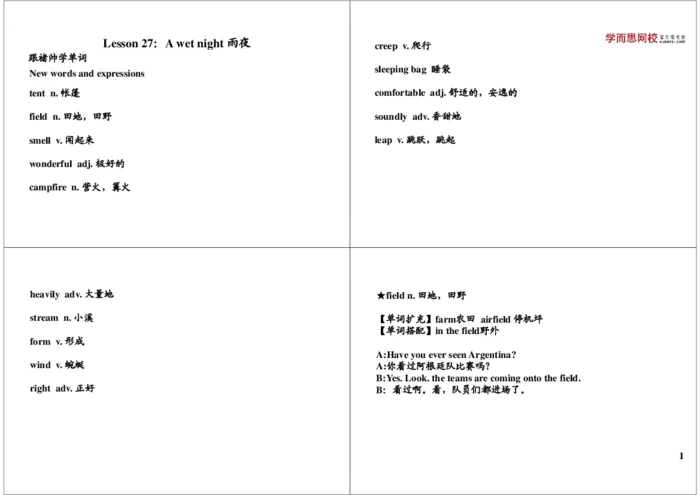
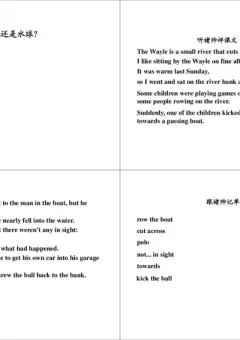
Late in the afternoon, the boys put up their tent in the middle of a field.
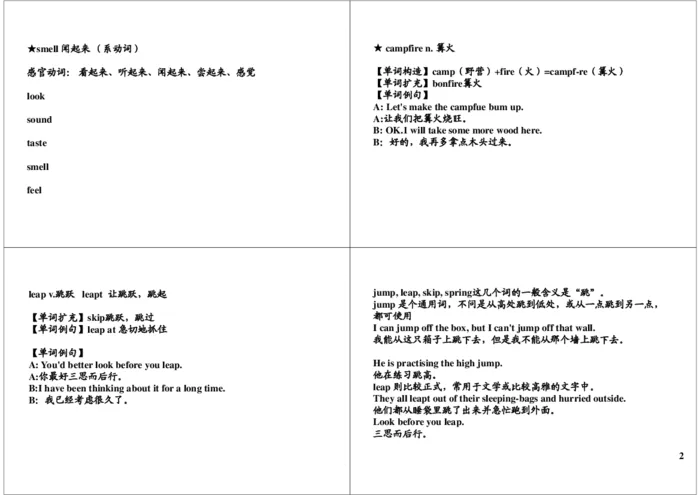
As soon as this was done, they cooked a meal over an open fire.
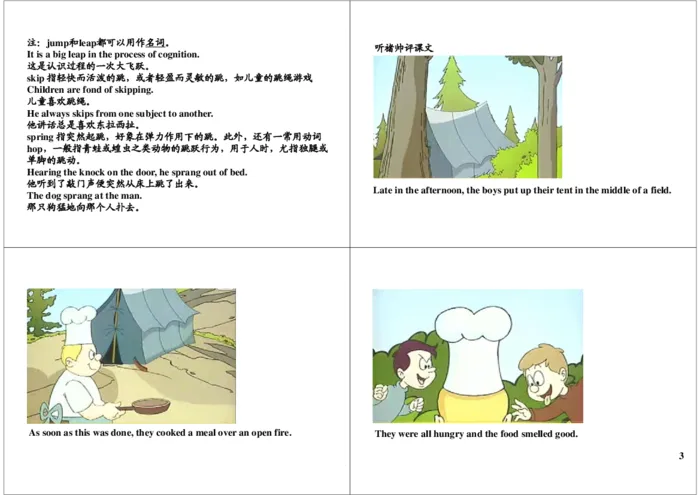
They were all hungry and the food smelled good.
3
After a wonderful meal, they told stories and sang songs by the
campfire.
But some time later it began to rain.
The boys felt tired so they put out the fire and crept into their tent.
Their sleeping bags were warm and comfortable, so they all slept
soundly.
4
In the middle of the night, two boys woke up and began shouting.
The tent was full of water! They all leapt out of their sleeping bags and
hurried outside.
It was raining heavily and they found that a stream had formed in the
field.
The stream wound its way across the field and then flowed right under
their tent!
5
听褚帅大话语法
一般过去时
在并列句中,各分句在时态上通常要保持一致。
在叙述过去发生的事件时,动词基本上都用一般过去时,但有时
也会出现过去完成时和过去进行时,它们的同时使用并不违反动词的
“一致原则”:
They all leapt out of their sleeping bags and hurried outside. It was
raining heavily and they found that a stream had formed in the field.
他们全都跳出睡袋,跑到外面。雨下得很大,他们发现地上已经
形成了一条小溪。
由于一般过去时常常表示过去某个特定的时间发生的事件,因此,
它常与when, where等疑问词连用。除了时间状语可以表示特定的时间
之外,
地点状语也可以暗示或包括特定的时间:
Where did you last see her?
你最后见到她是在哪里?
由于一般过去时常常表示过去某个特定的时间发生的事件,因此,
它常与when, where等疑问词连用。除了时间状语可以表示特定的时间
之外,地点状语也可以暗示或包括特定的时间:
Where did you last see her?
你最后见到她是在哪里?
6