文档文本内容
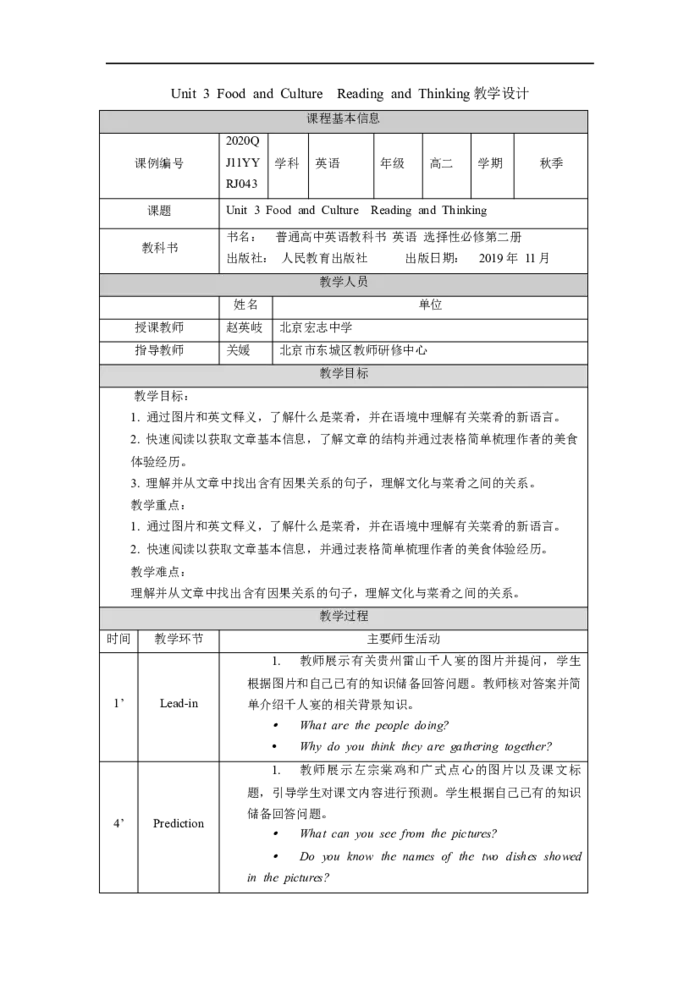
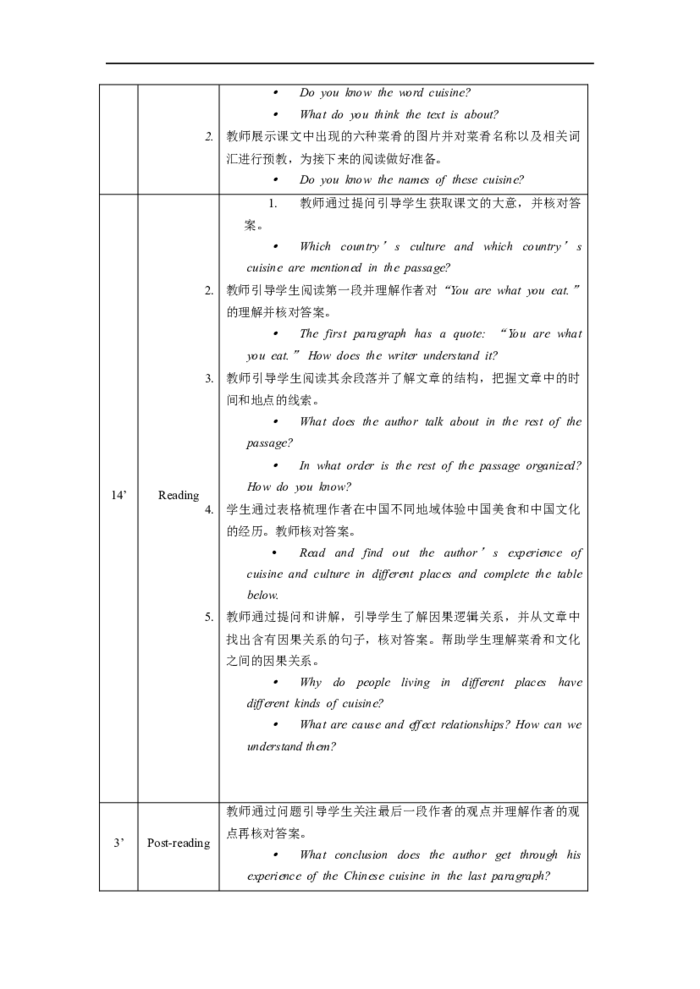
Unit 3 Food and Culture Reading and Thinking 教学设计
课程基本信息
课例编号
2020Q
J11YY
RJ043
学科
英语
年级
高二
学期
秋季
课题
Unit 3 Food and Culture Reading and Thinking
教科书
书名: 普通高中英语教科书 英语 选择性必修第二册
出版社: 人民教育出版社 出版日期: 2019 年 11 月
教学人员
姓名
单位
授课教师
赵英岐
北京宏志中学
指导教师
关媛
北京市东城区教师研修中心
教学目标
教学目标:
1. 通过图片和英文释义,了解什么是菜肴,并在语境中理解有关菜肴的新语言。
2. 快速阅读以获取文章基本信息,了解文章的结构并通过表格简单梳理作者的美食
体验经历。
3. 理解并从文章中找出含有因果关系的句子,理解文化与菜肴之间的关系。
教学重点:
1. 通过图片和英文释义,了解什么是菜肴,并在语境中理解有关菜肴的新语言。
2. 快速阅读以获取文章基本信息,并通过表格简单梳理作者的美食体验经历。
教学难点:
理解并从文章中找出含有因果关系的句子,理解文化与菜肴之间的关系。
教学过程
时间
教学环节
主要师生活动
1’
Lead-in
1.
教师展示有关贵州雷山千人宴的图片并提问,学生
根据图片和自己已有的知识储备回答问题。教师核对答案并简
单介绍千人宴的相关背景知识。
What are the people doing?
Why do you think they are gathering together?
4’
Prediction
1.
教师展示左宗棠鸡和广式点心的图片以及课文标
题,引导学生对课文内容进行预测。学生根据自己已有的知识
储备回答问题。
What can you see from the pictures?
Do you know the names of the two dishes showed
in the pictures?
Do you know the word cuisine?
What do you think the text is about?
2.
教师展示课文中出现的六种菜肴的图片并对菜肴名称以及相关词
汇进行预教,为接下来的阅读做好准备。
Do you know the names of these cuisine?
14’
Reading
1.
教师通过提问引导学生获取课文的大意,并核对答
案。
Which country’ s culture and which country’ s
cuisine are mentioned in the passage?
2.
教师引导学生阅读第一段并理解作者对“You are what you eat.”
的理解并核对答案。
The first paragraph has a quote: “You are what
you eat.” How does the writer understand it?
3.
教师引导学生阅读其余段落并了解文章的结构,把握文章中的时
间和地点的线索。
What does the author talk about in the rest of the
passage?
In what order is the rest of the passage organized?
How do you know?
4.
学生通过表格梳理作者在中国不同地域体验中国美食和中国文化
的经历。教师核对答案。
Read and find out the author’ s experience of
cuisine and culture in different places and complete the table
below.
5.
教师通过提问和讲解,引导学生了解因果逻辑关系,并从文章中
找出含有因果关系的句子,核对答案。帮助学生理解菜肴和文化
之间的因果关系。
Why do people living in different places have
different kinds of cuisine?
What are cause and effect relationships? How can we
understand them?
3’
Post-reading
教师通过问题引导学生关注最后一段作者的观点并理解作者的观
点再核对答案。
What conclusion does the author get through his
experience of the Chinese cuisine in the last paragraph?
What is the writer’ s idea about culture and
cuisine and what is the author’s reason?
学生大声跟读课文音频。
1’
Homework
你是否认同作者的观点:文化与菜肴息息相关呢?请写一小段文
字陈述自己的观点,并使用自己的经历支撑自己的观点。
Do you agree with the author’ s opinion that
culture and cuisine go hand in hand? Why or why not?
Please write a short paragraph to state your idea and use
your own experiences to support it.