文档文本内容
高二—人教版选择性必修二—英语—第三单元Food and Culture
Lesson 4 Listening and Speaking 教学设计
执教者:吴艳华(广州外国语学校)
主题语境:人与社会
语篇类型: 对话(关于与外国朋友在中国餐厅点菜)
授课时长:40 分钟
一、内容分析:
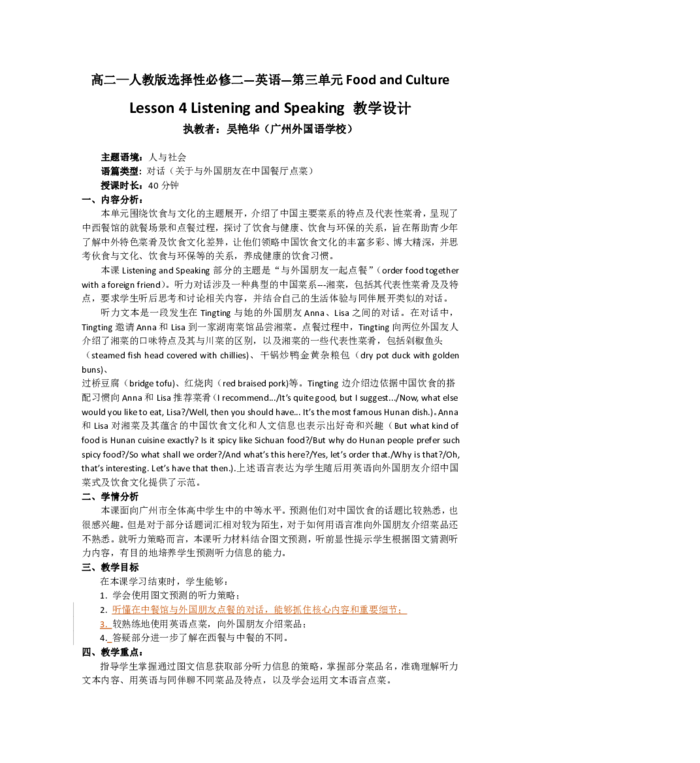
本单元围绕饮食与文化的主题展开,介绍了中国主要菜系的特点及代表性菜肴,呈现了
中西餐馆的就餐场景和点餐过程,探讨了饮食与健康、饮食与环保的关系,旨在帮助青少年
了解中外特色菜肴及饮食文化差异,让他们领略中国饮食文化的丰富多彩、博大精深,并思
考伙食与文化、饮食与环保等的关系,养成健康的饮食习惯。
本课Listening and Speaking 部分的主题是“与外国朋友一起点餐”(order food together
with a foreign friend)。听力对话涉及一种典型的中国菜系---湘菜,包括其代表性菜肴及及特
点,要求学生听后思考和讨论相关内容,并结合自己的生活体验与同伴展开类似的对话。
听力文本是一段发生在Tingting 与她的外国朋友Anna、Lisa 之间的对话。在对话中,
Tingting 邀请Anna 和Lisa 到一家湖南菜馆品尝湘菜。点餐过程中,Tingting 向两位外国友人
介绍了湘菜的口味特点及其与川菜的区别,以及湘菜的一些代表性菜肴,包括剁椒鱼头
(steamed fish head covered with chillies)、干锅炒鸭金黄杂粮包(dry pot duck with golden
buns)、
过桥豆腐(bridge tofu)、红烧肉(red braised pork)等。Tingting 边介绍边依据中国饮食的搭
配习惯向Anna 和Lisa 推荐菜肴(I recommend.../It’s quite good, but I suggest.../Now, what else
would you like to eat, Lisa?/Well, then you should have... It’s the most famous Hunan dish.)。Anna
和Lisa 对湘菜及其蕴含的中国饮食文化和人文信息也表示出好奇和兴趣(But what kind of
food is Hunan cuisine exactly? Is it spicy like Sichuan food?/But why do Hunan people prefer such
spicy food?/So what shall we order?/And what’s this here?/Yes, let’s order that./Why is that?/Oh,
that’s interesting. Let’s have that then.).上述语言表达为学生随后用英语向外国朋友介绍中国
菜式及饮食文化提供了示范。
二、学情分析
本课面向广州市全体高中学生中的中等水平。预测他们对中国饮食的话题比较熟悉,也
很感兴趣。但是对于部分话题词汇相对较为陌生,对于如何用语言准向外国朋友介绍菜品还
不熟悉。就听力策略而言,本课听力材料结合图文预测,听前显性提示学生根据图文猜测听
力内容,有目的地培养学生预测听力信息的能力。
三、教学目标
在本课学习结束时,学生能够:
1. 学会使用图文预测的听力策略;
2. 听懂在中餐馆与外国朋友点餐的对话,能够抓住核心内容和重要细节;
3. 较熟练地使用英语点菜,向外国朋友介绍菜品;
4. 答疑部分进一步了解在西餐与中餐的不同。
四、教学重点:
指导学生掌握通过图文信息获取部分听力信息的策略,掌握部分菜品名,准确理解听力
文本内容、用英语与同伴聊不同菜品及特点,以及学会运用文本语言点菜。
五、教学难点:
学生根据问题及对话的内容进行归纳答案可能会是一个难点,如何用地道的英语点菜也
可能是难点。
六、教学资源
课本,多媒体电脑,白板
七、教学过程
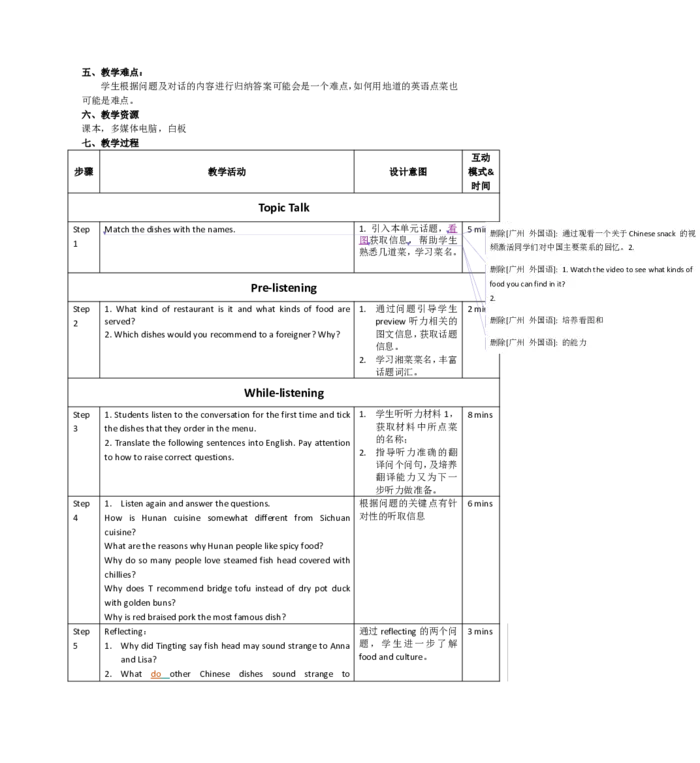
步骤
教学活动
设计意图
互动
模式&
时间
Topic Talk
Step
1
Match the dishes with the names.
1. 引入本单元话题,看
图获取信息,帮助学生
熟悉几道菜,学习菜名。
5 mins
Pre-listening
Step
2
1. What kind of restaurant is it and what kinds of food are
served?
2. Which dishes would you recommend to a foreigner? Why?
1.
通过问题引导学生
preview 听力相关的
图文信息,获取话题
信息。
2.
学习湘菜菜名,丰富
话题词汇。
2 min
While-listening
Step
3
1. Students listen to the conversation for the first time and tick
the dishes that they order in the menu.
2. Translate the following sentences into English. Pay attention
to how to raise correct questions.
1.
学生听听力材料1,
获取材料中所点菜
的名称;
2.
指导听力准确的翻
译问个问句,及培养
翻译能力又为下一
步听力做准备。
8 mins
Step
4
1.
Listen again and answer the questions.
How is Hunan cuisine somewhat different from Sichuan
cuisine?
What are the reasons why Hunan people like spicy food?
Why do so many people love steamed fish head covered with
chillies?
Why does T recommend bridge tofu instead of dry pot duck
with golden buns?
Why is red braised pork the most famous dish?
根据问题的关键点有针
对性的听取信息
6 mins
Step
5
Reflecting:
1.
Why did Tingting say fish head may sound strange to Anna
and Lisa?
2.
What
do
other
Chinese
dishes
sound
strange
to
通过reflecting 的两个问
题,学生进一步了解
food and culture。
3 mins
通过观看一个关于Chinese snack 的视
频激活同学们对中国主要菜系的回忆。2.
删除[广州外国语]:
1. Watch the video to see what kinds of
food you can find in it?
2.
删除[广州外国语]:
培养看图和
删除[广州外国语]:
的能力
删除[广州外国语]:
foreigners?
Step
6
1.
Find out the expressions used to order food and give
suggestions.
2.
What other expressions will the waiter and guest use
when they order food in the restaurant? (Waiter-W;
Guest-G)
3.
Tell what expressions are the waiter’s words and what are
the guests’.
1.
通过引导学生从听
力原文中寻找关于
点菜的对话句式,为
下一步的运用做准
备。
2.
引导学生进一步搜
索关于餐厅点菜及
服务员推荐菜品的
表达。
5 mins
Post-listening
Step
7
1. What types of restaurant would you like to take a foreign
visitor to, and why?
2.Ss
take turns
role-playing
their
foreign guest to the
restaurant they have chosen.
1. 学生通过本课所学,
谈论他们想推荐给外国
朋友的餐馆;
2. 教师给出范例,鼓励
学生模仿,但是也鼓励
学生在此基础上再创
造。
8 mins
Step
8
Summarize
“ Food and Culture ” by presenting several
definitions about food.
通过几个简短易记短句
加深学生对饮食文化的
理解。
2 mins
Step9
Homework:
1.Work in pairs. Do a survey about the differences between
eating in a Western restaurant and in a Chinese restaurant, and
then report your findings to the class.
2.Preview the text on Page 32.
通过课后作业鼓励学生
进一步了解中西文化中
饮食文化的大概区别,
拓展他们的视野。
1 min