 夜雨聆风
夜雨聆风


due 快到了,先别急着打开 Word
due 快到了,先别急着打开 Word
第 1 讲|Planning Your Essay
这一篇只讲一件事:写 essay 之前,先把题目和 plan 拆清楚。
为什么要为 essay 做一个 plan?
为什么在考试压力很大,或者 coursework assignment 已经快 due 的时候,还要“浪费时间”做这件事?
答案很简单:
因为从长期看,plan 会在三件事上回报你:
relevance、organisation、clarity。
也就是:
-
文章有没有回答题目。 -
内容有没有组织。 -
表达是不是清楚。
你平时和别人聊天也是这样。
别人问你怎么看一件事,或者问你一件事该怎么做。
如果你先稍微想一想,再回答,通常会比立刻冲出去回答更清楚。
essay 也是一样。
不管是 coursework assignment,还是 classroom / examination situation 里的 timed answer,写之前的一点点思考,如果能变成 brief notes,后面都会有用。
模块一|先看清楚:题目到底要你做什么
不管 assignment 是什么形式,你都要先盯住一件事:
specific task
也就是这道题真正要求你完成的任务。
不是你希望这个题目问什么。
不是你希望这个 subject 可以怎么写。
而是这个 question 实际上正在要求你做什么。
很多人写偏,不是因为完全不会。
恰恰相反,是因为他知道很多。
他知道某个 topic 的很多方面,于是一打开题目,就把自己知道的内容全倒上去。
但 assignment 不是你自己出的。
题目是 examiner 给你的。
所以你要给他们想要的东西。
不是你想写的答案,而是题目要求你写的答案。
提醒
Answer the specific question that is set, not some other question that you might like to be answering.
这句话放到赶 due 现场,就是:
别写你想写的题。
写 brief 让你写的题。
相关性,就是全部。
模块二|为什么要圈关键词
读 assignment 或 question 的时候,要很仔细地看每一个词。
一个实用办法是:
在题目里圈出三四个 key words。
这样做不是为了好看,而是为了把你的思路拉回题目本身。
key words 会提醒你:
-
这道题问的是解释,还是评价? -
重点对象是谁? -
讨论范围到哪里为止? -
哪些内容虽然你知道,但不该写进去?
赶 due 的时候,人最容易做的一件事,就是看到一个熟悉 topic,就马上开写。
但熟悉不等于相关。
你要先判断:这条内容是不是真的服务 set task。
模块三|例题 1:Hamlet 题怎么拆
来看一个 literature question:
Why does Shakespeare’s Hamlet delay carrying out his revenge for the murder of his father?
这道题到底让你做什么?
你可以先圈出四个词:
-
Why -
Hamlet -
delay -
revenge
关键词怎么提醒你
Why:题目要你解释 Hamlet 的 motives,不是复述剧情。
Hamlet:重点是 Hamlet 的行为原因,不是其他人物的动机。
delay:题目关心的是为什么拖延复仇。
revenge:讨论要围绕 Hamlet 被交给的复仇任务展开。
也就是说,这不是一篇“Hamlet 剧情介绍”。
也不是一篇“我最懂莎士比亚”的展示。
这篇 essay 要回答的是:
为什么 Hamlet delay carrying out his revenge?
模块四|例题 2:一战题怎么拆
再看一个 history assignment:
What were the origins of the First World War?
这道题的关键不只是 First World War。
更重要的是 origins。
因为题目问的是:
战争爆发的原因。
不是整场战争的过程。
不是战争中的所有事件。
也不是你知道的一战全部知识。
你可能对 First World War 知道很多。
但这道题只需要和 origins 有关的信息。
所以你要做的不是 show off。
不是把知识面全铺开。
而是 pick and choose well。
从你知道的内容里筛一遍,把真正 relevant 的东西用到这个 assignment 上。
模块五|复杂题也一样:先把范围圈出来
再看一个 Media Studies question:
Should the government intervene to prevent different media (newspapers, magazines, television and radio channels) from being owned and controlled by a few media moguls?
这道题比前面更长,所以要圈的词也会更多。
比如:
-
government intervene -
different media -
owned and controlled -
few media moguls
这些词分别提醒你:
government intervene:题目问的是政府该不该介入。
different media:你要考虑几种媒体形式,不是只谈一种。
owned and controlled:题目关心的是谁拥有并控制媒体权力。
few media moguls:问题落在少数人掌握 media power 这件事上。
这一模块的结论
不管是 coursework assignment,还是 examination paper 里的 question,开始时最好的办法都是:underline the key words。
这些 key words 会帮你把思路集中到那个 specific question 上。
模块六|essay 必须有计划结构
essay 必须有一个 planned structure。
这对你这个 writer 很重要。
因为如果你自己脑子里有清楚结构,就更容易 organize your content。
你的知识也能以更好的方式呈现出来。
但这对 reader 也一样重要。
reader 通常就是 teacher 或 examiner。
你要尽量让他们读起来 easy and understandable。
如果你的 essay 缺少 organization、focus、clarity、continuity,assessor 读起来很费劲,那你的文章很可能会被 down-grade。
所以,不要和 assessor 对着干。
要 meet the assessors more than halfway。
让他们的工作变轻松。
用你的 essay structure 和 methodical way 给他们一个好印象。
模块七|三段结构:opening、body、conclusion
为了建立 structured approach,可以先把 essay 想成三大部分:
-
the opening paragraph -
the development or body of the essay -
the conclusion
body 一定是最长的部分。
但是 opening 和 conclusion 同样重要。
没有这个 basic shape,reader 会怀疑你到底有没有给出一个 coherent response to the set task。
从现在开始,写 essay 时脑子里先放这个结构:
definite opening + considered development + emphatic conclusion
三部分要连成一个整体。
body 是最长的部分。
但它前面必须有 opening,后面必须有 closing。
模块八|coursework:有时间,就不要浪费这个优势
写 coursework assignment 的时候,你通常比考试有更多时间。
既然有时间,就不该浪费。
你应该用它来建立一个 essay structure。
形式可以是 notes。
也可以是 step-by-step sequence。
方法不止一种,重要的是找到适合你的方式。
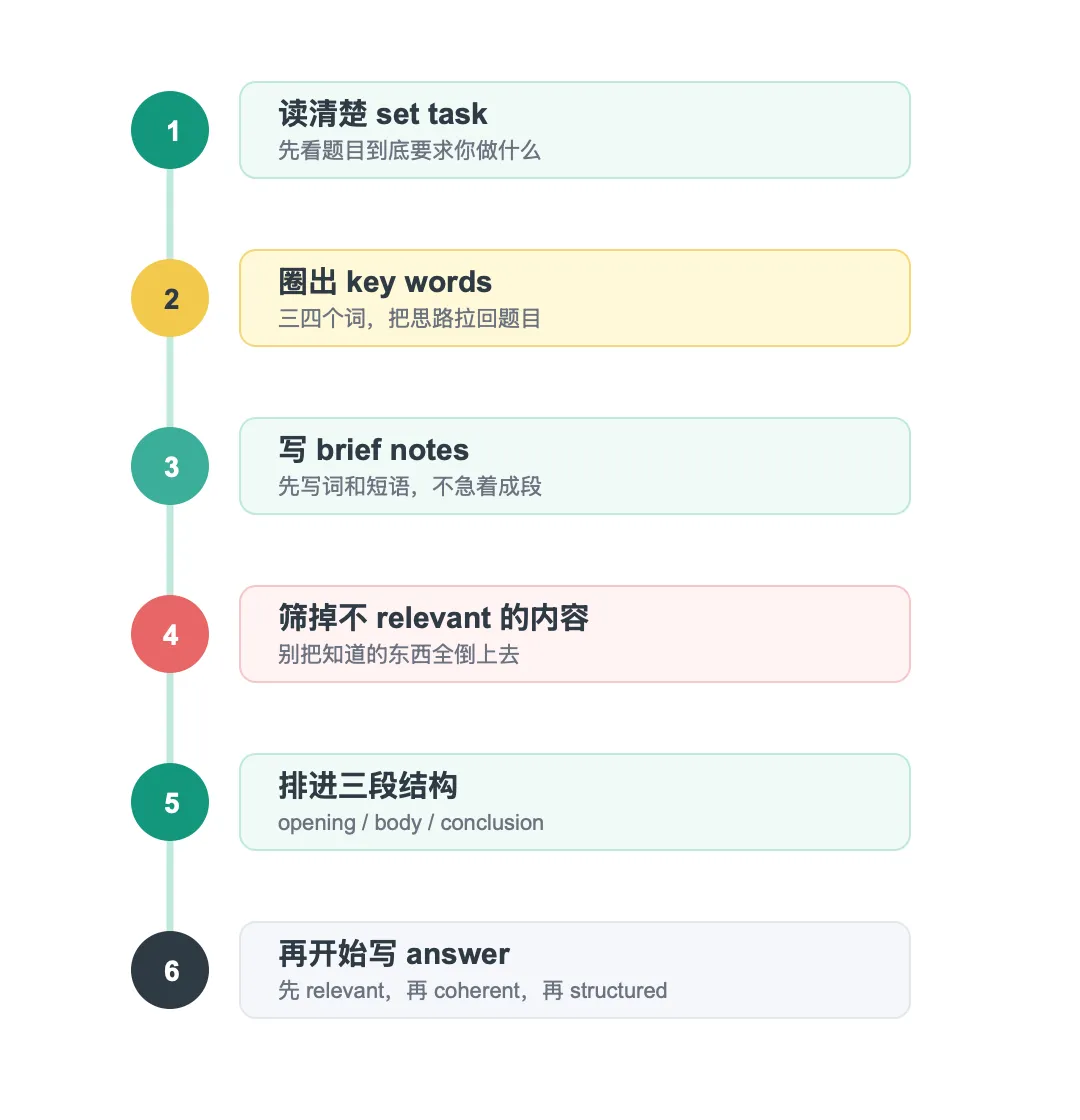
基本顺序可以是:
-
仔细读 assignment wording。 -
圈出 key words。 -
写 brief notes。 -
选择 relevant facts and analysis。 -
安排 paragraph structure。
paragraph structure 可以先这样放:
-
introduction: opening paragraph(s) -
first paragraph of the development or body -
a linked continuation of this development -
further paragraphs as required -
conclusion: a concluding paragraph
整体目标只有一个:
让 reader 看到你写的是一篇 relevant、coherent、well-structured essay。
而且它回答了 set question。
模块九|exam:不要直接冲进答案
考试里当然没有那么多时间。
你可能要在 clock 下面答好几道题。
但哪怕情况很急,也值得花几分钟做一个 essay plan。
不要一上来就 plunging straight into writing your answers。
这里要记住一句话:
考试不是比谁写得多。
It is not how much you write, but the quality of what you write.
很多学生考完会问:
你第三题写了多少?
这句话背后的意思好像是:写得越长,表现越好。
但这不是事实。
exam 不是比赛谁能在 answer booklet 里塞最多 words。
如果答案不 relevant,也没有 structure,写很多也没有意义。
一个 former examiner 甚至可能会把一页又一页完全不相关的答案直接划掉。
所以,length of answer 不是 be-all and end-all。
考试里,你通常只能使用你知道内容中的一小部分。
你必须接受这个事实,然后从你的 knowledge 里决定什么最 relevant。
模块十|exam plan 怎么做
读完 question 以后,先圈 key words。
然后用 words and phrases 写几条 brief notes。
这些 notes 一开始可以比较 random。
接着,把它们放进你想处理的顺序里。
这样你就有了一个 structured approach。
时间怎么控制?
如果一篇 essay 的写作时间是一小时以内,planning 不要超过 five to seven minutes。
因为你也不能沉迷做 notes,把真正写 answer 的时间挤掉。
考试里的 plan 不需要漂亮。
它只需要帮你判断:什么相关,先写什么,后写什么。
模块十一|你现在可以直接做的练习
如果你手里刚好有 assignment brief,可以直接练这一步:
-
在题目里圈出 three or four key words。 -
问自己:这道题真正的 task 是什么? -
写 5 条 brief notes。 -
划掉不 relevant 的 notes。 -
把剩下内容排进 opening、body、conclusion。
如果你在准备 exam,可以拿几道 past paper questions 做同样练习。
先选你觉得自己能答的题。
然后在有限时间内做一个 brief plan。
记住,赶 due 的时候,plan 不是为了把事情变复杂。
plan 是为了让你不要答错题。
先让答案 relevant。
再让它 coherent。
最后再让它 well-structured。
如果你正在赶 essay、report、presentation、reading、dissertation 或 revision,欢迎添加 Vivian:Energetic26。
作业考试分数我来卷,你只管享受精彩留学生涯~