ARTICLE · 1305710
小学语法大全300条|3-6年级到小升初,这一篇全搞定(附例句)



孩子英语成绩上不去,十有八九不是单词量不够,而是语法这块 "地基" 没打牢 ,可语法书动辄几百页,孩子翻两页就丢,家长也不知道从哪讲起。
这份我整理了很久的《小学语法大全 300 条》,把小学阶段必须掌握的知识点拆成 10 个版块,一条一个考点、条条配地道例句,从名词代词到四大时态再到句型结构全部覆盖。
建议收藏打印,每天陪孩子啃 10 条,一个月下来语法这块就稳了。



01 名词
可数名词复数一般直接加s,如 book—books,pen—pens,cat—cats
2. 以s、x、ch、sh结尾加es,如 bus—buses,box—boxes,watch—watches,dish—dishes
3. 辅音字母加y结尾,变y为i再加es,如 city—cities,baby—babies,story—stories
4. 元音字母加y结尾直接加s,如 boy—boys,day—days,monkey—monkeys
5. 以o结尾的名词多数加es,如 tomato—tomatoes,potato—potatoes,hero—heroes
6. 以o结尾的photo、piano、zoo、radio直接加s,如 photo—photos,piano—pianos
7. 以f或fe结尾,变f/fe为v再加es,如 knife—knives,leaf—leaves,wife—wives
8. 不规则复数要死记,如 man—men,woman—women,child—children
9. 更多不规则复数,如 foot—feet,tooth—teeth,mouse—mice,goose—geese
10. 单复同形不用变,如 sheep—sheep,fish—fish,deer—deer,Chinese—Chinese
11. people本身就是复数形式,后面动词用are,如 The people are friendly
12. 不可数名词没有复数形式,如 water,milk,bread,rice,juice,tea
13. 不可数名词要表达数量需用量词,如 a glass of water,a piece of bread
14. 更多量词搭配,如 a cup of tea,a bottle of milk,a bag of rice
15. 不可数名词用much、a little、some修饰,如 much water,a little milk
16. 可数名词用many、a few、some修饰,如 many books,a few apples
17. 可数名词单数前不能光秃秃,要加a、an或the,如 a dog,the cat
18. 名词所有格单数加's,表示“谁的”,如 Tom's book,Mary's bag
19. 复数以s结尾只加撇号,如 teachers' office,the students' books
20. 复数不以s结尾要加's,如 Children's Day,men's room
21. 两人共有一件东西只加一个's,如 Lily and Lucy's mother
22. 两人各自拥有要各加's,如 Lily's and Lucy's books
23. 无生命的名词所有格多用of,如 the door of the room,the name of the school
24. 表时间、距离的名词也可用's,如 today's newspaper,five minutes' walk
25. some用于肯定句,any用于否定句和疑问句,如 I have some pens;Do you have any pens
26. money和time都是不可数名词,如 Time is money
27. 名词修饰名词用单数形式,如 apple tree,bus stop,shoe shop
28. a lot of和lots of既可修饰可数也可修饰不可数,如 a lot of books,lots of water
29. 可数名词复数作主语,谓语用复数,如 The children are playing
30. 集合名词family、class作整体用单数、强调成员用复数,如 My family is big;My family are all here






02 代词
1. 人称代词主格作主语,如 I,you,he,she,it,we,they
2. 主格用在动词前,如 She likes music
3. 人称代词宾格作宾语,如 me,you,him,her,it,us,them
4. 宾格用在动词和介词后,如 Give me a book;Come with us
5. 形容词性物主代词后面必须跟名词,如 my,your,his,her,our,their
6. 名词性物主代词可单独使用,如 mine,yours,his,hers,ours,theirs
7. 名词性物主代词相当于“形容词性+名词”,如 This book is mine(=my book)
8. 指示代词this指近处单数,如 This is my pen
9. that指远处单数,如 That is your bike
10. these指近处复数,如 These are my friends
11. those指远处复数,如 Those are their books
12. it可指动物、物品、天气、时间,如 It is raining;It is Monday
13. it作形式主语,如 It's important to study hard
14. 疑问代词what问什么,如 What is your name
15. who问谁,如 Who is that girl
16. whose问谁的,如 Whose book is this
17. which问哪一个,如 Which one do you like
18. 反身代词myself、yourself、himself,如 I can do it myself
19. 反身代词复数ourselves、yourselves、themselves,如 They enjoy themselves
20. each强调“每个”个体,如 Each student has a book
21. every强调“每一个”,侧重整体,如 Every day is new
22. both指“两者都”,如 Both of them are teachers
23. all指“三者以上都”,如 All the students are here
24. either指“两者之一”,如 Either answer is right
25. neither指“两者都不”,如 Neither answer is right
26. other指“另一个/其他”,如 I have two pens;One is red,the other is blue
27. another指“再一个”,如 Have another cup of tea
28. many修饰可数复数,much修饰不可数,如 many toys,much water
29. a few表示“几个”表肯定,如 I have a few friends
30. few表示“几乎没有”表否定,如 I have few friends;a little和little同样用法



03 冠词
1. a用于辅音音素开头的词前,如 a book,a cat,a boy
2. an用于元音音素开头的词前,如 an apple,an egg,an orange
3. 判断用a还是an看读音不看字母,如 an hour(h不发音),a university(发辅音)
4. a/an表示“一个”,用于可数名词单数,如 I have an apple
5. the表示特指某人或某物,如 The book on the desk is mine
6. the用在世界上独一无二的事物前,如 the sun,the moon,the earth
7. the用在再次提到的人或物前,如 I have a dog;The dog is white
8. the用在形容词最高级前,如 the tallest boy,the best student
9. the用在序数词前,如 the first day,the third lesson
10. the用在乐器前,如 play the piano,play the violin
11. the用在江河湖海山脉前,如 the Yellow River,the Great Wall
12. the用在姓氏复数前表一家人,如 The Smiths are my neighbours
13. 球类运动前不加冠词,如 play football,play basketball
14. 三餐前不加冠词,如 have breakfast,have lunch,have dinner
15. 学科前不加冠词,如 learn English,study maths
16. 星期、月份前不加冠词,如 on Monday,in May
17. 颜色前不加冠词,如 It is red
18. 固定搭配用a,如 a little,a few,a lot of,in a hurry
19. 固定搭配用the,如 in the morning,in the afternoon,in the evening
20. 固定搭配不加冠词,如 at home,at school,go to bed,by bus
21. 定冠词the表“这一类”时加在名词单数前,如 The tiger is a wild animal
22. 独一无二的职位、称呼前常不加冠词,如 He is captain of the team
23. the加形容词表示一类人,如 the old,the young,the rich
24. 序数词加the表示第几,如 the second question
25. 表示“每”可用a/an,如 twice a day,once a week
26. a与one都表“一”但语气不同,如 I have a pen(一个);I have one pen(只一个)
27. 专有名词一般不加冠词,如 Beijing,China,Tom
28. 表示“去上学/回家”等固定结构不加冠词,如 go to school,go home
29. 表示“弹奏乐器”加the,表示“做运动”不加,如 play the guitar;play tennis
30. 表示“在早上/下午/晚上”用in the,表示“在正午/夜里”用at,如 at noon,at night






04 数词
1. 基数词表数量,如 one,two,three,four,five
2. 十几多在词尾加teen,如 thirteen,fourteen,fifteen
3. 整十多以ty结尾,如 twenty,thirty,forty,fifty
4. 21-99的写法是“整十+连字符+个位”,如 twenty-one,forty-five
5. 百用hundred,如 one hundred,two hundred
6. hundred表具体数字不加s,表概数加s,如 hundreds of students
7. 千用thousand,如 three thousand,thousands of people
8. 百万用million,如 two million,millions of stars
9. 序数词表顺序“第几”,如 first,second,third
10. 序数词第4-19多在基数词后加th,如 fourth,fifth,sixth
11. 特殊序数词要死记,如 first,second,third,eighth,ninth
12. 以ve结尾变f再加th,如 five—fifth,twelve—twelfth
13. 以y结尾变y为ie再加th,如 twenty—twentieth,thirty—thirtieth
14. 整十数词表“几十岁”用复数,如 in his twenties
15. 序数词前一般加the,如 the first,the second
16. 日期表示用序数词,如 June 1st,May 4th
17. 年份用基数词,如 in 2025,in 2008
18. 时间“几点”用基数词,如 at seven,at ten
19. “几点几分”的表达,如 seven thirty,ten fifteen
20. 时间过半小时用past,如 half past seven(七点半)
21. 未到半小时用to,如 ten to eight(差十分八点)
22. 一刻钟用quarter,如 a quarter past nine,a quarter to ten
23. 电话号码逐个读用基数词,如 five nine two
24. 编号表达用“名词+基数词”,如 Room 302,Bus 5,Class 3
25. 第几排第几课的表达,如 Lesson 2,Grade 6
26. 分数分子用基数词、分母用序数词,如 one third,two fifths
27. 分数分子大于1分母加s,如 two thirds,three quarters
28. 倍数“两倍”用twice,“三倍”用three times,如 twice a day
29. 年龄表达,如 five years old,a five-year-old boy
30. 概数表达,如 tens of,dozens of,hundreds of






05 形容词&副词
1. 形容词修饰名词,放在名词前,如 a tall boy,a red flower
2. 副词修饰动词,说明动作的方式,如 run fast,speak well
3. 副词修饰形容词和副词,如 very good,too fast
4. 形容词表状态常放在be动词后,如 The girl is beautiful
5. 形容词作表语,如 The soup is hot;I am tired
6. 形容词作定语,如 an interesting story,a funny cat
7. 一般副词加ly变副词,如 quick—quickly,slow—slowly
8. 以y结尾变y为i加ly,如 happy—happily,easy—easily
9. 特殊副词形式要死记,如 good—well,fast—fast,hard—hard
10. good是形容词、well是副词,如 He is good;He speaks well
11. 形容词比较级一般加er,如 tall—taller,fast—faster
12. 比较级加more用于多音节词,如 beautiful—more beautiful,interesting—more interesting
13. 辅元辅双写尾字母再加er,如 big—bigger,hot—hotter,thin—thinner
14. 以e结尾只加r,如 nice—nicer,fine—finer,late—later
15. 以辅音+y结尾变y为i加er,如 happy—happier,easy—easier
16. 不规则比较级要死记,如 good—better,bad—worse,many—more
17. more与than连用表示“比……更”,如 She is taller than me
18. 最高级加the和est,如 the tallest,the biggest
19. 多音节最高级用the most,如 the most beautiful
20. 不规则最高级,如 good—best,bad—worst,many—most
21. 比较级前可用much、a little修饰,如 much taller,a little better
22. as...as表示“和……一样”,中间用原级,如 as tall as me
23. not as...as表示“不如”,如 not as tall as me
24. 比较级用于两者之间,如 Which is bigger,a cat or a dog
25. 最高级用于三者以上,如 She is the tallest of the three
26. 比较级和最高级前的the用法,如 the older of the two
27. 形容词性物主代词后加名词,如 my new bike,her long hair
28. 多个形容词修饰名词的顺序从主观到客观,如 a big red round ball
29. 程度副词very、too、so放在形容词前,如 very happy,too young
30. 表示频率的副词often、usually、always放在be动词后、实义动词前,如 He is always busy;He always goes to school early






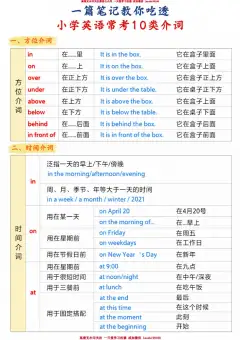
06 介词
1. in加年月季节,如 in 2025,in May,in summer
2. in加较长时间段,如 in the morning,in the afternoon,in the evening
3. on加具体日期和星期,如 on Monday,on June 1st,on Children's Day
4. on加具体某天的早中晚,如 on Sunday morning
5. at加具体时刻,如 at 7:00,at noon,at night
6. at加节日或小地点,如 at Christmas,at the door
7. 表示“在里面”用in,如 The ball is in the box
8. 表示“在上面”用on,如 The book is on the desk
9. 表示“在下面”用under,如 The cat is under the table
10. 表示“在旁边”用near,如 The school is near my home
11. 表示“在后面”用behind,如 There is a garden behind the house
12. 表示“在前面”用in front of,如 There is a tree in front of the house
13. 表示“在……之间”(两者)用between,如 Sit between Tom and Lucy
14. 表示“在……之间”(三者以上)用among,如 She is among the students
15. 表示“在对面”用across from,如 The bank is across from the park
16. 表示“在……旁边”还可用beside,如 Sit beside me
17. 表示“在……上面(接触)”用on,如 on the wall
18. 表示“在……上方(不接触)”用over,如 The bird is flying over the river
19. 表示“穿过”(内部穿过)用through,如 Walk through the door
20. 表示“穿过”(横跨)用across,如 Go across the street
21. 表示“沿着”用along,如 Walk along the road
22. 表示“来自”用from,如 I am from China
23. 表示“给/为了”用for,如 This gift is for you
24. 表示“和……一起”用with,如 I go to school with my friend
25. 表示“关于”用about,如 This book is about animals
26. 表示“乘交通工具”用by,如 by bus,by car,by plane
27. 步行用on foot,如 I go to school on foot
28. 表示“在……上面覆盖”用on还表“有关某方面”,如 a book on history
29. 表示“到……去”用to,如 go to school,go to the park
30. 表示“迟到”用be late for,如 Don't be late for class






07 动词时态
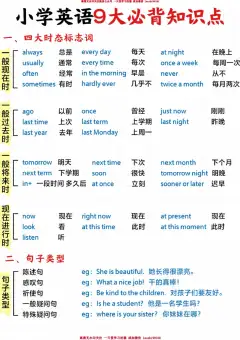
1. 一般现在时表经常习惯和客观事实,如 I get up at six
2. 一般现在时标志词,如 every day,usually,often,sometimes,always
3. 第三人称单数作主语,动词加s或es,如 He likes apples
4. 三单变化规律同名词复数,如 go—goes,watch—watches,study—studies
5. 一般现在时否定用don't或doesn't,如 I don't like tea;He doesn't like tea
6. 一般现在时疑问用Do或Does开头,如 Do you like milk;Does she play tennis
7. 助动词后用动词原形,如 He doesn't go to school;Does he go to school
8. 现在进行时表正在做,如 I am reading a book now
9. 现在进行时结构是am/is/are加动词ing,如 She is singing
10. 现在进行时标志词,如 now,look,listen,at the moment
11. 动词加ing一般直接加,如 read—reading,play—playing
12. 以不发音e结尾去e加ing,如 make—making,write—writing
13. 辅元辅双写尾字母加ing,如 run—running,swim—swimming,sit—sitting
14. 现在进行时疑问句把be提前,如 Are you watching TV
15. 现在进行时否定在be后加not,如 He isn't sleeping
16. 一般过去时表过去发生,如 I watched TV yesterday
17. 一般过去时标志词,如 yesterday,last night,last week,just now
18. 规则动词过去式直接加ed,如 play—played,walk—walked
19. 以e结尾加d,如 like—liked,dance—danced
20. 辅音加y结尾变y为i加ed,如 study—studied,carry—carried
21. 辅元辅双写尾字母加ed,如 stop—stopped,plan—planned
22. 不规则过去式要死记,如 go—went,eat—ate,see—saw
23. 更多不规则过去式,如 come—came,take—took,buy—bought
24. 一般过去时否定用didn't加动词原形,如 I didn't watch TV
25. 一般过去时疑问用Did开头,如 Did you watch TV yesterday
26. be动词过去式was/were,如 I was at home;They were here
27. 一般将来时表将要做,如 I will go to Beijing tomorrow
28. 一般将来时结构will加动词原形或be going to加动词原形,如 She is going to swim
29. 一般将来时标志词,如 tomorrow,next week,next year,soon
30. will的否定是won't,如 I won't go out tonight






08 情态动词&be动词
1. can表示“能,会”,如 I can swim
2. can表示“可以,许可”,如 You can go now
3. may表示“可以,也许”,如 May I come in
4. must表示“必须”,如 You must finish your homework
5. must的否定mustn't表示“禁止”,如 You mustn't run in the hallway
6. should表示“应该”,如 You should brush your teeth twice a day
7. 情态动词后加动词原形,如 I can dance;She can sing
8. 情态动词没有人称变化,如 He can swim;They can swim
9. 情态动词变疑问直接提前,如 Can you help me
10. 情态动词变否定在后面加not,如 I cannot(can't)do it
11. could是can的过去式,如 I could swim when I was five
12. would表示“愿意,将会”,如 Would you like some tea
13. need表示“需要”,如 You need to get up early
14. need做实义动词时要加to,如 I need to buy a pen
15. 情态动词不能连用,如 I can swim,不能说I can to swim
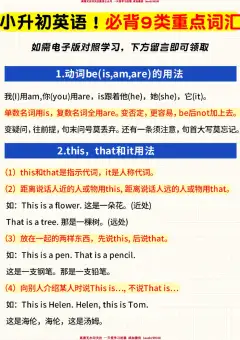
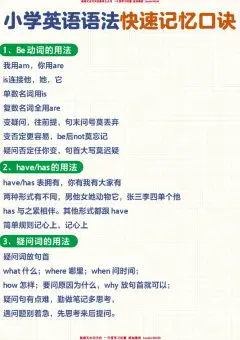
16. be动词am用于I,如 I am a student
17. be动词is用于he、she、it和单数名词,如 She is a teacher
18. be动词are用于you、we、they和复数名词,如 You are my friend;They are students
19. 我(I)用am,你(you)用are,is连着他她它,如 I am,you are,he is
20. 单数名词用is,复数名词用are,如 The dog is cute;The dogs are cute
21. be动词变否定在后面加not,如 I am not tired
22. be动词变疑问提前,如 Are you ready;Is he at home
23. there be句型表示“有”,如 There is a book on the desk
24. there be句型单数用is、复数用are,如 There are two books
25. there be句型就近原则,如 There is a pen and two books on the desk
26. can的过去式could更礼貌,如 Could you help me
27. must表“必须”回答用needn't表“不必”,如 Must I go now?No,you needn't
28. 情态动词一般没有时态人称变化,如 He can run fast
29. be going to中的be也要随主语变化,如 I am going to;She is going to;They are going to
30. 情态动词+动词原形构成谓语,如 She can speak English well






09 疑问句&句型
1. 一般疑问句用Yes或No回答,如 Is he tall?Yes,he is
2. 一般疑问句be动词提前,如 Are you a student
3. 一般疑问句助动词提前,如 Do you like apples
4. 一般疑问句情态动词提前,如 Can you swim
5. 特殊疑问句用特殊疑问词开头,如 What is your name
6. what问“什么”,如 What do you want
7. who问“谁”,如 Who is singing
8. where问“哪里”,如 Where is your school
9. when问“什么时候”,如 When do you get up
10. how问“怎么样”,如 How do you go to school
11. how old问“几岁”,如 How old are you
12. how many问“多少”后接可数名词复数,如 How many apples do you have
13. how much问“多少钱”或“多少”后接不可数,如 How much is it;How much water
14. how often问“多久一次”,如 How often do you exercise
15. how long问“多长时间/多长”,如 How long is the rope
16. why问“为什么”,如 Why are you late
17. which问“哪一个”,如 Which one is yours
18. whose问“谁的”,如 Whose bag is this
19. 特殊疑问句结构是疑问词+一般疑问句,如 Where do you live
20. 特殊疑问句对主语提问时语序不变,如 Who is in the classroom
21. 选择疑问句用or连接,如 Do you like tea or coffee
22. 反义疑问句前肯后否,如 You are a student,aren't you
23. 反义疑问句前否后肯,如 You aren't a student,are you
24. 祈使句以动词原形开头表命令请求,如 Open the door
25. 祈使句否定在句首加Don't,如 Don't open the door
26. 祈使句表礼貌可加please,如 Please sit down
27. Let's开头的祈使句,如 Let's go to the park
28. 感叹句用what加名词,如 What a nice day
29. 感叹句用how加形容词副词,如 How beautiful she is
30. 一般疑问句的肯定简略回答,如 Yes,I do;Yes,I can;Yes,he is






10 句子结构&高频考点
1. 肯定句结构是主语加谓语加其他,如 I like music
2. 否定句在be动词后加not,如 I am not hungry
3. 否定句在实义动词前加don't或doesn't,如 I don't like music
4. 过去时否定用didn't,如 I didn't see him
5. there is表“某地有某物”用单数,如 There is a park near my home
6. there are表“某地有某物”用复数,如 There are many trees in the park
7. 主语是单数谓语用单数,如 The boy runs fast
8. 主语是复数谓语用复数,如 The boys run fast
9. 人称代词作主语用主格,如 She is my sister
10. 人称代词作宾语用宾格,如 I help her
11. be动词后接形容词表状态,如 The sky is blue
12. 动词原形前不能加to(除特定结构),如 I can swim
13. 时间状语常放句末,如 I do my homework in the evening
14. 频率副词放be后实义动词前,如 She always helps me
15. 形容词修饰名词的位置在名词前,如 a lovely baby
16. 主谓一致:he、she、it做主语动词用三单,如 He plays football
17. 不可数名词作主语谓语用单数,如 Water is important
18. 表示“某人在做某事”用现在进行时,如 Mum is cooking
19. 表示“打算做”用be going to,如 I'm going to visit my grandma
20. 表示“将来计划”用will,如 It will rain tomorrow
21. 疑问句把助动词提前,如 Does she like reading
22. 名词所有格's表示“谁的”,如 My father's car
23. 物主代词的名词性形式单独使用,如 The bag is hers
24. 冠词the表特指,如 The man in black is my uncle
25. a/an表泛指,如 I want an ice cream
26. 表示“有”还有have/has,如 I have a dog;She has a cat
27. have用于I、you、we、they,has用于he、she、it,如 We have fun;He has a toy
28. 一般现在时疑问答句,如 Do you like it?Yes,I do
29. 一般过去时疑问答句,如 Did you go?Yes,I did
30. 综合运用:把时态、单复数、主谓一致一起检查,如 She goes to school by bike every day



语法不难,难的是把零散的点串成体系。这300条别让孩子一天啃完,就按版块一天10条,边读例句边套到自己的生活里说,比如学了比较级就跟孩子说“Dad is taller than me”,学了现在进行时就说“I am watching TV”。
坚持一个月,你会发现孩子做语法题不再靠蒙,作文里的句子也顺了。把这篇文章转发给身边需要的家长,一起陪孩子把英语地基打牢。
END