ARTICLE · 1335340
小学英语 | 1-6年级英语语法知识点大全(最全整理)!

STUDY
弘
思
留
学
很多家长问我:孩子学英语,最头疼的是什么?
答案几乎一样 —— 语法。
时态分不清、从句看不懂、句型记不住…… 明明单词背了不少,一到做题、写句子就乱了套。
其实英语语法没有想象中那么可怕。翻来覆去,核心就三样:时态、从句、句型。
今天帮大家把16大时态+3大从句+20 个核心句型一次性整理好了。没有废话,全是干货。建议先收藏,慢慢吃透,孩子的语法焦虑真的可以少一半。


NEW START
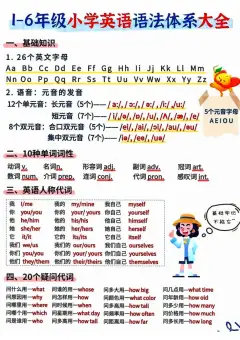
英语 10 大词性
名词 n.:是什么
动词 v.:干什么
代词 pron.:谁的
数词 num.:数量多少
介词 prep.:表示方位
连词 conj.:连接作用
副词 adv.:表示方式
冠词 art.:a/an/the
形容词 adj.:什么样的
感叹词 int.:情感变化
NEW START
18 个疑问代词
问 什么用 — what
问 年龄用 — how old
问 原因用 — why
问 多少用 — how many
问 哪里用 — where
问 价格用 — how much
问 哪个用 — which
问 多高用 — how tall
问 是谁用 — who
问 多大用 — how big
问 谁的用 — whose
问 多长用 — how long
问 频率用 — how often
问 几点用 — what time
问 多久用 — how soon
问 怎样用 — how
问 多重用 — how heavy
NEW START
26 个英语字母
Aa Bb Cc Dd Ee Ff Gg Hh Ii Jj Kk Ll MmNn Oo Pp Qq Rr Ss Tt Uu Vv Ww Xx Yy Zz
5 个元音字母(大写):A、E、I、O、U
12 个单元音
前元音:[iː]、[ɪ]、[e]、[æ]
中元音:[ɜː]、[ə]
后元音:[ɑː]、[a]、[ɔː]、[uː]、[ʊ]、[ʌ]
NEW START
16 种时态
一般现在时 — do
一般过去时 — did
一般将来时 — will do
现在进行时 — be doing
过去将来时 — would do
将来进行时 — will be doing
过去完成时 — had done
过去进行时 — was/were doing
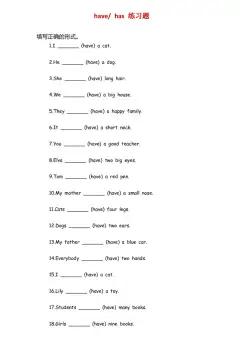
现在完成时 — have/has done
将来完成时 — will have done
过去将来进行时 — would be doing
过去将来完成时 — would have done
现在完成进行时 — have been doing
将来完成进行时 — will have been doing
过去完成进行时 — had been doing
过去将来完成进行时 — would have been doing
NEW START
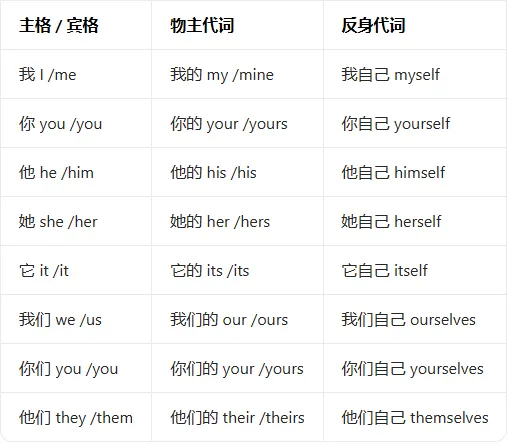
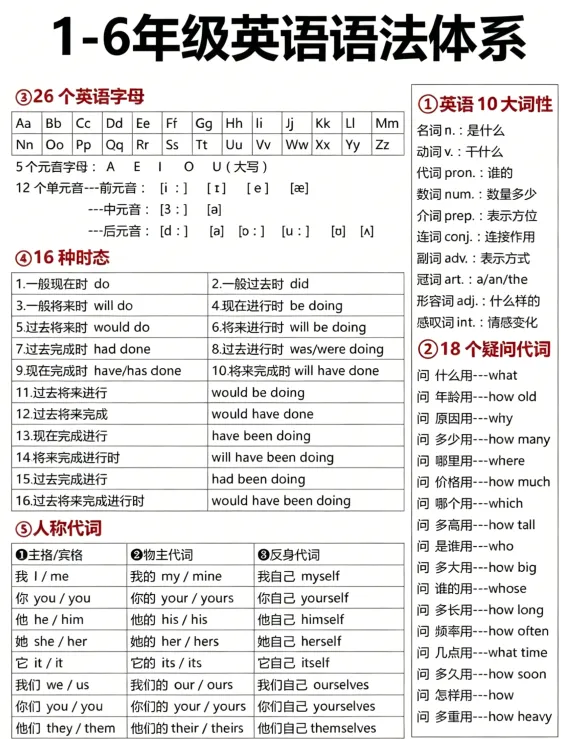
人称代词
NEW START
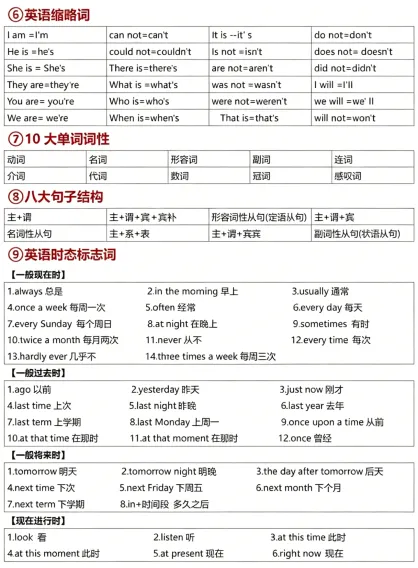
英语缩略词
I am = I'm
He is = he's
She is = She's
They are = they're
You are = you're
We are = we're
can not = can't
could not = couldn't
There is = there's
What is = what's
Who is = who's
When is = when's
It is = it's
Is not = isn't
are not = aren't
was not = wasn't
were not = weren't
That is = that's
do not = don't
does not = doesn't
did not = didn't
I will = I'll
we will = we'll
will not = won't
NEW START
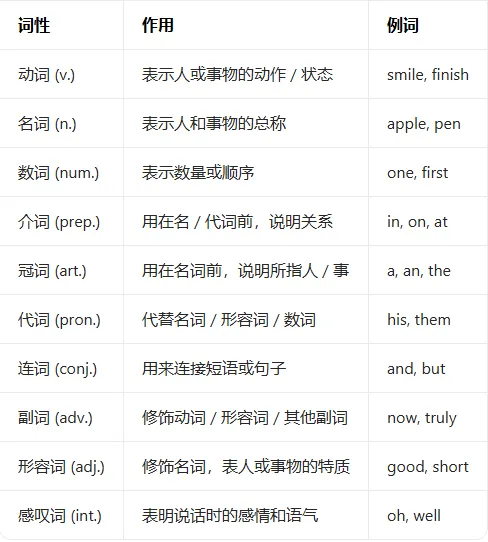
10 大单词词性
NEW START
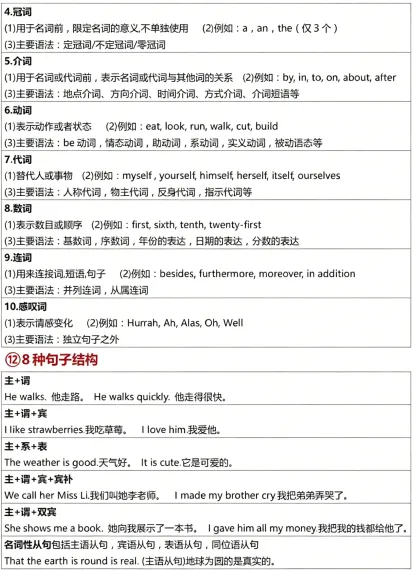
10 种单词词性详解
名词
表示人、物、地点、抽象概念的名称
例:hand, head, paper, mouse
主要语法:单复数、名词所有格、集合名词、主谓一致
形容词
修饰名词,表示人或事物的性质或特征
例:good, bad, big, small, young
主要语法:比较级、最高级、形副同形
副词
修饰动词 / 形容词,说明时间、地点、程度等
例:fortunately, frankly, generally, luckily
主要语法:时间 / 频率 / 方式 / 程度 / 其他副词
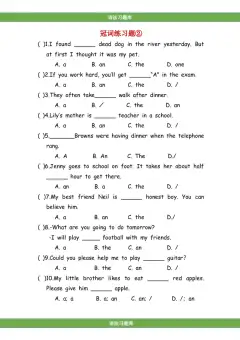
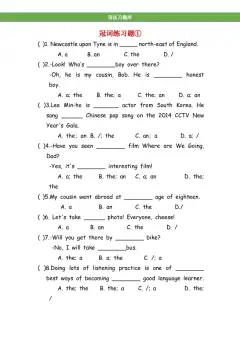
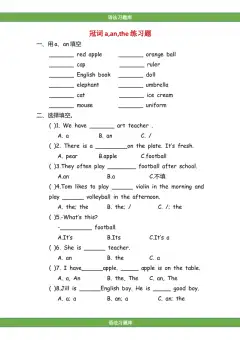
冠词
用于名词前,限定名词的意义,不单独使用
例:a, an, the(仅 3 个)
主要语法:定冠词 / 不定冠词 / 零冠词
介词
用于名词或代词前,表示名词或代词与其他词的关系
例:by, in, to, on, about, after
主要语法:地点介词、方向介词、时间介词、方式介词、介词短语等
动词
表示动作或者状态
例:eat, look, run, walk, cut, build
主要语法:be 动词、情态动词、助动词、系动词、实义动词、被动语态等
代词
替代人或事物
例:myself, yourself, himself, herself, itself, ourselves
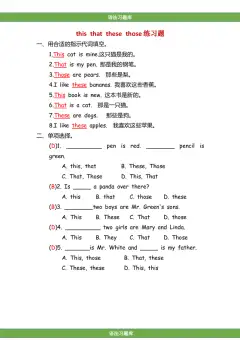
主要语法:人称代词、物主代词、反身代词、指示代词等
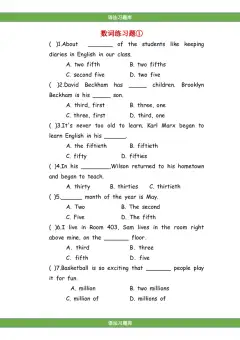
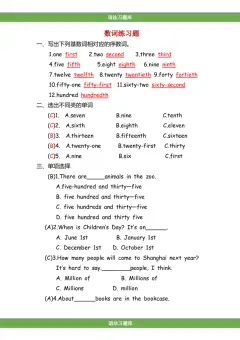
数词
表示数目或顺序
例:first, sixth, tenth, twenty-first
主要语法:基数词、序数词、年份的表达、日期的表达、分数的表达
连词
用来连接短语、句子
例:besides, furthermore, moreover, in addition
主要语法:并列连词、从属连词
感叹词
表示情感变化
例:Hurrah, Ah, Alas, Oh, Well
主要语法:独立句子之外
NEW START
八大句子结构
主 + 谓
主 + 谓 + 宾 + 宾补
形容词性从句 (定语从句)
主 + 谓 + 宾
名词性从句
主 + 系 + 表
主 + 谓 + 双宾
副词性从句 (状语从句)
NEW START
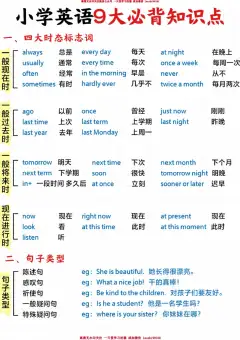
英语时态标志词
一般现在时
always 总是
in the morning 早上
usually 通常
once a week 每周一次
often 经常
every day 每天
every Sunday 每个周日
at night 在晚上
sometimes 有时
twice a month 每月两次
never 从不
every time 每次
hardly ever 几乎不
three times a week 每周三次
一般过去时
ago 以前
yesterday 昨天
just now 刚才
last time 上次
last night 昨晚
last year 去年
last term 上学期
last Monday 上周一
once upon a time 从前
at that time 在那时
at that moment 在那时
once 曾经
一般将来时
tomorrow 明天
tomorrow night 明晚
the day after tomorrow 后天
next time 下次
next Friday 下周五
next month 下个月
next term 下学期
in + 时间段 多久之后
现在进行时
look 看
listen 听
at this time 此时
at this moment 此时
at present 现在
right now 现在
将来进行时
tomorrow 明天
soon 待会
the day after tomorrow 后天
next week/month/year/ 下个周 / 月 / 年
the week/month/year/ 那周 / 月 / 年
过去完成时
by + 过去时间点
by the time 到.. 时候为止
by then 到那时候
by last time 最后一次
by the end of last week 上周末结束
before + 过去时间点
up until + 过去时间点
up until then 直到那时
现在完成时
already 已经
yet 还
just 刚才
never 从不
ever 曾经
before 以前
up to now 目前为止
so far 目前为止
NEW START
8 种句子结构详解
主 + 谓
例:He walks. 他走路。
例:He walks quickly. 他走得很快。
主 + 谓 + 宾
例:I like strawberries. 我吃草莓。
例:I love him. 我爱他。
主 + 系 + 表
例:The weather is good. 天气好。
例:It is cute. 它是可爱的。
主 + 谓 + 宾 + 宾补
例:We call her Miss Li. 我们叫她李老师。
例:I made my brother cry. 我把弟弟弄哭了。
主 + 谓 + 双宾
例:She shows me a book. 她向我展示了一本书。
例:I gave him all my money. 我把我的钱都给他了。
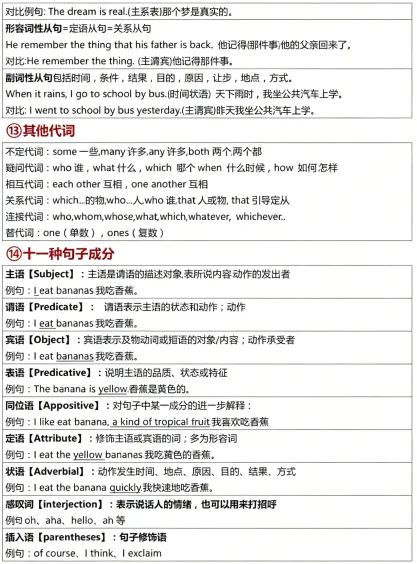
名词性从句(包括主语从句、宾语从句、表语从句、同位语从句)
例:That the earth is round is real. (主语从句) 地球为圆的是真实的。
形容词性从句(定语从句 / 关系从句)
例:He remember the thing that his father is back. 他记得 (那件事) 他的父亲回来了。
对比:He remember the thing. (主谓宾) 他记得那件事。
副词性从句(状语从句)
(包括时间、条件、结果、目的、原因、让步、地点、方式)
例:When it rains, I go to school by bus. (时间状语) 天下雨时,我坐公共汽车上学。
对比:I went to school by bus yesterday. (主谓宾) 昨天我坐公共汽车上学。
NEW START
其他代词
不定代词:some 一些,many 许多,any 许多,both 两个,两个都
疑问代词:who 谁,what 什么,which 哪个,when 什么时候,how 如何,怎样
相互代词:each other 互相,one another 互相
关系代词:which... 的物,who... 人,who 谁,that 人或物,that 引导定语从句
连接代词:who, whom, whose, what, which, whatever, whichever..
替代词:one(单数), ones(复数)
NEW START
十一种句子成分
主语【Subject】:主语是谓语的描述对象,表所说内容;动作的发出者
例:I eat bananas. 我吃香蕉。
谓语【Predicate】:谓语表示主语的状态和动作;动作
例:I eat bananas. 我吃香蕉。
宾语【Object】:宾语表示及物动词或短语的对象 / 内容;动作承受者
例:I eat bananas. 我吃香蕉。
表语【Predicative】:说明主语的品质、状态或特征
例:The banana is yellow. 香蕉是黄色的。
同位语【Appositive】:对句子中某一成分的进一步解释
例:I like eat banana, a kind of tropical fruit. 我喜欢吃香蕉。
定语【Attribute】:修饰主语或宾语的词;多为形容词
例:I eat the yellow bananas. 我吃黄色的香蕉。
状语【Adverbial】:动作发生时间、地点、原因、目的、结果、方式
例:I eat the banana quickly. 我快速地吃香蕉。
感叹词【interjection】:表示说话人的情绪,也可以用来打招呼
例:oh、aha、hello、ah 等
插入语【parentheses】:句子修饰语
例:of course、I think、I exclaim
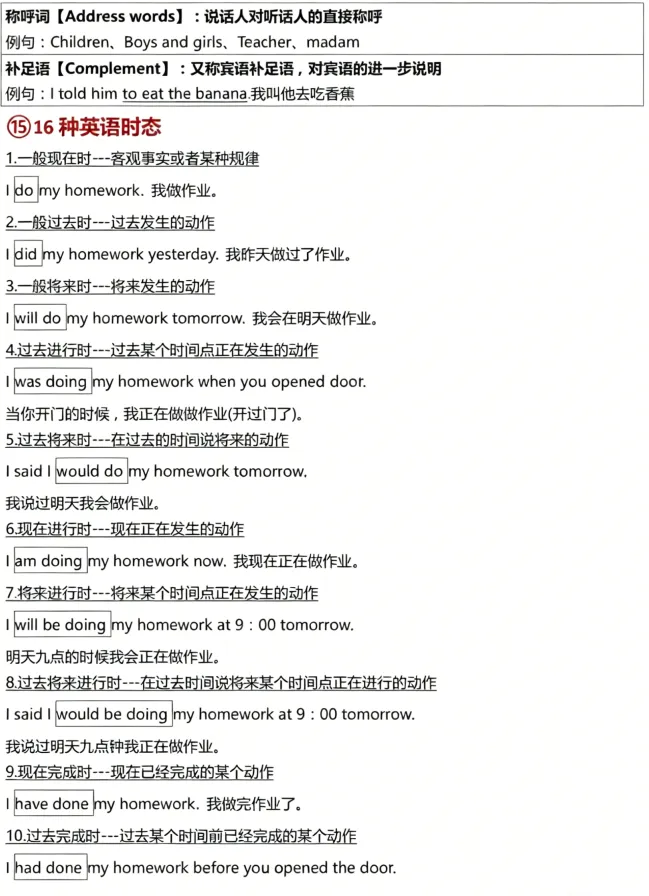
称呼词【Address words】:说话人对听话人的直接称呼
例:Children、Boys and girls、Teacher、madam
补足语【Complement】:又称宾语补足语,对宾语的进一步说明
例:I told him to eat the banana. 我叫他去吃香蕉。
NEW START
16 种英语时态详解
一般现在时(客观事实或者某种规律)
例:I do my homework. 我做作业。
一般过去时(过去发生的动作)
例:I did my homework yesterday. 我昨天做过了作业。
一般将来时(将来发生的动作)
例:I will do my homework tomorrow. 我会在明天做作业。
过去进行时(过去某个时间点正在发生的动作)
例:I was doing my homework when you opened door. 当你开门的时候,我正在做作业。
过去将来时(在过去的时间说将来的动作)
例:I said I would do my homework tomorrow. 我说过明天我会做作业。
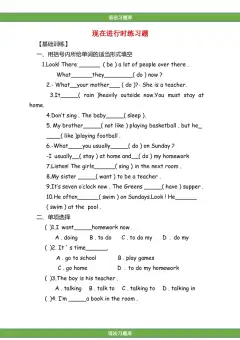
现在进行时(现在正在发生的动作)
例:I am doing my homework now. 我现在正在做作业。
将来进行时(将来某个时间点正在发生的动作)
例:I will be doing my homework at 9:00 tomorrow. 明天九点的时候我会正在做作业。
过去将来进行时(在过去时间说将来某个时间点正在进行的动作)
例:I said I would be doing my homework at 9:00 tomorrow. 我说过明天九点钟我正在做作业。
现在完成时(现在已经完成的某个动作)
例:I have done my homework. 我做完作业了。
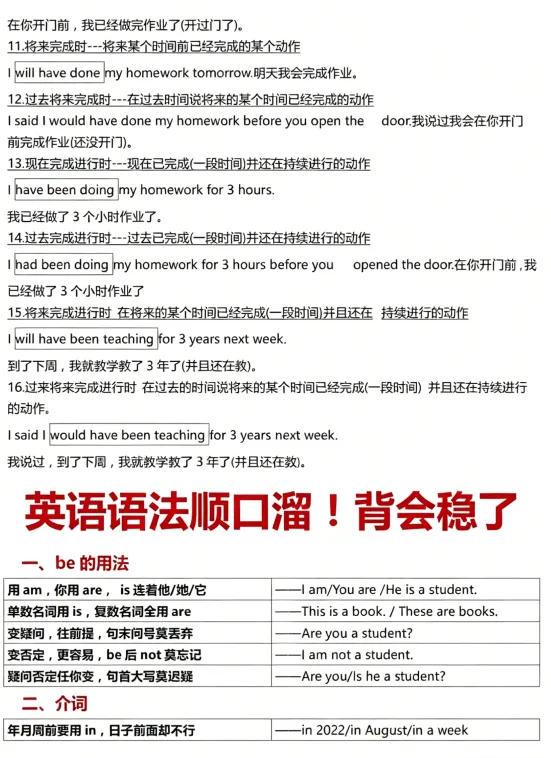
过去完成时(过去某个时间前已经完成的某个动作)
例:I had done my homework before you opened the door. 在你开门前,我已经做完作业了。
将来完成时(将来某个时间前已经完成的某个动作)
例:I will have done my homework tomorrow. 明天我会完成作业。
过去将来完成时(在过去时间说将来的某个时间已经完成的动作)
例:I said I would have done my homework before you open the door. 我说过我会在你开门前完成作业。
现在完成进行时(现在已完成 (一段时间) 并还在持续进行的动作)
例:I have been doing my homework for 3 hours. 我已经做了 3 个小时作业了。
过去完成进行时(过去已完成 (一段时间) 并还在持续进行的动作)
例:I had been doing my homework for 3 hours before you opened the door. 在你开门前,我已经做了 3 个小时作业了。
将来完成进行时(在将来的某个时间已经完成 (一段时间) 并且还在持续进行的动作)
例:I will have been teaching for 3 years next week. 到了下周,我就教学教了 3 年了。
过去将来完成进行时(在过去的时间说将来的某个时间已经完成 (一段时间) 并且还在持续进行的动作)
例:I said I would have been teaching for 3 years next week. 我说过,到了下周,我就教学教了 3 年了。
NEW START
英语语法顺口溜!背会稳了
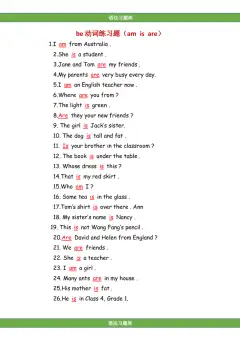
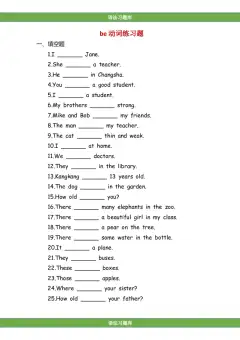
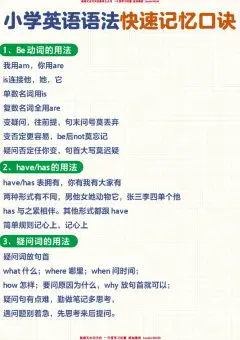
一、be 的用法
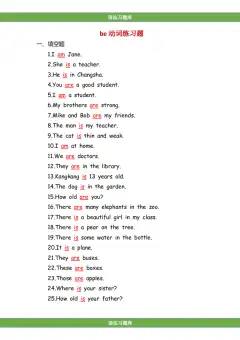
用 am,你用 are,is 连着他 / 她 / 它 —— I am/You are /He is a student.
单数名词用 is,复数名词全用 are —— This is a book. / These are books.
变疑问,往前提,句末问号莫丢弃 —— Are you a student?
变否定,更容易,be 后 not 莫忘记 —— I am not a student.
疑问否定任你变,句首大写莫迟疑 —— Are you/Is he a student?
二、介词
年月周前要用 in,日子前面却不行 —— in 2022/in August/in a week
遇到几号要用 on,上午下午又是 in —— on May 10th/in the morning
要说某日上下午,用 on 换 in 才能行 —— on Monday morning
午夜黄昏用 at,黎明用它也不错 —— at midnight 在午夜 /at dawn 在黎明
at 用在时分前,说差需要用上 to —— at six 在六点 /ten to nine 八点五十
说过只可用 past,多说多练牢牢记
三、可数名词的复数变化
名词复数有规律,一般词尾加 s —— apples
辅音字母 + y 型,变 y 为 i,再加 es —— baby- babies
s, x, sh, ch 结尾真有趣,末尾要加 es —— box-boxes/brush-brushes
f, fe 真小气,字母 v 来把它替,es 在后别忘记 —— knife-knives
字母 o 也够神奇,有生命力 es,没有生命加 s —— zoo-zoos, tomato-tomatoes
中日好友来聚会,绵羊鹿鱼带回家(单复同行)—— Chinese/Japanese/deer/fish/sheep
男士、女士 a 变 e —— man- men, woman--women
牙(齿)、双脚 a 变双 e —— foot-feet, tooth-teeth
四、省略不定式符号 to
一些动词要掌握,have, let 和 make, 此三动词是使役,注意观察听到 see, 还有 feel 和 watch,使用它们要仔细,后接宾补略去 to,此点千万要牢记
一感 feel,二听 hear, listen to,三让 have, let, make
四看 see, look at, observe, watch
例:Mr. Wang has his son write a diary every day. 王先生让儿子每天写一篇日记。
例:My mother wouldn't let me go to the park. 我妈妈不会让我去公园。
例:I watched her get into the car. 我看着她上了车。
例:I saw the woman enter a bank. 我看见这个女人进了一家银行。
五、f, fe 结尾名词复数变化
妻子持刀去宰狼,小偷吓得发了慌;躲在架后保已命,半片树叶遮目光
以 f (e) 结尾的名词:wife(妻子)、knife(刀子)、wolf(狼)、thief(小偷)、shelf(架子)、self(自己)、life(生命)、half(一半)、leaf(树叶)
这些名词以 - f (e) 结尾变复数时,将 f (e) 变 v 再加 es。还有以 - self 结尾的反身代词复数也同样,如:myself-ourselves. yourself-yourselves.
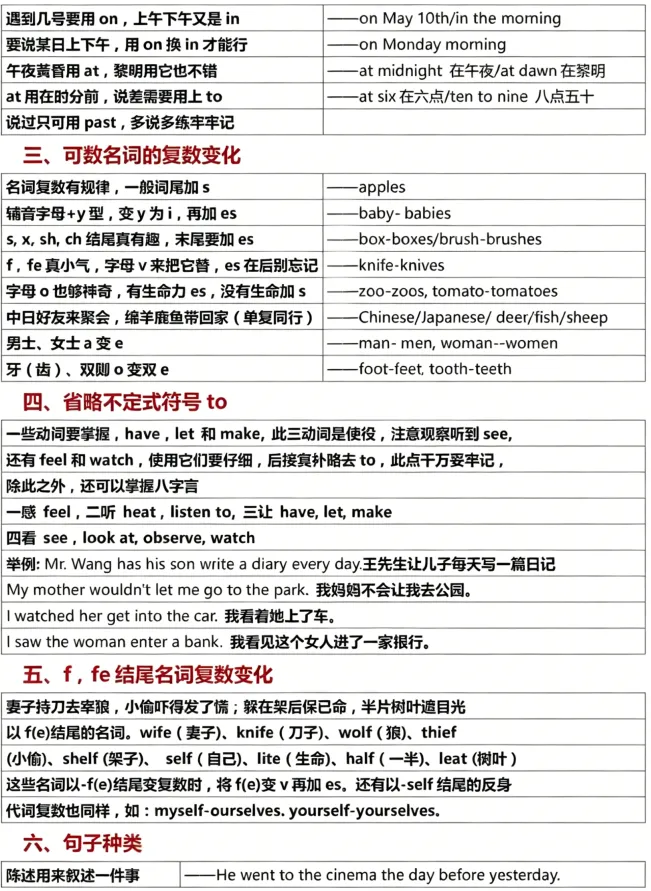
六、句子种类
陈述用来叙述一件事 —— He went to the cinema the day before yesterday.
疑问主要用来提问题 —— Where did you go yesterday?
祈使表达命令和请求 —— Open the door, please.
表达强烈感情感叹句 —— How beautiful the park is!
七、英语分数
英语分数不费事,母序子基四个字 ——one-tenth 十分之一
分子若是大于一,分母还须加 - s —— two thirds 三分之二
二分之一不说 a second, 而要说 a half。
四分之一和四分之三可以说 a fourth 和 three fourths, 但常用 a quarter 和 three quarters
八、形容词和副词的比较
一者比较用原级。比较级限二者比。三者三者往上比,最高级的用法起。
若要比项掌握齐,比较范围要搞细。比较级二句型记,做出句子没问题。
若甲乙程度相同,as...as 结构体。甲某方面不及乙,用 not so/as...as 表示
例:Our teacher is taller than we are. 我们老师的个子比我们的高。
例:His bedroom is not as neat as his sister's. 他的卧室没有他姐姐的整洁。
例:She is the best student in her class. 她是班上最好的学生。
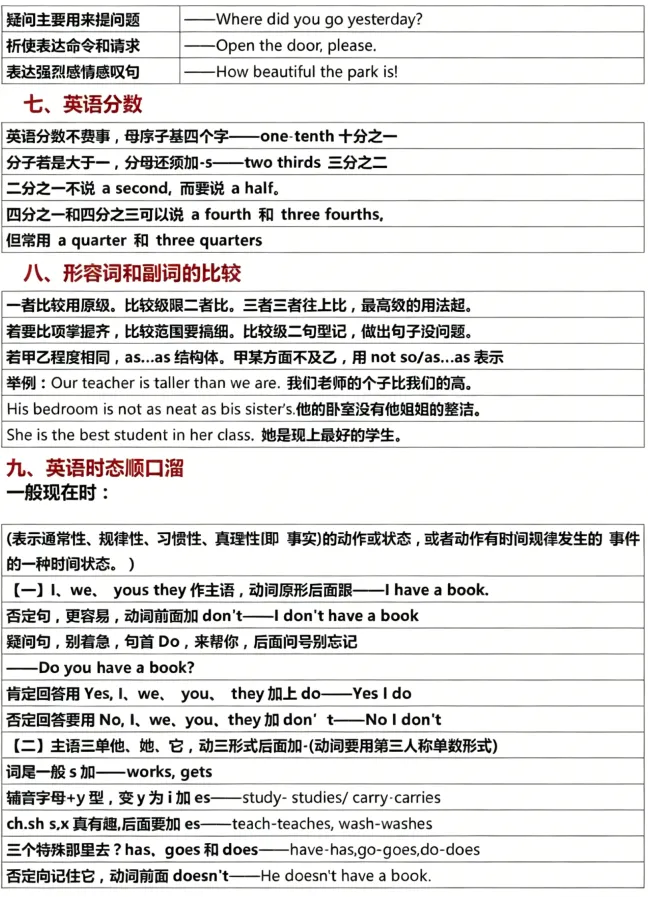
九、英语时态顺口溜
一般现在时
(表示通常性、规律性、习惯性、真理性 (即事实) 的动作或状态,或者动作有时间规律发生的事件的一种时间状态。)

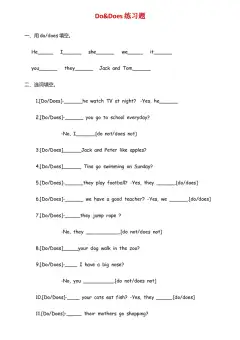
【一】I、we、you、they 作主语,动词原形后面跟 ——I have a book.
否定句,更容易,动词前面加 don't —— I don't have a book
疑问句,别着急,句首 Do,来帮你,后面问号别忘记 —— Do you have a book?
肯定回答用 Yes, I、we、you、they 加上 do —— Yes I do
否定回答要用 No, I、we、you、they 加 don't —— No I don't
【二】主语三单 he、she、it,动三形式后面加
词尾一般 s 加 —— works, gets
辅音字母 + y 型,变 y 为 i 加 es —— study- studies/carry-carries
ch.sh s,x 真有趣,后面要加 es —— teach-teaches, wash-washes
三个特殊那里去?has、goes 和 does —— have-has, go-goes, do-does
否定句记住它,动词前面 doesn't —— He doesn't have a book.
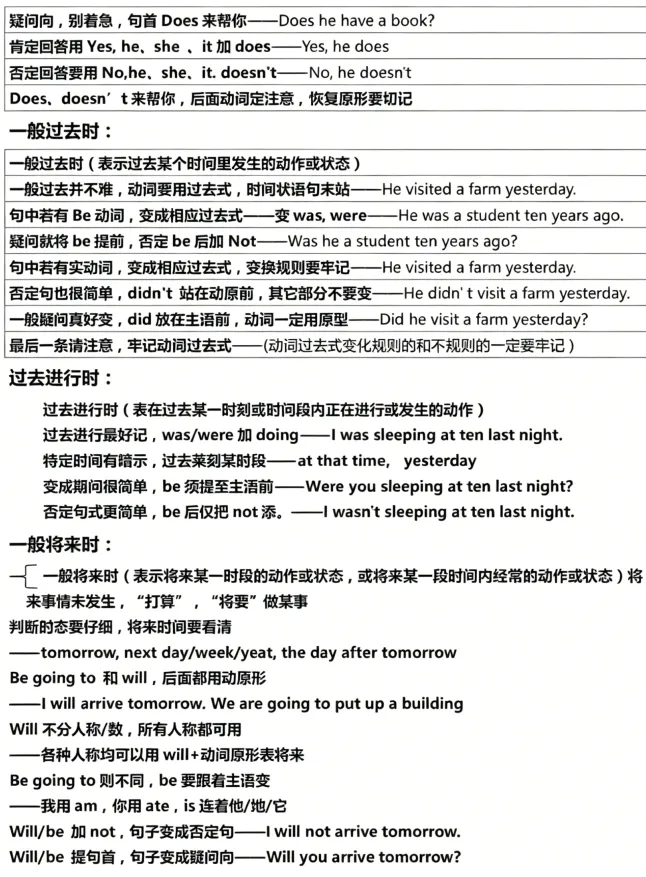
疑问句,别着急,句首 Does 来帮你 —— Does he have a book?
肯定回答用 Yes, he、she、it 加 does —— Yes, he does
否定回答要用 No, he、she、it. doesn't —— No, he doesn't
Does、doesn't 来帮你,后面动词定注意,恢复原形要切记
一般过去时
(表示过去某个时间里发生的动作或状态)

一般过去并不难,动词要用过去式,时间状语句末站 —— He visited a farm yesterday.
句中若有 Be 动词,变成相应过去式 —— 变 was, were —— He was a student ten years ago.
疑问就将 be 提前,否定 be 后加 Not —— Was he a student ten years ago?
句中若有实动词,变成相应过去式,变换规则要牢记 —— He visited a farm yesterday.
否定句也很简单,didn't 站在动原前,其它部分不要变 —— He didn't visit a farm yesterday.
一般疑问真好变,did 放在主语前,动词一定用原型 —— Did he visit a farm yesterday?
最后一条请注意,牢记动词过去式(动词过去式变化规则的和不规则的一定要牢记)
过去进行时

过去进行时(表在过去某一时刻或时间段内正在进行的动作)
过去进行最好记,was/were 加 doing —— I was sleeping at ten last night.
特定时间有暗示,过去某段某时段 ——at that time, yesterday
变成疑问很简单,be 须提至主语前 —— Were you sleeping at ten last night?
否定句式更简单,be 后仅把 not 添 —— I wasn't sleeping at ten last night.
一般将来时

一般将来时(表示将来某一时段的动作或状态,或将来某一段时间内经常的动作或状态)将来事情未发生,“打算”,“将要” 做某事
判断时态要仔细,将来时间要看清 —— tomorrow, next day/week/year, the day after tomorrow
Be going to 和 will,后面都用动原形 —— I will arrive tomorrow. We are going to put up a building
Will 不分人称 / 数,所有人称都可用 —— 各种人称均可以用 will + 动词原形表将来
Be going to 则不同,be 要跟着主语变 —— 我用 am,你用 are,is 连着他 / 她 / 它
Will/be 加 not,句子变成否定句 —— I will not arrive tomorrow.
Will/be 提句首,句子变成疑问句 —— Will you arrive tomorrow?

小葵论英语


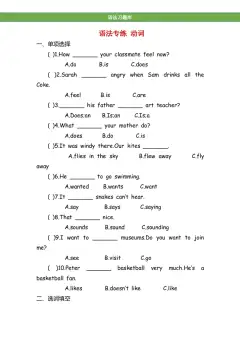
表示正在发生的事情或进行的动作,常与now,listen,look等词连用,结构是主语+be动词(am, is, are)+动词ing.
如:It is raining now.
外面正在下雨
It is six o’clock now.
现在6点了
My parents are reading newspapers in the sitting room.
我父母正在客厅看报纸
Look! The children are having a running race now.
看!孩子们正在赛跑
问句将be动词移前,否定句在be动词后+not.
表示经常反复发生的事情或动作,常与often, usually, sometimes, always, every day(week year…) on Sundays等词连用。
结构是主语+动词原形;当主语为第三人称单数即he,she, it, Tom, my mother, the boy等词时,动词后加s或es.
如:We have an English lesson every day.
我们每天都要上英语课
Do the boys run faster than the girls? Yes, they do.
男孩比女孩跑的快吗?是的
问句借助于do, does否定句借助于don’t, doesn’t,后面动词一定要还原。
表示发生在过去的事情或存在的状态,常与just now; a moment ago; … ago; yesterday; last ( week; month; year; Monday; weekend); this morning等词连用。
结构是主语+be动词的过去式(was; were)或主语+动词的过去式。
注意:be动词与动词过去式不可同时使用。
如:My earphones were on the ground just now.
我的耳机刚刚还在呢。
Where were you last week? I was at a camp.
你上个星期去哪了?我去野营了
What did you do yesterday? I visited a farm
你昨天去干嘛了?我去参观农场了。
问句有be动词将be动词移前,没有be动词借助于did,后面动词还原;
否定句有be动词在后面加not,没有借助于didn't后面动词还原。
表示将要打算发生的事情或动作,常与tomorrow, next week(year; Tuesday…), this week( weekend ;evening; afternoon;…)today等词连用。结构是主语+be(am, is, are) going to + 动原或主语+will +动原。
如:What are you going to do tomorrow? I am going to have a picnic.
你明天要去干嘛?我要去野餐。
The childre are going to have a sports meeting next week.
孩子们下个星期将参加运动会。
Tom will/is going to see a play with his father this evening.
Tom今晚将和父母去看演出。
问句将be动词或will移前;否定句在be动词或will后加not.
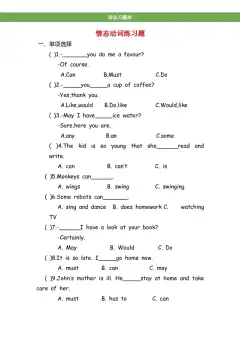
can; can’t; should; shouldn’t; must; may后一定加动词原形。
如:The girl can’t swim, but she can skate.
女孩不会游泳,但是会滑冰
Don’t talk in class, you should listen to the teacher carefully.
不要再课上说话,你应该认真听老师讲。
肯定祈使句以动词原形开头;否定祈使句以don’t加动词原形开头。
如:Open the box for me ,please.
请为我打开盒子。
Liu Tao! Please get up earlier tomorrow.
刘涛,明天请早点起床!
Don’t walk on the grass!
不要在草地上走!
Helen! Don’t climb the tree,please.
海伦!不要爬树。
去干嘛用go +动词ing
如: go swimming; go fishing;
go skating;
go camping;
go running;
go skiing;
go rowing…
than 前用比较级;as…as之间用原级。
如:My mother is two years younger than my father.
我妈比我爸年轻两岁。
Liu Tao jumps as far as Ben.
刘涛跳得和本一样远。
用like +动词ing或like+ to + 动原。
如: Su Yang likes growing flowers.
苏阳喜欢种花。
The children like to play with lanterns at Spring Festival.
孩子们喜欢在春节去玩花灯。
用 would like +to+动原或want + to +动原。
例:I’d like to visit the History Museum.=I want to visit the History Museum
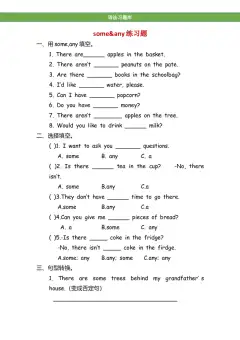
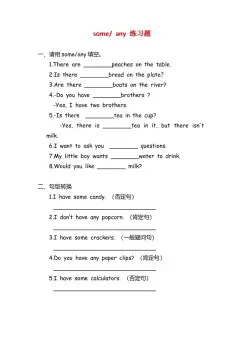
用于肯定句中,在否定句和问句中改为any,但当表示委婉语气时仍用
如:Can I have some writing paper? Would you like some orange juice?
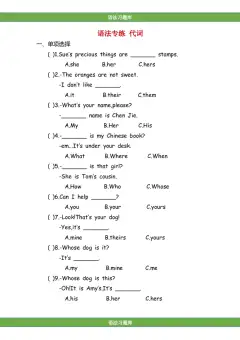
人称代词主格做主语用一般放在句首或动词前,主格分别是 I you he she it we you they。
宾格做宾语用,一般放在动词或介词后
如:Open them for me. Let us …, join me等。
宾格分别是me you him her it us you them。
形容词性物主代词放在名词前,不能单独使用,分别是my your his her its our your their
名词性物主代词相当于形物加名词,它只能单独使用后面不好加名词,分别是mine yours his hers its ours yours theirs。
介词后要么不加动词,加动词只能加动词ing形式
如:be good at running;
do well in jumping;
季节前,月份前用介词in
如:in summer;in March
具体的哪一天如星期几,几月几日用介词on
如:on Saturday; on the second of April; on Wednesday morning
在几点钟前用介词at
如: at a quarter to four;
只在上下午晚上用in
如:in the morning/ afternoon/ evening;
但在夜间用at night。
另:季节,月份和星期前不好加the.
有规则的有:
(1)直接在名词后加s
如orange—oranges; photo—photos;
(2) 以x, s, sh, ch 结尾的加es
如:box—boxes; glass—glasses; waitress—waitresses; watch—watches;peach--peaches
(3) 以辅音字母加y结尾的改y为i加es
如:study—studies;library—libraries; hobby—hobbies; family—families;
(4)以f, fe结尾的改f, fe 为v+es如:knife—knives; thief—thieves(注:以o结尾的我们学过的只有mango加es, mango—mangoes其余加s,)
不规则的有:
man—men; woman—women; people—people; child—children
(1)直接在动词后加s
如:run—runs; dance—dances
(2)以s,sh,ch,o结尾的加es
如:do—does;go—goes;wash—washes;catch—catches
(3)以辅音字母加y结尾的改y为i加es
如:study—studies; carry—carries;
(1)直接在动词后加ing
如:sing—singing; ski—skiing;
(2)双写词尾加ing
如:swim—swimming; jog—jogging;run—running;
(3)以不发音的e结尾的去e加ing
如:ride—riding; dance—dancing; make—making;
(1)直接在动词后加ed
如:clean—cleaned; milk—milked; play—played;
(2)以e结尾的直接加d
如:dance—danced; taste—tasted;
(3) 以辅音字母加y结尾的改y为i加ed
如:study—studied;carry—carried;
(4)双写词尾加ed
如:stop—stopped; jog—jogged;
不规则的有:am,is—was; are—were; do,does—did; have,has—had; go—went; meet—met; sit—sat; see—saw; get—got; tell—told; run—ran; come—came; steal—stole; read—read;
规则的:
(1)直接在形容词或副词后加er
如;small—smaller; low—lower;
(2)以e结尾的加r
如:late—larer;
(3)双写词尾加er
如:big—bigger; thin—thinner; fat—fatter;
(4) 以辅音字母加y结尾的改y为i加er
如:heavy—heavier; early—earlier;
不规则的有:
good, well—better(最高级为best); many, much--- more(最高级为most); far---farther;
(1)作为名词意思是雨水和雪是不可数名词
如:There is a lot of rain there in spring. 那儿的春天有很多雨水。
(2) 作为动词意思是下雨和下雪,有四种形式分别是:
动词原形rain, snow;
第三人称单数rains ,snows;
现在分词raining; snowing
过去式rained; snowed;
如:①Look! It is raining now. 瞧!天正在下雨。
②It often rains in Nantong in summer.南通夏天经常下雨。
③ It rained yesterday.昨天下了雨。
④It is going to rain tomorrow. 明天要下雨。
(3)形容词为rainy 和snowy 意思是有雨的和有雪的
如:It is often rainy here in spring.这儿的春天经常是有雨的。
If it is rainy tomorrow, I’ll stay at home.如果明天是有雨的,我将呆在家里。
注意只有同类事物才可进行比较。
如:My eyes are bigger than hers.Your school bag is heavier than mine. My computer is nicer than Nancy’s. My brother is stronger than me.
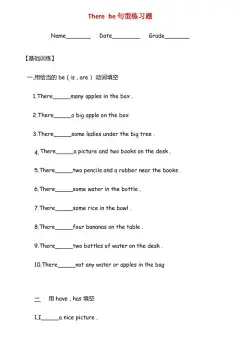
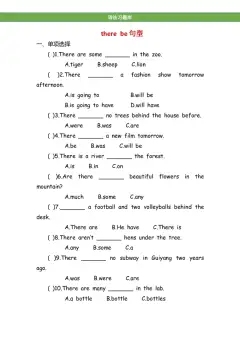
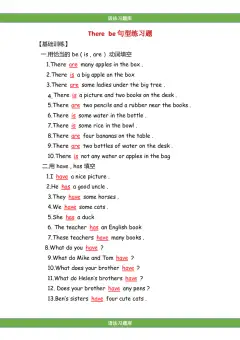
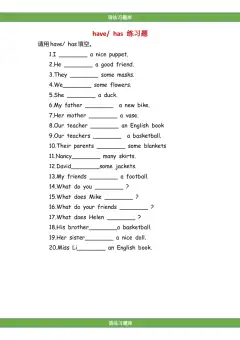
表示某人有(has用于第三人称单数);There is/ are;
There was/ were 表示某地存在有
注意There be 句型的就近原则
单数或不可数用there is /was;
复数用there are/ were.
眼镜glasses; 耳机earphones; 鞋shoes;裤子trousers等词本身是复数。
如:My glasses were on the chair just now.
但如果表示这双,这副,一双的时候用单数
如:There is a pair of chopsticks on the plate. This pair of earphones is for you.
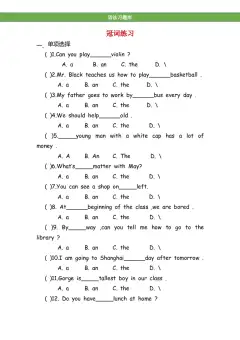
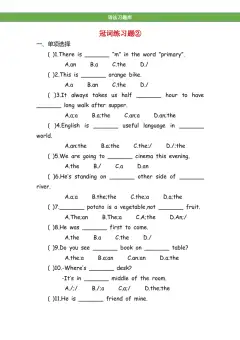
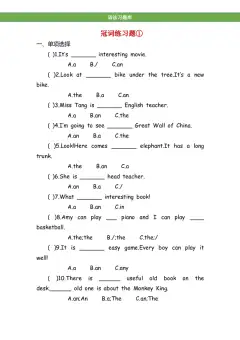
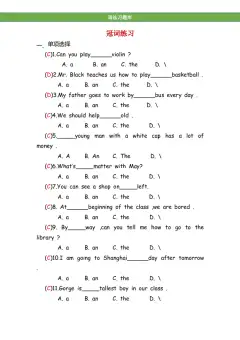
a用于辅音前不是辅音字母前;an 用于元音前不是元音字母前。
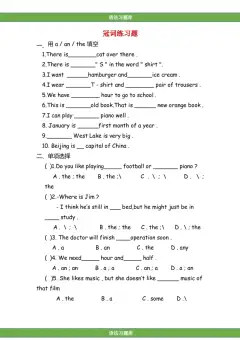
如:There is an ’s’, a ‘t’, a ‘u’, a ‘d’ ,an ‘e’, an ‘n’,and a ‘t’ in the word ‘student’.
有两种:
(1)直接读时钟和分钟。
如6:10读成 six ten; 7:30读成seven thirty; 8:45读成eight forty-five;
(2)用to与past表示。
在半小时包括半小时以内用几分past几点
如:6:10读成ten past six; 7:30读成half past seven;
过了半小时用下一个钟点差几分
如7:45读成a quarter to eight; 9:50读成ten to ten;
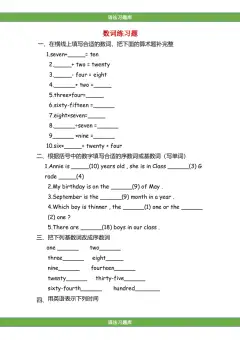
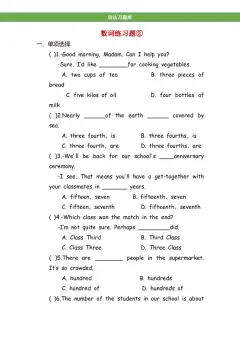
基变序有规律,结尾加上th; 一二三特殊例,结尾字母t、d(即first, second, third);
八去t, 九去e, ve要用f替(即eigh—eighth; nine—ninth; five-- fifth ;twelve—twelfth);
ty改y为ie后加th别忘记(即整十数如twenty—twentieth;forty—fortieth);
几十几十位为基个位为序(如第二十一为twenty-first)。
另外强调序数词前一定要加the。
用the+序数词+ of +月
如:三月三日 the third of March;
12月25日 the 25th of December.
如:My parents are both teachers.
all表示三者以上都
如:The students are all very excited.
有day的节日前用on.
没有day的节日前用at,
如:at Christmas; on Christmas Day; at New Year; on New Year’s Day.
excited表示激动的,兴奋地主语是人;
exciting表示令人激动的,令人兴奋的主语是事情
如:The running race is very exciting, so all the students are very excited.
赛跑非常令人激动,因此所有的学生都很激动。
两者比较用比较级,三者以上比较用最高级
如:Who runs faster, the boy or the girl? The boy does
谁跑得更快,男孩还是女孩?男孩。
Which season do you like best? I like autumn best.
你最喜欢哪个季节?我最喜欢秋天。
Which season do you like better, summer or winter? I like winter better.
你更喜欢哪个季节,夏天还是冬天?我更喜欢冬天。
前面用了do, does did, don’t, doesn’t didn’t后面动词要还原。
如:Did she watch TV last night?
Helen doesn’t like taking photos.
到达用get to
但注意到家,到这儿,到那儿不可以加to
如:get home; get here; get there,
另外go home; come here; go there也一样。
长着什么用with
如:the girl with big eyes 大眼睛的女孩;
穿着什么用in
如:the man in black穿黑衣服的男人
或:the woman in the white skirt 穿白色短裙的妇女
用let sb后加动词原形
如:Let’s water the flowers together.
是该做…的时候了用It’s time for+名词或It’s time to +动原。
帮助某人做某事是help sb with sth
如:帮我学英语是 help me with my English
外来的东西在树上用in the tree
如:the bird in the tree;
树上长的用on the tree
如:the apples on the tree
球类之前不加the;
乐器之前必须加the
如:play the piano; play football
END

关于我们

雅思/托福着急出分?
备考遇到瓶颈?
自学找不到方向?
……
欢迎扫描下方二维码
咨询了解更多雅思课程详情👇
请联系我们

我们的服务
|海外留学|雅思托福|院校申请|
英语快速提升
初高中艺考

如果觉得本文对您有帮助
欢迎推荐需要的家长和学生们


雅思/托福/英语提升课程,院校申请、及留学资讯等你来咨询~
电话:19807950001(微信同号)
联系人:彭老师
地址:江西省宜春市袁州区金融大厦一楼

声明:(信息均来源于网络,仅供参考,请以官网实时更新为准。)
如有侵权请联系删除 。