ARTICLE · 1341242
自然有其道 学习亦如是——外研版初中英语九上教材阅读笔记
自然有其道 学习亦如是
外研版初中英语九上教材阅读笔记
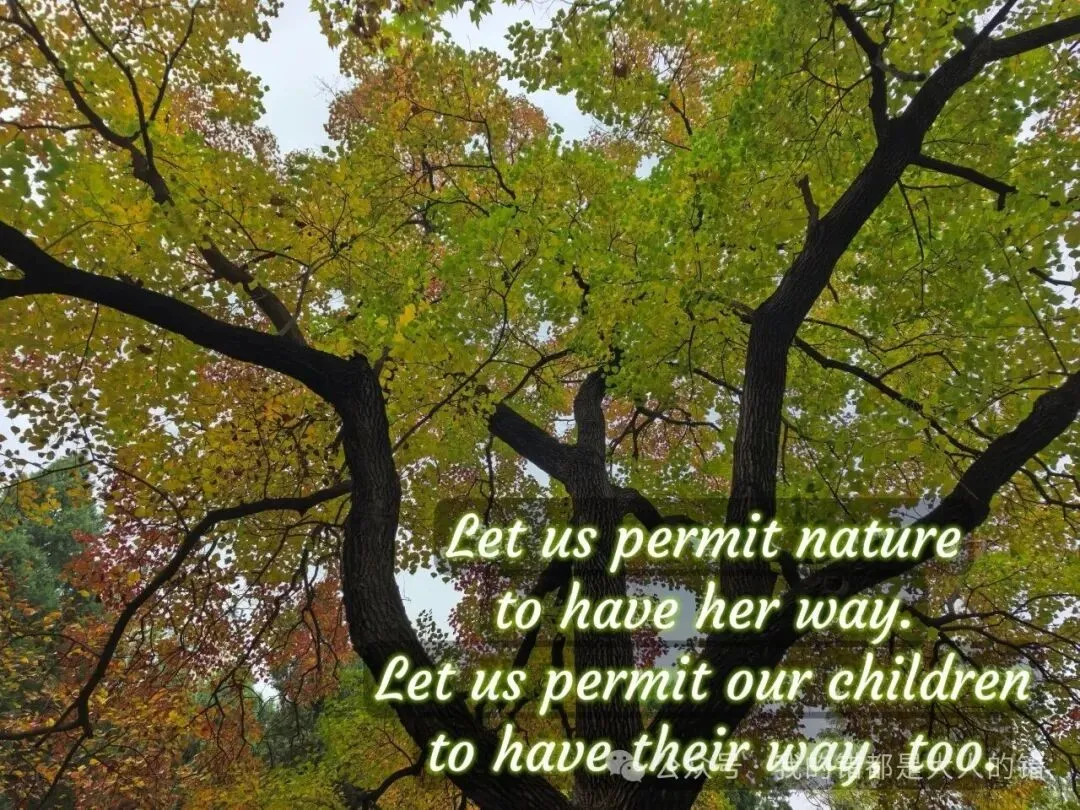
Let us permit nature to have her way.
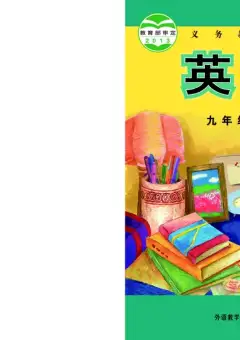
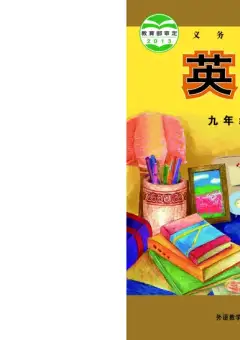
这几天,外研版九上教材读完,做以下梳理作为收尾。
外研版九年级上册一共六个单元,话题层层铺开:
Unit 1 Teenagers today,品读《少年中国说》,看见少年担当;
Unit 2 On the money,跟着小狗钱钱,一起思考金钱,建立财商思维;
Unit 3 Past passing by,了解三星堆、马王堆,探索传统文化如何焕发新活力;
Unit 4 Heroes,随着赵一曼、袁隆平的故事,认识不同时代的英雄,感受英雄力量。
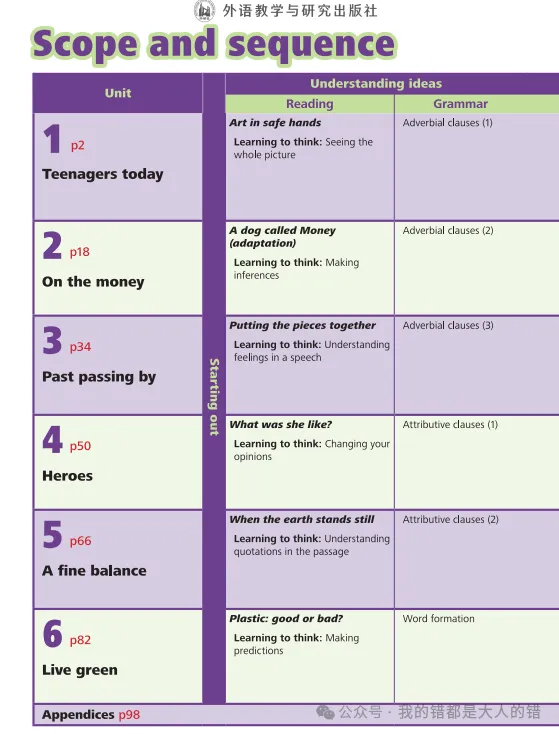
前四个单元,带领我们认识青年、财富、历史与榜样。来到Unit 5 A fine balance 和 Unit 6 Live green,教材把目光投向人与自然。
在阅读教材时,令我印象很深刻的就是来自第五和第六单元的三篇“人与自然”主题的文章。
不同于以往枯燥直白的环保说明文,这三篇文本构思巧妙、思辨感足,读起来很有惊喜,与大家分享。
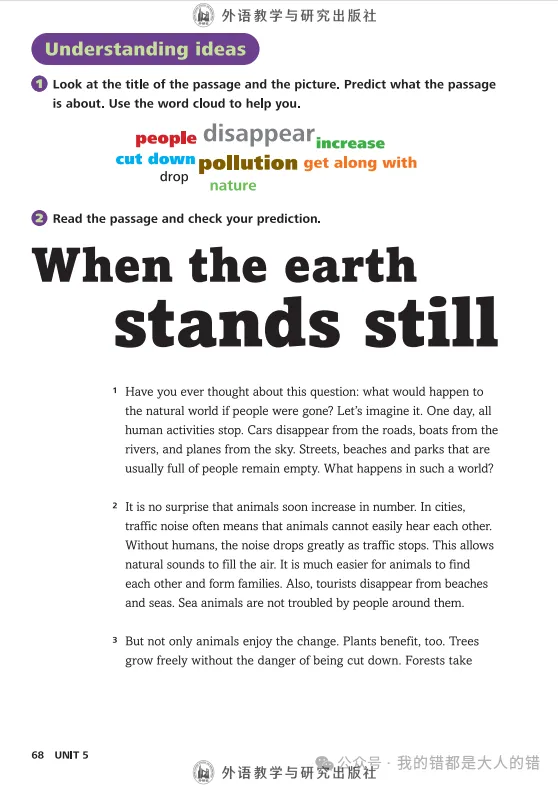
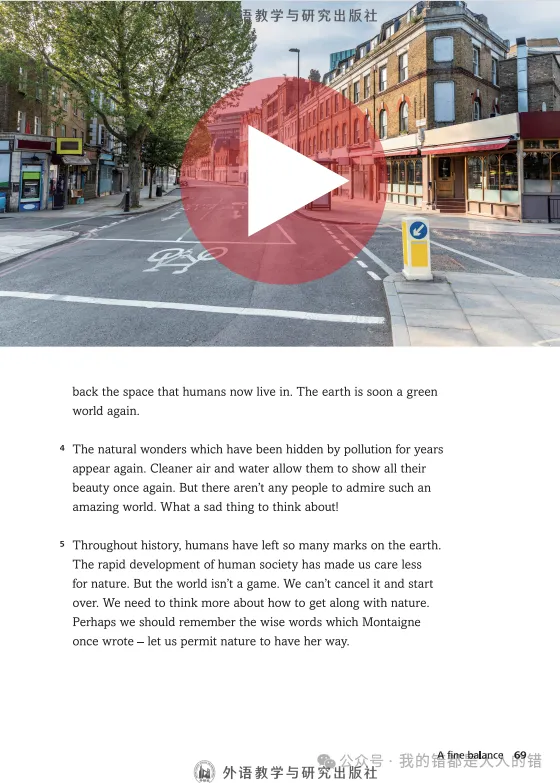
Unit 5 When the earth stands still
文章开篇抛出设想:What would happen to the natural world if people were gone. Let's imagine it. One day all human activities stop...读到开头,我下意识会猜想,没有人类,世界会不会变得荒芜衰败。可跟着文字读下去才发现,恰恰相反,一旦人类活动停止,动植物慢慢复苏,大地重归生机。
这种阅读预期上的反转很抓人。我们本来默认人类是世界的守护者,文章却告诉我们:人类停下干预,大自然自己就能恢复本来的面貌。
不需要刻意的批判,这种反差就让读者真切体会到,人类活动才是给环境带来巨大改变的源头,也让蒙田那句Let us permit nature to have her way.变得更好理解:
少一些人为干预,自然自有它运行的方式。
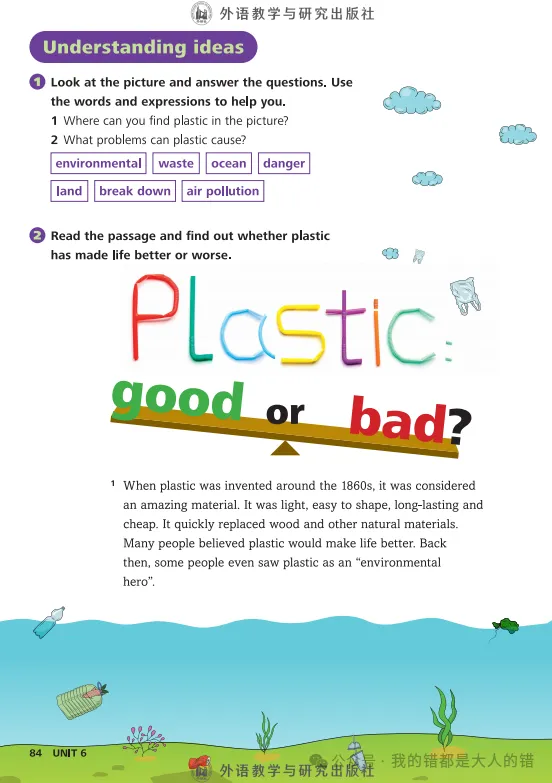
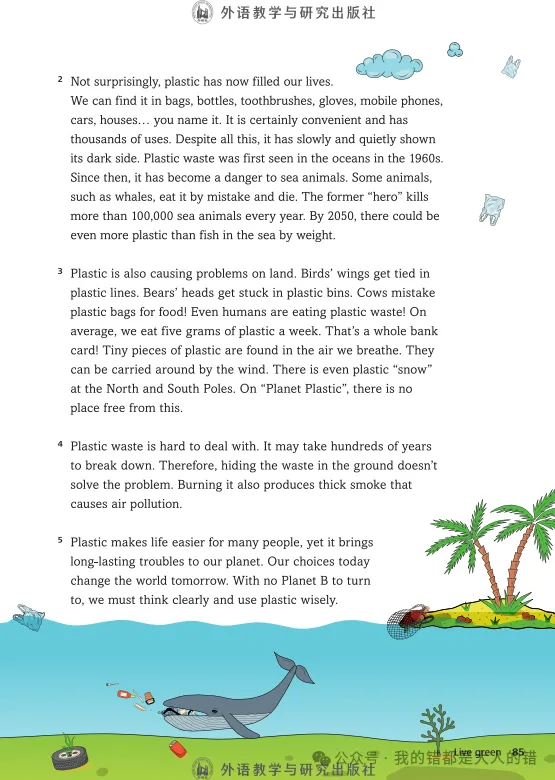
Unit 6 Plastic: good or bad?
这篇文章思辨色彩很强,跳出了"塑料全是坏处"这种非黑即白的简单论述。
文章一开头就告诉我们,塑料刚发明的时候,轻便、便宜、耐用,曾经被称作“环保英雄”。可随着大量使用,它的负面影响慢慢显现。
它没有一味否定塑料,承认塑料确实给生活带来便利,同时又点明它长久的环境危害。文末那句With no Planet B to turn to,用得很巧妙,谐音 Plan B(备选方案),意思就是我们没有第二个地球作为备选。
人类发明塑料是想改造世界、追求便利,可我们忽略了自然本身的承受能力。一味利用自然,而不懂得尊重自然的边界,便利背后就会埋下长久的隐患。
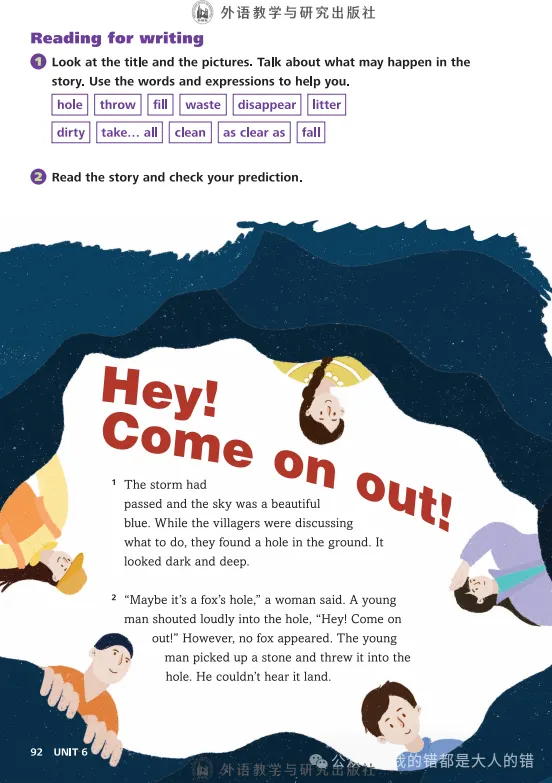
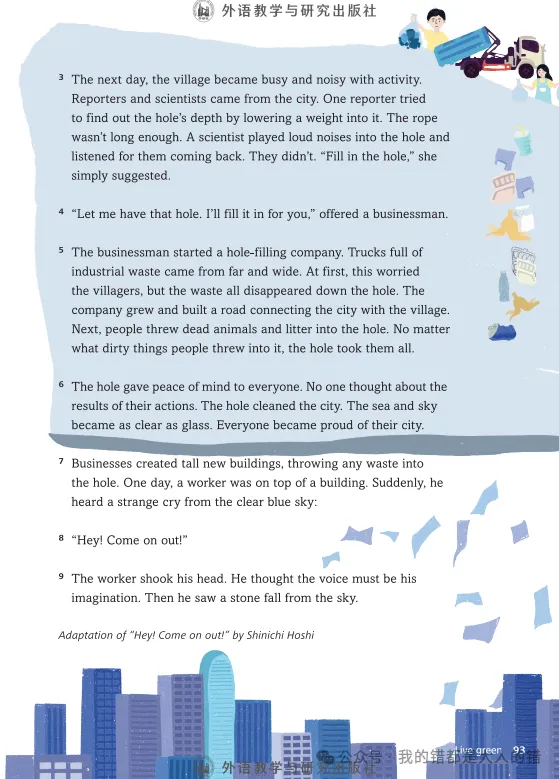
Unit 6 Hey! Come on out!
这篇文章改编自是日本作家星新一于1958年发表的科幻短篇小说《Hey! Come on out!》。人们发现深洞,不断往里丢弃垃圾,以为找到了一个一劳永逸的办法,城市看起来干净了,所有人都安心。直到结尾,当初丢进洞里的那块石头从天而降,故事就此停住,不再继续描写灾难。
留白的写法很有味道,留给读者想象空间。
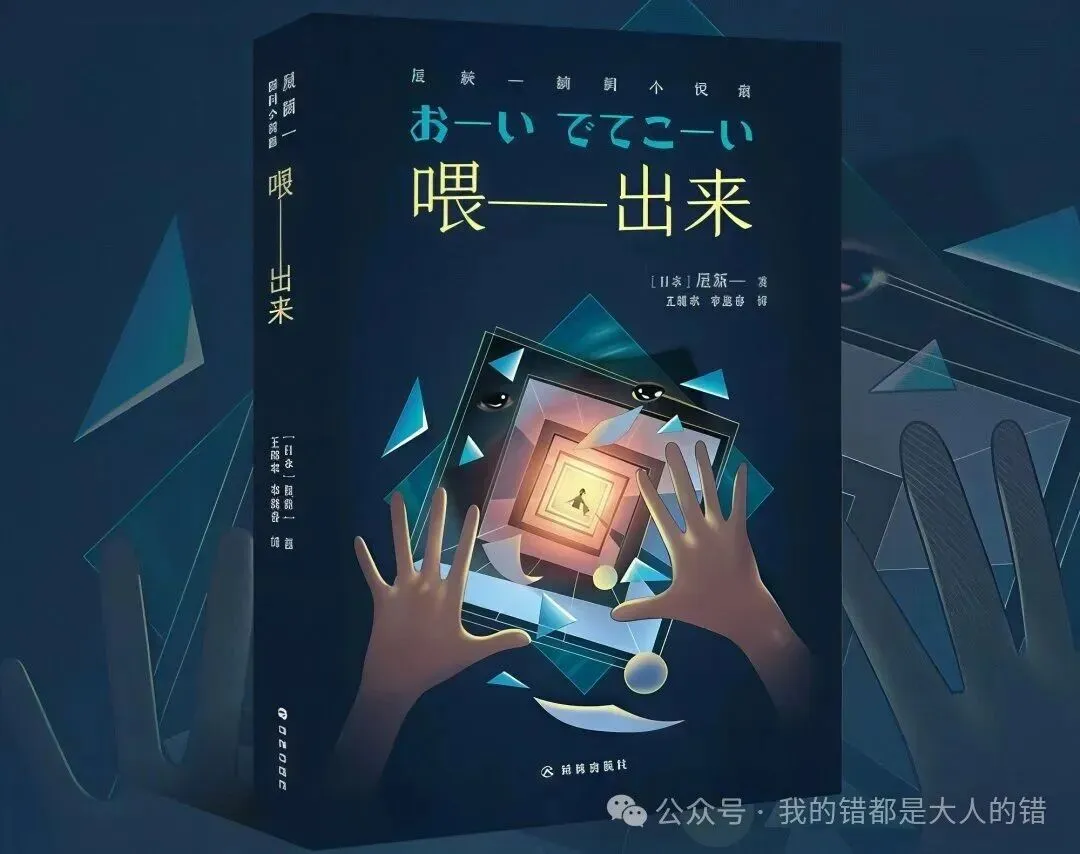
把三篇文章放在一起对照阅读,能发现编者选材的巧思。三篇体裁各不相同,但围绕同一个核心命题,用完全不一样的写作策略,提升了文章的可读性,也给学生英语读写教学带来很多启发。
开头会设置反差,勾起阅读兴趣
《When the earth stands still》一开篇提问:人类消失,世界会变成什么样?我们本来以为万物会衰败,读下去才发现,没有人类打扰,大自然慢慢恢复生机。这种反转,一下子吸引我们往下读。
《Plastic: good or bad?》打破我们的固有想法:塑料曾经被看作很棒的发明。文章先讲塑料的好处,再讲它带来的污染,让我们愿意继续读,思考事物的两面性。
《Hey! Come on out!》讲了一个有趣的故事:人们找到大洞来扔垃圾,以为难题解决了。直到结尾石头掉回来,故事就停住了。不把结局全部说透,留给我们自己思考。
启发:写文章不要上来就讲道理。先和读者原有想法对话,制造一点反差,读者才愿意读。学生写作文也可以用这个办法,避免从头到尾平铺直叙。
讲道理不靠口号,用故事和画面说话
作为环保主题的文章,三篇都没有空洞的环保口号。
《When the earth stands still》描绘画面,让我们看见大自然自我修复的样子。
《Plastic: good or bad?》摆出事实,好坏一起讲,引导我们自己权衡。
《Hey! Come on out!》用小故事藏道理,不直接批评。
启发:好的文章,把道理藏在场景和故事里,而不是生硬说教。挑选阅读材料,或是指导学生写作,尽量少用空洞口号,多用实例。
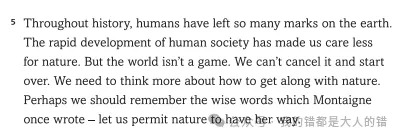
三篇文本,共同诠释蒙田的“Let us permit nature to have her way”。
它们告诉我们:无论是编写教材文本,还是学生写作,有趣的构思、克制的说理、多角度思考,远比复杂词句更能提升文章可读性。
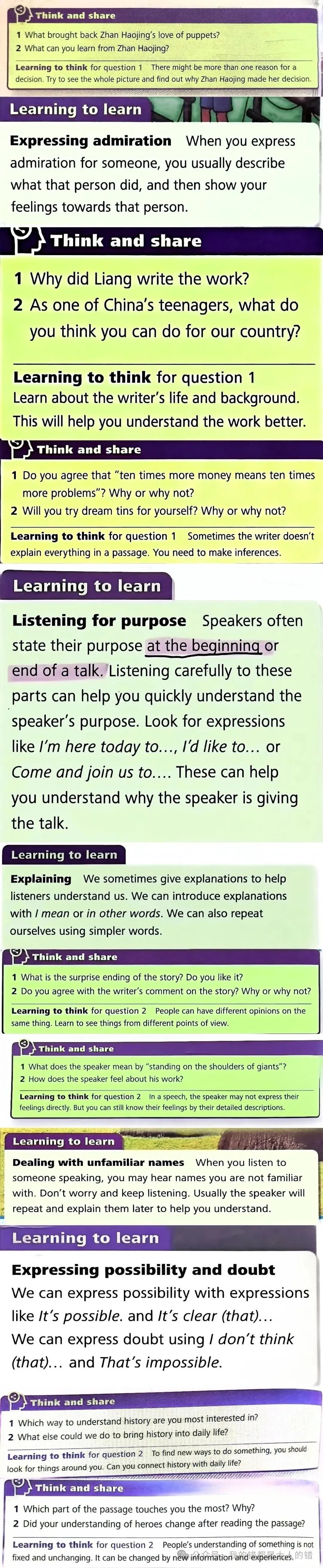
这本九上教材,我依旧整理了两部分内容:
一是本册教材里值得珍藏的金句,
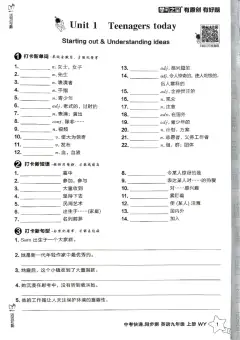
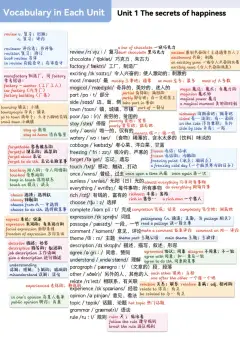
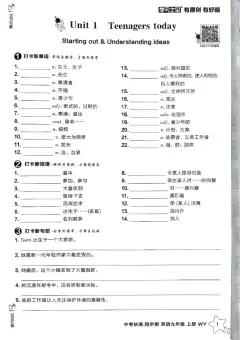
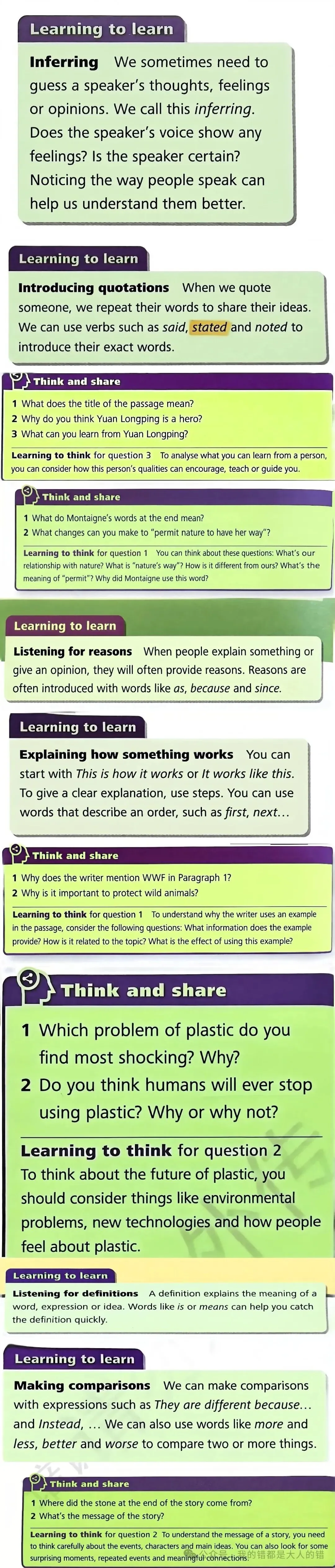
二是配套的学法指导与阅读思考题的截图。
这些素材不只是课堂练习,更是打开文本的钥匙。
金句凝练着课文的思想内核;学法指导给我们可落地的阅读方法;思考题则引导我们停下来深度思辨,把阅读的收获沉淀下来,对于我们备课上课都有很大的帮助。
The The future belongs to the young people, and the hopes also rest with them。—President Xi Jinping
The foundation of every state is the education of its youth.—Diogenes
The youth of today are the leaders of tomorrow.—Nelson Mandela
The positive reply from the young viewers gave me more courage.
Blue sky over our heads, yellow earth under our feet. Deep history in our hearts, wide land before our eyes. Our future is as endless as the ocean. It will be great and bright.— The Young China
Money is a good servant, but a bad master.—Francis Bacon
When a gentleman wants to be rich, he makes money in the right way.—Zengguang Xianwen
A penny saved is a penny earned. —Benjamin Franklin
Besides meeting our daily needs, money can also be given away to help others.
They have something much more important than money—they have love.
With history as a mirror, one can understand the rise and fall of a state.—Li Shimin
We are not the maker of history. We are made by history. —Martin Luther King Jr.
Histories make men wise. —Francis Bacon
As I continued their work, I often felt like I was standing on the shoulders of giants.
Different cultures mixed with each other to form today's China.
Our work is so important that we will never give up. But success never comes smoothly. Archaeologists do not believe in luck. We will work even harder so that people can know more about our wonderful past. Bit by bit, we will bring out more secrets of our history.
Reading about history is one thing, but seeing it with your own eyes is another.
With a little creativity, history becomes more than hard-to-remember facts. The past comes to life for us to see and feel.
History mirrors our past and carries our values. Only by understanding history can we face the future better. It's important to know what onece happened and pass it on.
Heroes inspire us and help shape a better world.
In all societies and at all times, people respect heroes and heroic actions.
Throughout history, humans have left so many marks on the earth. The rapid development of human society has made us care less for nature. But the world isn't a game. We can't cancel it and start over. We need to think more about how to get along with nature. Perhaps we should remember the wise words which Montaigne once wrote—let us permit nature to have her way.
It is certainly convenient and has thousands of uses. Despite all this, it has slowly and quietly shown its dark side.
Plastic makes life easier for many people, yet it brings long-lasting troubles to our planet. Our choices today change the world tomorrow. With no Planet B to turn to, we must think clearly and use plastic wisely.
自然有其道,学习亦如是。
万物自有运行的节奏,英语阅读与写作学习也是如此。从这三篇讲“人与自然”的文章告诉我们,好的表达不靠生硬说教,学习也不必追求直奔结论。
带着好奇去读,学着辩证去想,让学生在文字里慢慢体会、慢慢练习,正是我们可以带给课堂的状态。
Let us permit nature to have her way. Let us permit our children to have their way, too.