夜雨聆风
夜雨聆风
Recently, China’s Ministry of Education released the Action Plan for “Artificial Intelligence + Education”, proposing the integration of artificial intelligence into teacher qualification examinations and certification systems, making AI literacy a core professional competency for teachers. The Ministry also stated that AI education is expected to be widely implemented across primary and secondary schools by 2030. Against this backdrop, artificial intelligence is rapidly evolving from a supplementary tool into a core capability in future teacher education.
In response to this shift, the Master’s programme in Teaching English to Speakers of Other Languages (TESOL) at Xi’an Jiaotong-Liverpool University (XJTLU) has taken an early step by incorporating Artificial Intelligence (AI) Technologies for Language Education as a compulsory module within its teacher training curriculum.
Through the module, students are encouraged not only to critically understand the impact of AI on language education, but also to develop practical knowledge of relevant theories, teaching materials, and technological tools. They are further trained to design and implement AI-enhanced language teaching tasks and learning activities.
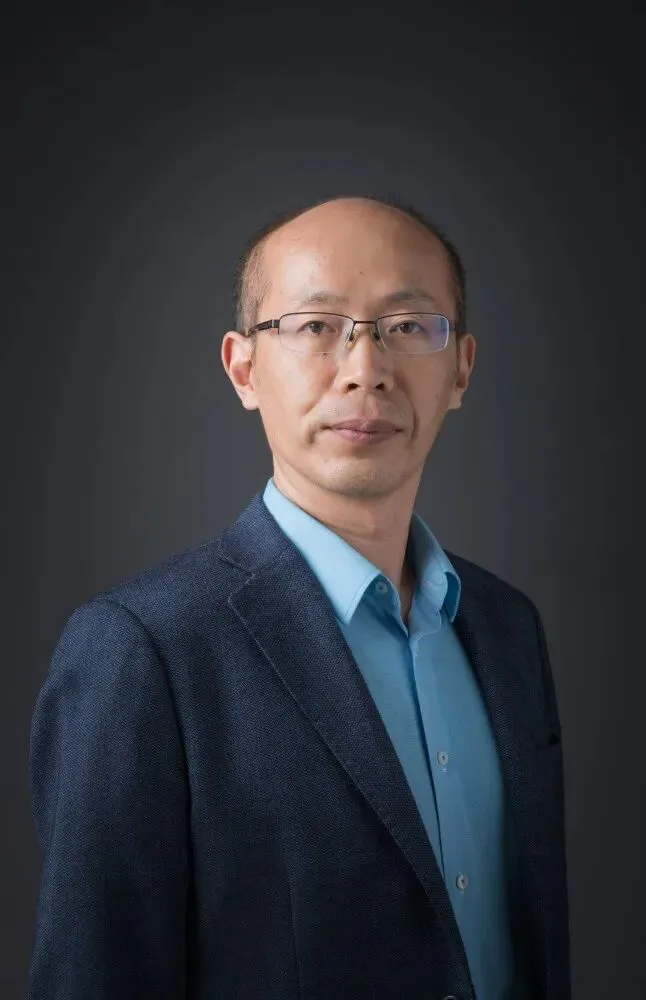
Professor Bin Zou
“This module is not simply about teaching students how to use AI tools. It focuses on genuinely integrating AI into real language teaching contexts,” said Professor Bin Zou, Programme Director of the MA TESOL programme. “In class, students learn how to use AI to quickly generate vocabulary and grammar exercises, reading materials, and listening resources. They can also create videos with English narration for classroom presentation, which greatly expands beyond the limitations of traditional teaching materials.”
The module is built upon Professor Zou’s long-term research in AI and language education. According to the Web of Science database, Professor Zou currently ranks first globally in publication output in both the fields of “AI and English Language Teaching” and “AI and Speaking Instruction.” The three PhD students he currently supervises are all conducting research related to AI and language education, and all graduated from XJTLU’s TESOL programme. In addition, Professor Zou also teaches AI and Applied Linguistics to undergraduate English majors and MA Applied Linguistics students at XJTLU, helping students leverage linguistic knowledge to better participate in the design, application, and development of AI technologies.
At a more advanced stage of the module, students are guided to move from simply “using AI” to “designing AI.” They are encouraged to build AI agents and adapt them to different teaching contexts and learner groups. For example, when designing teaching activities for younger learners, students need to carefully control the complexity of AI-generated language and the length of interactions to better suit classroom realities.
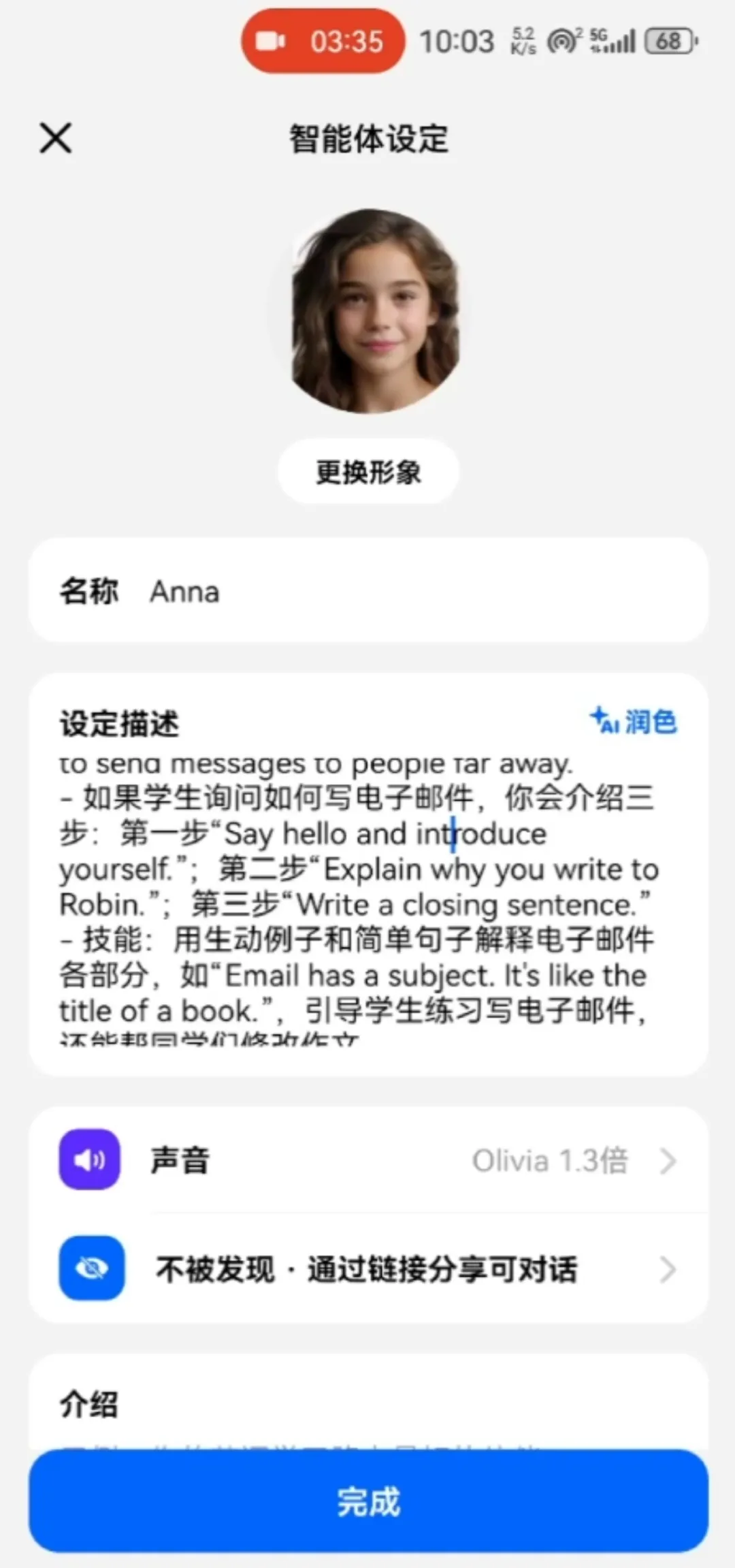
Students explain how to create AI agents
Yujia Ni, a second-year MA TESOL student, designed a 15-minute micro-lesson as part of a classroom presentation. She used AI platforms such as Jimeng and Doubao to generate multimodal teaching materials including audio, video, and images, while also developing an AI agent for classroom interaction.
“I designed an AI agent called ‘Bob’ to help students improve their IELTS speaking skills,” she explained. “It can identify problems in students’ spoken English and provide immediate feedback in an encouraging way.” She noted that compared with traditional lesson preparation, AI significantly improved the efficiency of course design while also making teaching activities more diverse and engaging.
Through systematic training, students not only learn how to create multimodal teaching resources, but also develop the ability to critically evaluate and optimise AI-generated content. The module requires students to assess AI outputs in terms of linguistic accuracy, cultural appropriateness, and potential bias, while continuously refining prompts to improve the quality of results. The accuracy and effectiveness of prompt design are also included in the assessment criteria.

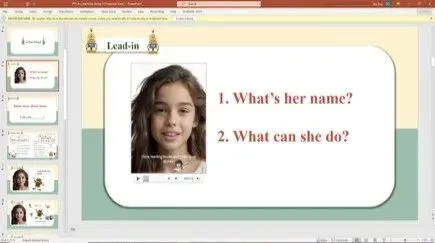
Teaching materials created by students using AI in class.
“I now have a much clearer understanding of how to write effective prompts, and I have become more cautious and reflective when evaluating AI-generated content,” said Yujia. “These skills are extremely useful for lesson preparation, teaching practice, and future employment.”
The practical impact of these skills has already begun to emerge. Some students have attracted employers’ attention during internships and job applications because of their AI-related teaching competencies.
“One of our graduates, after systematically studying AI theories and applications, was appointed as a subject leader upon joining a public middle school in Kunming,” Professor Zou shared.
In addition, the TESOL programme has established an Educational Research Practice Base in partnership with the Dushu Lake School affiliated with the University of Science and Technology of China. Nearly ten students have already entered frontline teaching environments, applying AI-related skills in real classrooms.
“As artificial intelligence becomes increasingly embedded in the core of education, the logic of teacher training is also changing,” Professor Zou concluded. “Future English teachers will not only need strong language teaching skills, but also the ability to understand, use, and design AI tools in ways that genuinely support classroom learning.”
He added that he hopes XJTLU graduates will become active participants and leaders in the application of AI in education, demonstrating stronger competitiveness in both public and international schools, while contributing to the development of AI and language education talent in China.
ByYiyi Gu
Photo courtesy of Zou Bin
New Media by Yiyi Gu