 夜雨聆风
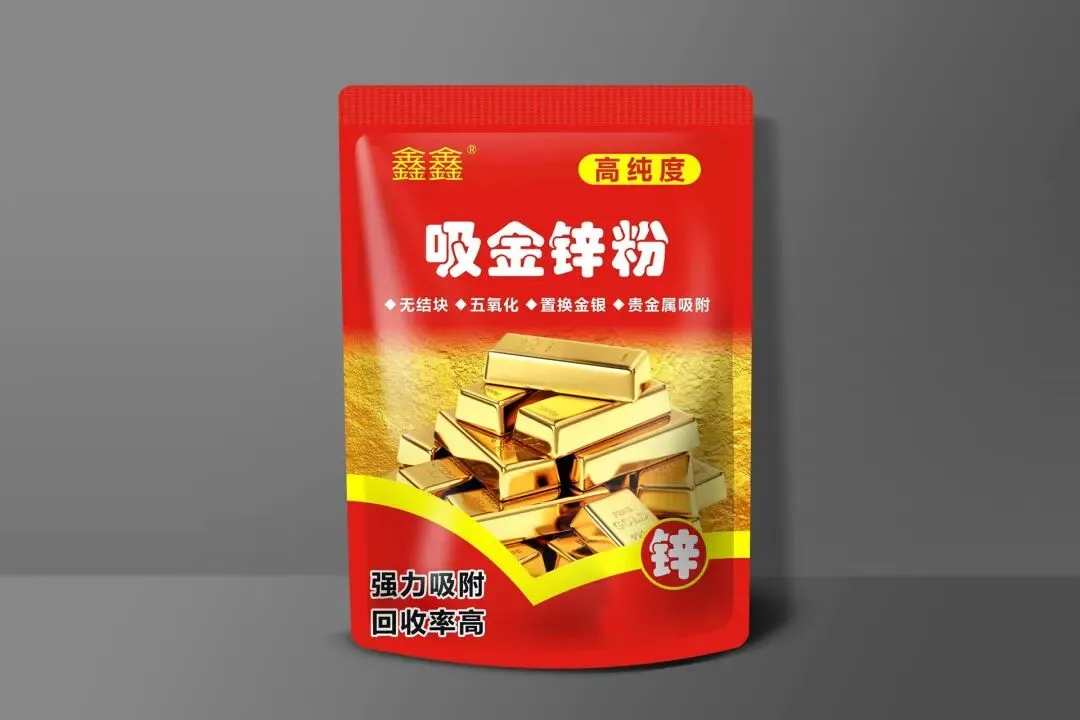
夜雨聆风吸金锌粉是黄金提炼(尤其氰化法体系)中将溶液中的金氰络离子(如[Au(CN)₂]⁻)置换为单质金的核心还原剂,通过金属置换反应实现黄金从“液态络合物”到“固态金泥”的转化,是氰化提金工艺中回收黄金的关键材料。
一、核心用途
• 氰化液提金:在氰化溶金后的含金贵液(如矿石氰化浸出液、废旧镀金件氰化溶解液)中,置换出金氰络离子中的单质金,生成可分离的金泥(含粗金),实现黄金的初步回收,回收率可达98%以上。
• 低浓度金回收:针对氰化提金产生的低浓度含金尾液(金含量通常<0.02g/L),通过锌粉置换进一步回收残留金,降低黄金流失,提升整体工艺的资源利用率与经济效益。
• 简化提纯流程:置换生成的金泥成分相对简单(主要含Au、Zn及少量杂质),后续仅需酸洗除锌、熔炼提纯即可得到粗金,相比其他还原法更易操作,适合工业化大规模生产。
二、典型用法(以氰化贵液置换法为例)
1. 贵液预处理:先检测含金贵液的pH值(需调节至10-11,若pH过低可加氢氧化钠调节),避免酸性环境导致锌粉过度溶解;同时通过板框过滤去除贵液中的悬浮杂质(如矿渣颗粒),防止杂质包裹锌粉影响置换效率。
2. 锌粉置换操作:将预处理后的贵液泵入置换槽,在搅拌状态下(转速80-120r/min),按金含量的8-10倍比例(过量锌粉确保金完全置换)缓慢加入300-500目细锌粉,控制温度在20-30℃,持续搅拌反应2-3小时;期间取样检测贵液中金含量,当金含量<0.001g/L时停止反应。
3. 金泥分离与酸洗:反应结束后,静置1-2小时使金泥(含锌粉、单质金)充分沉降,通过真空抽滤分离金泥;随后用10%-15%的稀硫酸浸泡金泥2-3小时(去除过量锌粉,反应生成硫酸锌溶液),再用去离子水冲洗金泥至中性,得到粗金泥(金含量约60%-80%)。
三、关键注意事项
• 锌粉选型要求:需选用高纯度(Zn含量≥98%)、细粒度(300目以上)的吸金锌粉,粒度过粗会减少与贵液接触面积(置换不充分),纯度过低则含杂质(如铁、铅)会污染金泥,增加后续提纯难度。
• 反应环境控制:严格控制贵液pH值在10-11,pH<9会导致氰化物分解产生剧毒氰化氢气体,pH>12则会生成氢氧化锌沉淀,包裹锌粉阻碍置换;同时禁止在有氧环境下操作(可通氮气隔绝空气),避免锌粉被氧化失效。
• 安全防护规范:操作涉及剧毒氰化物溶液与强腐蚀性硫酸,需佩戴防化手套、防毒面罩、防化服,全程在通风良好的密闭车间内进行;氰化废液需加入次氯酸钠氧化处理(破坏氰化物),达标后方可按危废处置,严禁直接排放。
• 锌粉储存与浪费控制:锌粉易受潮氧化、遇酸产生氢气(易燃易爆),需密封储存于干燥阴凉处,远离火源与酸性物质;置换时锌粉不可过量过多(通常不超过金含量10倍),否则会增加酸洗步骤的酸耗与金泥处理量,造成成本浪费。
Gold Refining Gold-Absorbing Zinc Powder: Uses, Application Methods and Precautions
Gold-absorbing zinc powder is a core reducing agent in gold refining (especially in the cyanidation system) that displaces gold cyanide complex ions (e.g., [Au(CN)₂]⁻) in solutions into elemental gold. It realizes the conversion of gold from "liquid complex" to "solid gold mud" through a metal displacement reaction, serving as a key material for gold recovery in the cyanide gold extraction process.
I. Core Uses
• Gold Extraction from Cyanide Solution: In the gold-containing precious solution after cyanide gold dissolution (such as ore cyanide leaching solution and waste gold-plated part cyanide dissolution solution), it displaces elemental gold from gold cyanide complex ions to form separable gold mud (containing crude gold), realizing the preliminary recovery of gold with a recovery rate of over 98%.
• Recovery of Low-Concentration Gold: For low-concentration gold-containing tailings (gold content usually <0.02g/L) generated in cyanide gold extraction, zinc powder displacement is used to further recover residual gold, reducing gold loss and improving the resource utilization rate and economic benefits of the overall process.
• Simplifying Purification Process: The gold mud generated by displacement has a relatively simple composition (mainly containing Au, Zn and a small amount of impurities). Subsequent steps only require acid washing to remove zinc and smelting purification to obtain crude gold. Compared with other reduction methods, it is easier to operate and suitable for large-scale industrial production.
II. Typical Application Method (Taking Cyanide Precious Solution Displacement as an Example)
1. Precious Solution Pretreatment: First, test the pH value of the gold-containing precious solution (it needs to be adjusted to 10-11; if the pH is too low, sodium hydroxide can be added for adjustment) to avoid excessive dissolution of zinc powder in an acidic environment. At the same time, remove suspended impurities (such as slag particles) in the precious solution through plate-and-frame filtration to prevent impurities from wrapping zinc powder and affecting displacement efficiency.
2. Zinc Powder Displacement Operation: Pump the pretreated precious solution into the displacement tank. Under stirring (rotation speed: 80-120r/min), slowly add 300-500 mesh fine zinc powder at a ratio of 8-10 times the gold content (excess zinc powder ensures complete gold displacement). Control the temperature at 20-30℃ and continue stirring for reaction for 2-3 hours. During this period, sample and test the gold content in the precious solution; stop the reaction when the gold content is <0.001g/L.
3. Gold Mud Separation and Acid Washing: After the reaction, let it stand for 1-2 hours to fully settle the gold mud (containing zinc powder and elemental gold), and separate the gold mud through vacuum filtration. Then soak the gold mud in 10%-15% dilute sulfuric acid for 2-3 hours (to remove excess zinc powder, and zinc sulfate solution is generated through the reaction). Rinse the gold mud with deionized water until neutral to obtain crude gold mud (gold content is about 60%-80%).
III. Key Precautions
• Zinc Powder Selection Requirements: High-purity (Zn content ≥98%) and fine-grained (300 mesh or above) gold-absorbing zinc powder should be selected. Excessively coarse particles will reduce the contact area with the precious solution (resulting in insufficient displacement), while excessively low purity will contain impurities (such as iron and lead) that contaminate the gold mud and increase the difficulty of subsequent purification.
• Reaction Environment Control: Strictly control the pH value of the precious solution at 10-11. A pH <9 will cause cyanide to decompose and produce highly toxic hydrogen cyanide gas, while a pH >12 will form zinc hydroxide precipitation that wraps zinc powder and hinders displacement. At the same time, operation in an oxygen-containing environment is prohibited (nitrogen can be introduced to isolate air) to avoid oxidation and inactivation of zinc powder.
• Safety Protection Standards: The operation involves highly toxic cyanide solution and highly corrosive sulfuric acid. It is necessary to wear chemical protective gloves, gas masks and chemical protective clothing, and the entire process should be carried out in a well-ventilated closed workshop. Cyanide waste liquid must be oxidized with sodium hypochlorite (to destroy cyanide) and can only be disposed of as hazardous waste after meeting the standards. Direct discharge is strictly prohibited.
• Zinc Powder Storage and Waste Control: Zinc powder is prone to moisture and oxidation, and produces hydrogen gas (flammable and explosive) when in contact with acid. It should be stored in a sealed, dry and cool place, away from fire sources and acidic substances. The amount of zinc powder should not be excessively large during displacement (usually not more than 10 times the gold content); otherwise, it will increase acid consumption in the acid washing step and the amount of gold mud to be treated, resulting in cost waste.