 夜雨聆风
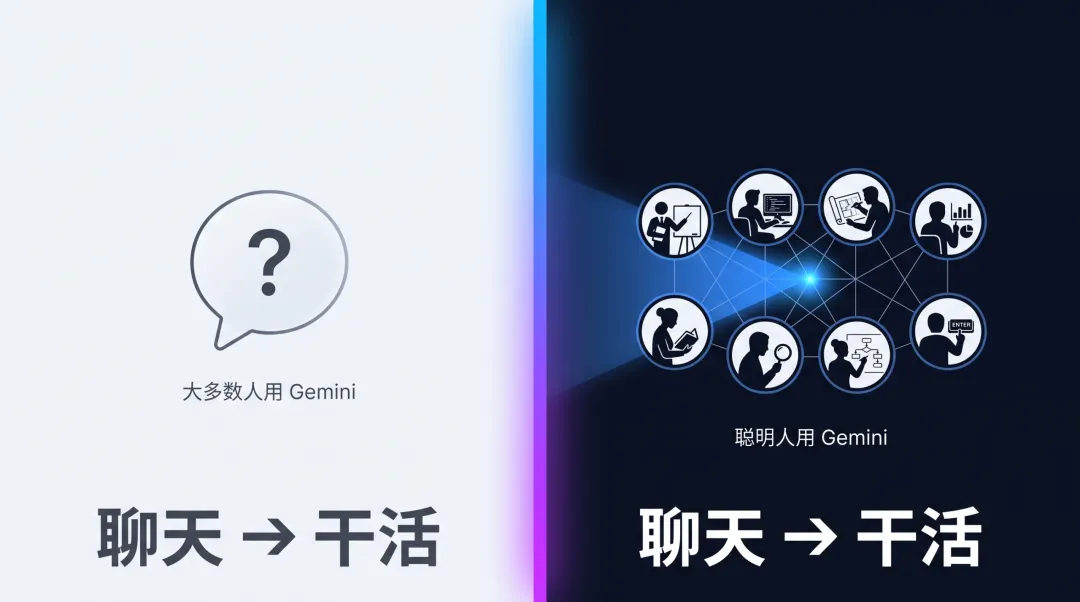
夜雨聆风大多数人提到 Google Gemini,第一反应还是"那个聊天机器人"。
他们错过了真正厉害的地方。
最聪明的创作者,已经不会用 AI 来问一次性问题了。
他们构建能为自己思考、规划和创作的 AI 系统。
产品经理、调试工程师、AI 架构师、数据分析师、研究员、代码审计师……
每个角色,都对应着一份精心设计过的提示词。
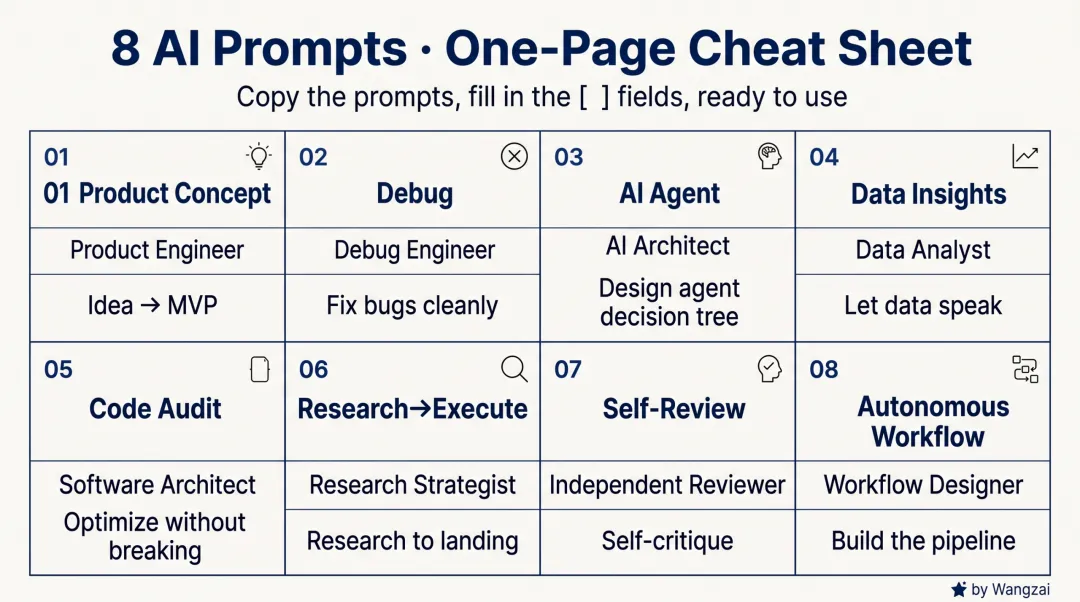
下面这 8 个 AI 提示词,是我筛选下来最顺手的"专家级模板"。
它们不是问答模板,是任务交付模板——输入需求,输出能直接落地的方案。
1. 把模糊想法变成可运行产品
中文解读:让 Gemini 扮演"高级产品工程师 + AI 架构师",不仅给你列功能清单,而是从产品概念、用户流程、数据流、边界情况到 MVP 实施计划全套输出。关键在于把"我想做个 XX"这种模糊需求,拆解成能直接开工的工程文档。
英文提示词:
Act as a senior product engineer and AI architect. I want to build[PRODUCT/APP IDEA] for [TARGET USERS] because they struggle with[PROBLEM]. The core outcome should be [DESIRED OUTCOME]. Users willprovide [INPUTS], the system should produce [OUTPUTS], essentialfeatures are [FEATURES], preferred platform is [WEB/MOBILE/DESKTOP],available APIs or tools are [TOOLS/APIs], technical limitations are[LIMITATIONS], design preference is [UI STYLE], and success will bemeasured by [SUCCESS METRIC]. First improve the product concept ifnecessary, then design the architecture, user flow, data flow, edgecases and implementation plan. Prioritize a simple MVP that feelsproduction-ready rather than an overcomplicated prototype.使用要点:把方括号 [...] 里的占位符替换成你的真实需求,越具体 Gemini 给的方案越能用。
2. 让 AI 像资深工程师一样调试你的项目
中文解读:常见用法是直接贴报错让 AI 修,结果是东改一行西改一行,越改越乱。这条提示词的精髓是先复现 → 找根因 → 给最小修复 → 验证副作用。让 Gemini 像真正的工程师那样做根因分析,而不是乱猜。
英文提示词:
Act as a senior debugging engineer. My project is [PROJECT], itsintended behavior is [EXPECTED BEHAVIOR], but the current problemis [PROBLEM]. The issue happens when [TRIGGER/CONDITION], relevantcode is [CODE], input is [INPUT], expected result is [EXPECTED RESULT],actual result is [ACTUAL RESULT], environment is [LANGUAGE/FRAMEWORK/VERSION],and errors/logs are [ERRORS/LOGS]. Do not immediately rewriteeverything. Trace the problem step by step, identify the most probableroot cause, explain why it occurs, propose the smallest reliablefix, check for side effects, and create tests that prove the fix works.使用要点:把"实际结果"和"错误日志"写得越具体越好,这是 Gemini 判断根因的关键依据。
3. 构建你的 AI 智能体
中文解读:现在大家都在聊 AI Agent,但大多数人只会写"你是 XX 助手"。这条提示词强制 Gemini 设计一整套决策逻辑 + 工具调用规则 + 记忆机制 + 容错恢复 + 人类审批点,让 Agent 真正能自主运行,而不是只能"回答问题"。
英文提示词:
Design an AI agent for [GOAL]. The agent will receive [INPUTS], use[TOOLS/APIs], access [DATA/SOURCES], follow [RULES/CONSTRAINTS],and deliver [OUTPUT]. It must decide when to research, reason, calla tool, verify information, ask for clarification, take an actionand stop. Define the agent's complete workflow, decision logic,tool-selection rules, memory requirements, validation checks,failure recovery, human-approval points and final reporting format.Optimize for accuracy, reliability, cost and speed. Include safeguardsagainst hallucinated actions and unsupported conclusions.使用要点:把"工具/API"和"数据源"列清楚,Gemini 才能给出真正可执行的决策树。
4. 把杂乱数据变成可执行决策
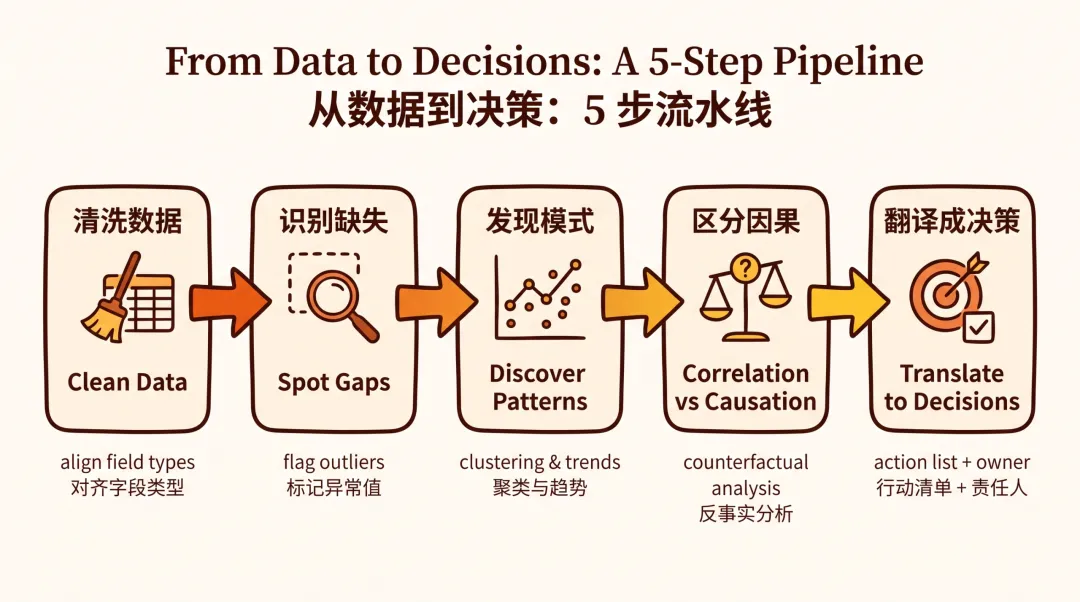
中文解读:常见误区是直接把数据扔给 AI 让它"分析一下"。结果是一堆描述性结论,没有可执行建议。这条提示词强制 Gemini 先清洗数据 → 识别缺失 → 区分相关与因果 → 翻译成决策,最后还要求它指出"哪里可能误导你"。
英文提示词:
Analyze the data I provide about [BUSINESS/PROJECT/TOPIC]. The datasetcontains [DATA TYPE], the business goal is [GOAL], the key questionsare [QUESTIONS], important variables are [VARIABLES], time period is[TIMEFRAME], and the decisions I need to make are [DECISIONS]. Cleanand structure the information first, identify missing or suspiciousdata, discover important patterns and relationships, separatecorrelation from evidence of causation, and translate the findingsinto practical decisions. Highlight anything that could make theanalysis misleading and explain what additional data would improveconfidence.使用要点:[DECISIONS] 字段是灵魂——没有它,Gemini 只会给"洞察",不会给"行动"。
5. 让代码库变得更好,但不破坏它
中文解读:程序员最怕 AI 改代码改出新坑。这条提示词让 Gemini 扮演高级架构师,先理解现有结构再做改造建议,并明确标出"哪些不能动"。最后还要给出验证方法,确保没有破坏现有功能。
英文提示词:
Act as a senior software architect reviewing [PROJECT/CODEBASE]. Theapplication currently does [CURRENT FUNCTION], users are [USERS],important components are [COMPONENTS], known problems are [PROBLEMS],expected scale is [SCALE], and future features may include [FUTUREFEATURES]. Analyze the existing structure before suggesting changes.Identify technical debt, unnecessary complexity, performancebottlenecks, security risks and maintainability issues. Then createa prioritized improvement plan showing what to change first, why itmatters, what should remain untouched and how to verify that existingfunctionality has not been broken.使用要点:[PROBLEMS] 和 [SCALE] 是关键输入,决定 Gemini 给的改造方案是激进还是保守。
6. 拿到一份"研究 → 执行"完整工作流
中文解读:很多人以为研究就是"找资料",但真正的研究产出是可执行计划。这条提示词让 Gemini 同时扮演研究员 + 战略师,每条建议都要给出证据、影响、风险、依赖和第一步,落地性极强。
英文提示词:
Act as my research and execution strategist. My objective is [OBJECTIVE],starting information is [INFORMATION], available sources are [SOURCES],tools are [TOOLS], constraints are [CONSTRAINTS], deadline is[DEADLINE], audience is [AUDIENCE], and final outcome should be[OUTCOME]. Research the problem, compare credible evidence, identifycontradictions and missing information, extract the insights thatactually matter, then convert them into a prioritized action plan.For every major recommendation, explain the evidence behind it,expected impact, risks, dependencies and the first practical step.使用要点:必填字段是 [OBJECTIVE] 和 [OUTCOME],两者缺一就会得到一堆空泛建议。
7. 让 AI 批评自己的工作
中文解读:这是 8 个提示词里最容易被低估的一个。AI 的第一版答案永远不是最终版。这条提示词让 Gemini 扮演"严格独立审稿人",主动攻击自己的答案,找出事实错误、缺漏、薄弱推理,最终只返回最强版本。
英文提示词:
Complete the task of [TASK] using the requirements below.Goal: [GOAL]. Audience: [AUDIENCE]. Inputs: [INPUTS].Constraints: [CONSTRAINTS]. Quality standard: [QUALITY STANDARD].Desired output: [OUTPUT]. After producing the first version, do notfinalize it immediately. Act as a strict independent reviewer andattack your own answer for factual errors, missing requirements,weak reasoning, unnecessary content, unclear assumptions and poorusability. Create a private improvement checklist, revise theanswer against that checklist, and return only the strongest finalversion.使用要点:搭配上面任何一条提示词用,效果翻倍——先出方案,再让 AI 自己挑刺。
8. 构建你的自主工作流
中文解读:第 8 个是压轴——把前面所有能力串成一条流水线。这条提示词让 Gemini 设计一个能自主研究、规划、执行、验证、恢复、汇报的工作流,关键设计原则是"高影响决策保留给人类,其余自动化"。
英文提示词:
Create an autonomous workflow for [GOAL].Current process: [CURRENT PROCESS].Inputs: [INPUTS].Available tools: [TOOLS/APIs].Information sources: [SOURCES].Rules: [RULES].Desired output: [OUTPUT].Quality standard: [STANDARD].Success metric: [METRIC].Human approval is required for [APPROVAL STEPS].Design the workflow so the system can research, plan, execute,verify, recover from failures and report results. Define everystage, required inputs, expected outputs, decision conditions andverification checks. Remove unnecessary manual work while keepinghumans in control of high-impact decisions.使用要点:[APPROVAL STEPS] 是这个模板的灵魂——明确告诉 AI 哪些决定必须人类拍板,避免它在重要环节擅自行动。
这 8 个提示词的共同点
回头看这 8 个提示词,会发现它们的设计有 3 个共同特征:
第一,强角色化。每个提示词都明确让 Gemini 扮演具体角色(产品工程师、调试工程师、AI 架构师、数据分析师、代码审计师、研究战略师、独立审稿人、工作流设计师),而不是空泛的"你是专家"。
第二,结构化输入槽位。所有需求都被拆成可填写的字段([GOAL] / [INPUTS] / [OUTPUT] / [CONSTRAINTS] 这种),强制你把模糊想法结构化。结构化本身就在帮你思考。
第三,可验证、可落地。每条提示词都要求 Gemini 输出"可执行的下一步"或"可验证的标准",避免出现一堆看似有道理但做不了事的空话。
把这 8 个提示词收藏起来,下次遇到对应场景,直接套用 + 填字段,你就已经跑赢了 90% 还在把 Gemini 当聊天工具的人。
💬 评论区见
这 8 个提示词,你打算先用在哪个场景?有没有已经用顺手了的版本想分享?
也欢迎在评论区聊:
• 你最常用的 AI 是哪一款?为什么选它? • 你觉得"聊天 → 干活"这条升级路径,下一步会是什么? • 第 7 条「让 AI 批评自己的工作」你试过吗?效果怎么样?
下周我会从评论里挑 3 个真实场景,把对应的提示词改造成「直接可抄」的定制版。
不抄作业,纯交流。👇