ARTICLE · 947565
“AI辅助经典英语阅读” 教材|《傲慢与偏见》(Pride and Prejudice):用经典小说学英语
“AI辅助经典英语阅读” 教材|《傲慢与偏见》(Pride and Prejudice):用经典小说学英语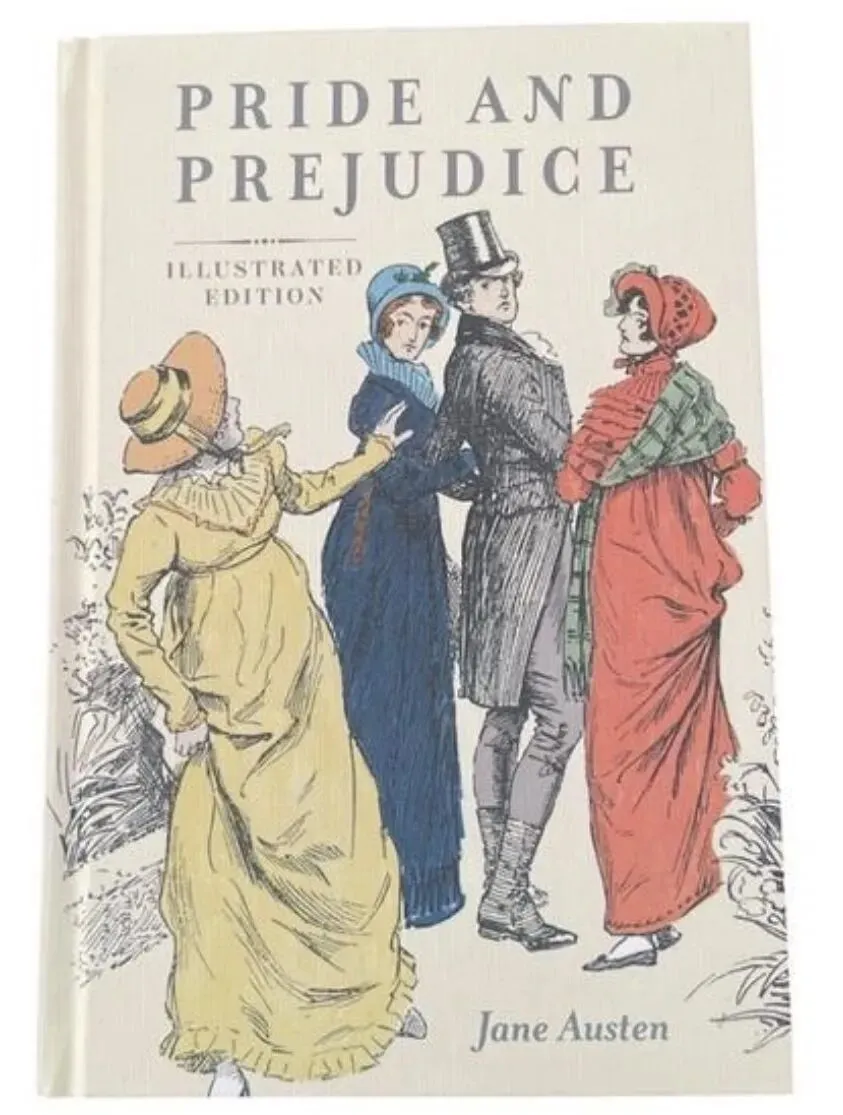
It is a truth universally acknowledged, that a single man in possession of a good fortune must be in want of a wife. However little known the feelings or views of such a man may be on his first entering a neighbourhood, this truth is so well fixed in the minds of the surrounding families, that he is considered as the rightful property of some one or other of their daughters. “My dear Mr. Bennet,” said his lady to him one day, “have you heard that Netherfield Park is let at last?” Mr. Bennet replied that he had not. “But it is,” returned she; “for Mrs. Long has just been here, and she told me all about it.” Mr. Bennet made no answer. “Do not you want to know who has taken it?” cried his wife, impatiently. “You want to tell me, and I have no objection to hearing it.” This was invitation enough. “Why, my dear, you must know, Mrs. Long says that Netherfield is taken by a young man of large fortune from the north of England; that he came down on Monday in a chaise and four to see the place, and was so much delighted with it that he agreed with Mr. Morris immediately; that he is to take possession before Michaelmas, and some of his servants are to be in the house by the end of next week.” “What is his name?” “Bingley.” “Is he married or single?” “Oh, single, my dear, to be sure! A single man of large fortune; four or five thousand a year. What a fine thing for our girls!” “How so? how can it affect them?” “My dear Mr. Bennet,” replied his wife, “how can you be so tiresome? You must know that I am thinking of his marrying one of them.” “Is that his design in settling here?” “Design? Nonsense, how can you talk so! But it is very likely that he may fall in love with one of them, and therefore you must visit him as soon as he comes.” “I see no occasion for that. You and the girls may go—or you may send them by themselves, which perhaps will be still better; for as you are as handsome as any of them, Mr. Bingley might like you the best of the party.” “My dear, you flatter me. I certainly have had my share of beauty, but I do not pretend to be anything extraordinary now. When a woman has five grown-up daughters, she ought to give over thinking of her own beauty.” “In such cases, a woman has not often much beauty to think of.” “But, my dear, you must indeed go and see Mr. Bingley when he comes into the neighbourhood.” “It is more than I engage for, I assure you.” “But consider your daughters. Only think what an establishment it would be for one of them. Sir William and Lady Lucas are determined to go, merely on that account; for in general, you know, they visit no new comers. Indeed you must go, for it will be impossible for us to visit him, if you do not.” “You are over scrupulous, surely. I dare say Mr. Bingley will be very glad to see you; and I will send a few lines by you to assure him of my hearty consent to his marrying whichever he chooses of the girls—though I must throw in a good word for my little Lizzy.” “I desire you will do no such thing. Lizzy is not a bit better than the others: and I am sure she is not half so handsome as Jane, nor half so good-humoured as Lydia. But you are always giving her the preference.” “They have none of them much to recommend them,” replied he: “they are all silly and ignorant like other girls; but Lizzy has something more of quickness than her sisters.” “Mr. Bennet, how can you abuse your own children in such a way? You take delight in vexing me. You have no compassion on my poor nerves.” “You mistake me, my dear. I have a high respect for your nerves. They are my old friends. I have heard you mention them with consideration these twenty years at least.” “Ah, you do not know what I suffer.” “But I hope you will get over it, and live to see many young men of four thousand a year come into the neighbourhood.” “It will be no use to us, if twenty such should come, since you will not visit them.” “Depend upon it, my dear, that when there are twenty, I will visit them all.” Mr. Bennet was so odd a mixture of quick parts, sarcastic humour, reserve, and caprice, that the experience of three-and-twenty years had been insufficient to make his wife understand his character. Her mind was less difficult to develop. She was a woman of mean understanding, little information, and uncertain temper. When she was discontented, she fancied herself nervous. The business of her life was to get her daughters married: its solace was visiting and news. ⸻ It is a truth universally acknowledged, that a single man in possession of a good fortune must be in want of a wife. 世人普遍承认这样一个道理:一个拥有丰厚财产的单身男人,一定需要一位妻子。 这里的语气其实非常幽默。 Austen 并不是认真宣布一个“宇宙真理”,而是在讽刺当时社会的一种普遍观念: 有钱的单身男人出现了——周围家庭首先想到的不是“他是什么样的人”,而是“他可以娶谁家的女儿”。 ⸻ he is considered as the rightful property of some one or other of their daughters. 他会被周围的家庭视为某个女儿“理所当然的归属对象”。 rightful property 字面意思是“合法的财产”,这里当然不是说男人真的属于某个女人,而是 Austen 用夸张、讽刺的方式表现婚姻市场。 这句话非常值得学习,因为它体现了 Austen 的核心写作方式: 一本正经地说荒谬的事情。 ⸻ Mrs. Bennet 告诉丈夫: “Have you heard that Netherfield Park is let at last?” “你听说了吗?Netherfield Park 终于租出去了?” 这里的 let 是英国英语中的传统用法: let a house = 出租房屋 今天英国房地产广告中仍然可以看到: To Let 即: 出租 ⸻ Mrs. Bennet 继续说: a young man of large fortune 一个非常有钱的年轻人。 他的年收入: four or five thousand a year 每年四五千英镑。 对当时的英国社会而言,这是相当可观的财富。 于是 Mrs. Bennet 马上想到: “What a fine thing for our girls!” “这对我们的女儿们来说可真是件大好事!” 为什么? 因为她马上想到: 他可以娶我的女儿。 ⸻ Mrs. Bennet: You must know that I am thinking of his marrying one of them. 你应该知道,我是在想他可以娶她们中的一个。 Mr. Bennet: Is that his design in settling here? “这就是他搬到这里来的计划吗?” Mrs. Bennet: Design? Nonsense! “计划?胡说!” 这里的 Nonsense! 非常实用。 意思可以是: • 胡说! • 别瞎说! • 哪有这种事! • 荒唐! ⸻ Mr. Bennet: Mr. Bingley might like you the best of the party. “说不定 Bingley 先生反而最喜欢你。” Mrs. Bennet 说自己年轻时很漂亮,但现在有了五个成年女儿,不应该再考虑自己的美貌。 Mr. Bennet 回答: In such cases, a woman has not often much beauty to think of. “在这种情况下,一个女人通常也没什么美貌可想的。” 这是典型的 dry humour(冷幽默)。 ⸻ Mrs. Bennet: You have no compassion on my poor nerves. “你一点也不体谅我可怜的神经。” Mr. Bennet: I have a high respect for your nerves. They are my old friends. “我非常尊重你的神经。它们可是我的老朋友了。” 这是本章最经典的夫妻斗嘴之一。 实际上,Mr. Bennet 并不是在认真安慰妻子。 他是在讽刺她经常把自己的情绪称作“nerves”。 ⸻ universally 普遍地 universally acknowledged acknowledge 承认 I acknowledge that he is right. fortune 财富;巨额财产 He inherited a fortune. neighbourhood 社区;附近地区 people in the neighbourhood property 财产 private property rightful 理所当然的;合法的 rightful owner let 出租 The house is let. large fortune 巨额财富 a man of large fortune take possession 接管;入住;占有 take possession of the house single 单身的 He is still single. occasion 必要性;场合 There is no occasion for that. fall in love with 爱上 She fell in love with him. flatter 奉承;恭维 You’re flattering me. extraordinary 非凡的 an extraordinary talent grown-up 成年的 grown-up daughters handsome 英俊的 a handsome young man good-humoured 脾气好的 a good-humoured person preference 偏爱;优先选择 give someone preference quickness 机敏;反应快 quickness of mind vex 使烦恼;惹恼 You are vexing me. compassion 同情;怜悯 show compassion sarcastic 讽刺的 a sarcastic remark reserve 矜持;拘谨 He spoke with reserve. caprice 任性;反复无常 a sudden caprice discontented 不满的 feel discontented solace 安慰;慰藉 Music is a solace. ⸻ I have no objection to hearing it. 我不介意听听。 现代英语非常实用: I have no objection to working late. 我不反对加班。 I have no objection to that. 我对此没有意见。 ⸻ What a fine thing for our girls! “这对我们的女儿们来说真是太好了!” 现代口语可以改成: What a great thing! What a wonderful opportunity! ⸻ How so? 什么意思? 为什么这么说? 这是非常地道的表达。 例如: A: This job isn’t right for me.
B: How so? A:这份工作不适合我。
B:为什么这么说? ⸻ Nonsense! 别胡说! 荒唐! 得了吧! 根据语气不同,可以很强,也可以只是轻微反驳。 ⸻ I dare say Mr. Bingley will be very glad to see you. 我想 Bingley 先生一定会很高兴见到你的。 I dare say… 是比较传统、英式的表达。 现代口语可以理解成: I suppose… I’d imagine… I’m sure… ⸻ Depend upon it, my dear… 你尽管放心…… 相信我…… 这是 Austen 时代非常典型的表达。 现代英语中不常用于普通日常对话,但阅读文学作品时非常值得认识。 ⸻ 《Pride and Prejudice》的故事发生在19世纪初的英国乡绅社会。 当时女性的经济独立程度远低于今天。 Bennet 家庭有五个女儿,而家庭财产继承制度又给她们带来潜在的经济压力。 因此,对 Mrs. Bennet 来说: 一个有钱的单身男人搬到附近 = 一个潜在的婚姻机会。 所以本章表面上是在讲: Netherfield Park 租给了 Mr. Bingley。 实际上是在讲: 婚姻市场开始启动。 这也是为什么第一句话如此重要。 Austen 用一句看似普通的“真理”,实际上讽刺了整个社会: “有钱男人需要妻子。” 真正的潜台词却是: “有钱男人就是附近年轻姑娘的潜在丈夫。” 这也是《Pride and Prejudice》的第一层主题: Money → Marriage → Social Status 金钱 → 婚姻 → 社会地位。 ⸻ 把 Austen 的文学英语转换成今天可以使用的英语。 情景一:听到附近来了一个有钱人 A: Did you hear that a wealthy young man has moved into the neighbourhood? B: Really? Is he single? A: Apparently, yes. B: Interesting! ⸻ 情景二:讨论别人是不是自己的类型 A: Do you think he’s your type? B: I’m not sure. A: Why not? B: He seems a little too serious for me. ⸻ 情景三:第一次见面后的评价 A: What did you think of him? B: He was handsome and polite. A: Anything else? B: Well, he seemed a little reserved. ⸻ 下面可以直接复制给 ChatGPT,作为英语口语 Agent 使用。 Prompt You are my English conversation partner. Let’s role-play a conversation inspired by Chapter 1 of Pride and Prejudice. You are Mr. Bennet, and I am Mrs. Bennet. We have just heard that a wealthy young single man named Mr. Bingley has rented Netherfield Park. Speak in modern natural English, not old-fashioned English. Ask me questions one at a time. After every answer I give: 1. Correct my grammar. 2. Suggest a more natural expression. 3. Give me one useful vocabulary word. 4. Continue the conversation. Keep the conversation suitable for IELTS Speaking practice. 第一轮示范 AI / Mr. Bennet: My dear Mrs. Bennet, I hear that a wealthy young man has moved into Netherfield Park. What do you think about that? 你可以回答: I’m very excited because he is single and apparently quite wealthy. I hope one of our daughters will marry him. AI接下来可以纠正: More natural:
I’m very excited because he’s single and apparently quite wealthy. I hope one of our daughters will end up marrying him. ⸻ 1. Do you think money is important when choosing a marriage partner? 你认为选择结婚对象时金钱重要吗? 2. What qualities do you value most in a partner? 你最看重伴侣的哪些品质? 3. Do you think first impressions are important? 你认为第一印象重要吗? 4. Have you ever changed your opinion about someone after getting to know them better? 你有没有在深入了解一个人之后改变过对他的看法? 5. Do people in your country care about social status? 你所在的国家,人们是否重视社会地位? ⸻ Describe a person you had a bad first impression of but later changed your opinion about. You should say: • who this person was • when you first met him or her • why you had a bad first impression • and explain why you changed your opinion My first impression of him was completely wrong. 我对他的第一印象完全错了。 I judged him too quickly. 我太快对他下了判断。 As I got to know him better, I realized that… 随着我越来越了解他,我发现…… Appearances can be misleading. 外表可能会误导人。 You can’t really judge a person based on a first impression. 你不能仅凭第一印象判断一个人。 ⸻ 1. It is a truth universally acknowledged… 这是一个广为人知的道理…… 2. He is considered as the rightful property of… 他被认为是……理所当然的对象。 3. I have no objection to hearing it. 我不介意听听。 4. What a fine thing for our girls! 这对我们的女儿们来说真是件好事! 5. How so? 为什么这么说? 6. Nonsense! 胡说!/ 得了吧! 7. You flatter me. 你过奖了。/ 你真会恭维人。 8. I see no occasion for that. 我看没有这个必要。 9. You have no compassion on my poor nerves. 你一点都不体谅我可怜的神经。 10. Depend upon it. 相信我。/ 尽管放心。 ⸻ 如果只从第一章学习英语,不要试图把所有生词都背下来。 建议抓住 5个核心能力: 理解 Austen 的长句结构。 重点掌握: fortune
neighbourhood
property
occasion
preference
compassion
sarcastic 重点掌握: How so?
Nonsense!
You flatter me.
I have no objection to…
I dare say… 把19世纪文学英语转换成21世纪自然英语。 例如: How so? ↓ Why do you say that? ⸻ 把小说主题转化成现代社会问题: Money and marriage
First impressions
Social status
Choosing a partner
Judging people 这正是“用经典小说学英语”的价值:你不是只学一本小说,而是在用文学作品训练现代英语思维。 ⸻ Don’t judge a person too quickly. 不要太快判断一个人。 而这句话,也正是整部 Pride and Prejudice 最重要的英语学习主题之一。