ARTICLE · 985970
初中英语阅读背单词-蝙蝠为什么倒挂着睡觉?
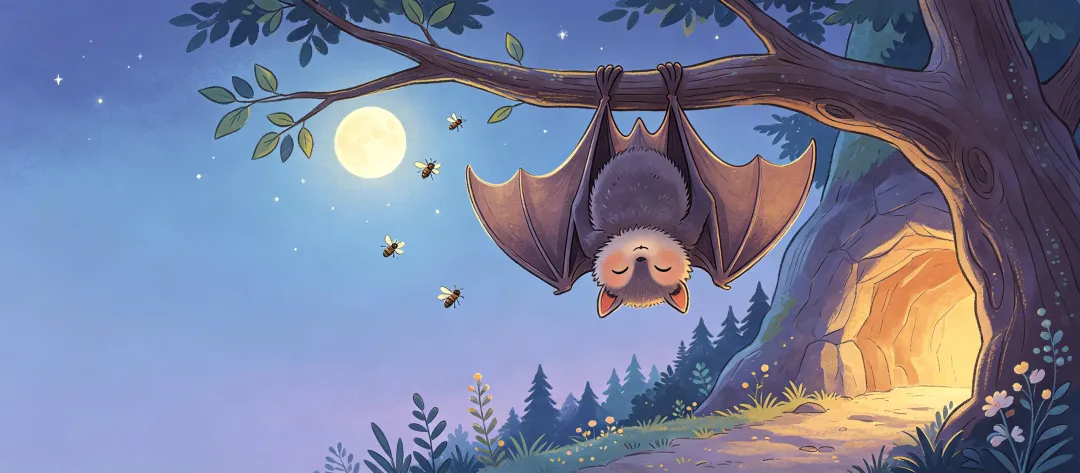
Many people think bats are strange because they always sleep upside down. They hang from tree branches or cave ceilings with their heads facing the ground. This weird sleeping habit looks tiring to humans, but it is the smartest and most comfortable way for bats to rest. It is not a strange hobby, but a special survival skill formed after long-term evolution.
很多人觉得蝙蝠很奇怪,因为它们总是倒挂着睡觉。它们倒挂在树枝或洞穴顶部,头部朝向地面。这种奇特的睡姿在人类看来很累,但对蝙蝠而言,这是最聪明、最舒适的休息方式。这并不是怪异的癖好,而是它们经过长期进化形成的特殊生存本领。
The biggest reason is their special body structure. Bats are the only mammals that can truly fly. Unlike birds with strong wings and hollow bones, bats have thin wing membranes and weak hind legs. They can hardly stand or walk on the ground. Once they land on flat ground, they cannot jump or rise up to fly. This makes them easy targets for natural enemies.
最主要的原因是它们特殊的身体构造。蝙蝠是唯一真正会飞行的哺乳动物。它们不像鸟类拥有强健的翅膀和中空的骨骼,蝙蝠的翼膜单薄、后腿弱小,几乎无法在地面站立和行走。一旦落在平地,它们无法起跳升空,很容易成为天敌的猎物。
Sleeping upside down solves this problem perfectly. When bats hang in the air, they can fly at any time. As soon as they let go of the branch, gravity pulls their bodies down. They gain flying speed instantly and escape quickly when danger comes. This quick take-off ability greatly improves their chance of survival in the wild.
倒挂睡觉完美解决了这个难题。蝙蝠悬空倒挂时,随时都能起飞。只要松开树枝,重力就会带动身体下坠,瞬间获得飞行速度,遇到危险就能快速逃离。这种极速起飞的能力,大大提高了它们在野外的生存几率。
Another amazing design is their claw locking system. Bats’ feet have special tendons. When their bodies hang down by gravity, the tendons will tighten automatically and lock their claws firmly. Surprisingly, this process needs no muscle power at all. Bats can relax completely while hanging, and they will not fall off even when they are dead asleep.
还有一个神奇的身体设计是它们的爪子锁定机制。蝙蝠的脚部有特殊的肌腱,当身体受重力下坠时,肌腱会自动收紧,牢牢锁住爪子。令人惊奇的是,这个过程完全不需要消耗肌肉力量。蝙蝠倒挂时可以彻底放松,就算熟睡也绝对不会掉落。
You may wonder why bats never feel dizzy or congested when hanging upside down. The answer lies in their unique blood circulation system. Their blood vessels have tiny valves that control blood flow. These valves can prevent blood from rushing to the head, so bats will never feel uncomfortable even after hanging all day long.
你可能会好奇,蝙蝠倒挂为什么不会头晕、脑充血?答案藏在它们独特的血液循环系统里。它们的血管中长有可以控制血流的微小瓣膜,这些瓣膜能阻止血液大量涌向头部,所以蝙蝠就算倒挂一整天,也不会产生任何不适感。
sleeping upside down is a perfect adaptation to nature. It helps bats save energy, take off quickly and stay safe. Every strange habit of animals is a precious gift from evolution, helping them live better in nature.
倒挂睡觉是蝙蝠适应自然的完美方式。这一习性帮助蝙蝠节省体力、快速起飞、规避危险。动物每一个看似怪异的习惯,都是进化赋予的珍贵本领,助力它们在自然界更好地生存。
一、重点核心词组(9个,初中高频)
1. upside down 颠倒,倒挂
2. survival skill 生存技能
3. body structure 身体构造
4. natural enemy 天敌
5. take off 起飞;离开
6. gain speed 获得速度
7. tendons and claws 肌腱和爪子
8. blood circulation 血液循环
9. adapt to nature 适应自然
二、重点核心语法(8个,初中必考)
1. 定语从句:引导词that/which修饰名词,文中“the only mammals that can truly fly”,限定先行词范围,是初中核心句式。
2.方式状语从句:unlike引导对比状语,表“与……不同”,用于事物对比描述。
3. 时间状语从句:when引导从句表时间,遵循“主将从现”基础规则,文中多用于场景描述。
4. 被动语态:be formed / be locked 等被动结构,客观阐述生物特性,科普文高频用法。
5. 不定式作目的状语:to do 结构表动作目的,如“improve their chance of survival”。
6. 宾语从句:why/what引导的名词性从句,作动词wonder、know的宾语。
7. 情态动词用法:can/may/will 表能力、推测和客观趋势,贴合科普说明语境。
8. 分词作状语:hanging、letting go 等现在分词作伴随状语,简化句式、让行文更流畅。