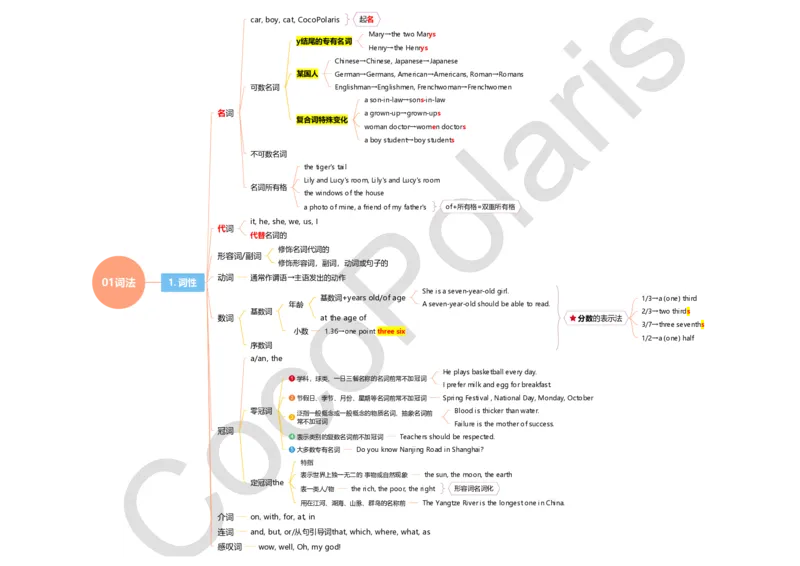
car, boy, cat, CocoPolaris 起名
Mary→the two Marys
y结尾的专有名词
Henry→the Henrys
Chinese→Chinese, Japanese→Japanese
某国人 German→Germans, American→Americans, Roman→Romans
可数名词 Englishman→Englishmen, Frenchwoman→Frenchwomen
a son-in-law→sons-in-law
名词 a grown-up→grown-ups
复合词特殊变化
woman doctor→women doctors
a boy student→boy students
不可数名词
the tiger's tail
Lily and Lucy's room, Lily's and Lucy's room
名词所有格
the windows of the house
a photo of mine, a friend of my father's of+所有格=双重所有格
it, he, she, we, us, I
代词
代替名词的
修饰名词代词的
形容词/副词
修饰形容词,副词,动词或句子的
动词 通常作谓语→主语发出的动作
01词法 1.词性
She is a seven-year-old girl.
基数词+years old/of age 1/3→a (one) third
年龄 A seven-year-old should be able to read.
基数词 2/3→two thirds
数词 at the age of 分数的表示法
3/7→three sevenths
小数 1.36→one point three six
1/2→a (one) half
序数词
a/an, the
He plays basketball every day.
学科,球类,一日三餐名称的名词前常不加冠词
I prefer milk and egg for breakfast.
节假日、季节、月份、星期等名词前常不加冠词 Spring Festival , National Day, Monday, October
零冠词 泛指一般概念或一般概念的物质名词、抽象名词前 Blood is thicker than water.
常不加冠词 Failure is the mother of success.
冠词
表示类别的复数名词前不加冠词 Teachers should be respected.
大多数专有名词 Do you know Nanjing Road in Shanghai?
特指
表示世界上独一无二的 事物或自然现象 the sun, the moon, the earth
定冠词the
表一类人/物 the rich, the poor, the right 形容词名词化
用在江河、湖海、山脉、群岛的名称前 The Yangtze River is the longest one in China.
介词 on, with, for, at, in
连词 and, but, or/从句引导词that, which, where, what, as
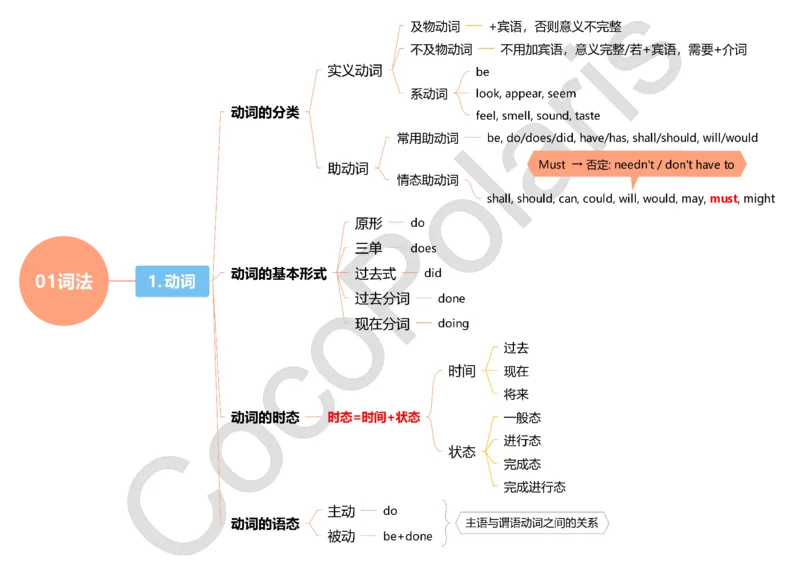
感叹词 wow, well, Oh, my god!及物动词 +宾语,否则意义不完整
不用加宾语,意义完整/若+宾语,需要+介词
be, do/does/did, have/has, shall/should, will/would
Must → 否定: needn't / don't have to
shall, should, can, could, will, would, may, must, might
01词法名词
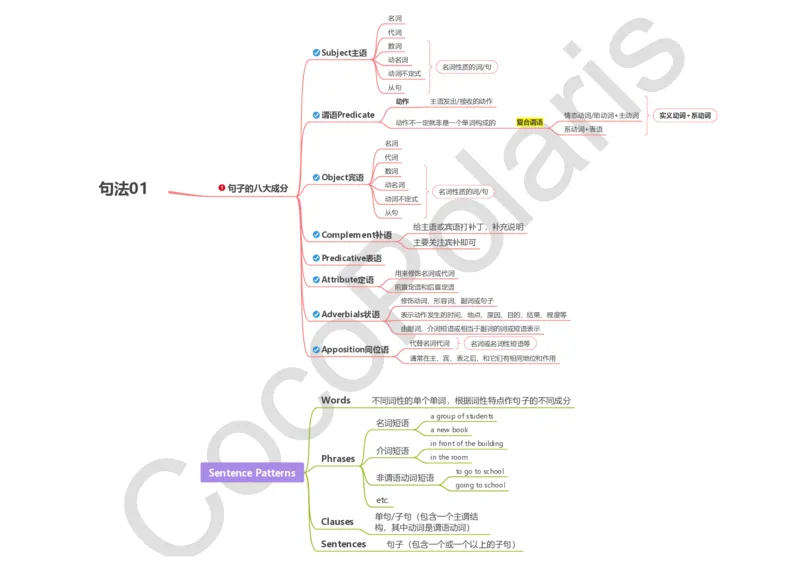
代词
数词
Subject主语
动名词
名词性质的词/句
动词不定式
从句
动作 主语发出/接收的动作
谓语Predicate 情态动词/助动词+主动词 实义动词+系动词
动作不一定就非是一个单词构成的 复合谓语
系动词+表语
名词
代词
数词
Object宾语
句法01 句子的八大成分 动名词
名词性质的词/句
动词不定式
从句
给主语或宾语打补丁,补充说明
Complement补语
主要关注宾补即可
Predicative表语
用来修饰名词或代词
Attribute定语
前置定语和后置定语
修饰动词、形容词、副词或句子
Adverbials状语 表示动作发生的时间、地点、原因、目的、结果、程度等
由副词、介词短语或相当于副词的词或短语表示
代替名词代词 名词或名词性短语等
Apposition同位语
通常在主、宾、表之后,和它们有相同地位和作用
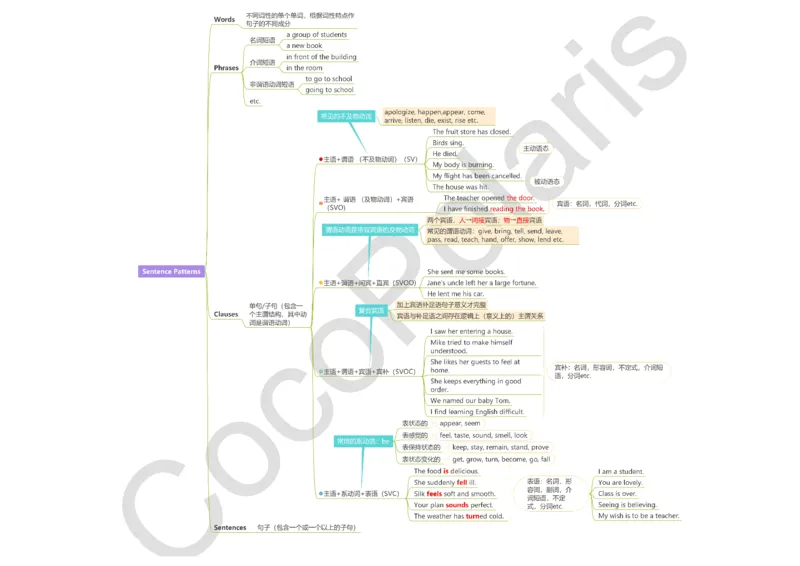
Words 不同词性的单个单词,根据词性特点作句子的不同成分
a group of students
名词短语
a new book
in front of the building
介词短语
Phrases in the room
Sentence Patterns to go to school
非谓语动词短语
going to school
etc.
单句/子句(包含一个主谓结
Clauses
构,其中动词是谓语动词)
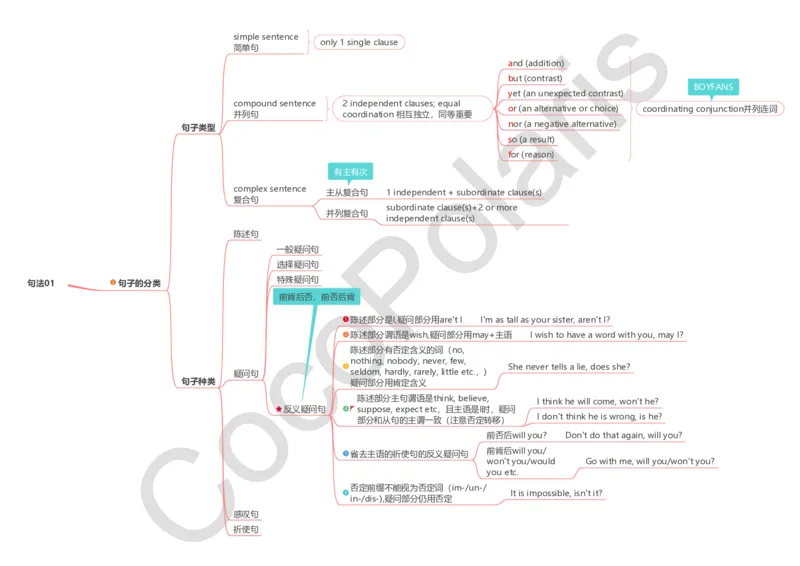
Sentences 句子(包含一个或一个以上的子句)simple sentence
only 1 single clause
简单句
and (addition)
but (contrast)
BOYFANS
yet (an unexpected contrast)
compound sentence 2 independent clauses; equal
or (an alternative or choice) coordinating conjunction并列连词
并列句 coordination 相互独立,同等重要
nor (a negative alternative)
句子类型
so (a result)
for (reason)
有主有次
complex sentence
主从复合句 1 independent + subordinate clause(s)
复合句
subordinate clause(s)+2 or more
并列复合句
independent clause(s)
陈述句
一般疑问句
选择疑问句
特殊疑问句
句法01 句子的分类
前肯后否,前否后肯
陈述部分是I,疑问部分用are't I I'm as tall as your sister, aren't I?
陈述部分谓语是wish,疑问部分用may+主语 I wish to have a word with you, may I?
陈述部分有否定含义的词(no,
nothing, nobody, never, few,
She never tells a lie, does she?
疑问句 seldom, hardly, rarely, little etc.,)
句子种类 疑问部分用肯定含义
陈述部分主句谓语是think, believe,
I think he will come, won't he?
反义疑问句 suppose, expect etc,且主语是I时,疑问
I don't think he is wrong, is he?
部分和从句的主谓一致(注意否定转移)
前否后will you? Don't do that again, will you?
前肯后will you/
省去主语的祈使句的反义疑问句
won't you/would Go with me, will you/won't you?
you etc.
否定前缀不能视为否定词(im-/un-/
It is impossible, isn't it?
in-/dis-),疑问部分仍用否定
感叹句
祈使句不同词性的单个单词,根据词性特点作
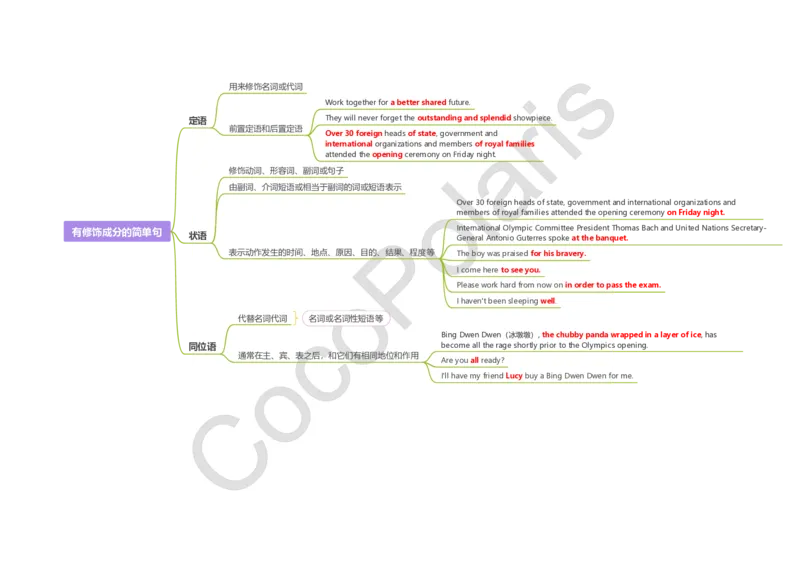
Words用来修饰名词或代词
Work together for a better shared future.
定语 They will never forget the outstanding and splendid showpiece.
前置定语和后置定语
Over 30 foreign heads of state, government and
international organizations and members of royal families
attended the opening ceremony on Friday night.
修饰动词、形容词、副词或句子
由副词、介词短语或相当于副词的词或短语表示
Over 30 foreign heads of state, government and international organizations and
members of royal families attended the opening ceremony on Friday night.
International Olympic Committee President Thomas Bach and United Nations Secretary-
有修饰成分的简单句
状语
General Antonio Guterres spoke at the banquet.
表示动作发生的时间、地点、原因、目的、结果、程度等 The boy was praised for his bravery.
I come here to see you.
Please work hard from now on in order to pass the exam.
I haven't been sleeping well.
代替名词代词 名词或名词性短语等
Bing Dwen Dwen(冰墩墩), the chubby panda wrapped in a layer of ice, has
同位语 become all the rage shortly prior to the Olympics opening.
通常在主、宾、表之后,和它们有相同地位和作用
Are you all ready?
I'll have my friend Lucy buy a Bing Dwen Dwen for me.先行词
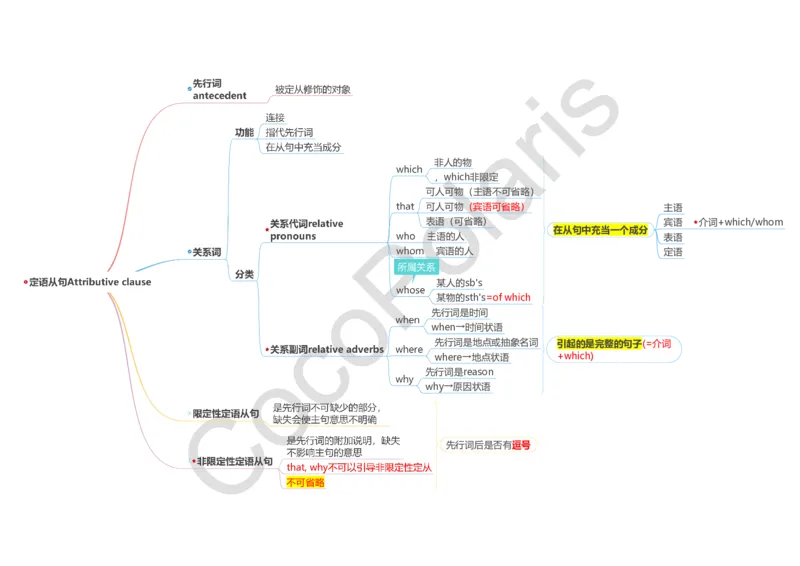
被定从修饰的对象
非人的物
,which非限定
可人可物(主语不可省略)
可人可物(宾语可省略) 主语
表语(可省略) 宾语 介词+which/whom
在从句中充当一个成分
主语的人 表语
宾语的人 定语
所属关系
某人的sb's
某物的sth's=of which
先行词是时间
when→时间状语
先行词是地点或抽象名词 引起的是完整的句子(=介词
where→地点状语 +which)
先行词是reason
why→原因状语
先行词后是否有逗号
that, why不可以引导非限定性定从
不可省略构成 连词+简单句
地点状语从句 where/wherever
谓语动词是短暂性或延续性的
when
动作同时/先后发生
谓语动词是延续性的
while
when/while/as/before 动作同时发生,从句通常为be doing的状态
动作同时发生(一边..一边,随着...)
as
一先一后
before 主句动作发生在从句之前
主句动词是延续性动词
until/till
否定句时,主句动词是非延续动词,从句为肯定句式
自...以来/以后
时间状语从句
从句谓语动词一般用过去时
since 引导的谓语动词可以是延续性也可是短暂性的
主句谓语动词用现在完成时
It is...since... 主句多用一般现在时
从句谓语动词一般用过去时,主语谓语动
状语从句Adverbial clause 词用过去完成时
by the time 到...的时候
种类 从句谓语动词一般用现在时,主句谓语动
词用将来完成时
the+"词汇意义非常明确的“时间名词=连词
as soon as一...就... the moment/the minute/the second/the instant
directly/immediately/instantly
原因状语从句 because/since/as...
目的状语从句 so that/in order that...
so...that.../such...that.../so that
结果状语从句
so+adj./adv.; such+n
as/as if/as though, like...
方式状语从句
as if/as though,可接陈述语气或虚拟语气
as+adj./adv.+as.../than, the more...the more...
比较状语从句
adj./adv.比较级+than...
although/though/even though/even if...
让步状语从句
even though强调意味,even if假设或虚拟的情况
if/unless...
条件状语从句
主将从现that无实际意义,不作成分
从属连词 that, whether whether不作成分,表“是否” 不缺成分
不能省略
连接词 作主语
who, what, which, whatever,
连接代词 作宾语 从句缺成分
主语从句 whichever, whoever
作定语
主从之间缺意思
介词宾语从句的that不能省
it作形式宾语时,that不能省
主句谓语动词带两个或以上宾语从句时,可
名词性从句Noun clause
省第一个that,其他不能省
whether...or not/whether to do
强调任意选择时,whether...or...
whether引导宾语从句,但为了强调放句首 不能用if替代
有if引导条件句时,用whether
容易产生歧义时,用whether
whether做介词/discuss宾语时
宾语从句为否定句时,只能用if
主句用过去时,从句是真理时,用一般现在时that 无意义,口语中可省略
从属连词 whether“是否” 一般疑问句用whether引导不用if
表语从句
连接词 as though (if), because
Predicative clause
连接代词 who, what, which, whatever, whichever, whoever
连接副词 when, where, how, why
对抽象名词进行解释说明,与先行词是同位关系
news, idea, fact, question, doubt, thought, hope, rumor,
常见的抽象名词
promise, suggestion, word(消息), message, possibility...
名词性从句Noun clause
从属连词 that, whether
连接词 连接代词 who, what, whose...
同位语从句 连接副词 when, where, why...
Appositive clause 同位关系
与先行词的关系
修饰关系
that是连词,不作任何成分
同位语从句v.s.定语从句 that
that是关系代词,充当成分
形容词性从句
从句范畴
名词性从句主语
特殊结构
I come across such a
Not until 12 o'clock did he come back.
I think it possible.
are we
强调“只有在那种不太可能的时候才会”
需要把强调部分(名词,形容词,副说话人认为不可能发生的
情况就用虚拟语气
真实 正常时态
从句 am/is/are → were; do → did
现在 - 过去
主句 will → would
am to/is to/are to → were to;
从句
将来 - 过去将来 shall do - should do
结构 主句中也可用could, might代替
虚拟 往后推一个时态 主句 will → would
would, should
was/were → had been;
从句
过去 - 过去完成 did → had done
虚拟语气 主句 would do → would have done
错综时间条件句 if条件从句和主句动作发生的时间不一致
If I know English, I will go abroad to If I knew English, I would go abroad to
虚拟→
further my study. further my study.
If I am to do it, I shall do it at once. 虚拟→ If I were to do it, I should do it at once.
If I had had enough time, I might have
If I had enough time, I might do it better. 虚拟→
例句 done it better.
If it hadn't rained so much, we would have a
good harvest in autumn.
If any of you had been honest with me, maybe
Eddie would still be here.
特殊结构
不定式、动名词、从句作
主语时
语法一致 Neither of my sisters likes sports. 谓语动词用单数
one, every, each,
Many a student takes a walk on
neither, many a...
campus after dinner.
以-s结尾的表示疾病,游
戏,国名、学科名词作主 Darts is basically an easy game. 单数
语
群岛,山脉,海峡,瀑布 The West Indies are commonly
复数
等地理名词作主语 divided into two parts.
The family is the tiniest cell of the society.
主谓一致 the+形容词/集体名词 看情况
意义一致 The family are all fond of football.
Twenty years stands for a long
“总量”=单数
表示时间,金钱,距离, period in one's life.
面积等作主语时 Four weeks are often regarded as
“有多少数量”=复数
one month.
and连接的两个主语意义 War and peace is a constant theme
上指同一个人或概念时 in history.
Either I or they are responsible for
either...or...neither...nor...not the result of the matter.
就近原则
only...but also...not...but... Neither the unkind words nor the unfriendly
attitude has caused me any distress.To see is to believe.
I want to walk.
He asked me to do the work with him.
He is looking for a room to live in.
to do
I came here to see you.
I am glad to be talking with you.
I intended to have telephoned you, but I forgot to.
The house needs to be repaired.
Reading is my hobby.
I like reading.
非谓语可以做句子中的任何成分,除了谓语动词
My favorite sport is swimming.
I regret having done such a thing.
No one can avoid being influenced by ads.
动名词doing
动名词的复合结构=名词所有格/形
容词性物主代词+动名词
一个句子中只能有一个谓语动作,其他动作出现
非谓语动词
He forgot about my asking him to 的形式只能用非谓语
动名词的逻辑主语是代词时,一般使 attend my wife's birthday party.
用形容词性的物主代词 I object to his making private
calls on the office phone.
The film was really moving.
a developing country
特殊结构 非谓语动词 vs 独立主格
I saw the boy climbing the tree.
现在分词doing
Being a clever boy, he studies very well.
Having waited for a long time, he was
asked into the office.
分词
They were excited on hearing the news.
a developed country
He had his money stolen.
过去分词done
If applied in agriculture, the machines will save
farmers much labor.
I heard the noise of furniture being moved upstairs.
Nobody to come later, we will not continue to wait.
名词(代词)+不定式 Many trees and flowers to be planted, our school
will look more beautiful.
状语部分有一个新的主语,和主句 There being no bus, we had to walk home.
不一样。 名词(代词)+分词
The test finished, we begin our holiday.
独立主格 相当于自带主语的状语从句 结构形式 He sat in the front row, his mouth half open.
名词(代词)+形容词/副词
结构不与主句发生句法上的联系 The meeting over, they all went home.
没有真正的主语和谓语动词,但在逻辑上 名词(代词)+名词 Two hundred people died in the accident, many of them children.
构成主谓或主表关系
名词(代词)+介词短语 A girl came in, book in hand.
He stood at the door, with a computer in his hand.
with/without+名词(代词)+宾补
The girl hid her box without anyone knowing where it was.