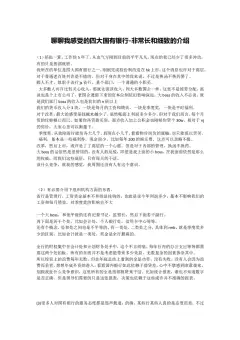
01.PESTELModel
词汇:
Model:模型
Macroenvironment: 宏观环境
Political:政治的
Taxationpolicy:税收政策
新
Governmentstability:政府稳定性
Foreigntrade:外贸
最
Regulation:法规
Economic:经济的
Environment:环境 网
Interestrate:利率
Inflation:通货膨胀
全
Businesscycle:商业周期;经济周期
Unemployment:失业
Disposableincome:可支配收入; ,
disposable:可处置的
Social:社会的
院
Culture:文化;Cultural,文化的
Demographics:人口统计资料
Mobility:流动性;移动性; 学
Incomedistribution:收入分配
Lifestyle:生活方式
计
Attitude:态度
attitudeto:…的态度
会
Leisure:闲暇,休闲;
Consumerism:消费主义(一种以消费来刺激经济的主张;亦指专心于或倾向于购买
消费品)
计
Technological:技术的,科技的
Influence:(及物动词)影响
审
Governmentspending:政府支出
R&D:ResearchandDevelopment研究与发展
:Focus:聚焦;焦点
Obsolescence:过时;
rateofobsolescence:淘汰速度,更新换代速度
B
Ecological:生态的,生态学的
T
Monopoly:垄断
Legislation:立法
Environmentprotection law:环境保护法
ThePESTELmodelstudiesthemacroenvironmentinthefollowingaspects:PESTEL
模型主要从以下几方面来研究宏观环境:
1. Political. The political environment includes taxation policy, government stability
andforeigntraderegulations.政治环境。政治环境包括税收政策、政府稳定性和外贸法规等
因素。2. Economic. The economic environment includes interest rates, inflation, business
cycles,unemployment,disposableincomeandenergyavailabilityandcost. 经济环境。经
济环境包括利率、通货膨胀水平、商业周期、失业水平、可支配收入和能源供应及成本等因
素。
3. Social. The social/cultural environment includes population demographics, social
mobility, income distribution, lifestyle changes, attitudes to work and leisure, levels新of
educationandconsumerism.社会文化环境。社会文化环境包括人口统计情况、社会流动性、
收入分配、生活方式变迁、工作休闲态度、教育水平和消费理念等因素
最
4. Technological. The technological environment is influenced by government
spending on research, new discoveries and development, government and industry focus
oftechnologicaleffort, speedof technologicaltransfer and rates ofobs网olescence.
技术环境。科技环境通常受政府在研发方面支出水平的影响,同时也受政府、行业确定
的科技发展方向以及技术转移及淘汰速度的影响。
全
5. Ecological/environmental. The ecological environment, sometimes just referred to
as ‘the environment’, considers ways in which the organization can produce its goods or
serviceswiththeminimumenvironmentaldamage. 生,态环境。生态环境通常就是指我们生
活的这个环境,在此通常要考虑的是组织要以对环境产生最小破坏的方式来生产商品或提供
劳务。
院
6. Legal.Thelegal environmentcovers influences suchas taxation,employment law,
monopoly legislation and environmental protection laws.法律环境。法律环境通常考虑税
法、劳动法、垄断法、环境保护法等法学律对组织的影响。
计
会
02. 行业生命周期IndustryLifeCycle
词汇:
Introduc计tion,growth,maturityanddecline:起步/成长/成熟/衰退期
Characteristics:特色,特点
Prospective:(名词)预期,展望(形容词)未来的,预期的
审
Feature:特征
Position:(动词)定位
:Awareness:意识,知道,认识
Marketgrowthrate:市场增长率
Patent:专利
B
Intensive:集中的,加强的
T
Well-informed:消息灵通的,见多识广的
Shake-out:摇动,抖动,动荡
Industryconcentration:行业集中
Marketsegmentation:市场细分
Grab:(动词)攫取,抓住,抢得
M&A(MergersandAcquisitions):并购
Overcapacity:产能过剩
Dramatically:剧烈地Dieout:消失,灭绝
Competitiveadvantage:竞争优势
行业生命周期IndustryLifeCycle
阶段stages 特征characteristics
起步期
新
Introduction Theentityis usually small.
Thereexists differentprospectiveforthe future.
最
Marketing strategy should focus on correcting product problems in design, features, and
positioning so as to establish a competitive advantage and develop product awareness
throughadvertising,promotion andpersonalsales techniques. 网
Theprofitabilityis relatively low.
Marketgrowthrateis high.
全
The management of the entity should carry out corresponding strategies to support the
launchofthe new products andmonitor the competitors’latestprogress.
企业规模较小;对未来发展有不同的看法;营销策略主,要关注于产品设计、特征及定位的修
正以建立起竞争优势,同时通过广告、促销、个人销售手段来增强消费者对产品的认知度;
盈利性较低;市场增长率较高。
院
管理层要采取相应的战略来支持新品上市,同时关注竞争对手的最新动态。
成长期 学
Growth Theindustry grows quickly.
The entity needs to finance for the market expansion and always faces the shortage of
计
cash.
The management of the entity must achieve the target market share by increasing the
会
production.And at the sametimethe entity canalso establish the “industry barrier” by the
patents,low costs and anyother methods.
成长期:行业增长迅速;企业需要大量资金来实现市场扩张,因此面临资金的短缺。
计
管理层必须通过扩大产量来达到公司设定的目标市场份额。同时通过专利、低成本及其他方
法来建立阻止竞争者进入的“行业壁垒”。
审
成熟期
:Maturity Thegrowth rateofthe industry declines and becomesstable gradually.
Thereexists intensivecompetition in themarket.
Thecustomersarewell-informed.
B
Only a few larger players remain in the industry after the shake-out of industry in the late
T
maturitywhichleads toincreased industryconcentration.
Theentityshouldfocusontheefficiency,costcontrolandmarketsegmentation.Inthelate
maturity, the entity should grab the opportunity for M&A and focus on the R&D for the
further developmentof new markets andnew technologies.
成熟期:行业增长率降低趋于稳定;市场竞争更加激烈;消费者见多识广;成熟期后期行业
剧烈动荡仅留下较大的企业,从而导致较高的行业集中度。
企业应重点关注效率、成本控制和市场细分。在成熟期后期,企业应抓住兼并机会,重点关
注研发以开拓新市场和获取新技术。衰退期
Decline Theindustry suffersfromovercapacity.
Marketgrowthratedeclines dramatically.
There exist fewer kinds of products and entities in the industry. Even finally the industry
willdie out.
Themanagementof the entityshould continuetokeep the competitive advantagein su新ch
situation.So inthisstage strategymanagementis very importanttothe entity.
衰退期:行业产能过剩;市场增长率大幅下降;产品品种和企业数量进一步减少,行业甚至
最
有可能消亡。
管理层在这样一个环境下,应继续保持竞争性优势。因此在这个阶段战略管理显得尤为重
要。 网
03.FiveForces Model ofCompetition 波特的五力模型
全
波特的五力模型 Five ForcesModel ofCompetition
Notes ,
Entrant:进入者
Extra:额外的
院
Capacity:能力,容量,资格,地位,生产力
Intensify:加剧
Competition:竞争 学
Barrierstoentry:进入壁垒
Foothold:立足处,据点,立锥之地
计
Thethreatofnew entrants
会
New entrants into an industry will bring extra capacity and intensify competition. The
strength of this threat depends upon the strength of the barriers to entry and the likely
response of计existing competitors to the new entrant. Barriers to entry are unfavorable
factors thatmakeitdifficultfor anewentrantto gainan initial footholdin amarket.
新进入者的威胁
审
新进入者为市场带来了额外的生产能力,进而加剧了市场的竞争。来自新进入者的威胁
大小取决于行业壁垒高低和现有企业对新进入者的反应。所谓的进入壁垒就是指那些使新进
:入者难于在市场立足的不利因素。
Notes
B
Economicsofscale:规模经济
T
Unitcost:单位成本
Decline:下降
Significantly:显著地,大幅度地
Volume:量,卷
CVPanalysis:本量利分析
Increase:增加
Decrease:减少
Suchthat/sothat:如此……以致于Beable todo sth:有能力去做某事
Onthe basisof:在……的基础上
Comparable:可比较的
Differentiation:差异
Brandimage:品牌形象
Customerloyalty:客户忠诚度
新
Overcome:克服
Prohibitive:禁止的,(费用,价格等)过高的
最
Transport:交通,运输
Switching cost:转换成本
One-off:一次性的 网
Accessto:接近,有权使用
Distributionchannel:分销渠道
全
Costadvantage:成本优势
Disadvantage:不利,劣势
Independent:独立的,不依赖……的,不受……支,配的
Subsidy:补贴
Know-how:专有技术
院
Barrierstoentry 1
学
•Economies of scale. The industry is one where unit costs decline significantly as
volumeincreases,sothatanewentrantwillbeunabletostartonacomparablecostbasis.
•Product differentiation. Established firms in an industry may have built up a good
计
brand image and customer loyalty.The costs of overcoming this barrier to entry for a new
entrantcanbeprohibitive.
会
•Capital requirements. Where capital investment requirements are high, the barrier
againstnew entrants willbe strong. (e.g.steelindustry,railtransport).
Barriers计toentry 2
•Switching costs. Switching costs refer to the one-off costs (time, money and
convenience) that a customer would have to incur by switching from one supplier to
审
another.
•Accesstodistributionchannels.Distributionchannelscarryamanufacturer’sproduct
:to end-buyer. For new entrants, new distribution channels are difficult to establish, and
existingdistributionchannels are hardtogain access to.
•Cost advantages of existing producers, independent of economies of scale include:
B
(i) Patentrights; (ii) Experienceandknow-how; (iii) Governmentsubsidies; (iv)
T
Laws and regulations; (v) Favoredaccess to suppliers
常见的进入壁垒有:
规模经济。规模经济表现为在一定时间内产品的单位成本随总产量的增加而降低,而新
进入者则不能一开始就达到此成本水平。
产品差异性。行业内已建立的公司拥有较好的品牌形象和客户忠诚度。如果行业新进入
者想克服这个壁垒,则代价是巨大的。
资本金投入要求。某些行业需要前期投入较大的资本金,则给新进入者设置的进入壁垒
较高,比如说钢铁行业、铁路运输等。转换成本。即从一个供应商转换到另一个供应商的一次性成本(包括时间、金钱和便利)。
对分销渠道的使用权。分销渠道使生产商的产品被运往终端消费者。对新进入者来说,
新的分销渠道难以建立,并且现有的分销渠道难以获得。
现有产品的成本优势(与规模经济无关)包括:
(i) 专利权; (ii) 经验和专有技术; (iii) 政府补贴; (iv) 法律法规; (v) 最
优惠供给资源
新
04.Porter’sValue Chain波特的价值链模型
最
Notes
Valuechain:价值链
Identify:识别 网
Contributeto:有助于
Competitiveadvantage:竞争优势
全
Approach:方法论,方法;靠近(vt.)
Breakdown…into:分解成…
Primary:基本的,主要的 ,
Firminfrastructure:企业的基础设施建设
Humanresourcemanagement:人力资源管理
院
Technology development:技术开发
Procurement:采购
学
Porter developed the value chain to help identify which activities within the firm were
contributing toacompetitive advantage and whichwere not.
The approach involves breaking down the firm into five “primary” and four “support”
计
activities,andinvestigatingeachtoseeiftheygiveacostadvantageorqualityadvantage.
波特提出了价值链模型,借此识别哪些活动会给公司带来竞争优势,哪些则不能。
会
该理论将公司划分为五种基本活动和四种辅助活动,并对每一种活动进行考察,以确定
其是否可以为公司带来成本优势或质量优势。
计
05.SWOTModel/SWOT模型
Notes:
审
SWOT
即Strength, Weakness,Opportunity,Threat的缩写, 优势、劣势、机会、威胁
:Internal/External:内部的/外部的
Unique:唯一的,独一无二的
Favorable:有利的
B
Unfavorable:不利的(un为前缀,表示否定)
T
The SWOT analysis includes four elements - strengths, weaknesses, opportunities
andthreats.
•Strength. It means the positive factors or unique capabilities which result in the
competitive advantages.
•Weakness.Itmeans the factors whichrestrictthe developmentofthe firm.
•Opportunity. It means the circumstances which are favorable to the development of
the firmasthe external environmentischanging.
•Threat. Itmeans the circumstanceswhichare unfavorabletothe developmentofthefirmas theexternal environmentis changing.
SWOT分析的四要素为优势、劣势、机会与威胁。
•优势:
是指能为企业带来重要竞争优势的积极因素或独特能力。
•劣势:
是指限制企业发展且有待改正的消极方面。
新
•机会:
是随着企业外部环境的改变而产生的有利于企业的时机。
最
•威胁:
是随着企业外部环境的改变而产生的不利于企业的时机。
网
06.GenericStrategies
Notes
全
Genericstrategy:一般战略
Costleadership:成本领先战略
Differentiation:差异化战略 ,
Focus:集中化战略
Niche:壁龛
院
Learning curve:学习曲线
Premise:前提,地基,场地
Segment:段,部分;分割 学
Fallback:可依靠的东西,撤退,退却
Entrepreneurialflair:企业家的才智
计
Stuckin:陷入,插入
Upmarket:以高消费者为对象的,高级的; 高档地, 高级地
会
Downmarket:面向低收入消费者的面向低收入阶层
Professor Michael Porter identified three generic strategies through which an
organization计couldachieve competitive advantages.
•Cost leadership
•Differentiation
审
•Focus
迈克尔•波特教授指出有三种一般战略可帮助一家企业获得竞争优势。
:•成本领先战略
•差异化战略
•集中化战略
B
T
07.CorporateStrategy
Notes
Horizontalintegration:横向一体化
Alliancestrategy:联盟战略
Verticalintegration:纵向一体化
Backwardsverticalintegration:后向一体化
Forwards verticalintegration:前向一体化
adaptability:适应性,适合性Horizontal integration means the M&Aor alliance strategies carried out by the entity.
The key reason for adopting such strategy by the entity is to achieve the competitive
advantagesbyreducingcompetitionintensity,realizingeconomicsofscaleandincreasing
strength.
Verticalintegrationoccurswhenacompanyexpandsbackwardsorforwardswithin新its
existingvaluenetwork andthus becomesits own supplier or distributor.
最
Vertical integration can be divided into backwards vertical integration and forwards
verticalintegration.
网
Advantagesofvertical integration:
Asecure supply ofcomponents or materials lower suppliersbargaining power
全
Stronger relationshipswith the finalconsumer oftheproduct
Ashare ofthe profits atall stages ofthe value network
Moreeffective pursuitofadifferentiationstrategy,
Creationofbarriers toentry
院
Disadvantagesofvertical integration
Over concentration.Acompany places “more eggs in the same end market basket”.
学
Such a policy is fairly inflexible, more sensitive to instabilities and increases the firms
dependenceonaparticular aspectofeconomicdemand.
The firm fails to benefit from any economies of scale or technical advances in the
计
industryinto whichithasdiversified.
Increaseinternalmanagementcost.
会
Advantagesofforwards vertical integration
Underst计and and control the market
Sensitivetothe consumer demands
Increasethe adaptabilityof products tothe market
审
Increasethe competitiveadvantages
:Advantagesofbackwards verticalintegration
Controlthe costandquality ofsubstantialraw materials andensure theirsupply.
Makethe company’soperationsmoothly.
B
T
Advantagesofbackwards verticalintegration
Controlthe cost,qualityof keymaterialsand secure the supply
Stabilize the operation
横向一体化战略是指企业收购、兼并或联合竞争企业的战略。企业用横向一体化战略的
主要目的是减少竞争压力、实现规模经济和增强自身实力以获取竞争优势。
纵向一体化是指公司沿其现有价值网络向后或向前延伸以成为自己的供货商或分销商。
纵向一体化战略可以分为后向一体化战略和前向一体化战略。
纵向一体化的优点:原材料、零部件的稳定供应,降低了供货商的议价能力与产品的最终用户建立更强有力
的关系可获得价值网络各阶段的有关利润可有效执行差异化战略创建进入壁垒
纵向一体化的缺点:
过于集中。公司将更多的“鸡蛋”放在同一市场中。该政策十分缺乏弹性,易受外界不稳
定因素的影响,增加了公司对特定经济需求的依赖。
公司未能从其进入行业的规模经济或科技进步中受益。
新
增加内部管理成本。
前向一体化的优点:
最
了解和控制市场对消费者需求更为敏感提高产品的市场适应性增强竞争优势
后向一体化的优点:控制关键原材料成本和质量,确保供应使经营平稳进行
网
08.Strategy Development
Notes
全
Organicgrowth:有机增长,也称为内生增长(internal development)
Acquisition:兼并
Strategic alliance:战略联盟 ,
Pursue:追求,寻求
Sensible:明智的,明显的
院
Genuine:真实的,真正的
Meticulous:一丝不苟的,小心翼翼的
Disruption:破坏,分裂,瓦解 学
Learning curve:学习曲线,经验曲线
Thereare three methods forstrategic development:
计
Organicgrowth
Acquisition
会
Strategic alliance
Organic计growth
Organic growth (sometimes referred to as internal development) is the primary
method of growth for many organizations. Organic growth is achieved through the
审
developmentofinternal resources.
:Reasons for pursuing organicgrowth:
Learning. The process of developing a new product gives the firm the best
understanding ofthe marketandthe product.
B
Innovation. It might be the only sensible way to pursue genuine technological
T
innovations,andexploit them.
Thereis no suitable targetforacquisition.
Organicgrowth can be plannedmore meticulously and offerslittle disruption.
It is often more convenient for managers, as organic growth can be financed easily
fromthe company's currentcashflows, withouthavingtoraiseextra money.
Thesamestyle of managementand corporate culture canbe maintained.
Hidden or unforeseen losses are less likely to happen in the mode of organic growth
than acquisition.Economies of scale can be achieved by more effective and efficient use of central
head officefunctions suchas finance, purchasing,personnel andmanagementservices.
Problemswith organic growth:
Sometimesittakes along timeto obtainalearning curve.
Barrierstoentry aredifficultto overcome. 新
Thefirmwillhave toacquirethe resources independently.
Organicgrowth may be too slow forthe dynamicsofthe market.
最
Organic growth is probably ideal for market penetration, and suitable for product and
marketdevelopment,butthere mightbe aproblem with diversification.
战略发展有三种类型: 网
有机增长
并购战略
全
战略联盟
有机增长
有机增长(通常也称作“内部发展”)对于许多组织来,说是发展壮大的主要方法。有机增
长通常通过内部资源来实现。
采用有机增长(内生发展)的原因:
院
学习的过程。开发新产品的过程使企业能最深刻地了解市场及产品。
创新。这可能是唯一合理的、实现真正技术创新的方法。
不存在合适的收购对象。 学
内生增长可以精心谋划,以便持续进行。
对于组织管理者来说,内生增长较为容易实施,这是因为内生增长所需融资可由组织当
计
前现金流来满足而无需额外筹资。
保持同样的管理风格和企业文化。
会
收购中通常会产生隐藏的或无法预测的损失,而内生增长不太可能产生这种情况。
通过总部各职能部门,诸如财务部、采购部、人力资源部和管理服务部等的更为有效的
使用,可取得规模经济效益。
计
内生增长的局限性:
有时会花相当长的时间才能取得学习曲线效应。
审
进入壁垒可能难以克服。
组织不得不独立地获取某些资源。
:当市场发展得非常快时,内部发展会显得过于缓慢。
内生增长的方法可能非常适用于市场渗透战略,也适合产品开发和市场开发战略,但若
用于多元化战略时,则会存在问题。
B
T
09.BCG
Notes
Empiricalresearch:实证研究,经验研究
Explosively:爆发地
Squeeze out:排挤出
Ex:以前的(附在名词前,用于带连词号的复合词)
Trap:陷阱
Niche:壁龛,利基divest:剥夺,撤退,出让
The Boston Consulting Group (BCG) developed a matrix based on empirical
research that assesses businesses in terms of potential cash generation and cash
expenditure requirements. SBUs are categorized in terms of market growth rate and
relativemarketshare.
新
Assessingmarketgrowthrateashighorlowdependsontheconditionsinthemarket.
No single percentage rate can be set, since new markets may grow explosively while
最
mature ones grow hardly at all. High market growth rate can indicate good opportunities
forprofitableoperations.
网
However,intensecompetitioninahighgrowthmarketcanerodeprofit,whileaslowly
growingmarketwith high barriers toentry canbe veryprofitable.
全
Relative market share is assessed as a ratio that is the market share compared with
themarketshareofthelargestcompetitor.Thusarela,tivemarketsharegreaterthanunity
indicates thatthe SBU isthe marketleader.
Relativemarketshare
院
high low
marketgrowth high stars question mark
学
low cash cows dogs
Star
In the short-term, stars require capital expenditure in excess of the cash they
计
generate, inorder to maintain the position in their competitive growth market,but promise
high returnsin the future.
会
Strategy: build
Cows 计
In due course, stars will become cash cows. Cash cows need very little capital
expenditure and they generate high levels of cash income. Cash cows can be used to
审
financethe stars.
Strategy: hold or harvestifweak
:Questionmark
Question mark must be assessed whether they justify considerable capital
expenditure in the hope of increasing their market share, or should they be allowed to die
B
quietlyas theyare squeezed outofthe expandingmarketby rivalproducts?
T
Strategy: buildor harvest
Dogs
Dogs may be ex-cash cows that have now fallen on hard times. Although they will
show only a modest cash inflow or outflow, they are cash traps which tie up funds and
provide a poor return on investment. However, they may have a useful role, either to
completeaproductrangeorto keep competitorsout.
Strategy: divestor hold
根据潜在的现金产生能力和现金支出需要的实证研究,波士顿咨询集团提出了一个矩阵模型。根据市场增长率和相对市场份额对战略业务单元进行划分。
评估市场增长率高与低取决于市场条件。因为新兴市场增速迅猛而成熟市场增速迟缓因
此不能设定单一的百分比指标。较高的市场增长率显示出较好的获利商机。但是增速过高的
市场,往往竞争也比较激烈,这会对利润产生侵蚀;而增速较慢的市场则有较高的进入壁垒,
其中的企业往往获利性较强。
相对市场份额能够通过比率来评估,即同最大竞争者的市场份额进行比较。如果相对市
新
场份额较大,表明战略业务单位是市场的领导者。
相对市场份额
最
高 低
市场增长率 高 明星产品 问号产品
低 金牛产品 瘦狗产品 网
明星产品
短期需要资本投入超过产生的现金,以便保持它们的市场地位,但是未来会带来高额的
全
回报。
在这个象限所用战略是建设。
金牛产品通常,明星产品会成为金牛产品。金牛产,品不需要大量资本投入,却能产生大
量的现金收入,可以用来提供明星产品需要的资金。在这个象限所用战略是持有或在虚弱的
时候收获。
院
问号产品
要判断产品是否需要大量的资本投入,以增加其市场份额,或者它们是否应当被淘汰。
在这个象限所用战略是建设或收获学。
瘦狗产品
瘦狗产品通常由金牛产品转化而来。尽管瘦狗产品只能带来一般的现金流入或者流出,
计
是融资的现金陷阱,并且投资回报不高,但是,它们是一个完成产品整个系列或者将竞争者
驱赶出去的有用工具。
会
在这个象限所用战略是剥夺或持有。
10.BSC计
Notes
BSC(Balancedscorecard):平衡记分卡
审
Align:匹配;使结盟
Vision:愿景
:Originate:引起,创作,原创,创始,首创
metric:度量,测度
Thebalancedscorecardis astrategic planningandmanagementsystemthat isused
B
extensively in business and industry, government, and non-for-profit organizations
T
worldwide to align business activities to the vision and strategy of the organization,
improve internal and external communications, and monitor organization performance
againststrategic goals.Itwas originatedby Dr.Robert
Kaplan ( Harvard Business School ) and David Norton as a performance
measurement framework that added strategic non-financial performance measures to
traditional financial metrics to give managers and executives a more “balanced” view of
organizationalperformance.
The balanced scorecard has evolved from its early use as a simple performancemeasurement framework to a full strategic planning and management system.The “new”
balanced scorecard transforms an organization’s strategic plan from an attractive but dull
documentinto the “marching orders” for the organization on adaily basis.
It provides a framework that balances the financial and non-financial, external and
internal,long-term and short-termfactors.
平衡记分卡是为工商企业、政府机关、非营利组织广泛使用的一种战略计划和管理的工
新
具,其可引导组织的日常商业活动与愿景和战略相一致,改善内外部交流沟通以及依战略目
标对组织进行绩效考量。平衡记分卡作为绩效考量的工具最早由卡普兰和诺顿提出,该工具
最
在传统的财务业绩考评的基础上增加了对战略非财务因素的考量,这给组织的管理者以更加
“平衡”的视角来看待组织的业绩。
平衡记分卡早期仅作为绩效考评的工具,逐渐发展成为全面的战略计网划和管理工具。这
种“新”的平衡记分卡将组织的战略计划由充满吸引力但枯燥的文件转化为日常实实在在的
行为指引。平衡记分卡提供了平衡财务与非财务因素、外部和内部因素、长期和短期因素的
全
一种框架。
11.Organizational Structure ,
Notes
Centralization:集权化
院
Decentralization:非集权化
Hierarchy:等级,层级
Retain:保留,保持 学
Toacertainextent:在一定程度上
Large-scale:大规模的
计
Front-line:一线的,前线的
Dispersed:分散的
会
Sub-optimize:次优化
CentralizationVS Decentralization
One fac计tor in determining the flexibility of a structure is the level at which decisions
are made. In centralized organizations the upper levels of an organization’s hierarchy
retain the authority to take most decisions. To a certain extent the choice of organization
审
will depend on the size of the organization and the scale of its activities. Usually the
functional structure is likely to be centralized, and the divisional structure is likely to be
:decentralized.
Characteristicsofdecentralization:
Ismore likely inlarge-scaleorganizations;
B
Gives authority to make specific decisions to units and people at lower levels in the
T
organization’shierarchy;
Allows front-line stafftorespondflexibly to customers demands;
Allows local management (of dispersed units) to respond flexibly to local market
conditions.
Advantagesofcentralization:
Co-ordinated decisions and better management control, therefore less sub
optimizing;
Conformitywith overallobjectives—goalcongruence is morelikely tobe achieved;Standardization;
Balance between functions, divisions, etc.—increases flexibility in the use of
resources;
Economiesofscale—generalmanagement, finance,procurement,production, etc.;
Topmanagersbecomebetterdecisionmakers,becausetheyhaveprovencompetent
andmore experienced; 新
Fastercentraldecisionsmaybemadeinacrisis—delegationcanbetime-consuming.
Disadvantagesofcentralization:
最
Thoseof lower rankreduces jobsatisfaction.
Frequently, senior management does not possess sufficient knowledge of all
organizational activities. Therefore, their ability to make decisions网is narrowed and
delegationbecomesessential.
Centralizationplacesstress andresponsibility ontosenior management.
全
Insufficient experience of subordinates restricted their opportunities for career
developmenttoward senior managementpositions.
Decisionsoftentakeconsiderabletime.Thisrestr,ictstheflexibilityoftheorganization,
and takes up valuable time. In addition, slower decision making impairs effective
communicationwhichmay affectindustrialrelations.
院
集权型和分权型
决定组织结构灵活性的其中一个因素就是做出决策的层级。在集权化的组织里,组织的
高层拥有绝大多数的决策权。选择集权学还是分权部分取决于组织的规模和业务活动范围,通
常职能制结构采用集权,而事业部制通常采用分权。
分权型的特点:
计
在大型组织中更可能采用分权模式
将特定决策的权力下放给层级较低的部门和职位较低的人员允许一线业务人员对客户
会
的需求自行作出回应允许各地机构的管理者针对当地市场条件自行应对
集权型的优点:
统筹决策
计
以及更好的管理控制,因此减少次优化决策与整体目标一致——目标的一致性
更有可能实现促进标准化的实现
实现职能间、部门间的协调平衡,这样可增加资源使用的灵活性规模经济——对管理、
审
财务、采购、生产进行统一管理高层管理者成为更好的决策制定者,因为其已证明具有能力
和更为丰富的经验在危机中可迅速做出决策,而授权决策则比较耗时。
:集权型的缺点:
低层级员工减少了工作满意度
通常高级管理层并不掌握组织所有业务活动的相关知识,因此他们进行决策的能力受到
B
限制,进行适当的授权是非常有必要的集权化将压力和责任全部转嫁至高级管理层低层级员
T
工因经验不足限制了向高层级晋升的职业生涯发展。
决策有时相当耗时。这限制了组织的灵活性,也占用了宝贵的时间。此外,较慢的决策
也损害了有效的信息沟通。这种信息沟通问题可能会影响同业关系。