【同步 100 分背默】Module10 On the radio 知识清单
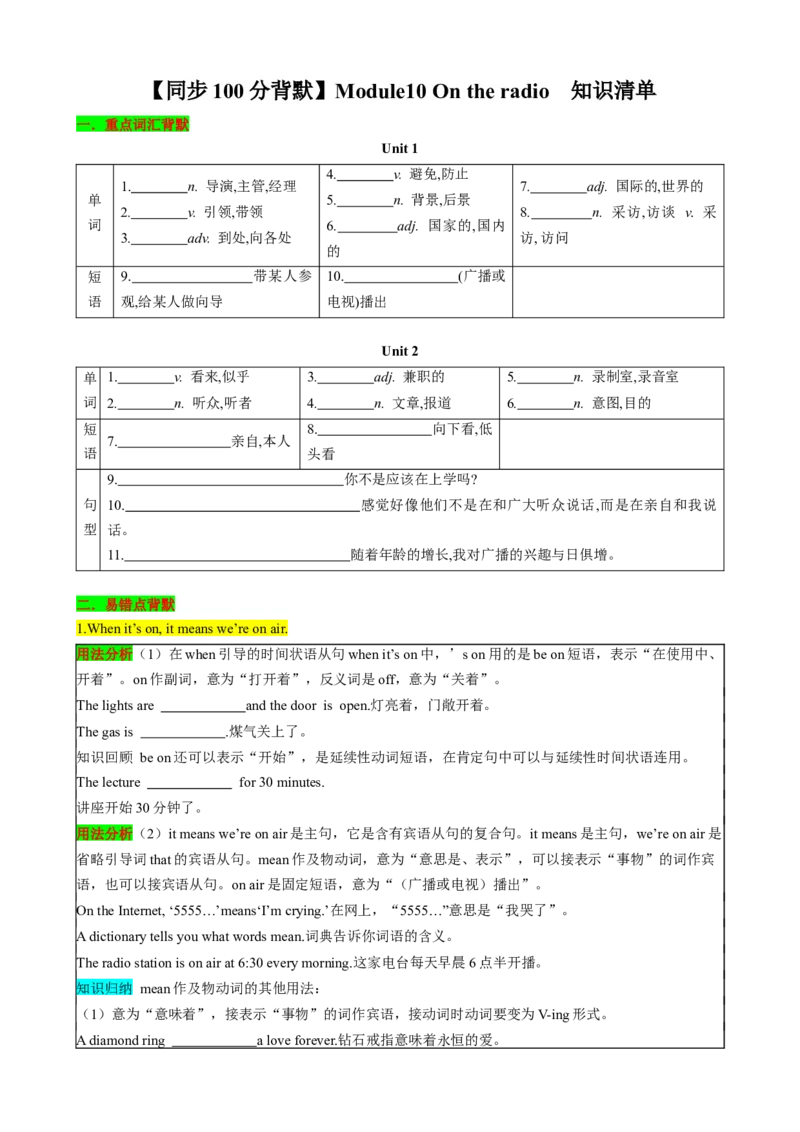
一.重点词汇背默
Unit 1
4. v. 避免,防止
1. n. 导演,主管,经理 7. adj. 国际的,世界的
单 5. n. 背景,后景
2. v. 引领,带领 8. n. 采访,访谈 v. 采
词 6. adj. 国家的,国内
3. adv. 到处,向各处 访, 访问
的
短 9. 带某人参 10. (广播或
语 观,给某人做向导 电视)播出
Unit 2
单 1. v. 看来,似乎 3. adj. 兼职的 5. n. 录制室,录音室
词 2. n. 听众,听者 4. n. 文章,报道 6. n. 意图,目的
短 8. 向下看,低
7. 亲自,本人
语 头看
9. 你不是应该在上学吗?
句 10. 感觉好像他们不是在和广大听众说话,而是在亲自和我说
型 话。
11. 随着年龄的增长,我对广播的兴趣与日俱增。
二.易错点背默
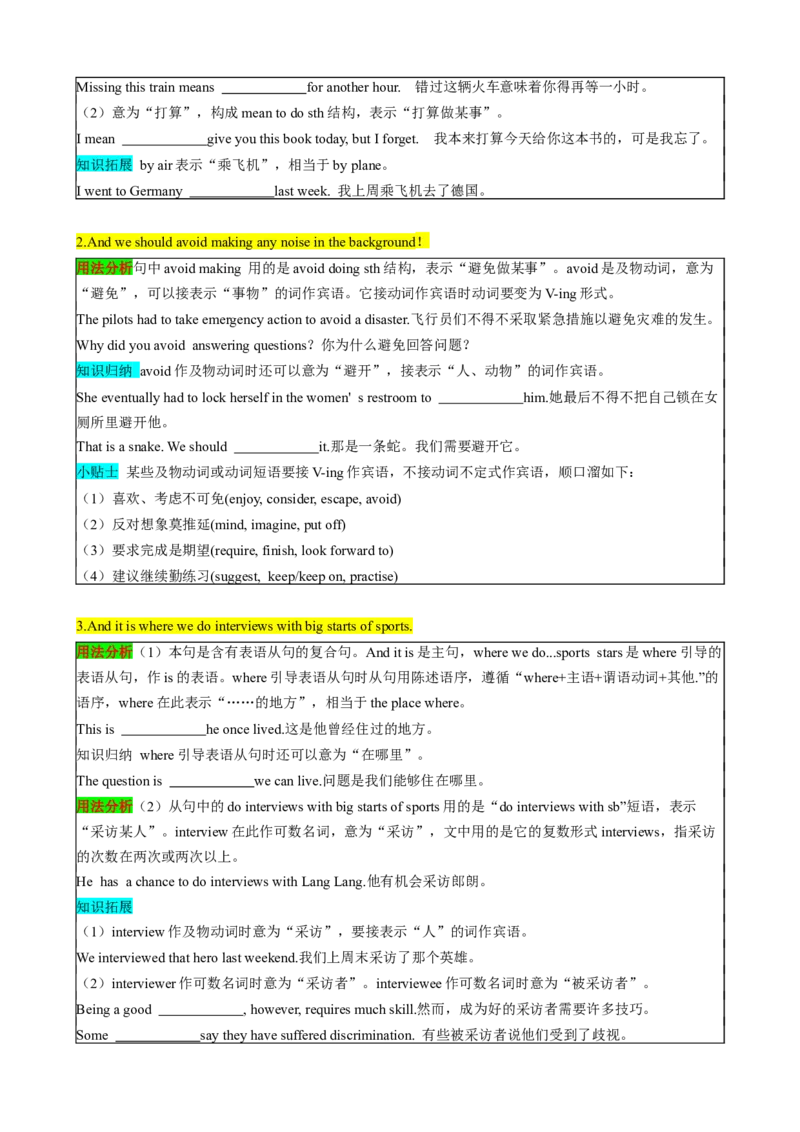
1.When it’s on, it means we’re on air.
用法分析(1)在when引导的时间状语从句when it’s on中,’s on用的是be on短语,表示“在使用中、
开着”。on作副词,意为“打开着”,反义词是off,意为“关着”。
The lights are and the door is open.灯亮着,门敞开着。
The gas is .煤气关上了。
知识回顾 be on还可以表示“开始”,是延续性动词短语,在肯定句中可以与延续性时间状语连用。
The lecture for 30 minutes.
讲座开始30分钟了。
用法分析(2)it means we’re on air是主句,它是含有宾语从句的复合句。it means是主句,we’re on air是
省略引导词that的宾语从句。mean作及物动词,意为“意思是、表示”,可以接表示“事物”的词作宾
语,也可以接宾语从句。on air是固定短语,意为“(广播或电视)播出”。
On the Internet, ‘5555…’means‘I’m crying.’在网上,“5555…”意思是“我哭了”。
A dictionary tells you what words mean.词典告诉你词语的含义。
The radio station is on air at 6:30 every morning.这家电台每天早晨6点半开播。
知识归纳 mean作及物动词的其他用法:
(1)意为“意味着”,接表示“事物”的词作宾语,接动词时动词要变为V-ing形式。
A diamond ring a love forever.钻石戒指意味着永恒的爱。Missing this train means for another hour. 错过这辆火车意味着你得再等一小时。
(2)意为“打算”,构成mean to do sth结构,表示“打算做某事”。
I mean give you this book today, but I forget. 我本来打算今天给你这本书的,可是我忘了。
知识拓展 by air表示“乘飞机”,相当于by plane。
I went to Germany last week. 我上周乘飞机去了德国。
2.And we should avoid making any noise in the background!
用法分析句中avoid making 用的是avoid doing sth结构,表示“避免做某事”。avoid是及物动词,意为
“避免”,可以接表示“事物”的词作宾语。它接动词作宾语时动词要变为V-ing形式。
The pilots had to take emergency action to avoid a disaster.飞行员们不得不采取紧急措施以避免灾难的发生。
Why did you avoid answering questions?你为什么避免回答问题?
知识归纳 avoid作及物动词时还可以意为“避开”,接表示“人、动物”的词作宾语。
She eventually had to lock herself in the women' s restroom to him.她最后不得不把自己锁在女
厕所里避开他。
That is a snake. We should it.那是一条蛇。我们需要避开它。
小贴士 某些及物动词或动词短语要接V-ing作宾语,不接动词不定式作宾语,顺口溜如下:
(1)喜欢、考虑不可免(enjoy, consider, escape, avoid)
(2)反对想象莫推延(mind, imagine, put off)
(3)要求完成是期望(require, finish, look forward to)
(4)建议继续勤练习(suggest, keep/keep on, practise)
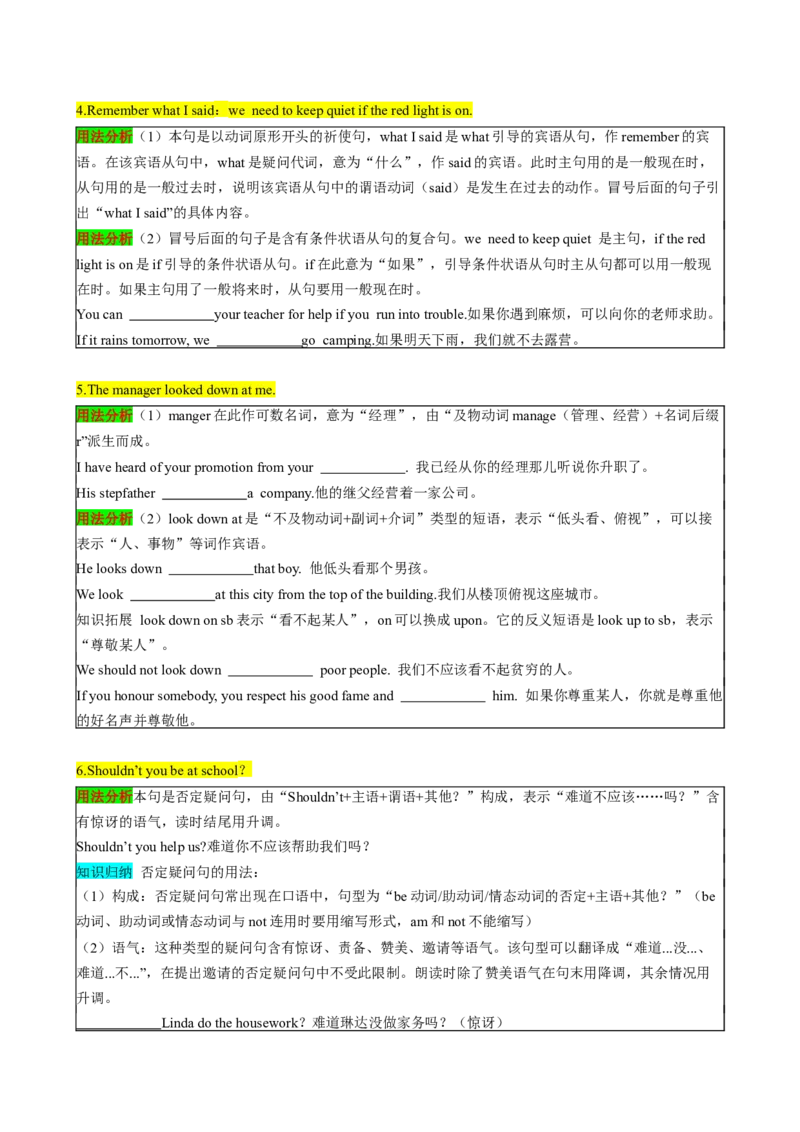
3.And it is where we do interviews with big starts of sports.
用法分析(1)本句是含有表语从句的复合句。And it is是主句,where we do...sports stars是where引导的
表语从句,作is的表语。where引导表语从句时从句用陈述语序,遵循“where+主语+谓语动词+其他.”的
语序,where在此表示“……的地方”,相当于the place where。
This is he once lived.这是他曾经住过的地方。
知识归纳 where引导表语从句时还可以意为“在哪里”。
The question is we can live.问题是我们能够住在哪里。
用法分析(2)从句中的do interviews with big starts of sports用的是“do interviews with sb”短语,表示
“采访某人”。interview在此作可数名词,意为“采访”,文中用的是它的复数形式interviews,指采访
的次数在两次或两次以上。
He has a chance to do interviews with Lang Lang.他有机会采访郎朗。
知识拓展
(1)interview作及物动词时意为“采访”,要接表示“人”的词作宾语。
We interviewed that hero last weekend.我们上周末采访了那个英雄。
(2)interviewer作可数名词时意为“采访者”。interviewee作可数名词时意为“被采访者”。
Being a good , however, requires much skill.然而,成为好的采访者需要许多技巧。
Some say they have suffered discrimination. 有些被采访者说他们受到了歧视。4.Remember what I said:we need to keep quiet if the red light is on.
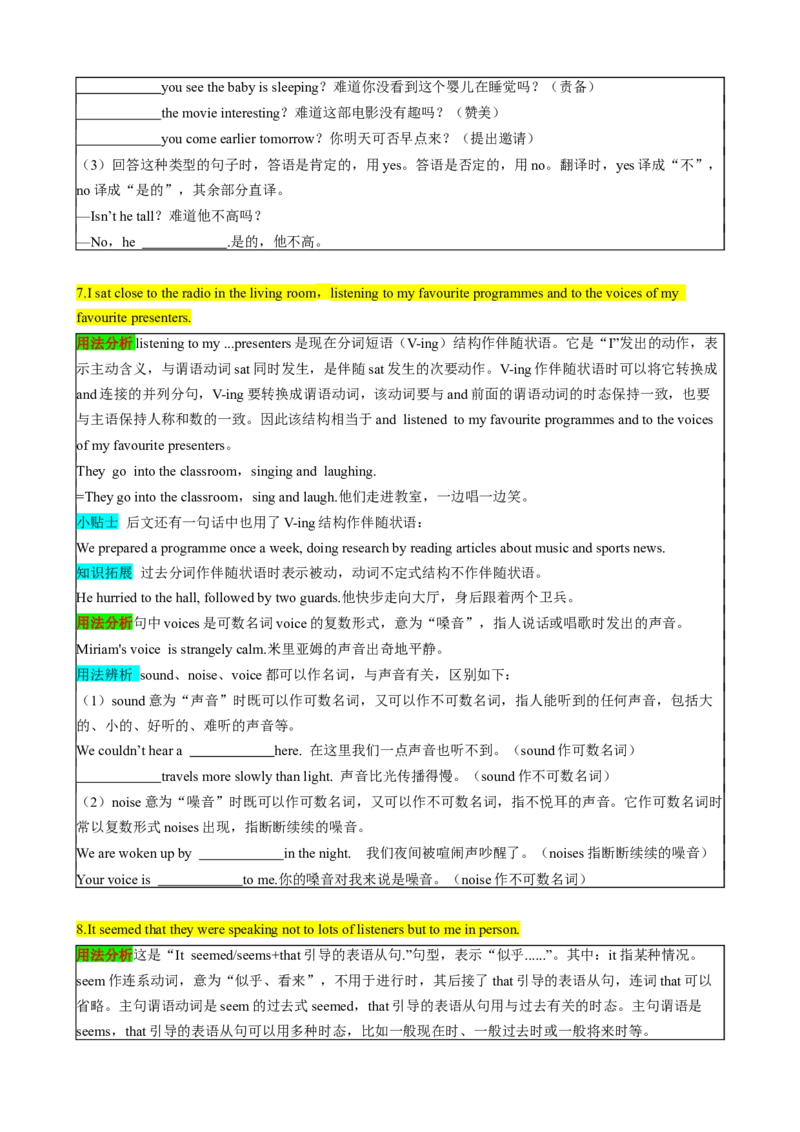
用法分析(1)本句是以动词原形开头的祈使句,what I said是what引导的宾语从句,作remember的宾
语。在该宾语从句中,what是疑问代词,意为“什么”,作said的宾语。此时主句用的是一般现在时,
从句用的是一般过去时,说明该宾语从句中的谓语动词(said)是发生在过去的动作。冒号后面的句子引
出“what I said”的具体内容。
用法分析(2)冒号后面的句子是含有条件状语从句的复合句。we need to keep quiet 是主句,if the red
light is on是if引导的条件状语从句。if在此意为“如果”,引导条件状语从句时主从句都可以用一般现
在时。如果主句用了一般将来时,从句要用一般现在时。
You can your teacher for help if you run into trouble.如果你遇到麻烦,可以向你的老师求助。
If it rains tomorrow, we go camping.如果明天下雨,我们就不去露营。
5.The manager looked down at me.
用法分析(1)manger在此作可数名词,意为“经理”,由“及物动词manage(管理、经营)+名词后缀
r”派生而成。
I have heard of your promotion from your . 我已经从你的经理那儿听说你升职了。
His stepfather a company.他的继父经营着一家公司。
用法分析(2)look down at是“不及物动词+副词+介词”类型的短语,表示“低头看、俯视”,可以接
表示“人、事物”等词作宾语。
He looks down that boy. 他低头看那个男孩。
We look at this city from the top of the building.我们从楼顶俯视这座城市。
知识拓展 look down on sb表示“看不起某人”,on可以换成upon。它的反义短语是look up to sb,表示
“尊敬某人”。
We should not look down poor people. 我们不应该看不起贫穷的人。
If you honour somebody, you respect his good fame and him. 如果你尊重某人,你就是尊重他
的好名声并尊敬他。
6.Shouldn’t you be at school?
用法分析本句是否定疑问句,由“Shouldn’t+主语+谓语+其他?”构成,表示“难道不应该……吗?”含
有惊讶的语气,读时结尾用升调。
Shouldn’t you help us?难道你不应该帮助我们吗?
知识归纳 否定疑问句的用法:
(1)构成:否定疑问句常出现在口语中,句型为“be动词/助动词/情态动词的否定+主语+其他?”(be
动词、助动词或情态动词与not连用时要用缩写形式,am和not不能缩写)
(2)语气:这种类型的疑问句含有惊讶、责备、赞美、邀请等语气。该句型可以翻译成“难道...没...、
难道...不...”,在提出邀请的否定疑问句中不受此限制。朗读时除了赞美语气在句末用降调,其余情况用
升调。
Linda do the housework?难道琳达没做家务吗?(惊讶)you see the baby is sleeping?难道你没看到这个婴儿在睡觉吗?(责备)
the movie interesting?难道这部电影没有趣吗?(赞美)
you come earlier tomorrow?你明天可否早点来?(提出邀请)
(3)回答这种类型的句子时,答语是肯定的,用yes。答语是否定的,用no。翻译时,yes译成“不”,
no译成“是的”,其余部分直译。
—Isn’t he tall?难道他不高吗?
—No,he .是的,他不高。
7.I sat close to the radio in the living room,listening to my favourite programmes and to the voices of my
favourite presenters.
用法分析listening to my ...presenters是现在分词短语(V-ing)结构作伴随状语。它是“I”发出的动作,表
示主动含义,与谓语动词sat同时发生,是伴随sat发生的次要动作。V-ing作伴随状语时可以将它转换成
and连接的并列分句,V-ing要转换成谓语动词,该动词要与and前面的谓语动词的时态保持一致,也要
与主语保持人称和数的一致。因此该结构相当于and listened to my favourite programmes and to the voices
of my favourite presenters。
They go into the classroom,singing and laughing.
=They go into the classroom,sing and laugh.他们走进教室,一边唱一边笑。
小贴士 后文还有一句话中也用了V-ing结构作伴随状语:
We prepared a programme once a week, doing research by reading articles about music and sports news.
知识拓展 过去分词作伴随状语时表示被动,动词不定式结构不作伴随状语。
He hurried to the hall, followed by two guards.他快步走向大厅,身后跟着两个卫兵。
用法分析句中voices是可数名词voice的复数形式,意为“嗓音”,指人说话或唱歌时发出的声音。
Miriam's voice is strangely calm.米里亚姆的声音出奇地平静。
用法辨析 sound、noise、voice都可以作名词,与声音有关,区别如下:
(1)sound意为“声音”时既可以作可数名词,又可以作不可数名词,指人能听到的任何声音,包括大
的、小的、好听的、难听的声音等。
We couldn’t hear a here. 在这里我们一点声音也听不到。(sound作可数名词)
travels more slowly than light. 声音比光传播得慢。(sound作不可数名词)
(2)noise意为“噪音”时既可以作可数名词,又可以作不可数名词,指不悦耳的声音。它作可数名词时
常以复数形式noises出现,指断断续续的噪音。
We are woken up by in the night. 我们夜间被喧闹声吵醒了。(noises指断断续续的噪音)
Your voice is to me.你的嗓音对我来说是噪音。(noise作不可数名词)
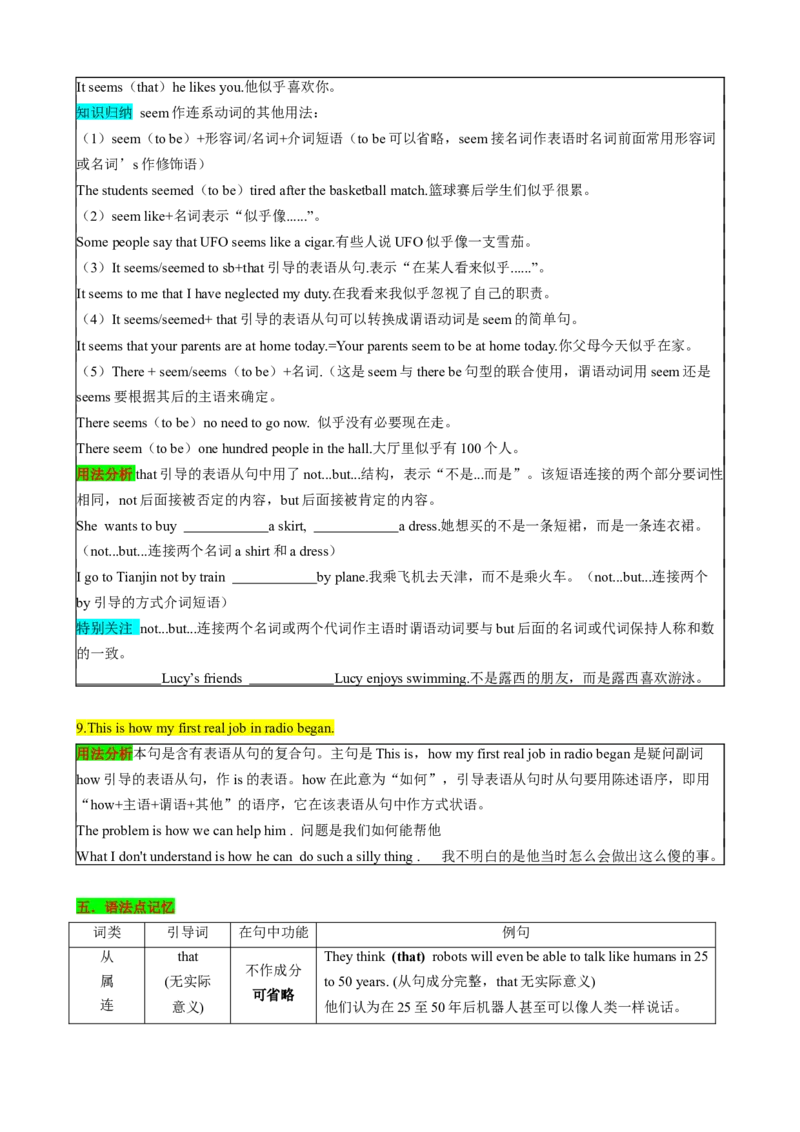
8.It seemed that they were speaking not to lots of listeners but to me in person.
用法分析这是“It seemed/seems+that引导的表语从句.”句型,表示“似乎......”。其中:it指某种情况。
seem作连系动词,意为“似乎、看来”,不用于进行时,其后接了that引导的表语从句,连词that可以
省略。主句谓语动词是seem的过去式seemed,that引导的表语从句用与过去有关的时态。主句谓语是
seems,that引导的表语从句可以用多种时态,比如一般现在时、一般过去时或一般将来时等。It seems(that)he likes you.他似乎喜欢你。
知识归纳 seem作连系动词的其他用法:
(1)seem(to be)+形容词/名词+介词短语(to be可以省略,seem接名词作表语时名词前面常用形容词
或名词’s作修饰语)
The students seemed(to be)tired after the basketball match.篮球赛后学生们似乎很累。
(2)seem like+名词表示“似乎像......”。
Some people say that UFO seems like a cigar.有些人说UFO似乎像一支雪茄。
(3)It seems/seemed to sb+that引导的表语从句.表示“在某人看来似乎......”。
It seems to me that I have neglected my duty.在我看来我似乎忽视了自己的职责。
(4)It seems/seemed+ that引导的表语从句可以转换成谓语动词是seem的简单句。
It seems that your parents are at home today.=Your parents seem to be at home today.你父母今天似乎在家。
(5)There + seem/seems(to be)+名词.(这是seem与there be句型的联合使用,谓语动词用seem还是
seems要根据其后的主语来确定。
There seems(to be)no need to go now. 似乎没有必要现在走。
There seem(to be)one hundred people in the hall.大厅里似乎有100个人。
用法分析that引导的表语从句中用了not...but...结构,表示“不是...而是”。该短语连接的两个部分要词性
相同,not后面接被否定的内容,but后面接被肯定的内容。
She wants to buy a skirt, a dress.她想买的不是一条短裙,而是一条连衣裙。
(not...but...连接两个名词a shirt和a dress)
I go to Tianjin not by train by plane.我乘飞机去天津,而不是乘火车。(not...but...连接两个
by引导的方式介词短语)
特别关注 not...but...连接两个名词或两个代词作主语时谓语动词要与but后面的名词或代词保持人称和数
的一致。
Lucy’s friends Lucy enjoys swimming.不是露西的朋友,而是露西喜欢游泳。
9.This is how my first real job in radio began.
用法分析本句是含有表语从句的复合句。主句是This is,how my first real job in radio began是疑问副词
how引导的表语从句,作is的表语。how在此意为“如何”,引导表语从句时从句要用陈述语序,即用
“how+主语+谓语+其他”的语序,它在该表语从句中作方式状语。
The problem is how we can help him . 问题是我们如何能帮他
What I don't understand is how he can do such a silly thing . 我不明白的是他当时怎么会做出这么傻的事。
五.语法点记忆
词类 引导词 在句中功能 例句
从 that They think (that) robots will even be able to talk like humans in 25
不作成分
属 (无实际 to 50 years. (从句成分完整,that无实际意义)
可省略
连 意义) 他们认为在25至50年后机器人甚至可以像人类一样说话。whether I wonder if/whether they'll have the races again next year.
(是否) 不作成分 (从句成分完整,whether / if意为“是否”)
if 不可省略 我想知道他们明年是否会再次举行比赛。
(是否) (介词+whether, 句末有or not用whether)
who We used a watch to see who was the fastest.
(谁,主/宾 我们用手表来看谁是最快的。(who作主语)
格)
whom Do you know whom the boy standing at the door is?
连
(谁,宾格) 从句不完整 你知道站在门口的那个男孩是谁吗? (whom作表语)
接
whose 充当成分 Could you tell me whose book it is?
代
(谁的) 不可省略 你能告诉我这是谁的书吗? (whose作定语)
词
what We never know what will happen in the future!
(什么) 我们永远不会知道未来会发生什么! (what作主语)
which He hasn't decided which wallet he should buy for his father.
(哪个) 他还没有决定为他的爸爸买哪一个钱包。(which作定语)
Can you tell us when the band starts playing this evening?
when
你能告诉我们乐队今天晚上什么时候开始演奏吗? (when作时
(什么时候)
间状语)
连
where 从句完整 I wonder where we should go next.
接
(什么地方) 充当状语 我想知道接下来该去哪里。(where 作地点状语)
副
how 不可省略 Could you please tell me how I can get to the post office?
词
(怎样) 你能告诉我如何去邮局吗? (how作方式状语)
why You'd better explain why you were late for class again.
(为什么) 你最好解释一下为什么上课又迟到了。(why作原因状语)
人称注意:句子转述时人称变化
时态注意:主句为一般现在时, 从句可以是任何时态 ;
主句为一般过去时,从句进行相应的变化 , 客观真理,自然现象等不变。
语序注意:宾语从句用陈述语序
一.用适当的形式填空。
1. The radio says it ___________ cloudy tomorrow. (be)
2. The headmaster hopes everything _________ well. (go)
3. Tom says that they ____________ (play) basketball at six o’clock yesterday evening.
4. I hear they ______________ (return) it already.
5. He said that they ____________ members of the Party since 1948. (be)
6. He asked what they _____________ at eight last night. (do)
7. The teacher told his class that light __________ faster than sound. (travel)
8. I think you ____________ about the murder now. (talk)
9.I didn’t know whom the letters __________ from. (be)10. I didn’t know what time he ___________ the letter. (write)
11. Mr Wang told me that the earth _________ (move) round the sun.
12. Could you tell me who ___________ away the book already? (take)
13. Ling Feng told me he __________ there several times. (be)
14. Our teacher told us in class the sun ___________ in the east. (rise)
15. Can you tell me what they ___________ yesterday? (do)
16. Could you tell me if they ___________ (work) in the factory so far?
17. ----- What ______ he _____ (say) just now? I ____________ (not can hear) him .
----- He _______ (say) that he __________ (plant) trees with his parents yesterday.
18. Can you tell me when ___________ (leave) tomorrow?
19. A: What are you standing here for?
B: I’m waiting here to ask Mr. Johnson if he ________ (give) us a talk on American history. If he _________
(have) no time , I’ll ask Mr. Smith instead.
20. A: Do you know when Mr Green ________ (come) to see us next month ?
B: Don‘t worry . I _______ (tell) you when he really _______(come) here.
二.用适当的连词填空,使句子通顺。(that/if/whether/who/when/where/why/how/…)
1. Some adults don't understand ___________ their children are so into the computer games.
2. I'm wondering___________ a computer repair shop can get the missing documents back or not.
3. It's hard to believe ___________ they could offer such a comfortable place to look after the old for free.
4. Alice interviewed some people and asked them about ___________ they did on Father's Day.
5. Mr. Green, my new teacher, often praises the students___________ desks are clean and tidy.
6. As soon as the man came home. he would count ___________ money he had make today.
7. Mary asked the lady ___________ there is a train ticket to Shanghai at 3 o'clock this afternoon.
8. We haven't decided ___________is the best time to hold the meeting.
9.I only knew he was studying in a western country, but I didn't know ___________ exactly he was.
10. Gordon didn't catch the man's name but he was unsure ___________ he could ask again in a polite way.
三:将下列句子变成宾语从句。
1. How can we get to the bus station?
→They'd like to know ___________________________________________.
2. What do you do with the old books?
→Can you tell me ___________________________________________?
3. Does Tom work hard at school?
→Tom's father asked ___________________________________________.
4. Who can work out the math problem?
→Mrs. Li asked ___________________________________________.
5. When did he buy this computer?
→Do you know ___________________________________________?
六.写作背默
本模块的话题是"广播",设置的写作题目多是谈论电台或广播节目主持人的工作,如何成为一名合格的主
持人或向电台主持人寻求帮助等。假设你叫李华,是一名八年级的学生,校园广播站要招聘一名英语节目主持人,介绍英语文化。请你根
据要点提示,给节目负责人写一封自荐信(人称:第一人称 语篇类型:自荐信 话题:应聘)。
要点提示:
1.喜欢播音,曾在小学广播站做主持人;
2.擅长英语,尤其对各国的文化感兴趣;
3.表明决心,对做好这份工作有信心。
素材积累
词汇
advantage 优点 presenter 主持人 enjoy doing sth. 喜欢做某事
the voices of my favourite presenters 最喜欢的主持人的声音
dream of doing sth. 梦想做某事
be good at doing sth. 擅长做某事
be interested in 对……感兴趣
句子
1.I enjoy listening to the radio and the voices of my favourite presenters. 我喜欢听广播和我最喜欢的主持人的
声音。
2.Since I was a kid, I have always dreamed of working in radio. 从小时候,我就一直梦想从事电台工作。
3.I worked in the radio station at primary school, so I have had much experience in radio. 我小学时就在电台工
作,所以我在广播这方面有很多经验。
4.I am good at speaking English and I'm interested in culture of different countries, especially English-speaking
countries.我擅长说英语,我对不同国家的文化感兴趣,尤其是英语国家。
5.If I can be the presenter, I'll work hard and have the confidence to make the program more interesting and
helpful.如果我可以成为主持人,我会努力工作并且有信心让这个节目更趣、更有帮助。
Dear Sir or Madam,I'm looking forward to your reply.
Yours,
Li Hua