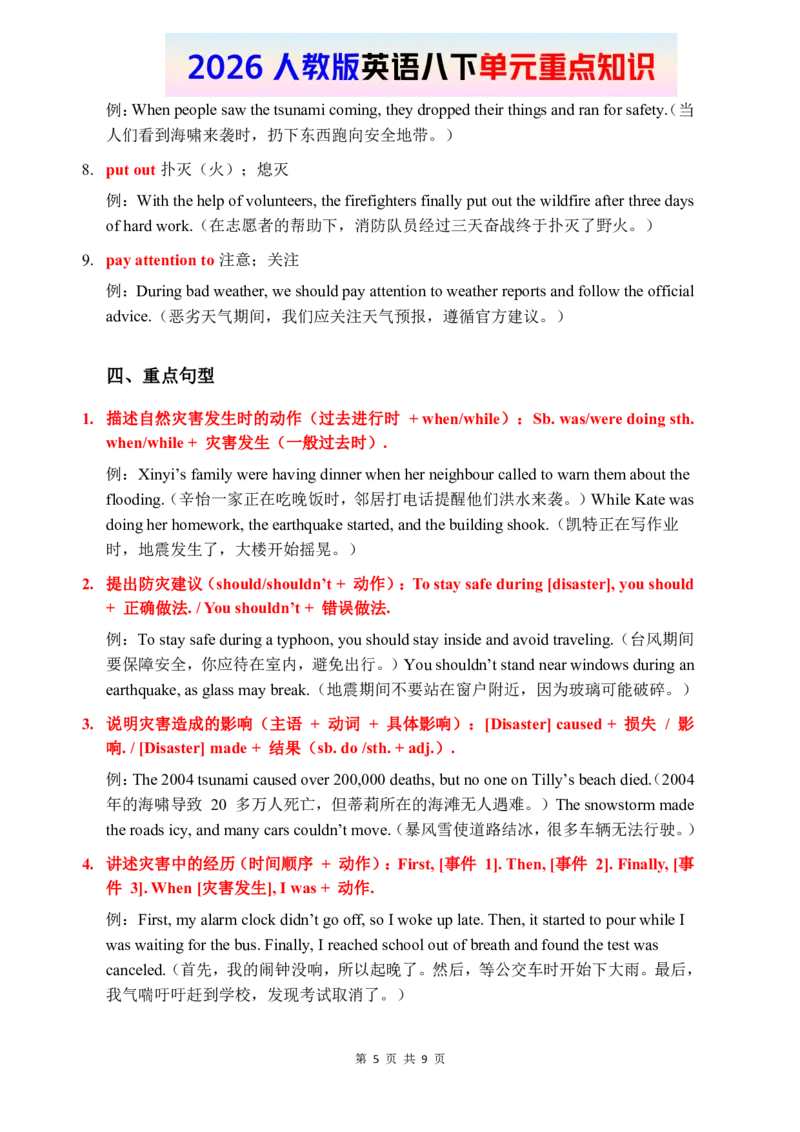
2026 人教版英语八下单元重点知识
Unit 5 Nature's Temper 单元重点知识
一、词汇巩固
(一)核心名词(自然灾害相关)
1. earthquake/ˈɜːθkweɪk/ (n.) 地震
例:Whentheearthquake hit, Katewas doing herhomework, andthebuilding shook
suddenly.(地震发生时,凯特正在写作业,大楼突然摇晃起来。)
2. typhoon/taɪˈfuːn/ (n.) 台风
例:Beforethe typhoon landed, Haitao’s family covered thewindows and stored food and
water, so they stayed safe.(台风登陆前,海涛一家加固了窗户、储备了食物和水,因
此安全度过。)
3. tsunami /tsuːˈnɑːmi/(n.) 海啸
例:TillySmith saved over100lives because sheremembered that underwaterearthquakes
can cause tsunamis.(蒂莉・史密斯拯救了 100 多人的生命,因为她记得海底地震会引
发海啸。)
4. wildfire/ˈwaɪldfaɪə(r)/ (n.) 野火
例:During thehot summer, a wildfirebroke out in themountains,and firefighters worked
day and night to putit out.(炎热的夏天,山里爆发了野火,消防队员日夜奋战灭火。)
5. preparation /ˌprepəˈreɪʃn/ (n.) 准备(工作);预备
例:Makingpreparations fornatural disasters, likestoring emergency supplies, canhelp
peoplestay safe.(为自然灾害做准备,如储备应急物资,能帮助人们保障安全。)
6. floodwater/ˈflʌdwɔːtə(r)/ (n.) 洪水
例:Afterthe typhoon, floodwater nearly reached thewindows ofLisa’s house, leaving a
mess inside.(台风过后,洪水几乎漫到莉萨家的窗户,屋里一片狼藉。)
(二)重点动词(灾害应对 & 预警)
1. warn /wɔːn/ (v.) 警告;提醒注意
例:Xinyi’s neighbour warned her about theflooding in time,so herfamily avoided danger.
(辛怡的邻居及时提醒她洪水来袭,因此她家躲过了危险。)
第 1 页 共 9 页2026 人教版英语八下单元重点知识
2. refuse/rɪˈfjuːz/(v.) 拒绝;退却
例:WhenTilly realized atsunami was coming, she refused towalk further, and finally
persuaded her familytoreturn to thehotel.(当蒂莉意识到海啸即将来临时,她拒绝继
续前行,最终说服家人返回酒店。)
3. rescue/ˈreskjuː/ (v.&n.) 援救;营救
例:Firefighters and volunteers worked together torescue peopletrapped in thewildfire.
(消防队员和志愿者共同营救被困在野火中的人们。)
4. avoid/əˈvɔɪd/ (v.) 避免;防止
例:Tostay safe during atyphoon, people shouldavoidtraveling andstay insideas much
as possible.(台风期间要保障安全,人们应避免出行,尽量待在室内。)
5. store/stɔː(r)/ (v.) 储存;存放
例:Beforea snowstorm, it’s wiseto storeenough food,water and warm clothes at home.
(暴风雪来临前,在家储存足够的食物、水和保暖衣物是明智的做法。)
6. panic/ˈpænɪk/ (v.) 惊慌;恐慌
例:Whenpeople sawthe tsunamicoming, theystarted topanic, but thesecurity guard
kept calm and guided them tosafety.(当人们看到海啸来袭时开始恐慌,但保安保持冷
静,引导大家前往安全地带。)
(三)关键形容词(灾害特征 & 状态)
1. sudden/ˈsʌdn/ (adj.) 突然的;骤然的
例:Theearthquake happened all ofa sudden,and many people were caught offguard(. 地
震突然发生,很多人毫无防备。)
2. dangerous/ˈdeɪndʒərəs/(adj.) 危险的
例:It’s dangerous tostay near thecoast during a typhoon, as tall waves and floodwater
may appear.(台风期间待在海岸附近很危险,因为可能出现巨浪和洪水。)
3. emergency /ɪˈmɜːdʒənsi/ (adj.) 紧急的;应急的 (n.) 紧急情况
例:Weshould keep an emergency kitat home, which includes bandages,medicine and
canned food.(家里应备有应急包,包含绷带、药品和罐头食品。)
4. terrible/ˈterəbl/(adj.) 可怕的;糟糕的
例:The snowstormlast weekend was terrible—manypeople couldn’t get homeand had to
stayin hotels.(上周末的暴风雪很可怕,很多人无法回家,不得不留在酒店。)
第 2 页 共 9 页2026 人教版英语八下单元重点知识
5. safe/seɪf/ (adj.) 安全的
例:After thetornado passed, Jenny’s family stepped outsideand found everyone was safe.
(龙卷风过后,珍妮一家走出户外,发现所有人都安全。)
二、词形变换
1. danger (n. 危险) → dangerous (adj. 危险的) → safely (adv. 安全地) → safety (n. 安
全)
例:There’s great danger in staying outsideduring atyphoon.(台风期间待在户外有很大
危险。)
Floodwater is dangerous because it may carry harmful things.(洪水很危险,因为可能携
带有害物质。)
Therescue team guided thevillagers toasafe place safely.(救援队安全地将村民引导到
安全地带。)
People’s safety shouldbe thetop priorityduring natural disasters.(自然灾害期间,人员
安全应是首要任务。)
2. sudden(adj. 突然的) →suddenly (adv. 突然地)→all ofasudden (短语:突然)
例:Asudden earthquakeshook thecity at midnight.(午夜时分,一场突如其来的地震
摇晃了整座城市。)
Thewind suddenly becamestronger, and therain started topour.(风突然变大,雨开始
倾盆而下。)
Allofa sudden, thelights went out, and theroom was intotaldarkness.(突然,灯灭了,
房间陷入一片黑暗。)
3. prepare(v. 准备) →preparation (n. 准备)→prepared(adj. 有准备的)
例:Weshouldprepare for natural disasters bylearning survival skills.(我们应通过学习
生存技能为自然灾害做准备。)
Makingearly preparations can reduce thedamage caused bytyphoons.(提前准备能减少
台风造成的损失。)
Haitao’s family was well prepared forthetyphoon, so they had notrouble(. 海涛一家为台
风做了充分准备,因此没有遇到麻烦。)
4. terrible(adj. 可怕的)→terribly (adv. 非常;糟糕地)
例:Thewildfire caused terrible damagetotheforest.(野火对森林造成了可怕的破坏。)
第 3 页 共 9 页2026 人教版英语八下单元重点知识
Thetyphoon hitthecity terribly, and manyhouses lost theirroofs.(台风严重袭击了这座
城市,很多房屋的屋顶被掀翻。)
5. panic(v. 恐慌)→panicked(adj. 惊慌的)→panicky (adj. 易恐慌的)
例:Peoplestarted to panicwhen they heard thetsunami warning.(听到海啸预警时,人
们开始恐慌。)
Thepanicked crowd rushed to theexit, but noonewas hurt.(惊慌的人群冲向出口,但没
有人受伤。)
Don’t bepanicky—followtheguide’sinstructions, and you’ll besafe.(别恐慌,听从向
导的指示,你就会安全。)
三、重点短语
1. allofasudden 突然;猛地
例:Allofa sudden,thunder rolled across thesky, and it started to rain heavily.(突然,
雷声滚滚,下起了大雨。)
2. make preparations 作准备
例:Beforea typhoon, weshould makepreparations likechecking windows andstoring
emergency supplies.(台风前,我们应做准备,如检查窗户、储备应急物资。)
3. stay safe保持安全
例:Thereporteradvised peopletostay safe bystaying insideand paying attention to
weather reports.(记者建议人们待在室内、关注天气预报以保持安全。)
4. breakout(灾害、疾病等)爆发
例:Awildfirebroke out inthe mountainslast week, and firefighters spent three days
puttingitout.(上周山里爆发了野火,消防队员花了三天时间才扑灭。)
5. catch offguard使措手不及;毫无防备
例:Theearthquake caught peopleoffguard, as therewas noearly warning.(由于没有预
警,地震让人们措手不及。)
6. intotal darkness完全处于黑暗中
例:Whenthepower went out duringthe storm,thehouse was intotal darkness, andwe
had to useflashlights.(暴风雨期间停电,屋里一片漆黑,我们不得不使用手电筒。)
7. runforsafety 跑向安全地带
第 4 页 共 9 页2026 人教版英语八下单元重点知识
例:When people sawthetsunami coming, they dropped theirthings and ran forsafety(. 当
人们看到海啸来袭时,扔下东西跑向安全地带。)
8. putout扑灭(火);熄灭
例:With thehelp ofvolunteers, thefirefighters finally put out thewildfireafter three days
ofhard work.(在志愿者的帮助下,消防队员经过三天奋战终于扑灭了野火。)
9. payattention to 注意;关注
例:During bad weather, we shouldpay attention toweather reports and followtheofficial
advice.(恶劣天气期间,我们应关注天气预报,遵循官方建议。)
四、重点句型
1. 描述自然灾害发生时的动作(过去进行时 + when/while):Sb. was/were doing sth.
when/while+ 灾害发生(一般过去时).
例:Xinyi’s familywere having dinner when her neighbour called to warn them about the
flooding.(辛怡一家正在吃晚饭时,邻居打电话提醒他们洪水来袭。)While Katewas
doingher homework, theearthquake started, and thebuilding shook.(凯特正在写作业
时,地震发生了,大楼开始摇晃。)
2. 提出防灾建议(should/shouldn’t+ 动作):Tostay safeduring [disaster], youshould
+ 正确做法./Youshouldn’t + 错误做法.
例:To stay safe during atyphoon, you should stay insideand avoid traveling.(台风期间
要保障安全,你应待在室内,避免出行。)You shouldn’t stand near windows during an
earthquake, as glass may break.(地震期间不要站在窗户附近,因为玻璃可能破碎。)
3. 说明灾害造成的影响(主语 + 动词 + 具体影响):[Disaster] caused + 损失 / 影
响./ [Disaster] made + 结果(sb. do/sth.+ adj.).
例:The2004tsunami caused over200,000deaths, but nooneonTilly’s beach died(. 2004
年的海啸导致 20 多万人死亡,但蒂莉所在的海滩无人遇难。)Thesnowstorm made
theroads icy, and many cars couldn’t move.(暴风雪使道路结冰,很多车辆无法行驶。)
4. 讲述灾害中的经历(时间顺序 + 动作):First, [事件 1].Then,[事件 2]. Finally,[事
件 3].When [灾害发生], I was+ 动作.
例:First, myalarm clock didn’t go off, so I wokeuplate. Then, it started to pourwhileI
was waiting forthe bus. Finally, Ireached school out ofbreath andfound thetest was
canceled.(首先,我的闹钟没响,所以起晚了。然后,等公交车时开始下大雨。最后,
我气喘吁吁赶到学校,发现考试取消了。)
第 5 页 共 9 页2026 人教版英语八下单元重点知识
5. 对比防灾准备的不同结果(with/withoutpreparation + 结果):With [preparation],
sb.+ 积极结果./Without[preparation], sb. + 消极结果.
例:With early preparations, Haitao’s family stayed safe during thetyphoon.(由于提前准
备,海涛一家在台风期间安全无恙。)Without any warning, many people were caught off
guard bythesudden earthquake.(由于没有任何预警,很多人对突然的地震毫无防备。)
6. 描述灾害中的情绪反应(sb. + felt+ 情绪 + because+ 原因):Peoplefelt[emotion]
because[灾害场景]./When [灾害场景],sb. started to + 情绪动作.
例:People felt scared because thetornado was getting closer and closer.(人们感到害怕,
因为龙卷风越来越近。)Whenthefloodwater entered the house,Lisa started to panic, but
herfather kept calm.(当洪水进入房屋时,莉萨开始恐慌,但她的爸爸保持冷静。)
7. 说明灾害预警与应对的关系(as soonas + 预警 + 行动):As soon assb. received the
[disaster]warning, sb. + 应对动作.
例:Assoon as Tilly’s father received thetsunami warning from thesecurity guard, he
helped guide people offthebeach.(蒂莉的爸爸一收到保安的海啸预警,就帮忙引导人
们撤离海滩。)As soon as theweather report said atyphoon was coming, Haitao’s family
started to cover thewindows and store supplies.(一听到天气预报说台风即将来临,海
涛一家就开始加固窗户、储备物资。)
8. 描述灾害后的救援与恢复(sb. + 救援动作 + to help sb. do sth.):After[disaster],
rescuers/volunteers + 救援动作 + to help people[恢复行动].
例:After the wildfireinChongqing, over 1,500firefighters and volunteers worked day and
night to help put outthe fireand bring peopletosafety.(重庆发生野火后,1500 多名消
防队员和志愿者日夜奋战,帮助灭火并将人们转移到安全地带。)After thetyphoon, the
neighbourhood residents helped clean upthestreets to make theareatidy again.(台风过
后,街区居民帮忙清理街道,让区域恢复整洁。)
9. 解释知识在防灾中的作用(becausesb. knew/remembered+ 知识 + sb.+ 积极结果):
Sb.saved lives/avoided dangerbecausesb.knew/remembered + 防灾知识.
例:TillySmith saved over100lives because sheremembered that underwaterearthquakes
can create tsunamis.(蒂莉・史密斯拯救了 100 多人的生命,因为她记得海底地震会
引发海啸。)Weavoided gettingcaught intheflood becausewe knew weshould moveto
higher ground when floodwater rises.(我们没有被困在洪水中,因为我们知道洪水上涨
时应转移到地势较高的地方。)
10. 表达灾害中的幸运与不幸(fortunately/unfortunately + 结果):Unfortunately, [不
幸结果]. Fortunately,[幸运转折].
第 6 页 共 9 页2026 人教版英语八下单元重点知识
例:Unfortunately, Lisa’s family didn’t knowthetyphoon was coming and almostgot into
acar accident. Fortunately, they finally got homesafely.(不幸的是,莉萨一家不知道台
风即将来临,差点发生车祸。幸运的是,他们最终安全到家。)Unfortunately, the man’s
windowbrokeduring the typhoon. Fortunately, noone inhis family was hurt.(不幸的是,
这位男士家的窗户在台风中碎了。幸运的是,他的家人都没有受伤。)
五、重点语法
(一)过去进行时(Past Continuous Tense)
1. 核心用法
表示过去某一时刻正在进行的动作:常与 “at the timeof...”“when...” 连用,描述灾害
突发时人们的即时动作,是单元语法核心。
例:Whatwere you doing at thetime ofthe earthquake?—Iwas doing my homework.
(地震发生时你在做什么?—— 我正在写作业。)
Whenthetyphoon hit, Haitao’s familywere reading together at home.(台风来袭时,海
涛一家正在家里一起看书。)
为过去动作提供背景:用 “while...” 引导持续动作,铺垫灾害发生的场景,使叙事更
生动。
例:Whileeveryonewasenjoying thebeach that morning, Tilly noticed strangewaves
and froth onthesea surface.(那天早上,当大家都在海滩上休闲时,蒂莉注意到海面
出现了异常的海浪和泡沫。)
Whilewewere drivinghome,the strong winds started, and we could barely see theroad.
(我们正开车回家时,大风突然刮起,我们几乎看不见路。) 12-84)。
2. 结构与句式变换
肯定式:主语 + was/were + 动词 -ing
例:Liu Yun was traveling onthetrain whenthesnowstorm started.(暴风雪开始时,刘
云正在坐火车旅行。)
否定式:主语 + was/were not + 动词 -ing
例:Theboywas notplaying outsidewhen thetyphoon hit—hewas at homehaving
dinner.(台风来袭时,这个男孩没在外面玩,他正在家里吃晚饭。)
第 7 页 共 9 页2026 人教版英语八下单元重点知识
疑问式:Was/Were+ 主语 + 动词 - ing
例:Were youpreparing for thetyphoon before itlanded? —Yes, we were covering the
windows.(台风登陆前你们在做准备吗?—— 是的,我们在加固窗户。)
3. 与一般过去时的辨析
过去进行时:表 “过去持续进行的动作”,常与 “while” 连用,强调动作的 “过程”;
一般过去时:表 “过去短暂发生的动作”,常与 “when” 连用,强调动作的 “结果”。
例:WhileI wasdoingchores,my motherprepared lunch.(我在做家务时,妈妈做好
了午饭。——“做家务” 是持续过程,“做好午饭” 是短暂结果)Whenthe
earthquake started,Kate was doingher homework.(地震发生时,凯特正在写作业。
——“地震发生” 是短暂动作,“写作业” 是持续过程)
(二)连词 when 与 while 的用法(结合灾害场景)
1. 共性与差异
共性:均引导时间状语从句,描述 “灾害发生时的动作关联”;
差异:① when:可接 “短暂动作” 或 “持续动作”,从句动作可先于、后于或同时于
主句动作;②while:仅接 “持续动作”(动词 - ing 形式),从句动作与主句动作 “同
时进行”。
例:Whenthetsunami came (短暂动作), peoplewere running forsafety.(海啸来临时,
人们正在跑向安全地带。)
Whilethetyphoon wasblowing (持续动作), westayed insideand listened totheradio.
(台风刮起时,我们待在室内听收音机。)
2. 句式结构
主句(过去进行时)+ when + 从句(一般过去时):
例:Weweredriving homewhen thestrong winds started.(我们正开车回家时,大风
突然刮起。)
While+ 从句(过去进行时)+ 主句(过去进行时 / 一般过去时):
例:WhileTilly waswalking along thebeach, shenoticed strange waves.(蒂莉正在海
滩散步时,发现了异常的海浪。)
(三)情态动词 should 的用法(防灾建议表达)
第 8 页 共 9 页2026 人教版英语八下单元重点知识
1. 表 “义务与建议”
用于提出 “防灾、避险的必要措施”,语气明确,后接动词原形,否定式为 “shouldn’t”。
例:You should storeemergency supplies likewater andcanned food before a disaster(. 灾
害前你应该储备水、罐头等应急物资。)
You shouldn’t staynear the coast when atsunami warning is issued.(海啸预警发布时,
你不应该待在海岸附近。)
2. 与 could 的语气对比
should:语气 “直接、坚定”,表 “必要建议”,如防灾中的 “必须措施”;
could:语气 “委婉、可选”,表 “可选建议”,如灾害中的 “替代方案”。
例:You shouldstay insideduring atyphoon.(台风期间你必须待在室内。—— 必要
措施)
You couldlisten to theradio orwatch TV toget weather updates.(你可以听收音机或看
电视获取天气更新。—— 可选方案)
(四)复合名词(自然灾害相关)
1. 构成与单元高频词
构成方式:“名词 + 名词” 或 “形容词 + 名词”,多表示 “自然灾害类型” 或 “防灾
相关事物”;
单元高频复合名词:wildfire(野火)、snowstorm(暴风雪)、floodwater(洪水)、
landslide(滑坡)、heartbeat(心跳)、safeguard(安全设施)。
例:Awildfirebroke out inthe mountains, and firefighters rushed toput it out.(山里爆发
了野火,消防队员赶来灭火。)
Thefloodwater nearly reached thefirst floorof thebuildingafter thetyphoon.(台风过
后,洪水几乎漫到了大楼的一楼。)
2. 用法注意
部分复合名词为 “可数名词”,复数形式在末尾加 -s,如 snowstorms、landslides;
部分复合名词为 “不可数名词”,无复数形式,如 floodwater、manpower。
例:Heavy rain caused many landslides in thearea.(暴雨在该区域引发了多起滑坡。)
Weneed more manpowertoclean upthestreets after thesnowstorm.(暴风雪后我们需
要更多人力清理街道。)
第 9 页 共 9 页