文档文本内容
2021 届人大附中高中英语新高考语法一轮复习讲义
(17)助动词(would、can、could、may、might、must)用
法知识点总结整理
——would
would 是 will 的过去式,用来表示过去将来时
例:
He said that he would try again.(他说了他会再试一
试)
Did you know when he would come?(你当时知道他
何时会来吗)
有时也会出现 will 与一般过去时连用的现象例:He said that he will visit the country sometime
in July(他说他会在七月份访问该国)
那么怎么区分使用 will 还是 would 呢?
He said 虽然为过去状态,但 will 是用于尚未到来的时间,
而 would 用于已经过去的时间。
例:
He said that he will visit you tomorrow(他说了他明
天会来拜访你)
He said that he would visit you yesterday(他说了昨
天会来拜访你)
would 用在虚拟语气中,表与现在或过去事实相反与现在事实相反: would + 动词原形 译为“就
会……”
例:If I had money now, I would buy a big house.
(如果我有现在有钱,我会买一套大房子)
与过去事实相反:would have + 过去分词
例 : If we had left earlier, we would have
been able to stop off for a coffee on the way.(如果
我们出发早一点,我们就能在去的路上停下来喝一杯咖啡)
用 would 表示过去特别的习惯或者动作
例:I had a friend from Albany, which is about 36
miles away, and we would meet every Thursday
morning and she would help us.(我有一个来自奥尔巴尼的朋友,大概有 36 英里远,我们经常在星期三早上见面,并且
她经常帮助我们)
用 would 表示间接委婉建议,经常和 advise, imagine,
recommend, say, suggest 等词连用
在请求或寻求帮助时,用 would 代替 will 以表礼貌正式
would 常用的一些搭配
would rather + 动词原形 宁愿……
例:I would rather go than stay here(我宁愿走也不
愿意呆在这里)
would you mind + v-ing 你介不介意……?
例:Would you mind using your book?(你介不介意
用一下你的书?)
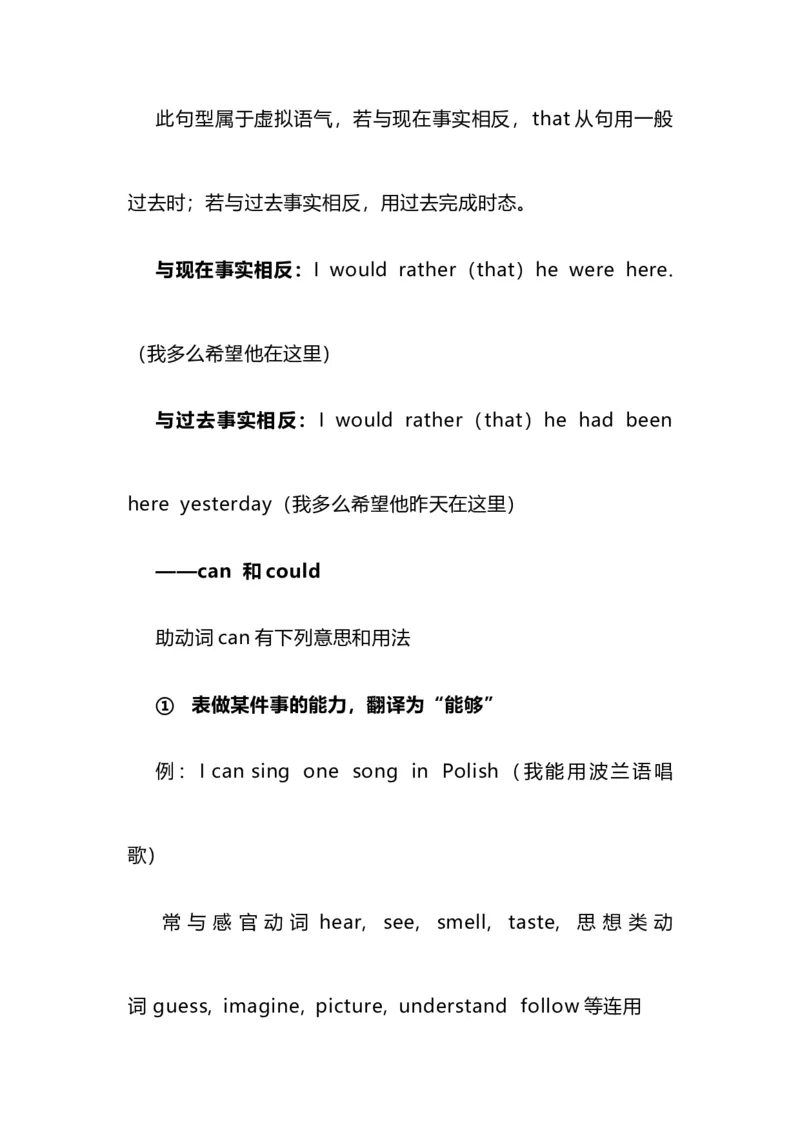
would rather +(that)从句 我多么希望……此句型属于虚拟语气,若与现在事实相反,that 从句用一般
过去时;若与过去事实相反,用过去完成时态。
与现在事实相反:I would rather(that)he were here.
(我多么希望他在这里)
与过去事实相反:I would rather(that)he had been
here yesterday(我多么希望他昨天在这里)
——can 和 could
助动词 can 有下列意思和用法
① 表做某件事的能力,翻译为“能够”
例:I can sing one song in Polish(我能用波兰语唱
歌)
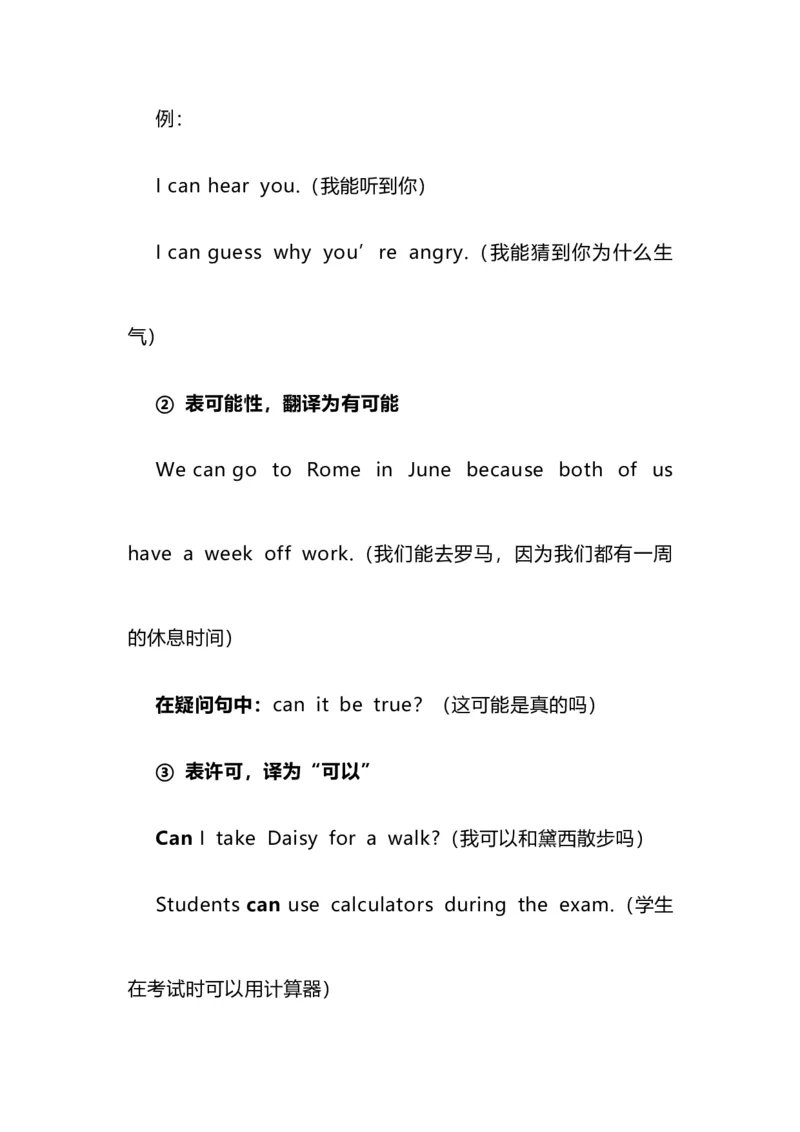
常 与 感 官 动 词 hear, see, smell, taste, 思 想 类 动
词 guess, imagine, picture, understand follow 等连用例:
I can hear you.(我能听到你)
I can guess why you’re angry.(我能猜到你为什么生
气)
② 表可能性,翻译为有可能
We can go to Rome in June because both of us
have a week off work.(我们能去罗马,因为我们都有一周
的休息时间)
在疑问句中:can it be true?(这可能是真的吗)
③ 表许可,译为“可以”
Can I take Daisy for a walk?(我可以和黛西散步吗)
Students can use calculators during the exam.(学生
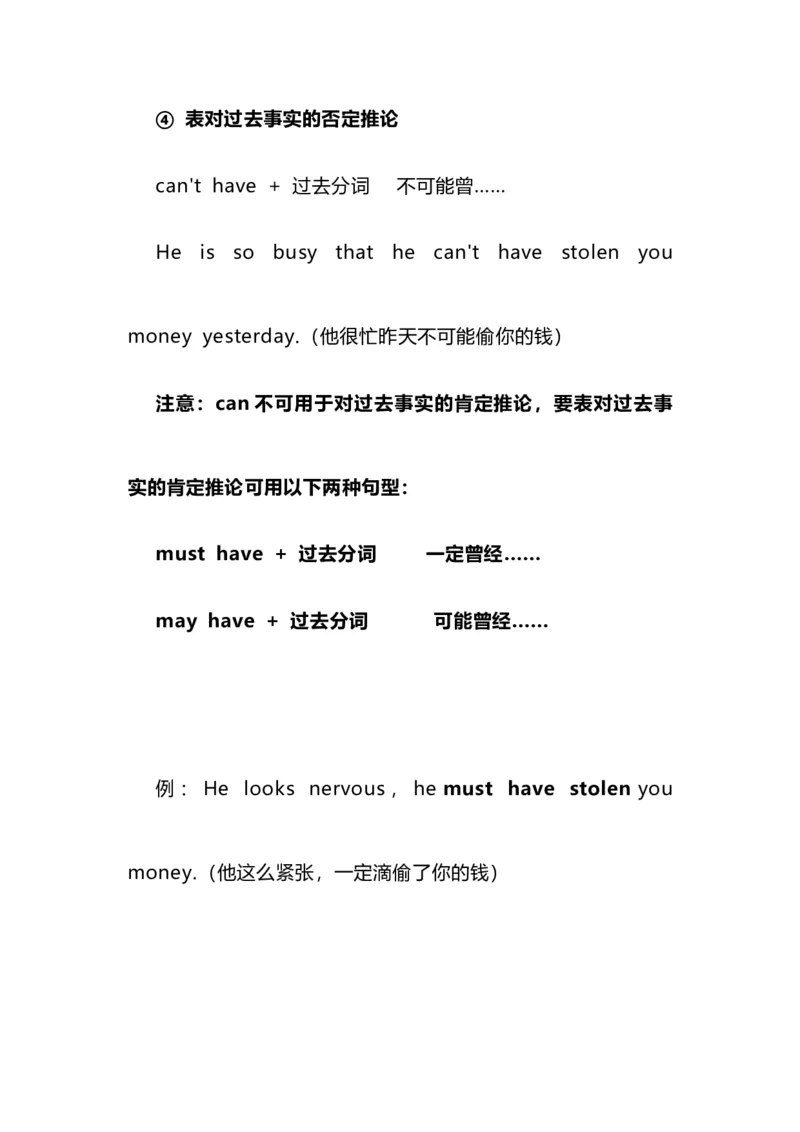
在考试时可以用计算器)④ 表对过去事实的否定推论
can't have + 过去分词 不可能曾……
He is so busy that he can't have stolen you
money yesterday.(他很忙昨天不可能偷你的钱)
注意:can 不可用于对过去事实的肯定推论,要表对过去事
实的肯定推论可用以下两种句型:
must have + 过去分词 一定曾经……
may have + 过去分词 可能曾经……
例 : He looks nervous , he must have stolen you
money.(他这么紧张,一定滴偷了你的钱)could 为 can 的过去式,通常用以表示过去的状况
例 : She could speak English well when she was
ten.(她 10 岁时英语就说得很好了)
In those days, you could buy everything in the
local shop. Now we have to go to the big
supermarket for everything.(哪些天你们能在当地超市买
想要的东西,现在我们不得不去大超市买了)
could = was/were able to 表示过去的能力,用于一般
过去时中例:He was able to eat eight bowels of rice when
he was young.(他年轻时能吃 8 碗米饭)
Could 使用于问句中表示客气
Could you please do it for me ?(你能帮我做这事
吗?)
Could have + 过去分词
用来表示本应该发生而为发生的事情,表遗憾
He could have been a doctor.(他本应该成为一名医生
的)
I could have been famous.(我本应该很出名的)
有时也会用 how could you/she/he/they……?来反对某
事例:How could you have gone without telling me?
(你怎么能不告诉我一声就走了呢)
Grandfather,How could you leave me?(爷爷,你怎
么能够抛弃下我呢)
can 与 not 连用时,不要写成 can not,而要写成 cannot
或者 can't
例:He cannot write letters(他不会写信)
can 的惯用语
can but/only 只能……
I can but/only do so.(我只能这么做)
cannot help doing 禁不住……
例:I cannot help laughing.(我忍不住大笑起来)
——may 和 might助动词 may 之后接原形动词,有以下意思及用法
表许可译为“可以”,询问显得有礼貌
例:You may take whatever you like.(你喜欢什么就
拿什么)
May I borrow the car tomorrow?(我明天可以借这辆
车吗)
表推测,译为“可能”,此时等于 can
Jack may be coming to see us tomorrow.(杰克明天
可能来看我们)
表祝愿:
may you be happy in the future(祝你余生快乐)否定形式为 may not,同样有表许可和推测的意思,分别
译为“可能不会”和“不可以”
might 通常与一般过去时连用,表过去的状况
有关 may 的惯用语
May well +原形动词 大可/足可.....
He knows so many things that he may well be called
a genius
他懂得那么多,大可称得上天才
May as well +动词原形 不妨....
You may as well stay at home (你不妨待在家里)
You had better stay at home (你最好待在家里)语气较
强
May as well+动词原形+as+动词原形 与其....倒不如....You may as well stay home as go out with them
你与其和他们出去,倒不如待在家里
——must
must 之后接原形动词
① 表义务译为“必须”
You must finish your task before leaving(你一定要
在离开前完成你的任务)
② must 可表对现在状况或过去的推论
现在的推论:must + 原形动词 一定……
He’ s so small , he must be no more than four
years old(他这么小,一定不会超过四岁)
过去的推论:must have + 过去分词 一定曾经……I called you yesterday around three o’clock but
you must have been out.(我昨天大约三点打过电话给你,
你一定是出去了)
③ 否定形式:must not 不可以
You must not leave any rubbish. (你不可以乱扔垃
圾)
④ must 与 have to 的比较
must 表示义务强制的必须,侧重于说话者的主观看法;而
have to 有勉强、被迫的意味,侧重于客观需要。
另外,must 只用于表现在或将来的状况,而 have to 可用
于表过去、现在、将来的任何状况。