押北京卷第 1-10 题
完形填空
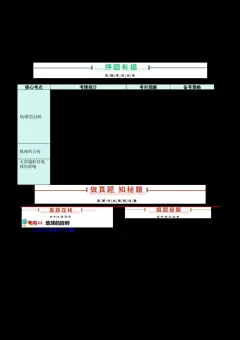
考点
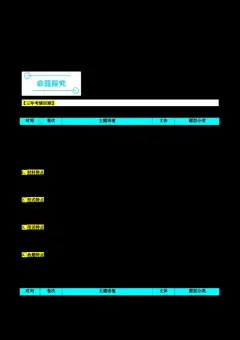
年份 体裁 类别 主题
形容
动词 名词 词、副 其他
词
2023年 记叙文 人与自我 从羞怯到自信的转变的故事 5 3 1 1
迟到的男孩不顾寒冷等待老
2022年 记叙文 人与社会 4 2 4 0
师来开门的故事
列车上一名男子救下一个小
2021年 记叙文 人与社会 5 2 3 0
男孩的故事
1.试题考查内容
近三年的完形填空均为10个题,文本类型均为“心灵鸡汤”类的记叙文。文本内容弘扬主旋律,传播正能
量。文本大多包含六大要素:时间、地点、人物、事件的起因、经过和结果。叙述过程中作者会加入对人物
语言、行为、心理的描写,也正是这方面的描写增加了学生做题的难度。整个文本包含“动作线索”和“情
感线索”双线索,通过对人和事的细致描写传达出作者要表达的意思和文章的中心思想。
2.试题考查词类
完形填空考查四类实词:以动词、名词为主;形容词、副词为辅。其中形容词和副词侧重考查人物心理变化
和精神状态,需要考生依据上下文和人物的动作进行推测,考生普遍反映此类试题较难。
(2023北京)
I was always timid(羞怯的). Being new to the school made me even 1 , so it was surprising I’d 2 to
anyone around me. Now I was paying the price—to write a five-page essay on “Why I Should Not Talk in Class”.
That would take all night!After I got home, though, I took my time petting the cat—postponing the pain.
When I finally sat down to 3 , I began with the reasons Ms Black would want to hear. Talking kept me and
my neighbours from 4 . One paragraph down; now what? I chewed on my pencil. Aha! What if talking were the
first step towards life as a criminal? Without the education I was throwing away, I’d turn to theft and go to prison.
When I got out, people would say, “She used to talk in class.” The pages began 5 .
But when mum got home from work, I was still 6 , “Five pages! That’s impossible!”
“Well, you’d better get back to work,” she said, “and I want to read it when you’re through.”
Soon after dinner, I handed the essay to mum. I half expected a 7 —at least an “I hope you’ve learned
your lesson”. 8 , mum laughed and laughed as she read.
The next day, when Ms Black read the essay to the class, everyone laughed. I could 9 they weren’t making
fun of me: they laughed because I had the power to tell a funny story. My 10 still needed some nudging(激发),
but I did learn I wasn’t shy in print.
1. A. freer B. shyer C. calmer D. happier
2. A. nod B. point C. listen D. chat
3. A. weep B. rest C. write D. read
4. A. learning B. playing C. planning D. laughing
5. A. standing out B. flying by C. breaking up D. checking in
6. A. celebrating B. longing C. complaining D. warning
7. A. lecture B. reason C. reward D. solution
8. A. Therefore B. Moreover C. Meanwhile D. Instead
9. A. hope B. imagine C. tell D. predict
10. A. patience B. confidence C. tolerance D. independence
通过对近三年完形填空的分析,我们可以发现,完形填空主要有以下五种考查方式:
(1)逻辑推理:考生依据上下文,运用“移情策略”,把自己设想为故事的主人公,依据人物身份进行合理推断,
选出符合人物心理描写的形容词和符合人物心理活动的动作。
(2)文化背景:完形填空均为中国或欧美文化生活的小故事,需要考生依据所学文化背景知识选出正确选项。
(3)词汇复现:完形填空文本虽短,但是对表达喜悦、紧张、失望等的单词、词组多使用同义词复现、近义词
复现,有时也会使用原词复现或反义词复现。(4)词义辨析:每一个题的四个选项词性相同,但词义不同。多数情况下两个选项是“positive(积极、正向)”,两
个选项是“negative(消极、负面)”,有时一个选项也会是“neutral(客观、中立)”。
(5)熟词生义:所谓熟词生义就是指我们熟悉的一个单词在新的文本中用法、词性、词义不同,即不是我们所
熟知的含义。熟词生义也往往是考试的难点。
解题小妙招
一、完形填空落实“三读法”
1.初读把握大意,找到明显答案;
2.细读逐空确定,疑难空做标记;
3.复读解决疑难选项,联系主旨作答。
二、重视词语复现五种类型
1.原词复现;2.近义词复现;3.同义词复现;4.反义词复现;5.同根词复现。
三、掌握词语辨析三大招
一看选项词义,二看选项搭配,三看语境逻辑。
一
(23-24丰台区一模)
I hadn’t seen Anne in nearly 20 years since college, yet we could still party like old times. It was great to have
her here, ___1___ our lives.
She was looking at the few blooms (花) left in my yard. I hadn’t planted much after losing my job. It had been
a ___2___ year for me. Just when I thought I was done with the bitterness, it would all come rushing back and the
___3___ thing on my mind was flowers.
“One of my hobbies is taking photos of ___4___,” she said and steadied herself near the last rose of the
season. I shrugged (耸肩), wondering why anyone would ___5___ taking time to look at a lowly rose.
Suddenly a hot song rang from her cell phone. “I set it to remind me to take my medicine,” she said calmly.
“An ___6___ for medicine?” I laughed. “Are we that old?”
“For my brain,” she smiled. “I have been diagnosed with a rare cancer, a small tumor (肿块) no bigger than
your fingernail,” she laughed softly. That was Anne—ever ___7___. Even cancer was no more than joking about.
So ___8___ that I was beyond words.
Later next day, an e-mail filled with the flower photos popped up from Anne—clear and beautiful. She hadgotten past the anger, the pity and unfairness, taking one moment at a time and polishing it until it ___9___.
I shifted my eye to outside, and I had her flowers in full bloom. Actually, I always had them, but it was Anne
who got me to really ____10____ them.
1. A. saving B. watching C. sharing D. controlling
2. A. normal B. new C. satisfying D. difficult
3. A. last B. same C. only D. right
4. A. yards B. flowers C. parties D. people
5. A. bother B. avoid C. miss D. stop
6. A. award B. order C. alarm D. idea
7. A. optimistic B. attractive C. hard-working D. confident
8. A. nervous B. shocked C. relaxed D. lucky
9. A. ended B. failed C. shined D. fruited
10. A. arrange B. trust C. colour D. appreciate
二
(23-24西城区一模)When Susan was a high school senior, her English teacher Mr. DiMeo gave the class a
challenging task: Recite a poem in front of the whole class.
“I had a mild stutter (结巴). I’d be ____1____ to get a word out that might begin with ‘D’ or ‘TH’, or I might
say ‘the’ three times,” Susan said. The thought of getting up in front of her classmates and stuttering through the
poem was too much to ____2____.
Susan went home and ____3____ how scared she was to her mom, who agreed to write a note asking for her
to be ____4____ from doing the task in front of the whole class.
When the day of the recitation came, Susan recited the poem one-on-one to Mr. DiMeo. ____5____ she was
done, Mr. DiMeo said something she’d never heard before: that he liked listening to her voice. For the first time,
she considered the possibility that public speaking didn’t have to be a source of ____6____.
Susan went on to graduate from high school and go to college. She never got to properly thank Mr. DiMeo.
But sometime after college, she ____7____ a job as a corporate trainer. The new position made her realize how
big a (n)____8____ he had had on her confidence.
“I stand up in front of people and speak, and I do it all the time. If I do stutter once in a while, no big deal,”
she said. Susan recently found a way to ____9____ her former teacher, and plans on sending him a letter
expressing her appreciation.
In her mind, Mr. DiMeo is an unsung hero, because he’s a big reason why she has a successful career and life.“I don’t know where I would’ve gone if I felt like I had to keep my voice ____10____ because I was afraid of
embarrassing myself. I’d like to thank him for that kindness.”
1.A. continuing B. struggling C. pretending D. hoping
2.A. share B. express C. find D. bear
3.A. taught B. proved C. revealed D. promised
4.A. excused B. prohibited C. corrected D. discouraged
5.A. While B. Although C. Unless D. Once
6.A. jealousy B. worry C. boredom D. loneliness
7.A. wanted B. offered C. landed D. created
8.A. impact B. idea C. choice D. stress
9.A. judge B. contact C. study D. interview
10.A. sweet B. loud C. quiet D. deep
三
(23-24门市头沟区一模)I was preparing for dinner with my husband when our daughter Rikki stormed
into the sitting room and marched to the sofa. I glanced out of the window and saw our neighbor Lexi walking
slowly back to her house with her head down, looking so ___1___.
“Why didn’t Lexi stay longer?” I asked her.
“I don’t want to play with her,” Rikki complained, “I wish she would stop coming over here all the time. Her
dress looks terrible and smells disgusting. Everyone in our class chooses to ___2___ her.” “That’s not her
___3___ , Rikki. Maybe she doesn’t have anyone to help her.” I said.
“You see, baby,” her father began to say, “I really know how she felt when you showed your ___4___ to her
because I had the same experience when I was a kid. I was the poor kid with hand-me-down clothes, the kid who
others looked down on. That ___5___ never goes away.” He told her he wanted her to be kind and ____6____ ,
not judgmental and hurtful. Tears were streaming down her face.
Then we ___7___ Lexi to come over and have dinner with us. I remembered Lexi coming in all smiles. We
gathered together and soon I saw the girls talking and ___8___ . They had a great time. I could even see a sweet
glow in Rikki’s eyes.
Rikki began to think ____9____ from that day on. Lexi came over a few times after that. They became good
friends.
Today, Rikki has a heart of gold. She is always the first to welcome those whom others might _____10_____
and is generous in helping others. I truly believe that day made a major difference in the person she has becometoday.
1.A. funny B. upset C. relaxed D. silly
2.A. punish B. inspire C. respect D. ignore
3.A. habit B. attitude C. fault D. quality
4.A. coldness B. selfishness C. strictness D. nervousness
5.A. dream B. thought C. feeling D. smell
6.A. honest B. curious C. normal D. helpful
7.A. assumed B. invited C. reminded D. warned
8.A. laughing B. arguing C. crying D. shopping
9.A. actively B. creatively C. professionally D. differently
10.A. worry about B. turn away C. depend on D. communicate with
四
(23-24高三上·北京朝阳·期末)Gardening changed how I see myself as a disabled woman. When I started
gardening in 2018, I didn’t know anything about plants, let alone how to grow things we can eat. I thought
gardening required a lot of 1 tasks. As I have a genetic (遗传的) condition that causes my bones to 2
easily, I didn’t believe I could complete them. The thought of taking care of plants in a wheelchair every day made
me feel 3 . But just like how I gradually learnt everything else as a disabled person, I had to 4
how to garden my way.
That first season, I visited my garden as much as I could. Noticing my interest in gardening, my neighbors in
the community 5 offered me advice and support. Under their careful 6 , I managed to pull up the
weeds and watered my plants on my own. Finally, I was so proud to eat the tomatoes I grew and even shared some
with neighbors. They tasted like summertime.
Gardening has 7 how I see other parts of my life. As a disabled woman, I fear being seen as a 8
and struggle to ask for the things I need. Gardening helped me normalize the fact that I have needs. I don’t think my
plant is a heavy load because it needs more nutrition. I don’t 9 it for getting insects and not being able to
fight against them. Gardening also helped me expand my social circle and grow close to people in our community.
Over the years, gardening has made me feel more confident in every aspect of my life. I’m planting what I want to
grow, and I have gained a lot of 1 0 from that.
1. A. simple B. physical C. pleasant D. urgent
2. A. change B. rest C. break D. move
3. A. anxious B. expectant C. motivated D. bored4. A. look over B. show off C. bring back D. figure out
5. A. suddenly B. readily C. hesitantly D. casually
6. A. observation B. check C. discussion D. guidance
7. A. impacted B. ruined C. controlled D. recorded
8. A. support B. comfort C. burden D. threat
9. A. appreciate B. fault C. challenge D. forgive
10. A. justice B. access C. weight D. power
五
(23-24 高三上·北京顺义·期末)A golden fog settled over the fields. The sun prepared to rest for the
evening. I looked forward to setting my 1 aside for an evening.
I wasn’t long headed home when I heard a voice behind me. “Photo, photo, photo.” A young boy about 7 or 8
years old followed closely. I breathed a tired sigh. I had no 2 to press the shutter button one more time, no
matter how beautiful or eager he was, but he kept following me. As I looked at him, half 3 , an idea for a
composition flashed in my mind.
I kneeled in the field and instructed the boy where to stand and how to pose. As I prepared to take the
photograph, his energy suddenly shifted from 4 to shyness to fear. No matter what I told him to do — how
to stand, how to look — I just couldn’t get the 5 . Defeated, I gave up. I looked at the boy, who looked 6
and awkward.
In an effort to 7 him, I clapped my hands, saying, “That was great. You were great.” Passers-by
gathered around, cheering and clapping loudly. The boy’s face immediately broke into (a) 8 . I intuitively
(直觉地) took a few shots of the moment.
That photograph turned out to be better than the 9 I’d imagined because it came from a deeper place
within me. When we 10 frustration (懊恼) and focus on what’s here in the moment, that is when we are
moved to create from the inside out.
1. A. money B. camera C. boots D. notebook
2. A. time B. confidence C. energy D. chance
3. A. interested B. disappointed C. relieved D. puzzled
4. A. panic B. confusion C. eagerness D. directness
5. A. help B. attention C. idea D. shot
6. A. alone B. unconcerned C. violent D. thoughtful
7. A. disturb B. cheer C. accept D. satisfy8. A. smile B. tears C. worries D. surprise
9. A. style B. color C. content D. composition
10. A. turn to B. deal with C. let go of D. give in to
六
(23-24高三上·北京西城·期末)A winter storm dropped huge amounts of snow overnight on January 16 in
western Pennsylvania. Coach Brian Delallo, who worked on a local high school football team, decided to 1
his players’ weightlifting practice. He texted his players saying: “Due to the expected severe 2 Monday’s
weightlifting workout has been cancelled. Find an elderly or disabled neighbor and shovel (为……除雪) their
driveway. Don’t accept any 3 -that’s our Monday workout. ”
The players received the message and went out to work on the more than six inches of snow that fell
overnight. They said that they removed 4 from dozens of homes. Some players texted their coach afterwards
to tell him how 5 it was. “We all feel great about it, ” said team captain Gavin Moul. “It’s not only helping
them, but it’s helping us to become a better team. ”
Many of the people whom the team members approached couldn’t believe that the players wouldn’t accept any
payment. Sometimes people even 6 their help because they wouldn’t take money for it.
Actually, it was not the first time for the team to have shoveling workout. It was started by a coach more than
two decades ago. It was one of the many 7 the team kept.
“It’s about community. ” the coach said. “It is an inspiring way for us to interact with our community and
show that it 8 . Shoveling snow is just one of those opportunities to show appreciation to the community
that supports us. ”The team got a workout and gave 9 to the community by doing these acts of kindness at
the same time. It was a 1 0 for all.
1. A. try out B. pick up C. go over D. call off
2. A. injury B. weather C. disease D. pressure
3. A. money B. apology C. challenge D. request
4. A. dirt B. water C. snow D. waste
5. A. demanding B. rewarding C. promising D. amusing
6. A. sought B. got C. appreciated D. refused
7. A. goals B. secrets C. traditions D. jobs
8. A. matters B. cares C. works D. stays
9. A. off B. up C. in D. back
10. A. way B. win C. must D. lesson