文档文本内容
Unit 3达标测试卷
时间:100分钟 满分:120分
题 号 一 二 三 四 五 六 七 八 九 十 十一 总 分
得 分
第Ⅰ卷 听力部分(20分)
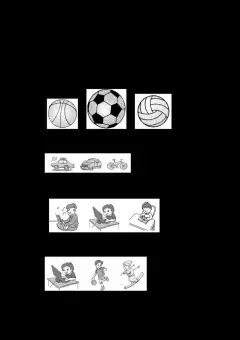
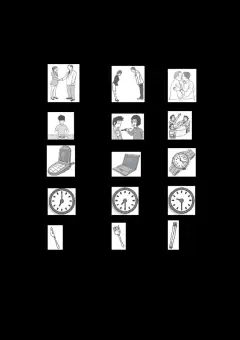
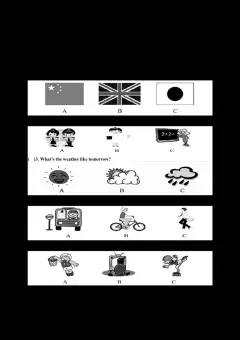
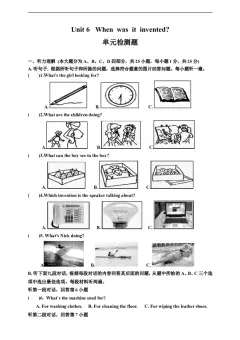
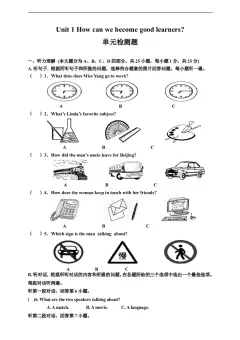
一、听句子,选出与所听句子内容相符的图片(每小题1分,共5分)
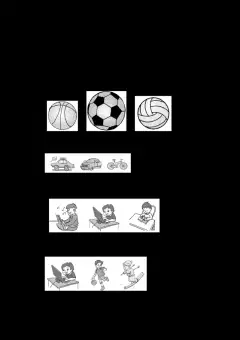
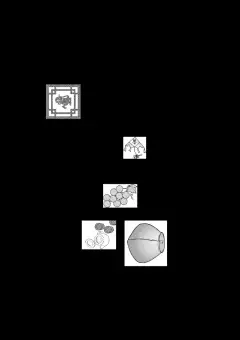
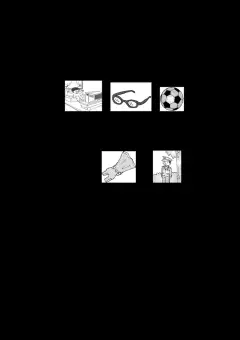
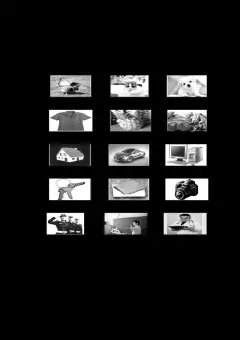
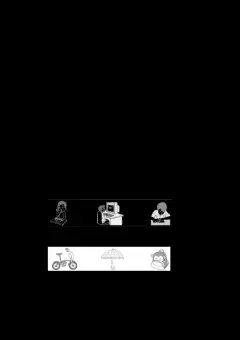
1. A INCLUDEPICTURE "E:\\九上\\九上人教\\九上R点拨典中点\\典中
点\\02.tif" \* MERGEFORMATINET B C
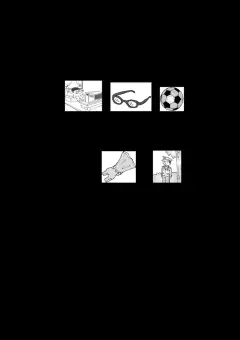
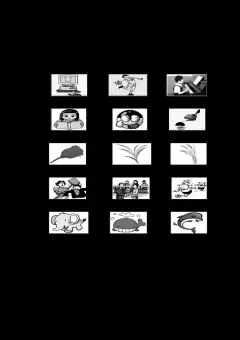
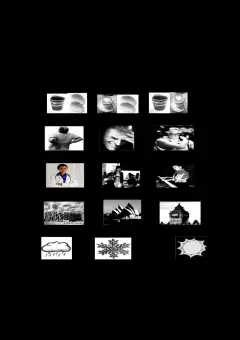
2. INCLUDEPICTURE "E:\\九上\\九上人教\\九上 R 点拨典中点\\典中点\\04.tif" \*
MERGEFORMATINET A INCLUDEPICTURE "E:\\九上\\九上人教\\九上R
点拨典中点\\典中点\\05.tif" \* MERGEFORMATINET B INCLUDEPICTURE
"E:\\九上\\九上人教\\九上R点拨典中点\\典中点\\06.tif" \* MERGEFORMATINET
C
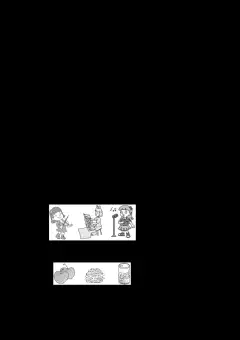
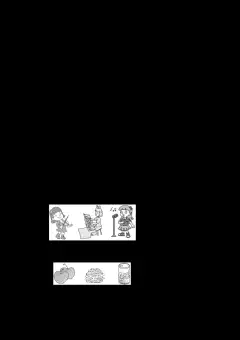
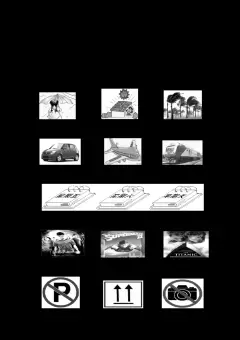
3. INCLUDEPICTURE "E:\\九上\\九上人教\\九上 R 点拨典中点\\典中点\\07.tif" \*MERGEFORMATINET A INCLUDEPICTURE "E:\\九上\\九上人教\\九上R点
拨典中点\\典中点\\08.tif" \* MERGEFORMATINET B INCLUDEPICTURE
"E:\\九上\\九上人教\\九上 R 点拨典中点\\典中点\\09.tif" \* MERGEFORMATINET
C
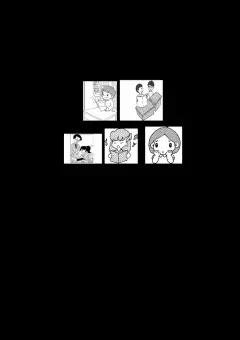
A B INCLUDEPICTURE "E:\\九上\\九上人教\\九上R点拨
典中点\\典中点\\U3-4C.tif" \* MERGEFORMATINET C
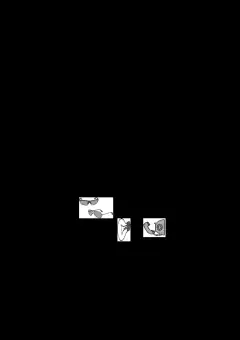
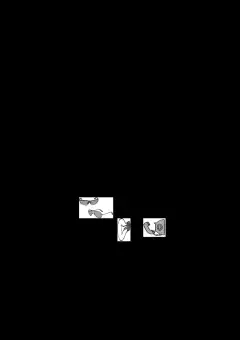
5. INCLUDEPICTURE "E:\\九上\\九上人教\\九上R点拨典中点\\典中点\\U3-5A.tif" \*
MERGEFORMATINET A B INCLUDEPICTURE "E:\\九上\\九上人教\\九上 R 点拨典中点\\典中点\\U3-5C.tif" \* MERGEFORMATINET
C
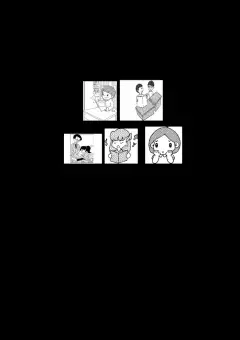
二、听小对话和问题,选出正确的答案(每小题1分,共5分)
6.A.Cleaning the floor. B.Washing the clothes.
C.Reading the book.
7.A.On Sixth Street. B.On Fifth Street.
C.On Seventh Street.
8.A.Go to a special mall.
B.Buy a present for his mother.
C.Go to school.
9.A.Go back to get his umbrella.
B.Leave without his umbrella.
C.Buy a new umbrella.
10.A.By bus. B.On foot. C.By car.
三、听下面两段长对话,选择正确的答案(每小题1分,共5分)
听第一段对话,回答第11~12小题。
11.Where does the conversation probably happen?
A.In a factory. B.In a supermarket. C.In a park.
12.Which floor is the restroom on?
A.The first floor. B.The second floor. C.The third floor.
听第二段对话,回答第13~15小题。
13.What are they discussing?
A.A training program. B.A train timetable.
C.Where to stay in New York.
14.When does the conversation probably happen?
A.On Sunday. B.On MidAutumn Day.
C.On Friday.
15.How long does it take the man to travel to New York by train?A.Two hours and twelve minutes.
B.One hour and fiftyseven minutes.
C.Four hours and nine minutes.
四、听短文及问题,选择正确的答案(每小题1分,共5分)
16.A.In Yueyang. B.In Xiangtan.
C.In Changsha.
17.A.On foot. B.By bus. C.By bike.
18.A.At 5:30. B.At 6:30. C.At 7:30.
19.A.Li Ming. B.Li Ming's mother.
C.Li Ming's aunt.
20.A.Only one. B.Two. C.Three.
第Ⅱ卷 笔试部分(100分)
五、单项选择(每小题1分,共15分)
21.—Could you tell me________ ?
—Talking about festivals.
A.how they are playing B.what they are doing
C.where they are going D.why they are practicing
22.—Excuse me.Could you tell me the way ________ the nearest supermarket?
—Go down the street and turn left.Then you'll see it.
A.to B.of C.in D.at
23.—Excuse me.May I know your________?
—Sure.It's No.3 Bridge Street.
A.house B.address C.way D.name
24. Many students are looking forward to ________ a good time after the final exam.
A.have B.had C.having D.has
25.She sang a song I believe I can fly in Yangzhou English Classics Reading Contest.I have
never heard a ________voice than that before.
A.good B.well C.better D.best
26.—How do you like the movie you watched last night?
—It was so ________and made me________.
A.frightening;frightening
B.frightening;frightenedC.frightened;frightening
D.frightened;frightened
27. ________,the Internet was only used by the government. But now it's widely used in
every field.
A.As usual B.At first
C.After all D.So far
28.Li Ming has no ________ but to leave.
A.choice B.support C.mixture D.honour
29.—When shall we go?
—It hasn't been decided yet.It ________ the weather.
A.begins with B.leads to
C.depends on D.thinks of
30.—Daddy,can you come home for supper with us this weekend?
—________,but I might be a little late.
A.I'm busy B.Hard to say
C.Of course D.Never mind
31.—Can you tell me ________ to London?
—Sure.Next month.
A.when you will travel B.when will you travel
C.when you travelled D.when did you travel
32.—Excuse me, do you know ________?
—Sure, there is a bookstore down the street near here.
A.where can I get some postcards
B.where I can get some postcards
C.how can I get some postcards
D.when I can get some postcards
33. Tom knew nothing ________ his friend told him.
A.because B.until C.since D.if
34.I'm not sure________.
A.where does he work
B.what's his father
C.how can I help youD.when the meeting will begin
35 . (N) A direct order like “Daisy , pass me the book.”sounds rude.We'd better
say:“________”
A.Daisy,could you please pass me the book?
B.Daisy,I wonder if can you pass me the book.
C.Daisy,give me the book!
D.Daisy,I wonder you can pass me the book.
六、完形填空(每小题1分,共15分)(词数:约260;建议用时:7分钟)
Most of us have three meals a day.We take food for granted (想当然).And we don't
think about it.________(36) experts argue a food crisis(危机)is coming.This crisis is going to
make us ________(37) the way we think about food.
Food is in great need ________(38) a growing of world population.By 1960, the
population was three billion.It doubled to six billion by 1999.By 2050, this planet will need
to ________(39) at least nine billion people.As a result, the food prices get higher and higher.
So, what can a ________(40), crowed world do? One suggestion is to
eat________(41)meat.Meat uses more natural resources (资源)than grains(谷物).It requires
more ________(42)to produce one pound of meat than to produce one pound of grain.It also
requires between 5 and 10 times more________(43)than vegetables.So, eating less meat will
________(44) more land for farming, and it will save water.
To eat less meat, people will need to change their eating habits.That will not
be________(45).Americans, for example, have ________(46) loved meat.In general, they eat
twice as much meat as people in other countries.At the same time, in developing countries
like China and Brazil, sales of meat have doubled in the last 20 years.________(47) will
double again by 2050.Growing need of meat will ________(48) to put pressure on natural
resources.
World population is increasing, resources are becoming fewer, and food prices are
rising.Therefore, we need to rethink ________(49) we eat every day.For meat lovers, we don't
need to give up meat ________(50).But we need to eat more grains and less meat.
36.A.And B.But C.Or D.Until
37.A.change B.find C.get D.tell
38.A.instead of B.thanks toC.because of D.as for
39.A.help B.have C.feed D.meet
40.A.busy B.tired C.thirsty D.hungry
41.A.less B.more C.much D.little
42.A.time B.land C.people D.place
43.A.air B.meat C.money D.water
44.A.provide B.produce C.waste D.need
45.A.important B.hard C.easy D.necessary
46.A.never B.seldom C.hardly D.always
47.A.It B.They C.We D.That
48.A.continue B.stop C.have D.start
49.A.how B.when C.what D.where
50.A.quickly B.completely C.finally D.especially
七、阅读理解(每小题2分,共30分)
A(词数:约230;建议用时:7分钟)
The police find most criminals (罪犯) because somebody tells them who the criminals
are.They find other criminals by using science and their computers.When there is a bank
robbery (抢劫),the police first look through their computers for the names of the bank
robbers that they know about.Then they go and talk to any of these robbers who are not in
prison (监狱).They ask them where they were when the robbery happened.If any of these
people cannot give a good answer,the police will often use science to find out if one of them
is the robber.
Many criminals leave something of themselves at the places of the crimes like a
fingerprint or a hair.Or they take something away on their shoes or clothes,like dirt or animal
hair.If they leave behind some of their blood or their hair or a piece of skin,it will have their
DNA inside it.
Everyone's DNA is different and their fingerprints are also different.So,if a criminal
cuts himself during a robbery or leaves his hair,or even a small piece of skin,scientists can
find out what his DNA is.The police can then ask the person they think is the robber to give
them his hair or some blood and see if it has the same DNA.Many criminals are in prison
today because of this kind of evidences.根据短文内容判断正(T)误(F)。
51.Usually the police find criminals because they use their computers.
52.The police do not usually ask criminals who are in prison about a crime because these
criminals could not have done it.
53.The most useful evidences that criminals leave at the places of their crimes are things
with their DNA in them.
54.Many criminals usually take something away only on their shoes after the crimes.
55.The story is about a bank robbery.
B(词数:约180;建议用时:5分钟)
Table manners from different cultures are totally different. Here are some interesting
table manners in different countries.
In Spain,you're supposed to use your bread as another piece of cutlery(餐具). Spanish
people often hold a fork in their right hand,and a small piece of bread in their left hand,
which is then used to help push food gently onto the fork.
In Brazil,you should wipe your mouth with your napkin(餐巾) every time you take a
drink.
In Russia,you're not supposed to look into another one's plate. It's polite to leave a little
food at the end of the meal.
In Chile(智利),dishes should be served from the left and taken away from the right.
In India,you should use the right hand to take food and use the left hand to pass dishes.
South Indian meals are served on a banana leaf that has been cleaned with warm water.
In the US and Canada,gentlemen should stand behind their chairs until women are
seated. Before asking for additional servings,you should finish the serving on your plate.
56.In Spain,you should push food onto your fork with ________.
A.the spoon in your left hand
B.the spoon in your right hand
C.the bread in your left hand
D.the bread in your right hand
57.You shouldn't ________ in Russia.
A.stand behind your chair
B.look into other people's platesC.wipe your mouth with your napkin
D.leave any food on your plate
58.In ________,people should take away dishes from the right.
A.Spain B.Chile
C.America D.Canada
59.People use________to take food in India.
A.forks B.napkin
C.the left hand D.the right hand
60.In South India,people put food________.
A.in a bowl with warm water
B.in a pot with warm water
C.on a clean banana leaf
D.on a clean plate
C(词数:约140;建议用时:5分钟)
When people meet for the first time,it is customary to shake hands,both for men and
for women. Kissing is not common,and men never kiss other men.
Americans will usually introduce themselves by their first name and last name (such as
“Hello,I'm John Smith.”),or by their first name only (“Hi,I'm John.”). The common
response when someone is introduced to you is “Pleased to meet you.” Unless someone is
introduced to you with their title and last name (such as Mister Smith or Miss Johnson),you
should address them by their first name. Americans normally address everyone they meet in a
social or business setting by their first name. However,you should always address your
college professors by their title and last name (such as Professor Jones),unless they ask you
to do otherwise.
61.People often ______________________________ when they meet for the first time.
62.Americans will introduce themselves by their ________________________________ or
by their first name only.
63.If John Smith is your college professor,you can call him
“_______________________”.
64.When an American is introduced to you,you should
respond,“____________________”65.In our daily life,a man ________________________________ kisses another man.
八、补全对话(有两项多余)(每小题1分,共5分)
Peter:Excuse me.Can you tell me the way to the Jingyue Park?
John:________(66) It's on the left side of the street.By the way,where do you come
from?
Peter:________(67)
John:I've been to Tangshan before.
Peter:How do you like it?
John:________(68) Have you ever been to Changchun before?
Peter:________(69)
John:What do you think of the city?
Peter:Changchun is much more beautiful than Tangshan.And the traffic in Changchun
is too heavy.
John:________(70) But the government of Changchun is trying to make every road
much wider than before.I think the traffic problem in Changchun will be solved in a short
time.
Peter:I hope so.
A.That's right.
B.It's a very beautiful city.
C.Sorry,I don't know.I'm new,too.
D.I come from Tangshan.
E.No.This is my first visit.
F.Yes.Go straight along the Jingyue Street.
G.Bad luck.
九、用所给词的适当形式完成句子(每小题1分,共5分)
71.It's ________(polite) of you to shout at your parents.
72.It's easy to be a listener but hard to be a ________(speak).
73.We are looking forward to ________(meet) you again.
74.Your ____________(suggest) are very helpful.Thank you so much.
75.The sign________(say)“Don't swim in the river.”
十、阅读短文,根据短文内容和首字母提示完成文中单词(每小题1分,共10分)We have been in Australia for three days. We're having a g______(76) time here. Australia
is the sixth largest country in the world. There is so m______(77) to see.And it is impossible
for me to tell you everything. Sydney is a beautiful city. There are many t______(78) and
beautiful flowers around the houses and they l______(79) really beautiful. There are also some
special a________(80) in Australia,such as kangaroos and koalas. They are really lovely.
During the past three days we've visited many p______(81) of interest around Sydney. I'd
like to spend more time here,but we will f______(82) to another city,Cairns,to see coral
reefs(珊瑚礁) tomorrow. It is said that words cannot tell the beauty of the colorful coral.
Many famous cartoon films were made there. Now we are b______(83) packing our bags. We
will enjoy o______(84) in Cairns this time tomorrow. I'm looking f______(85) to going there!
十一、书面表达(20分)
假如你校有几位来自美国的交换生,他们打算周末步行去翠湖公园。请根据提示为
他们写出前往的路线,并简介公园情况。
要点提示:
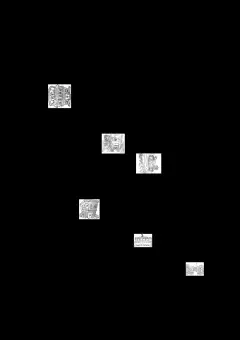
①路线(见下图)
②公园环境优美、凉爽,还可以游泳、野餐等;
要求:①词数:80词左右,开头已给出,不计入总词数。②文中不能出现自己的姓名
和所在学校的名称。
Cuihu Park is not far from here. It's easy to get there. Just go straight _______
_______________________________________________________________________Unit 3达标测试卷
第Ⅰ卷 听力部分
听力材料:
一、1.I live right next to a supermarket. It's very convenient.
2.Could you please tell me how to get to the post office?
3.Do you know if there are any public restrooms around here?
4.You can use the lift to go up and down.
5.Excuse me, which is the way to the clothes store?
二、6.M: Where's Jane? Is she in the classroom?
W:No, she's in her own room.
M:What's she doing?
W:Cleaning the floor.
Q:What's Jane doing?
7.M:Excuse me,can you tell me where I can find a bookstore in this town? I am a stranger
here.
W:Sure.There's a bookstore named Fancy on Seventh Street.
Q:Where's the bookstore?
8.W:What's wrong with you, Bob? You look very worried.
M:Well, Mother's Day is coming.I'd like to get a special present for my mother.But I can't
find one.
W:I know a mall on Main Street where you can buy special things.
Q:What would Bob like to do?
9.M:I left my umbrella in my room, Mary.Wait while I go back to get it.
W:You needn't do that.The weather report said it would clear up by noon.
Q:What will the man probably do?
10.W:I can't find the No.7 bus stop.I'd like to go to the Science Museum.
M:Well, you just go straight and turn left at the second crossing.You can find it on your
left.
Q:How will the woman get to the Science Museum?
三、Text 1
M:Excuse me,I wonder where I can get a toy.W:Go to the second floor and then turn left.
M:Is it just there?
W:No. There,you can see a bookstore. Go past it,and you will see a toy store.
M:Thanks. Could you tell me where the restroom is?
W:Pardon?
M:I wonder where I can find a toilet.
W:Go to the third floor and then turn right.
Text 2
M:Excuse me, madam. I can't read this timetable. When does Train 216 leave?
W:It leaves at 4:13 pm.
M:What time does it arrive in New York?
W:Wait a moment. Let me see. It arrives in New York at 6:25 pm.
M:Okay. I can read this. It's easier than I thought. One more thing — I'll come back on
Sunday. Should I use the same timetable?
W:No. On the next page, there are timetables for weekends and holidays.
M:Great! Thanks for your help.
W:You're welcome. Have a good trip.
四、One day,Li Ming's mother asked him to visit his aunt in Changsha.His mother
said,“Telephone the bus station and find out when the bus leaves.”Li Ming telephoned the
bus station.He asked ,“Could you please tell me when the bus leaves for Changsha
tomorrow?” The man answered,“The first bus leaves at 6:30 in the morning.There is a
bus every hour after that.”
The next morning Li Ming got to the bus station at 8:15.He waited and waited, but the
bus to Changsha didn't come.At 9:40 two buses to Changsha came together.One was seventy
minutes late.The other was ten minutes late.
Questions:16.Where does Li Ming's aunt live?
17.How did Li Ming go to his aunt's home?
18.What time does the first bus leave?
19.Who telephoned the bus station?
20.How many buses to Changsha came together?
听力答案:一、1~5:BAACC
二、6~10:ACBBA
三、11~15:BCBCA
四、16~20:CBBAB
第Ⅱ卷 笔试部分
五、21.B 点拨:考查宾语从句。由答语“Talking about festivals.”可知,询问的是“他
们正在做什么”。故选B。
22.A 点拨:the way to表示“去……的路”。
23.B 点拨:考查名词辨析。由答语中的“No.3 Bridge Street”可知是询问地址,所以用
address。
24.C 点拨:look forward to后接动名词。
25.C
26.B 点拨:frightening“令人恐惧的”,多用来描述事或物;frightened“害怕的”,多用
来修饰人。由题干知,第一个空是描述电影的,用frightening,第二个空是描述人的,
用frightened,故选B。
27.B 点拨:考查短语辨析。as usual“像往常一样”,at first“起初”,after all“毕竟”,so
far“到目前为止;迄今为止”。句意:“互联网在刚开始时只被政府使用。但是现在
被广泛地应用于各个领域。”所以选B。
28.A 点拨:考查名词辨析。choice“选择”,support“支持”,mixture“混合”,honour“荣
誉”。句意:除了离去,李明别无选择。所以选择A。
29.C 点拨:begin with“以……开始”; lead to“通向……”; depend on“取决于”;
think of “想起”。根据语境“还没有决定什么时候去”可知要取决于天气。
30.C 点拨:本题考查交际用语。I'm busy“我很忙”;hard to say“很难说”;of course“当
然”;never mind“别介意”。由答语的后半句“但是我也许晚一点儿”可知,答语的
前半句应为肯定回答,故选C。
31.A 点拨:考查宾语从句。宾语从句的语序使用陈述语序,由此可排除B、D两项;由
答语中的“Next month.”可知,使用一般将来时。故选A。 32.B
33.B 点拨:because“因为”;until“直到……为止”;since“自从……以来”; if“如果”。
句意:直到他的朋友告诉他汤姆才知道这件事。
34.D
35.A 点拨:考查交际用语。在英语中,常用could you please...;would you mind...;would you like...等形式来表达委婉的建议或请求。
六、36.B 点拨:本题考查连词的用法。空格前的“And we don't think about it.”与空格后
的“experts argue a food crisis(危机) is coming”之间是转折关系。but意为“但是”,
表示转折关系,符合文意。故选B。
37.A 点拨:本题考查动词辨析。change意为“改变”;find意为“找到”;get意为
“得到”;tell意为“告诉”。句意为:这场危机将会改变我们对食物的认识。故选
A。
38.C 点拨:本题考查介词短语辨析。instead of意为“代替,而不是”;thanks to意为
“幸亏,由于”;because of意为“因为”;as for意为“至于”。空格前的“Food is
in great need”和空格后的“a growing of world population”之间构成因果关系,即因
为世界人口增长,所以对食物的需求量非常大。故选C。
39.C 点拨:本题考查动词辨析。help意为“帮助”;have意为“有”;feed意为“喂养,
向……提供”;meet意为“见面”。由下文“As a result,the food prices get higher
and higher.”可知,到2050年,地球将需要为至少90亿人提供食物。故选C。
40.D 点拨:本题考查形容词辨析。busy意为“繁忙的”;tired意为“累的”;thirsty 意
为“渴的”;hungry意为“饿的”。结合语境可知,持续增长的人口数量导致了食
物危机和食物价格的上涨,因此世界将会变得既饥饿又拥挤。故选D。
41.A 点拨:本题考查形容词的比较级。由下文“Meat uses more natural resources(资源)
than grains(谷物).”可知,此处指有一个建议就是少吃肉。less意为“更少的”,符
合文意。故选A。
42.B 点拨:本题考查名词辨析。time意为“时间”;land意为“土地”;people意为
“人”;place意为“地方”。由下文“eating less meat will ________(44) more land
for farming”可知,此处指生产一磅肉比生产一磅谷物需要的土地多。故选B。
43.D 点拨:本题考查名词辨析。air意为“空气”;meat意为“肉”;money意为
“钱”;water意为“水”。由下文“it will save water”可知,生产同等重量的肉和蔬
菜,肉所需要的水是蔬菜所需水的5到10倍。故选D。
44.A 点拨:本题考查动词辨析。provide意为“提供”;produce意为“生产”;waste
意为“浪费”;need意为“需要”。句意为:因此,少吃肉将会为农业生产提供更多
的土地,并且会节约水资源。provide...for意为“为……提供”,符合文意。故选A。
45.C 点拨:本题考查形容词辨析。important意为“重要的”;hard意为“难的”;easy意为“容易的”;necessary意为“必要的”。由下文所举的“美国人爱吃肉”的例
子可知,此处指改变人们的饮食习惯并不容易。故选C。
46.D 点拨:本题考查副词辨析。never意为“从不”;seldom意为“很少”;hardly意
为“几乎不”;always意为“总是”。由下文“In general,they eat twice as much
meat as people in other countries.”可知,美国人吃的肉是其他国家的人的两倍,故此
处指美国人总是爱吃肉。故选D。
47.B 点拨:本题考查代词的用法。由上文“sales of meat have doubled in the last 20
years”可知,空格处代指“sales of meat”,表示复数概念,应用they。故选B。
48.A 点拨:本题考查动词辨析。continue意为“继续”;stop意为“停止”;have意为
“有”;start意为“开始”。句意为:对肉类需求的增长会继续给自然资源增加压
力。故选A。
49.C 点拨:本题考查宾语从句的引导词辨析。分析句子结构可知,空格处引导宾语从
句,在从句中作“eat”的宾语,应用what。句意为:因此,我们需要重新考虑我们每
天吃的东西。故选C。
50.B 点拨:本题考查副词辨析。quickly意为“迅速地”;completely意为“完全地”;
finally意为“最终地”;especially意为“尤其”。由下文“But we need to eat more
grains and less meat.”可知,此处指对于喜欢吃肉的人来说,我们不必完全放弃吃肉,
而是要多吃谷物少吃肉。故选B。
七、A 51.F 点拨:根据第一段第一句“The police find most criminals(罪犯) because
somebody tells them who the criminals are.”可知。
52.T 点拨:根据第一段中“When there is a bank robbery (抢劫), the police first look
through their computers for the names of the bank robbers that they know about.”可知。
53.T 点拨:根据第三段中“Everyone's DNA is different...”可知。
54.F 点拨:根据第二段中“Or they take something away on their shoes or clothes, like
dirt or animal hair.”可知。
55.F 点拨:通读全文可知这是关于警察如何破案的短文。
B 56.C 点拨:细节理解题。由第二段中的“...and a small piece of bread in their left
hand,which is then used to help push food gently onto the fork.”可知。
57.B 点拨:细节理解题。由第四段第一句“In Russia, you're not supposed to look into
another one's plate.”可知。58.B 点拨:细节理解题。由第五段“In Chile(智利), dishes should be...taken away from
the right.”可知。
59.D 点拨:细节理解题。由第六段第一句“In India,you should use the right hand to
take food...”可知,在印度,人们用右手取食物。
60.C 点拨:细节理解题。由第六段最后一句“...on a banana leaf that has been
cleaned...”可知。
C 61.shake hands
62.first name and last name
63.Professor Smith
64.Pleased to meet you. 65.never
八、66~70:FDBEA
九、71.impolite 72.speaker
73.meeting 74.suggestions 75.says
十、76.good/great 77.much
78.trees 79.look 80.animals
81.places 82.fly 83.busy
84.ourselves 85.forward
十一、范文:
Cuihu__Park__is__not__far__from__here.It's__easy__to__get____ there ① .Just go
straight and turn right at the first corner.Walk along the road and turn left when you find a
hospital.Cuihu Park is down the street on your right. Across__from② the park is a restaurant.
The park is really a good place to__have__fun③.It's beautiful and cool with the trees and
flowers.You can swim,play games or have a picnic there.It's very relaxing.You may also get
a good chance to practice Chinese.I hope you will enjoy__yourselves④.
点评:
①处there是副词,to要省略,这是使用get to应注意的地方。
②处across from表示“在……对面”,使用很恰当。
③处使用动词不定式作后置定语。
④处enjoy yourselves表示“玩得高兴”,语言简洁,意思到位。