五年级英语下册总复习
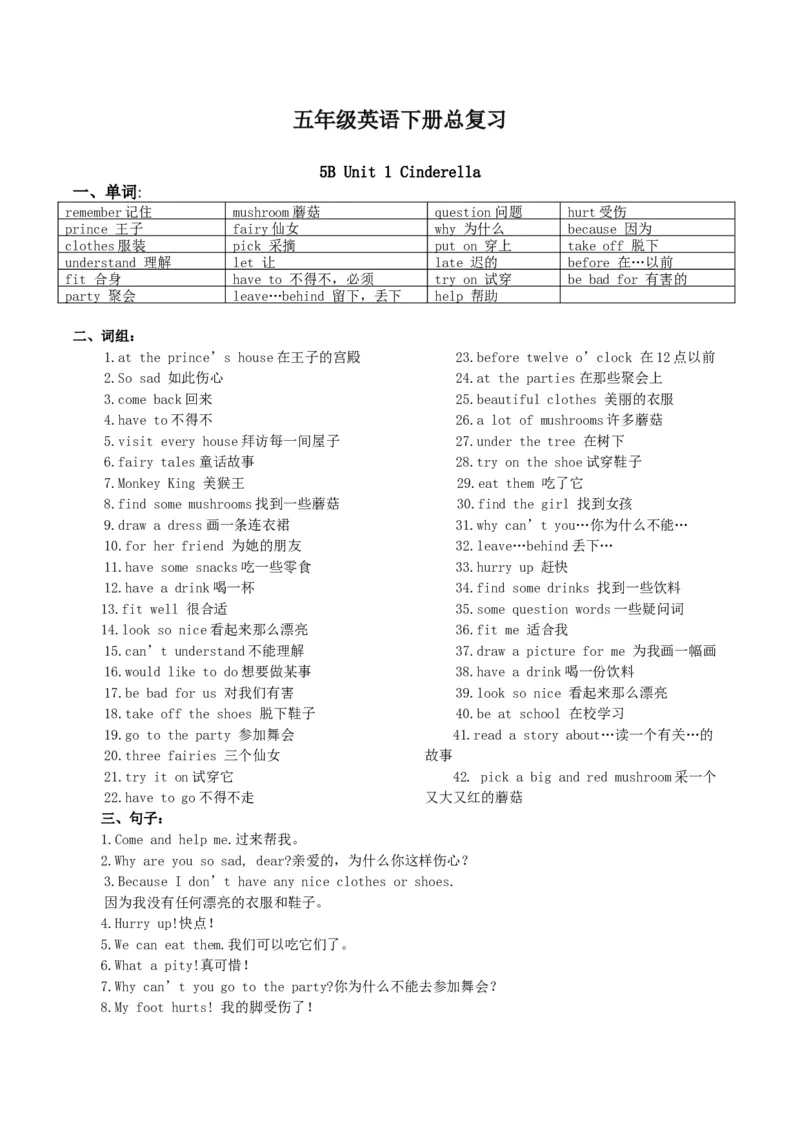
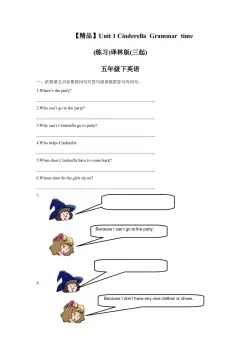
5B Unit 1 Cinderella
一、单词:
remember记住 mushroom蘑菇 question问题 hurt受伤
prince 王子 fairy仙女 why 为什么 because 因为
clothes服装 pick 采摘 put on 穿上 take off 脱下
understand 理解 let 让 late 迟的 before 在…以前
fit 合身 have to 不得不,必须 try on 试穿 be bad for 有害的
party 聚会 leave…behind 留下,丢下 help 帮助
二、词组:
1.at the prince’s house在王子的宫殿 23.before twelve o’clock 在12点以前
2.So sad 如此伤心 24.at the parties在那些聚会上
3.come back回来 25.beautiful clothes 美丽的衣服
4.have to不得不 26.a lot of mushrooms许多蘑菇
5.visit every house拜访每一间屋子 27.under the tree 在树下
6.fairy tales童话故事 28.try on the shoe试穿鞋子
7.Monkey King 美猴王 29.eat them 吃了它
8.find some mushrooms找到一些蘑菇 30.find the girl 找到女孩
9.draw a dress画一条连衣裙 31.why can’t you…你为什么不能…
10.for her friend 为她的朋友 32.leave…behind丢下…
11.have some snacks吃一些零食 33.hurry up 赶快
12.have a drink喝一杯 34.find some drinks 找到一些饮料
13.fit well 很合适 35.some question words一些疑问词
14.look so nice看起来那么漂亮 36.fit me 适合我
15.can’t understand不能理解 37.draw a picture for me 为我画一幅画
16.would like to do想要做某事 38.have a drink喝一份饮料
17.be bad for us 对我们有害 39.look so nice 看起来那么漂亮
18.take off the shoes 脱下鞋子 40.be at school 在校学习
19.go to the party 参加舞会 41.read a story about…读一个有关…的
20.three fairies 三个仙女 故事
21.try it on试穿它 42. pick a big and red mushroom采一个
22.have to go不得不走 又大又红的蘑菇
三、句子:
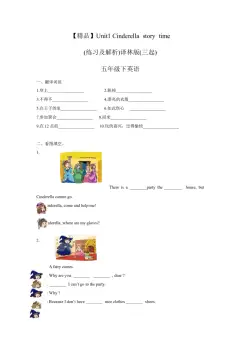
1.Come and help me.过来帮我。
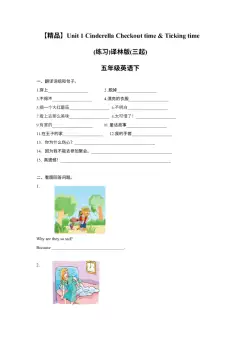
2.Why are you so sad, dear?亲爱的,为什么你这样伤心?
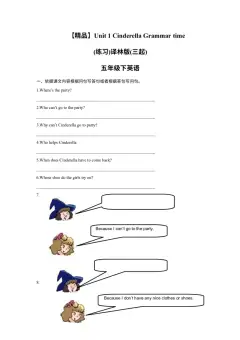
3.Because I don’t have any nice clothes or shoes.
因为我没有任何漂亮的衣服和鞋子。
4.Hurry up!快点!
5.We can eat them.我们可以吃它们了。
6.What a pity!真可惜!
7.Why can’t you go to the party?你为什么不能去参加舞会?
8.My foot hurts! 我的脚受伤了!9.I like reading stories about the Monkey King and Nezha. 我喜欢读猴王和哪吒的故事。
10.Because these mushrooms are bad for us.因为这些蘑菇对我们有害的。
11.Cinderella has a good time at the party. 灰姑娘在舞会上度过了美好时光。
12.Many girls try on the shoe, but it does not fit.许多女孩试穿这只鞋,但是不合适。
13.Why is Yang Ling not at school today? 杨玲为什么今天不在学校?
14.Why does Nancy take off her coat?南希为什么脱下她的外套?
15.She leaves a shoe behind. 她留下一只鞋。
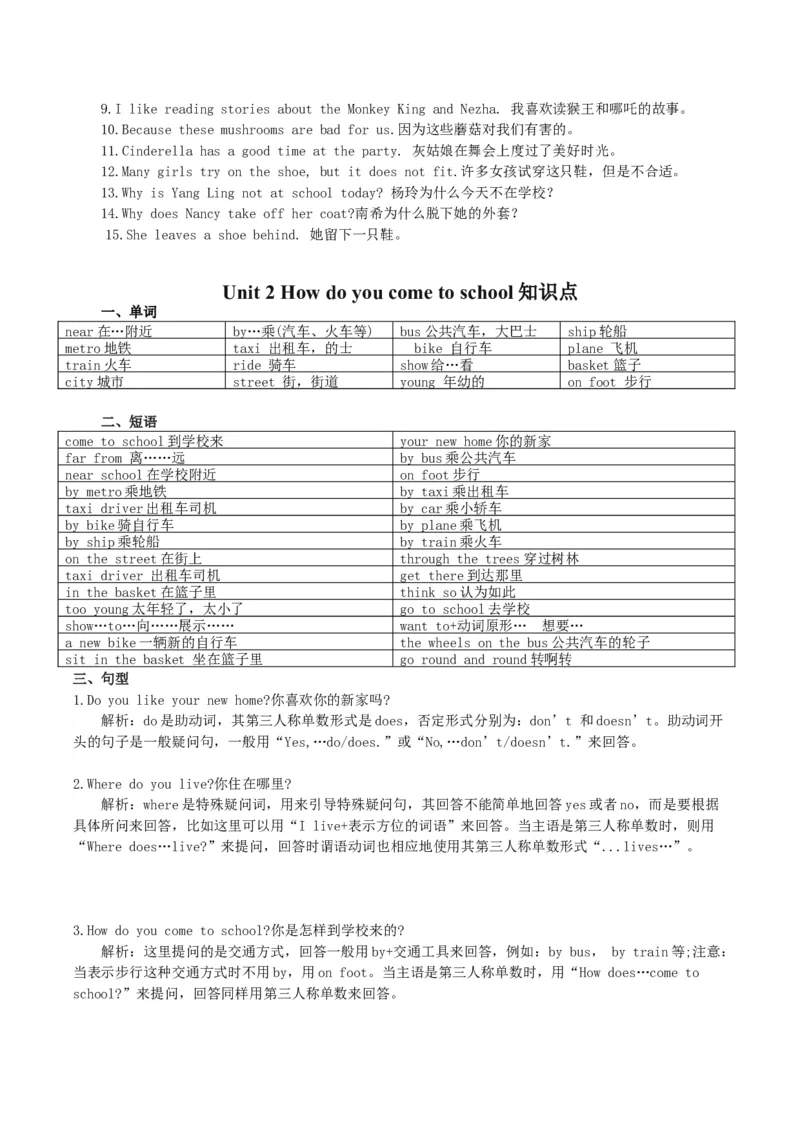
Unit 2 How do you come to school 知识点
一、单词
near在…附近 by…乘(汽车、火车等) bus公共汽车,大巴士 ship轮船
metro地铁 taxi 出租车,的士 bike 自行车 plane 飞机
train火车 ride 骑车 show给…看 basket篮子
city城市 street 街,街道 young 年幼的 on foot 步行
二、短语
come to school到学校来 your new home你的新家
far from 离……远 by bus乘公共汽车
near school在学校附近 on foot步行
by metro乘地铁 by taxi乘出租车
taxi driver出租车司机 by car乘小轿车
by bike骑自行车 by plane乘飞机
by ship乘轮船 by train乘火车
on the street在街上 through the trees穿过树林
taxi driver 出租车司机 get there到达那里
in the basket在篮子里 think so认为如此
too young太年轻了,太小了 go to school去学校
show…to…向……展示…… want to+动词原形… 想要…
a new bike一辆新的自行车 the wheels on the bus公共汽车的轮子
sit in the basket 坐在篮子里 go round and round转啊转
三、句型
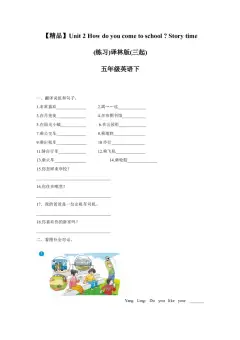
1.Do you like your new home?你喜欢你的新家吗?
解析:do是助动词,其第三人称单数形式是does,否定形式分别为:don’t 和doesn’t。助动词开
头的句子是一般疑问句,一般用“Yes,…do/does.”或“No,…don’t/doesn’t.”来回答。
2.Where do you live?你住在哪里?
解析:where是特殊疑问词,用来引导特殊疑问句,其回答不能简单地回答yes或者no,而是要根据
具体所问来回答,比如这里可以用“I live+表示方位的词语”来回答。当主语是第三人称单数时,则用
“Where does…live?”来提问,回答时谓语动词也相应地使用其第三人称单数形式“...lives…”。
3.How do you come to school?你是怎样到学校来的?
解析:这里提问的是交通方式,回答一般用by+交通工具来回答,例如:by bus, by train等;注意:
当表示步行这种交通方式时不用by,用on foot。当主语是第三人称单数时,用“How does…come to
school?”来提问,回答同样用第三人称单数来回答。4.Bobby wants to show his bike to Sam.鲍比想要把他的自行车给山姆看。
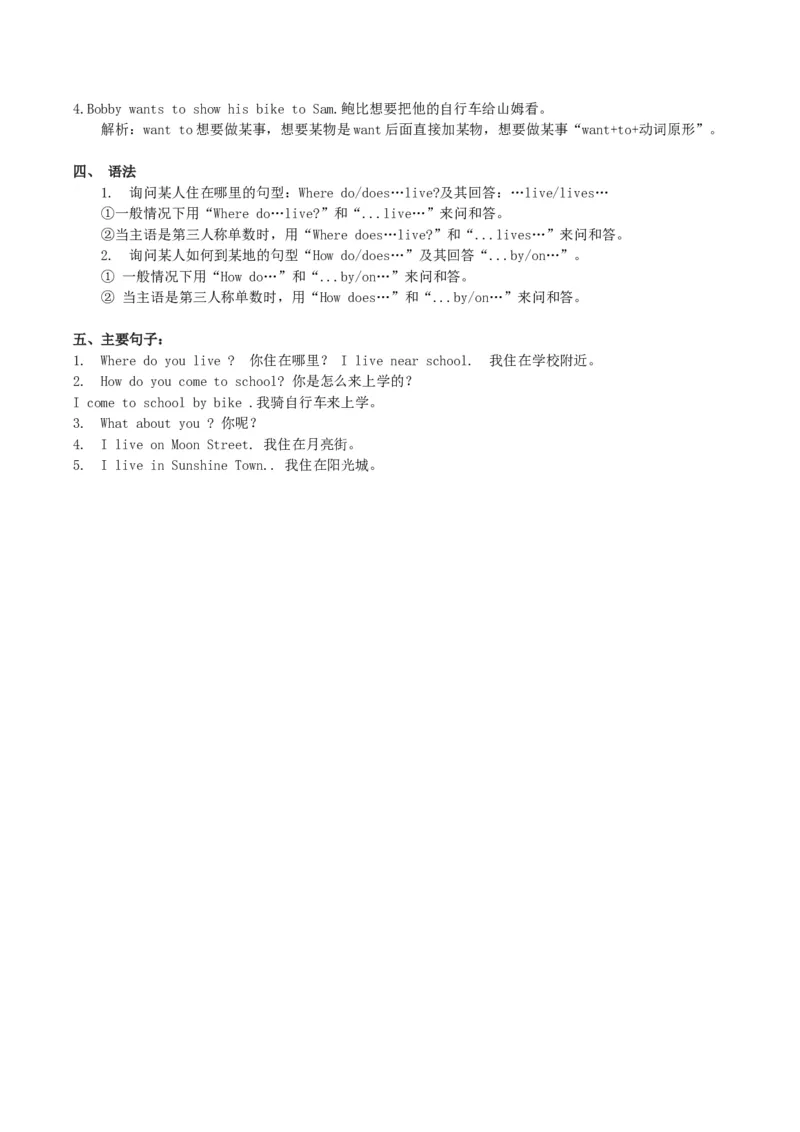
解析:want to想要做某事,想要某物是want后面直接加某物,想要做某事“want+to+动词原形”。
四、 语法
1. 询问某人住在哪里的句型:Where do/does…live?及其回答:…live/lives…
①一般情况下用“Where do…live?”和“...live…”来问和答。
②当主语是第三人称单数时,用“Where does…live?”和“...lives…”来问和答。
2. 询问某人如何到某地的句型“How do/does…”及其回答“...by/on…”。
① 一般情况下用“How do…”和“...by/on…”来问和答。
② 当主语是第三人称单数时,用“How does…”和“...by/on…”来问和答。
五、主要句子:
1. Where do you live ? 你住在哪里? I live near school. 我住在学校附近。
2. How do you come to school? 你是怎么来上学的?
I come to school by bike .我骑自行车来上学。
3. What about you ? 你呢?
4. I live on Moon Street. 我住在月亮街。
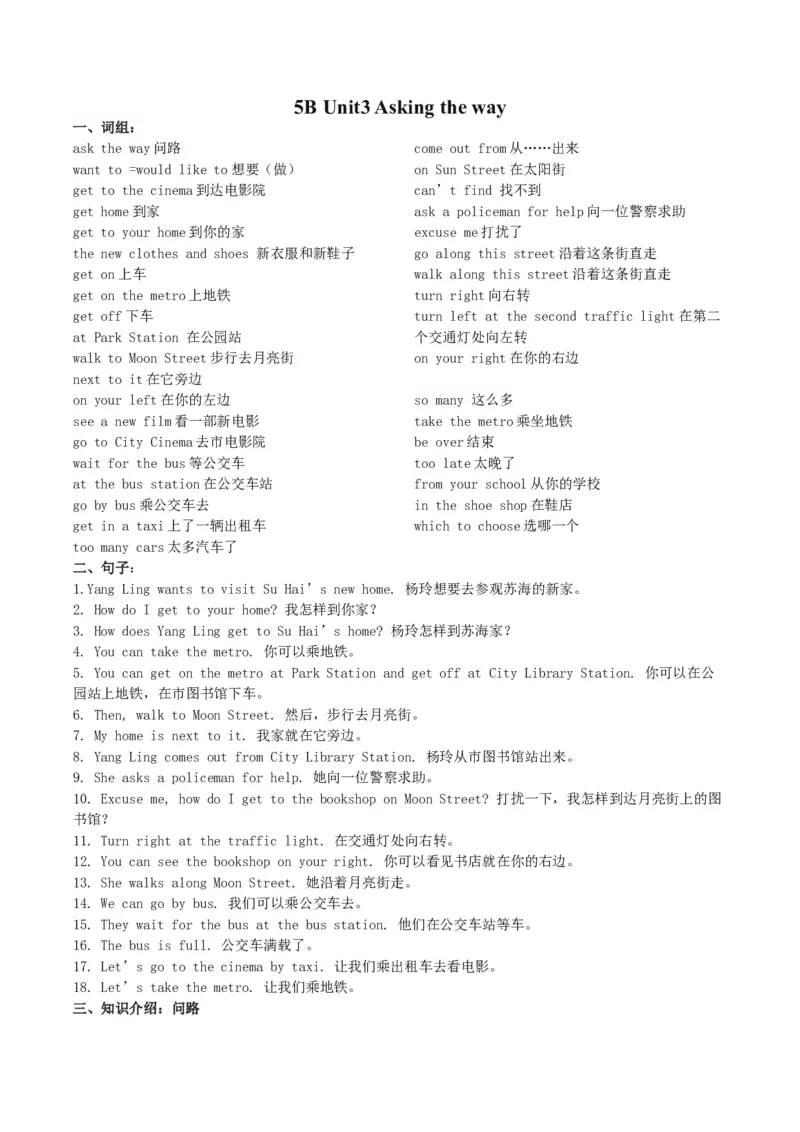
5. I live in Sunshine Town.. 我住在阳光城。5B Unit3 Asking the way
一、词组:
ask the way问路 come out from从……出来
want to =would like to想要(做) on Sun Street在太阳街
get to the cinema到达电影院 can’t find 找不到
get home到家 ask a policeman for help向一位警察求助
get to your home到你的家 excuse me打扰了
the new clothes and shoes 新衣服和新鞋子 go along this street沿着这条街直走
get on上车 walk along this street沿着这条街直走
get on the metro上地铁 turn right向右转
get off下车 turn left at the second traffic light在第二
at Park Station 在公园站 个交通灯处向左转
walk to Moon Street步行去月亮街 on your right在你的右边
next to it在它旁边
on your left在你的左边 so many 这么多
see a new film看一部新电影 take the metro乘坐地铁
go to City Cinema去市电影院 be over结束
wait for the bus等公交车 too late太晚了
at the bus station在公交车站 from your school从你的学校
go by bus乘公交车去 in the shoe shop在鞋店
get in a taxi上了一辆出租车 which to choose选哪一个
too many cars太多汽车了
二、句子:
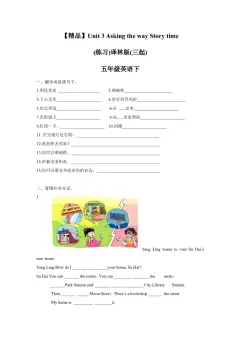
1.Yang Ling wants to visit Su Hai’s new home. 杨玲想要去参观苏海的新家。
2. How do I get to your home? 我怎样到你家?
3. How does Yang Ling get to Su Hai’s home? 杨玲怎样到苏海家?
4. You can take the metro. 你可以乘地铁。
5. You can get on the metro at Park Station and get off at City Library Station. 你可以在公
园站上地铁,在市图书馆下车。
6. Then, walk to Moon Street. 然后,步行去月亮街。
7. My home is next to it. 我家就在它旁边。
8. Yang Ling comes out from City Library Station. 杨玲从市图书馆站出来。
9. She asks a policeman for help. 她向一位警察求助。
10. Excuse me, how do I get to the bookshop on Moon Street? 打扰一下,我怎样到达月亮街上的图
书馆?
11. Turn right at the traffic light. 在交通灯处向右转。
12. You can see the bookshop on your right. 你可以看见书店就在你的右边。
13. She walks along Moon Street. 她沿着月亮街走。
14. We can go by bus. 我们可以乘公交车去。
15. They wait for the bus at the bus station. 他们在公交车站等车。
16. The bus is full. 公交车满载了。
17. Let’s go to the cinema by taxi. 让我们乘出租车去看电影。
18. Let’s take the metro. 让我们乘地铁。
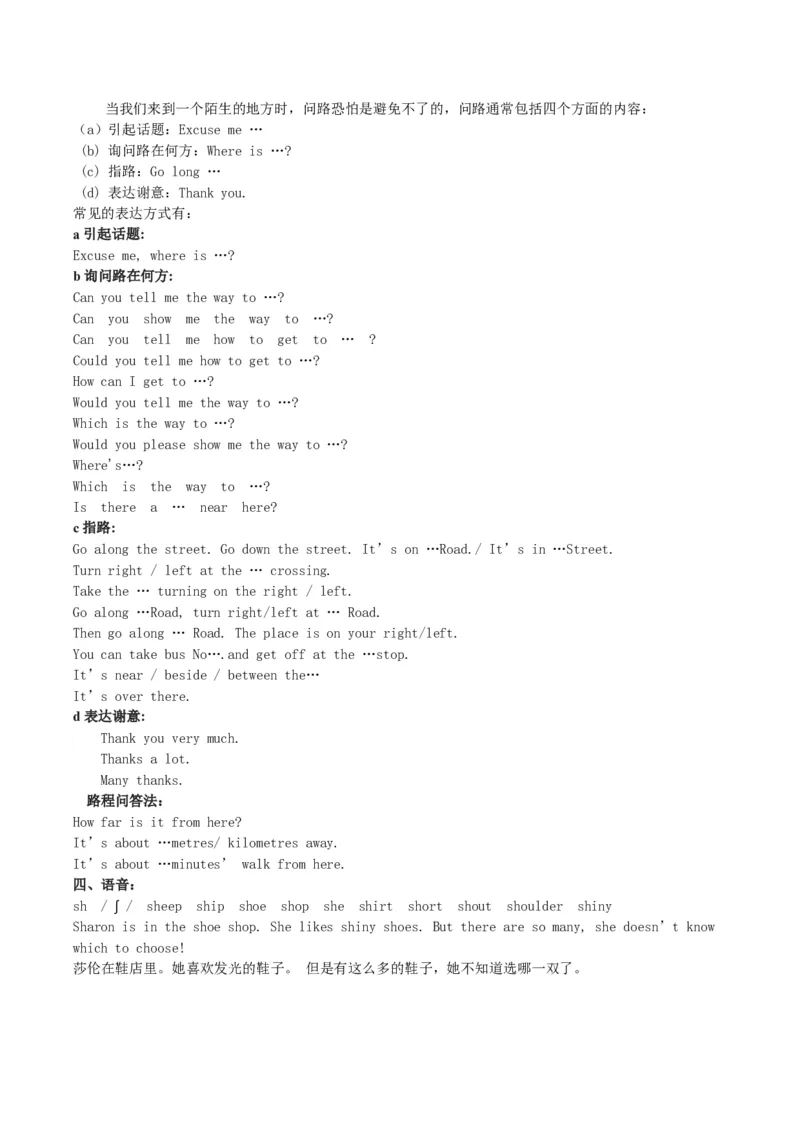
三、知识介绍:问路当我们来到一个陌生的地方时,问路恐怕是避免不了的,问路通常包括四个方面的内容:
(a)引起话题:Excuse me …
(b) 询问路在何方:Where is …?
(c) 指路:Go long …
(d) 表达谢意:Thank you.
常见的表达方式有:
a 引起话题:
Excuse me, where is …?
b 询问路在何方:
Can you tell me the way to …?
Can you show me the way to …?
Can you tell me how to get to … ?
Could you tell me how to get to …?
How can I get to …?
Would you tell me the way to …?
Which is the way to …?
Would you please show me the way to …?
Where's…?
Which is the way to …?
Is there a … near here?
c 指路:
Go along the street. Go down the street. It’s on …Road./ It’s in …Street.
Turn right / left at the … crossing.
Take the … turning on the right / left.
Go along …Road, turn right/left at … Road.
Then go along … Road. The place is on your right/left.
You can take bus No….and get off at the …stop.
It’s near / beside / between the…
It’s over there.
d 表达谢意:
Thank you very much.
Thanks a lot.
Many thanks.
路程问答法:
How far is it from here?
It’s about …metres/ kilometres away.
It’s about …minutes’ walk from here.
四、语音:
sh / ʃ / sheep ship shoe shop she shirt short shout shoulder shiny
Sharon is in the shoe shop. She likes shiny shoes. But there are so many, she doesn’t know
which to choose!
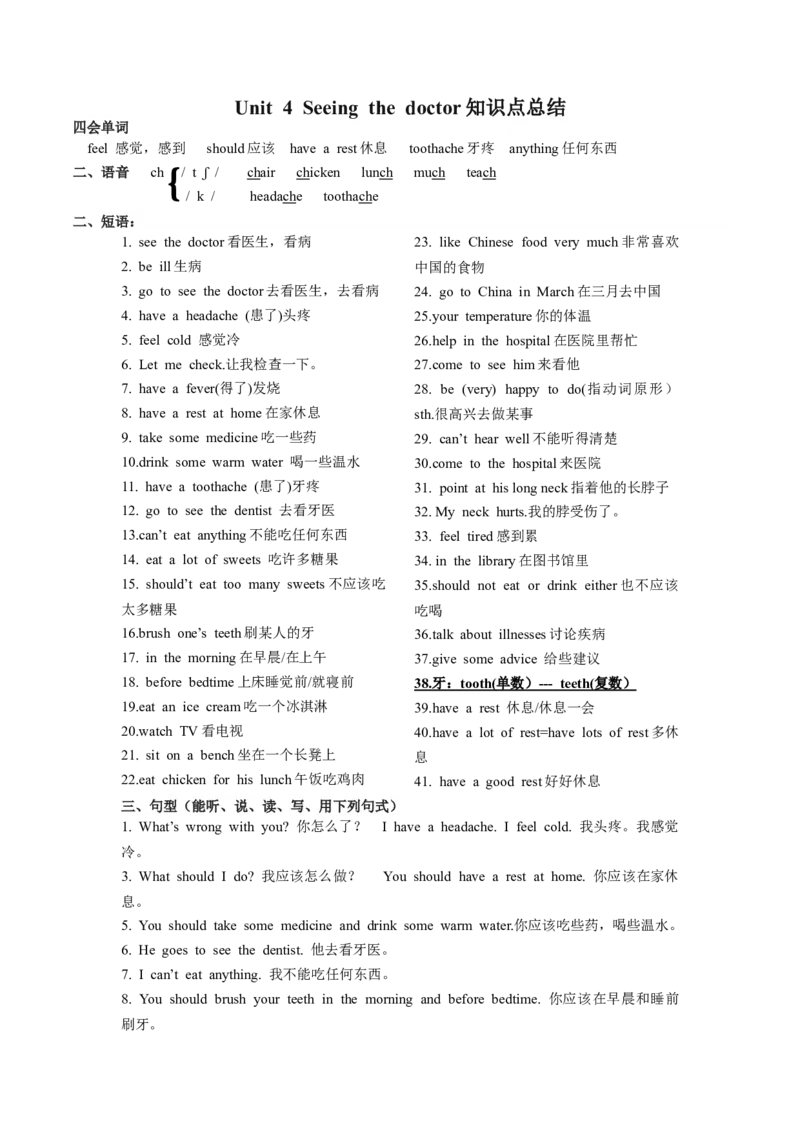
莎伦在鞋店里。她喜欢发光的鞋子。 但是有这么多的鞋子,她不知道选哪一双了。Unit 4 Seeing the doctor 知识点总结
四会单词
feel 感觉,感到 should应该 have a rest休息 toothache牙疼 anything任何东西
二、语音 ch / t ʃ / chair chicken lunch much teach
/ k / headache toothache
二、短语:
1. see the doctor看医生,看病 23. like Chinese food very much非常喜欢
2. be ill生病 中国的食物
3. go to see the doctor去看医生,去看病 24. go to China in March在三月去中国
4. have a headache (患了)头疼 25.your temperature你的体温
5. feel cold 感觉冷 26.help in the hospital在医院里帮忙
6. Let me check.让我检查一下。 27.come to see him来看他
7. have a fever(得了)发烧 28. be (very) happy to do(指动词原形)
8. have a rest at home在家休息 sth.很高兴去做某事
9. take some medicine吃一些药 29. can’t hear well不能听得清楚
10.drink some warm water 喝一些温水 30.come to the hospital来医院
11. have a toothache (患了)牙疼 31. point at his long neck指着他的长脖子
12. go to see the dentist 去看牙医 32. My neck hurts.我的脖受伤了。
13.can’t eat anything不能吃任何东西 33. feel tired感到累
14. eat a lot of sweets 吃许多糖果 34. in the library在图书馆里
15. should’t eat too many sweets不应该吃 35.should not eat or drink either也不应该
太多糖果 吃喝
16.brush one’s teeth刷某人的牙 36.talk about illnesses讨论疾病
17. in the morning在早晨/在上午 37.give some advice 给些建议
18. before bedtime上床睡觉前/就寝前 38 . 牙: tooth( 单数) --- teeth( 复数)
19.eat an ice cream吃一个冰淇淋 39.have a rest 休息/休息一会
20.watch TV看电视 40.have a lot of rest=have lots of rest多休
21. sit on a bench坐在一个长凳上 息
22.eat chicken for his lunch午饭吃鸡肉 41. have a good rest好好休息
三、句型(能听、说、读、写、用下列句式)
1. What’s wrong with you? 你怎么了? I have a headache. I feel cold. 我头疼。我感觉
冷。
3. What should I do? 我应该怎么做? You should have a rest at home. 你应该在家休
息。
5. You should take some medicine and drink some warm water.你应该吃些药,喝些温水。
6. He goes to see the dentist. 他去看牙医。
7. I can’t eat anything. 我不能吃任何东西。
8. You should brush your teeth in the morning and before bedtime. 你应该在早晨和睡前
刷牙。11. How do you feel now? 你现在感觉怎么样?
13. Can you help me? 你能帮助我吗?
14. Giraffe points at his long neck. 长颈鹿指着他的长脖子。
9. Why does he have a toothache? 他为什么牙疼?
10.Charlie is sitting on a bench.查理正坐在一个长凳上。
11.He’s going to China in March.他将要在三月去中国。
12.Your temperature is 102°F.你的体温是102华氏度。(美国等少数英语国家用华氏度)
13.Your temperature is 39°C.你的体温是39摄氏度。(我国和其他大多数国家用摄氏度)
四、语法
1. 询问某人身体状况的基本句型。
(1) What’s the matter (with...)?= What’s wrong with ..(可+人称代词宾格you, him, her,
them, us…)?
I/We/They have...... 我/我们/他们患了.... He/She/It has 他/她/它得了......
(2) How do you feel now? 你现在感觉怎么样? I feel.... 我感觉...
2. What should +人称主格(he/she/we/they)? (Shouldn’t=should not)
3.合成词:两个单词连在一起合成一个新词,前一个词修饰或限制后一个词。
此单元中如:headache、toothache、bedtime........
4. too+形容词/副词 ,意思是太...., 如too many/too high/too hot/too cold......
5. also在句中,实意动词前,特殊动词后,如:She can also swim.
也,还 too在句尾,肯定句和疑问句都能用,多用于口语。
either在句尾,通常用于否定句。
6. something :某事,某物一般用于肯定句。(用在疑问句中表示希望得到肯定回答)
anything:一般用于否定句或疑问句,用来代替something。(用于肯定句可表示任何事
物)
7. 吃,如:have a cake
多意词:have 有,如:have a cat can/can’t 情态动词+动词
原形
举行/举办,如:have a party should/shouldn’t
得了,患有,如:have a cold
8.feel(系动词)+形容词 :表示感觉怎么样,如,feel ill/cold/hungry/hot.....
9.
主格(主语) I we you he she it they
宾格(宾语) me us you him her it them
形容词性物主代词 my our your his her its their
(+名词)
小作文:
What’s wrong with Tim?
Tim is ill. He has a fever. He feels cold. He should go to see the doctor.He should
take some medicine and drink some warm water.He should have a lot of rest at home.He shouldn’t watch TV.
注意:本单元出现的(动词+ing)形式,多是动名词,如:seeing,eating,
但在Sound time部分: Charlie is sitting on a bench . 此句中是现在分词,
在: He ’ s going to China in March . 中,be going to 结构表示主观意愿的将要做
某事
5B Unit 5 知识点
词组:
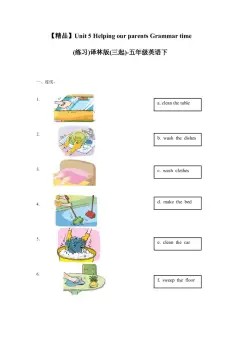
1. help our parents帮助我们的父母 18.read newspaper看报纸
2.Saturday morning星期六上午 19. make the bed 整理床铺
3.help him帮助他 20. wash clothes洗衣服
4. clean the car洗车 21.in the study在书房
5.cook breakfast 做早饭 22. listen to her听她讲
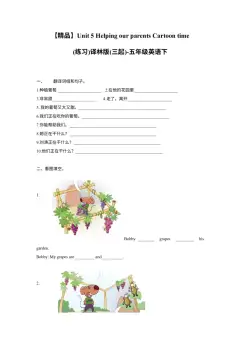
6.in the kitchen在厨房 23.grow grapes种葡萄
7.in the living room在客厅 24. in his garden在他的花园里
8.sweep the floor 扫地 25. big and sweet 又大又甜
9.in his bedroom在他的卧室里 26.many pests许多害虫
10. in the afternoon在下午 27.on the grapes 在葡萄上
11. my cousin我的表弟/表妹 28. on Sunday afternoon在星期天下午
12. be busy忙碌的 29. so sweet如此甜
13.cook dinner 做晚饭 30. go away 走了,离开
14. help her帮助她 31. some ladybirds 一些瓢虫
15.wash the dishes洗碗 32. do housework做家务
16. clean the table擦桌子 33.help me cook dinner 帮我做晚饭
17. eat fruit吃水果 34. to be continued 待续
句子:
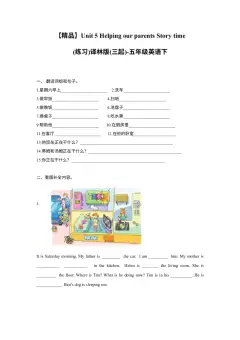
1.It’s Saturday morning.现在是星期六上午。
2. My father is cleaning the car.我的爸爸正在清洗小汽车。
3.I’m helping him.我在帮助他。
4. What are you doing? 你在干什么? I’m cleaning the table.我在擦桌子。
4. He grows grapes in his garden.他在他的花园种植葡萄。
5. Helen is in the living room.海伦在客厅。
6. What is she doing? 她在干什么? She is sweeping the floor.她在扫地。
7. What is he doing now? 他正在干什么? He is sleeping.他正在睡觉。
8. -What are they doing now? -他们现在在于什么?
-They are helping their parents. -他们在帮助他们的父母。
9. My mother is busy. 我的妈妈正忙着。
10. She is cooking dinner. 她在做晚饭。
11. What is Helen doing? 海伦在干什么? Helen is washing the dishes.海伦在洗碗。
12. My grapes are big and sweet. 我的葡萄又大又甜。13.There are some pests on the grapes.葡萄上有一些害虫。
13. The pests go away,but the ladybirds do not.害虫走了,但瓢虫们留下了。
14. They are eating fruit in the living room. 他们在客厅吃水果。
15. In the morning, I like to sing and watch the flowers growing.在早晨,我喜欢歌唱,看花儿
生长。
16. In the evening, I like to sit and listen to the wind blowing.在晚上,我喜欢静听风儿吹。
17. My mother is cooking breakfast in the kitchen.我的妈妈在厨房里做早饭。
作文:
A busy day
We have a busy day. My father is cleaning the car. My mother is cooking. I am making the bed.
We are busy but happy.
现在分词:
do-doing clean-cleaning cook-cooking eat-eating
help-helping wash-washing watch-watching sweep-sweeping
make-making sing-singing grow-growing blow-blowing
take-taking
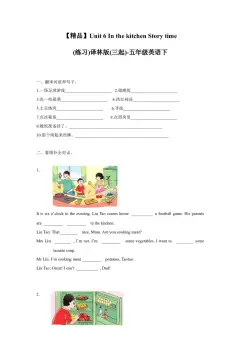
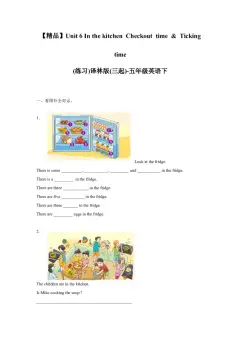
5B Unit 6 In the kitchen
一、、词组:
1. six o’clock in the evening 晚上六点钟 2. come home from a football game足球赛后回到家
3. cook dinner in the kitchen 在厨房里做饭 4. meat smells nice 肉闻起来很美味
5. cook meat 煮肉 6. wash some vegetables 洗一些蔬菜
7. cook some tomato soup 做番茄汤 8.cook meat with potatoes 烧些土豆烧肉
9. look for some juice 寻找一些果汁 10. in the fridge 在冰箱里
11. some orange/apple juice 一些橙汁/苹果汁 12. Dinner is ready. 晚餐准备好了。
13. eat the meat 吃肉 14. eat fruit 吃水果
15. you win 你赢了 16. the queen 女王,王后
17. come through our little town 通过我们的小镇 18. wear her golden crown 戴着她金色的皇冠
19. eat with chopsticks 用筷子吃饭 20. It’s yummy!=It’s delicious! 真美味!
21. eat with a knife and fork 用刀叉吃饭 22. a lot of pests and ladybirds 许多害虫和瓢虫
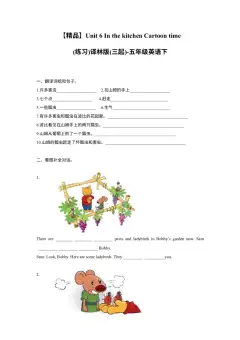
23. in Bobby’s garden 在波比的花园里 24. come to help Bobby 来帮助波比
25. see two ladybirds on Sam’s hand 26. catch a ladybird from the grapes
看到萨姆手上有两只瓢虫 从葡萄上抓到一只瓢虫
27. have seven spots 有七个斑点 28. how many spots 有多少个斑点
29. drive the bad ladybirds and the pests away 30. help in the kitchen 在厨房帮忙
把瓢虫和害虫赶走
二、句型:
1. That smells nice. 那个闻起来好香。2. Are you cooking meat? No,I’m not. 你在煮肉吗?没有,我没在煮肉。
3. I can’t wait, Dad! 爸爸,我等不及了!
4. Dinner is ready. 晚饭好了。
5. How’s the meat,Taotao? 涛涛,肉的味道怎么样?It’s yummy,Dad.爸爸,肉好吃。
6. You’re a great cook! 你做菜很棒!
7. They have seven sports. 它们有七个斑点。
8. There is some bread in the fridge. 冰箱里有些面包。
9. There are three potatoes in the fridge. 冰箱里有三个土豆。
10. Is he looking for some tomatoes? Yes, he is. 他在找番茄吗?是的,他在寻找。
四、语音:字母组合 ‘qu’ 在单词中的读音 /kw/ 如:quick , quiet ,question,quite, queen
五、语法总结:本单元的重点是现在进行时的一般疑问句及其回答,同时用 there be句型
呈现了可数名词和不可数名词的用法。
现在进行时的一般疑问句结构: Be 动词 + 主语 + 动词 ing+ 其他 ?
肯定回答:Yes,主语+be动词。否定回答:No,主语+be动词+not。例:
Is he running ? Yes,he is. /No,he isn’t. Are they climbing? Yes, they are. /No, they aren’t.
There be ...句型表示的是 “某处有(存在)某人或某物”, There be 结构强调的是“存
在关系”。其结构为There be(is,are)+名词+地点。There be 句型中的be 应和其后出现的
主语在数上一致,即“就近原则”,例如:
There be后接的如果是可数名词单数或不可数名词时,be只能是单数形式is;
如:There is a book on the desk.
There be后接的如果是可数名词复数时,一定要用复数形式are .
如:There are some books on the desk.
三,语法
There be 与have/has用法区别
1、There be 句型表示:在某地有某物(或人)
2、在there be 句型中,主语是单数,be 动词用is ; 主语是复数,be 动词用are ; 如有几件物品,be 动词根据最靠
近be 动词的那个名词决定。
3、there be 句型的否定句在be 动词后加not , 一般疑问句把be 动词调到句首。
4、there be句型与have(has) 的区别:there be 表示在某地有某物(或人);have(has) 表示某人拥有某物。
5、some 和any 在there be 句型中的运用:some 用于肯定句,any 用于否定句或疑问句。
6、and 和or 在there be句型中的运用:and 用于肯定句,or 用于否定句或疑问句。
7、针对数量提问的特殊疑问句的基本结构是:
How many + 名词复数 + are there + 介词短语?How much + 不可数名词 + is there + 介词短语?
8、针对主语提问的特殊疑问句的基本结构是:
What’s + 介词短语?
5B Unit7 Chinese festivals
【重要词汇】
festival 节日 June 六月 mountain 山
spring 春天 dragon 龙 or 或者
January 一月 race 比赛 songbird 鸣鸟
February 二月 place 地方 knock 敲
call 称呼,叫作 September 九月 Halloween 万圣节
together 一起 October 十月 know 知道
dumpling 饺子 November 十一月
May 五月 climb 爬,攀
【短语归纳】
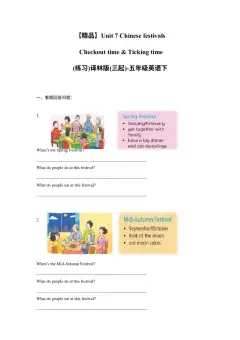
get together with their families 和家人团聚 dress up 装扮
eat rice dumplings 吃粽子 knock on people’s doors 敲人们的门
dragon boat races 龙舟比赛 on Mother’s Day 在母亲节
in some places 在一些地方 a day for mothers 母亲们的一天
at Mid-Autumn Festival 在中秋节 on the second Sunday of May 在五月的第二
in September or October 在九月或十月 个星期日
look at the moon at night 晚上赏月 give their mothers presents 给他们的母亲礼
eat moon cakes 吃月饼 物
climb mountains 爬山 That’s a good idea! 好主意!
sit in the tree 坐在树上 talk about the present for Mum 讨论给妈妈的
sing songs to me 唱歌给我听 礼物
on the thirty-first of October在十月三十一号
What about a card and some flowers? 一张卡片和一些花怎么样?
【重难点梳理】
1. “传统节日”汇总
Spring Festival 春节
Dragon Boat Festival 端午节
Mid-Autumn Festival 中秋节
Double Ninth Festival 重阳节
注意:上面的几个传统节日,前面的介词用at
拓展:节日前面的介词常用两个:at和on,具体的区别如下:
①不带 da y 的节日,用 a t
at Christmas 在圣诞节
②带 da y 的节日,用 on
on Children’s Day 在儿童节on Teachers’ Day 在教师节
介词填空:______ Spring Festival _______ Christmas Day
2. “十二月”大集合
January 一月 October 十月 August 八月
February 二月 May 五月 September 九月
March 三月 June 六月 November 十一月
April 四月 July 七月 December 十二月
月份前面用介词 in
Christmas is in December.
注意:如果表示具体的某一天(几月几日),则用介词on
Christmas is on December,25.
常见短语
summer holiday 暑假 寒假:_______________________
季节前面也用介词in
In winter, we can make snowmen. 我们可以在冬天堆雪人。
我们可以在夏天去游泳。
__________________________________
我们可以在春天放风筝。
__________________________________
5B Unit8 Birthdays
一、 词汇
A.单词
Birthday 生日
eleventh 第十一
together 一起 August 八月 answer 答案
eighth 第八 December 十二月 fourth 第四
April 四月 hero 英雄 start 开始
go shopping 去购物 play 戏,喜剧 fight 打仗,大家
March 三月 number 数字
July 七月 password 密码
B.词组
1. on the eleventh of May 在5月11日
2.Su Yang’s birthday 苏阳的生日
3. on her birthday 在她的生日那天
4. eat (some) noodles 吃面条
5. have a big dinner with our parents and grandparents
和我们的父母和祖父母吃大餐
6. a birthday cake 一块生日蛋糕 7. have a party 开派对
8. play (some) games 玩游戏
9. play with Kitty the cat 和凯蒂这只猫玩
10. have a great time 玩的愉快 11. a lot of fun 许多乐趣12. in a play 在一场戏剧中 13. be good at Maths 擅长数学
14. the fourth number 第四个数字 15. start fighting 开始打架
16. come out from a room 从一个房间出来 17. run away 逃跑
18. What a play! 怎样的一场戏剧呀!
二、 语音:
th [ð] brother, father, mother, these, they, their, there, them, these, those…
三、 日常交际用语及句型
1. when is your birthday? It’s on the eighth of April. 你的生日是什么时候? 在四月八号。
2. what do you do on your birthday? 在你生日那天你做了什么?
We usually have a big dinner with our parents and grandparents. 我们经常和我们的父母和
祖父母在一起吃大餐。
3. we eat the birthday cake together and play some games. 我们吃生日蛋糕和一起做游戏。
4. How can I open the door ? 我该怎么打开门?
5. Bobby sees some numbers on the door. 波比在门上看见了一些数字。
6. That’s easy for me. 对于我来说很简单。
7. The third number is also six. 第三个数字也是六。
8. People in the west usually open their presents as soon as they receive them.
西方的人们经常一收到他们的礼物就打开他们。
四、 重难点解析
1. 本单元重点讨论的话题是“生日”,主要介绍了在某人生日时如何度过的。期中月份
的表示方法如下:
On the eleventh of May 在五月十一号 on the eighth of April 在四月八号
2作文:
My birthday
时间:参考词汇:on the seventh of February 二月七日,May 五月
地点:参考词汇:home 家
活动:参考词汇:play some interesting games 玩一些有趣的游戏,watch TV 看电视,
have a birthday party 举办一个生日宴会
人物:参考词汇:parents 父母,friend 朋友
句型:My birthday is on…
指导:
1、写作要领:这篇作文要求介绍自己的生日,以及生日当天进行的活动
2、知识要点:本篇习作重点练习用英语描述有关生日的事情
3、注意事项:注意生日日期的写法,还有注意行文中字母的大小写,句子的标点符号等