文档文本内容
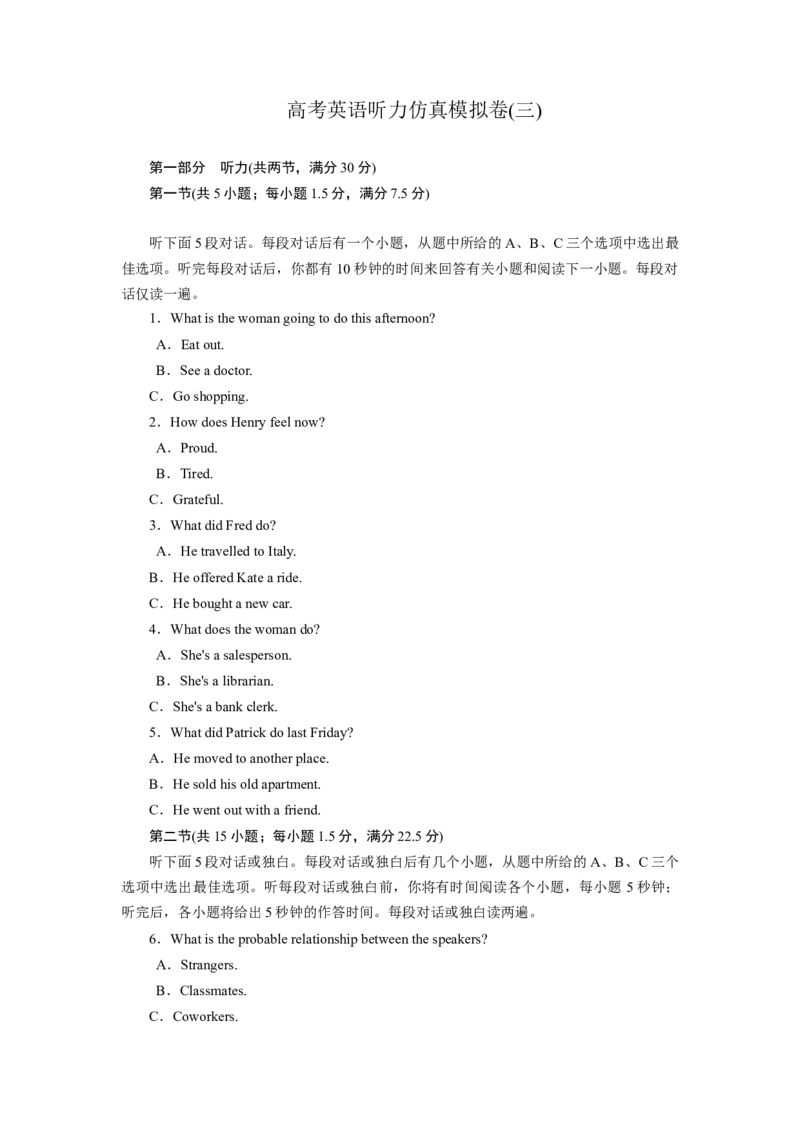
高考英语听力仿真模拟卷(三)
第一部分 听力(共两节,满分30分)
第一节(共5小题;每小题1.5分,满分7.5分)
听下面5段对话。每段对话后有一个小题,从题中所给的A、B、C三个选项中选出最
佳选项。听完每段对话后,你都有10秒钟的时间来回答有关小题和阅读下一小题。每段对
话仅读一遍。
1.What is the woman going to do this afternoon?
A.Eat out.
B.See a doctor.
C.Go shopping.
2.How does Henry feel now?
A.Proud.
B.Tired.
C.Grateful.
3.What did Fred do?
A.He travelled to Italy.
B.He offered Kate a ride.
C.He bought a new car.
4.What does the woman do?
A.She's a salesperson.
B.She's a librarian.
C.She's a bank clerk.
5.What did Patrick do last Friday?
A.He moved to another place.
B.He sold his old apartment.
C.He went out with a friend.
第二节(共15小题;每小题1.5分,满分22.5分)
听下面5段对话或独白。每段对话或独白后有几个小题,从题中所给的A、B、C三个
选项中选出最佳选项。听每段对话或独白前,你将有时间阅读各个小题,每小题 5秒钟;
听完后,各小题将给出5秒钟的作答时间。每段对话或独白读两遍。
6.What is the probable relationship between the speakers?
A.Strangers.
B.Classmates.
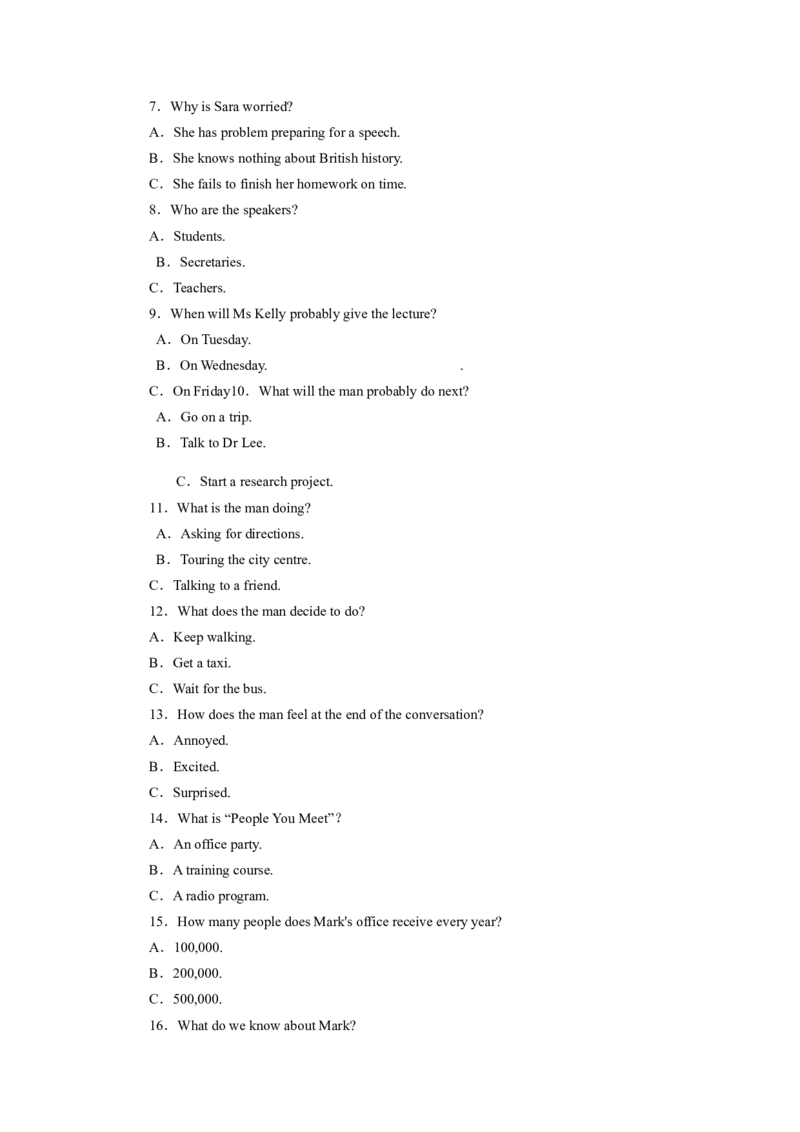
C.Coworkers.7.Why is Sara worried?
A.She has problem preparing for a speech.
B.She knows nothing about British history.
C.She fails to finish her homework on time.
8.Who are the speakers?
A.Students.
B.Secretaries.
C.Teachers.
9.When will Ms Kelly probably give the lecture?
A.On Tuesday.
B.On Wednesday. .
C.On Friday10.What will the man probably do next?
A.Go on a trip.
B.Talk to Dr Lee.
C.Start a research project.
11.What is the man doing?
A.Asking for directions.
B.Touring the city centre.
C.Talking to a friend.
12.What does the man decide to do?
A.Keep walking.
B.Get a taxi.
C.Wait for the bus.
13.How does the man feel at the end of the conversation?
A.Annoyed.
B.Excited.
C.Surprised.
14.What is “People You Meet”?
A.An office party.
B.A training course.
C.A radio program.
15.How many people does Mark's office receive every year?
A.100,000.
B.200,000.
C.500,000.
16.What do we know about Mark?A.He is a team leader.
B.He was born in London.
C.He speaks thirteen languages.
17.What do Mark and his coworkers usually do to help people?
A.Show them around.
B.Plan tours for them.
C.Teach them English.
18.How long did the speaker and his family live in the downtown apartment?
A.8 years.
B.10 years.
C.30 years.
19.What was the reason for the speaker's unpleasant childhood?
A.Strict family rules.
B.Little chance to play outside.
C.Too much school work.
20.What does the speaker think of outdoor activities?
A.Colorless.
B.Dangerous.
C.Enjoyable.