2006年Text4 阅读刷题 课堂笔记
2006年技巧回顾
NOTE:
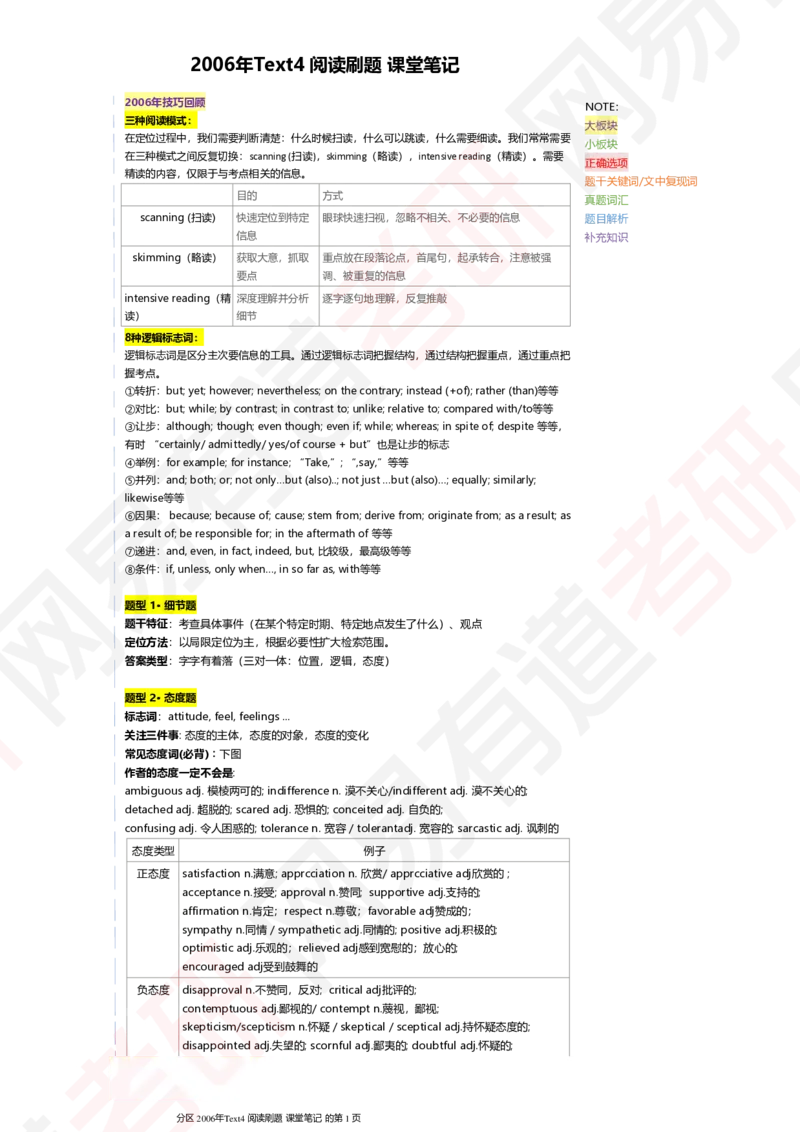
三种阅读模式:
大板块
在定位过程中,我们需要判断清楚:什么时候扫读,什么可以跳读,什么需要细读。我们常常需要
小板块
在三种模式之间反复切换:scanning (扫读),skimming(略读),intensive reading(精读)。需要
正确选项
精读的内容,仅限于与考点相关的信息。
题干关键词/文中复现词
目的 方式
真题词汇
scanning(扫读) 快速定位到特定 眼球快速扫视,忽略不相关、不必要的信息 题目解析
信息 补充知识
skimming(略读) 获取大意,抓取 重点放在段落论点,首尾句,起承转合,注意被强
要点 调、被重复的信息
intensivereading(精 深度理解并分析 逐字逐句地理解,反复推敲
读) 细节
8种逻辑标志词:
逻辑标志词是区分主次要信息的工具。通过逻辑标志词把握结构,通过结构把握重点,通过重点把
握考点。
①转折:but; yet; however; nevertheless; on the contrary; instead (+of); rather (than)等等
②对比:but; while; by contrast; in contrast to; unlike; relative to; compared with/to等等
③让步:although; though; even though; even if; while; whereas; in spite of; despite 等等,
有时 “certainly/ admittedly/ yes/of course + but”也是让步的标志
④举例:for example; for instance; “Take,”; “,say,”等等
⑤并列:and; both; or; not only…but (also)..; not just …but (also)…; equally; similarly;
likewise等等
⑥因果: because; because of; cause; stem from; derive from; originate from; as a result; as
a result of; be responsible for; in the aftermath of 等等
⑦递进:and, even, in fact, indeed, but, 比较级,最高级等等
⑧条件:if, unless, only when…, in so far as, with等等
题型 1· 细节题
题干特征:考查具体事件(在某个特定时期、特定地点发生了什么)、观点
定位方法:以局限定位为主,根据必要性扩大检索范围。
答案类型:字字有着落(三对一体:位置,逻辑,态度)
题型2· 态度题
标志词:attitude, feel, feelings ...
关注三件事:态度的主体,态度的对象,态度的变化
常见态度词(必背)︰下图
作者的态度一定不会是:
ambiguous adj.模棱两可的; indifference n.漠不关心/indifferent adj.漠不关心的;
detached adj.超脱的;scared adj.恐惧的; conceited adj.自负的;
confusing adj.令人困惑的;tolerance n.宽容 / tolerantadj.宽容的; sarcastic adj.讽刺的
态度类型 例子
正态度 satisfaction n.满意; apprcciation n. 欣赏/apprcciative adj欣赏的;
acceptance n.接受; approval n.赞同; supportive adj.支持的;
affirmation n.肯定;respect n.尊敬;favorable adj赞成的;
sympathy n.同情/sympathetic adj.同情的; positive adj.积极的;
optimistic adj.乐观的;relieved adj感到宽慰的;放心的;
encouraged adj受到鼓舞的
负态度 disapproval n.不赞同,反对; critical adj批评的;
contemptuous adj.鄙视的/contemptn.蔑视,鄙视;
skepticism/scepticism n.怀疑/skeptical/sceptical adj.持怀疑态度的;
disappointed adj.失望的; scornful adj.鄙夷的; doubtful adj.怀疑的;
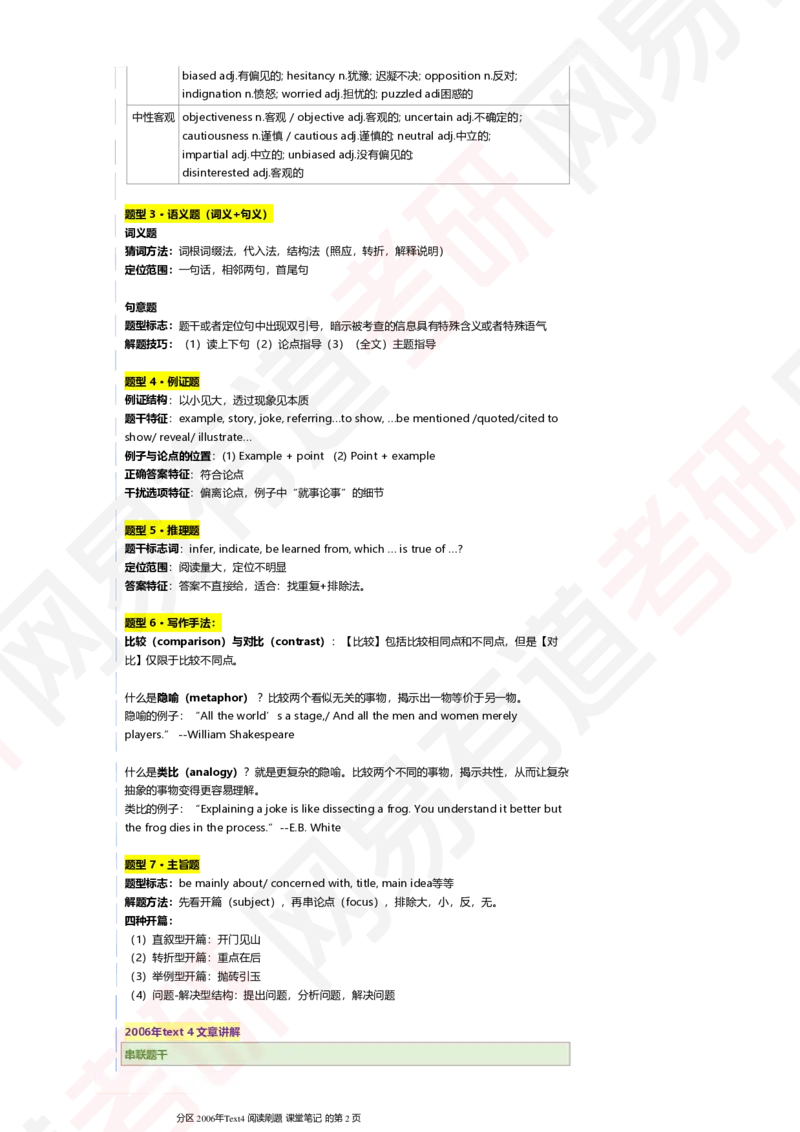
分区2006年Text4 阅读刷题 课堂笔记 的第1 页biased adj.有偏见的; hesitancy n.犹豫; 迟凝不决; opposition n.反对;
indignationn.愤怒; worried adj.担忧的; puzzled adi困惑的
中性客观 objectiveness n.客观/objective adj.客观的; uncertain adj.不确定的;
cautiousness n.谨慎/cautious adj.谨慎的; neutral adj.中立的;
impartial adj.中立的; unbiased adj.没有偏见的;
disinterested adj.客观的
题型3 · 语义题(词义+句义)
词义题
猜词方法:词根词缀法,代入法,结构法(照应,转折,解释说明)
定位范围:一句话,相邻两句,首尾句
句意题
题型标志:题干或者定位句中出现双引号,暗示被考查的信息具有特殊含义或者特殊语气
解题技巧:(1)读上下句(2)论点指导(3)(全文)主题指导
题型4· 例证题
例证结构:以小见大,透过现象见本质
题干特征:example, story, joke, referring…to show, …be mentioned /quoted/cited to
show/ reveal/ illustrate…
例子与论点的位置:(1) Example + point (2) Point + example
正确答案特征:符合论点
干扰选项特征:偏离论点,例子中“就事论事”的细节
题型 5· 推理题
题干标志词:infer, indicate, be learned from, which … is true of …?
定位范围:阅读量大,定位不明显
答案特征:答案不直接给,适合:找重复+排除法。
题型 6· 写作手法:
比较(comparison)与对比(contrast):【比较】包括比较相同点和不同点,但是【对
比】仅限于比较不同点。
什么是隐喻(metaphor)?比较两个看似无关的事物,揭示出一物等价于另一物。
隐喻的例子:“All the world’s a stage,/ And all the men and women merely
players.” --William Shakespeare
什么是类比(analogy)?就是更复杂的隐喻。比较两个不同的事物,揭示共性,从而让复杂
抽象的事物变得更容易理解。
类比的例子:“Explaining a joke is like dissecting a frog. You understand it better but
the frog dies in the process.”--E.B. White
题型7· 主旨题
题型标志:be mainly about/ concerned with, title, main idea等等
解题方法:先看开篇(subject),再串论点(focus),排除大,小,反,无。
四种开篇:
(1)直叙型开篇:开门见山
(2)转折型开篇:重点在后
(3)举例型开篇:抛砖引玉
(4)问题-解决型结构:提出问题,分析问题,解决问题
2006年text 4 文章讲解
串联题干
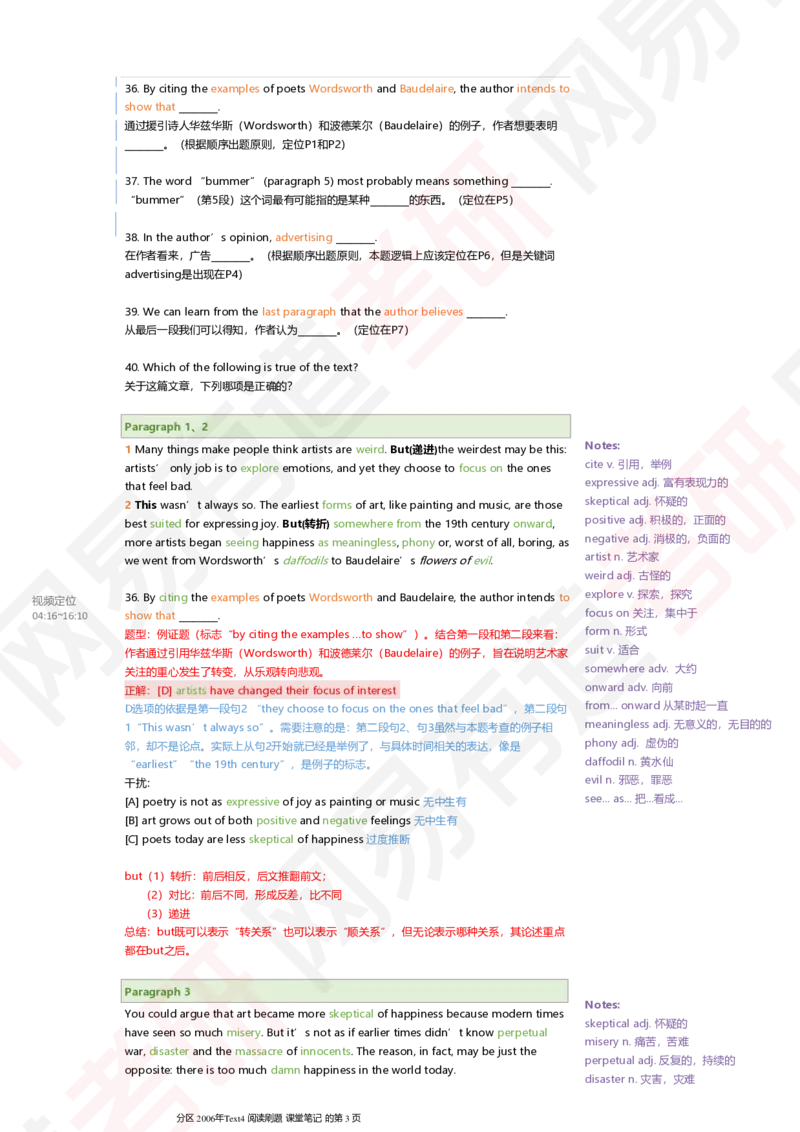
分区2006年Text4 阅读刷题 课堂笔记 的第2 页36. By citing the examplesof poets WordsworthandBaudelaire, the author intends to
show that________.
通过援引诗人华兹华斯(Wordsworth)和波德莱尔(Baudelaire)的例子,作者想要表明
________。(根据顺序出题原则,定位P1和P2)
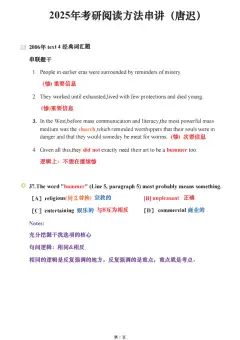
37. The word “bummer” (paragraph 5) most probably means something ________.
“bummer”(第5段)这个词最有可能指的是某种________的东西。(定位在P5)
38. In the author’s opinion,advertising________.
在作者看来,广告________。(根据顺序出题原则,本题逻辑上应该定位在P6,但是关键词
advertising是出现在P4)
39. We can learn from thelast paragraphthat theauthor believes________.
从最后一段我们可以得知,作者认为________。(定位在P7)
40. Which of the following is true of the text?
关于这篇文章,下列哪项是正确的?
Paragraph 1、2
1 Many things make people think artists are weird.But(递进)the weirdest may be this: Notes:
artists’ only job is to exploreemotions, and yet they choose tofocus onthe ones cite v. 引用,举例
that feel bad. expressive adj. 富有表现力的
2 Thiswasn’t always so. The earliest formsof art, like painting and music, are those skeptical adj. 怀疑的
best suitedfor expressing joy. But(转折)somewhere fromthe 19th century onward, positive adj. 积极的,正面的
more artists began seeinghappiness as meaningless, phonyor, worst of all, boring, as negative adj. 消极的,负面的
we went from Wordsworth’s daffodilsto Baudelaire’s flowers ofevil. artist n. 艺术家
weird adj. 古怪的
视频定位 36. By citingtheexamplesof poets Wordsworthand Baudelaire, the author intendsto explore v. 探索,探究
04:16~16:10 show that________. focus on 关注,集中于
题型:例证题(标志“by citing the examples …to show”)。结合第一段和第二段来看: form n. 形式
作者通过引用华兹华斯(Wordsworth)和波德莱尔(Baudelaire)的例子,旨在说明艺术家 suit v. 适合
关注的重心发生了转变,从乐观转向悲观。 somewhere adv. 大约
正解:[D] artistshave changed their focus of interest onward adv. 向前
D选项的依据是第一段句2 “they choose to focus on the ones that feel bad”,第二段句 from... onward 从某时起一直
1“This wasn’t always so”。需要注意的是:第二段句2、句3虽然与本题考查的例子相 meaningless adj. 无意义的,无目的的
邻,却不是论点。实际上从句2开始就已经是举例了,与具体时间相关的表达,像是 phony adj. 虚伪的
“earliest”“the 19th century”,是例子的标志。 daffodil n. 黄水仙
干扰: evil n. 邪恶,罪恶
[A] poetry is not as expressiveof joy as painting or music 无中生有 see... as... 把...看成...
[B] art grows out of both positive andnegativefeelings 无中生有
[C] poets today are lessskepticalof happiness过度推断
but(1)转折:前后相反,后文推翻前文;
(2)对比:前后不同,形成反差,比不同
(3)递进
总结:but既可以表示“转关系”也可以表示“顺关系”,但无论表示哪种关系,其论述重点
都在but之后。
Paragraph 3
Notes:
You could argue that art became moreskepticalof happiness because modern times
skeptical adj. 怀疑的
have seen so much misery. But it’s not as if earlier times didn’t knowperpetual
misery n. 痛苦,苦难
war, disasterand themassacreof innocents. The reason, in fact, may be just the
perpetual adj. 反复的,持续的
opposite: there is too much damnhappiness in the world today.
disaster n. 灾害,灾难
分区2006年Text4 阅读刷题 课堂笔记 的第3 页’ ’
massacre n. 屠杀,残杀
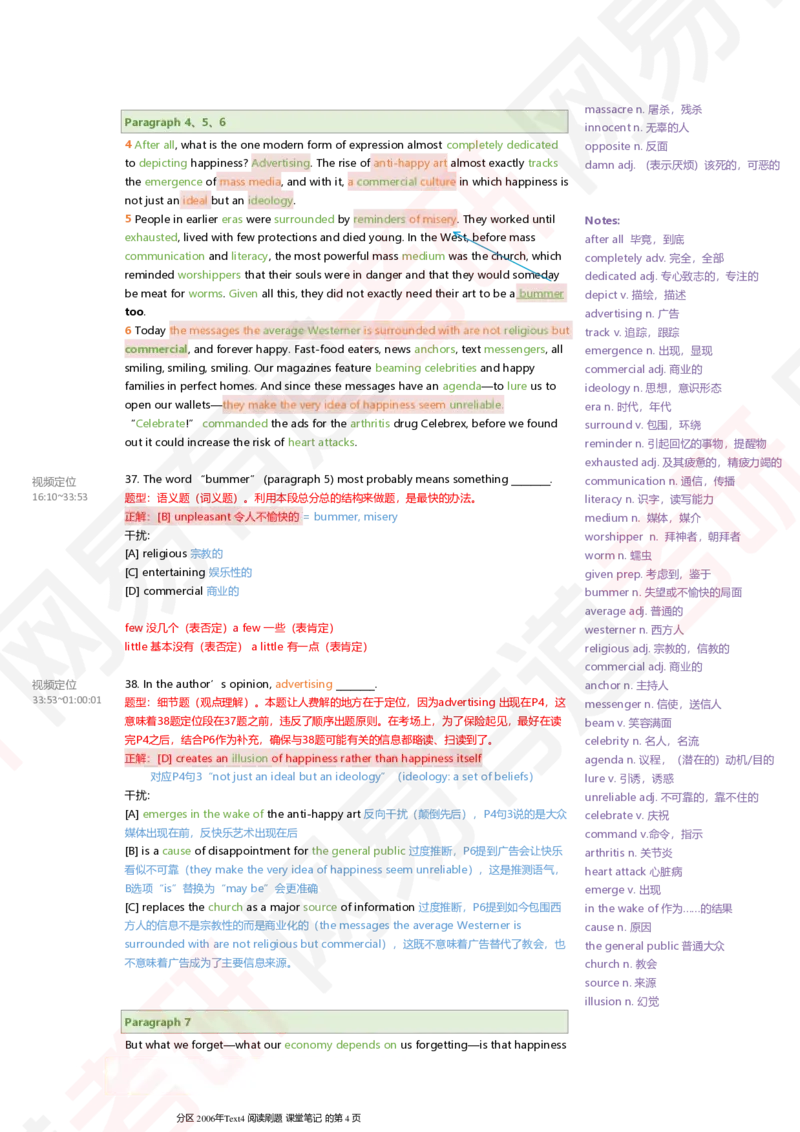
Paragraph 4、5、6
innocent n. 无辜的人
4 After all, what is the one modern form of expression almost completely dedicated opposite n. 反面
to depictinghappiness? Advertising. The rise ofanti-happy artalmost exactlytracks damn adj. (表示厌烦)该死的,可恶的
the emergenceofmass media, and with it, a commercialculturein which happiness is
not just anideal but an ideology.
5 People in earlier eraswere surroundedby remindersof misery. They worked until Notes:
exhausted, lived with few protections and died young. In the West, before mass after all 毕竟,到底
communicationandliteracy, the most powerful mass mediumwas the church, which completely adv. 完全,全部
reminded worshippersthat their souls were in danger and that they would someday dedicated adj. 专心致志的,专注的
be meat for worms.Givenall this, they did not exactly need their art to be abummer depict v. 描绘,描述
too. advertising n. 广告
6 Today the messages the average Westerneris surrounded with are not religiousbut track v. 追踪,跟踪
commercial, and forever happy. Fast-food eaters, news anchors, text messengers, all emergence n. 出现,显现
smiling, smiling, smiling. Our magazines feature beaming celebritiesand happy commercial adj. 商业的
families in perfect homes. And since these messages have an agenda—to lureus to ideology n. 思想,意识形态
open our wallets—they make the very idea of happiness seem unreliable. era n. 时代,年代
“Celebrate!” commandedthe ads for the arthritisdrug Celebrex, before we found surround v. 包围,环绕
out it could increase the risk of heart attacks. reminder n. 引起回忆的事物,提醒物
exhausted adj. 及其疲惫的,精疲力竭的
视频定位 37. The word “bummer” (paragraph 5) most probably means something ________. communication n. 通信,传播
16:10~33:53 题型:语义题(词义题)。利用本段总分总的结构来做题,是最快的办法。 literacy n. 识字,读写能力
正解:[B] unpleasant 令人不愉快的 = bummer, misery medium n. 媒体,媒介
干扰: worshipper n. 拜神者,朝拜者
[A] religious 宗教的 worm n. 蠕虫
[C] entertaining 娱乐性的 given prep. 考虑到,鉴于
[D] commercial 商业的 bummer n. 失望或不愉快的局面
average adj. 普通的
few 没几个(表否定)a few 一些(表肯定) westerner n. 西方人
little 基本没有(表否定)a little 有一点(表肯定) religious adj. 宗教的,信教的
commercial adj. 商业的
视频定位 38. In the author’s opinion, advertising________. anchor n. 主持人
33:53~01:00:01 题型:细节题(观点理解)。本题让人费解的地方在于定位,因为advertising 出现在P4,这 messenger n. 信使,送信人
意味着38题定位段在37题之前,违反了顺序出题原则。在考场上,为了保险起见,最好在读 beam v. 笑容满面
完P4之后,结合P6作为补充,确保与38题可能有关的信息都略读、扫读到了。 celebrity n. 名人,名流
正解:[D] creates an illusionof happiness rather than happiness itself agenda n. 议程,(潜在的)动机/目的
对应P4句3“not just an ideal but an ideology”(ideology: a set of beliefs) lure v. 引诱,诱惑
干扰: unreliable adj. 不可靠的,靠不住的
[A] emerges in the wake ofthe anti-happy art 反向干扰(颠倒先后),P4句3说的是大众 celebrate v. 庆祝
媒体出现在前,反快乐艺术出现在后 command v.命令,指示
[B] is a causeof disappointment for the general public过度推断,P6提到广告会让快乐 arthritis n. 关节炎
看似不可靠(they make the very idea of happiness seem unreliable),这是推测语气, heart attack 心脏病
B选项“is”替换为“may be”会更准确 emerge v. 出现
[C] replaces the churchas a major sourceof information 过度推断,P6提到如今包围西 in the wake of 作为……的结果
方人的信息不是宗教性的而是商业化的(the messages the average Westerner is cause n. 原因
surrounded with are not religious but commercial),这既不意味着广告替代了教会,也 the general public 普通大众
不意味着广告成为了主要信息来源。 church n. 教会
source n. 来源
illusion n. 幻觉
Paragraph 7
But what we forget—what our economy depends onus forgetting—is that happiness
,
分区2006年Text4 阅读刷题 课堂笔记 的第4 页otes:
is more thanpleasurewithout pain. The things that bring the greatestjoycarry the
economy n. 经济
greatest potentialfor lossand disappointment. Today, surroundedby promisesof
depend on 依靠,依赖
easy happiness, we need art to tell us, as religiononce did, Memento mori: remember
pleasure n. 快乐,愉快
that you will die, that everything ends, and that happiness comes not in denyingthis
joy n. 快乐,喜悦
but in living with it. It’s a message even more bitterthan a clove cigarette, yet,
potential n. 潜力,潜能
somehow, a breathof fresh air.
loss n. 损失,失败
视频定位 disappointment n. 失望,沮丧
39. We can learn from thelast paragraphthat theauthor believes________.
01:00:01~01:11:01 surround v. 环绕,包围
题型:推理题(标志词learn)。需要理解原文作者观点。
promise n. 承诺
正解:[B] the anti-happy art isdistastefulbut refreshing
religion n. 宗教
“distasteful” 对应“It’s a message even more bitter than a clove cigarette","
deny v. 否定,否认
refreshing”对应“yet, somehow, a breath of fresh air.”
live with 接受,容忍
干扰:
bitter adj. 苦的,令人不快的
[A] happiness more often than not ends insadness 过度推断,原文只说“最大的快乐伴
clove n.丁香,丁香香料
随最大的失落风险”(potential for loss),过度推断。
cigarette n. 香烟,卷烟
[C] miseryshould be enjoyed rather than denied偷换概念,原文强调“接受凡人必有一
somehow adv. 不知为何,不知怎么地
死”(living with it),而非主动“享受苦难”。
breath n. 呼吸的空气,气息,气味
[D] the anti-happy art flourisheswhen economy booms 无中生有
more often than not 通常
end in 以……告终
视频定位 40. Which of the following is true of the text? 推理题,覆盖全文
01:12:02~01:18:31 题型:推理题。定位范围遍布全文。用排除法来选(题本位)。 distasteful adj. 令人反感的
refreshing adj. 新鲜的
正解:[A] Religion once functionedas a reminderof misery.
misery n. 不幸
=P5:the most powerful mass medium was the church, which reminded worshippers
flourish v. 茁壮成长
that their souls were in danger and that they would someday be meat for worms
boom v. 兴旺
=P7:we need art to tell us, as religion once did, Memento mori: remember that you
function v. 发挥作用
will die, that everything ends, and that happiness comes not in denying this but in
reminder n. 提醒物
living with it.
expectation n. 期待
干扰:
mass media 大众媒体
[B] Art provides a balance between expectationand reality. 在第四段最后一句,“a
be inclined to 倾向于
balance”属于无中生有
cover v. 报道
[C] People feel disappointed at the realities of modern society.在第七段第二句,无中生
有
[D] Mass media are inclined to coverdisasters and deaths.第四段最后一句以及第六段第
一句都有涉及,反向干扰,大众媒体倾向于传播与快乐有关的信息
课后总结
1. 三种阅读模式:scanning (扫读),skimming(略读),intensive reading(精读)
2. 8种逻辑标志词:
①转折:but; yet; however; nevertheless; on the contrary; instead (+of); rather (than)
等等
②对比:but; while; by contrast; in contrast to; unlike; relative to; compared with/to
等等
③让步:although; though; even though; even if; while; whereas; in spite of; despite
等等,有时 “certainly/ admittedly/ yes/of course + but”也是让步的标志
④举例:for example; for instance; “Take,”; “,say,”等等
⑤并列:and; both; or; not only…but (also)..; not just …but (also)…; equally; similarly;
likewise等等
⑥因果: because; because of; cause; stem from; derive from; originate from; as a
result; as a result of; be responsible for; in the aftermath of 等等
⑦递进:and, even, in fact, indeed, but, 比较级,最高级等等
⑧条件:if, unless, only when…, in so far as, with等等
3.题型 1· 细节题
题干特征:考查具体事件(在某个特定时期、特定地点发生了什么)、观点
定位方法:以局限定位为主,根据必要性扩大检索范围。
分区2006年Text4 阅读刷题 课堂笔记 的第5 页定位方法:以局限定位为主,根据必要性扩大检索范围。
答案类型:字字有着落(三对一体:位置,逻辑,态度)
4. 题型2 · 态度题
标志词:attitude, feel, feelings ...
关注三件事:态度的主体,态度的对象,态度的变化
常见态度词(必背)︰下图
作者的态度一定不会是:
ambiguous adj.模棱两可的; indifference n.漠不关心/indifferent adj.漠不关心的;
detached adj.超脱的;scared adj.恐惧的; conceited adj.自负的;
confusing adj.令人困惑的;tolerance n.宽容 / tolerantadj.宽容的;
sarcastic adj.讽刺的
态度类型 例子
正态度 satisfaction n.满意; apprcciation n. 欣赏/apprcciative adj欣赏的;
acceptance n.接受; approval n.赞同; supportive adj.支持的;
affirmation n.肯定;respect n.尊敬;favorable adj赞成的;
sympathy n.同情/sympathetic adj.同情的; positive adj.积极的;
optimistic adj.乐观的;relieved adj.感到宽慰的;放心的;
encouraged adj受到鼓舞的
负态度 disapproval n.不赞同,反对; critical adj批评的;
contemptuous adj.鄙视的/contemptn.蔑视,鄙视;
skepticism/scepticism n.怀疑/skeptical/sceptical adj.持怀疑态度的;
disappointed adj.失望的; scornful adj.鄙夷的; doubtful adj.怀疑的;
biased adj.有偏见的; hesitancy n.犹豫; 迟凝不决; opposition n.反对;
indignationn.愤怒; worried adj.担忧的; puzzled adi困惑的
中性客观 objectiveness n.客观/objective adj.客观的; uncertain adj.不确定的;
cautiousness n.谨慎/cautious adj谨慎的; neutral adj.中立的;
impartial adj.中立的; unbiased adj.没有偏见的;
disinterested adj.客观的
5. 题型3 · 语义题(词义+句义)
词义题
猜词方法:词根词缀法,代入法,结构法(照应,转折,解释说明)
定位范围:一句话,相邻两句,首尾句
句意题
题型标志:题干或者定位句中出现双引号,暗示被考查的信息具有特殊含义或者特殊语气
6. 题型4· 例证题
例证结构:以小见大,透过现象见本质
题干特征:example, story, joke, referring…to show, …be mentioned /quoted/cited
to show/ reveal/ illustrate…
例子与论点的位置:(1) Example + point (2) Point + example
正确答案特征:符合论点
干扰选项特征:偏离论点,例子中“就事论事”的细节
解题技巧:(1)读上下句(2)论点指导(3)(全文)主题指导
7. 题型5· 推理题
题干标志词:infer, indicate, be learned from, which … is true of …?
定位范围:阅读量大,定位不明显
答案特征:答案不直接给,适合:找重复+排除法。
8. 题型6· 写作手法:
比较(comparison)与对比(contrast):【比较】包括比较相同点和不同点;
【对比】仅限于比较不同点
隐喻(metaphor) :比较两个看似无关的事物,揭示出一物等价于另一物。
类比(analogy):更复杂的隐喻。比较两个不同的事物,揭示共性,从而让复杂抽象的事
物变得更容易理解。
9.题型7 ·主旨题
题型标志:be mainly about/ concerned with, title, main idea等等
解题方法:先看开篇(subject),再串论点(focus),排除大,小,反,无。
分区2006年Text4 阅读刷题 课堂笔记 的第6 页解题方法:先看开篇(subject),再串论点(focus),排除大,小,反,无。
四种开篇:
(1)直叙型开篇:开门见山
(2)转折型开篇:重点在后
(3)举例型开篇:抛砖引玉
(4)问题-解决型结构:提出问题,分析问题,解决问题
10. but(1)转折:前后相反,后文推翻前文;(2)对比:前后不同,形成反差,比不同;
(3)递进
总结:but既可以表示“转关系”也可以表示“顺关系”,但无论表示哪种关系,其论述重
点都在but之后
11. few 没几个(表否定)a few 一些(表肯定)
little 基本没有(表否定)a little 有一点(表肯定)
分区2006年Text4 阅读刷题 课堂笔记 的第7 页