文档文本内容
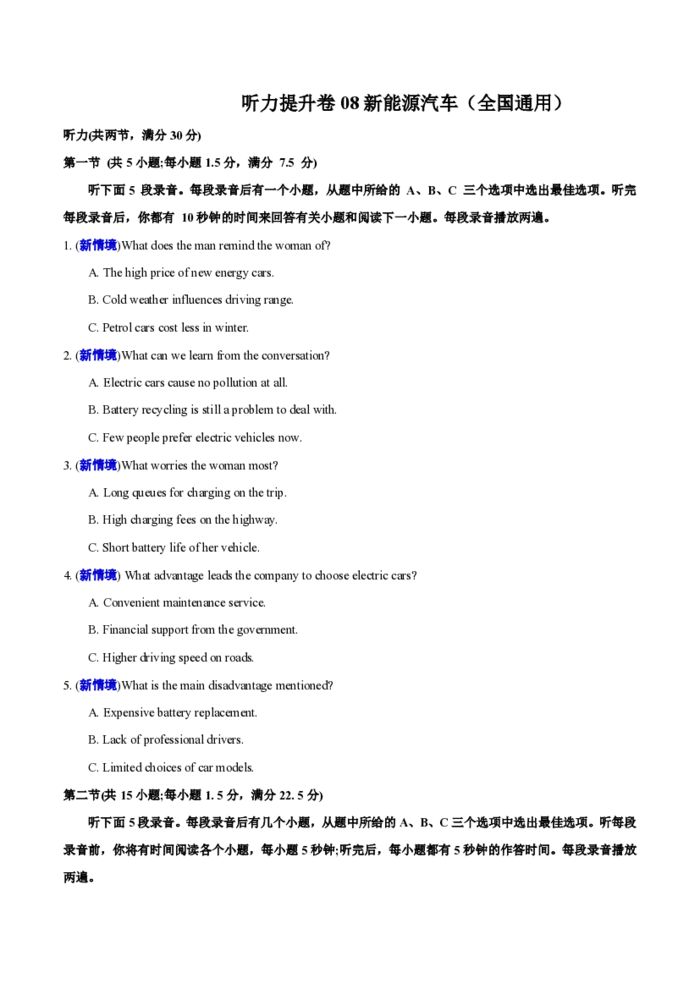
听力提升卷08 新能源汽车(全国通用)
听力(共两节,满分30 分)
第一节 (共5 小题;每小题1.5 分,满分 7.5 分)
听下面5 段录音。每段录音后有一个小题,从题中所给的 A、B、C 三个选项中选出最佳选项。听完
每段录音后,你都有 10 秒钟的时间来回答有关小题和阅读下一小题。每段录音播放两遍。
1. (新情境)What does the man remind the woman of?
A. The high price of new energy cars.
B. Cold weather influences driving range.
C. Petrol cars cost less in winter.
2. (新情境)What can we learn from the conversation?
A. Electric cars cause no pollution at all.
B. Battery recycling is still a problem to deal with.
C. Few people prefer electric vehicles now.
3. (新情境)What worries the woman most?
A. Long queues for charging on the trip.
B. High charging fees on the highway.
C. Short battery life of her vehicle.
4. (新情境) What advantage leads the company to choose electric cars?
A. Convenient maintenance service.
B. Financial support from the government.
C. Higher driving speed on roads.
5. (新情境)What is the main disadvantage mentioned?
A. Expensive battery replacement.
B. Lack of professional drivers.
C. Limited choices of car models.
第二节(共15 小题;每小题1. 5 分,满分22. 5 分)
听下面5 段录音。每段录音后有几个小题,从题中所给的A、B、C 三个选项中选出最佳选项。听每段
录音前,你将有时间阅读各个小题,每小题5 秒钟;听完后,每小题都有5 秒钟的作答时间。每段录音播放
两遍。
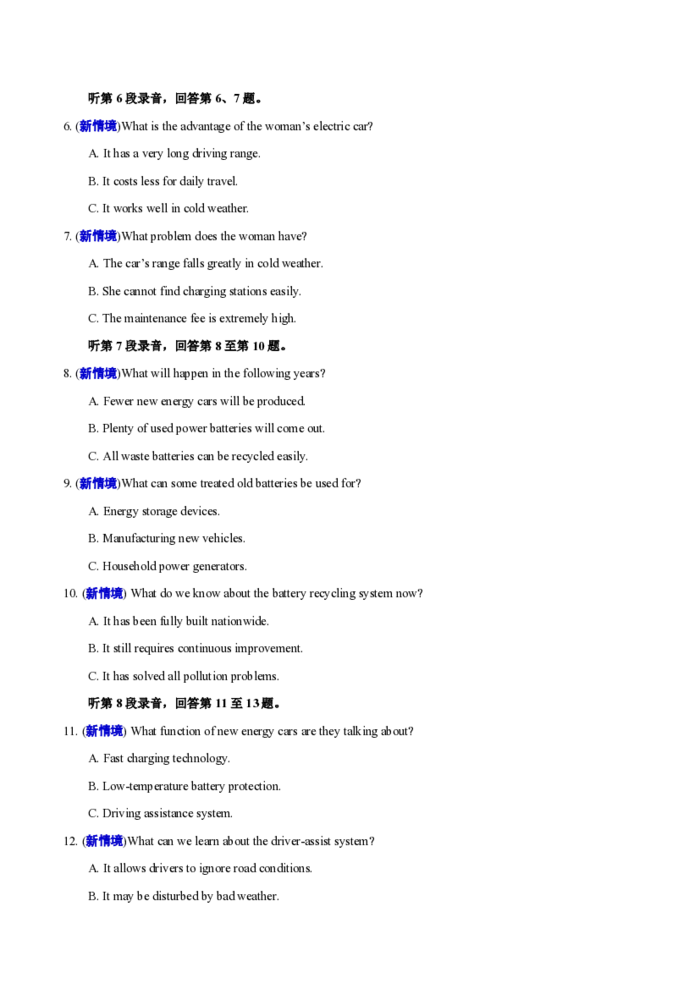
听第6 段录音,回答第6、7 题。
6. (新情境)What is the advantage of the woman’s electric car?
A. It has a very long driving range.
B. It costs less for daily travel.
C. It works well in cold weather.
7. (新情境)What problem does the woman have?
A. The car’s range falls greatly in cold weather.
B. She cannot find charging stations easily.
C. The maintenance fee is extremely high.
听第7 段录音,回答第8 至第10 题。
8. (新情境)What will happen in the following years?
A. Fewer new energy cars will be produced.
B. Plenty of used power batteries will come out.
C. All waste batteries can be recycled easily.
9. (新情境)What can some treated old batteries be used for?
A. Energy storage devices.
B. Manufacturing new vehicles.
C. Household power generators.
10. (新情境) What do we know about the battery recycling system now?
A. It has been fully built nationwide.
B. It still requires continuous improvement.
C. It has solved all pollution problems.
听第8 段录音,回答第11 至13 题。
11. (新情境) What function of new energy cars are they talking about?
A. Fast charging technology.
B. Low-temperature battery protection.
C. Driving assistance system.
12. (新情境)What can we learn about the driver-assist system?
A. It allows drivers to ignore road conditions.
B. It may be disturbed by bad weather.
C. It can work perfectly in heavy fog.
13. (新情境)What is the speakers’ final opinion?
A. The technology has already been fully mature.
B. The system can guarantee driving safety alone.
C. Drivers should still drive carefully themselves.
听第9 段录音,回答第14 至16 题。
14. (新情境)What is the main topic of the conversation?
A. Battery performance of new energy vehicles
B. Uneven distribution of charging piles in urban and rural areas
C. Advantages of driving electric cars in the countryside
15. (新情境)What prevents villagers from buying electric cars at present?
A. Short driving range of vehicles
B. Lack of enough charging equipment
C. Too high price of new energy vehicles
16. (新情境)What can we learn from the conversation?
A. The rural charging network will be further improved.
B. Few people in cities choose electric vehicles now.
C. Plenty of charging stations have been finished in villages.
听第10 段录音,回答第17 至20 题。
17. (新情境) What troubles most owners of used electric cars?
A. Few new batteries are available.
B. Charging fees keep rising sharply.
C. Their vehicles depreciate rapidly.
18. (新情境)What leads to the fast depreciation of old electric vehicles?
A. Outdated charging piles
B. Constant technical upgrades of batteries
C. Limited driving routes in cities
19. (新情境)Why do buyers hesitate to buy second-hand electric cars?
A. They doubt the battery’s remaining service life.
B. They find electric models hard to operate.
C. Government bans the trade of used EVs.
20. (新情境)What can we expect in the future?
A. Petrol cars will disappear from the market.
B. Battery testing standards will be cancelled.
C. Rules for the used new energy car market will come out.