文档文本内容
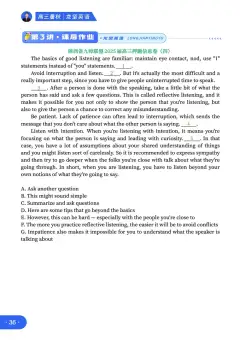
第3讲·课后作业
陕西省九师联盟2025届高三押题信息卷(四)
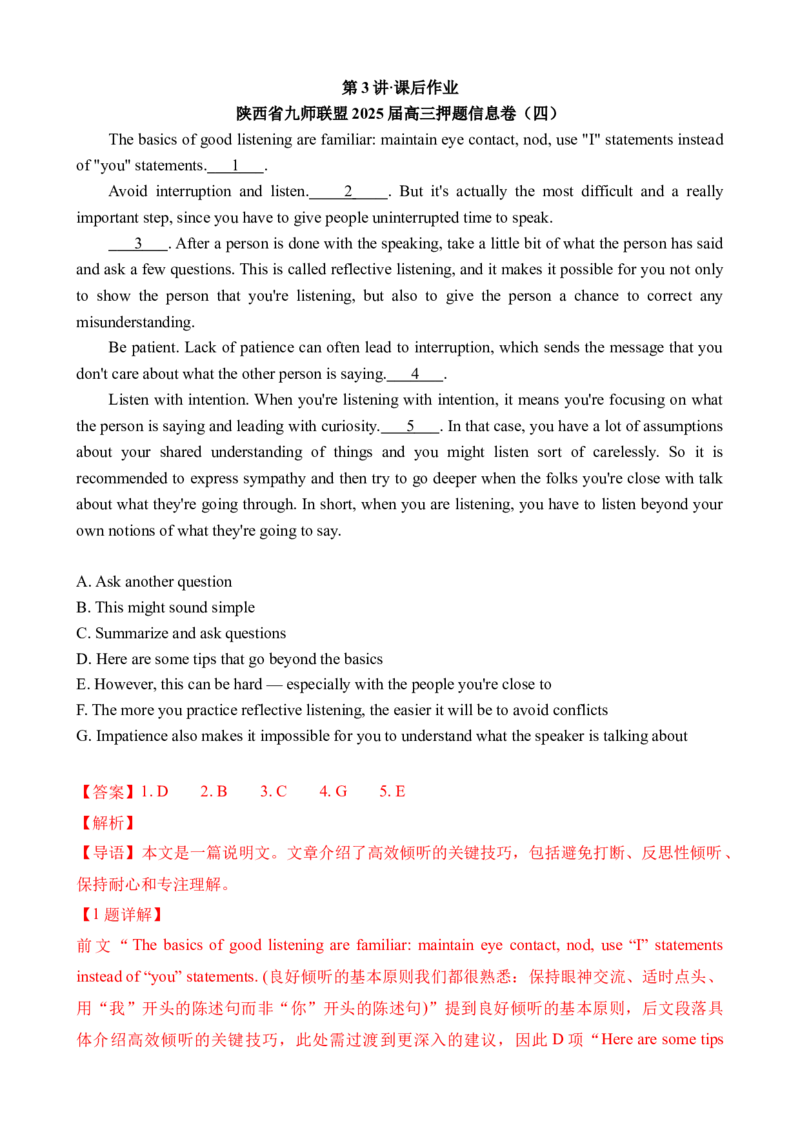
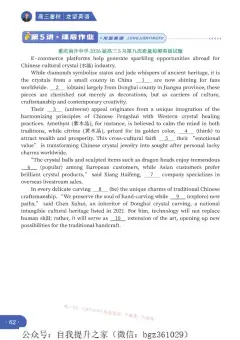
The basics of good listening are familiar: maintain eye contact, nod, use "I" statements instead
of "you" statements. 1 .
Avoid interruption and listen. 2 . But it's actually the most difficult and a really
important step, since you have to give people uninterrupted time to speak.
3 . After a person is done with the speaking, take a little bit of what the person has said
and ask a few questions. This is called reflective listening, and it makes it possible for you not only
to show the person that you're listening, but also to give the person a chance to correct any
misunderstanding.
Be patient. Lack of patience can often lead to interruption, which sends the message that you
don't care about what the other person is saying. 4 .
Listen with intention. When you're listening with intention, it means you're focusing on what
the person is saying and leading with curiosity. 5 . In that case, you have a lot of assumptions
about your shared understanding of things and you might listen sort of carelessly. So it is
recommended to express sympathy and then try to go deeper when the folks you're close with talk
about what they're going through. In short, when you are listening, you have to listen beyond your
own notions of what they're going to say.
A. Ask another question
B. This might sound simple
C. Summarize and ask questions
D. Here are some tips that go beyond the basics
E. However, this can be hard — especially with the people you're close to
F. The more you practice reflective listening, the easier it will be to avoid conflicts
G. Impatience also makes it impossible for you to understand what the speaker is talking about
【答案】1. D 2. B 3. C 4. G 5. E
【解析】
【导语】本文是一篇说明文。文章介绍了高效倾听的关键技巧,包括避免打断、反思性倾听、
保持耐心和专注理解。
【1题详解】
前文“The basics of good listening are familiar: maintain eye contact, nod, use “I” statements
instead of “you” statements. (良好倾听的基本原则我们都很熟悉:保持眼神交流、适时点头、
用“我”开头的陈述句而非“你”开头的陈述句)”提到良好倾听的基本原则,后文段落具
体介绍高效倾听的关键技巧,此处需过渡到更深入的建议,因此 D项“Here are some tipsthat go beyond the basics (这里有一些超越基础的建议)”符合语境,引出后文段落。故选D。
【2题详解】
本段主旨句是“Avoid interruption and listen. (避免打断,专心倾听)”,后文“But it’s actually
the most difficult and a really important step, since you have to give people uninterrupted time to
speak. (但这实际上是最困难也最关键的一步,因为你需要给予对方完整的表达时间)”提到
某件事最困难也最重要,此处需要转折性引入,因此 B项“This might sound simple (这听起
来可能很简单)”符合语境,承接前文,和后文构成转折,其中的 This指代主旨句内容。故
选B。
【3题详解】
后文“After a person is done with the speaking, take a little bit of what the person has said and ask
a few questions. This is called reflective listening (当对方结束讲话后,选取其话语中的部分内
容进行提问。这种方式被称为“反思性倾听”)”描述了复述对方的话并提问的技巧,此处
位于段首,是段落主旨句,需建议复述并提问,且需和其他段首句一样使用祈使句的形式,
因此C项“Summarize and ask questions (总结并提问)”符合语境,概括该段主旨。故选C。
【4题详解】
前文“Lack of patience can often lead to interruption, which sends the message that you don’t care
about what the other person is saying. (缺乏耐心往往会导致打断对方,这传递出的信息是:你
根本不在乎对方在说什么)”讨论耐心不足导致的负面效果,此处是段末句,需进一步补充
耐心不足的坏影响,因此G项“Impatience also makes it impossible for you to understand what
the speaker is talking about (不耐烦也会让你无法理解说话者的内容)”符合语境,和前文是递
进关系。故选G。
【5题详解】
前文“When you’re listening with intention, it means you’re focusing on what the person is saying
and leading with curiosity. (当你进行有意倾听时,就意味着你要全神贯注于对方的话语,并
怀着好奇心引导对话)”建议倾听时应保持专注,保有好奇心,后文“In that case, you have a
lot of assumptions about your shared understanding of things and you might listen sort of carelessly.
(在这种情况下,你会对彼此的共识产生诸多预设,从而可能导致漫不经心的倾听)”提到某
种情况下会导致带有预设,此处需描述这种具体情况,因此 E项“However, this can be hard
— especially with the people you’re close to (然而,这可能会很难——尤其是与亲近的人相处
时)”符合语境,和前文构成转折,引出后文。故选E。