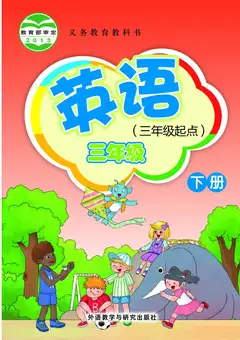
义
务
教
育
教
科
书
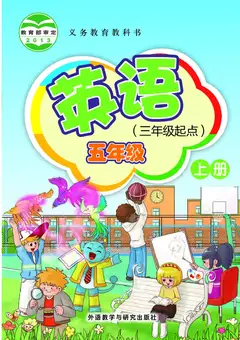
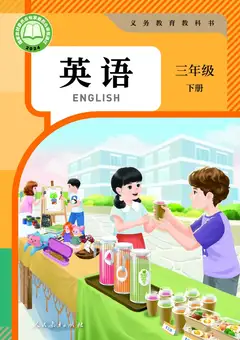
三年级 下册
e
当
剔
氲
剔
怿
x
8灭琮!!:炽
]!!棣
媑蜫曗
棣!!旯
鮂犦㫜
䯒慍礣僠炐觠翍戹姃䯓
鲋頧郹!蓴!
颲!艀頧頧
紹! 糤! 苧暠硣! 嬨! 僤
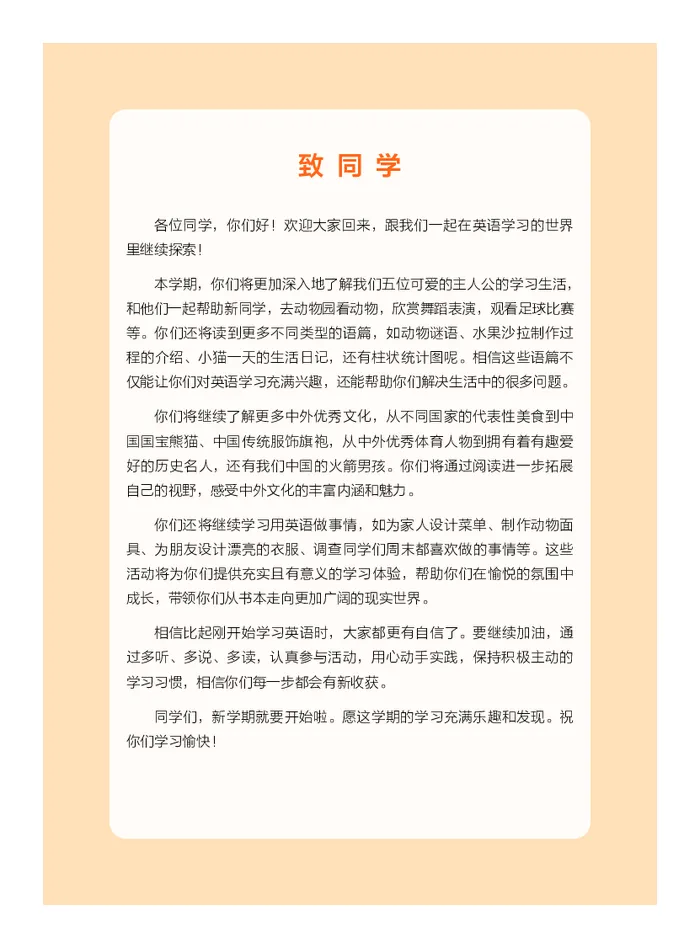
致 同 学
各位同学,你们好!欢迎大家回来,跟我们一起在英语学习的世界
里继续探索!
本学期,你们将更加深入地了解我们五位可爱的主人公的学习生活,
和他们一起帮助新同学,去动物园看动物,欣赏舞蹈表演,观看足球比赛
等。你们还将读到更多不同类型的语篇,如动物谜语、水果沙拉制作过
程的介绍、小猫一天的生活日记,还有柱状统计图呢。相信这些语篇不
仅能让你们对英语学习充满兴趣,还能帮助你们解决生活中的很多问题。
你们将继续了解更多中外优秀文化,从不同国家的代表性美食到中
国国宝熊猫、中国传统服饰旗袍,从中外优秀体育人物到拥有着有趣爱
好的历史名人,还有我们中国的火箭男孩。你们将通过阅读进一步拓展
自己的视野,感受中外文化的丰富内涵和魅力。
你们还将继续学习用英语做事情,如为家人设计菜单、制作动物面
具、为朋友设计漂亮的衣服、调查同学们周末都喜欢做的事情等。这些
活动将为你们提供充实且有意义的学习体验,帮助你们在愉悦的氛围中
成长,带领你们从书本走向更加广阔的现实世界。
相信比起刚开始学习英语时,大家都更有自信了。要继续加油,通
过多听、多说、多读,认真参与活动,用心动手实践,保持积极主动的
学习习惯,相信你们每一步都会有新收获。
同学们,新学期就要开始啦。愿这学期的学习充满乐趣和发现。祝
你们学习愉快!
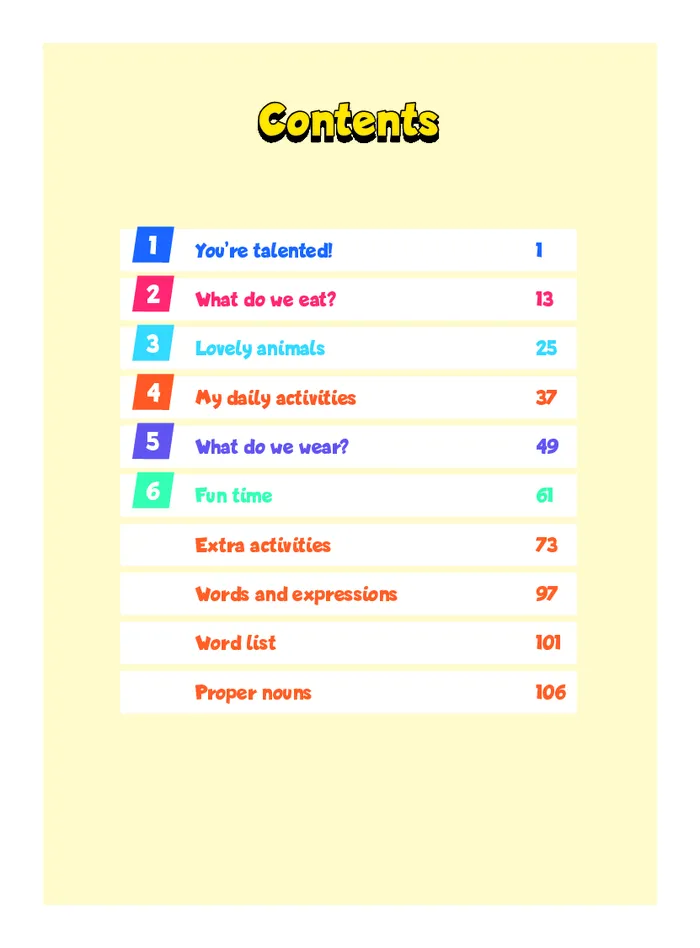
Contents
Contents
1
You’re talented!
1
2
What do we eat?
13
3
Lovely animals
25
4
My daily activities
37
5
What do we wear?
49
6
Fun time
61
Extra activities
73
Words and expressions
97
Word list
101
Proper nouns
106
1
1
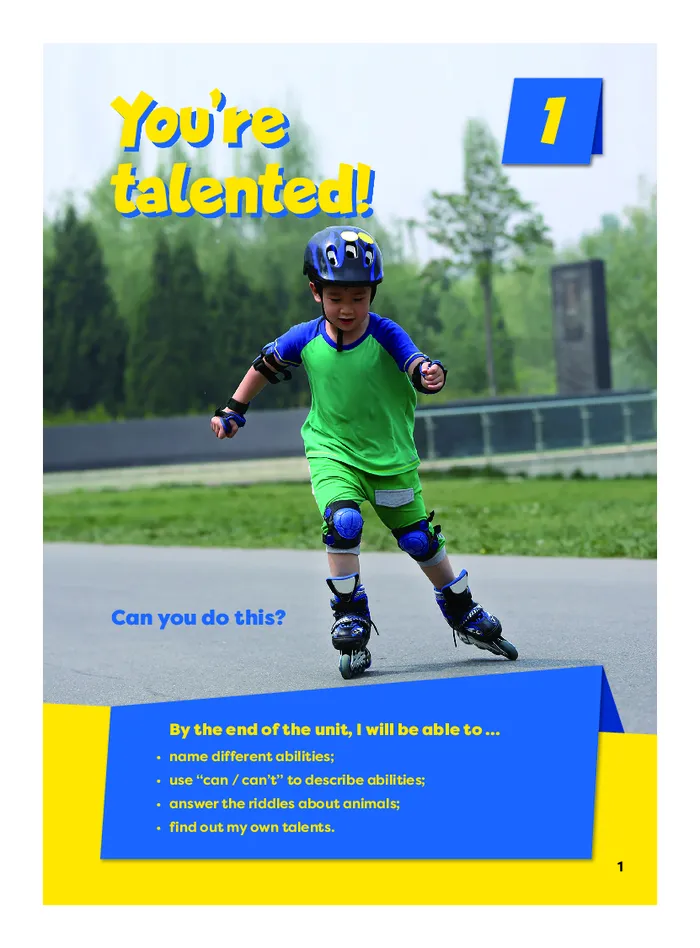
Can you do this?
1
• name different abilities;
• use “can / can’t” to describe abilities;
• answer the riddles about animals;
• find out my own talents.
By the end of the unit, I will be able to ...
1
2
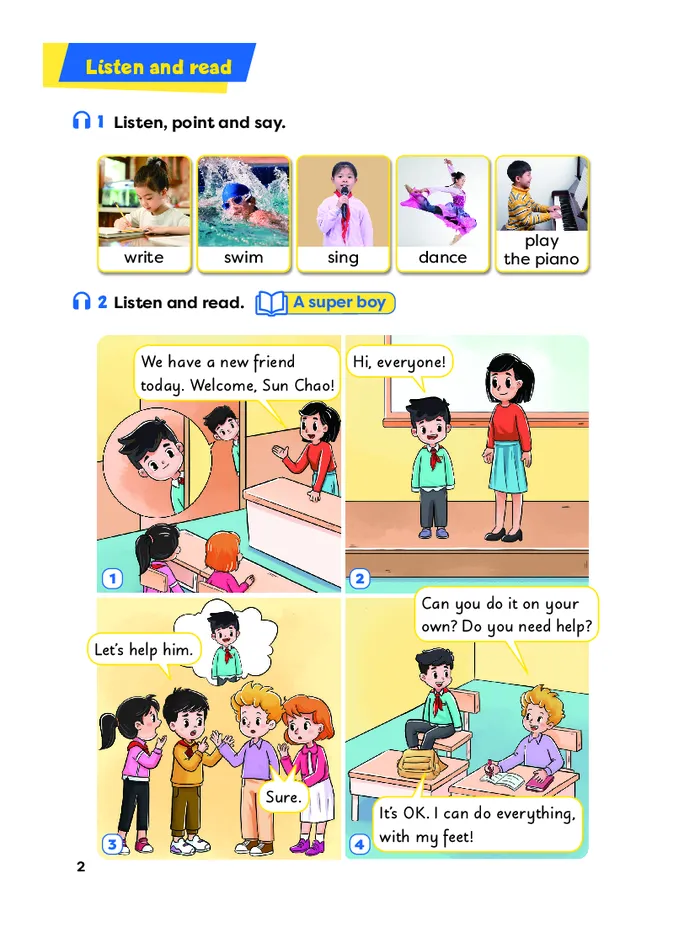
1 Listen, point and say.
2 Listen and read.
Listen and read
write
swim
sing
dance
play
the piano
1
2
3
4
A super boy
We have a new friend
today. Welcome, Sun Chao!
Can you do it on your
own? Do you need help?
Hi, everyone!
Let's help him.
Sure.
It's OK. I can do everything,
with my feet!
3
7
8
9
10
5
6
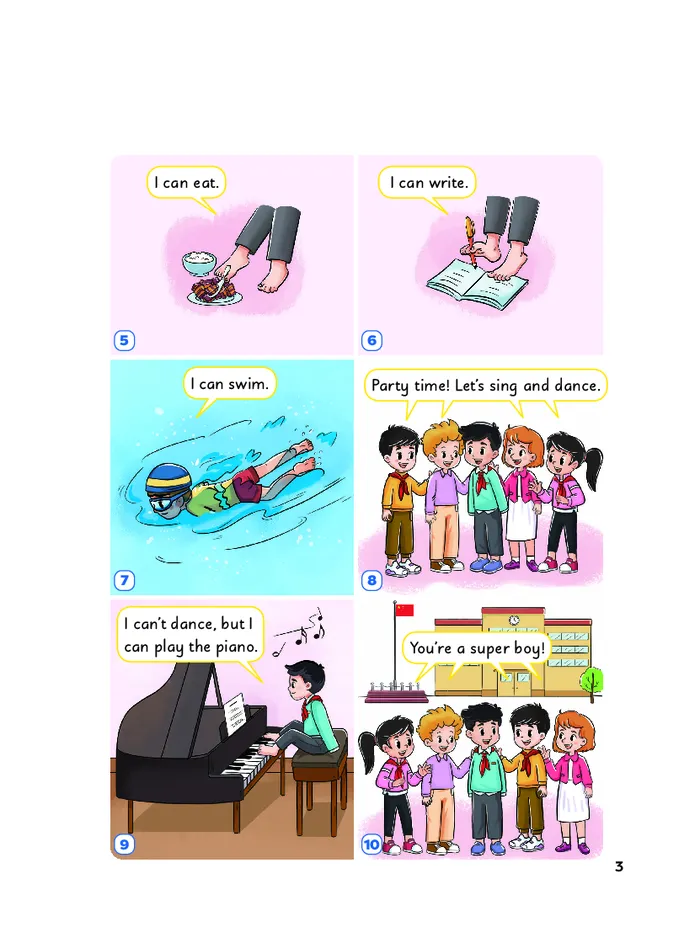
I can eat.
I can write.
I can swim.
You’re a super boy!
Party time! Let's sing and dance.
I can't dance, but I
can play the piano.
4
3 Read and circle.
➊ Sun Chao is a new teacher / student.
➋ Sun Chao can do things with his hands / feet.
➌ Sun Chao can / can’t write.
➍ Sun Chao can / can’t swim.
➎ Sun Chao dances / plays the piano at the party.
4 Look and order. Then retell the story.
5
6 Work in pairs. Act and guess.
a I can swim.
5 Look, read and match.
Look at me.
Yes, I can.
You can play the piano!
Yes. Can you play the piano?
➊
➋
➌
b I can’t dance, but I can play
the piano.
c I can do everything, with
my feet!
In focus
I can / can’t ...
— Can you ...?
— Yes, I can. / No, I can’t.
6
2 Listen and read.
What animals are they?
1 Listen, point and say.
Read to learn
jump
run
fly
Animal riddles
Animal 1
This animal is big. It’s grey.
Can it run? No, it can’t.
Can it jump? Yes, it can.
Can it fly? No, it can’t.
Can it swim? Yes, it can.
It lives in water.
It eats fish.
Can it help people?
Yes, it can!
Animal 2
This animal is small.
It’s black and yellow.
Can it fly? Yes, it can.
Can it jump? No, it can’t.
Can it swim? No, it can’t.
Can it run? No, it can’t.
It has got six legs.
It eats honey.
Can it help people?
Yes, it can!
In focus
He / She / It can / can’t ...
— Can he / she / it ...?
— Yes, he / she / it can. / No, he / she / it can’t.
7
It
3 fly.
It
4 swim.
3 Read and tick (✔).
4 Look and complete.
5 Work in pairs. Draw, ask and answer.
Can it ...?
Yes, it can. /
No, it can't.
It can jump.
It can run.
It can swim.
It can fly.
It can help people.
Animal 1
Animal 2
It
5 jump.
It
6 fly.
It
1 jump.
It
2
fly.
Your favourite animal
8
2 Look and complete.
1 Listen and chant.
Learn to use
He can jump.
He can dance and sing.
He can climb.
He can ride a bike.
Wow! What a super monkey!
What a nice friend!
This is Alex.
Can he play the piano?
1 .
Look! He 2 play football.
This is Lucy.
Can she play basketball?
3
.
Can she take pictures?
4
.
Phonics
n s
9
Hu Tao
4 Think and talk.
What can you do? What can your best friend do?
3 Listen and tick (✔) or cross (✘).
Liu Jin
Liu Fei
Sun Tong
I can play basketball,
but I can’t swim.
My best friend is Li Ming. He
can sing, but he can't dance.
Play the game
10
Work in pairs. Ask and answer.
Can she write?
We can do it!
Yes, she can.
Project
2 Draw and show.
Draw a graph of your group. Then present your graph to the class.
Our group
Yes
No
0
1
2
2
4
3
4
5
6
7
dance swim run fast jump high play basketball play the piano
1 Work in groups. Ask and answer. Then tick (✔) or cross (✘).
3 Find out the most common talent in your class.
Do a survey about talents
In our group, four people can dance …
Name
11
Check it
Now I can
name different abilities;
use “can / can’t” to describe abilities;
answer the riddles about animals;
find out my own talents.
Yes, I can. /
No, I can’t.
Can you …?
11
12
2 Work in groups and talk.
What other sports masters do you know?
1 Listen and read.
What can they do?
See the world
Su Bingtian can run fast. He can run
100 metres in 9.83 seconds.
A cheetah can run fast.
It can run about 100
kilometres per hour.
Jessica Long can swim fast. She
can swim 200 metres in about
2 minutes and 37 seconds.
A swordfish can swim fast. It
can swim about 90 kilometres
per hour.
Zhu Jianhua can jump high.
He can jump 2.39 metres high.
A frog is good at jumping.
This frog can jump about
2 metres high.
Masters of sports
Masters of sports
Masters of sports
2
What do
we eat?
What do you see in the picture?
13
• name different kinds of food and drinks;
• use “like / don’t like” to talk about food and drinks;
• explain the importance of eating healthy food.
By the end of the unit, I will be able to ...
14
1 Listen, point and say.
Listen and read
soup
chocolate
ice cream
1
13
2
24
fish
2 Listen and read.
That’s not good for you!
Time for dinner!
I’m not hungry.
Why do you
only have soup?
Good night, dear.
Good night, Mum.
I don’t like fish.
I don’t like carrots.
15
5
7
9
6
8
Yummy!
My stomach hurts.
Take some pills.
I'm hungry. I can't sleep.
That's not good for you!
Let’s go to the doctor.
I like chocolate. I like
cake and ice cream!
Oh no, I don’t
like pills!
16
3 Read and order.
Doudou has some soup.
Doudou eats chocolate, cake and ice cream.
The doctor tells Doudou to take some pills.
Mum and Dad take Doudou to the doctor.
Doudou can’t sleep at night.
4 Look and write the letters in the boxes.
What does Doudou like? What doesn’t he like?
5 Work in groups and discuss.
➊ What do you want to say to Doudou?
➋ �Which food in the story do you like?
b
c
e
d
a
17
7 Work in groups. Play the game.
6 Look, read and match.
I like fish.
I don't like fish.
I like fish, too.
c I like chocolate. I like cake
and ice cream.
b I don’t like pills.
a I don’t like fish.
➊
➋
➌
x
In focus
I like / don’t like ...
Read to learn
1 Listen, point and say.
2 Listen and read.
How many kinds of fruit are in the fruit salad?
orange
apple
fruit salad
�Let’s make a fruit salad!
Great!
�Do you like oranges?
Yes, I do.
�Let’s cut some oranges.
Do you like pears?
�No, I don’t. I like bananas.
OK. Let’s cut some bananas.
Do you like apples?
Yes, I do. Let’s put apple in.
�OK. Now add the salad dressing
and mix them together.
Yummy! The salad is
so good!
18
pear
Le
t’s
m
a
k
e
a
fr
u
i
t
s
al
ad
!
In focus
— Do you like ...?
— Yes, I do. /
No, I don’t.
banana
19
How
➊ The children make …
➋ They like / don’t like the salad.
3 Read and circle.
4 Look and complete. Then act out the story.
5 Work in pairs and talk.
What food do you like? What food don’t you like?
Yes, I do.
Do you like apples?
What
a b c
a.
b.
c.
salad dressing
1. the fruit.
2. them in a bowl.
3. the salad dressing.
4. them together.
H ow to make a fru it salad
20
2 Listen and write the numbers in the plates and glasses.
What food and drinks do the children like?
1 Listen and chant.
Learn to use
Apples are green.
Tomatoes are red.
Lemons are yellow.
Grapes are purple.
Carrots are orange.
I like them all for breakfast.
So many colours in my bowl.
It’s like a rainbow.
Xiaoxiao
Steven
Wang Hao
Phonics
k I
➎
apples
➋
hamburgers
➏
bread
➑
water
➒
milk
➍
tomatoes
➐
juice
➌
fish
chicken
➊
21
4 Do a survey in your class.
What’s your favourite food or drink?
3 Look and say.
Taotao
2
0
4
6
potatoes
eggs
water
milk
tomatoes
chicken
In my class,
the favourite
food / drink is …
Ten people like it.
Six people like potatoes …
The favourite food / drink is …
22
Play the game
Work in pairs. Ask and answer.
Do you like apples?
Yes, I do. / No, I don’t.
I like it!
Finish
Start
23
Check it
Now I can
name different kinds of food and drinks;
use “like / don’t like” to talk about food and drinks;
explain the importance of eating healthy food.
Project
1 Think and say.
What food or drinks do your family members like?
2 Complete the notes.
3 Draw and show your plan to your classmates.
4 Work in pairs. Compare your plans.
How are they similar? How are they different?
This is the meal for my family.
Dad likes … Mum likes …
I like … Do you like my plan?
Plan a meal or your amily
23
Food
Dad
Mum
…
Drinks
Su
pe
r f
oo
d
a
r
oun
d
th
e
wo
rld
24
2 Work in groups and talk.
What’s the super food in your place?
1 Listen and read.
Where is the food from?
See the world
My name’s Susana and
I’m from Mexico. My
favourite food is tacos.
We put many things in
tacos, like cheese, onions
and meat.
My name’s Ama and I’m
from Sri Lanka. I like curry
so much. We put meat,
vegetables and rice in the
curry with hot peppers.
Yummy!
I’m Ji Chen from
China. I like dumplings
very much. Dumplings
with pork and carrots
are my favourite!
3
What do you see in
the picture?
25
• name different animals;
• use “likes / doesn’t like” to talk about animals;
• introduce my animal friends.
By the end of the unit, I will be able to ...
25
Lovely
animals
1 Listen, point and say.
1
2
3
4
2 Listen and read.
Animal friends at the zoo
zookeeper
elephant
leaf
Let's go to the zoo today.
Hello, everyone. I am
Zack, the zookeeper.
This is Mark.
He likes apples.
This is Mike. He
doesn't like apples.
He likes bananas.
Let's go to meet
my animal friends.
Great!
26
Listen and read
5
6
7
8
9
10
This is Eli the elephant.
He likes bananas, too?
This is Gary
the giraffe.
Which animal
do you like?
No. He doesn't
like bananas.
He likes leaves.
She likes
bananas, too.
I like them all!
27
3 Look and match.
What food do they like?
Mike
a
c
b
Mark
Gary
Eli
Gary
4 Read and write T (true) or F (false).
➊ Mark the monkey likes apples.
➋ Mike the monkey doesn’t like bananas.
➌ Eli the elephant likes bananas.
➍ Gary the giraffe doesn’t like leaves.
5 Work in groups and discuss.
➊ What animals does Zack like?
➋ What animals do you like?
28
7 Work in pairs and talk.
What animals do you like? What animals do your family
members like?
c He doesn’t like apples. He
likes bananas.
b He likes apples.
a He likes leaves.
6 Look, read and match.
I like lions. But my
sister doesn’t like lions.
She likes pandas.
I like birds. But my
dad doesn’t like
birds. He likes bears.
29
➊
➋
➌
In focus
He / She likes / doesn’t like ...
1 Listen, point and say.
2 Listen and read.
What does Mia want?
bird
cat
dog
1
3
5
Woof!
2
4
6
30
Read to learn
He likes you!
He likes you!
I have got a cat. I have got
a bird. Can I have a dog?
Yes, let’s go and
have a look.
How about
this one?
Does he like
cats and birds?
Yes, he does.
Does he like …
Oh, he likes you!
Ha ha. I like him, too. Come
home with me. Do you like
the name “Bobby"?
Woof!
No, he doesn’t.
He likes water.
Does he like milk?
Welcome.
In focus
— Does he / she like ...?
— Yes, he / she does. /
No, he / she doesn’t.
➊ — Does Bobby like ?
— Yes, he does.
➋ — Does Bobby like ?
— Yes, he .
➌ — Does Bobby like ?
— No, he .
➍ — Does Bobby like ?
— , he .
3 Read and circle.
➊ Bobby is a bad / good dog.
➋ Mia likes / doesn’t like Bobby.
➌ Mia has got two / three pets now.
4 Read and complete.
5 Draw and discuss.
Your pet / A pet you
want to have
Do you have a pet?
Does he / she like ...?
Yes, I have a(n) ...
Yes, he / she does. / No, he /
she doesn't. He / She likes ...
31
2 Listen and tick (✔).
What animals does Yuanyuan like?
1 Listen and chant.
Let’s walk around the farm,
And listen to the animals’ song.
It’s a cow. Moo! Moo! It’s a goat. Baa! Baa!
It’s a horse. Neigh! Neigh! It’s a pig. Oink! Oink!
Farm animals, here and there.
Farm animals, cute and funny.
➋
➌
➍
➎
➑
➐
➊
➏
Phonics
c g
32
Learn to use
3 Read and circle. Then say the sentences.
We have lots of animals: horses, sheep,
cows, ducks, rabbits and chickens.
Come and have a look!
➊ The children are at a farm / zoo.
➋ Linda likes horses / sheep.
➌ Xinxin likes chickens / cows.
➍ Binbin likes horses / sheep.
➎ Haohao likes rabbits / chickens.
My name’s Binbin.
I like sheep.
I’m Xinxin,
and I like cows.
I’m Linda. I like horses.
My name is Haohao.
I like rabbits!
We love the animals. We take care of them.
Welcome to our farm!
My friend likes .
He / She doesn’t like .
4 Draw and write. Then share.
What animals does your friend like? What animals doesn’t
your friend like?
wonderful farm
wonderful farm
wonderful farm
wonderful farm
33
Help Jenny find her animal friends
Work in pairs. Ask and answer.
Does Jenny like giraffes?
Does Jenny like sheep?
No, she doesn't.
Yes, she does.
Play the game
34
Project
1 Choose your favourite animal for a mask.
Make an animal mask
2 Draw the animal’s face on a piece
of paper.
3 Cut out your animal face and
tie a string to each side.
5 Vote for the best mask in your class.
35
4 Work in pairs. Show your mask to your
partner and talk about it.
Check it
Now I can
name different animals;
use “likes / doesn’t like” to talk about animals;
introduce my animal friends.
This is my mask. It’s a panda. It’s my favourite animal.
Does it like carrots?
No, it doesn’t.
35
3 Work in groups and talk.
What other night animals do you know?
1 Look, guess and match.
2 Listen, read and check.
Animals at night
Animals at night
fox
owl
bat
moth
mouse
Night animals sleep in the day.
They come out at night.
Look at this mouse.
It comes out.
Look at this owl.
It likes mice.
Look at this bat.
It likes insects.
Look at this moth.
It comes out.
Look at this mouse.
It comes out.
Look at this fox.
It likes mice.
36
See the world
4
My daily
activities
Do you like the activity
in the picture?
• name different daily activities;
• use simple present tense to talk about daily activities;
• make good use of my day.
By the end of the unit, I will be able to ...
37
go to work
have class
go to sleep
1 Listen, point and say.
go to school
It’s seven o’clock in the morning.
Doudou goes to school.
Dad comes back from work.
1
It’s nine o’clock in the morning.
Doudou has class at school.
Dad goes to sleep.
2
3
2 Listen, read and draw the time.
A day for Doudou and Dad
38
Listen and read
It’s five o’clock in the afternoon.
Doudou goes home.
Dad goes to work.
4
5
6
7
It’s nine o’clock in the evening.
Doudou goes to bed.
Dad works.
39
3 Look and match.
What do Doudou and his dad do at different times?
➊
➌
a
b
c
d
➋
➍
4 Read and write T (true) or F (false).
➊Doudou goes to school at seven o’clock in the morning.
➋Dad goes home at five o’clock in the afternoon.
➌Dad goes to sleep at nine o’clock in the evening.
40
6 Talk about your day.
It’s seven o’clock in the
morning. My dad goes
to work. I go to school.
b Doudou has class at school.
c Doudou goes home.
a Doudou goes to bed.
➊
➋
➌
5 Look, read and match.
In focus
It’s ... o’clock in the morning /
afternoon / evening.
He / She works / goes ...
41
2 Listen and read.
What does Milu do every day?
1 Listen, point and say.
catch a mouse
read
do homework
by Coco
Milu doesn’t go to school in the morning.
She eats. She plays. She sleeps.
Does Milu read in the afternoon?
No. She eats. She plays. She sleeps.
Does Milu do homework in the evening?
No. She eats. She plays. She sleeps.
Milu catches mice at night.
In focus
— Does he / she ...?
— Yes. / No. He / She ...
42
Read to learn
3 Read and tick (✔).
What’s the best title for the text?
4 Read and complete.
a A day of Coco
b A day of Milu
c A busy day
Does your dad go to
work in the morning?
5 Work in pairs. Ask and answer.
What do your family members do every day?
No. He goes to
work in the evening.
➊ — Does Milu go to school in the morning?
— . She .
➋ — Does Milu read in the afternoon?
— . She .
➌ — Does Milu do homework in the evening?
— . She .
➍ — Does Milu catch mice at night?
— , .
43
Ben is busy every day,
With different things to do and play.
Dance to music and make art,
Play balls and run fast.
Busy, happy, Ben loves his day.
He enjoys every minute in his own way.
1 Listen and chant.
do housework
read books
play with friends
watch a film
walk the dog
play sports
2 Listen and order.
Phonics
b d
44
Learn to use
3 Read and write T (true) or F (false).
My name’s Li Wei. After school, I play
basketball with my friends. Then I do my
homework and play the piano.
I’m Wang Yunxi. After school, I take
pictures of flowers and animals. I use
them to make posters.
I’m Tina. I like sports. I play football every
afternoon. And I swim every Friday afternoon.
I love music, too. Sometimes I sing and dance
with my parents in the evening.
What do they do after school?
What do they do after school?
➊ Li Wei sings and dances after school.
➋ Wang Yunxi takes pictures of flowers and animals
after school.
➌ Wang Yunxi plays basketball after school.
➍ Tina plays football every afternoon.
➎ Tina swims every Sunday afternoon.
4 Think and write. Then share.
What activities do you do after school every day?
5:00 pm play football
My after-school activities
45
46
Does Sara go to school at
7 o’clock in the morning?
No. She walks the dog at 7 o’clock in the
morning. She goes to school at 8 o’clock.
Play the game
Sara’s day
Alice’s day
Morning
Morning
Afternoon
Afternoon
Evening
Evening
W ork in pairs. Ask and answer.
Talk about their days
46
Project
Do a survey about weekend activities
2 Introduce your group members’ weekend activities to the class.
3 Find out the favourite weekend activity of your class.
1 Work in groups. Talk and complete the table.
What activities do you do at weekends?
Name
Youyou
In our group, Youyou plays the piano in the
morning. She goes swimming in the afternoon.
She watches films in the evening …
I play the piano in the morning and go
swimming in the afternoon. I watch films
with my family in the evening.
The favourite weekend activity of our class is …
47
Check it
Now I can
name different daily activities;
use simple present tense to talk about daily activities;
make good use of my day.
47
2 Think and say.
Compare your day and Rosina’s day.
I go to the school for
the deaf. I learn sign
language in the morning.
I play chess with my
friend after school.
1 Listen and read.
What does Rosina do every day?
I play football in the
afternoon.
Rosina’s day
I am deaf. I talk
with my hands.
Rosina
48
See the world
49
5
What do
we wear?
Do you like the clothes
in the picture?
Read
Use
Write
In this unit you will
stories about arts and artists
the simple future tense and the simple past tense to
talk about arts and artists
an art exhibition
49
• name different clothes;
• use “He / She has got / wears ...” to describe people’s clothes;
• talk about a green fashion show;
• design uniforms for my school.
By the end of the unit, I will be able to ...
50
1 Listen, point and say.
Listen and read
He’s got a smart jacket
and cool shorts.
jacket
shorts
dress
shoes
T-shirt
jeans
1
2
3
4
2 Listen and read.
The best dancer
A dance show!
Beibei, join in!
OK. Let me have a try.
She's got a
beautiful dress
and a pair of
shining shoes.
Everyone has got smart clothes!
51
7
8
5
6
The best dancer
is … Beibei!
Beibei, what's wrong?
Don't worry about your
clothes. Just go and dance.
I've only got a T-shirt and
jeans. I can't win.
She dances so well!
Hooray!
52
3 Read and circle.
4 Work in groups and discuss.
➊ Which clothes in the story do you like?
➋ Do you think cool clothes are important for a dance show?
Why or Why not?
➊ The dance show is on
this Friday / next Friday.
➋ Beibei wants / doesn’t want
to join in the dance show.
➎ Beibei can / can’t
dance well.
➏ Beibei wins / doesn’t win
the dance show.
➌ This girl has got a
beautiful jacket / dress.
➍ Beibei is / isn’t worried
about her clothes.
In focus
He’s / She’s got ...
53
6 Work in pairs. Play the game.
This one.
You're right!
After 30 seconds
b Everyone has got smart
clothes!
c He’s got a smart jacket and
cool shorts.
a She’s got a beautiful dress
and shining shoes.
➊
➋
➌
She's got a pink dress
and black shoes.
5 Look, read and match.
What clothes has she got?
She's got a pink dress
and black shoes.
54
1 Listen, point and say.
2 Listen and read.
How many special clothes can you see?
Read to learn
hat
paper
bag
skirt
plastic
bag
cardboard
Look! It's Luoluo. She wears
a skirt made from plastic
bags. Clever idea!
A spe
cial s
how
Here comes Longlong. He
wears a cardboard hat. Cool!
Now comes Kangkang.
Wow! He wears a T-shirt
made from paper bags.
The next one is Taoxin.
She has got a jeans bag.
I like it!
54
In focus
He / She wears ...
Good evening! Welcome to
our special fashion show.
Well done, everyone!
Thanks for your work for
a greener world!
55
➊ Longlong wears a / hat.
➋ Kangkang wears a / T-shirt.
➌ Luoluo wears a / skirt.
➍ Taoxin has got a / bag.
3 Read and tick (✔).
5 Work in pairs and talk.
What do you want to wear in a green fashion show?
4 Read and circle. Then say the sentences.
➊ Why is the show special?
a It’s a fashion show.
b The students are special.
c The clothes are special.
➋ The host says “thanks” because
.
a the students do well in the fashion show
b the clothes in the fashion show are beautiful
c the students make their clothes in a green way
56
1 Listen and chant.
2 Listen and match.
What do they want to find?
Learn to use
Different clothes for different days.
What’s best for your day?
It is hot. Take a cap or a hat.
It is cold. Put on a coat.
Jacket and jeans, for a walk in the wind.
It rains. But I need to go.
Put on my boots and raincoat.
Lanlan
Leilei
Nana
Andy
Phonics
h j
57
I’m Lin Jing. I’m from China. At my school, girls wear
a white shirt and a blue skirt. Boys wear a white shirt
and blue trousers. We like our uniforms.
I’m Isabella. I’m from Italy. We wear school uniforms every
day. Girls wear a white and blue dress. Boys wear a white
jacket and blue trousers.
4 Design uniforms for your school. Then share.
3 Read and write T (true) or F (false).
➊ Lin Jing wears a blue skirt and a grey shirt
at school.
➋ Boys in Lin Jing’s school wear blue trousers
and a white shirt.
➌ Tom has got a school uniform.
➍ Tom often wears black trousers and a red T-shirt.
➎ Isabella doesn’t have to wear a school uniform.
➏ Boys wear blue trousers and a blue jacket in
Isabella’s school.
I’m Tom. I’m from the US. I wear a red sweater and
black trousers at school. I like my school uniform.
These are uniforms for
my school. Look! Boys
wear … Girls wear …
58
Work in pairs. Ask and answer.
Play the game
Tingting
Jingjing
Mike
Dingding
Amy
Taotao
Chaochao
Linda
Joe
She's got a hat.
Yes, she is.
No, she isn’t. She
wears a blue T-shirt.
Is she Jingjing?
is it
Who
?
Is she Tingting?
59
Check it
1 Work in pairs and talk.
— Which clothes do you like?
— I like T-shirts and trousers.
Design new clothes or a riend
My clothes are for Mingming. In this
picture, he has got a blue T-shirt.
He wears orange trousers …
Project
2 Design the clothes for your friend.
3 Show your design to your classmates.
4 Vote for the best design in your class.
59
Now I can
name different clothes;
use “He / She has got / wears ...” to describe people’s clothes;
talk about a green fashion show;
design uniforms for my school.
60
2 Work in groups and talk.
Do you know other jobs? What clothes do people wear?
1 Listen and read.
What do they wear at work and after work?
See the world
Clothes at work and after work
I’m a chef. At work, I wear a
long white coat and a tall
white hat. After work, I often
wear jeans and a sweater.
They’re comfortable.
I’m a policewoman. I wear a
uniform at work. I wear black
trousers, a blue shirt and a
black cap. I often go to play
tennis after work. I wear shorts,
a T-shirt and sports shoes.
worker
firefighter
doctor
Read
Use
Write
In this unit you will
stories about arts and artists
the simple future tense and the simple past tense to
talk about arts and artists
an art exhibition
6
Fun time
What is the girl doing?
Read
Use
Write
In this unit you will
• name different hobbies;
• use “like(s) / don’t (doesn’t) like doing” to talk about hobbies;
• explain the importance of hobbies.
By the end of the unit, I will be able to ...
61
1 Listen, point and say.
play football
watch a match
fans
referee
1
3
4
2 Listen and read.
A great referee
2
Oh, a corner kick.
Come on!
You know football well. Why
don't you join the match?
You're a big football fan.
Right!
I'm not good at playing
football. But I like watching
football matches. I like
reading about football, too.
62
Listen and read
5
6
7
8
OK. I'll have a try.
She's a great referee!
Thank you!!
Oh no! The referee is hurt.
What about the match?
Go to help, Beibei!
You can do it.
I don't like watching
football matches.
But now I'm a big
fan of you.
63
5 Read and circle.
➊ Charlie / Beibei knows football well.
➋ Beibei is / isn’t good at playing football.
➌ Beibei likes / doesn’t like reading about football.
➍ Tiaotiao / Beibei is a big football fan.
4 Read and answer.
➊ What happens at the beginning of the match?
➋ What does Charlie think of Beibei?
➌ What does Beibei do to help?
3 Look and order.
64
7 Work in pairs. Look and say.
b I like watching football
matches.
a I don’t like watching
football matches.
➊
➋
6 Look, read and match.
In focus
I like / don’t like (doing) ...
I like playing basketball.
I don’t like playing
basketball. I like
listening to music.
65
1 Listen, point and say.
Look. Yan Hongsen, the Rocket Boy!
Wow. He’s only 9, but his model rocket can fly up high.
He likes learning everything about rockets. He likes
reading about space science. He also likes visiting
space museums.
He gives online lessons
about space.
Show us his videos,
Tiaotiao.
OK!
Charlie:
Doudou:
Tiaotiao:
Doudou:
Mia:
Beibei:
In focus
He / She likes / doesn’t
like (doing) ...
Rocket boy
Rocket boy
2 Listen and read.
What does Tiaotiao show the children?
66
Read to learn
model
space
museum
rocket
4 Read and complete.
5 Work in pairs. Talk about the hobbies of someone
you know.
3 Read and tick (✔).
➊ Who is Yan Hongsen?
a A scientist.
b A teacher.
c A student.
➋ Why is he called the Rocket Boy?
a He likes everything about rockets and knows a lot
about them.
b He knows everything about rockets.
c His work is to make rockets.
➋ He likes about
space science.
➊ Yan Hongsen likes
everything about rockets.
➌ He likes space
museums.
➍ He online lessons
about space.
67
Dad likes playing the guitar.
Mum likes singing Beijing opera.
My sister and I like playing ping-pong.
We are a happy family.
We have so much fun.
1 Listen and chant.
Learn to use
2 Listen and complete the faces.
Liu Lei
Jon
Clara
Luo Meng
Phonics
f p
68
69
3 Read and write T (true) or F (false).
4 Work in groups and do a survey.
What are your group members’ favourite hobbies?
➊ Qiqi has got an interesting hobby.
➋Qiqi doesn’t like making kites.
➌ Qiqi has got 20 animal kites.
My best friend's
My best friend's
hobby
hobby
By Nana
By Nana
My best friend is Qiqi. She
lives in Weifang, Shandong.
She has got an interesting
hobby. She likes making
kites. She has got 20 kites. Some are animals. Some are
flowers. Look! The butterfly kite is so beautiful!
Feifei
In my group …
Feifei's favourite
hobby is …
He doesn’t like listening to music.
Play the game
Work in pairs and say.
What do they like doing?
What do they like doing?
START
FINISH
She likes playing the piano.
70
Project
1 Do a survey. Ask your friend about his or her hobby.
Plan a school club
2 Work in groups and discuss.
3 Think and answer.
4 Introduce your club to your friends.
What do you like?
I like dancing.
71
What’s the name of your club?
On which day do you meet?
At what time do you meet?
A: My friend Wang Ling likes dancing.
B: My friend Zhou Wei likes dancing, too.
C: Let’s start a dancing club.
Check it
Now I can
name different hobbies;
use “like(s) / don’t (doesn’t) like doing” to talk about hobbies;
explain the importance of hobbies.
71
2 Work in groups and talk.
Find out about other famous people and their hobbies.
1 Listen and read.
Whose hobby do you think is the most interesting?
Su Shi
I like cooking, and
I like doing sports.
Marie Curie
I like swimming and riding
a bike with my family.
Albert Einstein
I like playing the violin.
I also like sailing.
72
See the world
Hobbies of famous people
Hobbies of famous people
73
2 Read and draw lines.
Follow the words with n and s sounds to find the way out.
➐d
➋
t
➊s w i m
➍
n
➌c
➏
u
➎
y
73
dance
jump
run
can
cake
kick
sofa
nice
lamp
swim
monkey
clock
ruler
Start
Finish
climb
sing
write
ear
1 Look and write.
Extra activities
1
➊
➋
➌
➍
➎
➏
➐
74
3 Look, listen and match.
4 Listen and tick (✓) or cross (✗).
Ruirui
Hanhan
Yanyan
Lele
Feifei
Lili
Name
Li Jin’s
mum
Wu Chen’s
mum
a
b
c
d
e
f
e
75
5 Look and write.
Use can or can’t.
➊She
play the piano.
➋She
play the piano.
➍He
ride a bike.
➌He
ride a bike.
6 Look, read and circle.
➊Can he write?
a Yes, he can.
b No, he can’t.
➋Can it fly?
a Yes, it can.
b No, it can’t.
➌Can he take pictures?
a Yes, he can.
b No, he can’t.
➍Can it swim?
a Yes, it can.
b No, it can’t.
➎Can it jump?
a Yes, it can.
b No, it can’t.
➏Can she run?
a Yes, she can.
b No, she can’t.
76
2 Draw and write about what you can do.
1 Read and tick (✔) or cross (✘).
What can you do? What can’t you do?
write
swim
sing
dance
play the piano
play football
run
jump
take pictures
climb
play basketball
I can
.
About me
77
1 Look and find the words in the word snake.
77
w
a
t
e
r
e
g
r
a
p
e
c
p
o
t
a
t
o
e
l
o
r
a
n
g
e
y
a
p
p
l
e
r
b
a
n
a
n
a
o
j
u
i
c
e
l
t
o
m
a
t
o
t
c
a
r
r
o
t
2 Look and complete. Then say the words.
➊
➊
➋
➌
➍
➍
➎
➎
➏
➏
➐
➐
➑
➑
➒
➌
➋
brea
fast
fruit sa
ad
ca
e
choco
ate
chic
en
emon
ye
low
mil
s
What do we eat?
2
78
3 Look, listen and draw or .
4 Listen and draw. Then write.
are the class’s favourite fruit.
A survey on favourite fruit
2
0
6
8
10
12
14
16
4
Tangtang
Junjun
j
Ann
Adam
Name
10
79
5 Look and circle.
➊I like / don’t like soup.
I like / don’t like tomatoes.
I like / don’t like milk.
➌I like / don’t like chocolate.
I like / don’t like water.
I like / don’t like fruit salad.
✓
✓
✓
✓
✓
✗
6 Write like, Yes or No.
➊A: Do you
soup?
B:
, I do.
7 Work in pairs. Ask and answer.
➋I like / don’t like carrots.
I like / don’t like potatoes.
I like / don’t like juice.
✗
Do you like milk?
Yes, I do.
7 Work in pairs. A
Do
✗
✗
➋A: Do you
ice cream?
B:
, I don’t.
80
2 Read and complete.
Use food and drinks you circled in Activity 1 to help you.
3 Draw a picture of your favourite food and drink. Then
complete the sentences.
My favourite food is
.
My favourite drink is
.
I like
.
I don’t like
.
About me
1 Look and circle.
What food and drinks do you like?
81
1 Look and match.
2 Read and draw lines.
Follow the words with c and g sounds to help the rabbit find
the carrots.
81
duck
elephant
cat
sheep
rabbit
horse
monkey
chicken
cake
cute
grape
goat
card
zookeeper
banana
sofa
water
lemon
mouth
pet
run
animal
dance
swim
cat
Finish
ish
Finish
Start
Lovely animals
3
cow
➎
➏
➊
➋
➌
➍
➑
➐
82
3 Look, listen and tick (✔).
4 Listen and match.
Lulu’s sister
Emily
Animal
Wang Rui’s dad
Wang Rui’s mum
Emily’s sister
Lulu’s brother
Snowy
Luna
Henry
Bob
a
b
c
d
e
f
83
6 Order the words to make sentences.
5 Look, read and circle.
➊ Does the monkey like bananas?
a Yes, he does.
b No, he doesn’t.
➋Does she like dogs?
a Yes, she does.
b No, she doesn’t.
➌Does she like cats?
a Yes, she does.
b No, she doesn’t.
➍ Does the elephant like chicken?
a Yes, he does. b No, he doesn’t.
➊he / elephants / like / Does / ?
➋like / Does / giraffes / she / ?
➌ grass / horse / The / likes / .
➍ dog / like / Her / doesn’t / apples / .
84
2 Choose a family member and ask.
What animals in Activity 1 does he or she like? What
animals in Activity 1 doesn’t he or she like?
1 Look and say.
What animals can you see?
3 Circle the animals he or she likes in red. Circle the animals
he or she doesn’t like in blue. Then talk about them.
About me
85
1 Look and find the words.
2 Say the words. Circle the beginning letters.
➊
➍
➎
➏
➌
➋
m / b / t
o / z / d
e / m / d
n / b / t
d / f / n
l / o / b
➍
➌
➊
➋
➎
➏
➑
➐
My daily activities
4
s
p
y
h
h
l
d
c
c
l
c
o
m
s
r
s
h
a
l
m
e
s
a
l
o
y
t
e
a
t
w
e
o
l
b
w
r
u
s
e
l
y
r
o
t
y
l
p
a
e
k
r
e
a
d
e
w
o
r
k
l
e
r
a
86
3 Look, listen and order.
4 Listen again. Draw the time.
5 Listen and tick (✔).
➊
➋
➌
➍
in the morning
in the afternoon
in the evening
in the morning
in the afternoon
in the evening
in the morning
in the afternoon
in the evening
in the morning
in the afternoon
in the evening
87
6 Read and match.
7 Look, read and circle.
8 Read and write.
➊ I walk the dog at five / six
o’clock in the afternoon.
➌ My mum goes to work at
nine / ten in the morning.
➍ My brother reads books in
the afternoon / evening.
➊go to ➋ have ➌ walk ➍ draw ➎ watch
➊Do you jump rope in the afternoon? (morning)
No, I jump rope
.
➋Does your mum read books in the evening?
Yes, she reads books
.
➌Does Amy play the piano in the morning? (afternoon)
No, she plays the piano
.
➍Does your teacher go home at four o’clock? (six)
No, he goes home
.
a a picture b the dog c school d classes e a film
b
th
d
➋ Tony does housework in
the morning / evening.
88
2 Read and complete. Then circle.
1 Think about your daily activities. Write and draw the time.
➊go to school
➋ have class
➌ play
➍ do homework ➎ go to sleep
➏ others:
About me
➊I go to school at
o’clock in the morning /
afternoon / evening.
➋My first class starts at
o’clock in the morning /
afternoon / evening.
➌I play
at
o’clock in the morning /
afternoon / evening.
➍I do homework at
o’clock in the morning /
afternoon / evening.
➎I
at
o’clock in the morning /
afternoon / evening.
➏I go to sleep at
o’clock in the morning /
afternoon / evening.
1 Order the letters. Then match.
2 Say the words. Circle the beginning letters.
➊
➍
➋
➎
➌
➏
h
e
s
o
s
t
h
a
t
r
h
s
i
n
e
a
s
j
t
a
c
o
h
s
o
t
r
i
t
k
r
s
s
s
d
e
r
c / j / h
f / h / z
h / m / f
j / d / w
p / n / j
s / g / h
➊
➋
➌
➍
➎
➏
➐
➑
➍
89
What do we wear?
5
s
➊
90
3 Look, listen and order.
4 Listen and match.
What do you wear in these places?
➊
➋
➌
➍
a
c
g
f
b
d
e
91
5 Look, read and tick (✔).
6 Look, read and complete.
➊In spring, we wear shirts and
.
➋In summer, we wear T-shirts and
.
➌In autumn, we wear
and
.
➍In winter, we wear
and
.
a
b
c
d
a He’s got a blue T-shirt and yellow shorts.
b He’s got a blue T-shirt and yellow trousers.
➊
a She’s got a red skirt and yellow shoes.
b She’s got a red dress and yellow shoes.
➋
a She’s got an orange skirt and a brown T-shirt.
b She’s got an orange skirt and a brown shirt.
➌
a He’s got blue trousers and a green T-shirt.
b He’s got blue trousers and a blue T-shirt.
➍
a He’s got a red coat and a red cap.
b He’s got a red coat and a red hat.
➎
a She’s got blue trousers and a pink jacket.
b She’s got blue trousers and a brown jacket.
➏
92
3 Read and write about your family member.
Who is he or she? What clothes has he or she got?
1 Read and tick (✔).
What’s your favourite clothes?
2 Take a photo of your family member.
uniform
trousers
raincoat
jacket
boots
dress
shoes
shirt
shorts
T-shirt
jeans
hat
skirt
coat
He / She is my
.
He / She has got
.
About me
93
1 Match to make expressions. Then find the right pictures.
2 Look and find the words.
3 Say the words and match them to the first letters.
play
watch
read
make
a kite
the piano
a match
a book
f
a
n
r
j
d
m
u
s
e
u
m
o
l
p
a
d
g
d
a
a
d
a
u
e
z
c
l
e
e
l
a
e
r
e
t
r
o
c
k
e
t
f
p
space
model
rocket
museum
read
➊
➍
➌
➋
Fun time
6
94
4 Look, listen and tick (✔) or cross (✘).
5 Look, listen and match.
6 Listen again and write T (true) or F (false).
Tim
He Chen
Gina
Fu Jin
Xiaoxue
➊ Xiaoxue’s mum likes reading books. She doesn’t
like watching films.
➋Xiaoxue’s dad doesn’t like watching films. He likes
playing sports.
➌ Xiaoxue’s brother likes playing basketball. He
doesn’t like playing football.
➍ Xiaoxue’s sister doesn’t like playing basketball,
but she likes swimming.
➎Xiaoxue doesn’t like singing and dancing.
a
b
a
b
a
b
a
b
95
7 Look, read and circle.
➊She
(like) playing the piano.
➋He
(not like) making kites.
➌I
(like) playing ping-pong.
➍He likes
(read) about space.
➎I
(not like) watching films.
➏She likes
(watch) football matches.
8 Read and complete.
➌ I like / don’t like
making models.
➊I like / don’t like
playing football.
➋I like / don’t like
playing ping-pong.
➍ I like / don’t like
drawing pictures.
96
2 Read and complete.
Use the pictures you ticked and crossed in Activity 1 to help you.
3 Choose a member of your family.
4 Think and write about your family member.
What does he or she like doing? What doesn’t he or she like doing?
1 Look and tick (✔) or cross (✘).
What do you like doing? What don’t you like doing?
I like
.
I don’t like
.
He / She likes
.
He / She doesn’t like
.
mum
dad
sister
brother
grandma
grandpa
About me
Unit 1
talented 有天赋的,有才能的
write 写字
swim 游泳
dance 跳(舞)
piano 钢琴
super 极好的,了不起的
boy 男孩,少年
today 在今天,在今日
him 他(宾格)
sure 当然,好的
on your own 单独地,独自地
need 需要
OK 可以
everything 每件事物,一切
foot (复数feet) 脚,足
teacher 教师,老师
student 学生
thing 事情;东西
his 他的
hand 手
fly 飞,飞翔
animal 动物
riddle 谜,谜语
grey 灰色的
water 水,水域
fish (复数fish) 鱼
honey 蜂蜜
climb 攀登,爬
ride 骑
bike 自行车
wow 呀,哇(表示非常赞叹或惊奇)
monkey 猴子
football 足球
basketball 篮球
Unit 2
soup 汤
chocolate 巧克力
ice cream 冰激凌
why 为什么
only 只限,只有
hungry 饥饿的
good night 晚安
sleep 睡,睡觉
yummy 美味的,很好吃的
stomach 胃
hurt (身体部位)感到疼痛
doctor 医生,大夫
pill 药丸,药片
tell 告诉,告知
want 想要
which 哪一个;哪些
food 食物
fruit salad 水果沙拉
pear 梨
Words and expressions
Words and expressions
注:加粗词汇为义务教育英语课程标准二级词汇
97
apple 苹果
cut 切
add 添加,增加
salad dressing 沙拉调味料
mix (使)混合,拌和
children (child的复数形式) 儿童,
小孩
bowl 碗
tomato 番茄,西红柿
lemon 柠檬
grape 葡萄
breakfast 早餐,早饭
many 许多
colour 颜色
rainbow 彩虹
chicken 鸡肉
hamburger 汉堡包
bread 面包
juice (水果或蔬菜的)汁
milk (牛或羊的)奶
potato 马铃薯,土豆
egg 鸡蛋
favourite 最喜欢的
drink 饮料
Unit 3
lovely 美丽的;可爱的
zookeeper 动物园饲养员
elephant 象
leaf 叶,叶子
zoo 动物园
lion 狮子
panda 大熊猫
bird 鸟
cat 猫
dog 狗,犬
animal shelter 动物收容所
one (用于代替已提及的某人、某物
或对方已知道的某人、某物)
pet 宠物
walk around 绕…… 走一圈
farm 农场
listen 听
song 歌曲
cow 母牛,奶牛
moo (母牛)发出哞哞声
goat 山羊
baa 咩咩叫
horse 马
neigh (马)嘶鸣
pig 猪
oink (猪)哼哼
funny 使人发笑的,有趣的
wonderful 令人高兴的,使人愉
快的
sheep (复数sheep) 羊,绵羊
duck 鸭
care 照顾,照料,护理
take care of sb / sth 照看某人/
某物
98
Unit 4
daily 每日,每天
activity 活动
day 一天,一日
o’clock ……点钟
morning 早晨,上午
afternoon 下午,午后
evening 晚上
read 阅读
homework (学生的)家庭作业,
功课
catch 抓住,捉住
mouse 老鼠
by 由…… 所作
busy 忙的
every 每一个
ball 球
enjoy 喜欢;享受…… 的乐趣
minute 分,分钟
way 方式
housework 家务(劳动)
sport 体育运动
watch 观看
film 电影,影片
after (时间上)在……后
then 接下来,然后
use 用,使用
poster 招贴画,海报
Friday 星期五
sometimes 有时,不时
after-school 课外的
pm 下午(用于表示钟点的数字
之后)
Unit 5
wear 穿
clothes 衣服,衣物
jacket 夹克,短上衣
shorts 短裤
dress 连衣裙
shoe 鞋
T-shirt T恤(衫),短袖运动衫
jeans 牛仔裤
dancer 舞蹈者
show 表演,演出
join 参与,加入(某项活动)
join in 参加,加入
try 试图,尝试
have a try 试一试
smart (衣服等)整洁漂亮的
shine 闪亮,发亮
wrong (状况)有问题的
win 获胜,赢
just 只是,只管
well 顺利地;令人满意地
hooray 好哇(表示高兴的呼喊声)
important 重要的
second 秒
cardboard (硬)纸板,卡纸
hat 帽子
paper bag 纸袋
skirt 半身裙,裙子
99
plastic 塑料制的
special 特殊的,特别的
fashion show 时装表演,时装秀
clever 聪明的,聪颖的
idea 想法,主意
thanks 多谢
host 节目主持人
because 因为
their 他们的
hot 炎热的
cold 冷的,寒冷的,冰凉的
coat 大衣,外套
wind 风
rain 下雨
boot 靴子
raincoat 雨衣
lost and found 失物招领处
shirt 衬衫
trousers 裤子
uniform 制服
sweater (长袖)毛线衣,羊毛衫
often 经常,时常
Unit 6
fun 有趣的
referee 裁判
match 体育比赛,竞赛
fan (运动、表演艺术或名人的)狂热
崇拜者,…… 迷
corner kick 角球
will 将,会,要
happen 发生
beginning 开始,开端
rocket 火箭
model (尤指可拼装的)模型
space 太空
museum 博物馆,博物院
high (离地面)高高地
science 科学
visit 参观,游览
give 发表(讲话等)
online 在线的,联网的
lesson 课;课程
us 我们(宾格)
video 录影,录像
scientist 科学家
call 叫作
guitar 吉他
ping-pong 乒乓球运动
much 许多,大量
hobby 业余爱好
interesting 有趣的,吸引人的
kite 风筝
butterfly 蝴蝶
group 组
100
Word list
Word list
C
call 叫作
cardboard (硬)纸板,卡纸
care 照顾,照料,护理
take care of sb / sth 照看某人/
某物
cat 猫
catch 抓住,捉住
chicken 鸡肉
children (child的复数形式) 儿童,
小孩
chocolate 巧克力
clever 聪明的,聪颖的
climb 攀登,爬
clothes 衣服,衣物
coat 大衣,外套
cold 冷的,寒冷的,冰凉的
colour 颜色
corner kick 角球
cow 母牛,奶牛
cut 切
D
daily 每日,每天
dance 跳(舞)
dancer 舞蹈者
day 一天,一日
doctor 医生,大夫
A
activity 活动
add 添加,增加
after (时间上)在……后
afternoon 下午,午后
after-school 课外的
also 而且,除此之外,还
animal 动物
animal shelter 动物收容所
apple 苹果
B
baa 咩咩叫
ball 球
basketball 篮球
because 因为
beginning 开始,开端
bike 自行车
bird 鸟
boot 靴子
bowl 碗
boy 男孩,少年
bread 面包
breakfast 早餐,早饭
busy 忙的
butterfly 蝴蝶
by 由…… 所作
101
dog 狗,犬
dress 连衣裙
drink 饮料
duck 鸭
E
egg 鸡蛋
elephant 象
enjoy 喜欢;享受…… 的乐趣
evening 晚上
every 每一个
everything 每件事物,一切
F
fan (运动、表演艺术或名人的)狂
热崇拜者,…… 迷
farm 农场
fashion show 时装表演,时装秀
favourite 最喜欢的
film 电影,影片
fish (复数fish) 鱼
fly 飞,飞翔
food 食物
foot (复数feet) 脚,足
football 足球
Friday 星期五
fruit salad 水果沙拉
fun 有趣的
funny 使人发笑的,有趣的
G
give 发表(讲话等)
goat 山羊
good night 晚安
grape 葡萄
grey 灰色的
group 组
guitar 吉他
H
hamburger 汉堡包
hand 手
happen 发生
hat 帽子
high (离地面)高高地
him 他(宾格)
his 他的
hobby 业余爱好
homework (学生的)家庭作业,
功课
honey 蜂蜜
hooray 好哇(表示高兴的呼喊声)
horse 马
host 节目主持人
hot 炎热的
housework 家务(劳动)
hungry 饥饿的
hurt (身体部位)感到疼痛
102
I
ice cream 冰激凌
idea 想法,主意
important 重要的
interesting 有趣的,吸引人的
J
jacket 夹克,短上衣
jeans 牛仔裤
join 参与,加入(某项活动)
join in 参加,加入
juice (水果或蔬菜的)汁
just 只是,只管
K
kite 风筝
L
leaf 叶,叶子
lemon 柠檬
lesson 课;课程
lion 狮子
listen 听
lost and found 失物招领处
lovely 美丽的;可爱的
M
many 许多
match 体育比赛,竞赛
milk (牛或羊的)奶
minute 分,分钟
mix (使)混合,拌和
model (尤指可拼装的)模型
monkey 猴子
moo (母牛)发出哞哞声
morning 早晨,上午
mouse 老鼠
much 许多,大量
museum 博物馆,博物院
N
need 需要
neigh (马)嘶鸣
O
o’clock ……点钟
often 经常,时常
oink 猪(哼哼)
OK 可以
on your own 单独地,独自地
one (用于代替已提及的某人、某物
或对方已知道的某人、某物)
online 在线的,联网的
only 只限,只有
P
panda 大熊猫
paper bag 纸袋
pear 梨
pet 宠物
103
piano 钢琴
pig 猪
pill 药丸,药片
ping-pong 乒乓球运动
plastic 塑料制的
pm 下午(用于表示钟点的数字
之后)
poster 招贴画;海报
potato 马铃薯,土豆
R
rain 下雨
rainbow 彩虹
raincoat 雨衣
read 阅读
referee 裁判
riddle 谜,谜语
ride 骑
rocket 火箭
S
salad dressing 沙拉调味料
science 科学
scientist 科学家
second 秒
sheep (复数sheep) 羊,绵羊
shine 闪亮,发亮
shirt 衬衫
shoe 鞋
shorts 短裤
show 表演,演出
skirt 半身裙,裙子
sleep 睡,睡觉
smart (衣服等)整洁漂亮的
sometimes 有时,不时
song 歌曲
soup 汤
space 太空
special 特殊的,特别的
sport 体育运动
stomach 胃
student 学生
super 极好的,了不起的
sure 当然,好的
sweater (长袖)毛线衣,羊毛衫
swim 游泳
T
talented 有天赋的,有才能的
teacher 教师,老师
tell 告诉,告知
thanks 多谢
their 他们的
then 接下来,然后
thing 事情;东西
today 在今天,在今日
tomato 番茄,西红柿
trousers 裤子
try 试图,尝试
have a try 试一试
104
T-shirt T恤(衫),短袖运动衫
U
uniform 制服
us 我们(宾格)
use 用,使用
V
video 录影,录像
visit 参观,游览
W
walk around 绕…… 走一圈
want 想要
watch 观看
water 水,水域
way 方式
wear 穿
well 顺利地;令人满意地
which 哪一个;哪些
why 为什么
will 将,会,要
win 获胜,赢
wind 风
wonderful 令人高兴的,使人愉
快的
wow 呀,哇(表示非常赞叹或惊奇)
write 写字
wrong (状况)有问题的
Y
yummy 美味的,很好吃的
Z
zoo 动物园
zookeeper 动物园饲养员
105
Names
Lucy 露西
Steven 史蒂文
Zack 扎克
Mark 马克
Eli 伊莱
Gary 加里
Bobby 博比
Linda 琳达
Coco 科科
Milu 米卢
Ben 本
Tina 蒂娜
Tom 汤姆
Isabella 伊莎贝拉
Clara 克拉拉
Jon 乔恩
Places
China 中国
the US (the United States of
America) 美国
Italy 意大利
Others
Beijing opera 京剧
Proper nouns
Proper nouns
106
后 记
亲爱的同学们,当你们翻到这一页,就意味着又一个阶段的英语学
习旅程圆满结束了,而新的学习篇章正等待着你们去体验和挑战。感谢
每一位同学在这个学习过程中所表现出的好奇心、热情以及不懈的努力。
我们希望这套教材能够为你们打开一扇通往丰富多彩的英语世界的大门;
希望五位主人公的故事能够温暖你们的学习时光,让英语不再是生硬的
知识点堆砌,而变成了一场场生动的冒险,让你们愿意学习、敢于尝试;
希望你们在未来的探索中,能不断拓宽自己的视野,丰富自己的人生经验。
尊敬的老师们,感谢你们为了教授好这套教材所付出的心力与汗水。
正是你们不懈的努力,确保了教材能够实现既定的育人目标。你们为我
国英语课程改革贡献了重要力量。
教材编写团队、编辑团队和设计团队的每位成员,感谢你们对本套
教材的精心设计、反复打磨,你们的艰辛努力确保了本套教材能够在党
的教育方针指引下,落实立德树人根本任务,实现学生核心素养的培养。
此次编写也得到了众多编审专家、社会各界人士及组织的大力支持。
你们的支持保证了教材的语言真实地道、内容鲜活多样。在此,我们一
并向你们表示诚挚的谢意。
我们热切地期待本套教材能得到业内专家持续指正,在未来的实践
中亦将广泛征求使用者的意见,使之更加完善。
我们的联系方式是:
电 话:400 898 7008
电子邮箱:beed@fltrp.com
外语教学与研究出版社