夜雨聆风
夜雨聆风


Shanghai launches app-based buses for 1 yuan—and they find you

That moment when you’re running late, the bus app says “arriving in 8 minutes,” and you’re already doing the math: is it faster to walk or keep waiting?
For thousands of Shanghai commuters, this daily gamble might finally be over. A new “bus hailing” service has quietly launched in Lujiazui, and it’s rewriting the rules of public transport—starting with a price tag that’s hard to beat: one yuan.
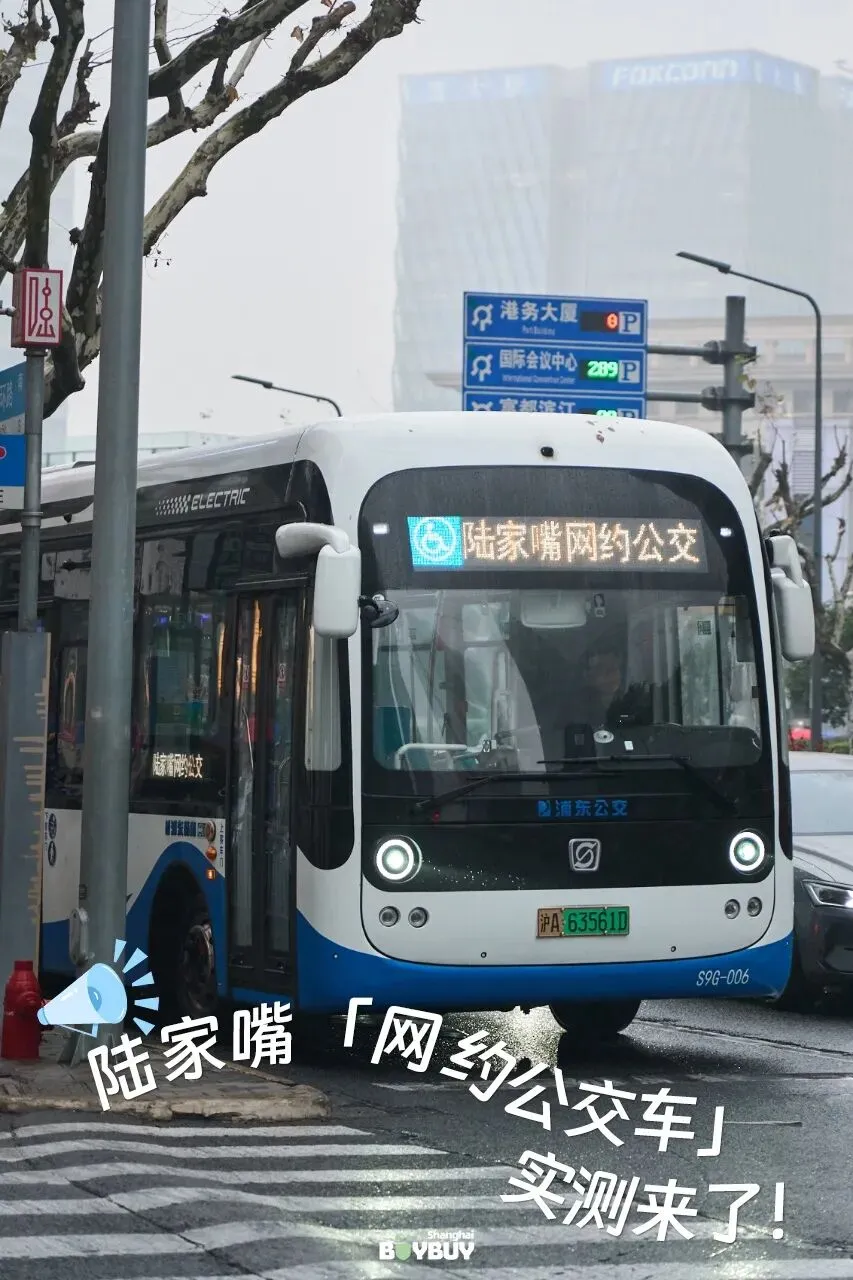
Here’s how it works. Open Alipay or WeChat, search for the mini-program “浦交行” (Pujiaoxing—just type “Lujiazui bus” and it should pop up), tell it where you’re going, and the system handles the rest. Unlike regular buses locked to fixed routes and mandatory stops, these vehicles adapt in real time. An algorithm calculates the most efficient path and beams it directly to the driver’s dashboard. You book, you walk to the stop, the bus arrives. No more freezing at empty stations. No more watching three empty buses pass while yours plays hide-and-seek .
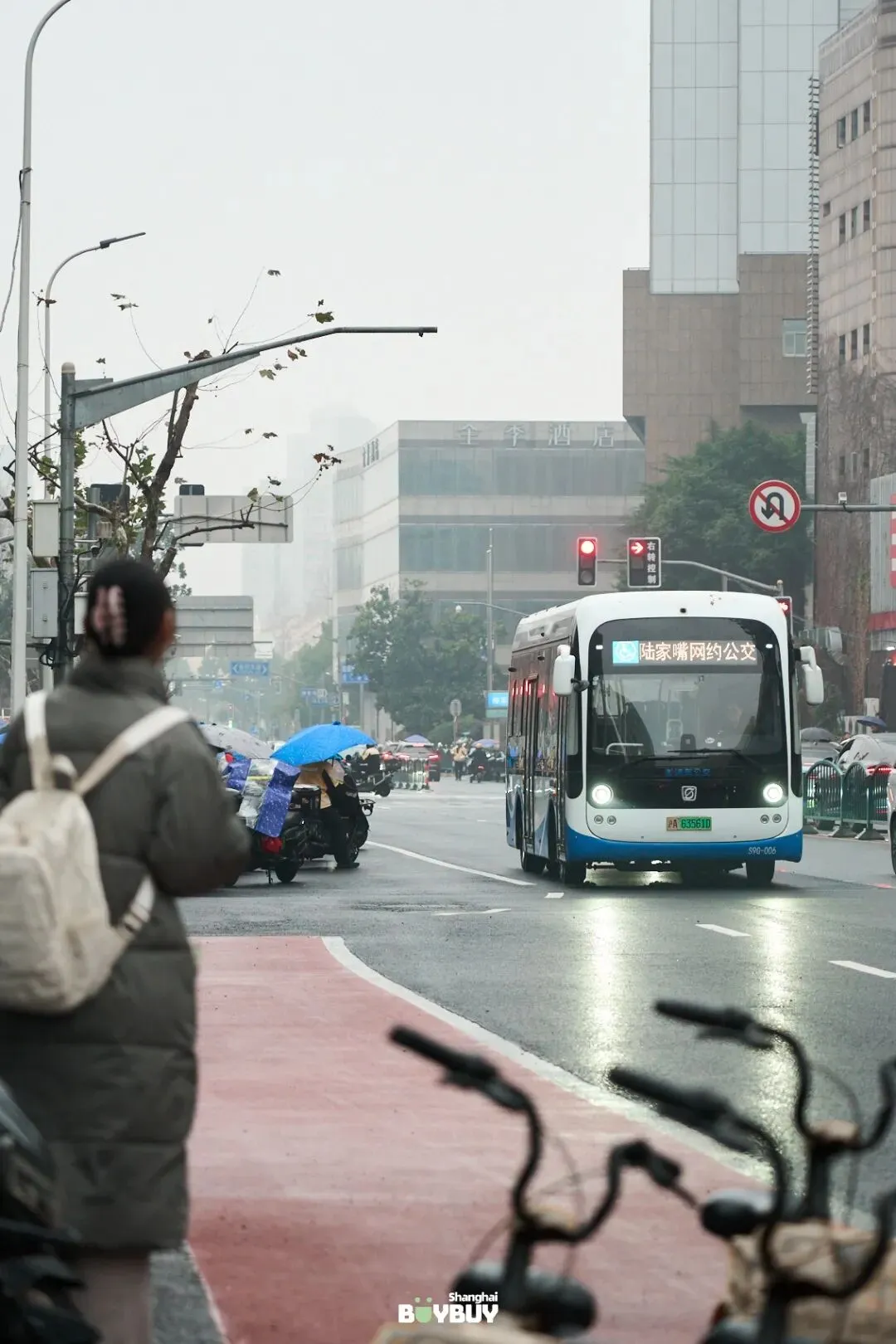
Since March, the service has entered what operators call a “fare rehearsal phase,” with tickets priced at a symbolic one yuan per person—about the cost of a pack of tissues from a vending machine . It runs weekdays from 8 am to 2 pm, those awkward midday hours when regular buses rattle around half-empty but office workers still need to dash for lunch, coffee runs, or that visa photo appointment .
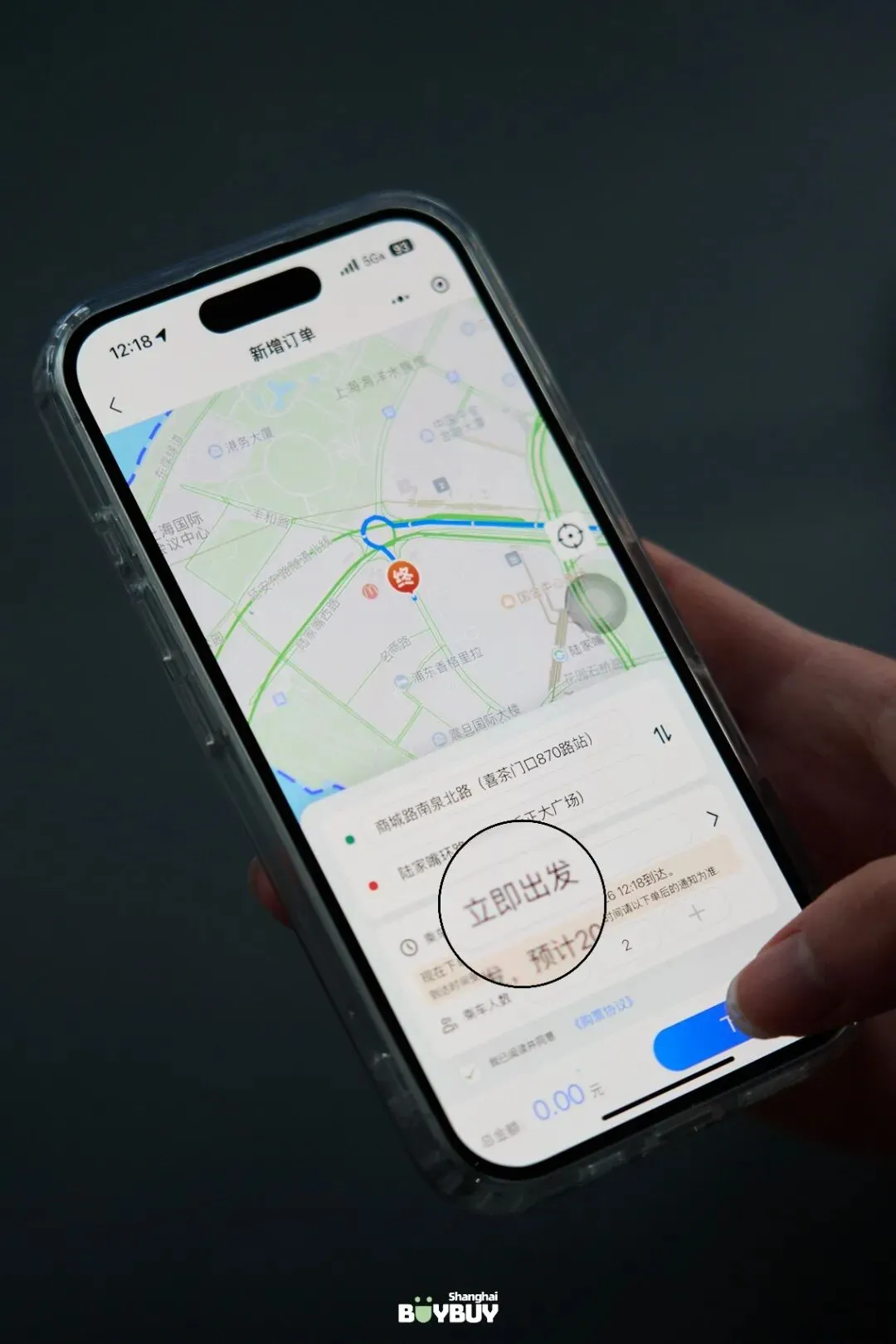
The numbers tell the story. A regular taxi from Jin Mao Tower to IFC Mall will set you back about 16 yuan during lunch rush. Didi express? Around 14 yuan. This bus? One yuan. The same ride that used to cost you a coffee now costs less than the sugar packet that goes in it .
The trial actually began in January, with early testers enjoying free rides. Now, as word spreads on social media, Chinese netizens are calling it “too advanced”—a phrase that mixes genuine admiration with the kind of playful disbelief you’d use if someone told you they’d taught their cat to do laundry .
So, what’s the catch? For now, the service is limited to Lujiazui’s core area—roughly the triangle between the Oriental Pearl Tower, the Shanghai Stock Exchange, and Superbrand Mall. That means you can hop between office towers, subway stations, and shopping centers, but you can’t take it home to Jing’an just yet .
And yes, there’s debate. Critics argue that running buses with just one or two passengers isn’t exactly eco-friendly . Some question whether public funds should subsidize what feels like a private car experience. But supporters counter that this is precisely what 21st-century cities need—transport that bends to human behavior, not the other way around .
For the foreign professional in Shanghai, here’s the bottom line: if you work in Lujiazui and need to move between those glass towers during lunch, your ride is now cheaper than a bottle of water. And you don’t need to say a word of Mandarin to use it. One yuan. Book on WeChat. The bus finds you.