ARTICLE · 1052894
可打印丨小学英语基础知识汇总大全,期末考一定用的到,建议收藏!
可打印丨小学英语基础知识汇总大全,期末考一定用的到,建议收藏!▼ 
第一部分 基础知识 1. 字母:26个字母的大小写 ABCDEFGHIJKLMNOPQRSTUVWXYZ abcdefghijklmnopqrstuvwxyz 2. 音标:48个音标 3. 词汇:词汇量,近反义词 4. 句子:大小写,标点符号 
第二部分 语法知识 一、名词:名词单复数,名词的格 (一)名词单复数 1. 一般情况,直接加-s,如:book-books, bag-bags, cat-cats, bed-beds 2. 以s. x. sh. ch结尾,加-es,如:bus-buses, box-boxes, brush-brushes, watch-watches 3. 以“辅音字母+y”结尾,变y为i, 再加-es,如:family-families, strawberry-strawberries 4. 以“f或fe”结尾,变f或fe为v, 再加-es,如:knife-knives 5. 不规则名词复数: man-men woman-women,mouse-mice policeman-policemen policewoman-policewomen child-children,foot-feet tooth-teeth,fish-fish people-people Chinese-Chinese Japanese-Japanese 不可数名词的复数就是原型:paper, juice, water, milk, rice, tea (二)名词的格 1. 有生命的东西的名词所有格: (1)单数后加 s ,如:Lucy s ruler my father s shirt (2)以s 结尾的复数名词后加 ,如:his friends bags (3)不以s 结尾的复数后加 s,如children s shoes 并列名词中,如果把 s加在最后一个名词后,表示共有,如: Tom and Mike s car. 汤姆和迈克共有的小汽车 要表示所有物不是共有的,应分别在并列名词后加 s, 如: Tom s and Mike s cars. 汤姆和麦克各自的小汽车 2. 表示无生命东西的名词通常用“ of +名词”来表示所有关系:如: a picture of the classroom a map of China. 二、冠词:不定冠词,定冠词种类 (一)不定冠词:a / an 元音开头的可数名词前用an : an egg / an apple / an orange / an eraser / an answer / an ID card / an alarm clock / an actor / an actress / an e-mail / an address / an event / an example / an opera / an houran old man / an interesting book / an exciting sport / an action movie / an art lesson / (二)定冠词:the 定冠词的用法: 1. 特指某(些)人或某(些)物:The ruler is on the desk. 2. 复述上文提到的人或物:He has a sweater. The sweater is new. 3. 谈话双方都知道的人或物:The boys aren’t at school. 4. 在序数词前:John’s birthday is February the second. 5. 用于固定词组中:in the morning / afternoon / evening (三)不用冠词的情况: 1. 专有名词前:China is a big country. 2. 名词前有定语:this , that , my , your , some, any , no 等,如:This is my baseball. 3. 复数名词表示一类人和事:Monkeys can’t swim. They are teachers. 4. 在节日,日期,月份,季节前:Today is Christmas Day. It’s Sunday. 5. 一日三餐前:We have breakfast at 6:30. 6. 球类、棋类运动前:They often play football after class. He plays chess at home. * 但乐器前要用定冠词:I play the guitar very well. 7. 学科名称前:My favorite subject is music. 8. 在称呼或头衔的名词前:This is Mr Li. 9. 固定词组中:at noon at night by bus. 三、代词、形容词、副词 代词:人称代词,物主代词 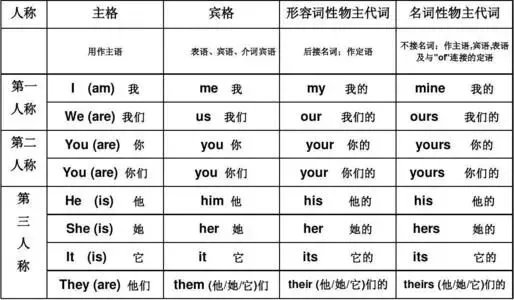
形容词,副词:比较级,最高级 (一) 形容词的比较级 1. 形容词比较级在句子中的运用:两个事物或人的比较用比较级,比较级后面一般带有单词than。 比较级前面可以用more, a little来修饰表示程度。than后的人称代词用主格(口语中可用宾格)。 2. 形容词加er的规则: (1)一般在词尾加er; (2)以字母e 结尾,加r; (3)以一个元音字母和一个辅音字母结尾,应双写末尾的辅音字母,再加er; (4)以“辅音字母+y”结尾,先把y变i,再加er。 3. 不规则形容词比较级:good-better, beautiful-more beautiful (二)副词的比较级 1. 形容词与副词的区别(有be用形,有形用be;有动用副,有副用动) (1)在句子中形容词一般处于名词之前或be动词之后 (2)副词在句子中最常见的是处于实义动词之后 2. 副词比较级的变化规则基本与形容词比较级相同(不规则变化:well-better, far-farther) 四、数词:基数词、序数词 (一)基数词 1. 1-20 one,two,three,four,five six,seven,eight,nine,ten eleven,twelve,thirteen,fourteen fifteen,sixteen,seventeen,eighteen nineteen,twenty 2. 21-99 先说“几十”,再说“几”,中间加连字符 23→twenty-three,34→thirty-four 45→forty—five,56→fifty-six 67→sixty-seven,78→seventy-eight 89→eighty-nine,91→ninety-one 3. 101-999先说“几百”,再加and,再加末两位数或末位数 586→five hundred and eighty-six 803→eight hundred and three 4. 1,000以上,先从右往左数,每三位数加一个“,”。第一个“,”前为thousand;第二个“,”前为million;第三个“,”前为billion。 1,001→one thousand and one 18,423→eighteen thousand,four hundred and twenty-three 6,260,309→six million two hundred and sixty thousand three hundred and nine 750,000,000,000→seven hundred and fifty billion (二)序数词 1. 一般在基数词后加th eg.four→fourth thirteen→thirteenth 2. 不规则变化 one→first,two→second three→third,five→fifth eight→eighth,nine→ninth twelve—twelfth 3. 以y结尾的十位整数,变y为ie再加th twenty→twentieth forty→fortieth ninety→ninetieth 4. 从二十一后的“几十几”直至“几百几十几”或“几千几百几十几”只将个位的基数词变为序数词 twenty-first two hundred and forty-fifth (三)基数词转为序数词的口诀 基变序,有规律,词尾加上-th。 一,二,三,特殊记,词尾字母t,d,d。 八去t,九去e, ve要用f替。 ty将y变成i,th前面有个e。 若是碰到几十几,前用基来后用序。 五、介词 常用介词:in,on,at,behind等 1. at:表示时间概念的某一个点(在某时刻、时间、阶段等) at 1:00(dawn,midnight,noon) 在一点钟(黎明、午夜、中午) 2. on (1)表示具体日期 *注: 1)关于"在周末"的几种表示法: at(on)the weekend在周末——特指 at(on)weekends在周末——泛指 over the weekend在整个周末 during the weekend在周末期间 2)在圣诞节,应说at Christmas?而不说on Christmas? (2)在(刚……)的时候。 On reaching the city he called up his parents. 一到城里他就给父母打了一个电话。 3. in:表示"时段"、"时期",在多数情况下可以和during互换,前者强调对比,后者强调持续。 in(during)1988(December,the 20th century) 在一九八八年(十二月、二十世纪) 六、动词:动词的四种时态 (一)一般现在时: 1. 一般现在时的构成: (1)be动词:主语+be(am, is, are)+其它。如:I am a boy. 我是一个男孩。 (2)行为动词:主语+行为动词(+其它)。如:We study English. 我们学习英语。 当主语为第三人称单数(he, she, it)时,要在动词后加"-s"或"-es"。如:Mary likes Chinese.玛丽喜欢汉语。 2. 动词+s的变化规则 (1)一般情况下,直接加-s,如:cook-cooks, milk-milks (2)以s. x. sh. ch. o结尾,加-es,如:guess-guesses, wash-washes, watch-watches, go-goes (3)以“辅音字母+y”结尾,变y为i, 再加-es,如:study-studies (二)一般过去时: 动词过去式详解——动词的过去式的构成规则有: 1. 规则动词 (1)一般直接在动词的后面加ed:如:worked , learned , cleaned , visited (2)以e结尾的动词直接加d:如 lived , danced , used (3)以辅音字母加y结尾的动词要改y为i再加ed(此类动词较少)如:study – studied carry – carried worry – worried (注意play、stay不是辅音字母加y,所以不属于此类) (4)双写最后一个字母(此类动词较少)如:stopped 2. 不规则动词(此类词并无规则,须熟记)小学阶段要记住以下动词的原形和过去式: sing – sang,eat – ate,see – saw have – had,do – did,go – went take – took,buy – bought,get – got read – read,fly – flew,am/is – was are – were,say – said,leave – left swim – swam,tell – told,draw – drew come – came,lose – lost,find – found drink – drank,hurt – hurt,feel – felt (三)一般将来时: 基本结构: ①be going to + do; ②will+ do. be going to = will I am going to go swimming tomorrow(明天)= I will go swimming tomorrow (四)现在进行时: am,is,are+动词现在分词 动词现在分词详解——动词的ing形式的构成规则: 1. 一般的直接在后面加上ing,如doing,going,working,singing,eating 2. 以e 结尾的动词,要先去e再加ing,如having,writing 3. 双写最后一个字母的(此类动词极少)有:running,swimming,sitting,getting ▼ 
第三部分:句法 陈述句 1. 肯定句 是指用肯定的语气来陈述的句子,如:I’m a student. She is a doctor. He works in a hospital. There are four fans in our classroom. He will eat lunch at 12:00. I watched TV yesterday evening. 2. 否定句 含有否定词或表示否定意义词的句子,如:I’m not a student. She is not (isn’t) a doctor. He does not (doesn’t) work in a hospital. There are not (aren’t) four fans in our classroom. He will not (won’t) eat lunch at 12:00. I did not (didn’t) watch TV yesterday evening. 疑问句 1. 一般疑问句 是指询问事实的句子,此类句子必须用“yes”或“no”来回答。 2. 特殊疑问句 以特殊疑问词(what , where , who , which , when , whose , why , how等)开头引导的句子。 此类句子应该问什么就答什么,不能用“yes 、no”来回答。 There be句型 There be 句型与have, has的区别 1. There be句型表示:在某地有某物(或人) 2. 在there be句型中,主语是单数,be动词用is;主语是复数,be动词用are;如有几件物品,be动词根据最近be动词的那个名词决定。 3. there be句型的否定句在be动词后加not,一般疑问句把be动词调到句首。 4. there be句型与have(has) 的区别:there be表示在某地有某物(或人);have(has) 表示某人拥有某物。 5. some和any在there be句型中的运用:some用于肯定句,any用于否定句或疑问句。 6. and和or在there be句型中的运用:and用于肯定句,or用于否定句或疑问句。 7. 针对数量提问的特殊疑问句的基本结构是: How many + 名词复数 + are there + 介词短语? How much + 不可数名词 + is there + 介词短语? 8. 针对主语提问的特殊疑问句的基本结构是: What’s + 介词短语? ▼ 收藏,感谢分享!
朗读君提醒
点击图片跳转至小程序
即可【下载打印】
朗读君提醒
点击图片跳转至小程序
即可【下载打印】
朗读君提醒
点击图片跳转至小程序
即可【下载打印】
最后,觉得小编今天分享的资料有用,底部点亮“在看”,文末左下角“分享”给更多的家长们和同学们哦~