ARTICLE · 1342895
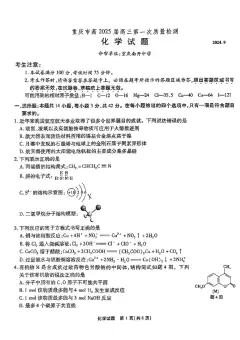
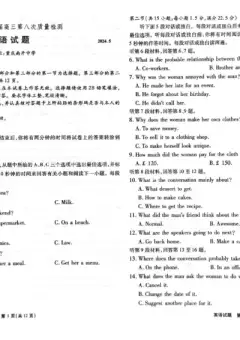
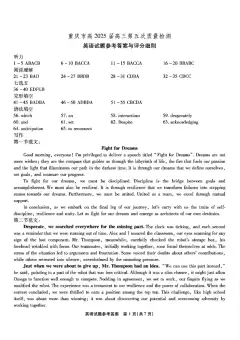
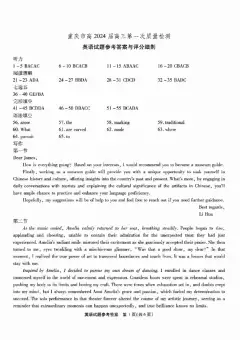
26年11月重庆市南开中学高三质检三英语试卷及完整答案解析纯净打印版
⬇️PDF可打印下载版放在评论区⬇️
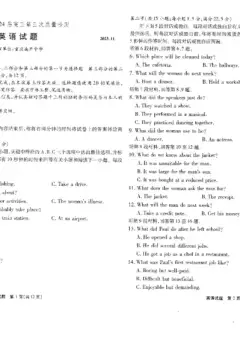
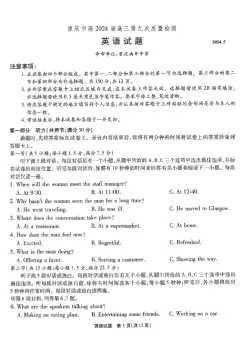
第一部分听力(共两节;满分30分)
第一节(共5小题;每小题1.5分,满分7.5分)
听下面5段对话。每段对话后有一个小题,从题中所给的A、B、C三个选项中选出最佳选项。听完每段对话后,你都有10秒钟的时间来回答有关小题和阅读下一小题。每段对话读两遍。
1. What does the man want to do?
A. Buy electronic products.
B. Sell second-hand items.
C. Throw away old items.
2. What does the woman's father do?
A. He teaches maths at a university.
B. He deals with insurance policies.
C. He works on searching for signs of the past.
3. What are the speakers mainly talking about?
A. Countries.
B. Time zones.
C. Weather.
4. How does the woman feel about the 3D printer?
A. She is doubtful about its functions.
B. She is impressed by the technology.
C. She is confused about its working method.
5. What is the man's prediction?
A. Humans might disappear in the future.
B. Many more creatures may appear soon.
C. Dinosaurs might help solve the mystery.
第二节(共15小题;每小题1.5分,满分22.5分)
听下面5段对话或独白。每段对话或独白后有几个小题,从题中所给的A、B、C三个选项中选出最佳选项。听每段对话或独白前,你将有时间阅读各个小题,每小题5秒钟;听完后,各小题将给出5秒钟的作答时间,每段对话或独白读两遍。
听第6段材料,回答第6、7题。
6. What is one concern the woman raises about having more elderly people?
A. Lack of young volunteers.
B. Increased need for nursing teams.
C. Higher pressure on economic growth.
7. What makes the woman uncertain about relying on robots?
A. The robots' inability to perform difficult tasks.
B. The loss of emotional communication.
C. The cost of getting such technology.
听第7段材料,回答第8至10题。
8. How is the man probably related to the woman?
A. Her classmate.
B. Her student.
C. Her teacher.
9. Which subject will the woman probably study alone?
A. Math.
B. History.
C. Literature.
10. What might help the man master knowledge better?
A. Writing notes.
B. Reading silently.
C. Teaching others.
听第8段材料,回答第11至13题。
11. Why does Marie suggest writing down ideas first?
A. To avoid bad ideas early.
B. To come up with more details.
C. To let quieter people express themselves.
12. Where is the conversation probably taking place?
A. At an advertising agency.
B. At a sports club.
C. In a hospital.
13. What does the man suggest?
A. Giving up old ideas.
B. Selecting talented people.
C. Preparing some visual aids.
听第9段材料,回答第14至17题。
14. What is an advantage of the solar energy equipment?
A. It can last for a long time.
B. It needs less maintenance.
C. It can be set up anywhere easily.
15. What's the last energy the speakers have mentioned?
A. Wind.
B. The sun.
C. Water.
16. What can be a problem in creating water power according to the woman?
A. It can influence the fish and plants nearby.
B. It can cause the moving of the local people.
C. It can be easily affected by natural disasters.
17. What is the woman's suggestion on renewable energy sources?
A. Using different types of sources reasonably.
B. Focusing on the most effective source.
C. Discovering more clean energy sources.
听第10段材料,回答第18至20题。
18. What kind of chance is Jamie offering the audience?
A. To participate in the game.
B. To chat with the competitors.
C. To view the production process of a TV show.
19. Where do competitors get ready?
A. In Studio 3.
B. In the green room.
C. In the editing room.
20. How long does the warm-up last?
A. 5 minutes.
B. 8 minutes.
C. 10 minutes.
第二部分阅读理解(共两节;满分50分)
第一节(共15小题;每小题2.5分,满分37.5分)
阅读下列短文,从每题所给的A、B、C、D四个选项中选出最佳选项。
A
Celebrate Christmas in Style
Newmarket Holidays presents appealing Christmas tours covering Europe and the UK, with savings of up to 15% for advance reservations.
Christmas in Saxony
Kick off your six-day adventure on December 23, 2026 at £1,364 per person. The package covers return airfares, coach transfers and five nights' three-star all-inclusive accommodation. Travellers can taste authentic German festive cuisine, ride the Fichtelberg Railway and wander seasonal Christmas markets with a tour guide.
Christmas on the Algarve
Set out on this eight-day escape on December 21, 2026, with fares at £1,410 per person. Return flights, coach transfers and seven nights' four-star half-board accommodation are included. Your tour guide will take you to enjoy splendid Christmas feasts, discover centuries-old fishing settlements and dive into Lisbon's twinkling festive markets.
Christmas in the Italian Dolomites
Priced at £1,240 per person, this six-day getaway sets off on December 22. It offers return flights, coach transport and five nights' four-star half-board accommodation. A festive lunch in a local restaurant together with afternoon tea and cakes awaits tourists on Christmas Day, alongside a scheduled guided tour to nearby towns.
Christmas in the Peak District
Starting on December 22 at £828 per person, this six-day UK tour relies solely on coach transfers and provides five nights' four-star bed-and-breakfast accommodation. Its highlight is a trip to Chatsworth House for its unique Christmas exhibition with an experienced tour guide.
The discount is available for tours booked by November 30, 2026. Full refund will be offered if you cancel at least seven days before departure. Please call FREE on 0808-239-2089 or visit www.mailtravel.co.uk.
21. Which tour lasts the longest time?
A. Christmas in Saxony.
B. Christmas on the Algarve.
C. Christmas in the Italian Dolomites.
D. Christmas in the Peak District.
22. What do the four tours have in common?
A. They depart on the same day.
B. They provide Christmas dinners.
C. They include air travel costs.
D. They offer guided-tour service.
23. What can we learn from the text?
A. Full refunds are available for last-minute cancellations.
B. Reservations can only be made on the official website.
C. Discounted bookings close by the end of November, 2026.
D. Visitors with discounted tours will depart on December 21.
B
When Tim Cook became Apple's CEO in August 2011, he had big shoes to fill. His predecessor, Steve Jobs, a world-famous innovator, had turned Apple into a global giant with revolutionary products. Now, 15 years later, Cook has led the company to astonishing heights by forging his own path.
Cook will be remembered for making the iPhone essential to everything from buying a coffee to listening to music, hitting the gym or paying a credit card bill. That's all thanks to the web services and accessories Cook pioneered over the past decade. Apple's stock (股票) has soared by over 2,000% during his time. The company also reached a $5 trillion market capitalization in July, the second company to reach that milestone.
But getting there wasn't just about making smart product decisions. It also involved navigating political relationships across the US and China. Cook came into the CEO role with expertise in operations and management. But it was his mild-mannered approach, swift decisions and skills for negotiation that helped keep the iPhone machine running smoothly despite geopolitical challenges, experts say. They described Cook as an intelligent leader with overall plans. "He was perhaps the most thoughtful of the executive team members. He would always listen first and speak when he had something to add."
When pressured to build phones in America, Cook promised a $600 billion US investment to avoid high tariffs (关税). Still, the Covid pandemic and Trump's tariffs illustrated how Apple's reliance on China could be a problem. Tension with European regulators forced Apple to adjust its App Store operations there. Then there's AI. An ongoing shortage of memory chips due to the AI race has pushed up its product prices. Despite these challenges, Cook stuck to customer-centred product ideas. He said, "Follow the principle and decide accordingly, and you will build a strong business."
24. What does the underlined phrase "had big shoes to fill" in Paragraph 1 mean?
A. Cook had to follow all of Jobs' decisions.
B. Cook could easily meet Jobs' expectations.
C. Cook faced pressure to match Jobs' performance.
D. Cook was in an awkward situation for little experience.
25. What is Paragraph 2 mainly about?
A. Apple's global market risks.
B. Cook's achievements.
C. Cook's competition strategies.
D. Apple's future plans.
26. What can be learned about Tim Cook's leadership style?
A. He put innovation far above daily operations.
B. He attached importance to geopolitical analysis.
C. He valued quick decisions over others' opinions.
D. He was open to taking others' opinions into account.
27. What challenge is Apple faced with?
A. The loss of its Chinese market.
B. Insufficient supply of memory chips.
C. Steep tariffs from European countries.
D. The shortage of Apple stores in Europe.
C
If you could push a button and wipe out all the mosquitoes in the world right now, would you? It's tempting. Mosquitoes aren't just annoying; they are the single most deadly animal to humans, killing over 700,000 people each year by transmitting malaria (疟疾), dengue, yellow fever, and more. Climate change is worsening the problem by creating warmer conditions that allow mosquitoes to reproduce in new places.
But before pushing that button, consider this: mosquitoes have been around for 100 million years. We've tried eliminating them before. DDT was widely used but banned decades ago due to environmental and health concerns. Recently, scientists have tried releasing more mosquitoes—millions of lab-bred males exposed to Wolbachia bacteria, which makes them infertile (不育的). When these males mate with wild females, eggs don't hatch, reducing populations. But this must be repeated forever, making it expensive, and it hasn't worked on anopheles mosquitoes, the ones that transmit malaria.
Scientists explore supergenes to sterilize (使绝育) anopheles or block malaria in them, but ethical concerns and strict regulations prevent wild testing. Some argue it messes with evolution itself. And if that's considered too controversial, it is not a good sign for our button, is it?
Like it or not, mosquitoes are part of the ecosystem—food for birds, bats, fish, and turtles, and pollinators (传粉者) helping provide our food. Some scientists think the impacts of wiping them out would be manageable; others fear unintended consequences, perhaps even something more dangerous filling the gap.
This isn't a simple problem with a simple solution. Global travel, trade, poverty, and climate change all fuel the spread of disease-carrying mosquitoes. Besides high-tech science, low-tech approaches work too: access to running water and flush toilets reduces mosquito reproduction. Perhaps learning about mosquitoes, rather than simply eliminating them, is the best way to keep us all safe.
28. What makes mosquitoes the biggest threat to human life?
A. Their fast reproduction.
B. Their long history of existence.
C. Their ability to spread disease.
D. Their large population worldwide.
29. Why is the Wolbachia method considered imperfect?
A. It makes mosquitoes more resistant.
B. It only works on female mosquitoes.
C. It causes serious environmental pollution.
D. It fails to affect the species that spreads malaria.
30. What is implied about the ecosystem if mosquitoes disappear?
A. More animals might be infertile.
B. Birds and bats would lose their habitats.
C. Deadlier creatures might take their place.
D. The food chain would collapse immediately.
31. What would be the best title for the passage?
A. To Push or Not to Push the Button
B. Say Goodbye to Mosquitoes Forever
C. The History of Mosquito Control Methods
D. Why Are Mosquitoes the Deadliest Animals
D
Harvard University has approved a grade cap aimed at limiting grade inflation (膨胀) and better distinguishing the highest academic performers. The measure, approved on May 19 and taking effect in fall 2027, caps A grades in each course at 20% of students.
Harvard Dean of Education Amanda Claybaugh proposed the measure, committed to making Harvard the demanding institution it should be. "Our current grading practices were a barrier to that goal," she said. "Teachers who dared to offer tougher courses risked lower course evaluations and enrollments, while students who dared to take them risked lower GPAs (grade point averages). I realized we had to change the system, that is, the grading culture." She hopes other schools will find solutions that fit them.
Princeton University abandoned its decade-long grade deflation (紧缩) policy in 2014. The policy, adopted in 2004, required departments to award no more than 35% A grades in coursework. Following a 2014 report, Princeton officials removed those limits, citing student mental health as one reason, and chose to monitor grading patterns. Nevertheless, researchers concluded the policy itself was not the main factor for stricter grading, because GPA had already fallen as professors adjusted their grading standards.
Yale University joined the debate over grade inflation with a new policy report that examined whether Yale grades remain as meaningful as they once were. By tightening grading standards, Yale hopes to restore confidence in letter grades and make a 3.0 GPA the norm. "Grade like we mean it," the report states.
David Whalen, vice president of Hillsdale College, admits that efforts to hold back grade inflation are admirable, but he anticipates challenges in rolling them out. "There will be too many complications, too many exceptions needed or requested, and too much student and parent resistance or confusion," Whalen said, "Workarounds will multiply, so I am not confident in the solution, yet I admire the intention."
32. What problem does the present grading system bring about according to Claybaugh?
A. Schools' work is not fairly evaluated.
B. Exams are growing more demanding.
C. Teachers hesitate to set tough courses.
D. Students fail to finish coursework on time.
33. What can we infer about Princeton's grade deflation from Paragraph 3?
A. GPAs kept rising after its abandonment.
B. Students' mental health was overlooked.
C. It successfully achieved its expected goal.
D. It had limited impact on teachers' grading.
34. Why is Yale University mentioned in Paragraph 4?
A. To prove a 3.0 GPA is the best standard.
B. To explain why it abandoned grade caps.
C. To compare its grading methods with Harvard's.
D. To highlight a shared concern among top universities.
35. What is David Whalen's attitude toward Harvard's grade cap policy?
A. Cautious and disapproving.
B. Supportive and optimistic.
C. Doubtful but appreciative.
D. Dismissive but concerned.
第二节(共5小题;每小题2.5分,满分12.5分)
阅读下面短文,从短文后的选项中选出可以填入空白处的最佳选项。选项中有两项为多余选项。
AI-generated photos and videos flood social media nowadays. These visually realistic fake works are capable of misleading the public and spreading false information online. Many ordinary users lack basic skills to tell them apart from real-world shots. 36 Here are several practical approaches to spot AI-produced visual content.
37 Artificial intelligence cannot perfectly handle fine points within pictures. Street-sign text may turn into meaningless disordered letters. Human features such as fingers or ears in the images can appear oddly shaped. 38
Besides checking visual features, it is worthwhile to trace where a piece of material originally comes from. Much fake content spreads on poorly-regulated platforms, making direct source identification difficult. 39With its help, people can locate where the picture or video first appeared on the web. If the material comes from unknown-source websites, we ought to treat it with greater caution.
However, we should be aware that no single clue can serve as absolute evidence. A small strange feature does not automatically prove that a piece of media is fake. Real photographs may also carry unnatural marks caused by shooting or post-processing. 40
A. One effective method is to focus on tiny visual details.
B. Image-based search serves as a powerful tool for this task.
C. Such imperfections can act as warning signs for ordinary users.
D. We can judge whether media is fake merely by its visual features.
E. It is therefore necessary for us to master some identification skills.
F. That's why we need multiple pieces of evidence before concluding.
G. The popularity of AI-made works has improved people's photography.
第三部分语言运用(共两节,满分30分)
第一节(共15小题;每小题1分,满分15分)
阅读下面短文,从各题所给的A、B、C、D四个选项中,选出最佳选项。
Gladys Kalema-Zikusoka, Uganda's first wildlife veterinarian(兽医), has spent decades protecting mountain gorillas in Bwindi Impenetrable National Park.
As a child, she developed a(an) 41 for living creatures, often bringing home homeless dogs and founding a wildlife club at her local school. After her training in London, she returned home and stepped into the misty rainforest, 42 herself to changing the fate of the country's most endangered animals.
As a new veterinarian, she 43 held the belief that gorilla protection was simply about guarding the species against poachers and infectious disease. Yet a sudden scabies(疥疮)outbreak among the gorillas 44 her to a hidden danger. The gorillas had caught the skin condition after touching clothing left behind by nearby farmers. It dawned on her that they could 45 diseases from nearby human neighbors through cross-species contact, a risk she had ignored. One could not properly protect gorillas 46 paying attention to the health of their human neighbors.
To 47 the risk of cross-species infection, her non-profit built hand-washing stations, arranged 48 services for villagers who lacked access to treatment, and handed out tree seedlings and crop seeds. The goal was to 49 local people from over-harvesting firewood deep inside the rainforest, bringing stable food and income to families. This "One Health" model, which ties wildlife protection closely to human well-being, has received 50 across conservation circles.
Her years of efforts have finally 51. Having proved her program's value, Gladys has begun to 52 its reach, training rangers to monitor gorillas and holding health workshops in more regions. Yet a new challenge has appeared: though gorilla numbers have grown, their forest habitat has failed to keep 53. She is now working to 54 enough funding to buy land from willing local landowners. In her eyes, this widespread support is a clear 55of how beloved gorillas have become—their future is closely tied to ours.
41.
A. demand
B. affection
C. talent
D. hatred
42.
A. adapting
B. dedicating
C. limiting
D. adjusting
43.
A. eventually
B. occasionally
C. originally
D. jokingly
44.
A. invited
B. accompanied
C. alerted
D. attached
45.
A. prevent
B. contract
C. fight
D. escape
46.
A. by
B. without
C. through
D. after
47.
A. lower
B. bear
C. face
D. assess
48.
A. medical
B. educational
C. financial
D. emotional
49.
A. separate
B. protect
C. discourage
D. rescue
50.
A. permission
B. sympathy
C. comfort
D. credit
51.
A. broken down
B. paid off
C. got across
D. faded away
52.
A. measure
B. extend
C. restrict
D. monitor
53.
A. pace
B. track
C. order
D. faith
54.
A. advance
B. invest
C. secure
D. approve
55.
A. indication
B. lesson
C. conclusion
D. test
第二节(共10小题;每小题1.5分,满分15分)
阅读下面短文,在空白处填入1个恰当的单词或者括号内单词的正确形式。
For over 1,000 years, the music of Nanyin, one of the oldest 56.(remain) musical genres in China, has carried the sounds of southern China through generations. Now, some musicians in Quanzhou, Fujian province, known as Nanyin Xin Shili (Nanyin New Force) 57. (give) the ancient Nanyin tradition new energy through creative combinations. Their creative works fill the centuries-old art with modern 58. (vital).
Chen Huanxi, the leading figure of the group, 59. (expose) to Nanyin since childhood. 60. Chen puts it, Nanyin New Force is interested in what happens when that centuries-old sound meets the musical vocabulary of today. Their intention is not to replace Nanyin with electronic beats, 61.to preserve the tradition while allowing it to enter new musical contexts.
A typical example is Yue Niang Yue Guang Guang (Moon, Moonlight), 62.Minnan children's song familiar to local generations. Along with the China Broadcasting Film Symphony Orchestra, the group headed by Chen will perform the song on the symphonic stage, bringing new life 63. this traditional folk tune.
Nanyin, 64. (put) onto the UNESCO Intangible Cultural Heritage List in 2009, is often called a "living fossil" of Chinese music. Such creative efforts make this time-honored art more accessible to young audiences and are 65. (enormous) significant for passing on this precious cultural treasure.
第四部分写作(共两节,满分40分)
第一节(满分15分)
假定你是李华,准备参加英语演讲比赛。外教Mr. Carter帮忙修改了你的演讲稿,但你对稿件还有一些疑惑,请给他写一封邮件,内容包括:
1. 致谢并说明你的疑惑;
2. 希望见面商讨。
注意:
1. 写作词数应为80个左右;
2. 请按如下格式在答题卡的相应位置作答。
Dear Mr. Carter,
How's everything going?
Yours,
Li Hua
第二节(满分25分)
阅读下面材料,根据其内容和所给段落开头语续写两段,使之构成一篇完整的短文。
Many years ago, I worked as a gold hunter in the wild Alaskan forest. The wide and quiet wilderness was covered with tall pine trees, where the air was fresh and clean. One calm spring morning, I walked along the twisting stream after hunting for gold for half a day. When I walked out of the thick woods, I stopped suddenly. A big female wolf was tightly caught in a heavy iron trap set by a local hunter. The old hunter had died of a heart attack two days before. The trap had been abandoned in the wilderness, and no one could come to save the poor animal.
The wolf looked very scared and exhausted, with pain and fear shining in her eyes. She struggled hard against the cold iron trap, trying her best to get rid of the tight chain. But each violent movement only hurt her swollen injured foot, bringing her more pain. When I watched her closely, I noticed her breasts were filled with milk, indicating that she must have some newly-born baby wolves waiting eagerly and hungrily for her in a hidden cave nearby. However, the wild wolf was very careful and unfriendly to me. Whenever I moved a bit closer, she would show her sharp teeth and make low sounds to warn me. I was sure that she would attack me cruelly if I tried to set her free right away.
After thinking twice, I came up with a much safer plan. I decided to find her pups (幼崽) first rather than rush to free the defensive mother wolf without thinking. I strongly believed that if the worried mother wolf met her weak little babies again, her anger and fear would slowly disappear. She would calm down and slowly trust me, which would make my rescue safe and successful.
注意:
(1)续写词数应为150个左右;
(2)请按如下格式在答题卡的相应位置作答。
With a clear plan in mind, I set off to search for the wolf pups.
Seeing the mother wolf and her pups reunited safely, I decided to free her.
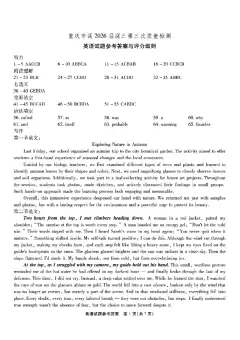
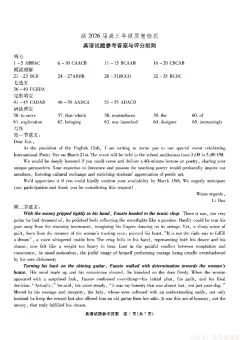
重庆市南开中学高2027届高三年级质量检测(三)
英语参考答案
第一部分听力
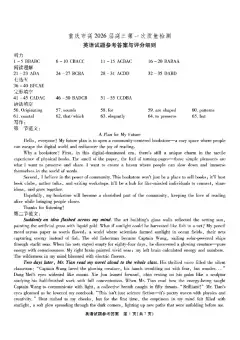
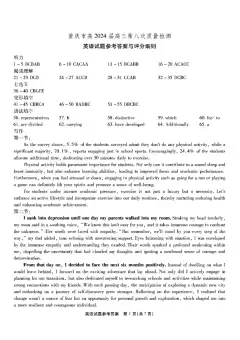
1-5 BCBBA 6-10 BBAAC 11-15 CACBC 16-20 AACBC
第二部分阅读理解
21-23 BDC 24-27 CBDB 28-31 CDCA 32-35 CDDC
36-40 EACBF
第三部分语言运用
完形填空
41-45 BBCCB 46-50 BAACD 51-55 BBACA
语法填空
56. remaining 57. give/are giving 58. vitality 59. has been exposed 60. As
61. but 62. a 63. to 64. put 65. enormously
第四部分写作
第一节参考范文:
Dear Mr. Carter,
How's everything going? I am writing to express my sincere gratitude for your invaluable assistance and professional advice in revising my speech draft for the upcoming competition. Your thoughtful modifications have noticeably enhanced the overall logic, coherence, and persuasiveness of my article, making it far more compelling than before.
However, after carefully reviewing the polished manuscript, I still find myself confused about a few specific vocabulary choices and sentence constructions in the second section. I am slightly concerned that these alterations might not fully convey my original intentions to the audience. Therefore, I am eager to seek your further guidance on these details so as to better refine my speech.
Would it be convenient for you if we meet in person to discuss these issues thoroughly? I am available this Thursday afternoon around 4:00 p.m. in your office, or at any other time that suits your schedule. Thank you again for your selfless help, and I look forward to your reply.
Yours,
Li Hua
第二节参考范文:
With a clear plan in mind, I set off to search for the wolf pups. I followed the faint paw prints on the ground that stretched deep into the quiet forest. With the freezing cold wind sweeping through the woods, I grew concerned about the helpless pups in the wild. After walking deeper into the forest, I eventually spotted a hidden cave tucked under a huge tree. Aware that wolf pups feared strangers, I gently imitated the mother wolves call repeatedly. Before long, four tiny and lovely pups stepped out cautiously. Weak and starving, they had obviously suffered a lot without their mother's company for days. I knelt down slowly, carefully placed the fragile pups in my warm palms and hurried back to their mother. No sooner had the mother wolf caught sight of her babies than she stopped struggling and stared at us with softened eyes.
Seeing the mother wolf and her pups reunited safely, I decided to free her. Much to my relief, all her hostility and tension melted away as her lively pups nestled closely against her. I inched forward cautiously, heart pounding wildly. I bent down, pried open the heavy iron trap and slowly released her swollen, wounded paw. It came as a great surprise that the wolf made no attempt to flee into the dense forest. Instead, she limped gently toward me, stretched out her rough tongue and licked my fingers tenderly, a silent and touching gesture of gratitude that sent a warm shiver through my body. It was this unforgettable experience that taught me that true kindness can break the invisible barrier between humans and wild animals. Even fierce wild creatures are capable of sensing warmth and repaying kindness with pure trust.
听力原文
Text 1
M: Hey, where did you get rid of your old electronics?
W: I sold them in a new second-hand shop. Super easy!
M: That sounds eco-friendly and convenient. I should give it a try. The idea of reducing waste while making some extra cash is great.
Text 2
M: Jill, someone told me your dad has a really interesting job.
W: Yes, he's a historian. He goes to historic places and does research.
M: Sounds exciting. My dad is good at numbers and he is in the accounts department of an insurance company.
Text 3
W: My cousin in Australia is already experiencing tomorrow. It's 11:00 p.m. on Monday here in our country, but 9:00 a.m. on Tuesday there.
M: Yeah, the Earth is divided into different time zones, so it's day in one place and night in another.
Text 4
W: I saw a 3D printer at school today. It can make objects out of plastic.
M: A printer without paper? What does it print?
W: Almost anything—like toys, tools, or even parts of machines. I couldn't take my eyes off it!
Text 5
W: It's amazing that there were so many creatures living on Earth before humans existed.
M: Yes, just like the dinosaurs. They lived millions of years ago, but have disappeared already. Maybe the same thing will happen to humans one day.
Text 6
M: People are living longer because of better health care.
W: Yes, but that also could cause problems. There might not be enough workers to support the elders.
M: That's right. More old people means the government might need to spend more on health care.
W: Who is going to take care of all of them? We're already short of nursing staff.
M: Maybe robots could help. I've read about robots that help in hospitals. Artificial intelligence makes things like that possible.
W: It won't solve everything. What about loneliness? Old people need human contact, too.
M: We'll need more community support, like volunteers and family members helping out.
Text 7
M: Would you like to join the study group today?
W: No, thank you for asking. I actually prefer studying alone. It's quieter, and I can focus better. When I'm by myself, I don't have to worry about what other people are doing.
M: I get that, but sometimes we can share notes and explain things to each other.
W: I suppose so, but it's hard to stay focused when everyone is talking or has different ideas.
M: I like working in a small group—maybe two or three people. That way, there's a balance. You're not alone, and it's not too noisy either.
W: It depends. For subjects like math, I definitely need quiet to concentrate. But for history or literature, it might be helpful to discuss with others.
M: When I explain something to someone, it helps me understand it better myself.
W: That's true.
Text 8
M: We need some fresh ideas for this event. Marie, how do you think we should brainstorm? I'm struggling to think of anything new.
W: I think it works best when everyone writes down their ideas first. That way, quieter people get a chance to share too, without feeling like they have to compete.
M: Good idea. After that, we can have an open discussion where everyone builds on each other's suggestions. Sometimes the best ideas come from combining smaller ones.
W: Exactly. It's important not to give up any ideas at the start, even if they sound a bit strange. Sometimes the strange ones lead to great and creative advertising events.
M: True. And maybe we could break into smaller teams for the next part. That way, each group can focus on a specific aspect of the event and develop it in more detail.
W: Yes, it's easier to come up with details when you're not trying to solve everything at once. Smaller teams also encourage more participation from everyone.
M: We should prepare some visual aids to stimulate additional thoughts.
W: Sure. Visualizing ideas can inspire people to think more creatively.
Text 9
W: I wish people would realize that we don't need to harm the planet in order to survive.
M: What do you mean?
W: We can use nature to help us without harming the planet.
M: In what way?
W: Well, for example, wind can produce electricity, which doesn't cause pollution or harm the environment like burning coal or gas does.
M: The sun can do something similar, right? People use sunlight to make power and don't produce any harmful gases.
W: Exactly. They're both great because they don't run out of fuel like coal or oil. Plus, solar equipment is easy to set up in sunny areas. Once they're set up, they don't need much maintenance.
M: What about water? Rivers can be used to create energy. Isn't that a good option, too?
W: Yes, water is also a good source of renewable energy, but we have to be careful. If we block rivers too much, it can affect the fish and plants that live there.
M: Right. It could also remove water from places that need it. We have to make sure we're using nature in a way that doesn't cause damage.
W: That's why we should use renewable energy reasonably, so we don't put too much pressure on any one resource.
Text 10
Welcome to the backstage area at Yorkshire TV, where you'll get a look behind the scenes and enjoy a live recording of the Mind Benders Quiz! I'm Jamie, and I'll be showing you around today. I guarantee you'll enjoy yourself!
We'll start from Studio 3. This is the heart of our production area. It's huge! And see those lights above? I think that they look like stars that appear every night, making everything shine.
In 15 minutes, we'll head over to the green room, where the competitors get ready. Have you ever wondered what it's like to wait to go on TV? After that, I'll take you to the editing room, where the magic happens. I love this part and I believe if a job is worth doing, it is worth doing well. When it comes to editing for broadcast, every second is important. Speaking of timing, if we hurry up, we'll get to see the staff preparing today's quiz set before the show airs.
By 10:30, you'll be seated in the audience, ready to see the Mind Benders Quiz being filmed live! The competitors will have a 10-minute warm-up before the cameras get switched on, so you won't be bored waiting!
【答案解析】
A篇主题语境: 人与社会——旅游与交通
【语篇导读】本文是一篇应用文。文章主要讲的是Newmarket Holidays推出的欧洲和英国四条圣诞旅游线路的行程天数、出发日期、价格、包含服务、优惠及预订退款信息。
第21题.B细节理解。解析: 根据文中信息, Christmas in Saxony为"six-day", Christmas on the Algarve为"eight-day", Christmas in the Italian Dolomites为"six-day", Christmas in the Peak District为"six-day"。对比可知, Algarve线路为八天, 持续时间最长。故选B。
第22题.D细节理解。解析:对照四条线路的内容描述,四条线路均包含导游带领游览的服务:萨克森线配导游逛圣诞市集、阿尔加维线有导游带领体验节日活动、多洛米蒂线有scheduled guided tour、峰区线配资深导游参观庄园展览。故选D。
第23题.C细节理解。解析:A项错,文中说“if you cancel at least seven days before departure”才可全额退款,并非最后时刻取消也可全额退款;B项错,文中还提供了免费电话0808-239-2089,并非只能在官网预订;C项正确,文中明确说“The discount is available for tours booked by November 30, 2026”,即折扣预订截止到2026年11月底;D项错,只有Algarve线路于12月21日出发,并非所有折扣线路都在12月21日出发。故选C。
B篇主题语境:人与社会——科学与技术
【语篇导读】本文是一篇说明文。文章主要讲的是Tim Cook接任苹果CEO后带领公司取得巨大商业成就,并介绍其温和、善听意见、果断谈判的领导风格,以及苹果在地缘政治、关税和AI芯片短缺等方面面临的挑战。
第24题.C词义猜测。解析:第一段提到Cook接任时,前任Steve Jobs是“world-famous innovator”,并把苹果打造成全球巨头,说明Cook要面对与Jobs成就比较的压力。“had big shoes to fill”意为“面临压力,要接替一位杰出前任并达到其水平”,并非“完全追随Jobs的所有决定”“轻松达到期望”或“因经验少而处境尴尬”。故选C。
第25题.B段落主旨。解析:第二段列举Cook让iPhone成为生活必需、推动网络服务和配件发展、苹果股票上涨超过2,000%、市值达到5万亿美元等事实,核心是Cook任内取得的成就。故选B。
第26题.D推理判断。解析:文中说Cook“mild-mannered”“would always listen first and speak when he had something to add”,并称他“thoughtful”,说明他愿意倾听并考虑他人意见。故选D。
第27题.B细节理解。解析:最后一段明确提到“An ongoing shortage of memory chips due to the AI race has pushed up its product prices”,即AI竞赛导致记忆芯片持续短缺。故选B。
C篇主题语境:人与自然——自然生态
【语篇导读】本文是一篇议论文。文章主要讲的是是否应“按下按钮”消灭世界上所有蚊子,分析了蚊子传播疾病的危害、现有控蚊方法的局限、生态影响与伦理争议,指出这不是简单问题,主张综合防治并加深对蚊子的了解。
第28题.C细节理解。解析:第一段指出蚊子是“single most deadly animal to humans”,每年通过传播疟疾、登革热、黄热病等杀死70多万人,说明其最大威胁在于传播疾病的能力,而非繁殖快、历史悠久或数量大。故选C。
第29题.D细节理解。解析:第二段指出释放感染沃尔巴克氏菌的雄蚊方法必须永远重复、成本高,而且“hasn't worked on anopheles mosquitoes, the ones that transmit malaria”,即对传播疟疾的按蚊无效。故选D。
第30题.C推理判断。解析:第四段说一些科学家担心消灭蚊子会产生“unintended consequences, perhaps even something more dangerous filling the gap”,即可能有更危险的生物填补生态空缺。故选C。
第31题.A主旨大意。解析:全文围绕“如果按按钮消灭所有蚊子,你会不会按”展开,先讲蚊子危害,再讲控蚊方法局限、伦理争议和生态风险,最后指出问题不简单。A“To Push or Not to Push the Button”最能概括全文,故选A。
D篇主题语境:人与社会——历史、社会与文化
【语篇导读】本文是一篇说明文。文章主要讲的是哈佛大学批准将每门课程获A等级的学生比例限制在20%的成绩上限政策,以遏制成绩膨胀,并介绍普林斯顿大学、耶鲁大学的相关做法及专家对该政策实施难度的看法。
第32题.C细节理解。解析:根据第二段Claybaugh所说“Teachers who dared to offer tougher courses risked lower course evaluations and enrollments”,敢于开设更难课程教师可能面临较低课程评价和选课人数,说明现行评分制度使教师不愿开设难课。故选C。
第33题.D推理判断。解析:第三段指出,普林斯顿2004年实施成绩紧缩政策,2014年取消该限制,理由包括学生心理健康,并改为监测评分模式;研究者结论是“the policy itself was not the main factor for stricter grading, because GPA had already fallen as professors adjusted their grading standards”,即政策本身并非评分变严的主要因素,教师调整评分标准后GPA已下降,说明该政策对教师评分影响有限。选D。
第34题.D推理判断。解析:第四段提到耶鲁大学也加入关于成绩膨胀的讨论,通过新政策报告审视耶鲁成绩是否仍像过去一样有意义,并希望收紧评分标准以恢复字母成绩的可信度。这与哈佛关注成绩膨胀、维护成绩区分度形成呼应,说明顶尖大学对成绩膨胀和成绩可信度存在共同担忧。故选D。
第35题.C观点态度。解析:第五段中David Whalen承认遏制成绩膨胀的努力“admirable”,但预计实施中会有“too many complications, too many exceptions... too much student and parent resistance or confusion”,并说“I am not confident in the solution, yet I admire the intention”,即对解决方案存疑但赞赏其意图。故选C。
七选五主题语境:人与社会——科学与技术
【语篇导读】本文是一篇说明文。文章主要讲的是AI生成的图片和视频在社交媒体上泛滥、容易误导公众,普通用户应掌握观察细节、追溯来源并综合多证据来辨别真假的方法。
第36题.E上下文逻辑关系与过渡句。解析:前文指出AI生成的视觉内容会误导公众,而许多普通用户缺乏辨别真假的基本技能;后文紧接着说“Here are several practical approaches...”,即要介绍具体识别方法。E项中的“therefore”承接前文问题,“identification skills”呼应后文“approaches”,起到承上启下的作用。故选E。
第37题.A段落主题句。解析:该段后文列举街道标志文字变成无序字母、图片中手指或耳朵形状怪异等,都属于图片中的细小视觉细节。A项“focus on tiny visual details”正好总领本段,与后文例子形成总分关系。故选A。
第38题.C指代衔接与段落总结。解析:前文列举了AI处理不好的文字、手指、耳朵等“瑕疵”,C项中的“Such imperfections”指代这些不自然细节;“warning signs for ordinary users”说明这些瑕疵可提醒普通用户警惕。故选C。
第39题.B代词指代与语义衔接。解析:后文“With its help”中的“its”需要一个单数名词性工具来指代,B项中的“Image-based search”正好对应;同时“locate where the picture or video first appeared”与上文“trace where a piece of material originally comes from”语义一致。故选B。
第40题.F逻辑结论与主旨升华。解析:前文强调“no single clue can serve as absolute evidence”,小瑕疵不能自动证明媒体是假的,真实照片也可能有不自然痕迹,因此得出结论:下结论前需要多方面证据。F项中的“multiple pieces of evidence”与上文逻辑紧密衔接。故选F。
完形填空主题语境:人与自然——自然生态与环境保护
【语篇导读】本文是一篇记叙文。文章主要讲的是乌干达首位野生动物兽医Gladys Kalema-Zikusoka数十年保护山地大猩猩,通过“One Health”模式把野生动物保护与人类健康、社区发展结合起来,并持续扩展项目、筹资保护栖息地的故事。
第41题.B名词辨析/语境推断。解析:A.demand需求;B.affection喜爱;C.talent天赋;D.hated憎恨。空格前有developed a(an),后有for living creatures,后文又写她常把流浪狗带回家、在学校创办野生动物俱乐部,说明她从小对生物有“喜爱之情”,affection for符合语境。故选B。
第42题.B动词辨析/固定搭配。解析:A.adapting适应;B.dedicating奉献;C.limiting限制;D.adjusting调整。dedicate oneself to doing sth意为“献身于做某事”,此处指她投身于改变本国最濒危动物命运的事业。故选B。
第43题.C副词辨析/语境逻辑。解析:A.eventually最终;B.occasionally偶尔;C.originally最初;D.jokingly开玩笑地。句意为“作为一名新兽医,她最初认为保护大猩猩只是防止偷猎和传染病”,originally与as a new veterinarian相呼应。故选C。
第44题.C动词辨析/固定搭配。解析:A.invited邀请;B.accompanied陪伴;C.alerted使意识到;D.attached附上。alert sb to sth意为“使某人意识到某事”,疥疮暴发使她意识到一个隐藏的危险。故选C。
第45题.B动词辨析/语境义。解析:A.prevent预防;B.contract感染;C.fight对抗;D.escape逃避。contract diseases意为“感染疾病”,指大猩猩可能通过跨物种接触从附近人类邻居那里感染疾病。故选B。
第46题.B介词辨析/双重否定结构。解析:A.by通过;B.without没有;C.through通过;D.after在……之后。句意为“如果不关注人类邻居的健康,就不能妥善保护大猩猩”,not...without构成双重否定,强调关注人类健康的必要性。故选B。
第47题.A动词辨析/固定搭配。解析:A.lower降低;B.bear承受;C.face面对;D.assess评估。lower the risk of意为“降低……的风险”,指为降低跨物种感染风险而采取多项措施。故选A。
第48题.A形容词辨析/语境搭配。解析:A.medical医疗的;B.educational教育的;C.financial财政的;D.emotional情感的。后文“villagers who lacked access to treatment”说明村民缺乏治疗机会,因此安排的是医疗服务。故选A。
第49题.C动词辨析/固定搭配。解析:A.separate分开;B.protect保护;C.discourage劝阻;D.rescue救援。discourage sb from doing sth意为“劝阻某人做某事”,目的是劝阻当地人深入雨林过度采集柴火。故选C。
第50题.D名词辨析/固定搭配。解析:A.permission许可;B.sympathy同情;C.comfort安慰;D.credit赞誉/认可。receive credit意为“获得认可/赞誉”,指“One Health”模式在保护界获得认可。故选D。
第51题.B动词短语辨析。解析:A.broken down出故障;B.paid off见成效/得到回报;C.got across被理解;D.faded away逐渐消失。句意为“她多年的努力终于见成效”,与后文“已证明项目价值”相呼应。故选B。
第52题.B动词辨析/搭配。解析:A.measure衡量;B.extend扩大;C.restrict限制;D.monitor监测。extend its reach意为“扩大其影响范围/覆盖范围”,后文培训护林员、在更多地区举办健康研讨会正是扩大项目范围。故选B。
第53题.A名词辨析/固定搭配。解析:A.pace步伐;B.track轨迹;C.order秩序;D.faith信念。keep pace with意为“跟上……的步伐”,句意为大猩猩数量增长了,但森林栖息地未能跟上其增长步伐。故选A。
第54题.C动词辨析/搭配。解析:A.advance推进;B.invest投资;C.secure获得;D.approve批准。secure funding意为“获得资金”,指她正努力获得足够资金从愿意出售土地的当地地主手中购买土地。故选C。
第55题.A名词辨析/语境推断。解析:A.indication迹象;B.lesson教训;C.conclusion结论;D.test测试。a clear indication of意为“……的明确迹象”,指广泛支持清楚表明大猩猩已多么受人们喜爱。故选A。
语法填空主题语境:人与社会——文学、艺术与体育
【语篇导读】本文是一篇说明文。文章主要讲的是泉州“南音新势力”音乐人通过创造性融合现代音乐元素,让古老南音焕发新活力,并促进这一非物质文化遗产的传承。
第56题.remaining非谓语动词(现在分词作定语)。解析:此处修饰musical genres,remain与genres之间为主动关系,表示“现存的、剩余的”,故用现在分词remaining作前置定语。one of the oldest remaining musical genres意为“现存最古老的音乐种类之一”。
第57题.give/are giving时态、主谓一致和双宾结构。解析:主语some musicians为复数,谓语应用复数形式。填give时,用一般现在时表示客观陈述或当前做法;填are giving时,用现在进行时强调如今正在发生的动作。give sb sth为双宾结构,give the ancient Nanyin tradition new energy意为“赋予古老南音传统新的能量”。
第58题.vitality词性转换(形容词变名词)。解析:modern后需要名词作with的宾语;vital的名词形式为vitality,意为“活力、生命力”,且为不可数名词。fill...with modern vitality表示“使……充满现代活力”。
第59题.has been exposed时态、语态和固定搭配。解析:since childhood常与现在完成时连用;主语Chen Huanxi为单数,且Chen与expose之间是被动关系,故用现在完成被动语态has been exposed。be exposed to意为“接触、暴露于”。
第60题.As连词/固定句式。解析:As Chen puts it是固定表达,意为“正如陈所说”;as引导方式状语从句,位于句首时首字母大写。
第61题.but并列连词/固定结构。解析:not...but...是固定并列结构,意为“不是……而是……”,连接两个不定式to replace...与to preserve...,表示他们的目的是不用电子节拍取代南音,而是保护传统并使其进入新的音乐语境。
第62题.a冠词。解析:此处作Yue Niang Yue Guang Guang的同位语,表示“一首闽南童谣”,为单数可数名词泛指,故用不定冠词a。
第63题.to介词固定搭配。解析:bring new life to...为固定搭配,意为“给……带来新生命/新活力”;此处to为介词,后接this traditional folk tune。
第64题.put非谓语动词(过去分词作定语)。解析:句中已有谓语is often called,空处应填非谓语动词;Nanyin与put之间是被动关系,且put onto the UNESCO Intangible Cultural Heritage List发生在2009年,故用过去分词put作后置定语,相当于which was put onto...。put的过去分词与原形同形。
第65题.enormously词性转换(形容词变副词)。解析:空处修饰形容词significant,需要用副词;enormous的副词形式为enormously,意为“极其、非常”。be enormously significant for...表示“对……极为重要”。