ARTICLE · 1389730
2026小升初小学英语四大时态归纳复习
2026小升初小学英语四大时态归纳复习
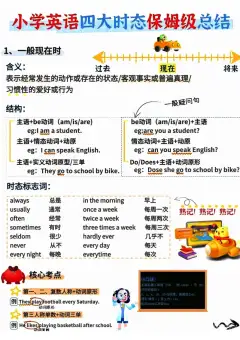
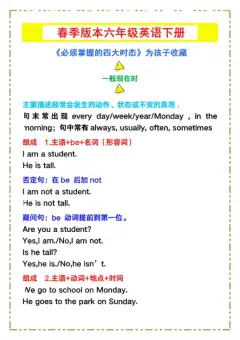
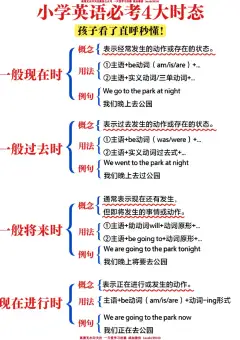
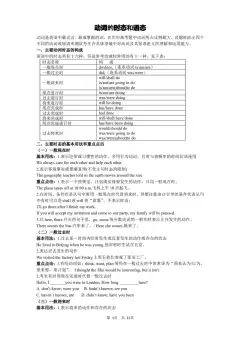
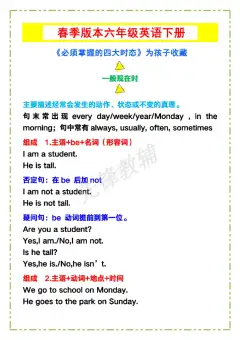
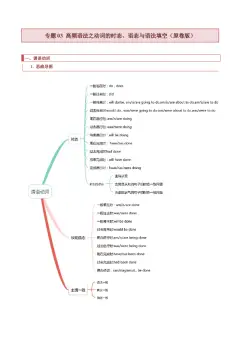
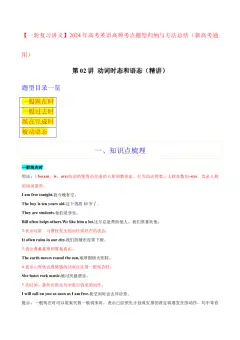
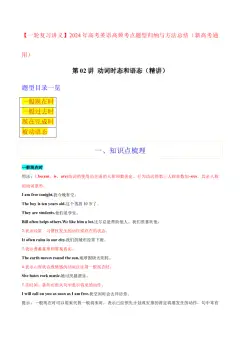
一、一般现在时(do/does)
含义:表示经常性、习惯性的动作或存在的状态,也用于描述客观事实和真理。
结构:
主语 + be动词(am/is/are)+ 表语
主语 + 实义动词原形/第三人称单数形式 + 其他
主语为第三人称单数(he/she/it/单数名词等)时,动词用第三人称单数形式
其他主语用动词原形
例句:
I am a student.(我是一名学生。)
He goes to school at 7:00 every day.(他每天七点去上学。)
The earth moves around the sun.(地球绕着太阳转。)
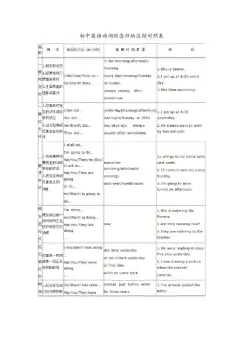
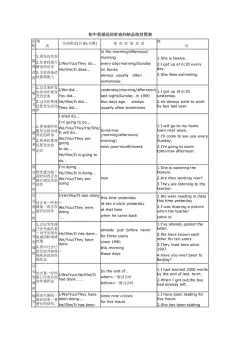
时态标志词:every day/week/month, usually, often, sometimes, always, never, on weekends 等。
第三人称单数动词变化(一般现在时)
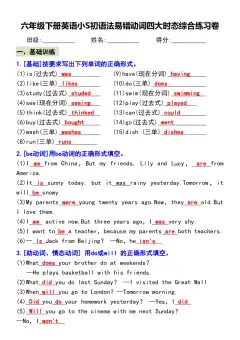
1. 一般情况直接加-s:like → likes
2. 以x/s/ch/sh/o结尾加-es:watch → watches, go → goes
3. 元音字母+y结尾直接加-s:play → plays
4. 辅音字母+y结尾改y为i加-es:study → studies
5. 不规则变化:have → has be → is
二、一般将来时(will do / be going to do)
含义: 表示将要发生的动作或存在的状态,也可表达计划、打算做的事。
结构:
主语 + will + 动词原形 + 其他
主语 + be (am/is/are) going to + 动词原形 + 其他
例句:
I will visit my grandparents tomorrow.(我明天将去看望祖父母。)
She is going to have a party this weekend.(她这周末打算举办派对。)
时态标志词:tomorrow, next week/month/year, soon, in the future, this afternoon/evening 等。
用法区别:
will 多用于临时决定、客观预测或表达意愿。
be going to 多用于已有计划、打算,或有明显迹象表明将要发生的事。
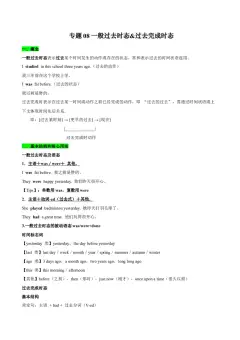
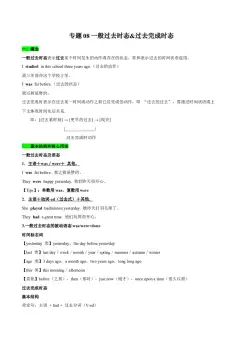
三、一般过去时(did)
含义:表示过去某个时间发生的动作或存在的状态。
结构:
主语 + be动词(was/were)+ ……
主语 + 实义动词过去式 + ……
例句:I met Jenny yesterday.(我昨天遇见珍妮了。)
时态标志词:ago 以前 yesterday 昨天 just now 刚才 last year 去年
last night 昨晚 then 那时 one day 一天last week/month/term 上周/上个月/上学期in the early days 在早期at the age of 在…岁时once upon a time 很久以前on that day 在那天 in + 过去的时间 过去某时the day before yesterday 前天 this morning 今天早上
动词变过去式(一般过去时):
A. 规则变化:
1. 一般情况下,直接加-ed。例:work → worked
2. 以不发音的e结尾,直接加-d。例:live → lived
3. 以辅音字母加y结尾改y为i加-ed。例:cry → cried
4. 以双辅音结尾双写最后字母加-ed。例:stop → stopped
B. 不规则变化:例:see → saw is----was are----were
四、现在进行时(be doing)
含义:表示现在(说话瞬间)正在进行或发生的动作。
结构:主语 + be动词(am, is, are)+ 动词-ing形式
例句:I am walking to school now.(我现在正在步行去学校。)
时态标志词:now(现在)、at present(现在)、listen(听)、at this time(此时)、look(看)、at this moment(此时)、right now(现在)
动词变-ing形式(现在进行时)
1. 一般情况下,直接加-ing。例:read → reading
2. 以不发音的e结尾,去e加-ing。例:make → making
3. 以双辅音结尾双写最后字母加-ing。例:run → running
4. 少数以ie结尾,变ie为y,再加-ing。例:lie → lying
五、专项练习
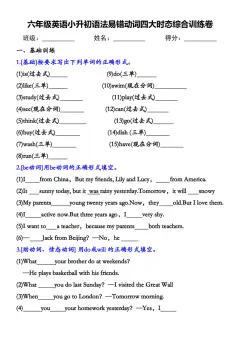
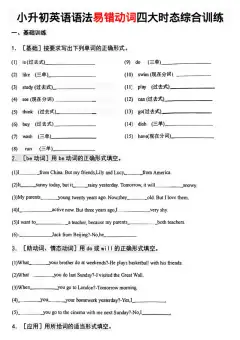
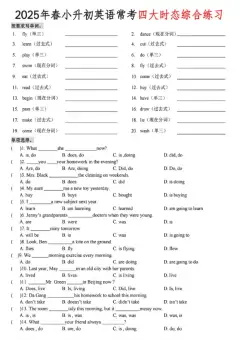
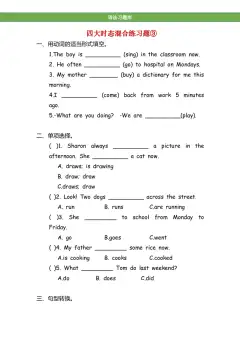
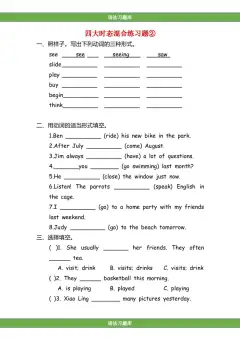
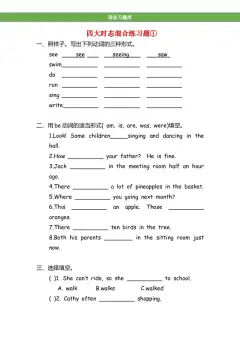
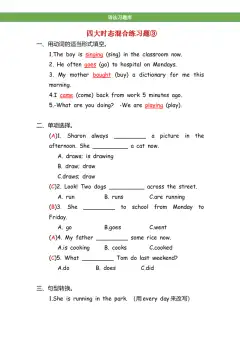
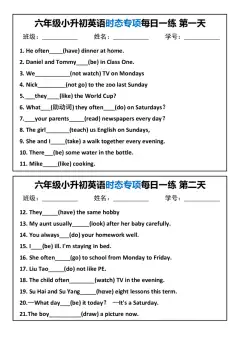
A. 一般现在时练习题
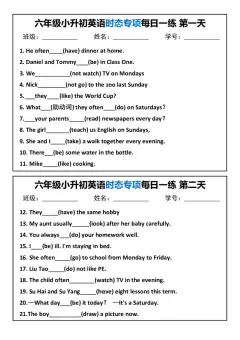
1. Mike ______ (do) his homework every day.
2. There ______ (be) some water in the glass.
3. We like ______ (play) basketball after class.
4. I like singing. I often ______ (listen) to the music in the evening.
5. My grandma ______ (watch) TV every day.
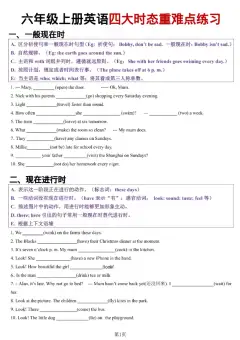
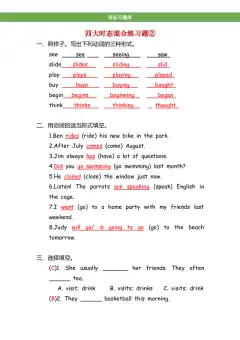
B. 现在进行时练习题
1. Look! Chen Jie and Mike are ______ (sing) now.
2. The small bear is ______ (climb) the tree.
3. Mike is ______ (draw) picture.
4. She is ______ (do) the dishes.
5. My brother is ______ (make) kites.
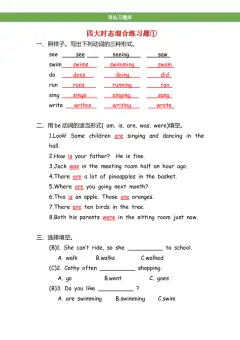
C. 一般过去时练习题
1. ______ you ______ (water) the flowers yesterday?
2. Su Hai ______ (go) for a walk last Sunday.
3. Mike didn’t ______ (finish) his homework yesterday.
4. I ______ (pick) apples on the tree last month.
5. I ______ (is) ten years old last year.
D. 一般将来时练习题
1. I ______ ______ ______ ______ (see) a film tomorrow.
2. There ______ ______ (be) a party in our school next Friday.
3. Mike ______ ______ (visit) his grandparents next week.
4. I ______ ______ (fly) a kite with my father next week.
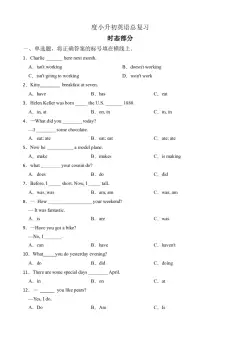
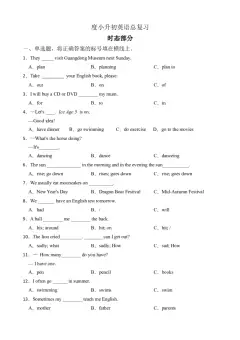
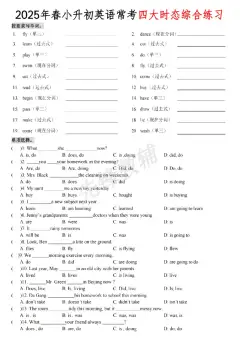
小升初英语必考四大时态语法专项训练
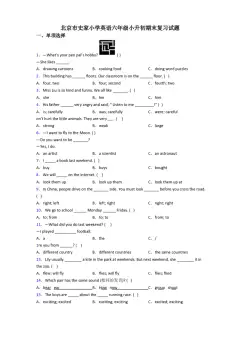
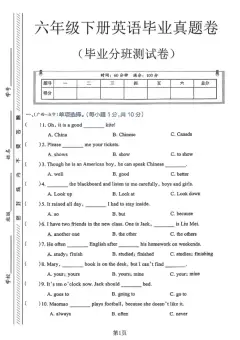
一、选择题
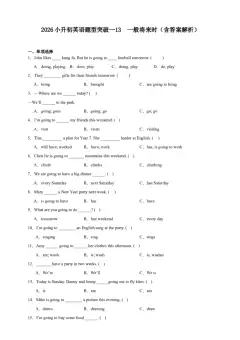
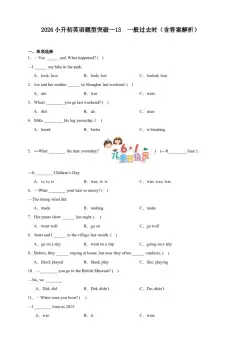
1. Every morning, my father ______ the newspaper before going to work.
A. reads B. read C. is reading D. will read
2. Look! The kids ______ games on the playground.
A. play B. played C. are playing D. will play
3. She ______ to the movies with her friends last night.
A. go B. goes C. went D. will go
4. If it is sunny tomorrow, we ______ a picnic in the park.
A. have B. had C. are having D. will have
5. Listen! The baby ______ in the next room.
A. cry B. cries C. is crying D. cried
6. My mother usually ______ dinner at 6:30 p.m.
A. cook B. cooks C. is cooking D. cooked
7. They ______ a snowman in the yard yesterday afternoon.
A. build B. builds C. built D. will build
8. I ______ a letter to my pen pal next week.
A. write B. wrote C. am writing D. will write
9. The students ______ an English class at the moment.
A. have B. are having C. had D. will have
10. My little brother often ______ TV after dinner.
A. watch B. watches C. is watching D. watched
11. He ______ to school by bike yesterday morning.
A. go B. goes C. went D. will go
12. We ______ a party next weekend.
A. have B. had C. are having D. will have