 夜雨聆风
夜雨聆风Hello~欢迎翻阅Ivy的教学备忘录!
教师成长助力站

您身边的教学资源宝库
1
基本信息
资料信息
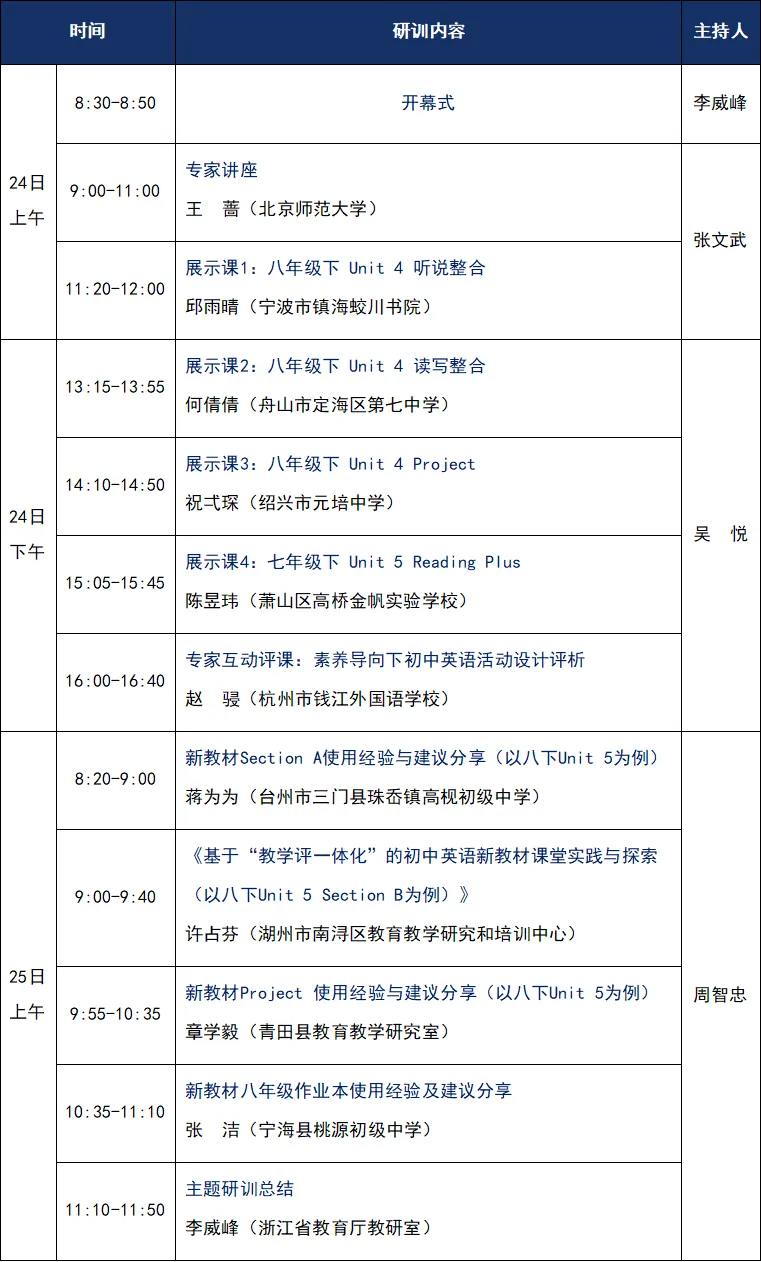
时、地 | 2026年3月24-25日 宁波市 |
来源 | 2026年浙江省初中英语新教材(人教版)专题研训活动 |
资料清单 | 课件(截图版)、授课视频、逐字稿 |
教学信息
课文 | The Wonders of Nature  |
教材单元 | 八年级下 Unit 4 |
学生 | 八年级 |
教师 | 祝戈琛 绍兴市元培中学 |
课型 | project 课型 |
研讨会详情

2
教学详情
Lead in
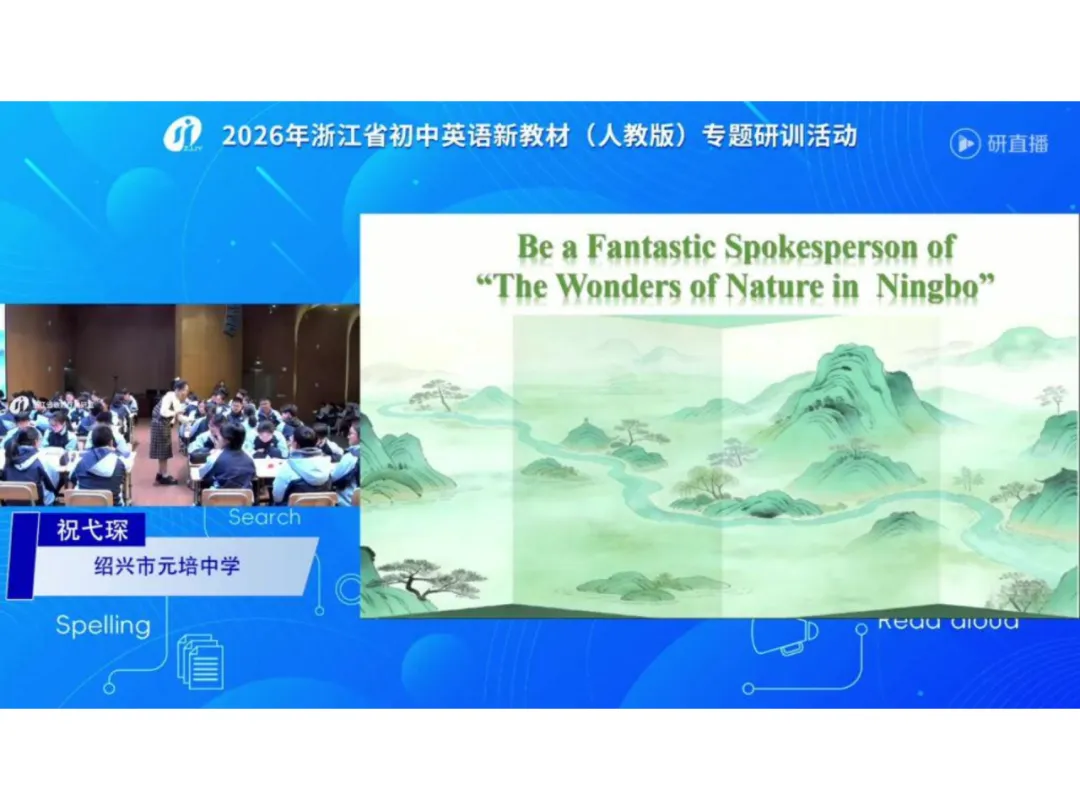
视频T: Good afternoon, everyone! Nice to meet you. From my name, can you guess where I come from?
Ss: ...
T: Yes, I come from Shaoxing. What do you want to know about Shaoxing? You can use 5W1H questions. Have a try!
S1: What food...?
T: What food? You can try Smelly Tofu and Yellow Wine. Delicious! Anything else?
S2: How large...?
T: How large is Shaoxing? It's about as large as Ningbo. Shaoxing is a cultural and natural city, with many natural wonders.
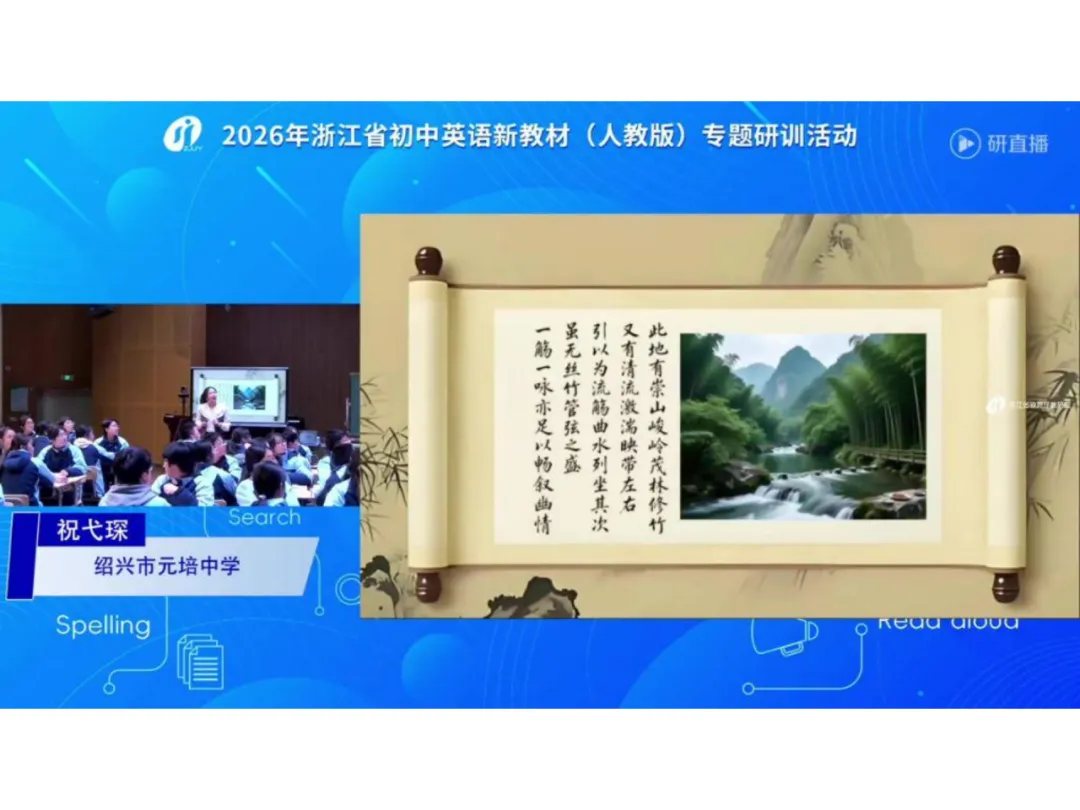
视频T: Look, this is Lanting. What can you see?
S3: A river. The water is clear.
T: Yes. And the boy, please?
S4: Many bamboos.
T: Yes, high and thick bamboo forests. Lanting has a variety of animals and plants. (Read after me: variety).
TPR--Now, imagine we are in Lanting. Take a deep breath. This air goes into our lungs. So, we can describe Lanting as the "Lungs of Shaoxing". (Read: Lungs).
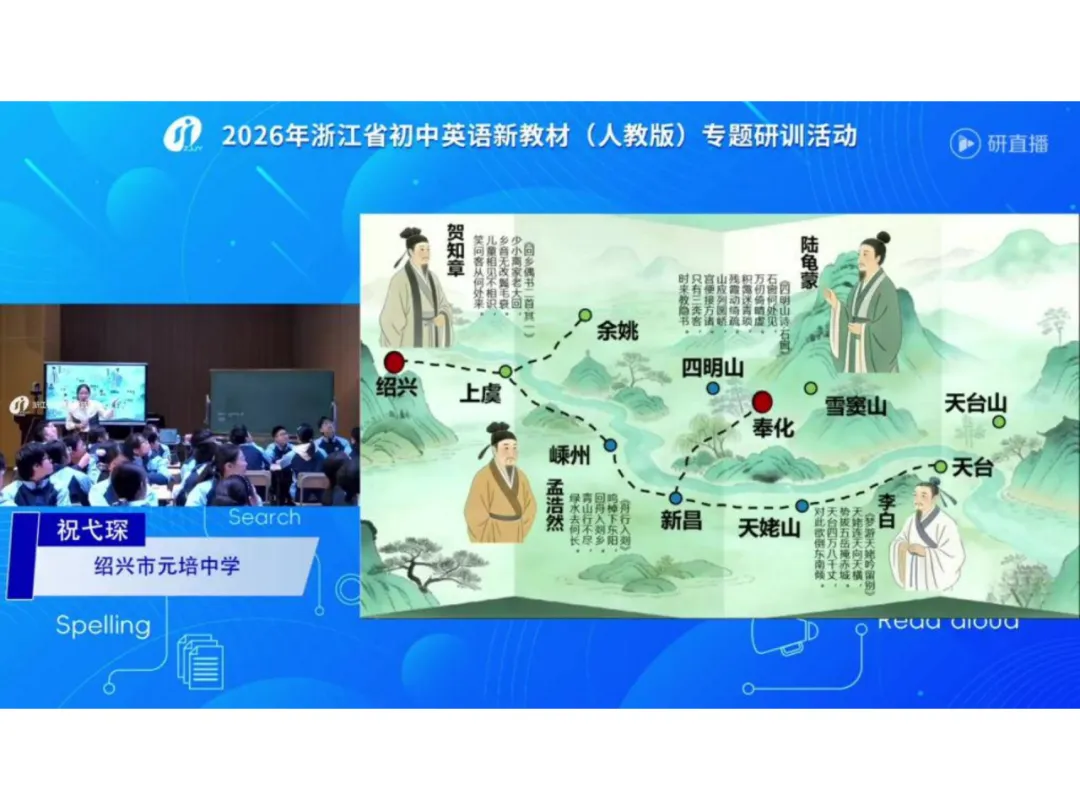
What about your city?
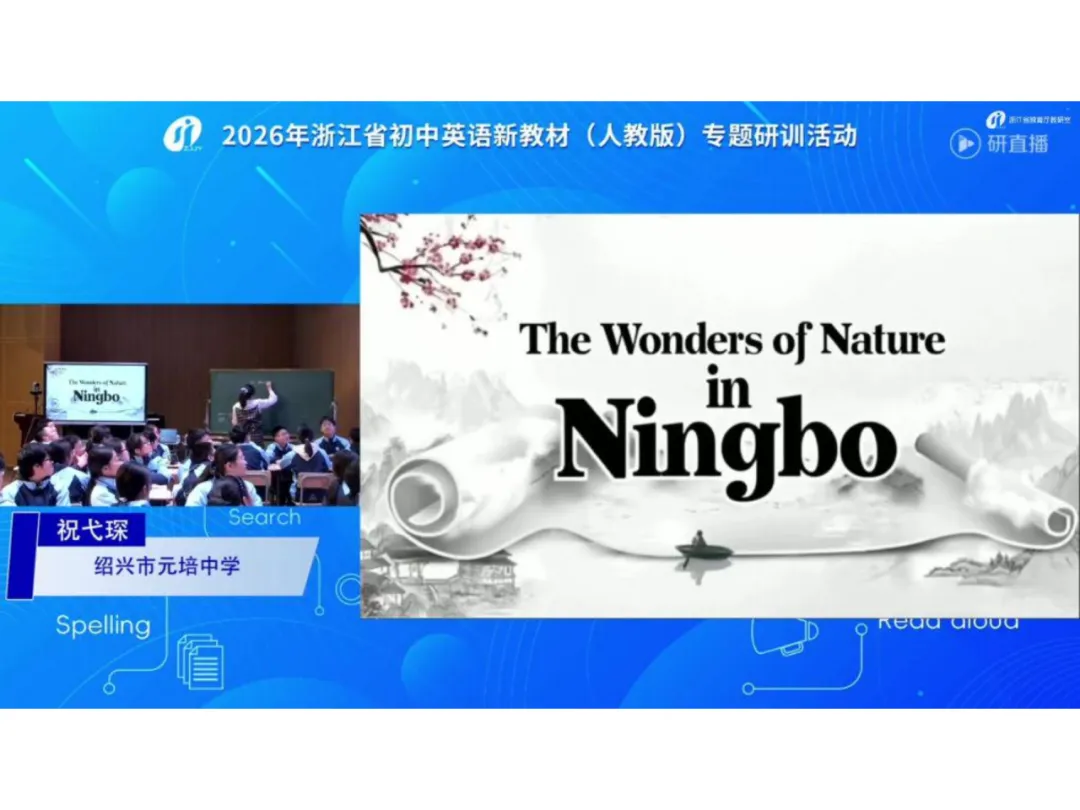
T: Today, let's travel along the Tang Poetry Road to explore the wonders of nature. To make more people know Ningbo, let's be the Spokespersons of Our City. What are in their hands? Posters!
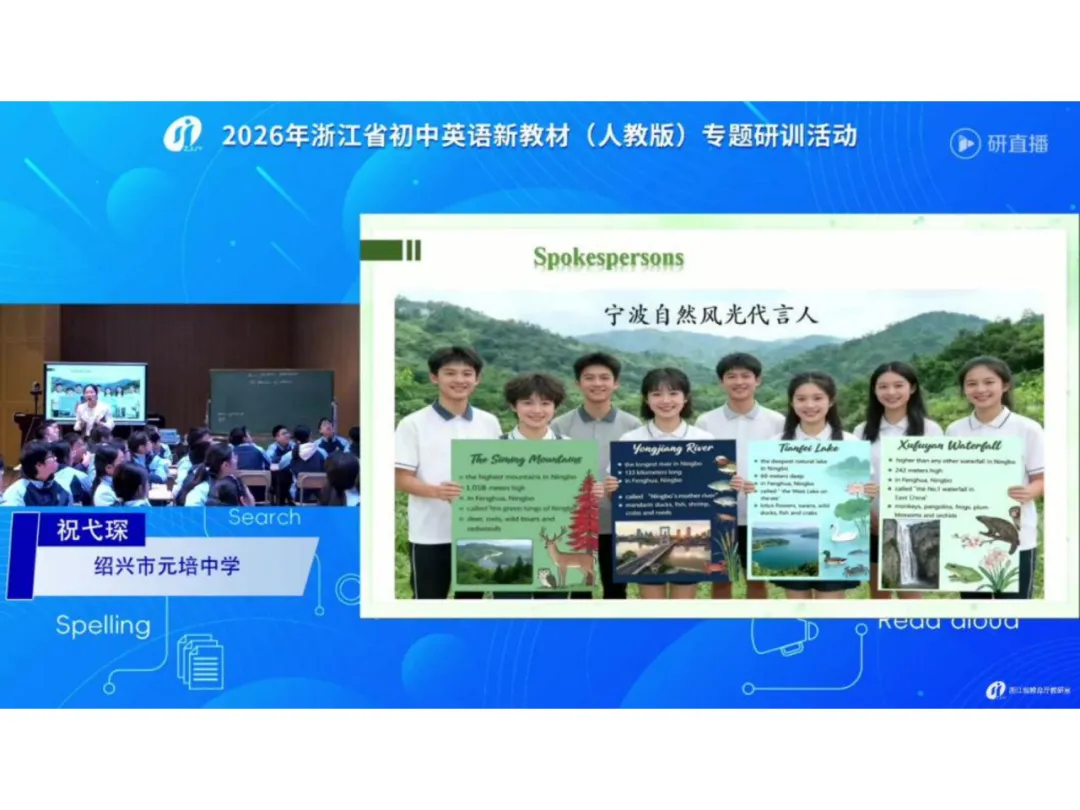
So today, we will design posters about natural wonders. Let our posters inspire others. Clear?
Explore
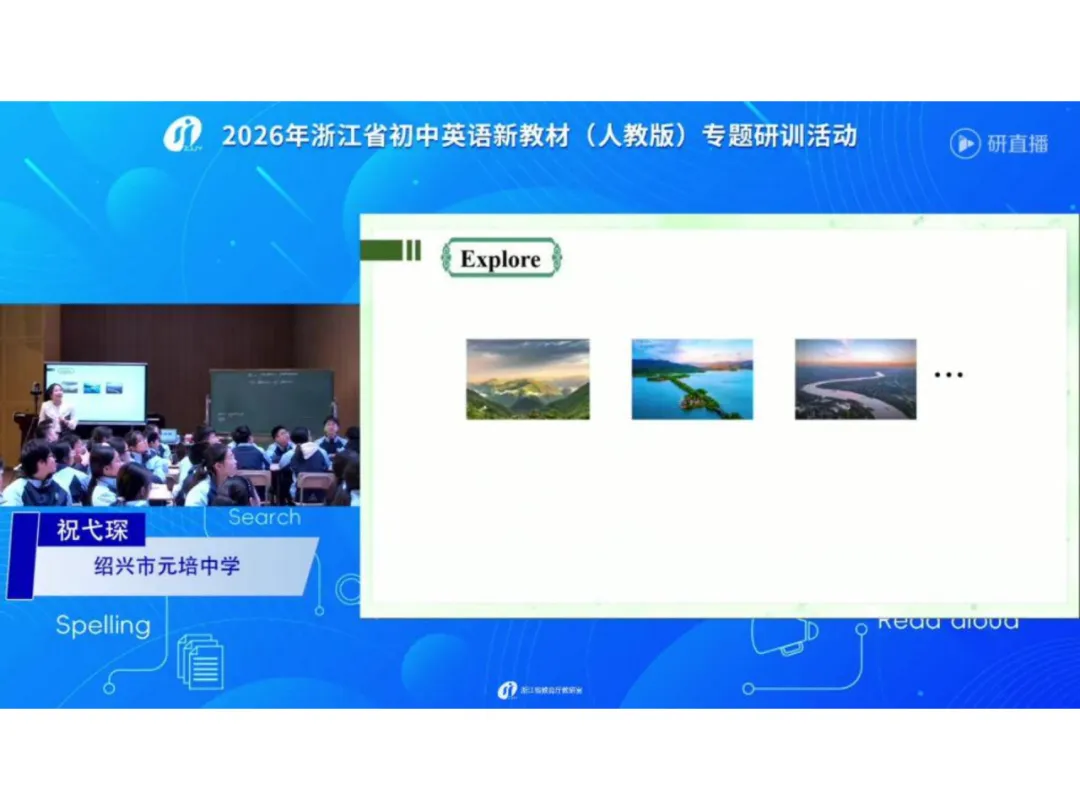
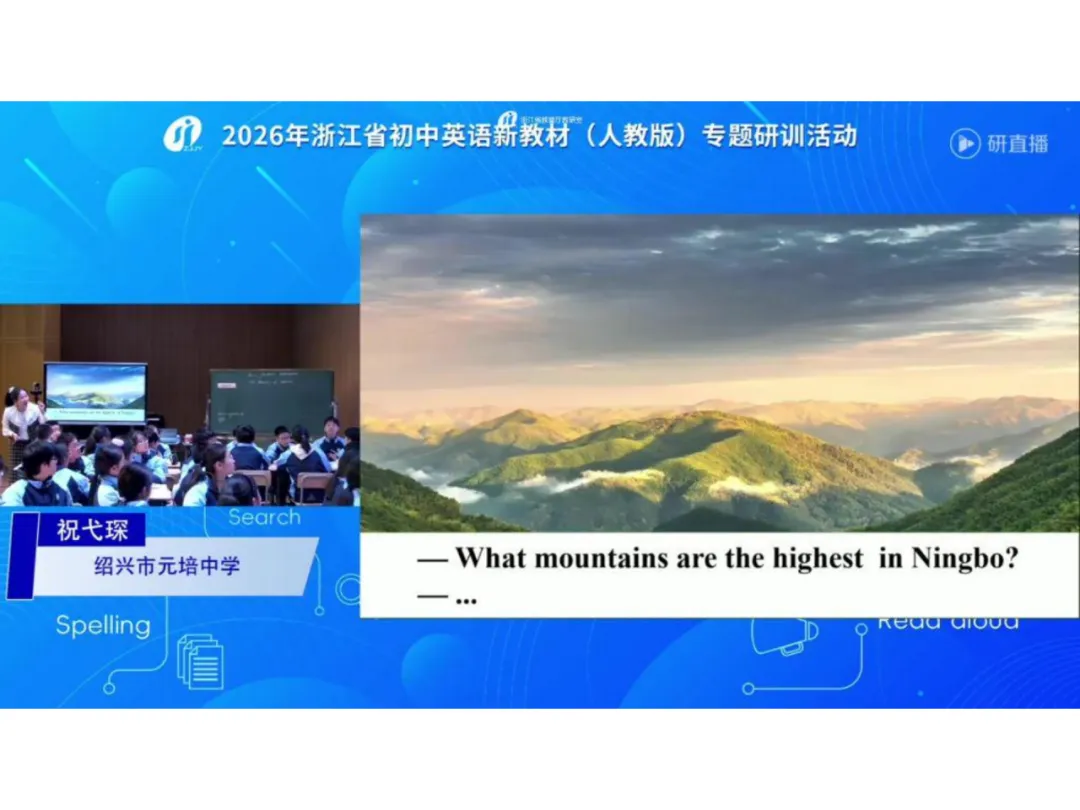
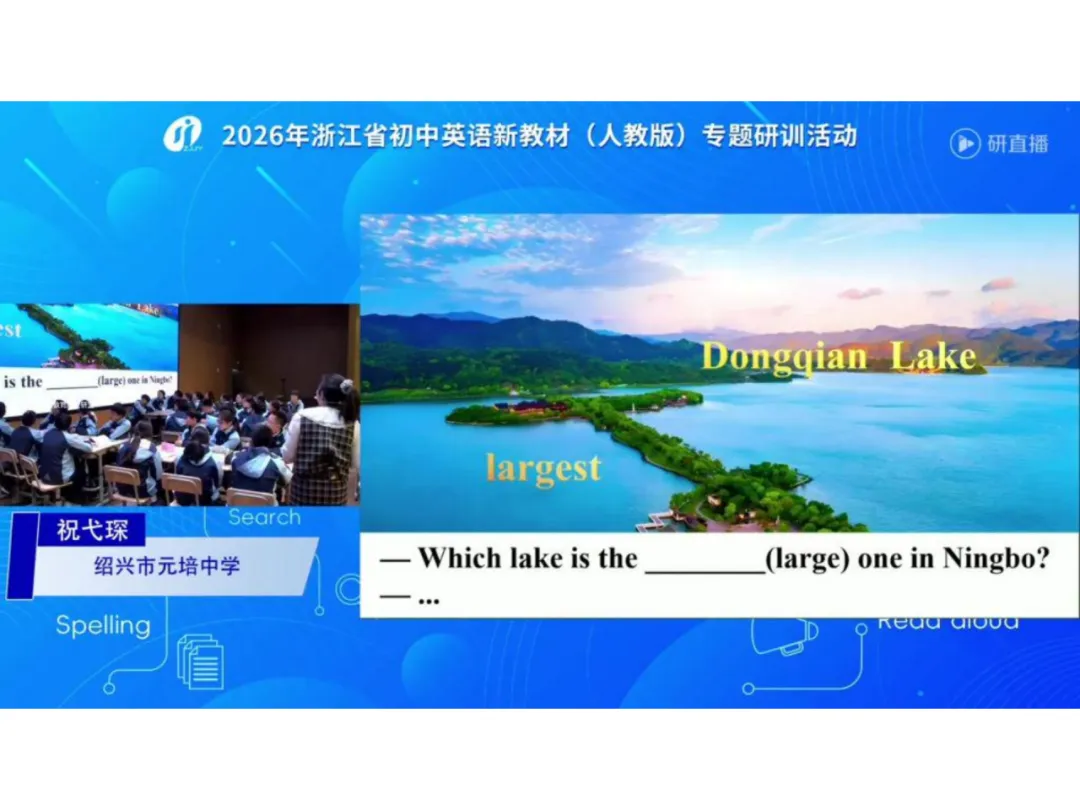
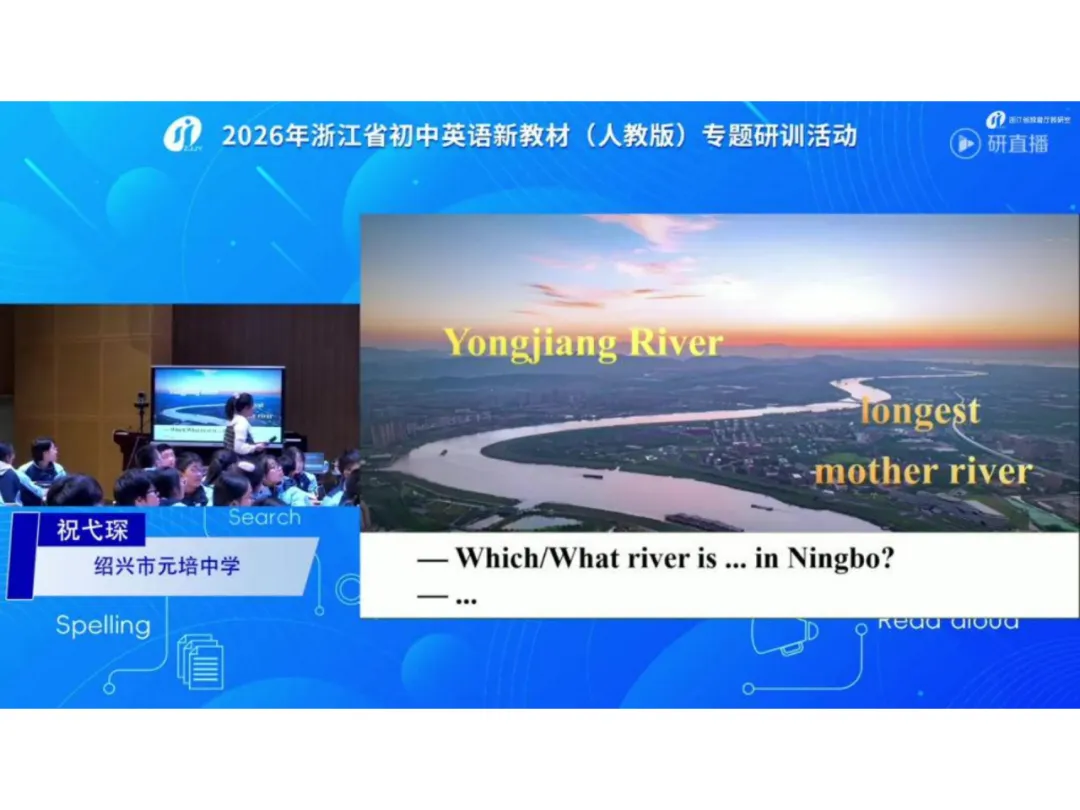
T: First, choose a place. What mountains are the highest in Ningbo?
S5: Siming Mountains.
T: Make a full sentence, please.
S5: Siming Mountains are the highest mountains in Ningbo.
T: Great. We can also describe them as the "Lungs of Ningbo". How about this place? (Points to Dongqian Lake). Who can ask a question?
S6: The largest one in...
T: Who can answer?
Ss: Dongqian Lake is the largest lake in Ningbo.
T: And this river? (Yongjiang River). Which river is the longest? ... Yongjiang River is the longest. People in Ningbo depend on it a lot. In your family, who do you depend on most? Our mother. So we call it the "Mother River of Ningbo". Thanks for sharing.
词汇教学:通过隐喻将地理特征转化为情感符号,提升了语言的感染力和思维的深度
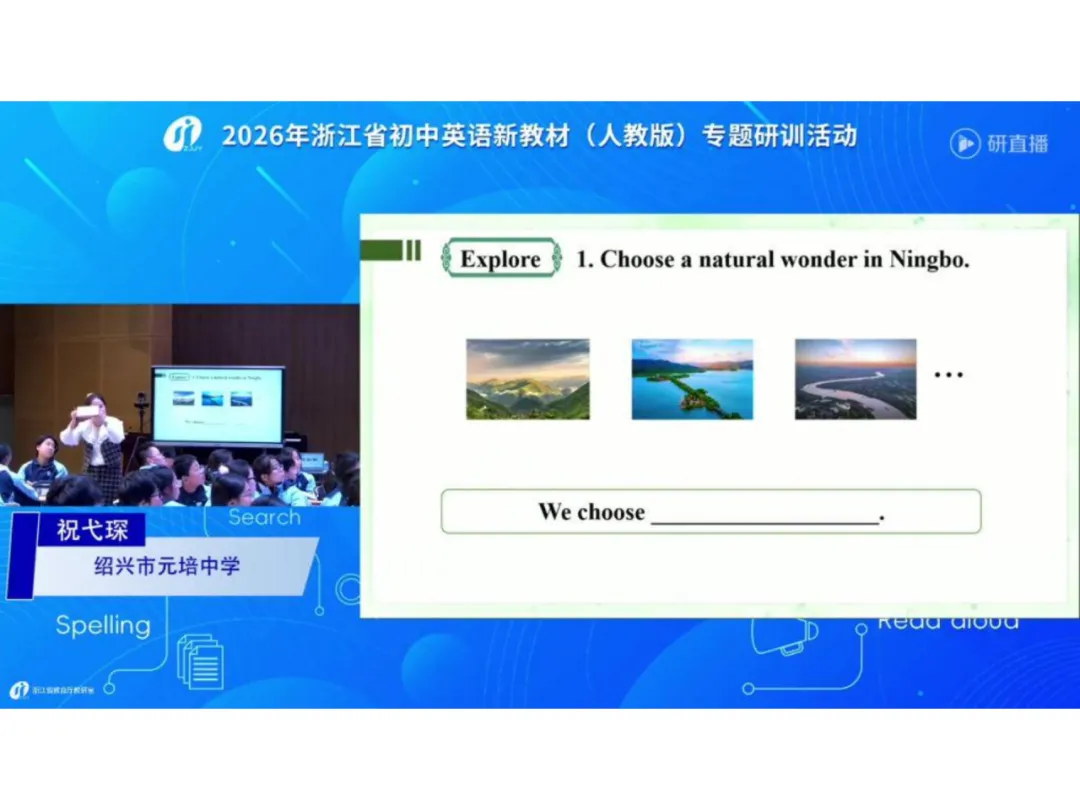
T: Now, discuss in groups. Choose one natural wonder. (Group work time). I'm curious, what did you choose?
Group Ss: We choose Dongqian Lake... / Siming Mountain...
T: Why?
Group Ss: Because it's the largest...
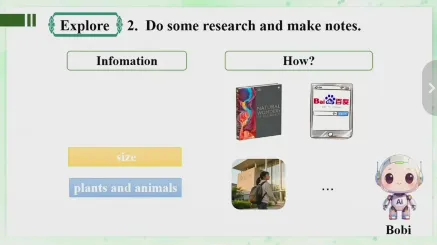
T: Thanks. But if we meet unsure information, what should we do?
Ss: Do research!
T: How? Look through books? Go to museums? Or use the internet? Today, let's ask AI for help. Bobby is here.(Teacher interacts with AI)
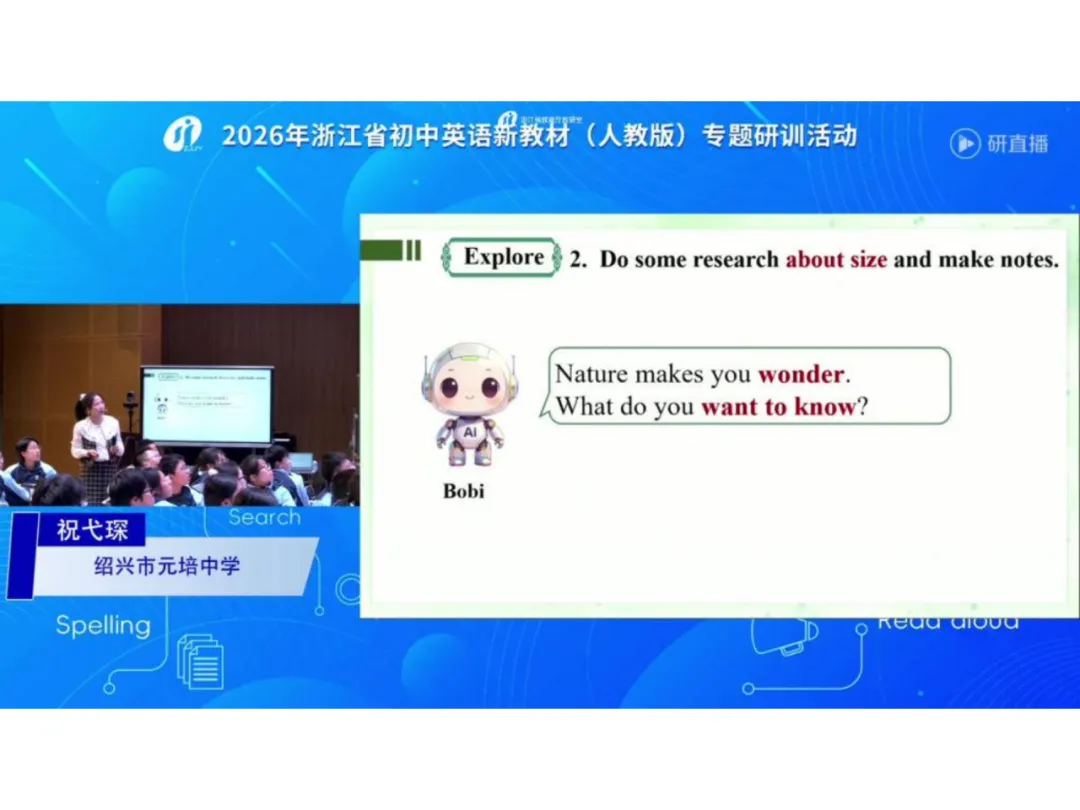
“容错”教学:引入AI (Bobby) 进行实时问答,但恰逢了AI“网络错误”和“数据缺失”的真实场景。它教会学生技术是工具,培养了批判性思维。
T: Bobby, I wonder how high the Siming Mountains are? ... 1021 meters? Great. How about Dongqian Lake? How large is it? ... 22 square kilometers. And Yongjiang River? How long is it? ... 133 kilometers. Please take notes.
人机交互,教师示范后,学生参与
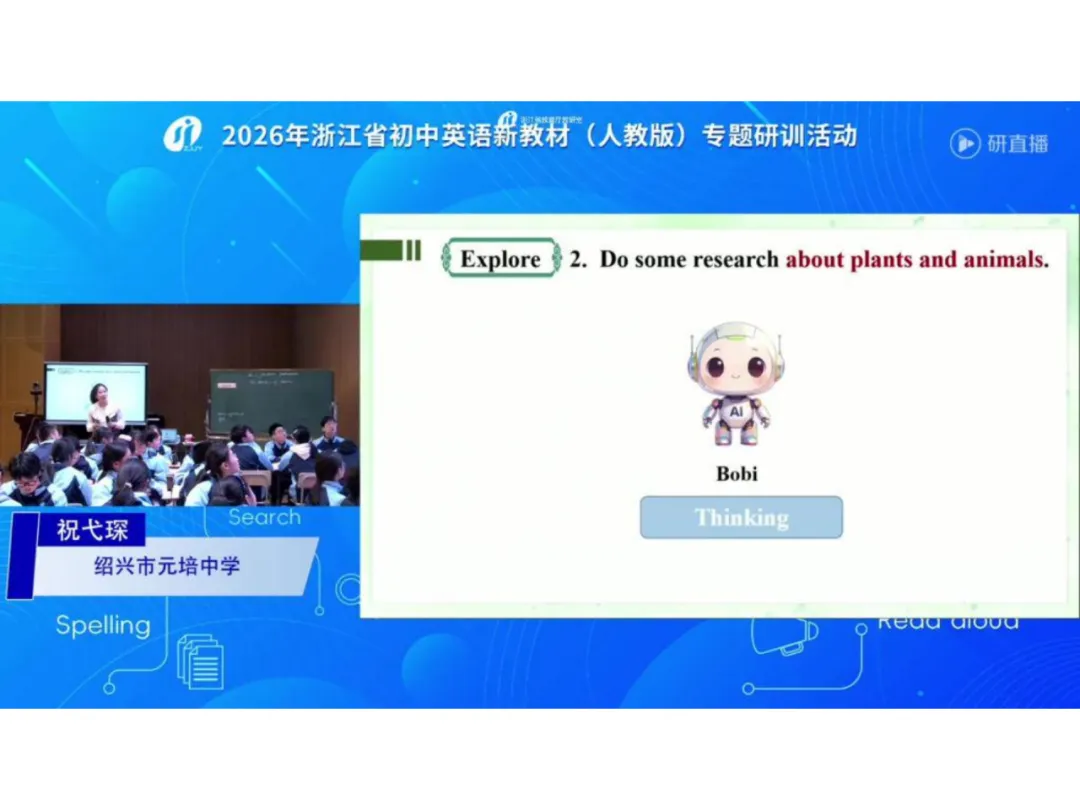
视频补充we have so much information about the size.and now let's make further explanation about the plants and animals. so bobby.can you send just a video about the plants and animals about these natural wonders?please watch your video,so here is the video. let's watch it and take notes about the animals and the plants.
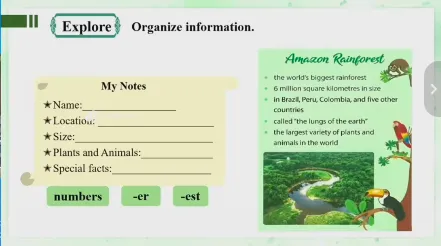
T: We have so much information about the plants and animals. Now, let's turn these notes into a Poster.
Class, please discuss the notes you have written with your partner. Check the notes, and later I'll invite some of you to make a brief introduction to us. Okay, check it with others. Maybe... you can discuss this with your partner. Yes, you can discuss with your partner.
T: So, who would like to share with us some information about the facts from your notes? Any volunteers? Okay, the girl, have a try.S12: ...T: Very good. Big hands to her!S13: ...
T: Very good. So much information about your notes.
T: Class, so much for the information. And now, let's turn your notes into a Poster. So we can see, when describing the information, usually we'll use numbers, comparatives, and superlatives. So besides the information, what can we see on a poster?Ss: Titles and pictures.
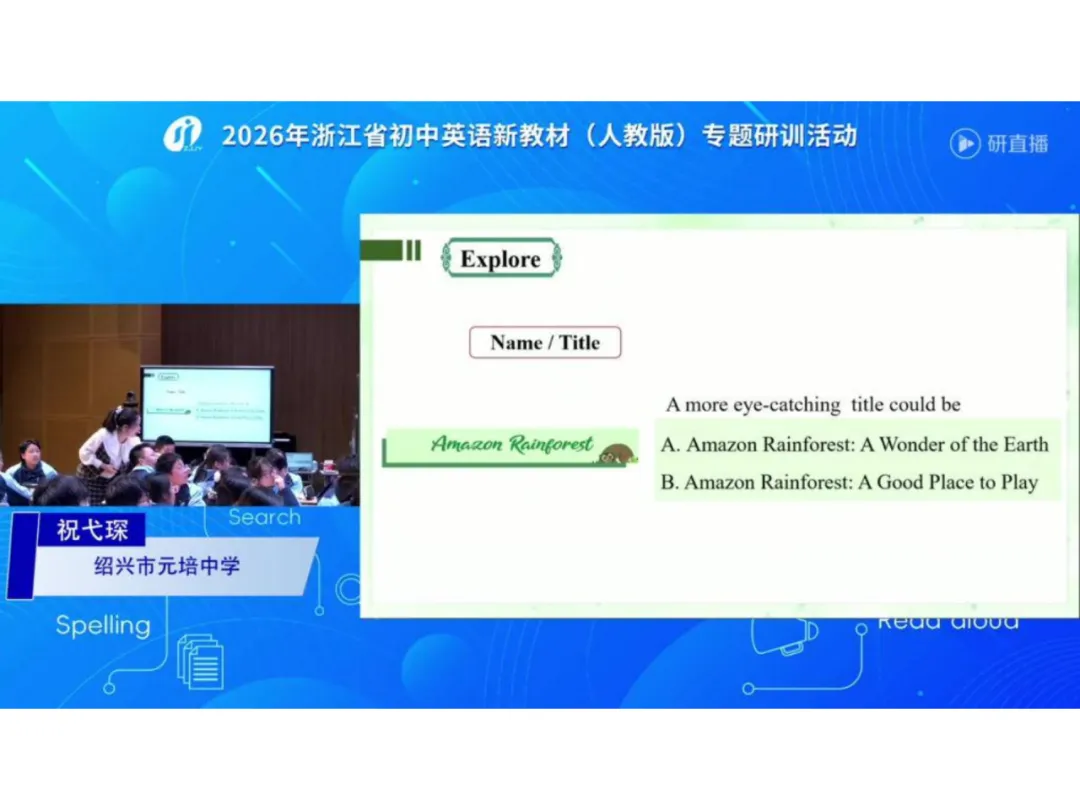
T: Great. So now let's focus on the titles. Read the title please.Ss: Amazon Rain Forest.T: Is it a good title? It's short but very direct, right? But can we make it a more eye-catching one? Here are two examples for you. So, which one do you think is better? Which one? Oh, A. So can you read the title for us?Ss: "Amazon Rain Forest: A Wonder of the Earth."T: And which word catches your eyes?Ss: "Wonder."T: Yes, "wonder". So this place must be wonderful. A very creative title. Do you think so? So what is a good title like? It's very creative. Excellent.
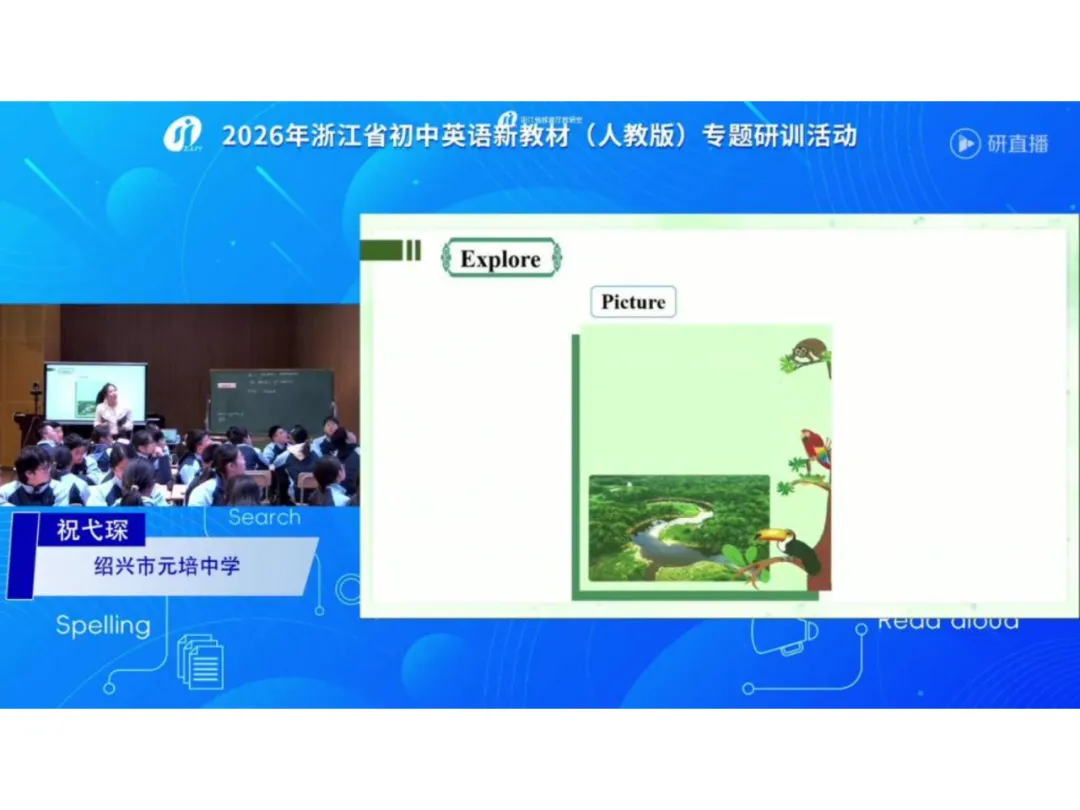
多模态的海报设计:分析了标题的吸引力和图片的色彩心理学。将英语写作与视觉传达(Visual Communication)结合,新课标对审美和跨学科能力的要求。
T: How about these pictures, class? What do you think of these pictures? What do you think? You please.S: The pictures are wonderful. They have many colors. So they are colorful and lively.T: Don't you think so? And what color is the background? What color is the background? You please.S: It's green.T: Yeah, it's green. And what feeling does green bring you?S: I feel very quiet. I feel very peaceful.T: Yes. So we need to use lively pictures. Yes or no?
experience
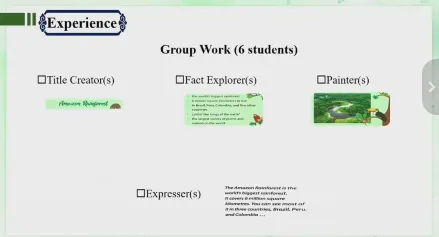
T: And now let's experience making a poster and introduce them to us. So let's start our group work. Six students in a group. You can be Title Creators, Fact Explorers, and Painters. So remember, we should use a creative title, believable information, and lively pictures. Clear? And we also need an Express (Reporter) to give us a report.
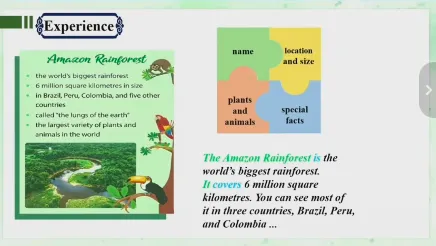
从“碎片信息”到“完整语篇”的支架搭建 (Scaffolding): 从笔记(Noun Phrases)到演讲(Sentences)的差距在于主语和谓语。这是一个非常具体、可操作的语言支架,帮助学生完成了从“写”到“说”的跨越。
T: But class, think about it. How can we make the notes into a report? Maybe we can add the subjects and some verbs, do you think so? And now let's report together.(Teacher leads a model report)T: "The Amazon Rainforest is the world's biggest rainforest. It covers six million square kilometers. You can see most of it in three countries: Brazil, Peru, and Colombia."T: Very good. And now it's our time to experience. So class, please work in a group. Make a poster and give us a report like this. Clear? So now please work with your partner, go. Here we go.
(BGM/视频背景播放Group Work Time: Teacher guides students)
(Note: Teacher assists different groups, checking roles)
express
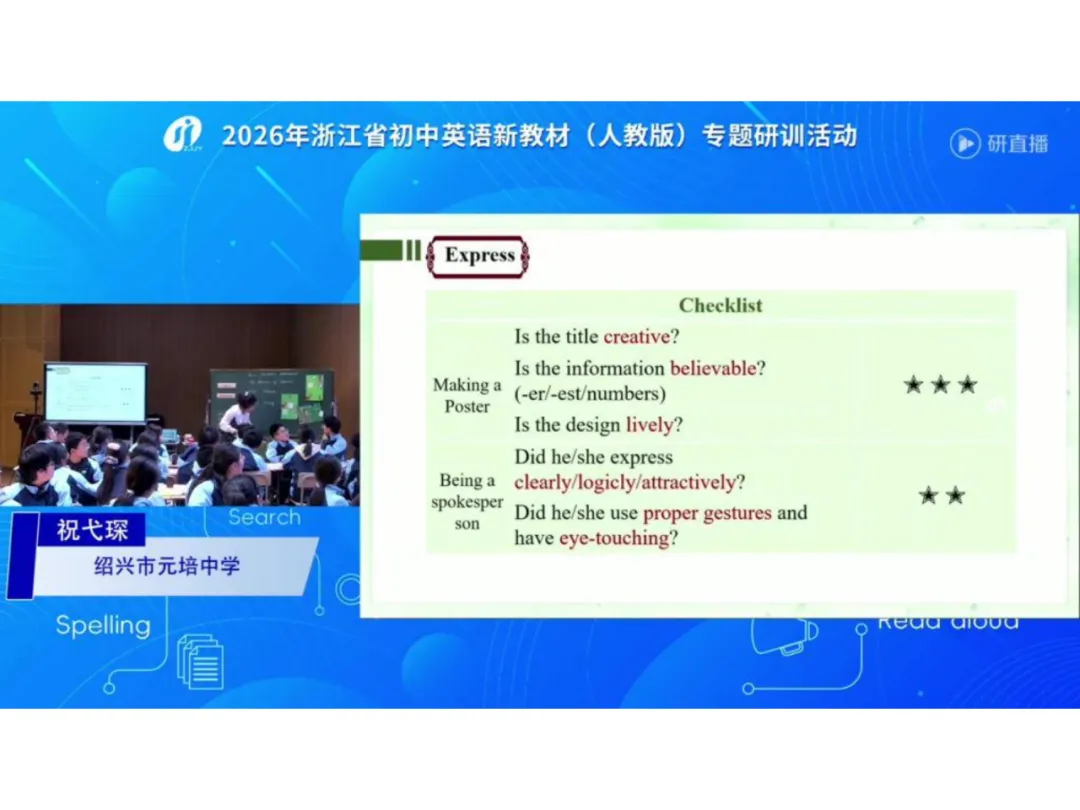
T: Okay, time's up. Some groups have finished your posters. Let me show the posters. Right? Very good. How about yours? Yes, maybe we can put them on the blackboard. Very good. And now, who would like to say something about your posters and introduce these natural wonders to us? Who would like to have a try? The girl, can you have a try? Yes, bring your poster and come to the front. Come on.
S14 (Presentation): ...
T: Very good. So you are a very good reporter. To be a good spokesperson, let's be creative, logical, and loud. OK?
可视化评价标准 (Visible Assessment Criteria):老师用三个简单的词(Creative, Logical, Loud)概括了口语表达的评价标准。不仅评价学生,更教给学生如何自我修正。
So any other group to say something about your posters? Which group? This group, your poster is very beautiful. So who is the expresser? Can you? Okay, come to the front. Big hands for him!
S15 (Presentation): ...
T: Yes, very good.
T: So class, how was his performance? How was his performance? Yes, did he speak clearly, logically and attractively? Yes or no?Ss: Yes!T: And did he use some structures? And make eye contact? Yes, he did a good job. And what about their poster? Does it have a creative title? Yes. And is the information believable? Yes, he used big numbers and comparatives. And is the design lively? Yes, it's a good poster and a good introduction.
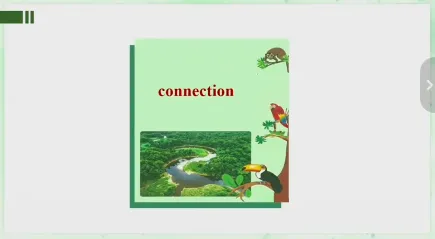
T: So class, today you have achieved how to make a poster. It's your curiosity and ambitions that lead to your achievements.
T: And now let's come back to these pictures. Class, think about it: Where are the animals?Ss: They are in the forest.T: Yes, they are in the forest. And in the picture, they live in the same tree. Do you think so? Yes. And where are they looking at?Ss: They are looking at us / the Amazon Rainforest.T: Yes, they are looking at the Amazon Rainforest. So they share the same tree, the same home, and the same earth.
T: Let's imagine: If the tree falls, what will happen?
逻辑闭环:从介绍宁波的景点(Siming Mountain),到最后升华到全球视野(Amazon Rainforest),再到人与自然的共生(If the tree falls...),从“家乡美”到“地球美”的升华,立德树人的育人目标。
S16: They will die.S17: They will lose their home.T: Yes, they will lose their homes.
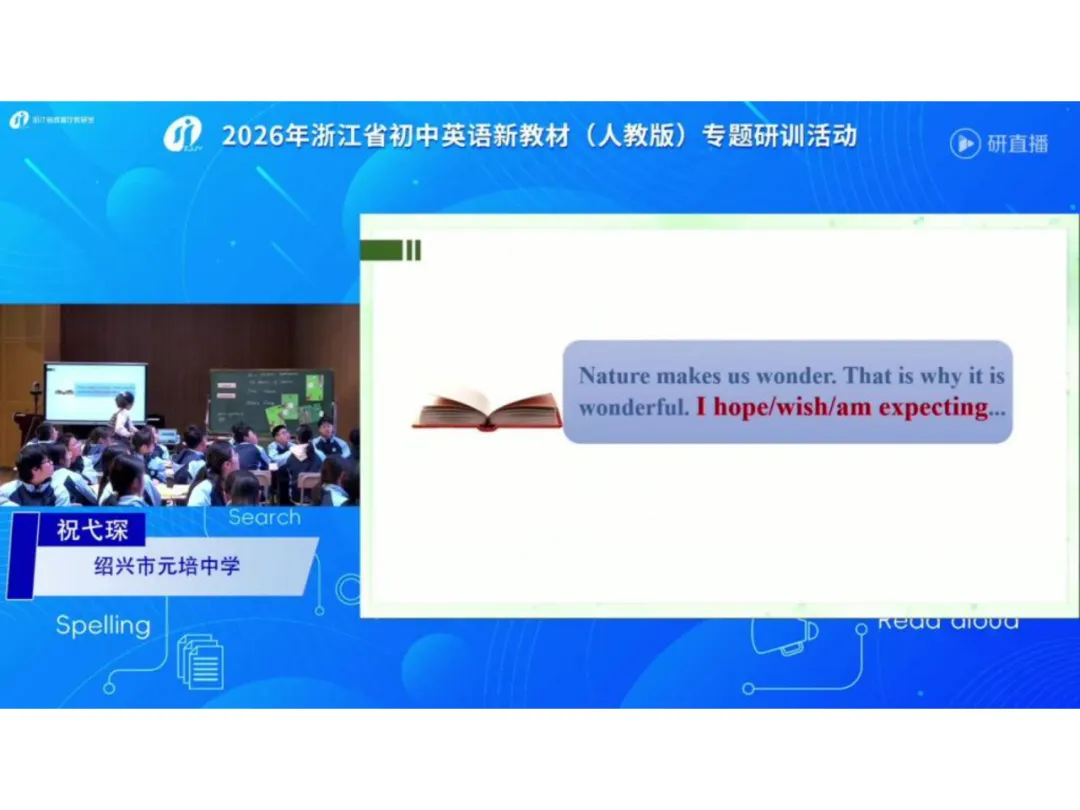
T: So class, at the end of this class, what do you want to say to the world? What do you want to say?S18: We should protect our environment.T: Yes, we should protect the environment. Anything else?S19: We can plant more trees and don't litter.T: Yes, we can take part in it. Right? And I want you to tell us: Let's follow the rules of nature.
板书设计
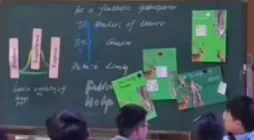
板书贴T: In Fenghua, we make a connection between the mountains, the rivers, and human beings. So class, we have a wonderful day, isn't it? And I hope tomorrow you can be a good explorer, a reporter, and experiencer. Clear?
视频升华Yes. So let's protect the earth together and care for the living, and care for our connections with others.
T: So class, this is the end of this class. Thank you for your cooperation and participation. So goodbye, everyone.Ss: Goodbye!T: Okay, the class is over. Let's stand up and say goodbye to the teachers.
3
资料获取
有效期7天,请及时保存!
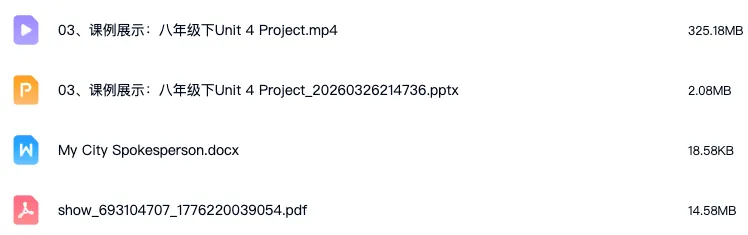
通过网盘分享的文件:八年级下 Unit 4 project
链接: https://pan.baidu.com/s/1sctZwHvBD09lVSjsWh2yNw?pwd=faqc 提取码: faqc
免责声明:本公众号所涉及展示课等资料已注明来源与出处,再由本公众号原创整理推送。旨在互相分享学习,提升教学质量。展示课等资料均属原作者所有,如有侵权请联系删除。





长按保存见面礼🎁
长按看教学视频
长按进教学分享群