夜雨聆风
夜雨聆风

SEMINAR INFORMATION

Topic
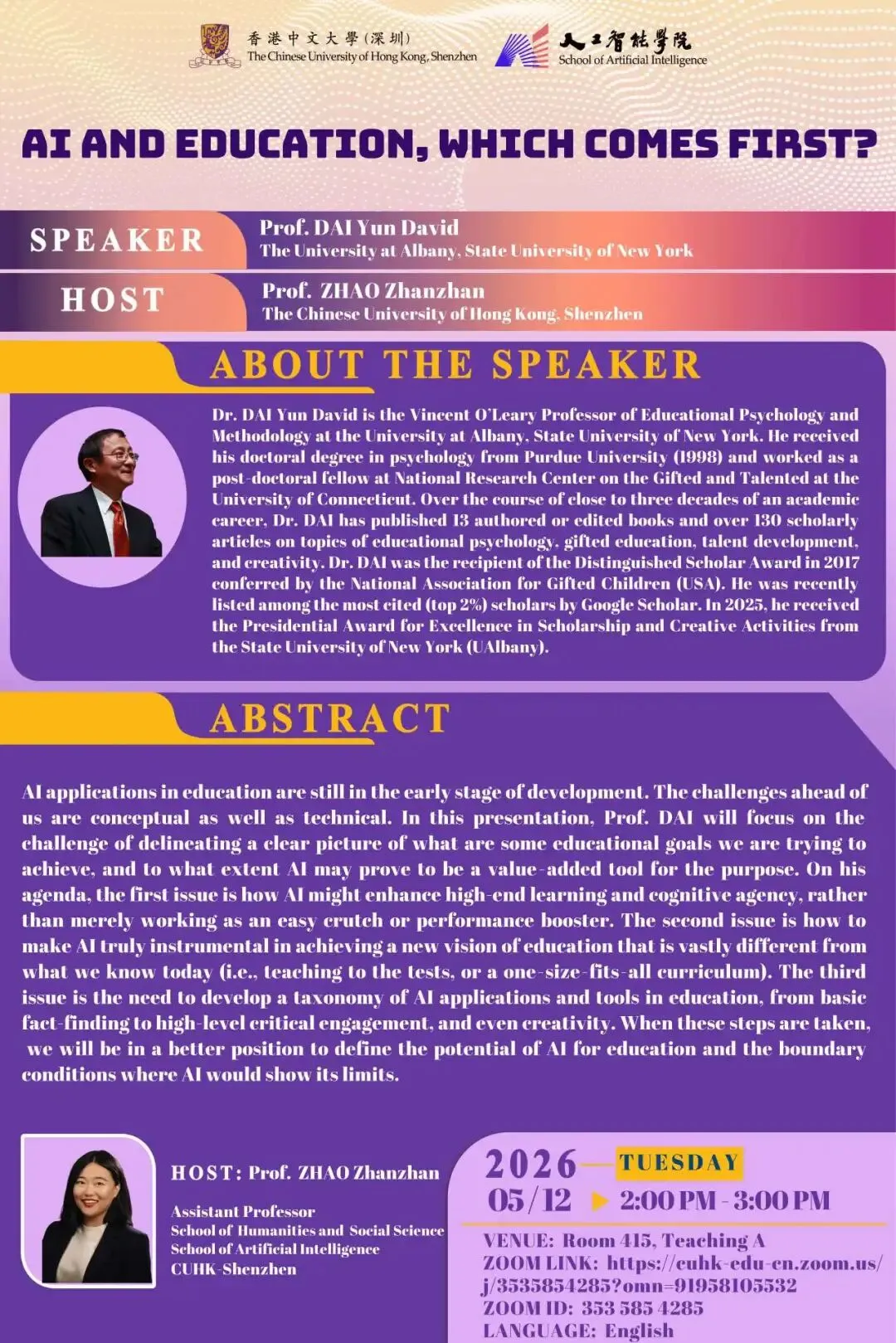
AI and Education, Which Comes First?
Time
02:00-03:00 PM
Date
May 12th, 2026
Venue
Room 415, Teaching A
Zoom meeting
https://cuhk-edu-cn.zoom.us/j/3535854285?omn=91958105532
Meeting ID:3535854285
Speaker
Prof. DAI Yun David
(The University at Albany, State University of New York)
Host
Prof. ZHAO Zhanzhan
(The Chinese University of Hong Kong, Shenzhen)
ABOUT THE SPEAKER

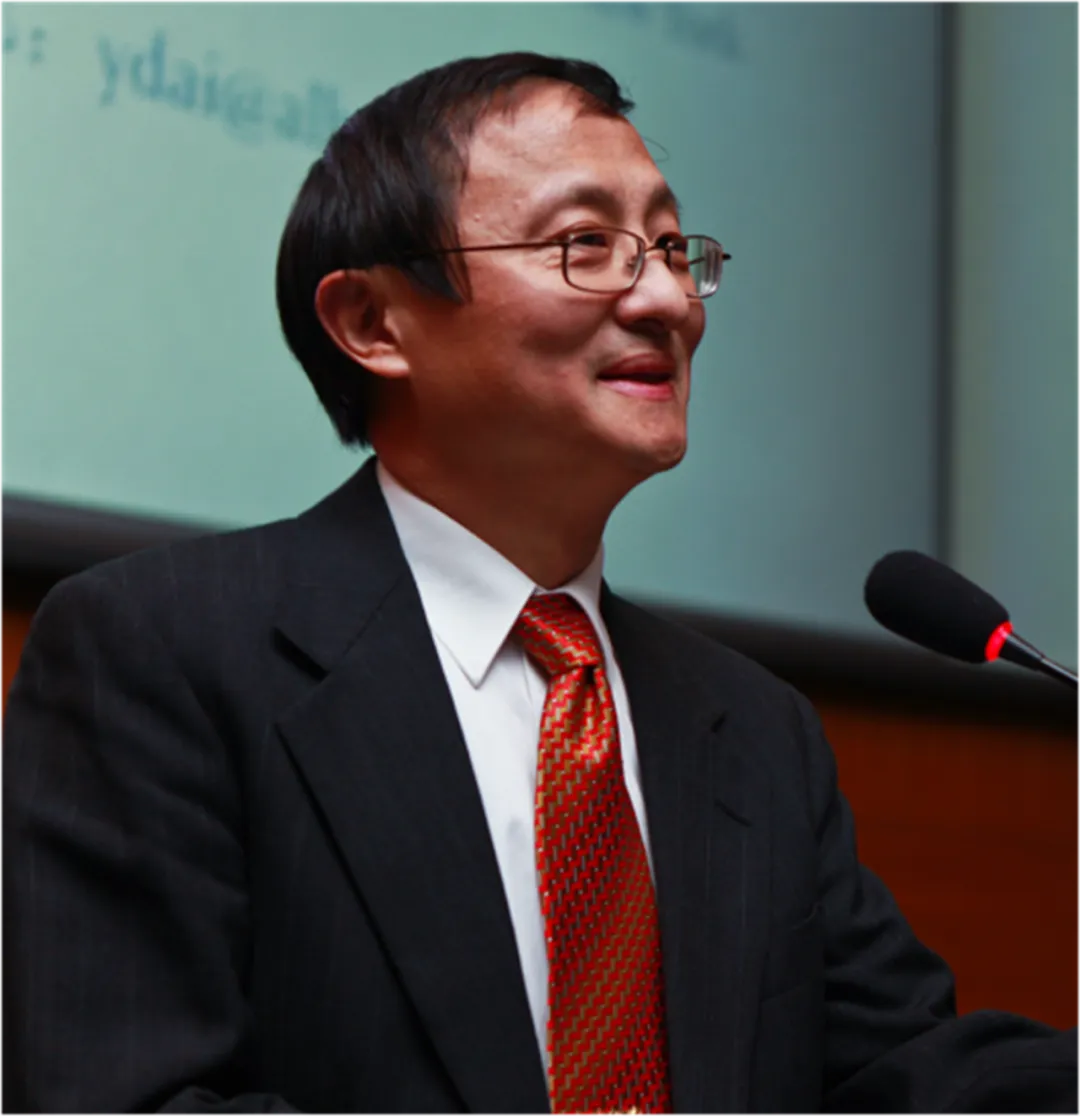
Prof. DAI Yun David
The State University of New York (UAlbany)
Dr. DAI Yun David is the Vincent O’Leary Professor of Educational Psychology and Methodology at the University at Albany, State University of New York. He received his doctoral degree in psychology from Purdue University (1998) and worked as a post-doctoral fellow at National Research Center on the Gifted and Talented at the University of Connecticut. Over the course of close to three decades of an academic career, Dr. DAI has published 13 authored or edited books and over 130 scholarly articles on topics of educational psychology, gifted education, talent development, and creativity. Dr. DAI was the recipient of the Distinguished Scholar Award in 2017 conferred by the National Association for Gifted Children (USA). He was recently listed among the most cited (top 2%) scholars by Google Scholar. In 2025, he received the Presidential Award for Excellence in Scholarship and Creative Activities from the State University of New York (UAlbany).
ABSTRACT

AI applications in education are still in the early stage of development. The challenges ahead of us are conceptual as well as technical. In this presentation, Prof. DAI will focus on the challenge of delineating a clear picture of what are some educational goals we are trying to achieve, and to what extent AI may prove to be a value-added tool for the purpose. On his agenda, the first issue is how AI might enhance high-end learning and cognitive agency, rather than merely working as an easy crutch or performance booster. The second issue is how to make AI truly instrumental in achieving a new vision of education that is vastly different from what we know today (i.e., teaching to the tests, or a one-size-fits-all curriculum). The third issue is the need to develop a taxonomy of AI applications and tools in education, from basic fact-finding to high-level critical engagement, and even creativity. When these steps are taken, we will be in a better position to define the potential of AI for education and the boundary conditions where AI would show its limits.

All of you are warmly welcome!