夜雨聆风
夜雨聆风📌 阅读原文,请点击文末“阅读原文”
【导读】
AI Machine Vision on Ships: 2026 Guide
January 14, 2026
AI machine vision on ships is shifting from “nice to have cameras” to a practical bridge and operations layer: automated detection of small targets, floating objects, and developing close-quarters situations, plus better watchkeeping support at night and in reduced visibility. Going into 2026, the most noticeable progress is sensor fusion (camera + radar + AIS), shared hazard intelligence across fleets/networks, and more commercial-grade packaging that crews will actually use.
What is it and Keep it Simple...
AI machine vision on ships uses onboard cameras (often including thermal) plus software that detects and tracks objects automatically. Think of it as an always-on lookout assistant: it highlights what the bridge might miss, especially small craft, floating debris, low-contrast targets, and cluttered traffic scenes.
The best systems do not replace radar, AIS, or the watch. They fuse the picture: camera detections are compared to radar and AIS, then prioritized into simple alerts so the bridge is not overwhelmed.
In plain terms
Cameras feed a “detection engine.” The system labels objects, tracks their movement, and warns when something looks relevant to your course or your close-quarters situation. It is especially helpful when targets are visually hard to pick out.
2026
The market is moving beyond isolated onboard tools toward networked awareness and better integration with decision support and autonomy/remote operations programs. Shared “verified safety alerts” and packaged commercial systems are becoming a more common rollout pattern.
What you are really buying
More consistent detection of small or low-visibility targets (especially at night) Faster “what is that?” answers when radar and eyesight disagree A simple alerting layer to reduce watch fatigue in busy waters A foundation for sensor fusion on the path toward remote operations and autonomy
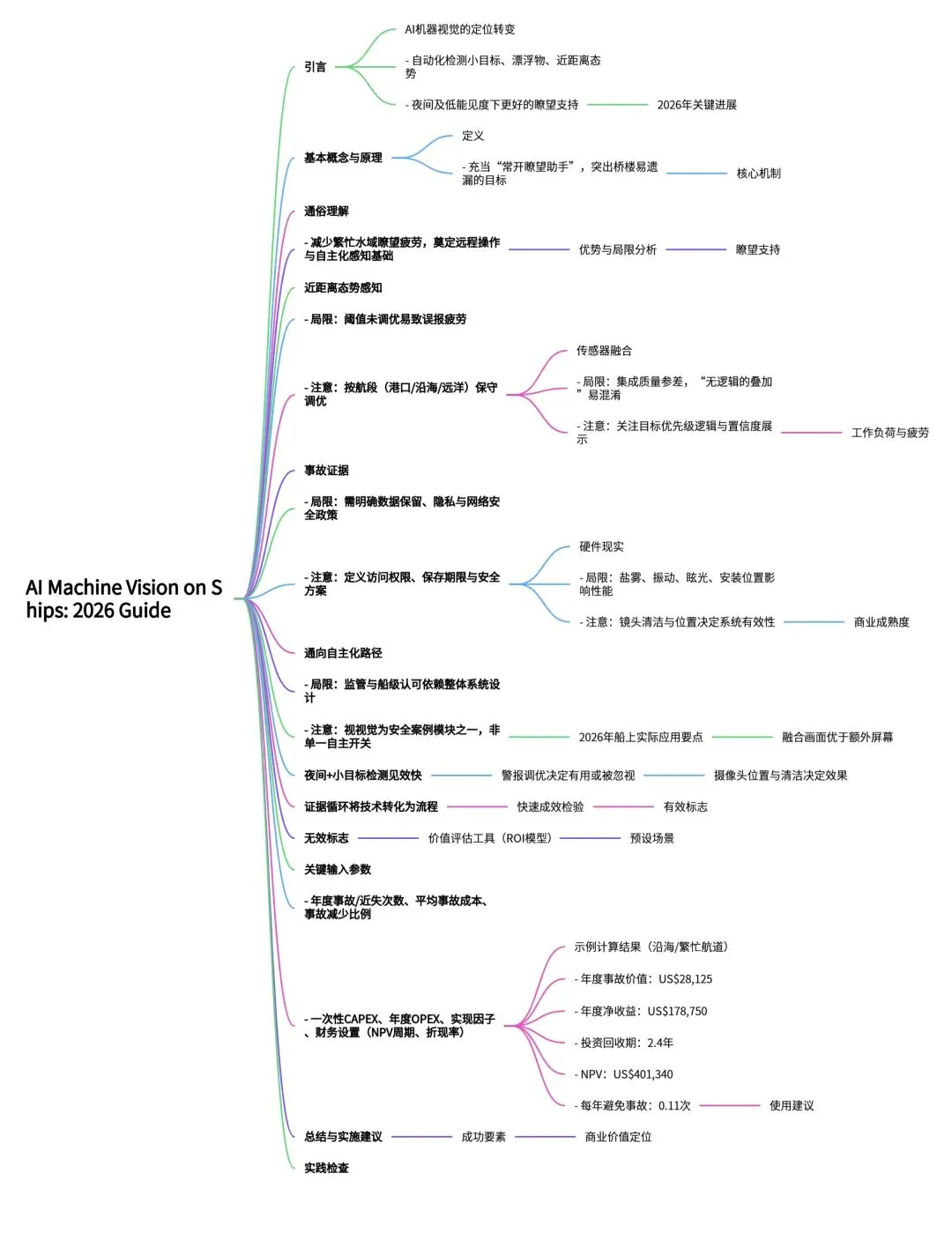
AI Machine Vision on Ships
| Lookout support | |||
| Close-quarters awareness | |||
| Sensor fusion | |||
| Workload and fatigue | |||
| Incident evidence | |||
| Hardware reality | |||
| Commercial maturity | |||
| Path to autonomy |
Summary: AI machine vision tends to pay off when it reduces missed detections and speeds up “what are we looking at?” decisions in the real world. It fails when it becomes a noisy extra screen. The difference is tuning, placement, and tight fusion with radar/AIS.
2026 AI vision: what’s really working onboard
1) “Fused picture” beats “another camera screen”
The rollouts that stick show detections in a way the bridge already understands, and cross-check with radar and AIS. If it feels like an extra noisy display, adoption stalls.
2) Night + small-target detection is the early win
Thermal plus AI is where crews feel the value fastest: small craft, unlit targets, and cluttered approaches. The system earns trust when it consistently flags “hard to see” objects earlier.
3) Alert tuning is the difference between useful and ignored
Working programs tune by operating area: port approaches, coastal lanes, offshore. They keep alerts limited, prioritize relevance, and avoid fatigue.
4) Camera placement and cleaning access decide outcomes
Salt spray, glare, and vibration are not edge cases. If lenses are hard to clean or poorly placed, performance drops and people stop trusting it.
5) Evidence loops turn “tech” into “procedure”
The best fleets review a small set of detections each week (near-misses and weird targets) and update settings. That creates steady improvement and consistent bridge behavior.
Fast “is it working” test
If you can show earlier detection on real transits, fewer “sudden slowdowns,” fewer close-quarters surprises, and crews asking for the same setup on sister ships, it is working. If the watch teams mute alerts or ignore the screen, it is not working yet.
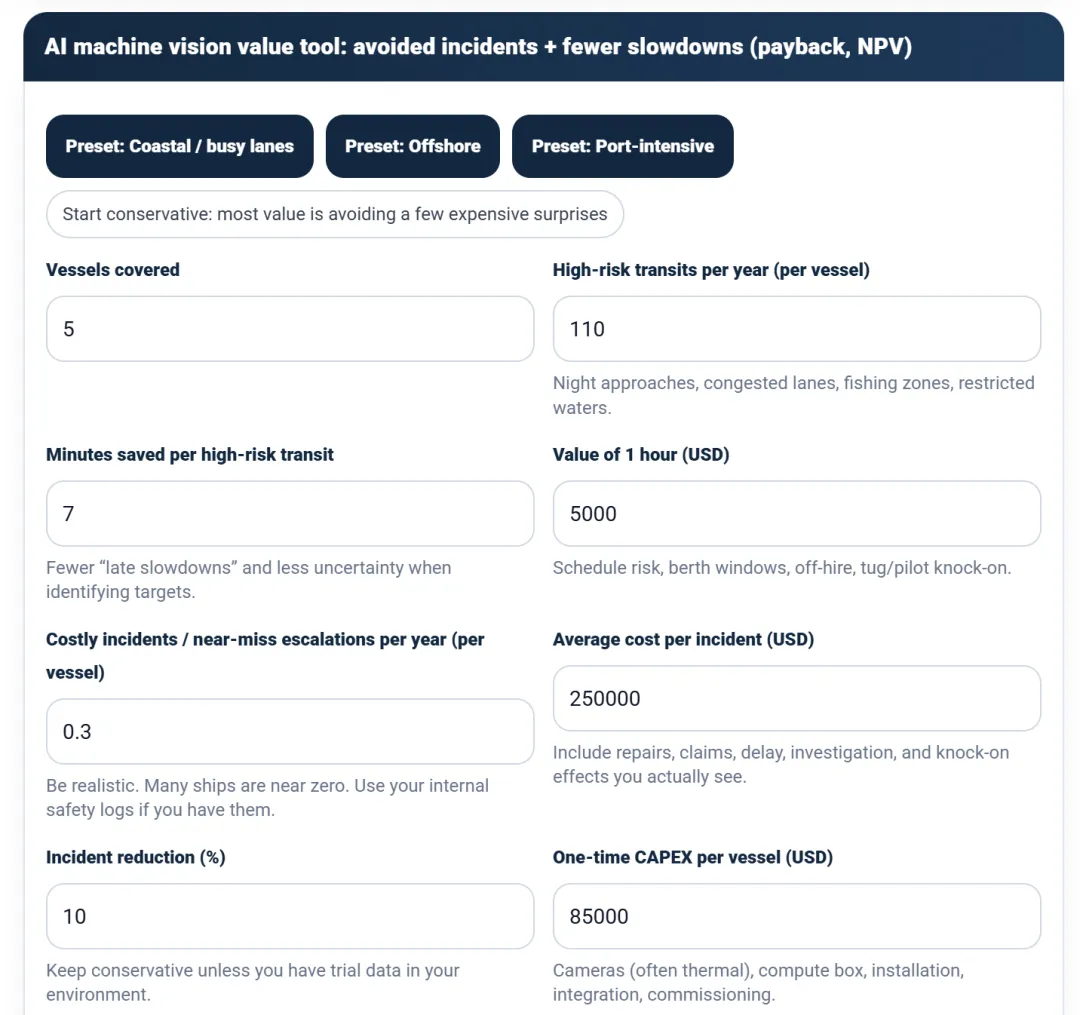
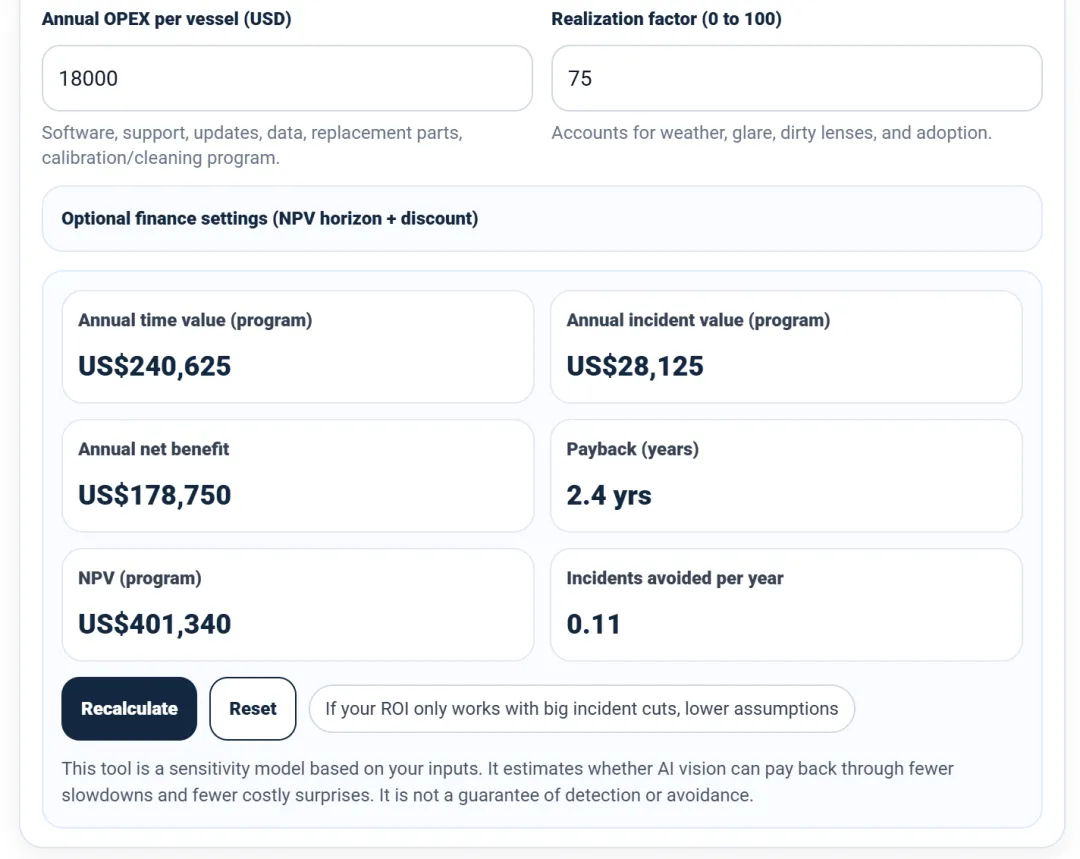
AI machine vision works best when it is treated like a disciplined bridge aid: well-placed cameras, clean lenses, tuned alerts, and a fused presentation that supports how crews already stand watch. The business case is usually not “big fuel savings.” It is fewer expensive surprises and fewer last-second slowdowns because the bridge can identify targets earlier and with more confidence. If you want a quick reality check, run the tool with conservative incident reduction and small time savings, then see if the numbers still make sense for your busiest lanes.
***
【总结】海事领域的AI机器视觉正从“可有可无的摄像头设备”转变为一个实用的船舶驾驶台与操作层辅助系统。其主要通过传感器融合(摄像头+雷达+AIS)、跨船队/网络的共享危险情报,以及商业化解决方案来实现变革。其价值在于提升目标探测的持续性和决策速度,减少人为观测的遗漏和突发性减速,而不是为了节省燃料。实施成功的关键在于合理的硬件布置、警报调校以及与现有系统的紧密融合。
核心概念与定位:AI机器视觉是利用船载摄像头(常含热成像)配合智能软件,自动探测、识别并跟踪海上目标的系统。 其作为“持续值守的瞭望助手”,不替代雷达、AIS或船员,而是通过传感器融合提供辅助决策,重点提升对小艇、漂浮物、低可见度目标等“难发现对象”的早期识别能力。其从孤立工具转向网络化协同感知(跨船队共享危险情报)、更成熟的商用集成方案,并为远程操作与自主航行奠定基础。
AI不仅是战略机遇,也是复杂的运营、法律和声誉风险源。AI的应用速度往往超过治理、法规和劳动力技能的准备速度。
***
本公众号所载内容为原创或来源于研究机构报告、官方网站动态新闻等整理、翻译与转载,转载内容版权归原作者所有,如涉及作品内容、版权或其他问题,请与本公众号联系。转载内容不代表本公众号的观点。本公众号拥有对此声明的最终解释权。 |
***凡事多躬行,莫做纸上兵***